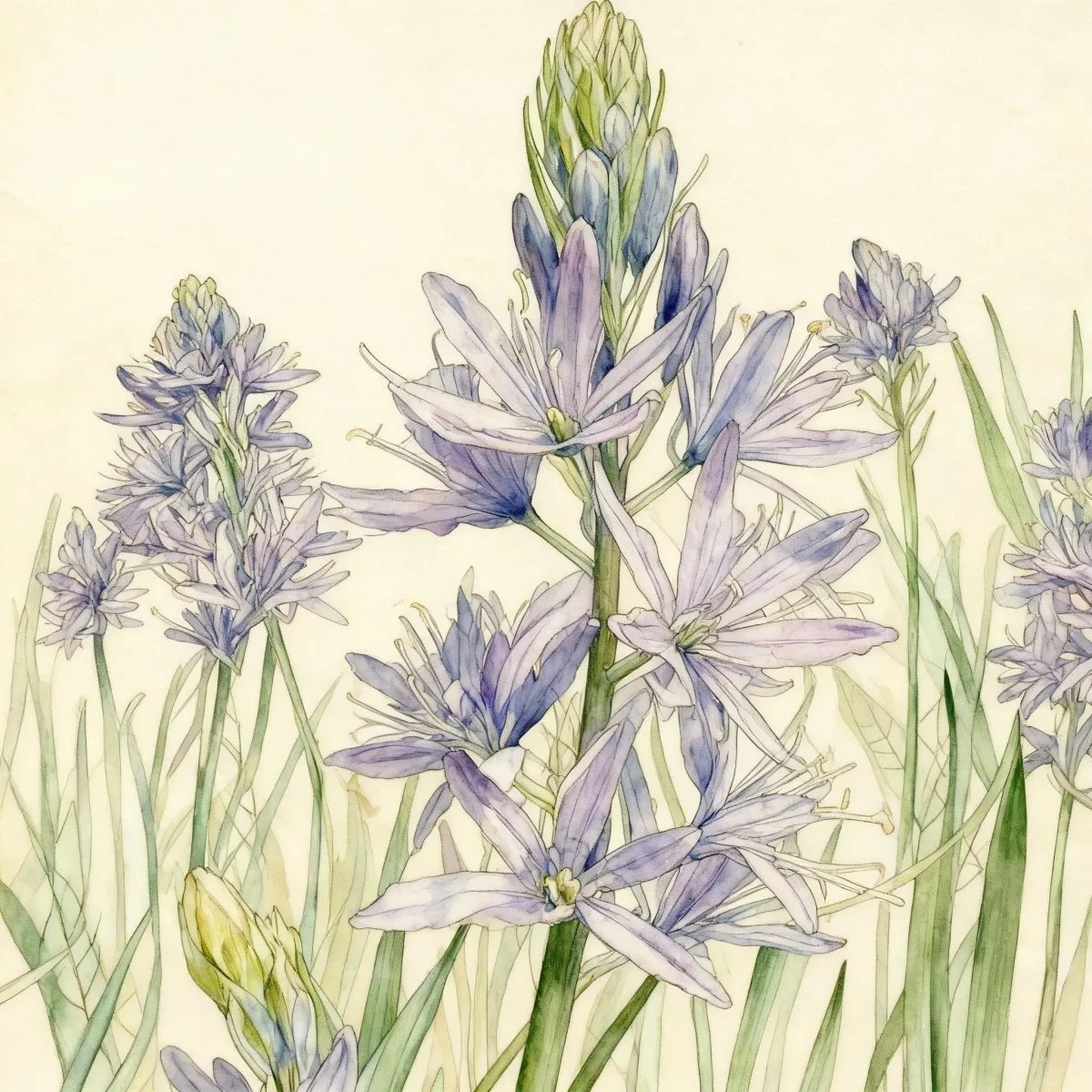
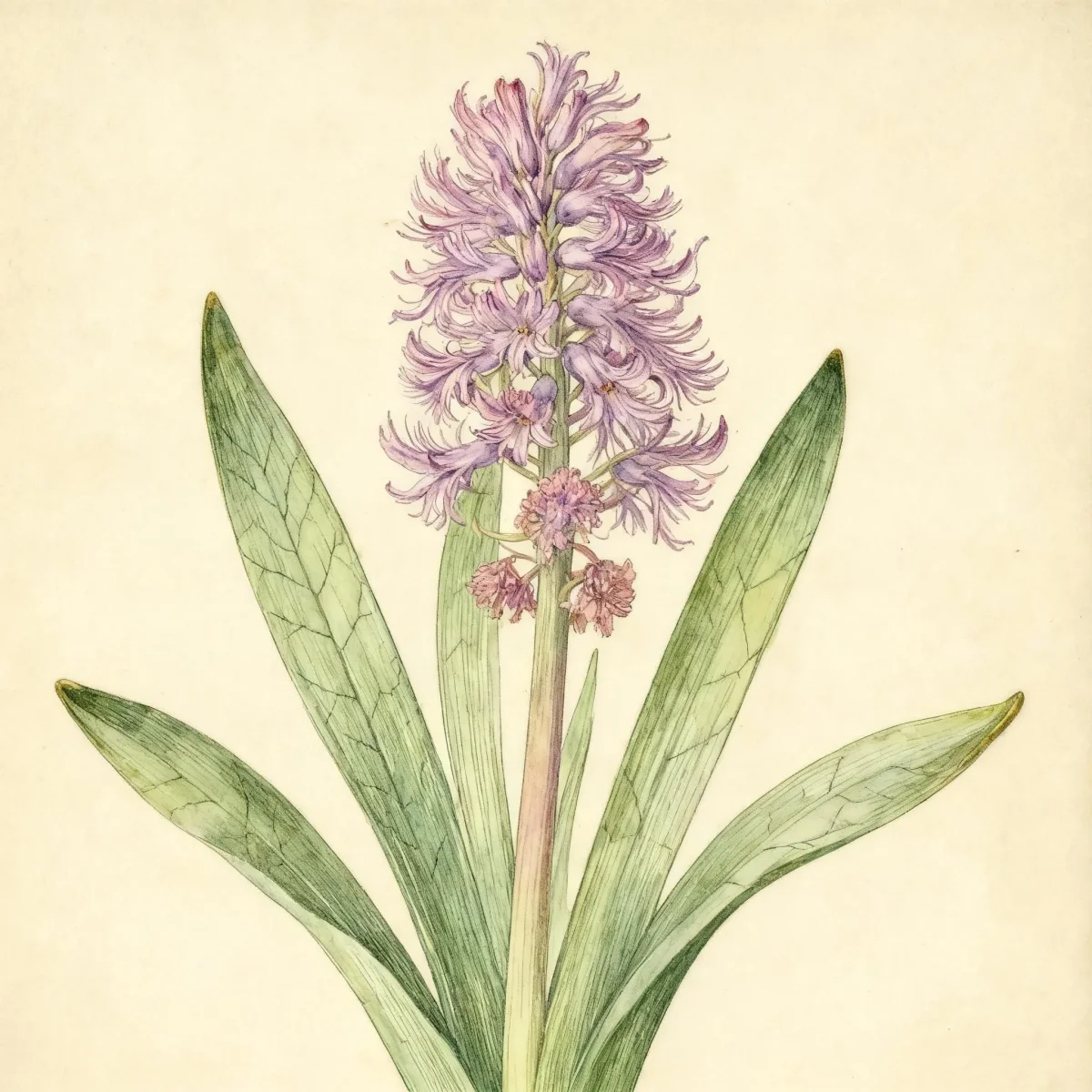
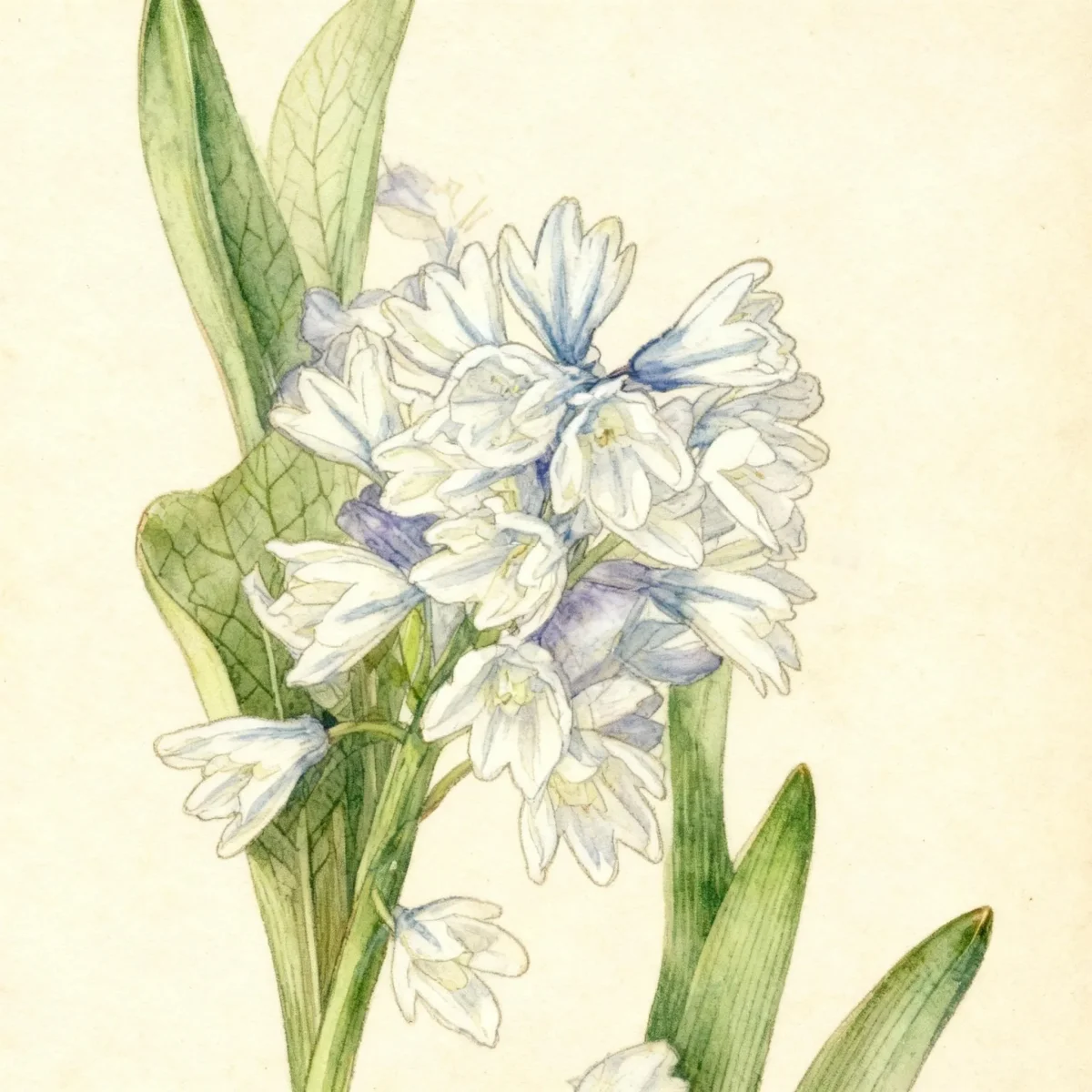
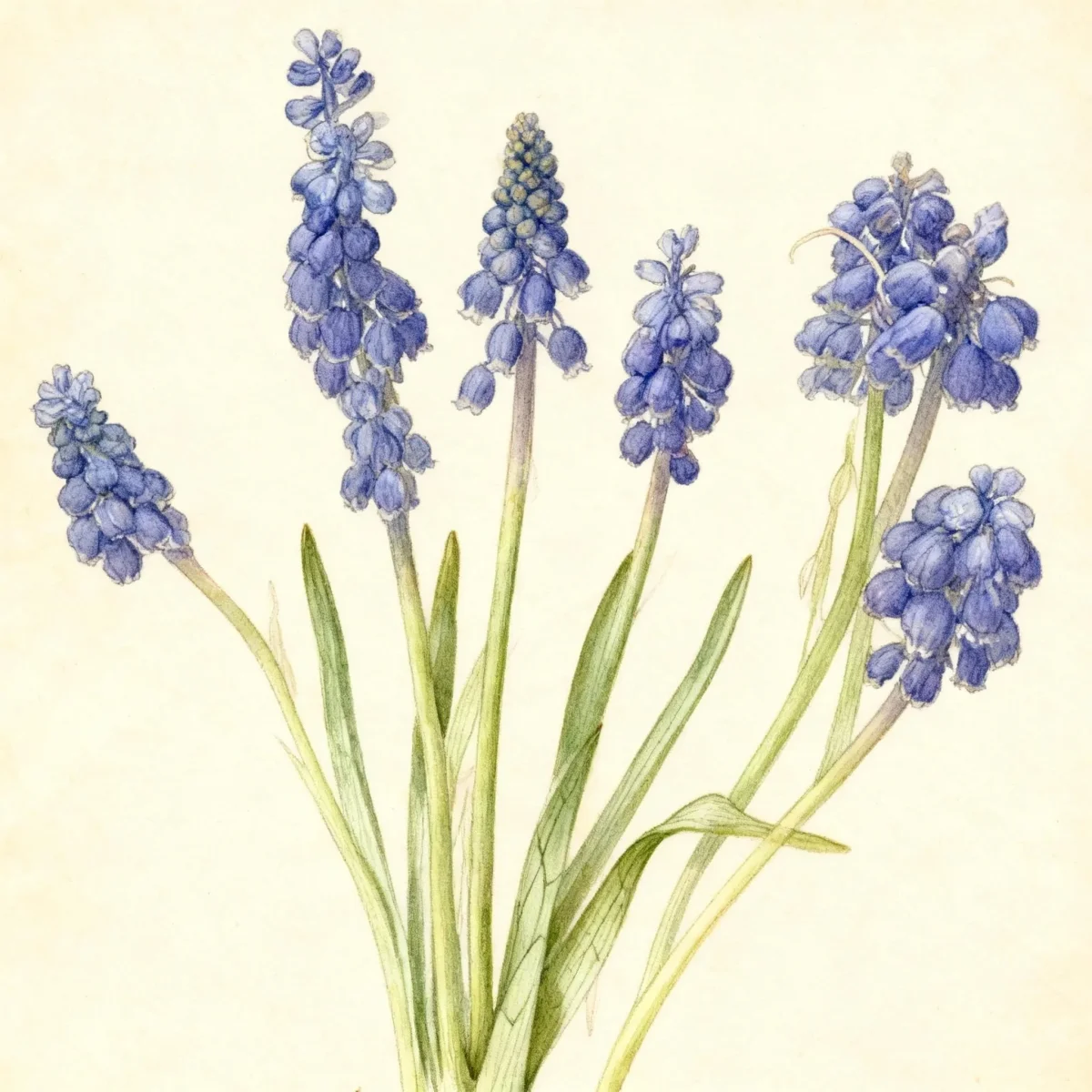
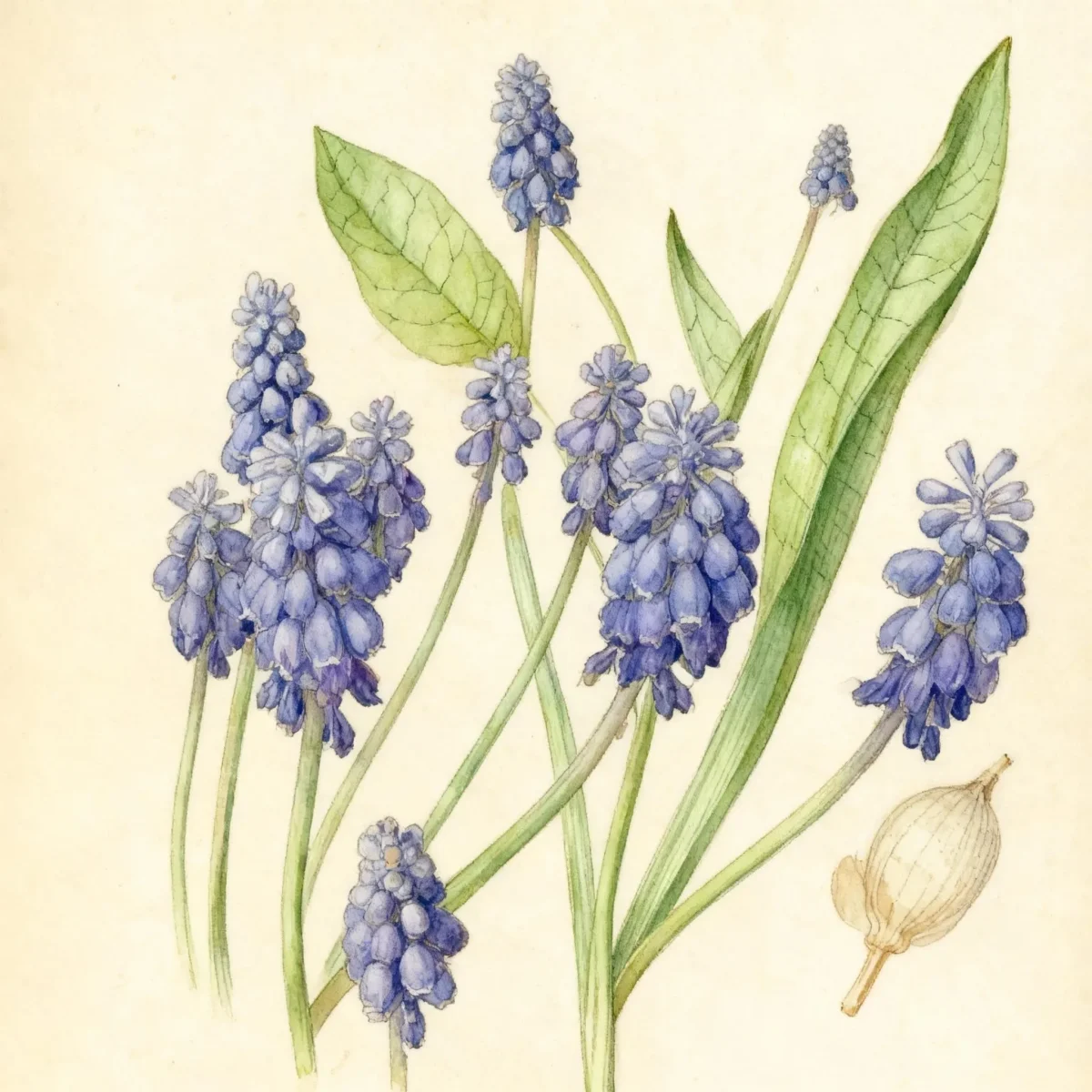
English bluebell (Hyacinthoides non-scripta)
Discover Hyacinthoides non-scripta, the classic English bluebell, prized for its fragrant, deep violet-blue spring blooms and low maintenance needs.
Scroll down to discover growing tips, care requirements, companion plants, and more
Complete Plant Information
Overview
The English bluebell, Hyacinthoides non-scripta, is a cherished bulbous perennial celebrated for carpeting woodland floors with enchanting azure color each spring. Native to Western Europe, this plant brings undeniable elegance to shaded gardens with its arching sprays of intensely fragrant, deep violet-blue, bell-shaped flowers. Its low maintenance requirements and naturalizing tendencies make the English bluebell a staple for replicating naturalized spring scenes.
Hyacinthoides non-scripta establishes itself easily, thriving beneath deciduous trees where it receives dappled sunlight before the canopy fills in. Gardeners value this species not only for its beauty but also for its distinct differences from the invasive Spanish bluebell, particularly the fragrance and the typically pendulous, one-sided flower raceme. Properly sited, this bulb will return reliably year after year, offering fleeting but magical springtime color.
Fast Facts
- Plant Family: Asparagaceae
- Plant Type: Bulb
- Native Range: Western Europe
- Hardiness Zones: USDA Zones 5-8
- Size at Maturity:
- Height: 1-1.5 ft
- Spread: 0.25-0.5 ft
- Bloom Time: April to May
- Bloom Description: Deep violet blue
- Sun Exposure: Full sun to part shade
- Water Needs: Medium
- Maintenance Level: Low
How to Grow
Planting Hyacinthoides non-scripta bulbs is best done in the fall before the ground freezes. Choose a location offering average, medium moisture, well-drained soil; this species particularly favors sandy soils and should be avoided in heavy, unamended clay. Set the bulbs approximately 3 to 4 inches deep and space them 4 to 6 inches apart to allow room for natural increase.
Care for these bulbs is generally minimal once established. They require medium moisture, especially as they emerge and bloom in spring; allow the foliage to dry down naturally as the plant goes dormant in early summer, as removing it prematurely depletes the bulb’s energy stores for next season. The English bluebell naturalizes effectively through bulb offsets and self-seeding under ideal conditions. Be mindful that if planted near Hyacinthoides hispanica (Spanish bluebells), hybridization can occur, potentially altering the desirable traits of your native Hyacinthoides non-scripta.
Landscape Uses
The primary recommendation for the English bluebell is naturalizing it in large drifts. This technique best mimics its native woodland habitat, creating spectacular seasonal displays under deciduous trees where sunlight filters through in early spring. They provide essential early color that dramatically contrasts with emerging green foliage across woodland or shade gardens.
Beyond woodland settings, Hyacinthoides non-scripta performs wonderfully in wild or naturalized areas where year-round neatness is not a priority. These bulbs also adapt well to containers or pots, either grown alone for a close-up view of their delicate bells or used as an underplanting for later spring shrubs.
Standout Features
Flower Qualities
- Showy
- Fragrant
Noteworthy Characteristics
Hyacinthoides non-scripta, commonly called English bluebell, is a bulbous perennial that is native to open woodland areas of western Europe including, of course, England. Each bulb produces a small clump of linear, strap-shaped, acute-tipped, basal leaves (3-6 per bulb) from which rises in spring (April-May) a 12-15” tall rigid flower stem topped by an arching terminal, one-sided raceme of 4-16 fragrant, pendant, narrow-tubular, bell-shaped, deep violet blue flowers (each to 3/4” long). Each flower has six petals fused together to form a narrow almost straight-sided bell with slightly rolled back petal tips. English bluebell is very similar to Spanish bluebell except English bluebell has fragrant flowers, arching flowering racemes, and shorter flowering stems. Species is synonymous with and formerly known as Scilla campanulata, Scilla hispanica and Endymion hispanicus.Genus name means resembling hyacinth.Specific epithet means without markings.
Tolerances
- Heavy Shade
- Black Walnut
Potential Problems
This species generally exhibits no serious insect or disease problems under suitable conditions, contributing to its low maintenance rating. The main aesthetic issue is that the strap-like basal leaves can become rather unsightly and yellow before they finally disappear completely as the plant enters summer dormancy. To manage this, ensure the planting area is not highly visible once the foliage declines, or use the bluebells as an early spring carpet beneath later-emerging perennials that will hide the fading leaves.
Frequently Asked Questions
What hardiness zones is English bluebell suitable for?
The English bluebell (Hyacinthoides non-scripta) is generally suitable for USDA Hardiness Zones 5 through 8.
How large does English bluebell grow?
At maturity, Hyacinthoides non-scripta typically reaches a height between 1 and 1.5 feet, with a spread of only about 0.25 to 0.5 feet per bulb cluster.
What sun exposure does English bluebell need?
This bulb performs well in a range spanning from full sun down to part shade, making it quite adaptable, though it performs best in sun-dappled environments.
When does English bluebell bloom?
The characteristic deep violet blue flowers of the English bluebell appear relatively early in the season, typically blooming from April into May.
Conclusion
For gardeners seeking true early spring woodland charm, Hyacinthoides non-scripta delivers unparalleled beauty and fragrance with minimal effort. The naturalizing ability of the English bluebell ensures successive years of enchanting color, provided soil drainage is adequate. Before adding these bulbs to your landscape, verify that your USDA hardiness zone falls between 5 and 8, and plan your fall planting schedule accordingly.
Companion Planting
When naturalizing Hyacinthoides non-scripta, pair it with plants that emerge later in the season to appreciate its early display and mask its summer dormancy. Good companions include hostas, ferns, and hellebores, all of which share a preference for the dappled shade that bluebells enjoy once tree canopies mature. These companions provide structure and foliage interest during the late spring and summer months after the Hyacinthoides non-scripta has faded.
Propagation Tips
While Hyacinthoides non-scripta naturalizes well on its own through bulb offsets, gardeners can actively propagate this species via careful division. Wait until the foliage has fully ripened and died back in early summer; this ensures the bulb is fully charged for next year’s display. Gently lift the clump, separate the offsets (smaller bulbs formed around the main bulb) during this dormant period, and immediately replant the smaller bulblets at a slightly shallower depth than mature bulbs. This method preserves the genetic integrity of the true English bluebell.