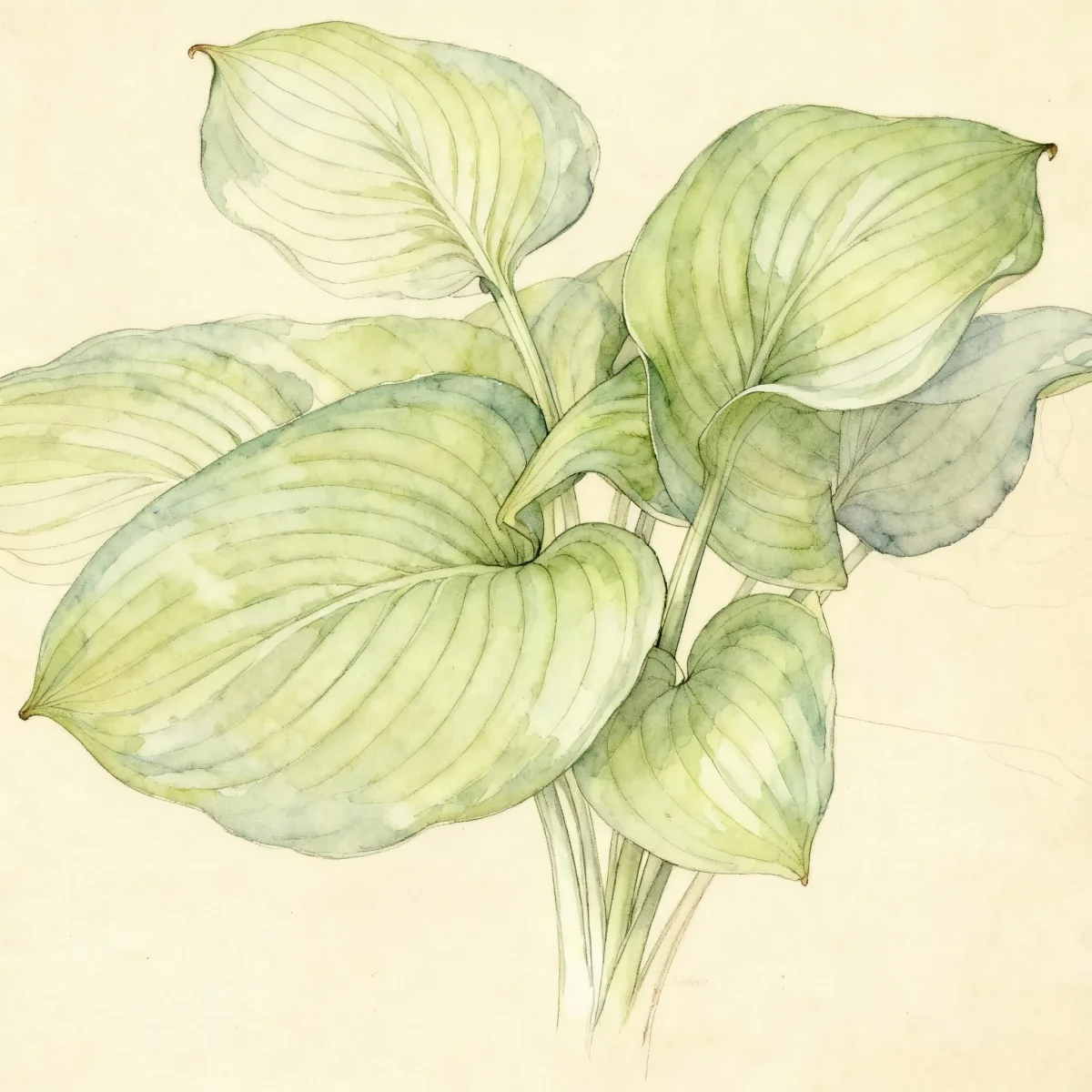
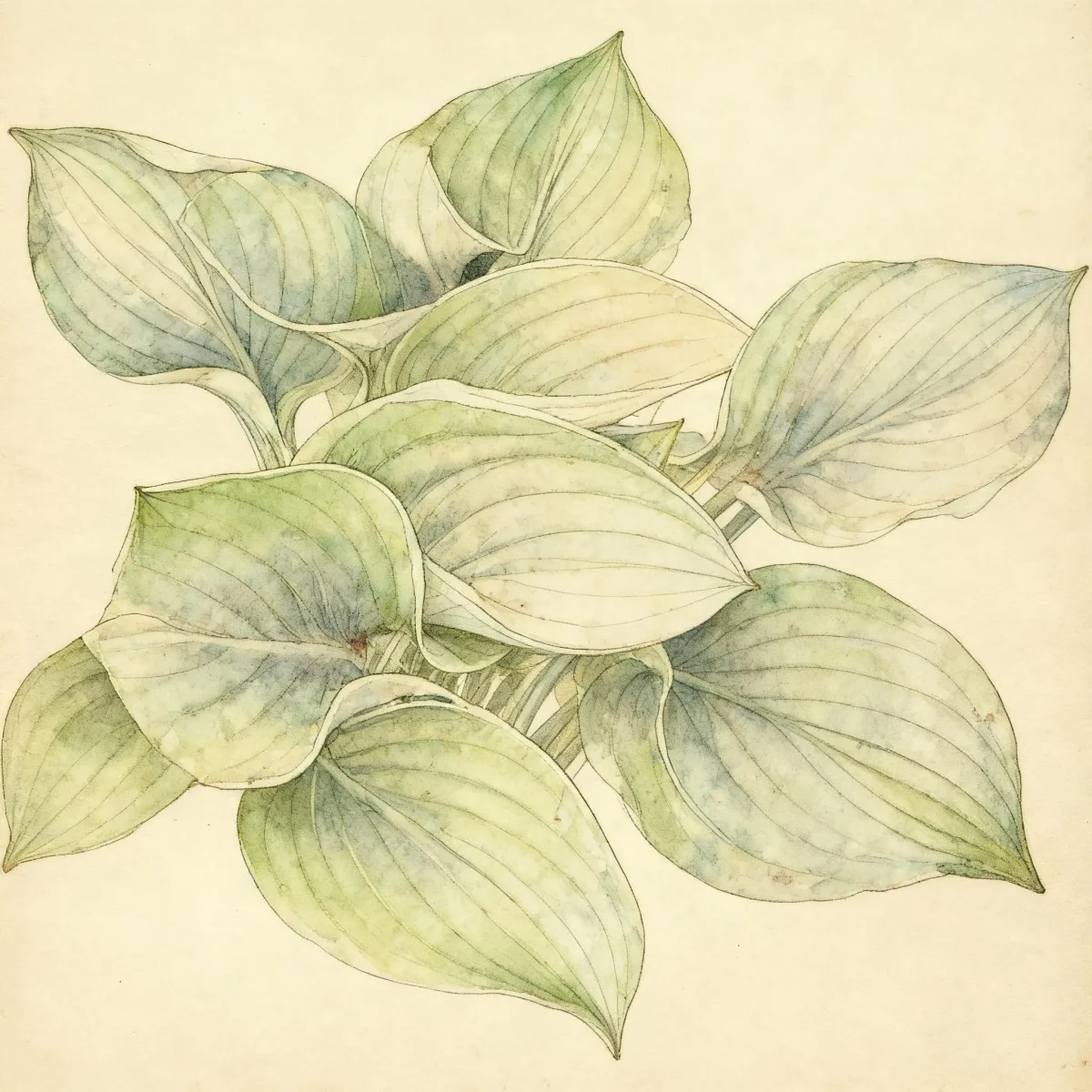
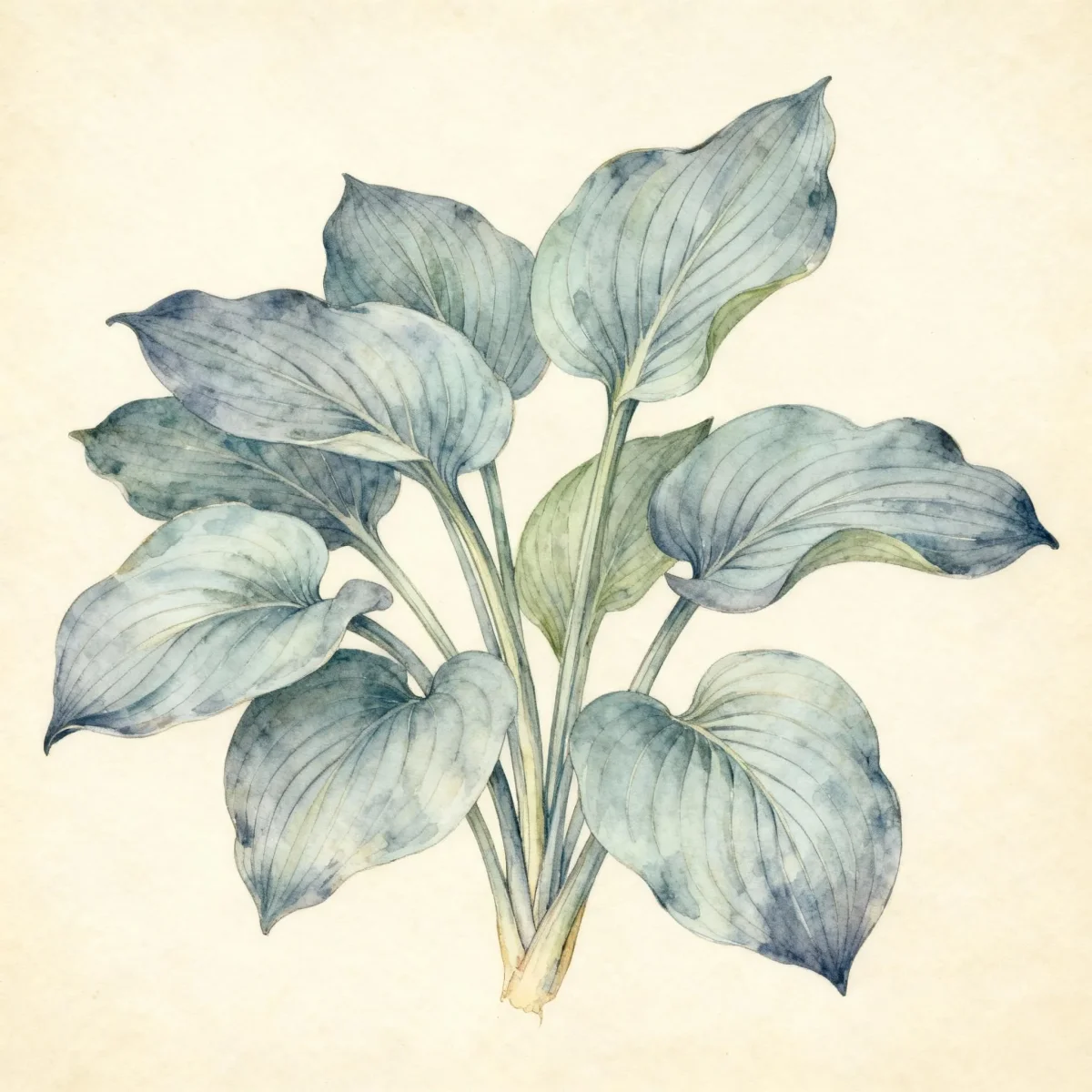
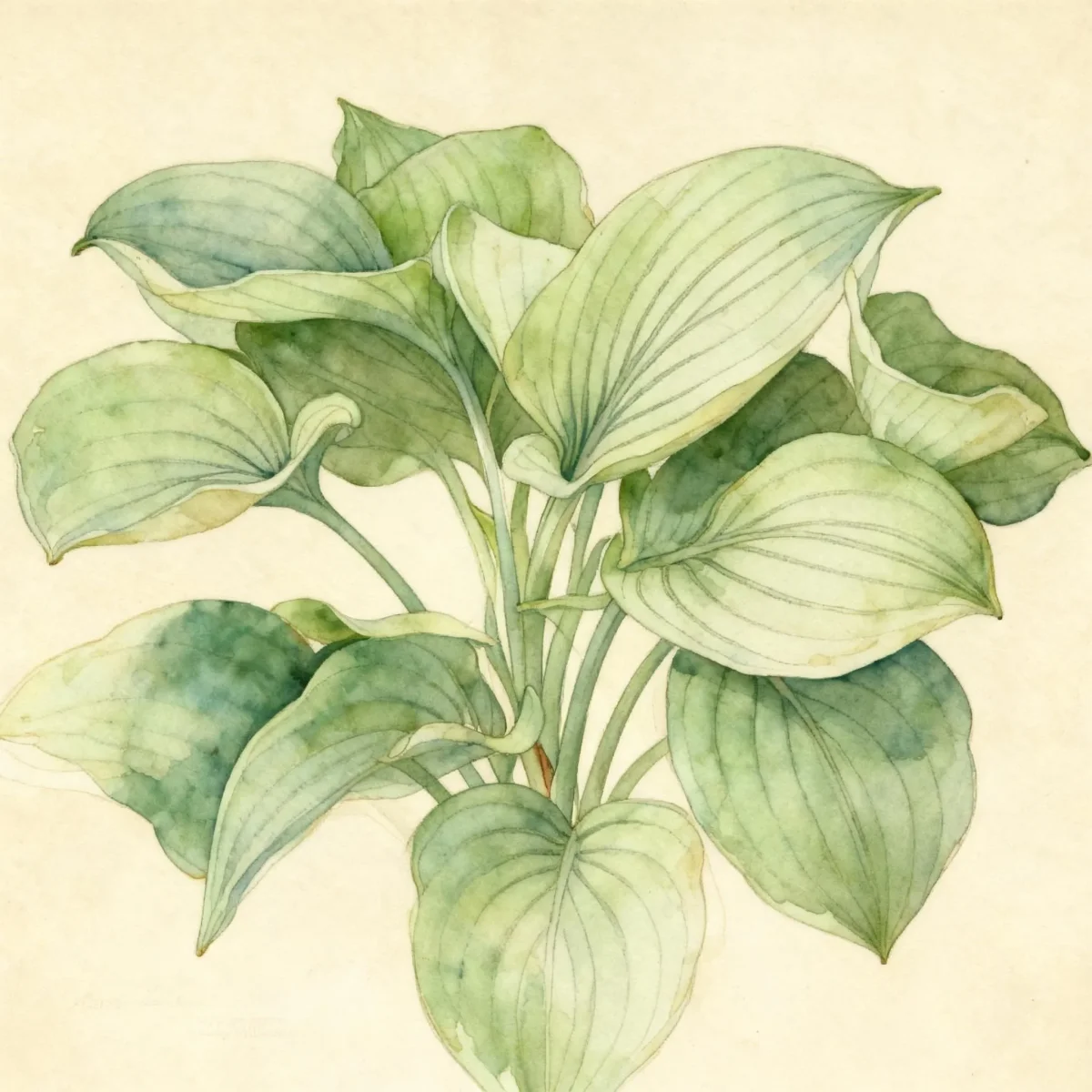
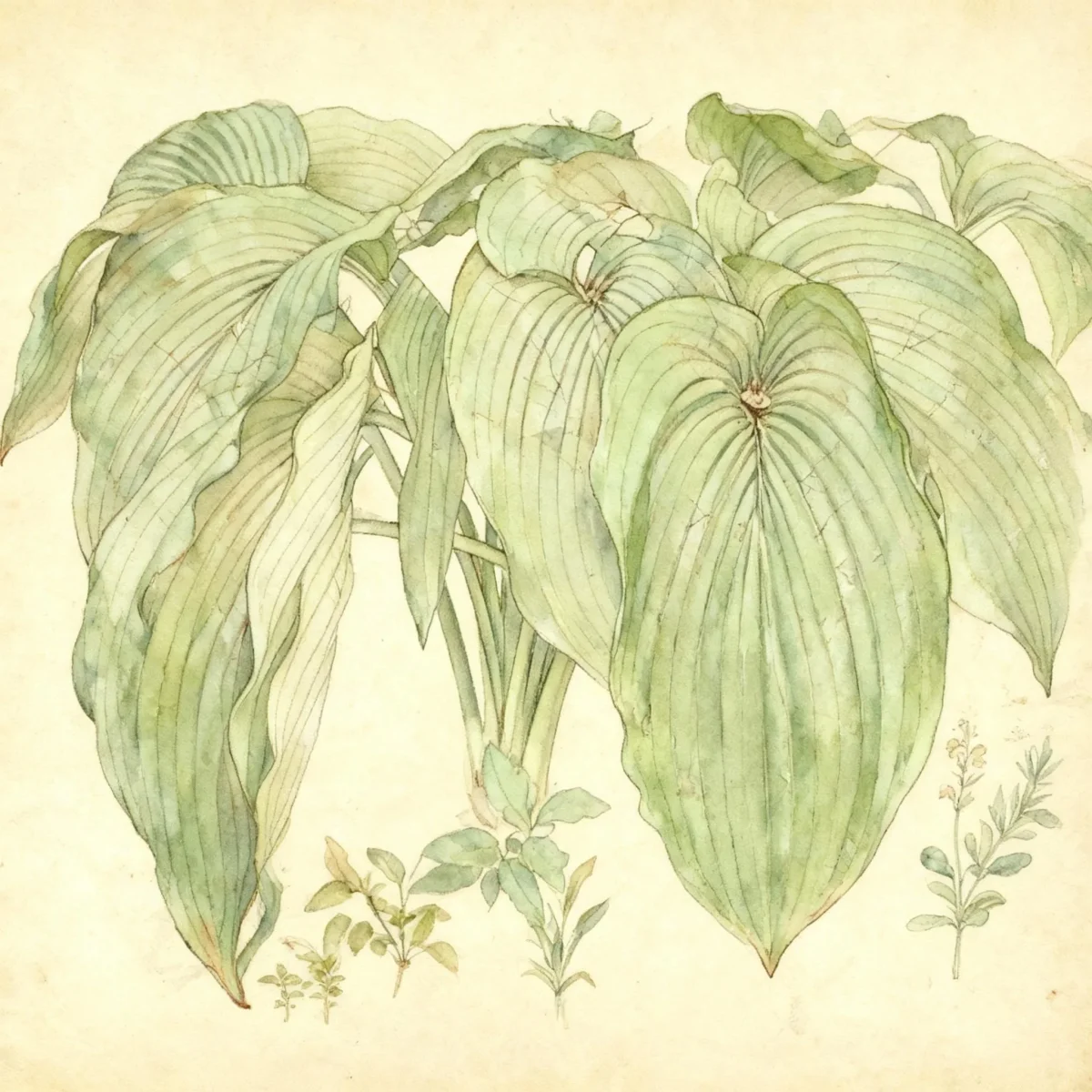
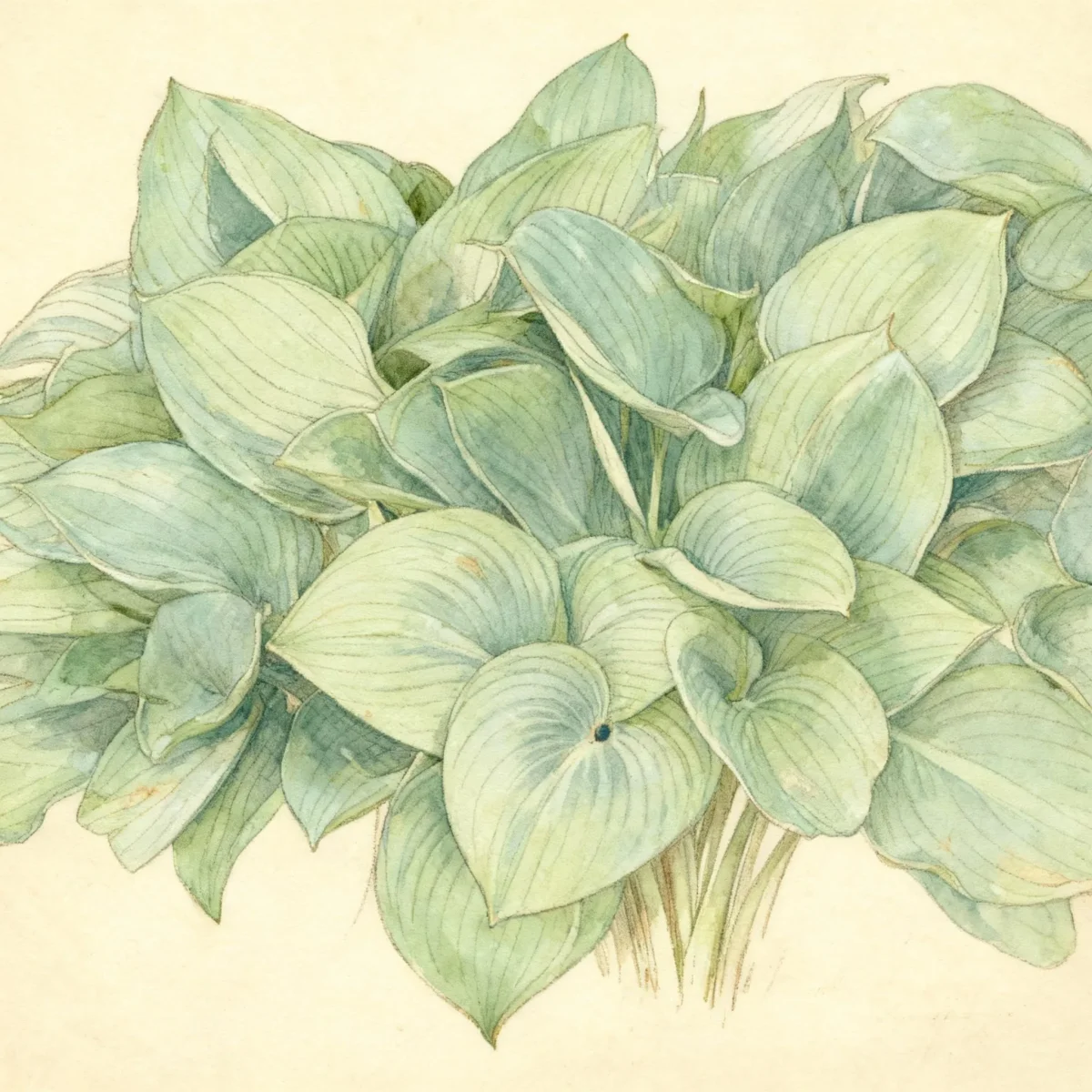
Hosta (Hosta clausa)
Hosta clausa, a unique Hosta from Korea, offers medium-dark green foliage and interesting, unopened purple flower buds. Low maintenance and shade tolerant.
Scroll down to discover growing tips, care requirements, companion plants, and more
Complete Plant Information
Overview
Hosta clausa, commonly known as Hosta, is a fascinating herbaceous perennial native to Korea, valued for its unique foliage and unusual floral structure. Unlike many garden varieties, this species is known for producing purple flower buds that remain closed, eventually dropping without setting fruit, offering a subtle textural interest in late summer. This Hosta establishes a dense, rounded clump, making it excellent for creating clean lines in shaded borders.
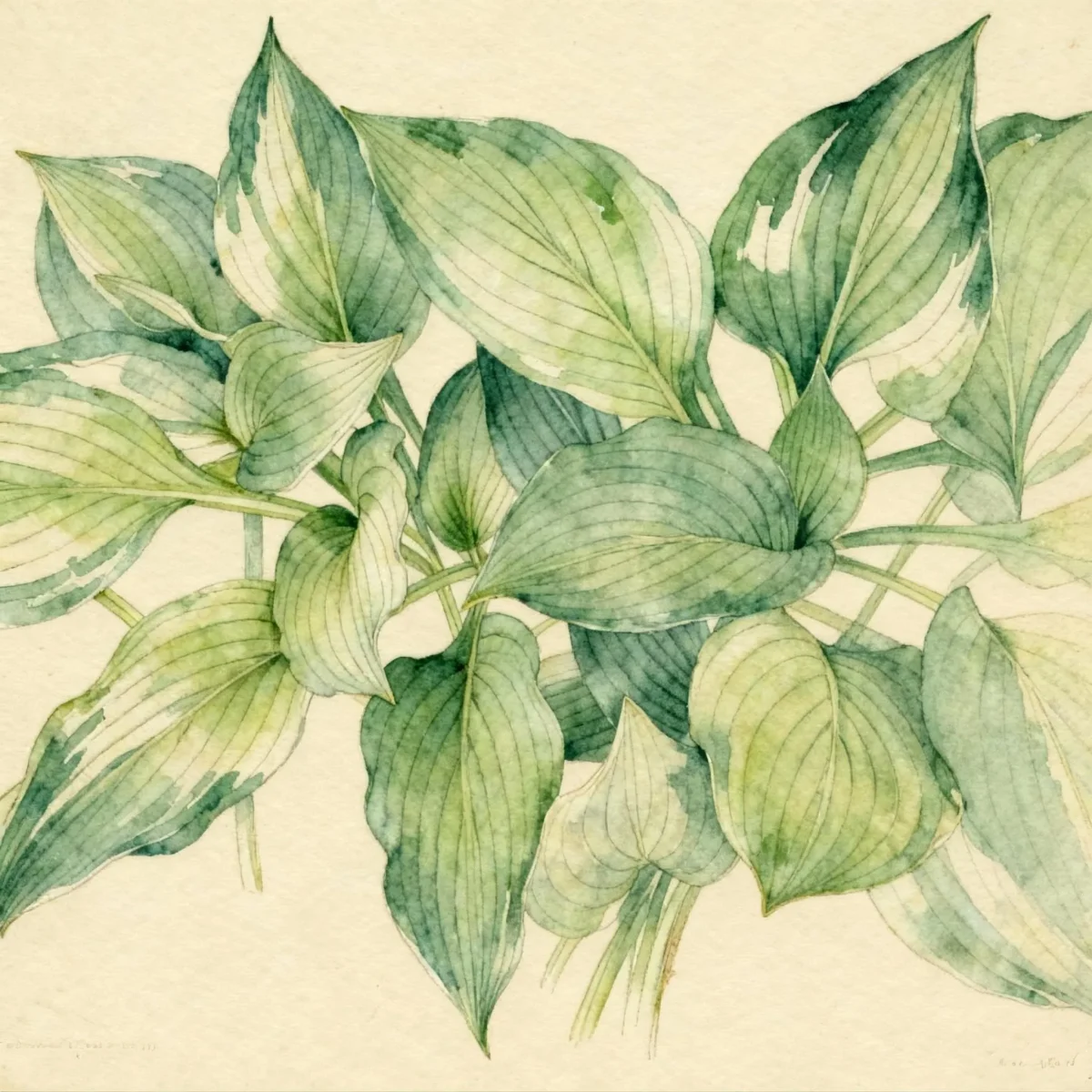
As a relatively low-maintenance plant, Hosta clausa thrives where many flowering plants struggle, preferring the shelter of dappled light or full shade. Its foliage is typically medium to dark green with narrow, elliptic shapes and prominent veins, contributing heavily to its landscape appeal throughout the season. Gardeners appreciate this species for its reliability and suitability for woodland or shaded areas.
The specific epithet clausa refers directly to its closed buds, translating to a unique botanical curiosity within the Hosta genus. Integrating Hosta clausa into garden designs provides guaranteed texture and reliable performance with minimal input once established in suitable conditions.
Fast Facts
- Plant Family: Asparagaceae
- Plant Type: Herbaceous perennial
- Native Range: Korea
- Hardiness Zones: USDA Zones 3-8
- Size at Maturity:
- Height: 1-2.5 ft
- Spread: 1-1.5 ft
- Bloom Time: August to September
- Bloom Description: Purple
- Sun Exposure: Part shade to full shade
- Water Needs: Medium
- Maintenance Level: Low
How to Grow
The ideal time to plant Hosta clausa is during spring or early autumn, ensuring roots have time to establish before temperature extremes. This Hosta prefers average, medium moisture, well-drained soil, though it exhibits surprising tolerance for dryish soils compared to many other hostas. While it performs best in rich, organic soils, it tolerates a wide range of conditions, making it versatile for difficult shady spots.
Maintain medium moisture levels, especially during the active growing season, applying water directly to the soil beneath the leaves to avoid wetting the attractive foliage unnecessarily. Fertilization is often unnecessary if the soil is rich, but consistent moisture is key to preventing leaf scorching or stress. Division of Hosta clausa plants is easily accomplished in early spring before leaves unfurl, or in autumn, helping to manage spread via stolons.
Because this plant spreads by stolons, be prepared for it to colonize spaces over time, which is ideal for groundcover but requires management in smaller borders. If hail is common in your area, situate this Hosta where ambient protection from overhead storms is available, as exposed leaves can be easily damaged.
Landscape Uses
Hostas are foundational elements in any successful shade garden, and Hosta clausa excels in these settings. Its uniform, medium-sized clump is effective when massed together, creating a bold texture in woodland borders or beneath mature trees. Its ability to handle heavy shade and dry soil conditions makes it a reliable choice for those challenging, dark areas of the yard where few plants thrive.
Use this Hosta effectively as an edging plant along shady pathways where its medium height (1 to 2.5 feet) provides a clean visual break without overwhelming smaller foreground plants. Mix it with ferns, Hakonechloa grass, or early-blooming woodland bulbs that fade before the Hosta clausa reaches its full summer stature.
For a naturalistic woodland look, allow Hosta clausa drifts to mingle with native shrubs. Its reliability and low maintenance ensure that these perennial anchors provide deep green consistency season after season.
Standout Features
Flower Qualities
- Showy
Noteworthy Characteristics
Hosta clausa is distinguished by its sterile, triploid nature, which results in purple flower buds that do not open but instead drop off in the fall. The foliage forms a rounded clump, typically reaching 12 inches tall, composed of shiny, narrow-oval, dark green leaves up to 6 inches long with distinct, closely spaced veins. Historically, two stable variants have been noted: H. clausa var. Normalis with open purple flowers and H. clausa var. Stolonifera, which lacks flower scapes entirely.
Tolerances
- Drought
- Heavy Shade
- Dry Soil
- Black Walnut
Potential Problems
Slugs and snails represent the primary challenge for Hosta clausa foliage, seeking out the leaves to chew jagged holes, which can quickly mar the appearance if infestations are ignored. Proactive management is essential; apply slug bait, diatomaceous earth, or use beer traps early in the season. Less frequently, leaf spots or crown rot can occur, usually indicating overwatering or poor drainage, respectively. Otherwise, this tough Hosta is generally pest-free and requires minimal intervention, though hail can cause severe physical damage to leaves on exposed sites.
Frequently Asked Questions
What hardiness zones is Hosta clausa suitable for?
Hosta clausa is reliably hardy across USDA Zones 3 through 8.
How large does Hosta grow?
This species typically reaches a mature height between 1 and 2.5 feet, with a spread of 1 to 1.5 feet.
When does Hosta clausa bloom?
The characteristic flower buds of Hosta clausa appear late in the season, generally blooming (or rather, budding) from August into September, presenting a purple color.
What sun exposure does Hosta clausa need?
This Hosta performs best when situated in part shade to full shade locations.
Conclusion
Hosta clausa offers gardeners a dependable, low-maintenance perennial recognized for its dense, dark green foliage and unique, closed purple buds. Its exceptional tolerance for heavy shade and drier soils makes it an invaluable solution for difficult landscape areas. Before planting, confirm your garden location falls within USDA Zones 3-8 to ensure the best long-term success with this resilient Hosta.
Companion Planting
When selecting companions for Hosta clausa, focus on plants that share similar requirements for shade and medium moisture, while offering contrasting textures or bloom times. Consider pairing it with Spring Ephemerals like Bloodroot (Sanguinaria) or spring-flowering bulbs, which complete their cycle before the hosta fully emerges, ensuring seasonal interest. As the Hosta matures, contrasting its elliptical leaves with fine textures, such as Astilbe or various woodland ferns, enhances the overall visual depth of the shade border.
Design Ideas for Hosta clausa
Due to its stoloniferous habit and uniform appearance, Hosta clausa is excellent for creating a solid green carpet effect under high canopy trees where lawn grasses fail. This density also makes it a superior textural feature when used near hardscape elements like natural stone pathways or shaded retaining walls. Use mass plantings of this medium-sized Hosta rather than single specimens to maximize its impact in borders, remembering to leave adequate space for its natural spread over several seasons.