Toad lily (Tricyrtis macropoda)
Discover Tricyrtis macropoda, the unique Toad lily. Valued for late-season, spotted flowers blooming reliably in shade.
Scroll down to discover growing tips, care requirements, companion plants, and more
Complete Plant Information
Overview
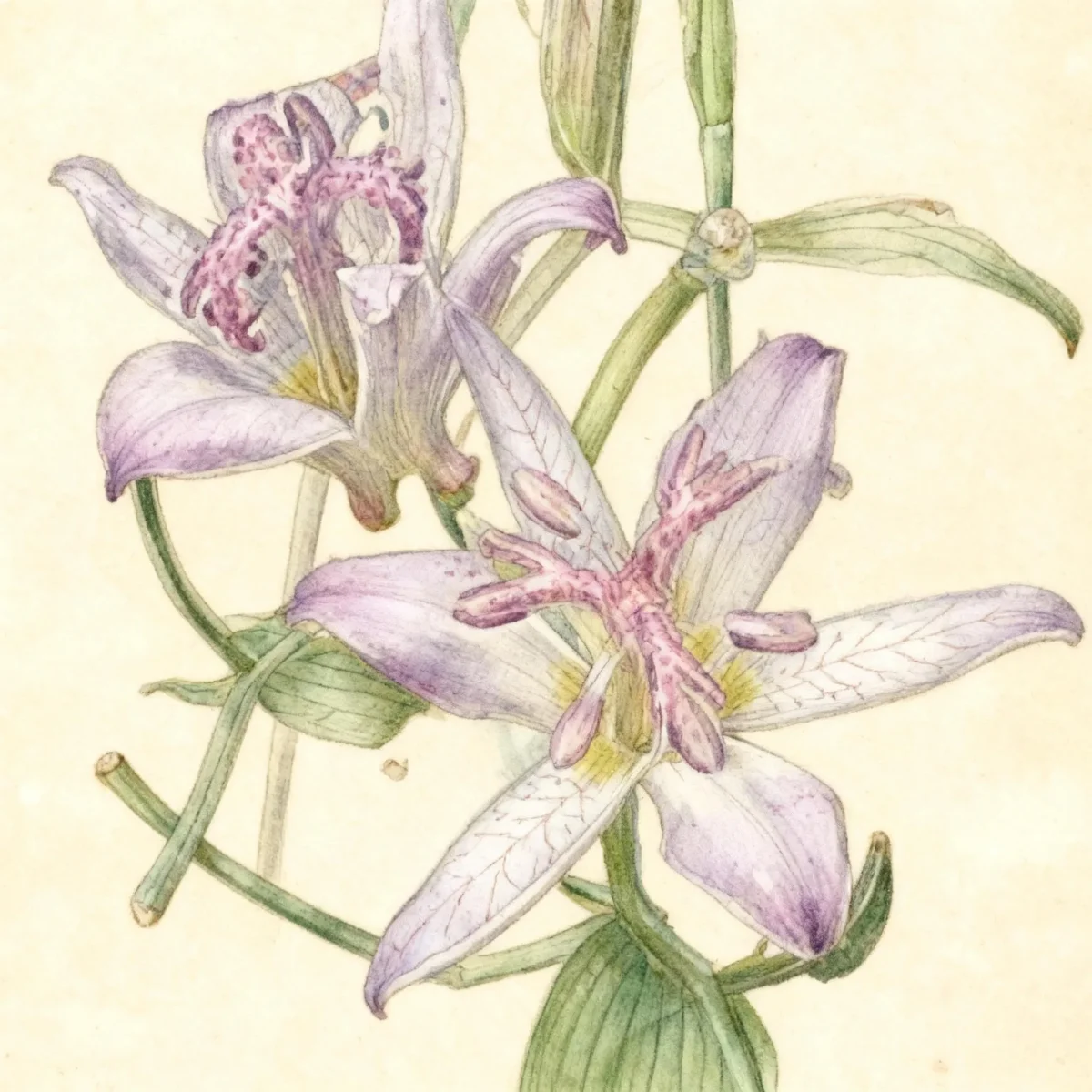
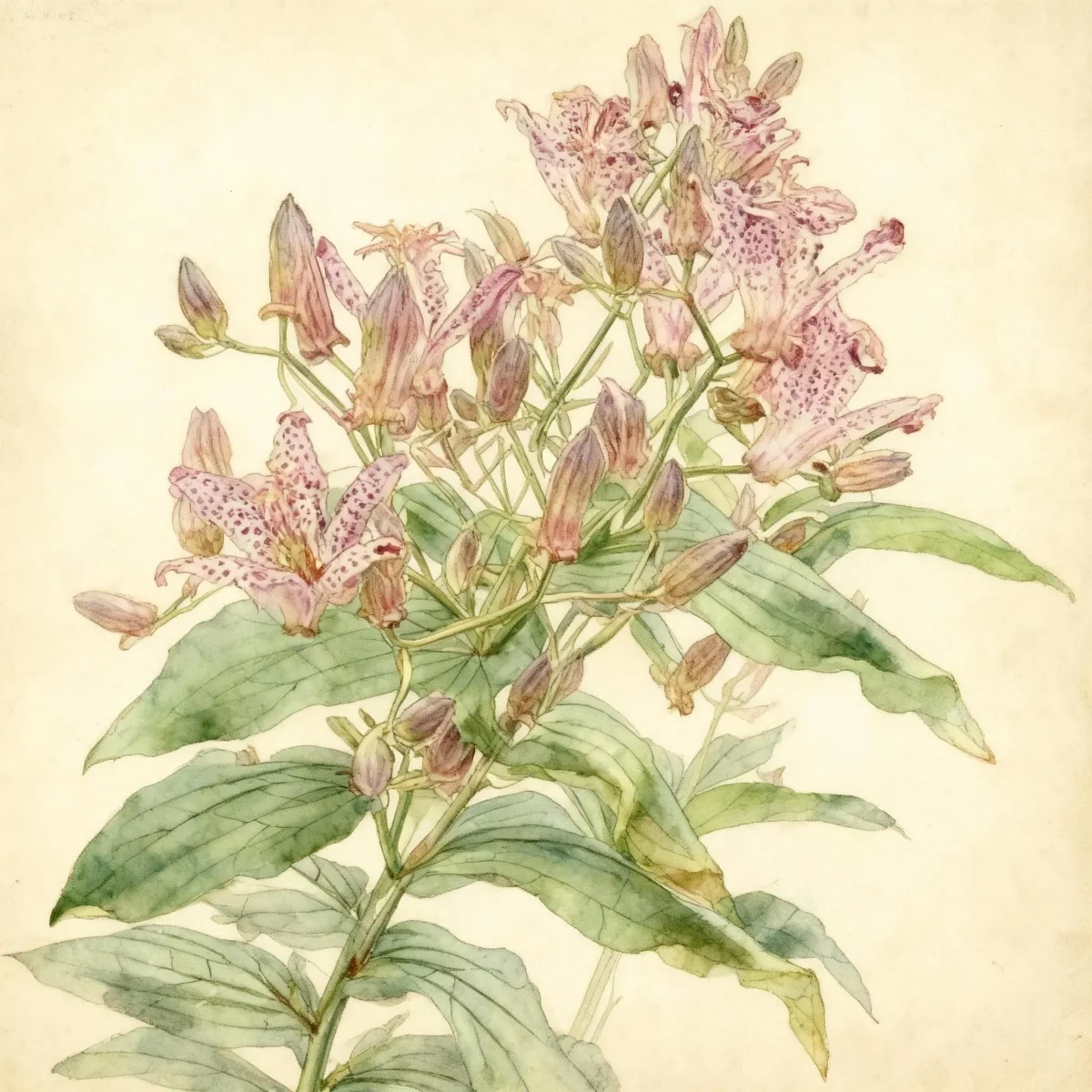
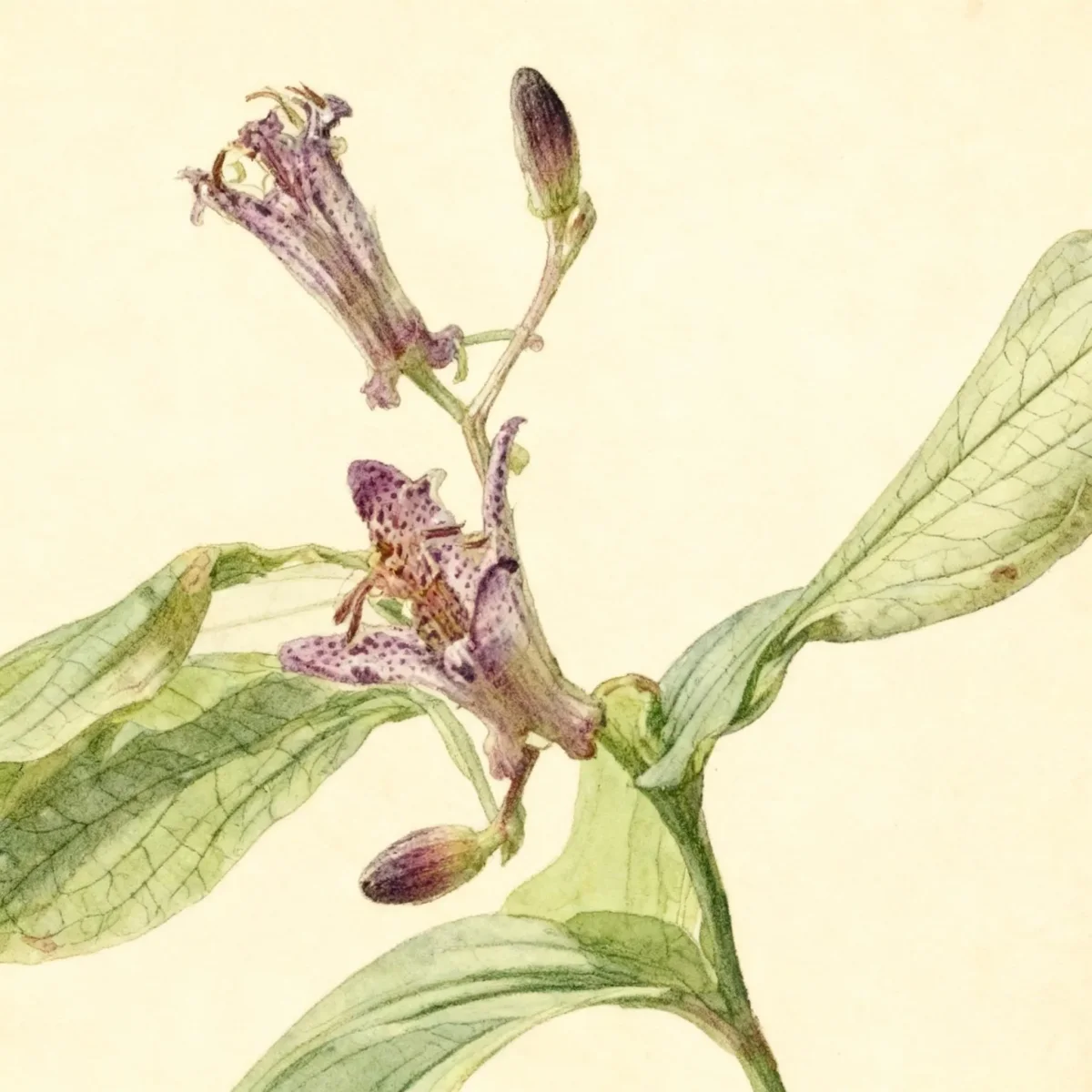
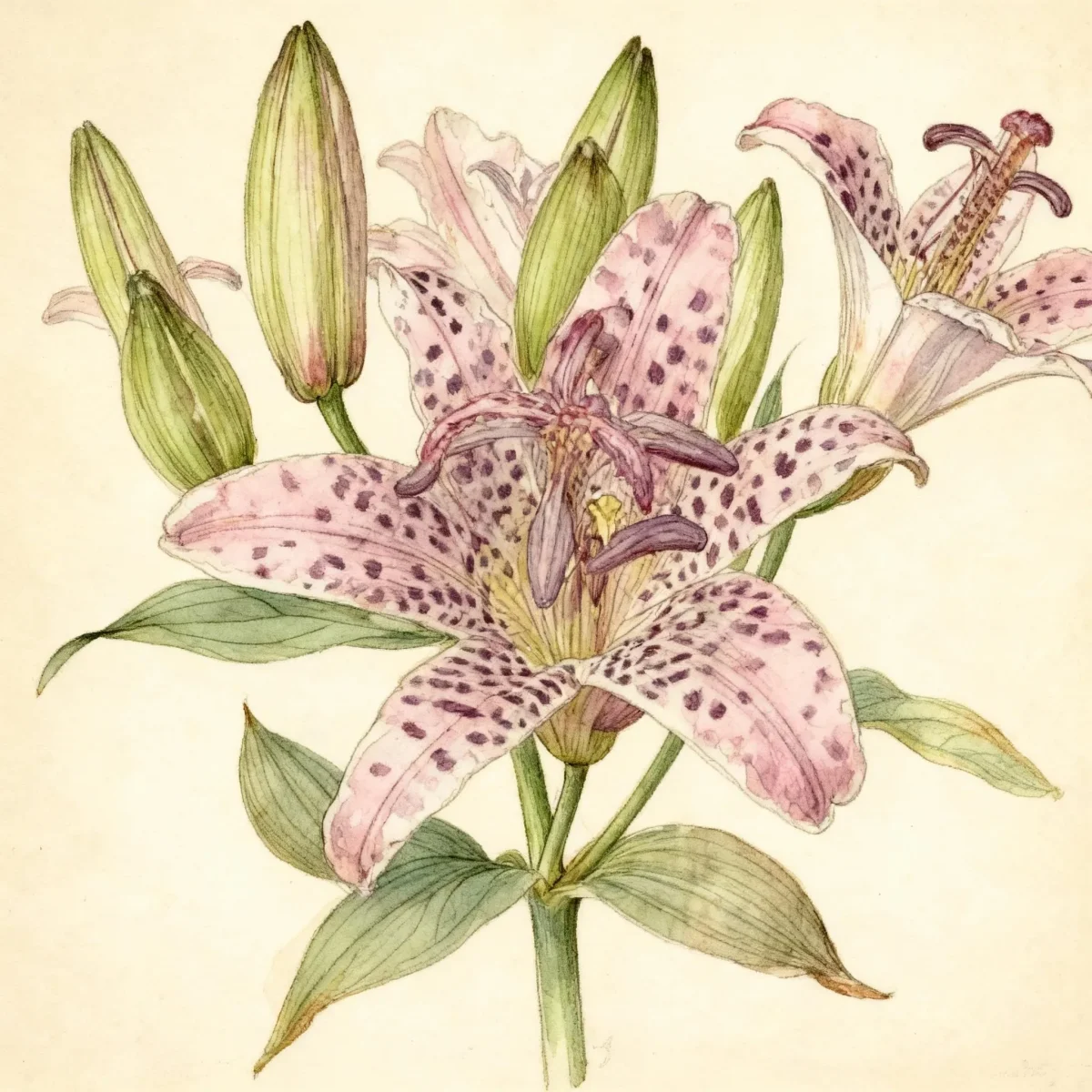
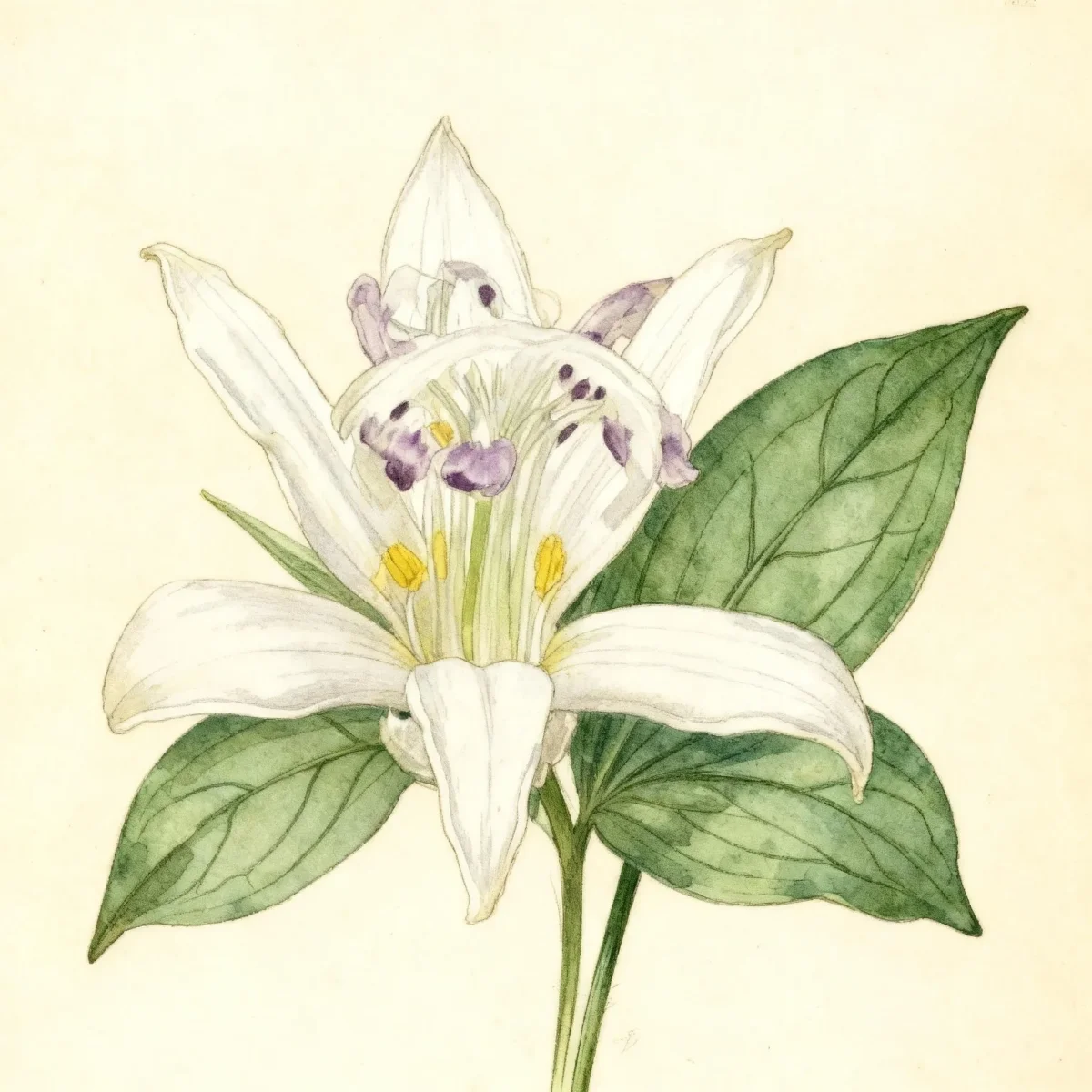
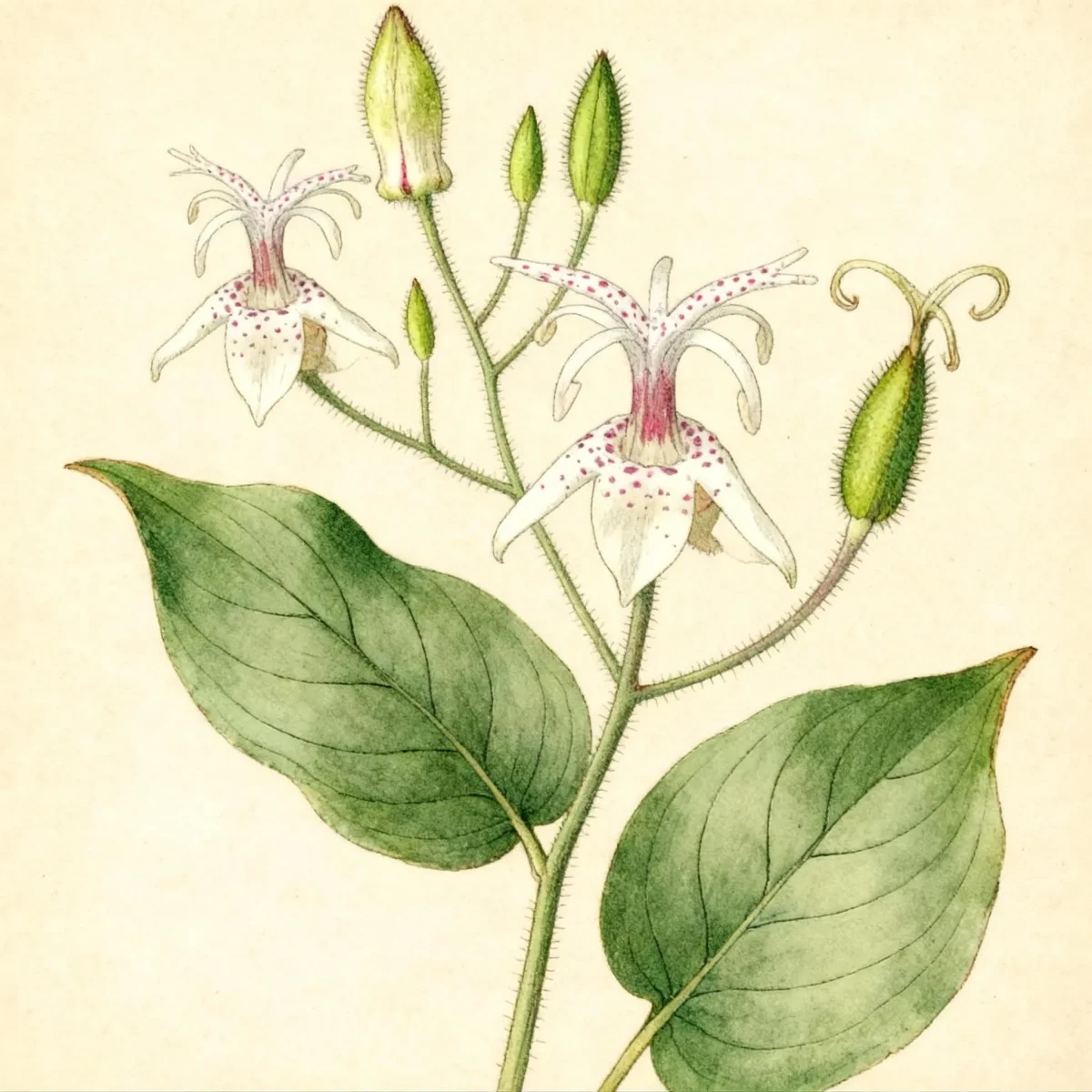
The Toad lily (Tricyrtis macropoda) is a standout herbaceous perennial valued by gardeners for bringing unique structure and bloom color to deep shade areas late in the season. Native to Japan, this plant offers glossy, attractive foliage throughout the summer, providing texture where few other plants thrive. Its true spectacle arrives when the small, white flowers, distinctly marked with heavy purple spotting, emerge in late summer.
Tricyrtis macropoda is prized because it reliably performs well in shady conditions, lighting up the garden when many other perennials have finished flowering. It is incredibly easy to care for, demanding minimal maintenance once established. This rhizomatous perennial will slowly spread, creating a lovely, low-maintenance patch perfect for naturalized settings.
Gardeners appreciate the unique beauty of the Toad lily flowers, which justify siting them where they can be viewed up close. The structure of the bloom lives up to the common name, offering orchid-like complexity in a tough, shade-loving package. Growing Tricyrtis macropoda ensures you have reliable color and interest deep into the fall garden rotation.
Fast Facts
- Plant Family: Liliaceae
- Plant Type: Herbaceous perennial
- Native Range: Japan
- Hardiness Zones: USDA Zones 5-8
- Size at Maturity:
- Height: 2-2.5 ft
- Spread: 1-2 ft
- Bloom Time: August to September
- Bloom Description: White with heavy purple spotting
- Sun Exposure: Part shade to full shade
- Water Needs: Medium to wet
- Maintenance Level: Low
How to Grow
Planting Tricyrtis macropoda is best achieved in spring or fall when the soil is workable. Locate these Toad lilies in consistently moist, well-drained soil enriched with organic matter, ideally slightly acidic humus. They perform admirably in average soil but thrive when the ground retains moisture; never allow the soil to dry out completely, especially during establishment.
Ongoing care for this plant is minimal, fitting its low-maintenance profile. Ensure consistent watering if rainfall is sparse, keeping the soil medium to wet, as specified by their needs. Fertilization is usually unnecessary if the soil is organically rich, but a spring top-dressing of compost will support vigorous growth ideal for Tricyrtis macropoda.
Since this is a rhizomatous plant, it will gradually colonize the area, creating a non-invasive clump that fills in beautifully over time. In terms of seasonal cleanup, simply trim back the old stems in early spring before new growth emerges. This ease of care makes the Toad lily a reliable choice for woodland or shade gardens lacking high-intensity care schedules.
Landscape Uses
Tricyrtis macropoda is perfectly suited for integrating into woodland gardens or deeply shaded borders where its late-season color is a major asset. It performs excellently in sun-dappled shade, offering a sophisticated backdrop of glossy, dark green foliage. Because the flowers are small and highly detailed—white speckled with heavy purple spotting—the plants must be sited where they can be appreciated up close.
Consider using this Tricyrtis macropoda near pathways, along the edges of patios, or under high-branched trees where the canopy filters high sun exposure. While excellent planted amongst hostas and ferns, ensure it is not overshadowed completely, as it still requires sufficient ambient light to produce its signature blooms. Furthermore, the stems provide excellent material for unique cut flower arrangements, bringing that fascinating late-summer detail indoors.
For naturalized areas where you wish to create a subtle, woodland feel, allow the rhizomes of the Toad lily to spread gently. This creates a cohesive ground cover effect that looks natural beneath mature deciduous trees, delivering textural contrast throughout the growing season and glorious flowers in fall.
Standout Features
Flower Qualities
- Showy
- Fragrant
- Good for cut flowers
Noteworthy Characteristics
Tricyrtis macropoda, commonly called toad lily, is native to forests, grassy slopes and rock crevices in southern China. It typically grows to 24-30” tall. Shiny, ovate-elliptic to oblong-lanceolate, dark green leaves (to 4-6” long) are sessile or have short petioles. Leaves generally remain attractive throughout the growing season. Small, lily-like, white to pale lavender flowers (1” long) with heavy purple spotting bloom in branched terminal clusters (cymes) primarily at the stem ends in late summer to early fall. The genus name comes from Greek words referring to the swollen bases of the outer petals.
Tolerances
- Heavy Shade
Potential Problems
This plant generally experiences no serious insect or disease problems, making it very dependable. The main pests to watch for are slugs and snails, which occasionally find the substantial green foliage appealing. To manage these mollusks, apply iron phosphate baits around the base of the plants, or hand-pick them, particularly in damp spring and fall weather when they are most active.
Frequently Asked Questions
What hardiness zones is Tricyrtis macropoda suitable for?
This reliable Toad lily is suitable for USDA Hardiness Zones 5 through 8. Ensure suitable winter protection if planting near the colder edges of its range.
How large does Tricyrtis macropoda grow?
This perennial typically reaches a mature height between 2 and 2.5 feet tall, with a modest spread ranging from 1 to 2 feet wide.
When does Toad lily bloom?
The Toad lily flowers in the later part of the growing season, typically blooming from August into September with distinctive white flowers heavily marked in purple.
What sun exposure does Tricyrtis macropoda need?
Tricyrtis macropoda requires part shade to full shade environments to display its best foliage and flower production.
Conclusion
The Tricyrtis macropoda Toad lily offers gardeners a rare combination of reliable shade tolerance, attractive foliage, and spectacular bloom time in late summer and fall. Its low maintenance needs and unique, spotted flowers secure its place in thoughtful landscape designs focusing on woodland or shade gardens. Before planting, confirm your garden conditions match the need for medium to wet soil and plan to site your Tricyrtis macropoda where its intricate blossoms can be truly appreciated.
Companion Planting
When selecting neighbors for the Toad lily, prioritize plants that share similar requirements for rich, moist, shady conditions. Hostas are excellent companions, offering varied leaf shapes and colors that contrast nicely with the glossy, upright leaves of Tricyrtis macropoda. Consider ferns, such as Japanese Painted Ferns or Wood Ferns, to enhance the woodland aesthetic. Other late-season shade bloomers, like certain astilbes or Tiarella (Foamflower), will ensure continuous interest in the border long before your Toad lilies begin to flower.
Seasonal Care Calendar
Spring is the primary time for preparing the soil and waking up your Toad lily. Apply a fresh layer of compost around the base to replenish organic matter, which is crucial for maintaining moisture retention. Keep soil consistently moist as new shoots emerge. Summer care centers mainly on deep, slow watering during dry spells; do not let the soil approach dryness. In late fall, after the foliage has died back following the bloom period, you can prune the spent stems down to the ground to tidy the area for winter, readying the rhizomes for the next growing season.