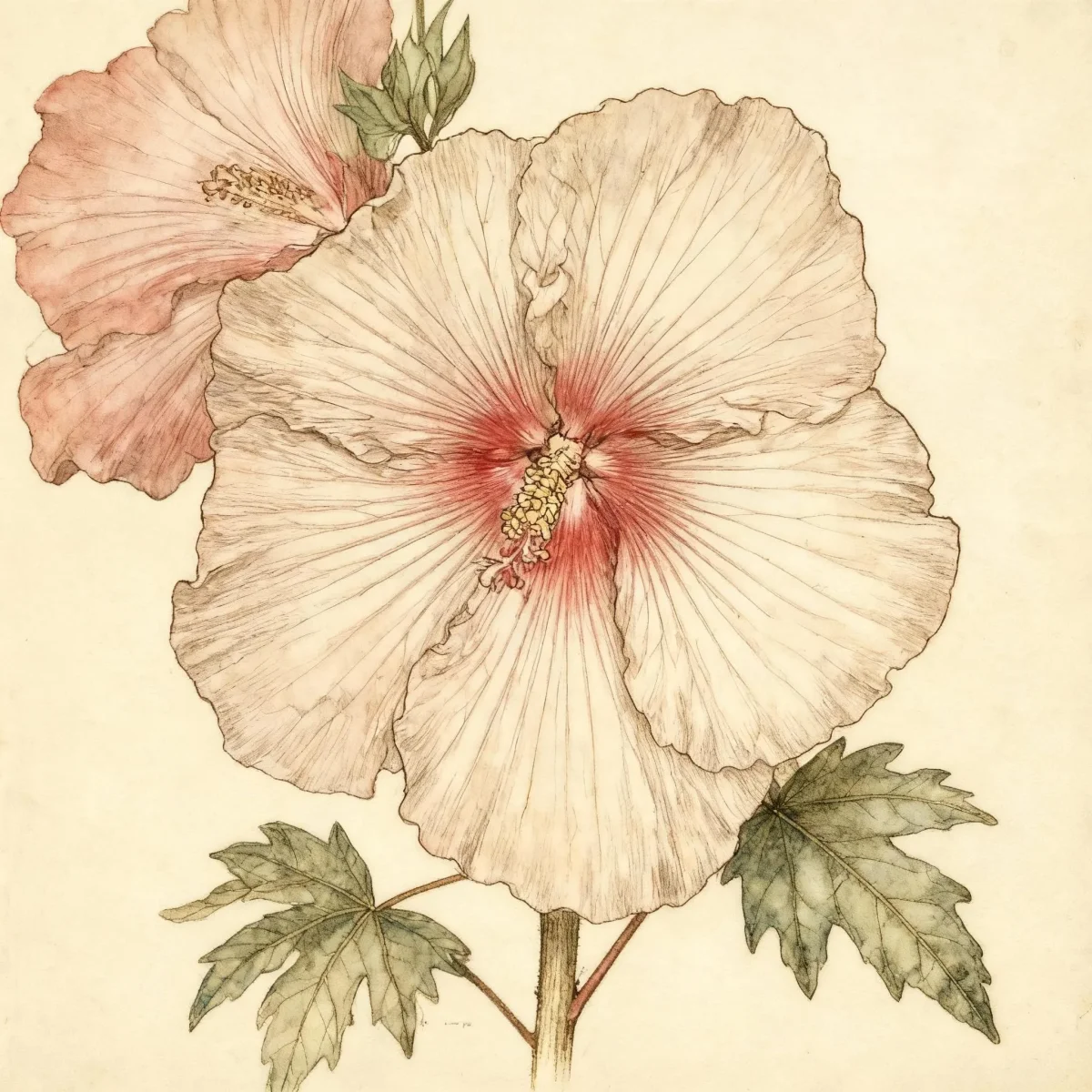
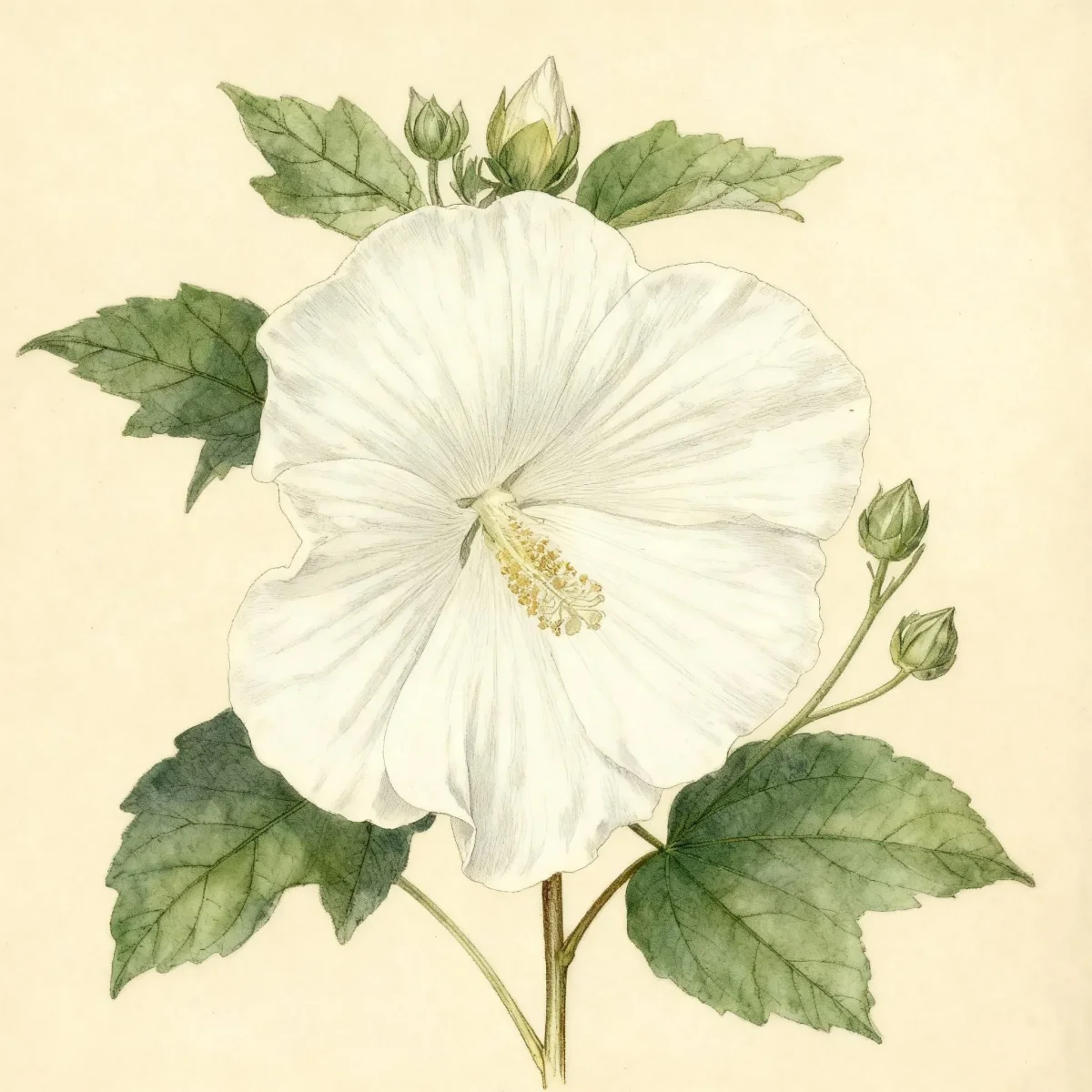
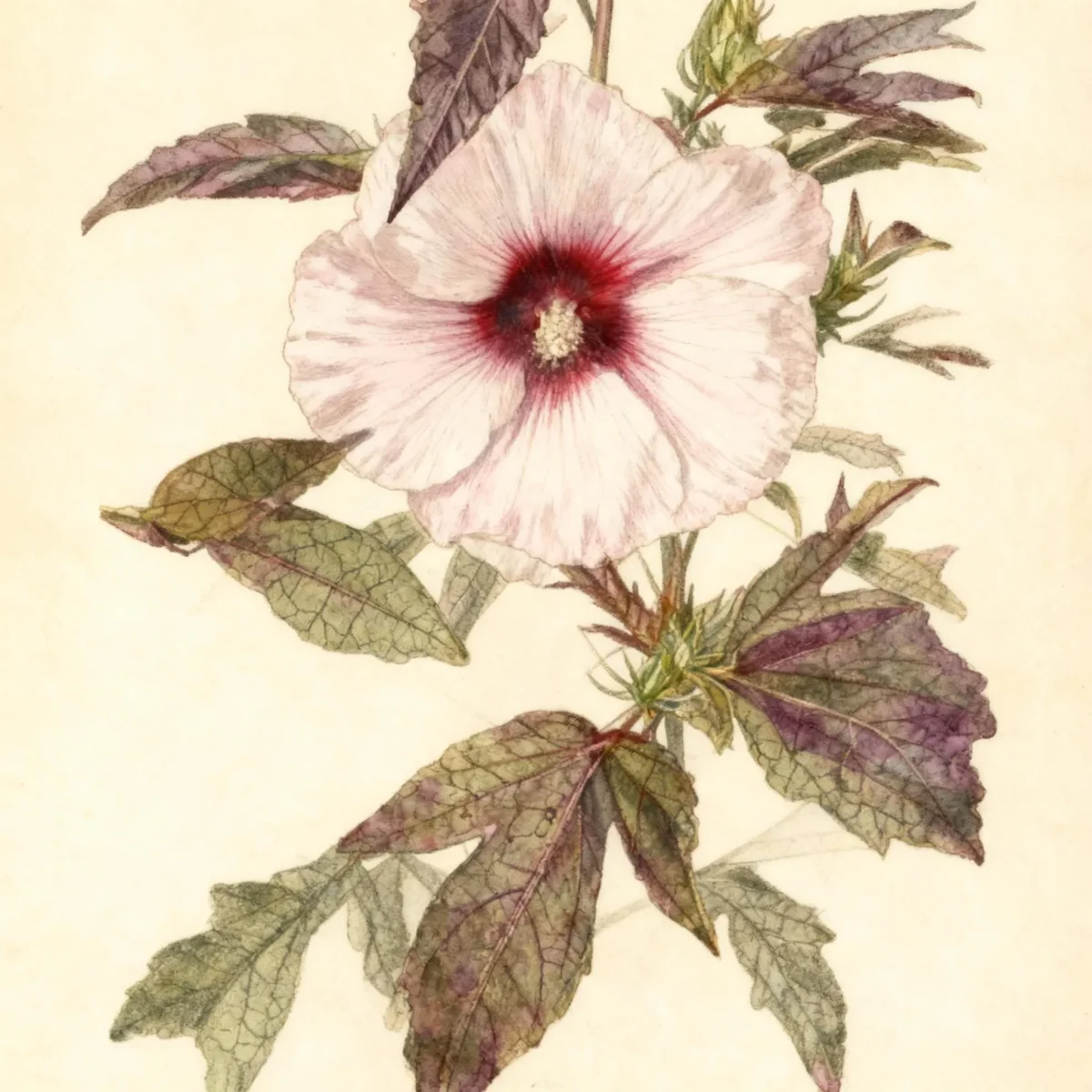
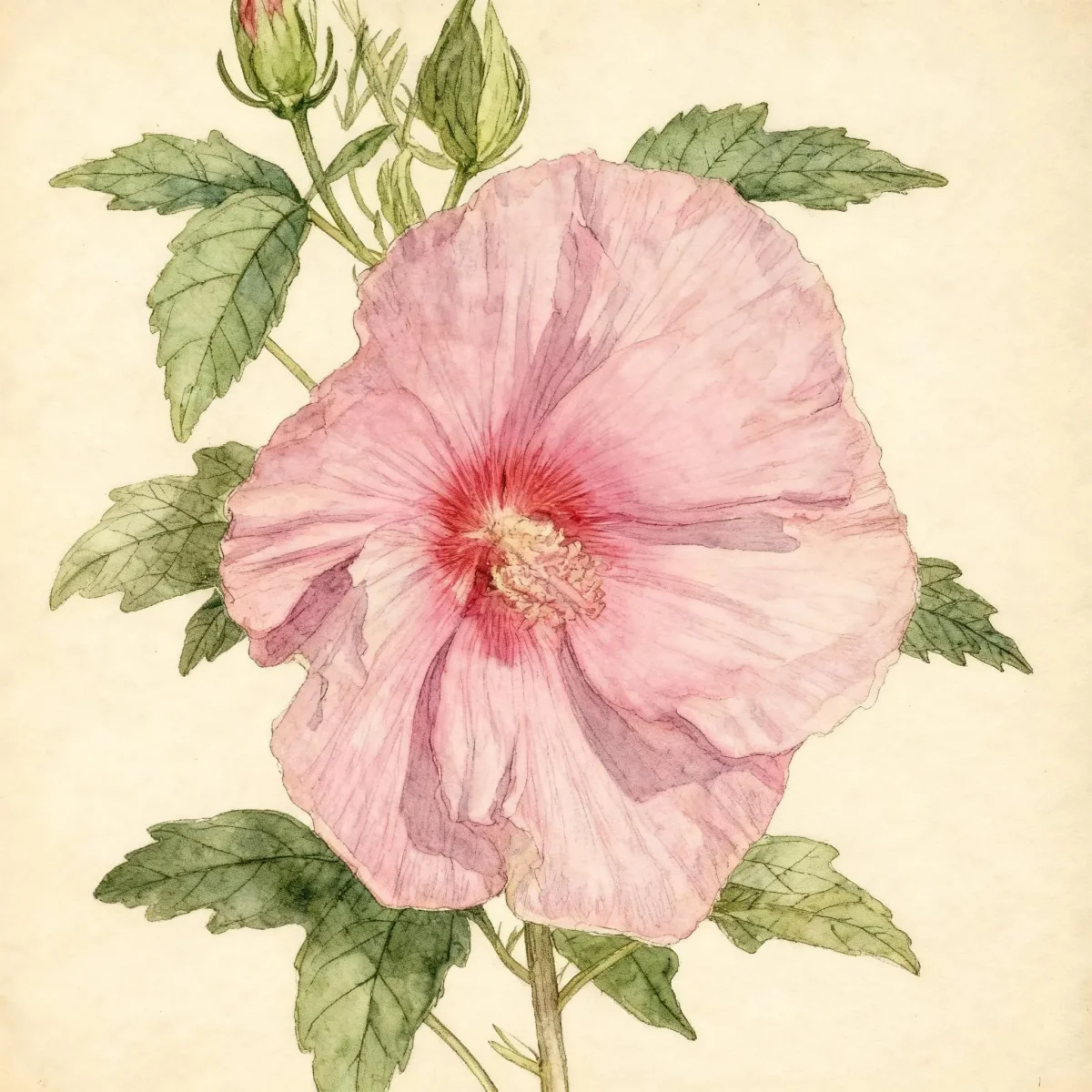
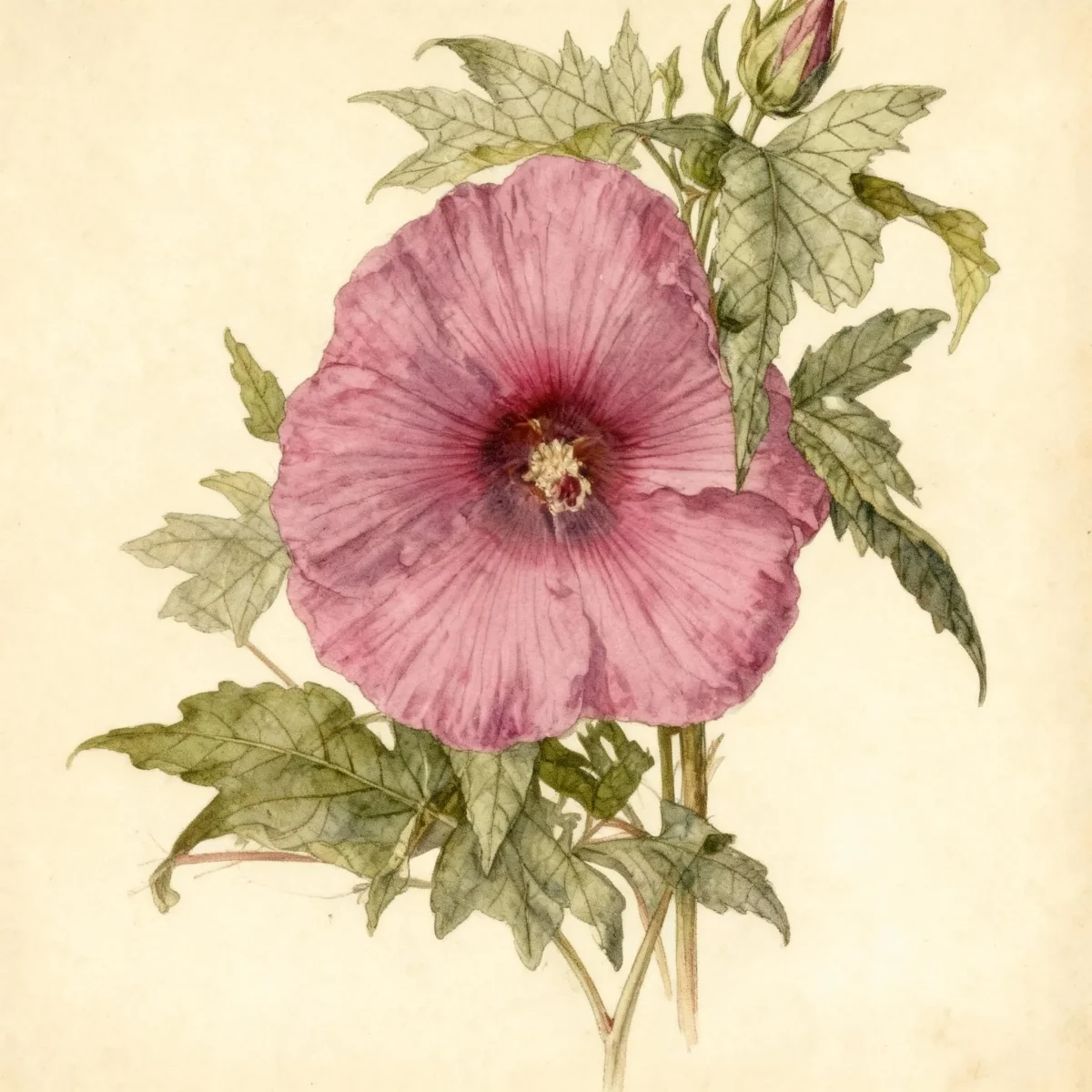
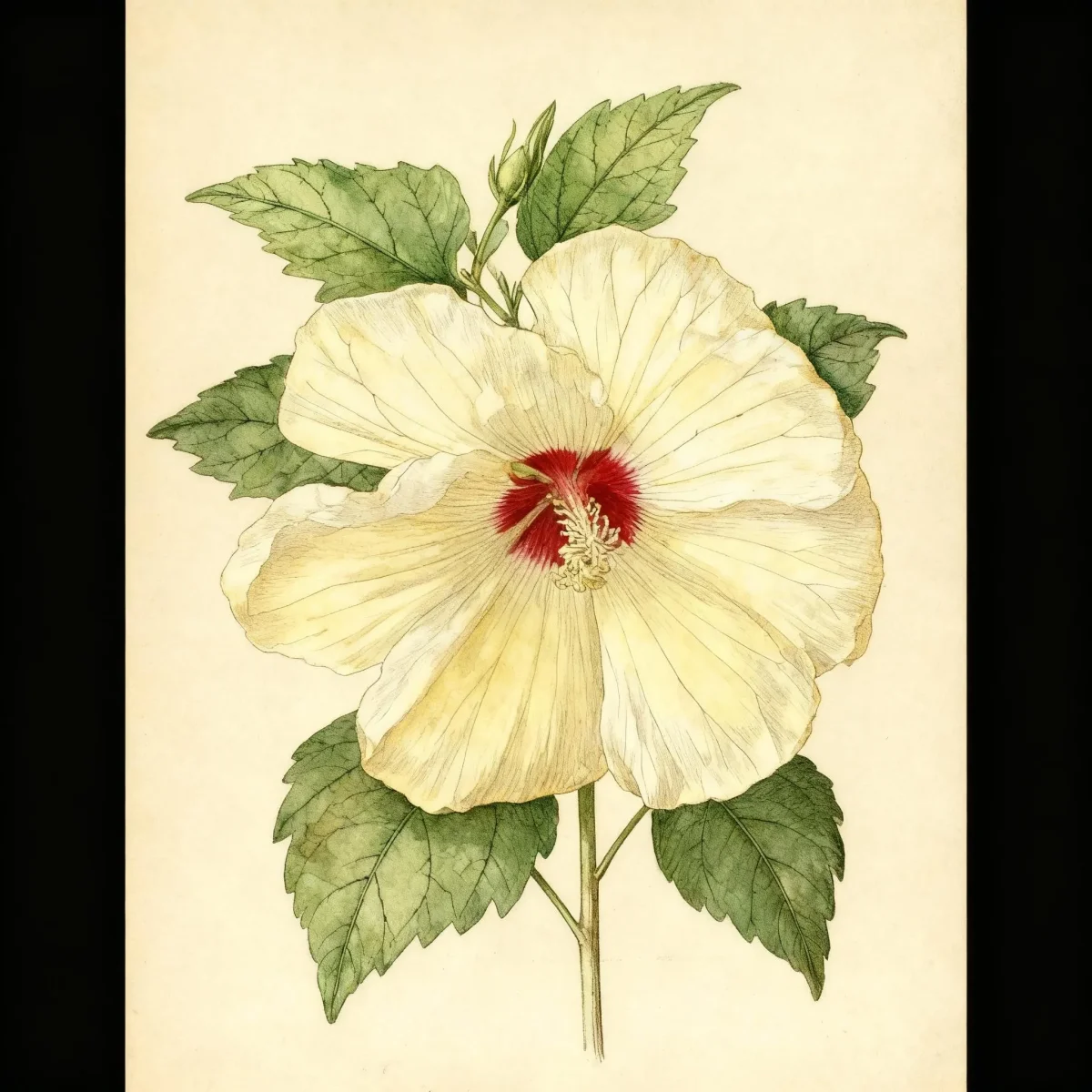
Swamp mallow (Hibiscus moscheutos)
Discover Swamp mallow (Hibiscus moscheutos), a hardy perennial with showy, dinner-plate blooms perfect for wet garden spots.
Scroll down to discover growing tips, care requirements, companion plants, and more
Complete Plant Information
Overview
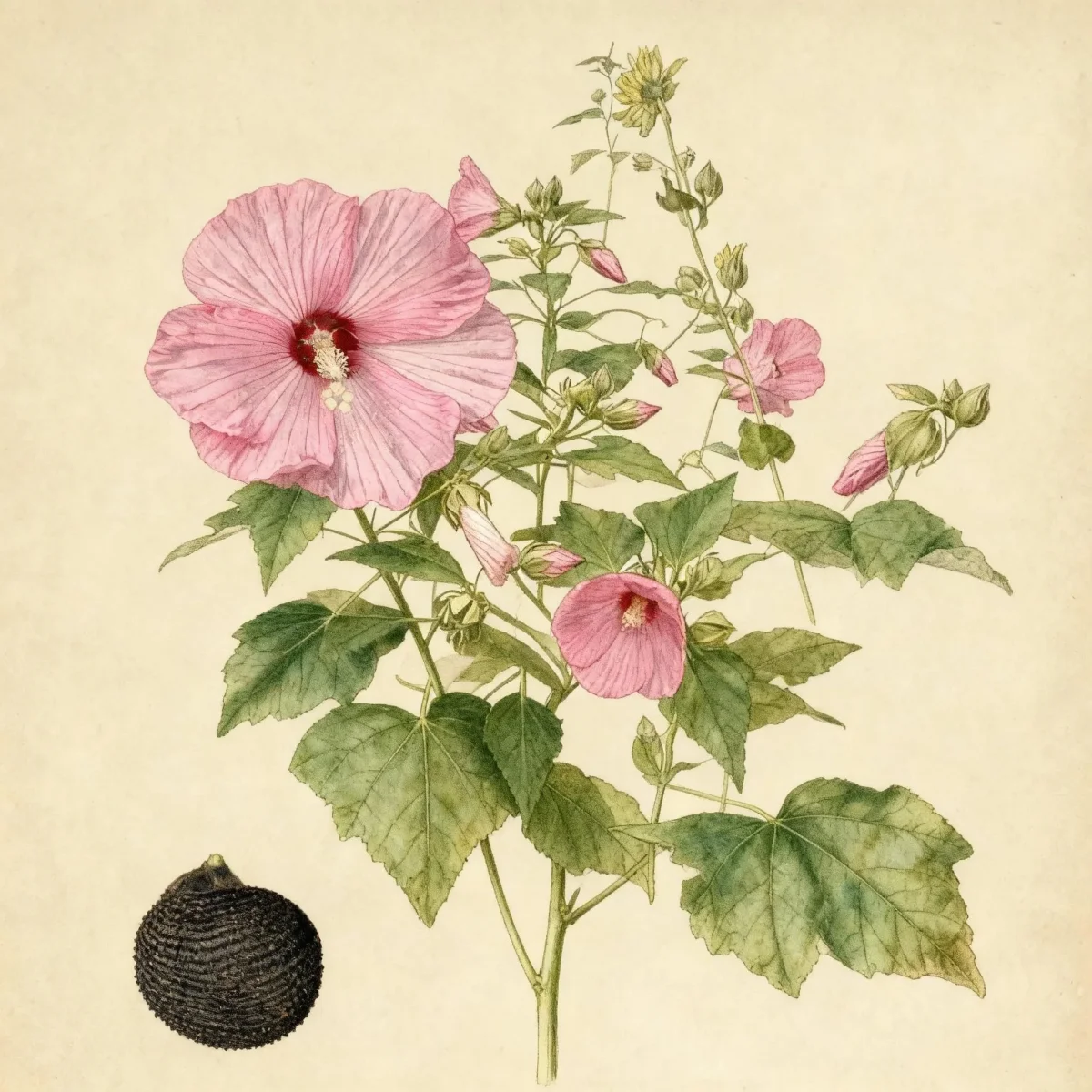
The Swamp mallow is a magnificent, though often underestimated, native perennial celebrated for producing some of the largest flowers found on any winter-hardy perennial. Hibiscus moscheutos, or hardy hibiscus as it is sometimes known, offers spectacular blooms, often reaching dinner-plate size, providing high summer drama in the landscape. This sturdy plant establishes deep roots, thriving in moist environments where many garden species falter.
Native to the damp edges of marshes, swamps, and floodplains across eastern North America, this plant brings reliable color from mid-summer well into early autumn. Its structure is robust yet slightly woody at the base, developing into a full, rounded form that performs wonderfully as a specimen plant or an informal screen. Gardeners appreciate the low maintenance requirements of Hibiscus moscheutos once established in its preferred wet conditions.
The expansive flowers of Swamp mallow are a major draw, attracting numerous pollinators while standing tall throughout the sweltering summer months. Providing a vertical element to rain gardens and moist borders, this species is a true workhorse of the boggy and consistently damp landscape areas.
Fast Facts
- Plant Family: Malvaceae
- Plant Type: Herbaceous perennial
- Native Range: Southern and eastern North America
- Hardiness Zones: USDA Zones 5-9
- Size at Maturity:
- Height: 3-7 ft
- Spread: 2-4 ft
- Bloom Time: July to September
- Bloom Description: White to pink
- Sun Exposure: Full sun
- Water Needs: Medium to wet
- Maintenance Level: Low
How to Grow
Planting Hibiscus moscheutos is best achieved in spring after the threat of frost has passed, giving the slow-to-emerge stems time to establish before intense summer heat. Choose a location that receives full sun exposure, although light shade is tolerated; full sun ensures the strongest stems and best flowering potential. While it performs best in moist, organically rich soils, this hardy hibiscus surprisingly adapts well to average garden soils, provided they do not completely dry out.
Regular deep watering is critical to prevent leaf scorch, especially during prolonged dry spells. This plant loves moisture, making it ideal for placement near ponds or in rain gardens. Fertilize regularly throughout the growing season to support the heavy blooming schedule of Swamp mallow. To encourage a bushier habit rather than a leggy one, actively pinch back the growing tips when the plant reaches 8 inches and again at 12 inches tall.
In late autumn, after the foliage has died back, cut the stems down to merely 3-4 inches above the ground. Be patient in early spring, as new growth on Hibiscus moscheutos can be quite slow to appear, though it accelerates rapidly once sprouts emerge. Protecting the established plant from strong winds will help prevent premature stem damage or wind burn on the large leaves.
Landscape Uses
The Swamp mallow excels in locations demanding consistent moisture, making it a cornerstone for rain garden designs. Its height (up to 7 feet) and substantial presence also make it highly effective when used as a temporary summer screen or informal hedge around utility areas. Consider using Hibiscus moscheutos along the edges of streams, ponds, or in low landscape depressions where water tends to accumulate.
For a stunning vertical accent, feature this hardy hibiscus as a specimen plant. It pairs well visually with moisture-loving companions like irises, cardinal flower (Lobelia cardinalis), or reliable grasses that can handle wet feet. Given its robust growth, it can also be accommodated in very large containers, though it will require significantly more consistent watering to maintain performance near its native swamp conditions.
Standout Features
Flower Qualities
- Showy
Noteworthy Characteristics
Hibiscus moscheutos, commonly known as hardy hibiscus or swamp rose mallow, is a vigorous, sturdy, rounded, somewhat shrubby, hairy-stemmed, woody-based perennial of the mallow family. It typically grows to 3-7’ tall and to 2-4’ wide and is native to wet spots across southeastern North America. The plant produces showy, dinner plate-sized flowers with contrasting dark crimson bases, which are highly attractive to butterflies and other pollinators throughout its long blooming season.
Tolerances
- Wet Soil
Potential Problems
While generally tough, Swamp mallow can occasionally face fungal issues such as leaf spots, blights, rusts, or canker, particularly if air circulation is poor or humidity is overwhelming. Ensure ample sunlight and space between plants to mitigate these risks. Pest pressure often includes damage from Japanese beetles, which can rapidly defoliate the plant if not managed promptly, and occasional infestations from whiteflies, aphids, or scale insects. The most common injury is leaf scorch, which occurs if the soil is allowed to dry out completely; consistent moisture is the best preventative defense against both pests and leaf burn.
Frequently Asked Questions
What hardiness zones is Swamp mallow suitable for?
Hibiscus moscheutos is winter hardy in USDA Zones 5 through 9.
How large does Swamp mallow grow?
This perennial typically reaches a mature height between 3 and 7 feet tall and spreads 2 to 4 feet wide.
What sun exposure does Swamp mallow need?
Hibiscus moscheutos requires full sun for the strongest stems and the best display of its enormous flowers.
When does Swamp mallow bloom?
Swamp mallow blooms profusely from July through September, displaying striking white to pink flowers.
Conclusion
The imposing size and massive, tropical-looking flowers make Swamp mallow an indispensable feature for deep summer color, especially in moist areas of the garden. Planting Hibiscus moscheutos where it receives adequate moisture and lots of sun guarantees spectacular results with minimal ongoing effort. Check your location’s hardiness zone compatibility now, and plan to plant in the spring to enjoy this native giant next summer.
Wildlife Benefits
The enormous, nectar-rich blooms of Hibiscus moscheutos are significant attractors for foraging pollinators during the late summer glut. Butterflies, including Swallowtails and large Fritillaries, are frequently observed visiting the prominent staminal columns. While individual flowers only last a day or two, continuous opening ensures a reliable, long-lasting food source from July through September. Planting this native species directly supports local pollinator populations throughout these high-heat months.
Companion Planting for Moist Borders
When incorporating Swamp mallow into a border, select companions that share its preference for medium to wet soil conditions. Groups of native Blue Flag Iris (Iris versicolor) or Marsh Marigold (Caltha palustris) provide complementary early-season interest before the hibiscus takes center stage. Taller foliage plants, such as certain types of native Joe Pye Weed (Eutrochium species), can provide a softer backdrop that complements the large structure of Hibiscus moscheutos without competing heavily for light.