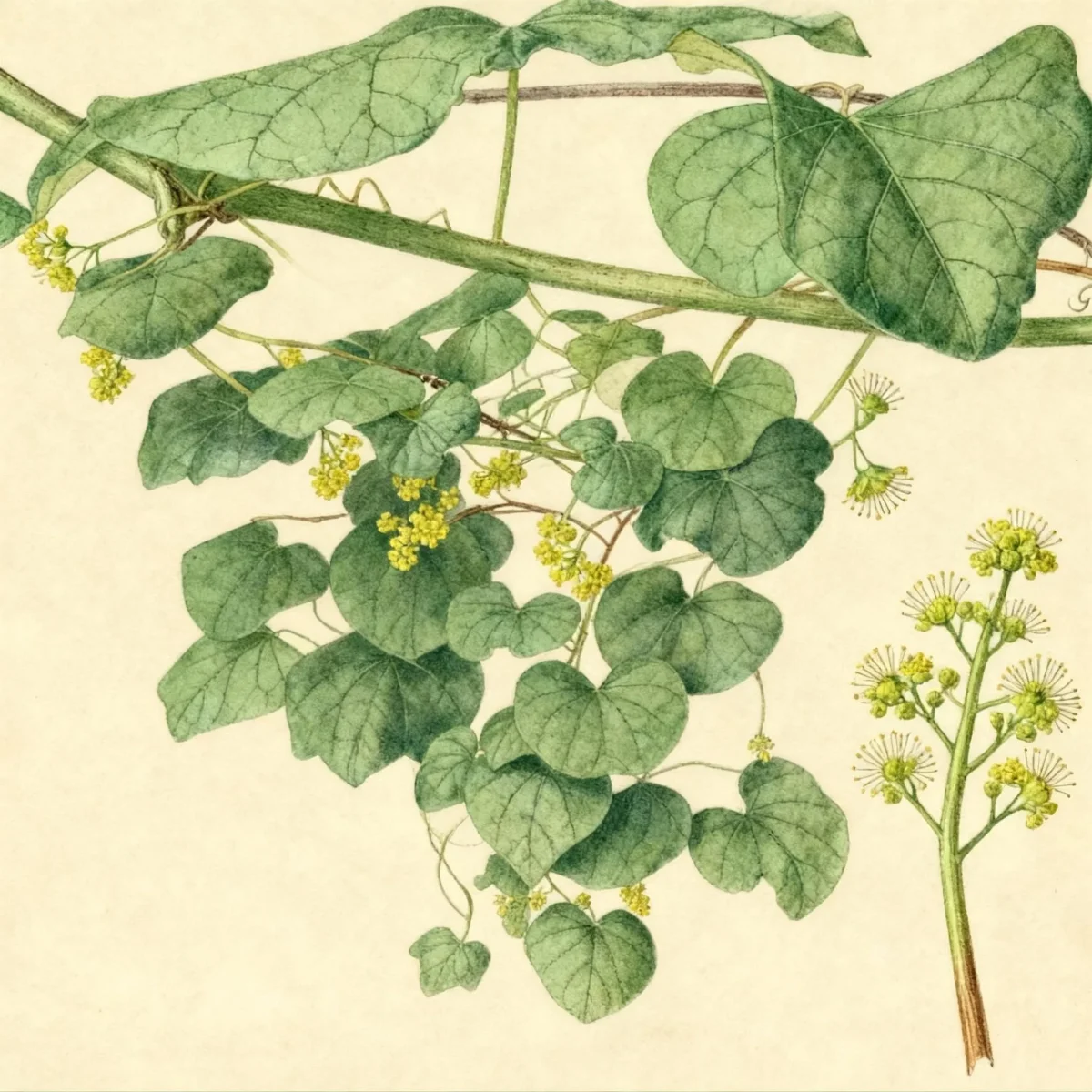
Common moonseed (Menispermum canadense)
Menispermum canadense, or Common moonseed, is a dioecious woody vine native to Eastern North America, ideal for naturalized areas.
Scroll down to discover growing tips, care requirements, companion plants, and more
Complete Plant Information
Overview
Common moonseed (Menispermum canadense) is a vigorous, native woody vine valued for its quick coverage and interesting autumn fruits. As a scrambling, twining plant, it covers supports or spreads along the ground effectively where no support is available, forming dense ground cover. This species is dioecious, meaning separate male and female plants are required for the desirable dark, moonseed-bearing fruits to develop on female specimens in the fall.
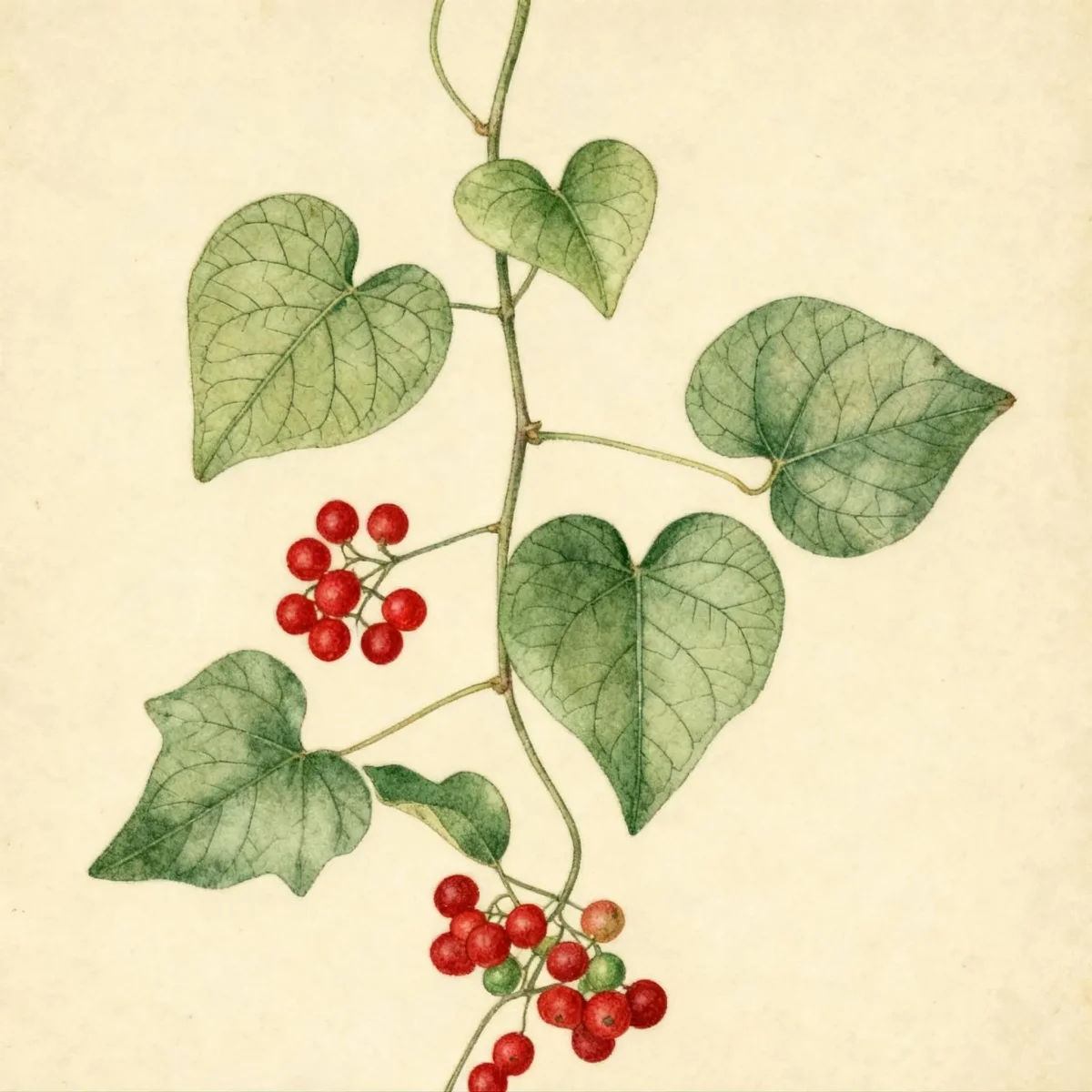
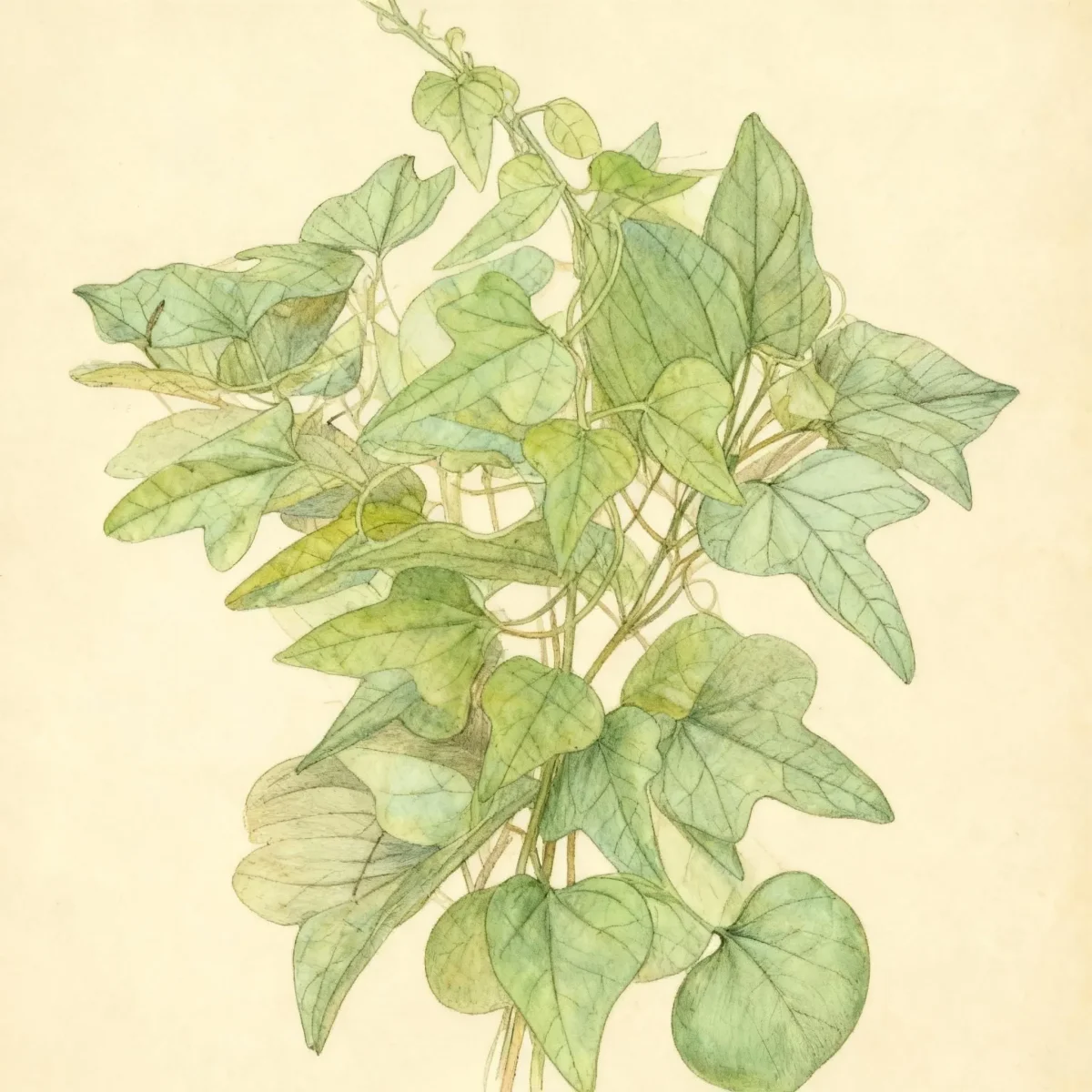
The distinctive foliage, featuring rounded to shallowly-lobed peltate leaves, adds texture to woodland edges and naturalized settings. Gardeners should recognize the growth habit of Menispermum canadense as vigorous, often reaching heights of 8 to 20 feet when climbing. While generally hardy and resilient, proper identification is crucial, as its poisonous fruits should never be confused with edible wild grapes.
For cultivation, Common moonseed thrives in well-drained soil under full sun or dappled shade, making it versatile for varied light conditions across its native Eastern North American range. Its ability to function as both a screen or a tough ground cover makes Menispermum canadense a highly functional native addition, provided site conditions match its medium water needs.
Fast Facts
- Plant Family: Menispermaceae
- Plant Type: Vine
- Native Range: Eastern North America
- Hardiness Zones: USDA Zones 5-8
- Size at Maturity:
- Height: 8-20 ft
- Spread: 3-6 ft
- Bloom Time: May to July
- Bloom Description: Greenish-white
- Sun Exposure: Full sun to part shade
- Water Needs: Medium
- Maintenance Level: Medium
How to Grow
The best time to establish Menispermum canadense is when planting bare-root stock or container plants in spring or fall. This vine prefers sandy, moderately fertile, medium-moisture soil that drains well. While it tolerates full sun, especially in cooler northern areas, avoid intense, hot summer sun exposure, as dappled light conditions often suit it best.
Maintenance for Common moonseed is generally medium. Plants spread via rhizomes, so diligent monitoring may be required if you wish to restrict its area. Propagation is easily achieved through the division of these rhizomes in the spring, or by sowing seeds, though remember seeds require both male and female plants nearby for fruit production.
Since the vine is dioecious, ensure you select both male and female plants if seed production is desired. Water newly established plants to maintain medium moisture levels, settling into its natural rhythm once established. Pruning is mainly required for guiding the twining stems or cutting back excessive spread along the ground.
Landscape Uses
Common moonseed excels where a vigorous vertical element or dense ground cover is needed. It is typically grown as a twining woody vine, carefully trained onto a support structure like a sturdy arbor, trellis, or allowed to weave naturally through supporting shrubs or lower tree branches. This provides excellent screening or can cover unsightly utility boxes or fences with dense foliage.
Alternatively, where no vertical support is present, Menispermum canadense will spread along the ground, forming an effective, dense ground cover rising about 12 inches high. This characteristic makes it useful in naturalized areas, woodland plantings, or along banks and slopes to help prevent soil erosion. Its robust nature means it often blends seamlessly into native landscapes.
For cottage gardens or woodland settings where a native touch is desired, allow this vine to ramble. While ornamental uses are secondary to its functional coverage, the contrast between the bright green leaves above and the paler, downy underside offers textural interest throughout the growing season.
Standout Features
Flower Qualities
- Showy
Fruit Qualities
- Showy
Noteworthy Characteristics
Menispermum canadense, commonly called common moonseed or Canada moonseed, is a dioecious, scrambling, twining woody vine featuring distinctive peltate leaves and small, inconspicuous greenish-white flowers. Following flowering, female plants produce drooping clusters of grape-like, blue-black fruits in the fall, each containing a single seed shaped like a crescent moon. Because the fruit is poisonous to humans, it is vital to exercise caution when placing this vine near areas frequented by children.
Tolerances
- No serious insect or disease problems
Potential Problems
This plant generally suffers from no serious insect or disease problems, which contributes to its low maintenance reputation in suitable settings. Because it spreads by rhizomes, the main management concern is controlling its spread rather than battling pests or pathogens. If the vine is growing too aggressively, cut back the runners or divide the rhizomes aggressively during the dormant season.
Frequently Asked Questions
What hardiness zones is Common moonseed suitable for?
Common moonseed (Menispermum canadense) is winter hardy across USDA Zones 5 through 8.
How large does Common moonseed grow?
This vine typically reaches a mature height between 8 to 20 feet long when twining, or spreads 3 to 6 feet wide when used as a ground cover.
When does Common moonseed bloom?
The bloom time for Menispermum canadense is from May through July, producing flowers described as greenish-white.
What sun exposure does Common moonseed need?
It prefers full sun to part shade, growing best in sun-dappled conditions, particularly avoiding harsh afternoon sun in hot summer climates.
Conclusion
Menispermum canadense offers gardeners a robust, native solution for fast coverage, whether climbing vertically or sprawling horizontally as ground cover. The unique, moon-shaped seeds following the bloom period add late-season interest to female plants of this dioecious vine. Before integrating Common moonseed into your landscape, confirm your location falls within USDA Zones 5-8 and plan for adequate support or space to manage its spreading nature.
Propagation Tips
Propagating Menispermum canadense is straightforward, primarily achieved through two methods. The simplest technique for maintaining established varieties is the division of rhizomes, best performed during early spring just as growth begins. Ensure each division has several healthy buds attached to ensure successful reestablishment in its new location or subdivision.
Sexual propagation involves seeds collected from the dark, poisonous fruits in the fall. These seeds require stratification to break dormancy, mimicking natural winter cycles. While propagation by seed ensures genetic diversity, remember that successful fruiting requires both male and female plants.
Wildlife Benefits
While the fruits of Common moonseed are toxic to humans and pets, they serve a role in the ecosystem for certain wildlife, particularly birds who can safely consume them, aiding in seed dispersal. The dense foliage created by this vigorous vine also provides excellent cover and nesting habitat within thickets or wooded borders. Planting Menispermum canadense along naturalized edges supports local biodiversity in Eastern North America’s woodland ecosystems.