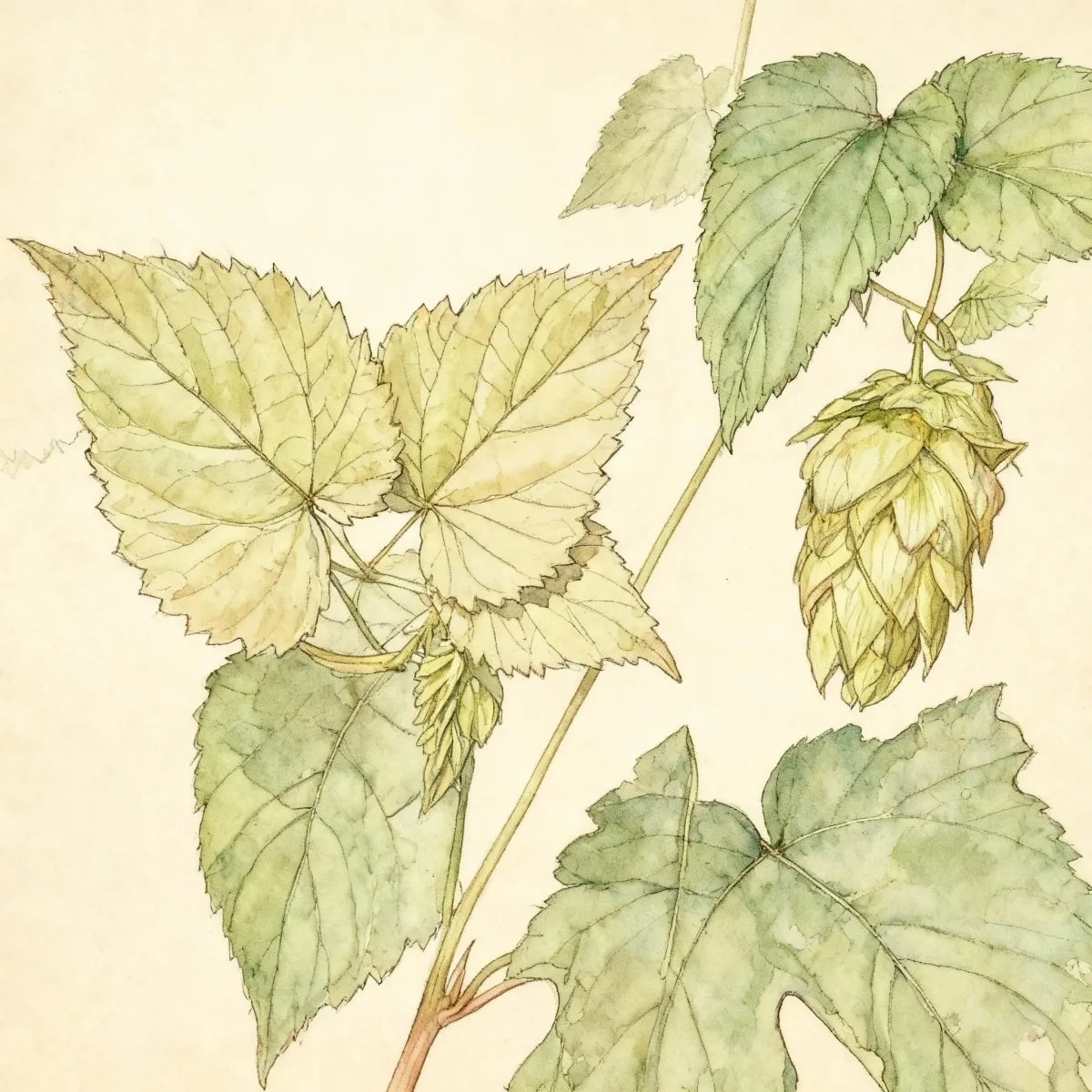
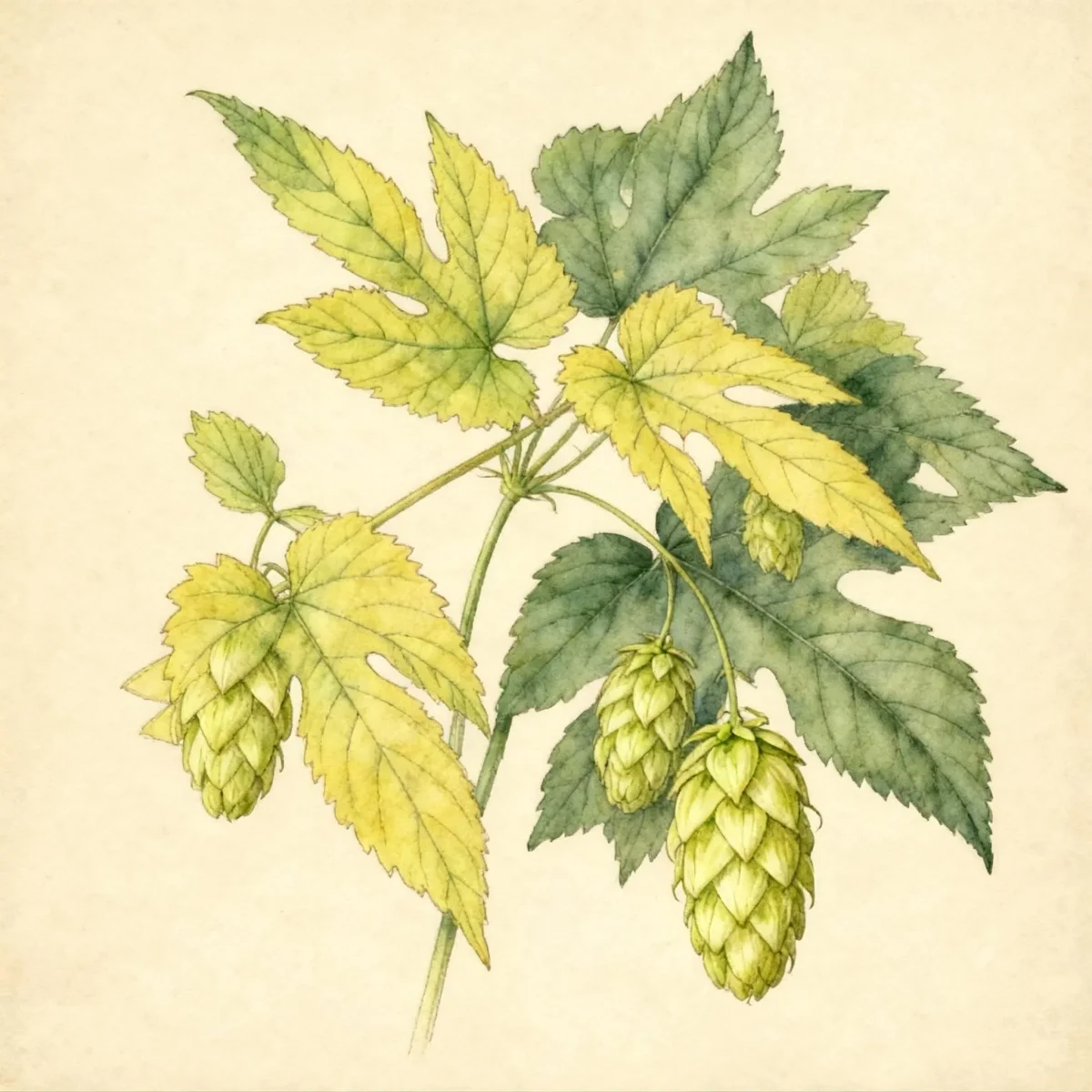
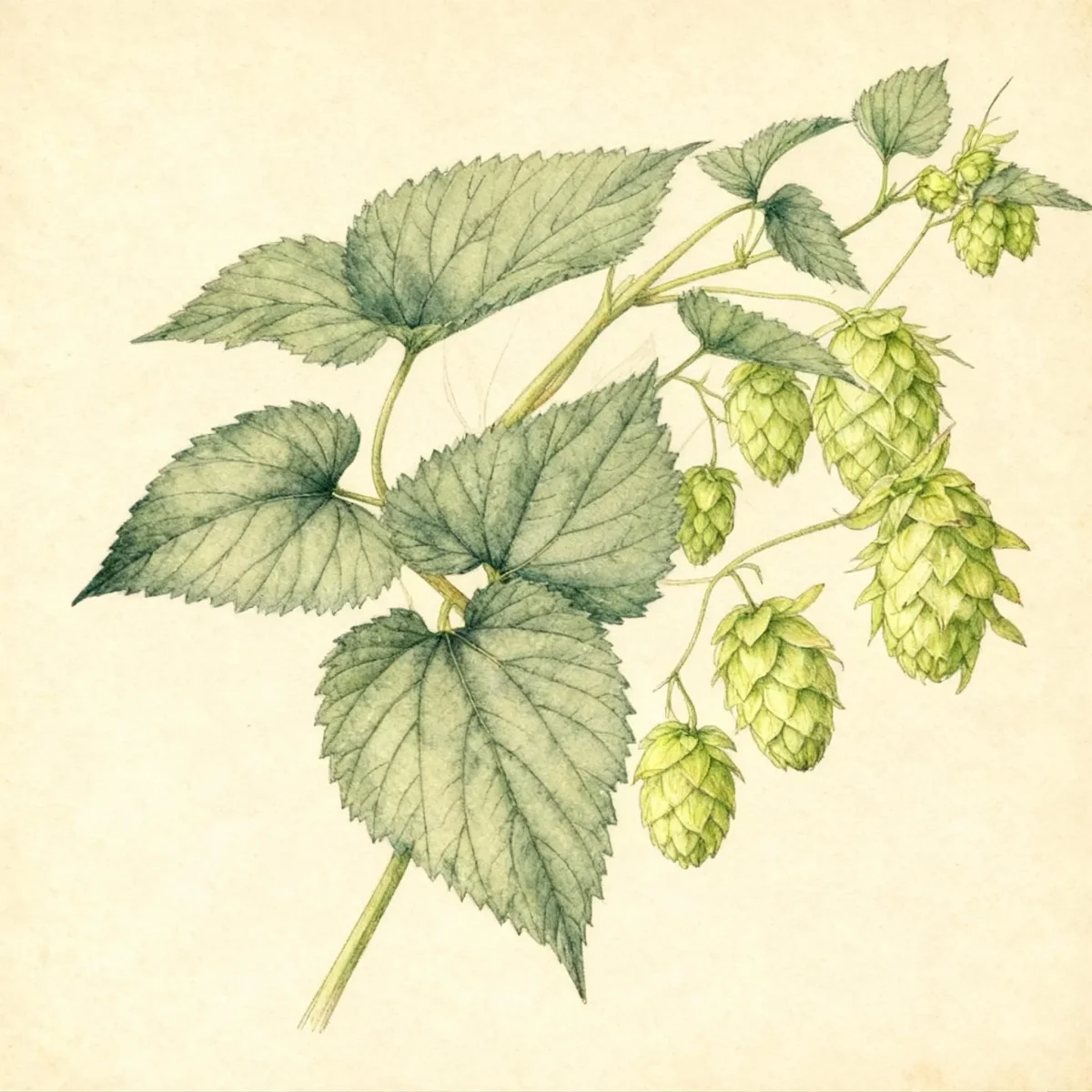
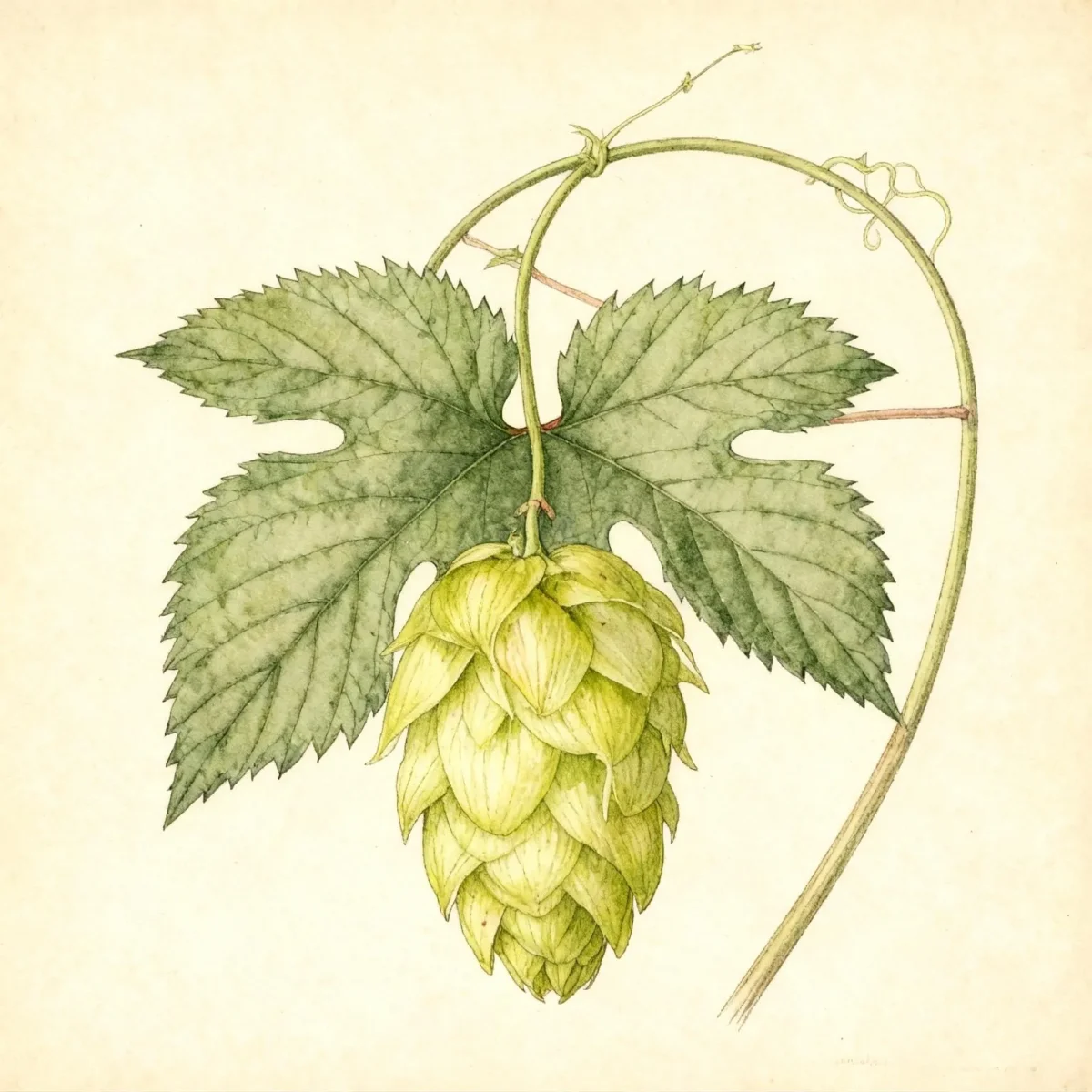
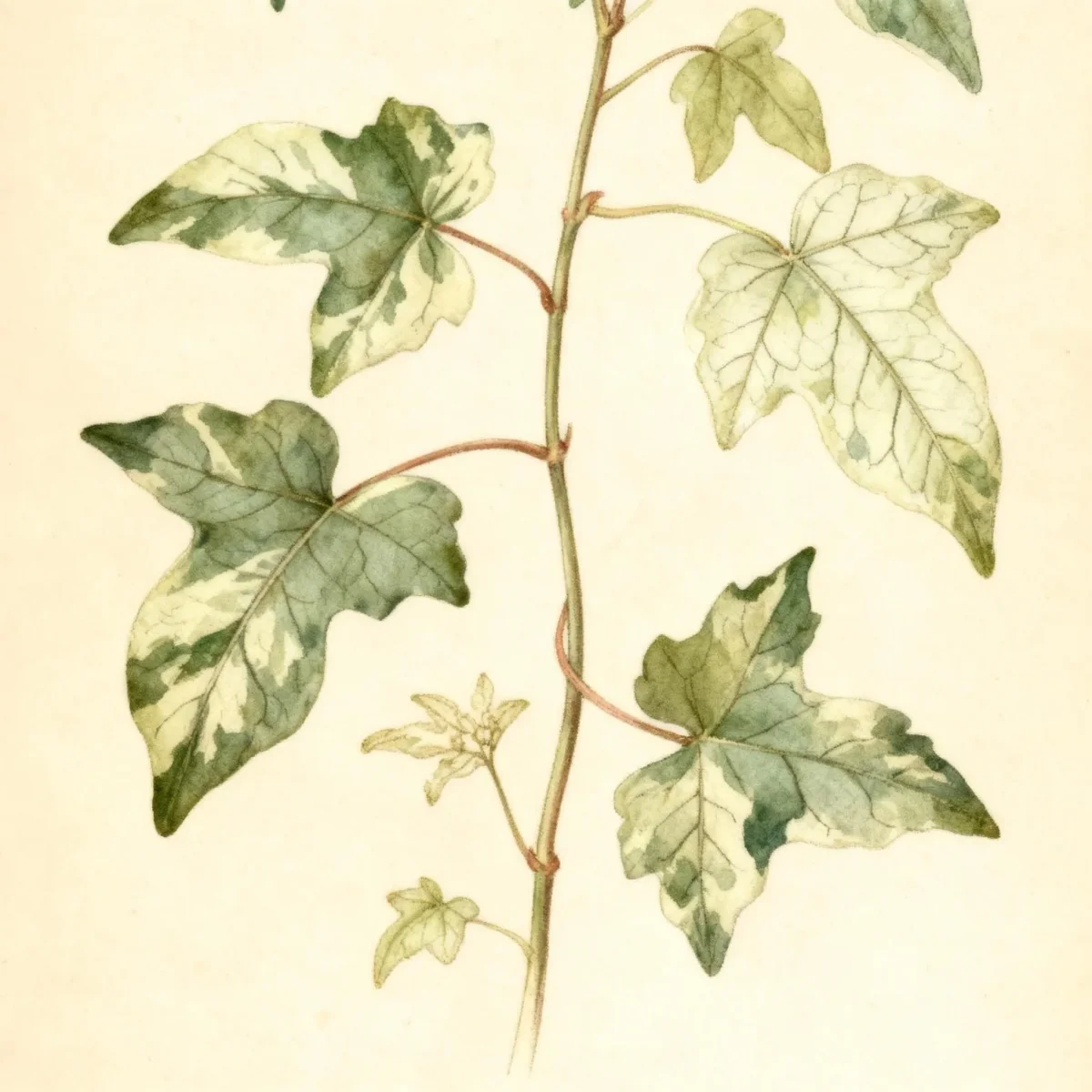
Common hop (Humulus lupulus)
Humulus lupulus, the Common hop, is a fast-growing, robust perennial vine perfect for screening, offering fragrant blooms, and low maintenance.
Scroll down to discover growing tips, care requirements, companion plants, and more
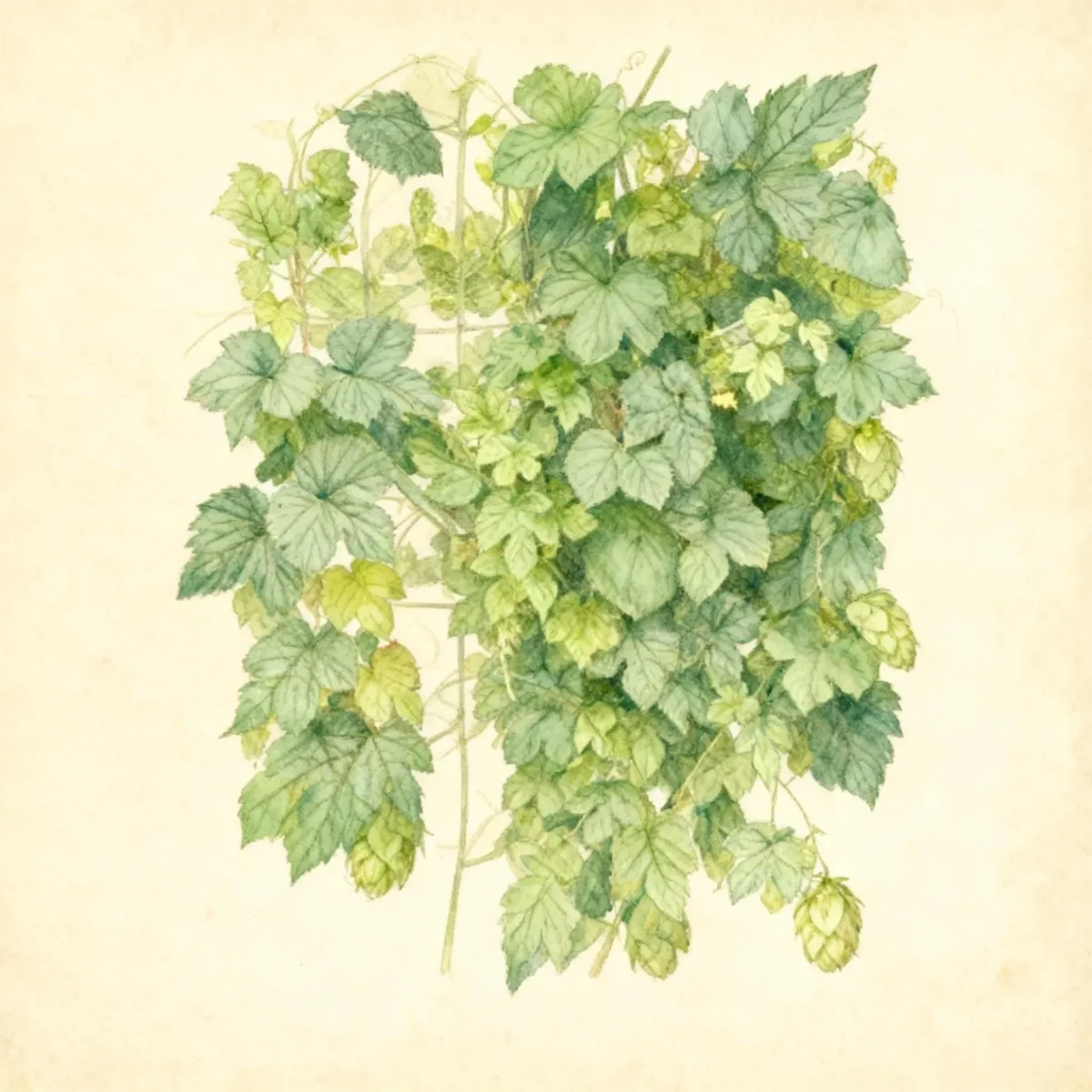
Complete Plant Information
Overview
The Common hop (Humulus lupulus) is a vigorous, rhizomatous, twining perennial vine prized both for its functional use in brewing and as a rapid, highly effective ornamental screen. This plant, Humulus lupulus, exhibits rapid growth, covering significant vertical space quickly with its rough stems and lobed leaves each season. Gardeners appreciate its low maintenance requirements once established, making it an excellent choice for covering structures in warmer zones.
Valuable for its distinctive cone-like female fruits (strobiles), the Common hop offers unique texture and a pine-like fragrance. While primarily known for brewing applications, it also serves as a superb visual feature, attracting butterflies with its late-season blooms. Since the plant is dioecious, successful seed production requires both male and female specimens nearby.
Established Humulus lupulus represents a reliable perennial that dies back completely to the ground in winter, returning robustly from its crown roots in spring. Its ability to quickly establish means it serves as an excellent solution for screening large, unattractive walls or providing shade over pergolas throughout the growing season.
Fast Facts
- Plant Family: Cannabaceae
- Plant Type: Vine
- Native Range: Eurasia
- Hardiness Zones: USDA Zones 4-8
- Size at Maturity:
- Height: 15-20 ft
- Spread: 3-6 ft
- Bloom Time: September to October
- Bloom Description: Green
- Sun Exposure: Full sun to part shade
- Water Needs: Medium
- Maintenance Level: Low
How to Grow
Planting Humulus lupulus is best achieved in spring after the danger of hard frost has passed, ensuring the soil is average, medium-moisture, and well-drained. While the Common hop has some drought tolerance, it thrives best in rich soils kept consistently moist. Because this vine grows so aggressively, ample space and a sturdy support structure are non-negotiable requirements from the outset.
Regarding care, maintain medium moisture levels, especially during active summer growth, though established plants handle brief dry spells well. Little fertilization is typically needed if planted in rich soil. After the first hard frost in autumn, the stems will die back; they can be pruned entirely to the ground at this time, as the perennial root system survives the winter.
Spring cleanup involves waiting for new growth to emerge from the crown before removing any remaining dead material. Propagation of this useful vine is straightforward, typically achieved by taking cuttings of the runners that emerge from the crown. If you desire seed production for brewing or experimentation, you must ensure a male plant is present to pollinate the female Humulus lupulus flowers.
Landscape Uses
The primary landscape function of Common hop is rapid vertical coverage. It excels when trained onto sturdy trellises, robust pergolas, or arbors, quickly creating dense, living green walls. If you need to obscure unsightly utility boxes or fences, this vine provides one of the fastest, most effective green screens available for shaded or partially sunny locations.
Incorporating Humulus lupulus into an herb garden section allows for easy access to the cones for crafting or brewing purposes. Its vigorous nature makes it a dramatic focal point, capable of softening harsh architectural lines throughout the summer months. The fragrant aspect of the flowers also adds an aromatic dimension to seating areas situated near its support structure.
Standout Features
Flower Qualities
- Showy
- Fragrant
Noteworthy Characteristics
Humulus lupulus, commonly known as common hop, is a dioecious, rhizomatous, twining perennial vine that is grown commercially for harvest of female fruits which are used by breweries to preserve and flavor beer. It is also an easy-to-grow ornamental plant that can be grown on a variety of support structures. The vine grows rapidly each year, with its yellow-green male flowers blooming in catkins and its characteristic cone-like female structures (strobiles) maturing in late summer.
Tolerances
- Drought
Potential Problems
While Humulus lupulus generally avoids serious insect or disease issues, gardeners must address its structural needs proactively. The most critical requirement is providing a strong vertical support structure, as the vine cannot climb on its own and will sprawl unattractively otherwise. Furthermore, skin contact with the rough stems or leaves can occasionally cause dermatitis in sensitive individuals, making gloves advisable when pruning or heavy handling.
Frequently Asked Questions
What hardiness zones is Common hop suitable for?
The Common hop (Humulus lupulus) is reliably hardy in USDA Zones 4 through 8.
How large does Common hop grow?
This vigorous vine typically reaches heights between 15 and 20 feet tall, with a spread ranging from 3 to 6 feet wide when given adequate support.
What sun exposure does Humulus lupulus need?
Humulus lupulus performs best when sited in full sun but can tolerate partial shade, though growth may be less dense in shadier conditions.
When does Common hop bloom?
The green flowers appear relatively late in the season, typically blooming from September into October.
Conclusion
The Common hop (Humulus lupulus) offers gardeners an unmatched combination of rapid vertical coverage and low-maintenance growth, delivering both aesthetic screening and functional cones. Ensure you match its medium water needs and provide sturdy upward support for this impressive perennial vine. Before planting, verify that your local growing conditions fall within USDA Zones 4-8 for best results.
Wildlife Benefits
Although primarily grown for brewing, the flowers of Humulus lupulus contribute positively to the garden ecosystem. The pine-like fragrance emitted by the blooms is noted as being attractive to various butterfly species, encouraging their presence during the late summer and early fall months. Providing a thick, textured vertical element like this vine can also offer sheltered nesting or resting spots for small beneficial insects.
Propagation Tips
The primary method for successfully increasing your supply of Common hop is through vegetative propagation using runners. During the spring growing season, look for slender shoots or runners emanating directly from the established crown or root system. These runners can be carefully severed, dug up with some root material attached, and replanted immediately in their new location. This technique ensures the new plant is an exact clone of the vigorous parent stock.