Marvel of Peru (Mirabilis jalapa)
Grow the low-maintenance Marvel of Peru (Mirabilis jalapa) for evening-blooming, fragrant flowers in warm summer gardens from June to frost.
Scroll down to discover growing tips, care requirements, companion plants, and more
Complete Plant Information
Overview
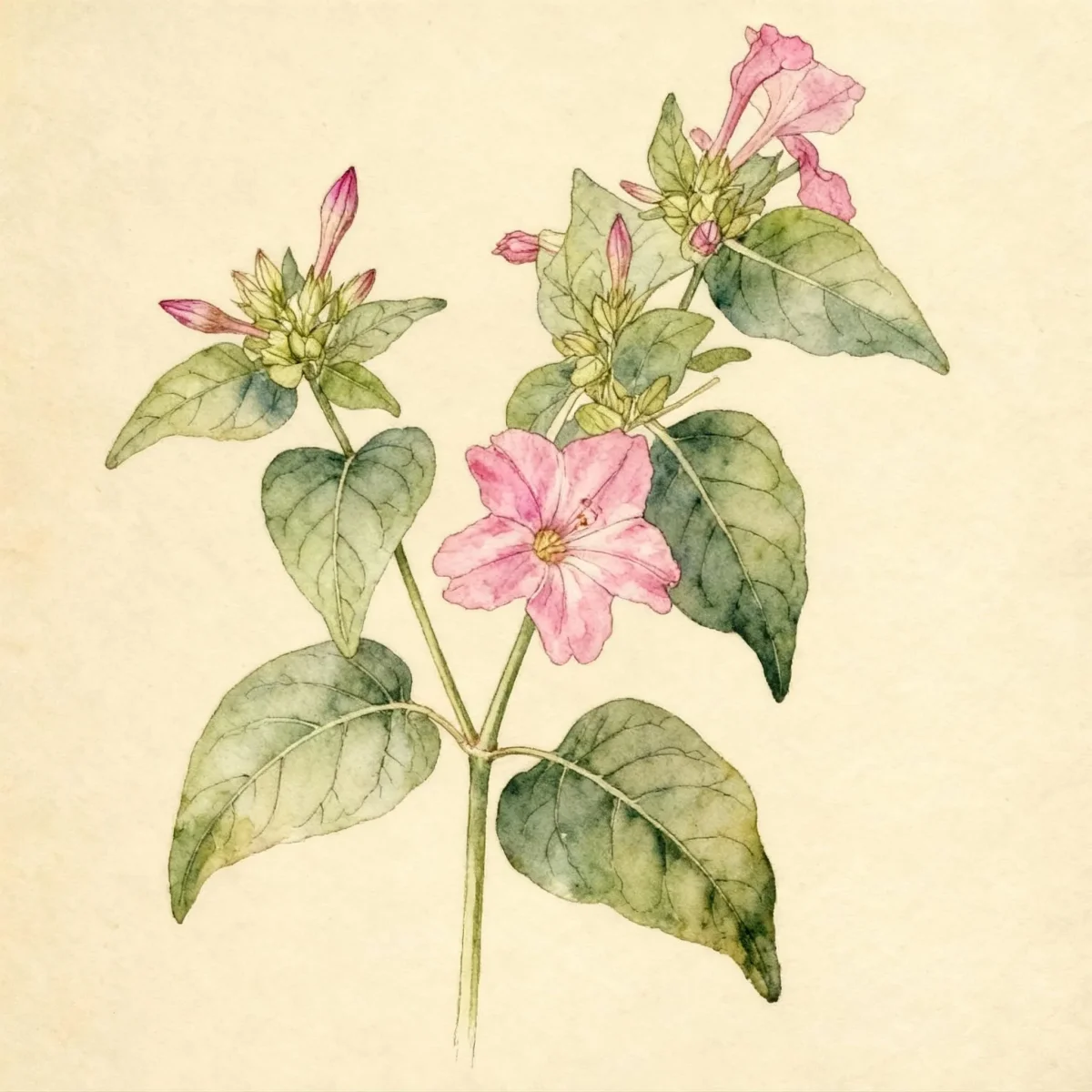
The Marvel of Peru, scientifically known as Mirabilis jalapa, is an old garden favorite valued for its fast growth and vibrant, colorful blooms that appear in the late afternoon. This plant is easily recognized by its unique blooming schedule, often opening its fragrant, funnel-shaped flowers around four o’clock in the afternoon and closing them by morning. It brings an exotic touch wherever it is planted, offering a medley of pink, red, yellow, and white flowers sometimes appearing mottled on a single Mirabilis jalapa specimen.
As a tuberous-rooted tender perennial, it thrives across USDA Zones 9 through 11, but gardeners elsewhere treat it as a rewarding warm-season annual. Its low maintenance requirements and ability to tolerate various soil conditions, including wet soil, make the Marvel of Peru an accessible and reliable choice for adding height and fragrance to summer displays. Established roots ensure robust flowering, which is a key reason for overwintering the tubers in colder regions.
This species fits beautifully into mixed borders, containers, or as a temporary hedge due to its bushy habit and rapid maturity. While the flowers attract hummingbirds, gardeners must use caution as all parts of the Mirabilis jalapa plant are poisonous if ingested.
Fast Facts
- Plant Family: Nyctaginaceae
- Plant Type: Herbaceous perennial
- Native Range: Tropical America
- Hardiness Zones: USDA Zones 9-11
- Size at Maturity:
- Height: 2-3 ft
- Spread: 2-3 ft
- Bloom Time: June to frost
- Bloom Description: Pink, rose, red, magenta, yellow, white
- Sun Exposure: Full sun to part shade
- Water Needs: Medium
- Maintenance Level: Low
How to Grow
For the best results with Mirabilis jalapa, sow seeds directly into the garden well after the danger of the last frost has passed. Alternatively, you can get a head start by beginning seeds indoors about six to eight weeks prior to transplanting. Set out seedlings, purchased plants, or overwintered tubers only after the soil has warmed sufficiently following the last frost date. This plant adapts well to average, consistently moist, well-drained soils but tolerates a surprisingly wide range of soil types.
The Marvel of Peru requires a medium amount of water to maintain consistent soil moisture throughout the growing season. While it thrives in full sun, it also performs adequately with partial shade, though this may slightly reduce the profusion of blooms. Because it is generally a low-maintenance plant, significant fertilization is usually unnecessary if the soil is reasonably fertile.
If you garden outside of Zones 9-11, treating the Marvel of Peru as an annual is common. However, to ensure superior flowering the subsequent year, the tuberous roots should be carefully dug up in the fall before the first hard freeze. Store the tubers overwinter in a cool, dry location, packed in a barely moist medium like peat moss or sand, safe from frost exposure in a basement or frost-free garage.
Landscape Uses
The bushy, upright structure of the Mirabilis jalapa makes it highly versatile in landscape design. They look attractive planted in groups to create broad sweeps of color, or they can be used as striking single specimens within a mixed border setting. For seasonal impact, they function well as an annual hedge, a usage that was particularly popular during the Victorian era for outlining pathways or garden rooms.
Because they are robust and tolerate wet soil, these plants fit perfectly into rain gardens where moisture levels can fluctuate. Furthermore, the vibrant colors and evening fragrance make them excellent candidates for patio containers. Plan plantings near seating areas to ensure you can enjoy the afternoon fragrance as the flowers unfurl.
Standout Features
Flower Qualities
- Showy
Noteworthy Characteristics
Mirabilis jalapa, commonly called four o’clock or marvel of Peru, is native to tropical North, Central, and South America. It is a bushy, tender perennial that typically grows to 24-36” tall on erect, branching stems, featuring funnel-shaped, tubular flowers (2” long) attractive to hummingbirds. Flowers open in the late afternoon and display varied colors, sometimes with mottling, sometimes opening different colored blooms on the same plant. Genus name is a Latin word meaning wonderful.
Tolerances
- Rabbit
- Deer
- Wet Soil
Potential Problems
This plant generally faces no serious insect or disease problems, allowing for its low-maintenance classification. Gardeners should focus primarily on proper overwintering techniques in colder climates rather than pest management in the summer garden. Keep in mind that all parts of the Marvel of Peru are poisonous if consumed, so supervise children and pets around the foliage.
Frequently Asked Questions
What hardiness zones is Marvel of Peru suitable for?
Mirabilis jalapa is reliably winter hardy in USDA Zones 9 through 11.
How large does Marvel of Peru grow?
This species typically reaches a height of 2 to 3 feet and spreads to a similar width of 2 to 3 feet at maturity.
What sun exposure does Mirabilis jalapa need?
It performs best in full sun but adapts well to locations that receive part shade.
When does Marvel of Peru bloom?
You can expect the colorful blooms of the Marvel of Peru to appear from early June right through until the first hard frost.
Conclusion
The Mirabilis jalapa offers remarkable late-day color and fragrance with minimal effort, making the Marvel of Peru a highly rewarding addition to any warm-season garden. Its dependable performance and tolerance for varied conditions secure its place as a classic annual or perennial, depending on your climate. Check your local hardiness zone and plan to lift the tubers if you wish to enjoy the unique four o’clock blooms year after year.
Wildlife Benefits
The structure and timing of the Mirabilis jalapa flower make it particularly appealing to specific pollinators. The tubular shape of the blossoms is perfectly suited for the long tongues of hummingbirds, which are often seen visiting the flowers during their afternoon opening period. Planting clusters of these vibrant flowers can create reliable nectar sources throughout the humid summer months.
Companion Planting
Due to its medium water requirements and tolerance for a range of soils, the Marvel of Peru pairs well with other summer-blooming annuals that enjoy similar conditions, such as Zinnias or Cannas, creating rich textures in a mixed border. Placing Mirabilis jalapa near structural, heat-tolerant perennials like ornamental grasses or Sedum allows the upright stems to fill in gaps as the season progresses. Ensure companions do not create too much dense shade, as the plant prefers high light levels.