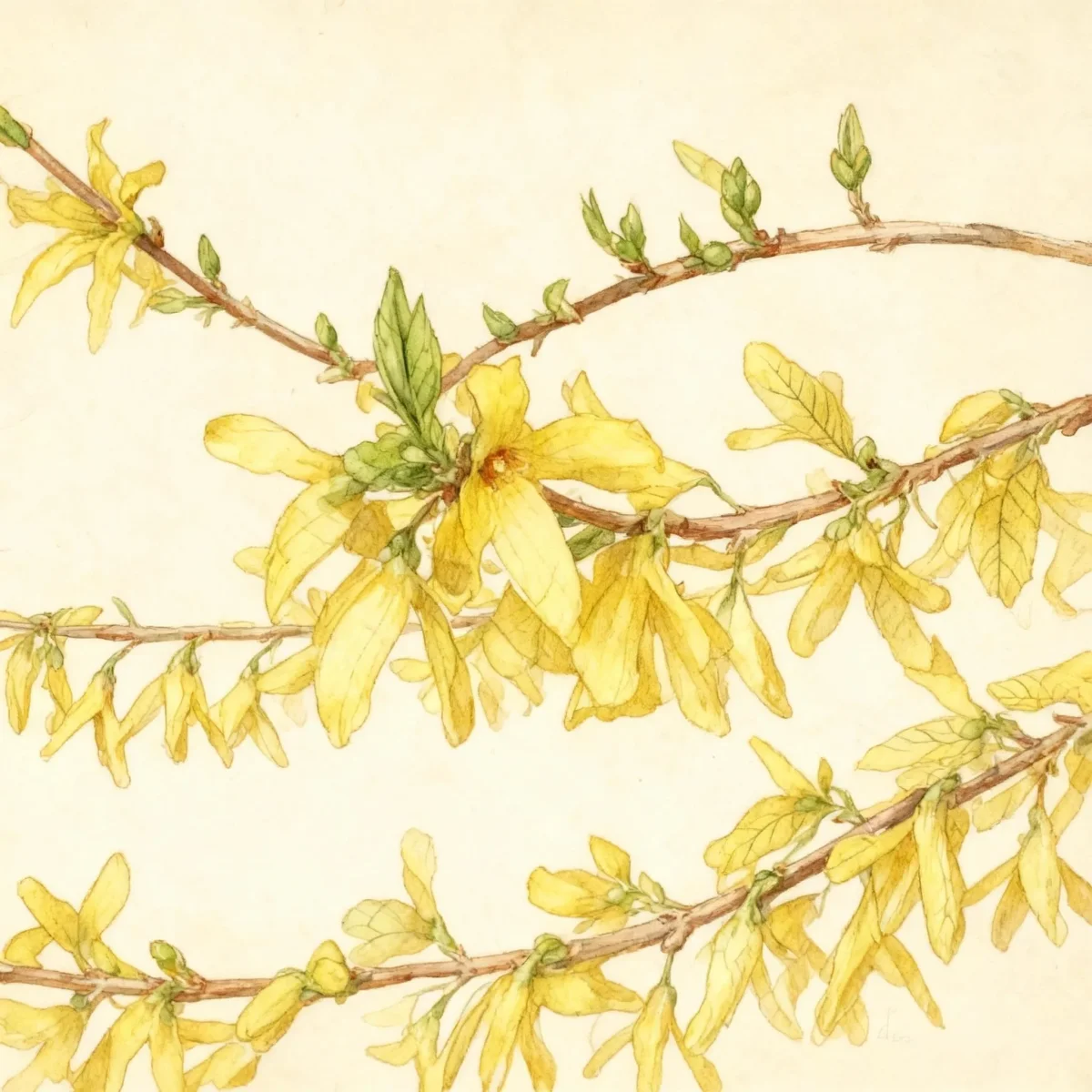
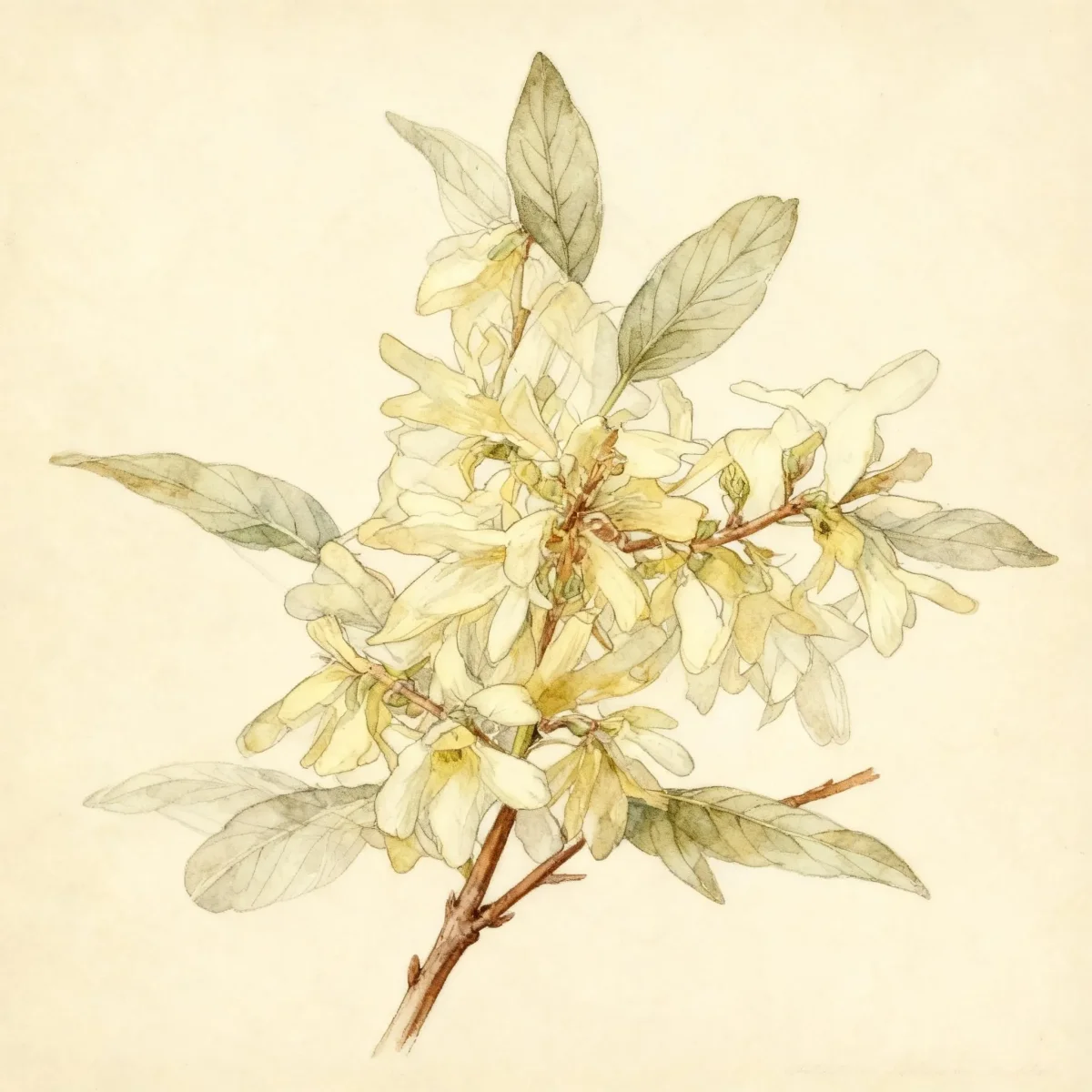
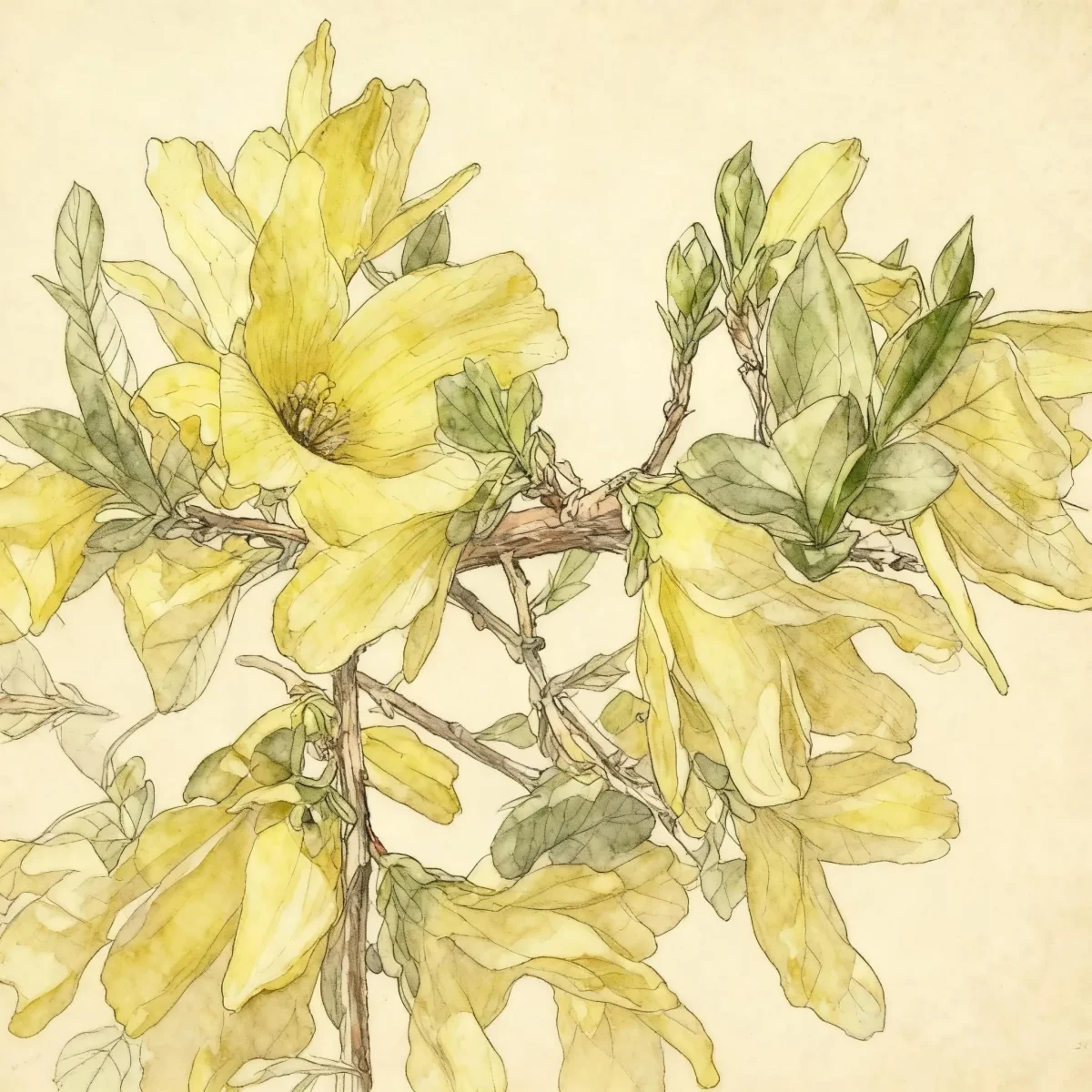
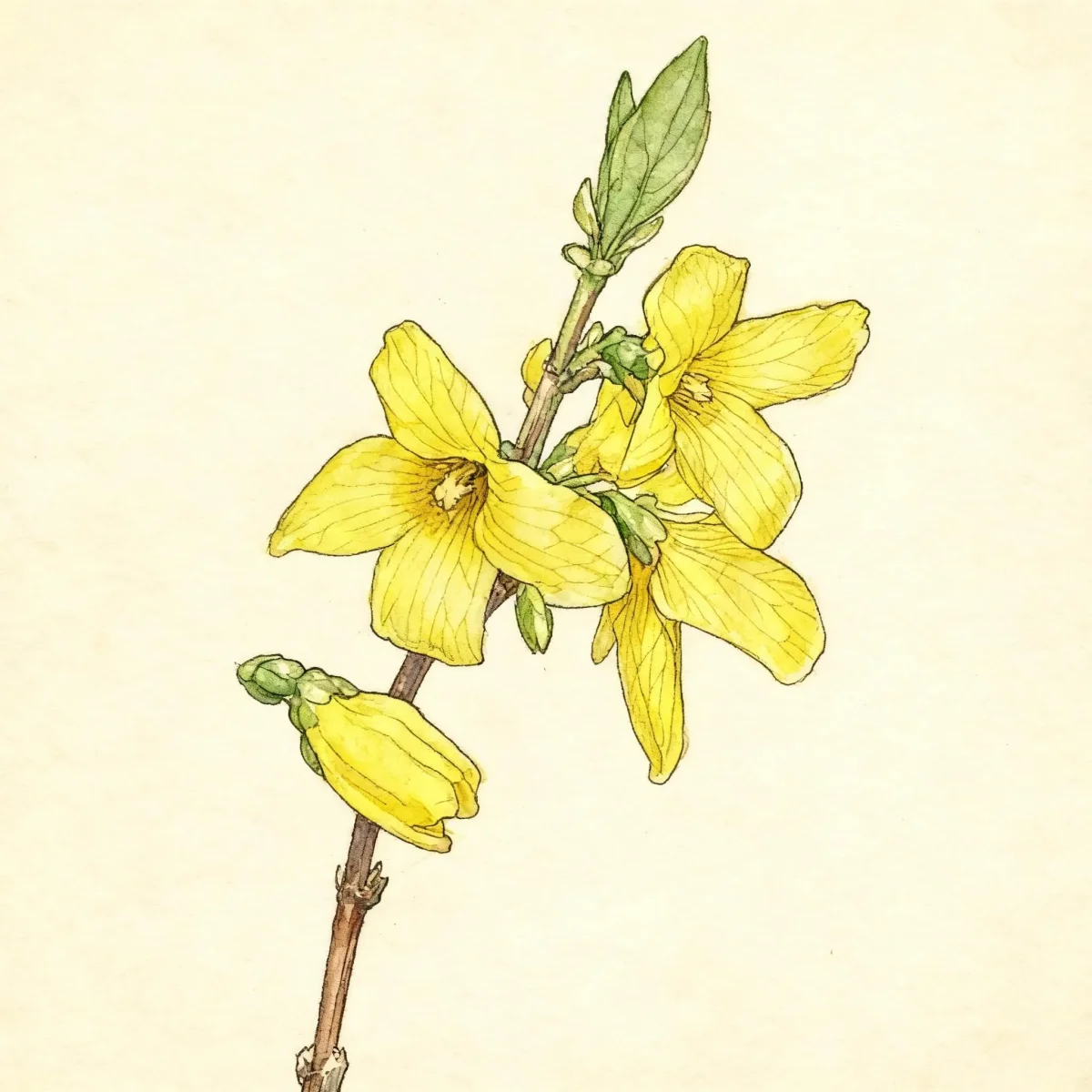
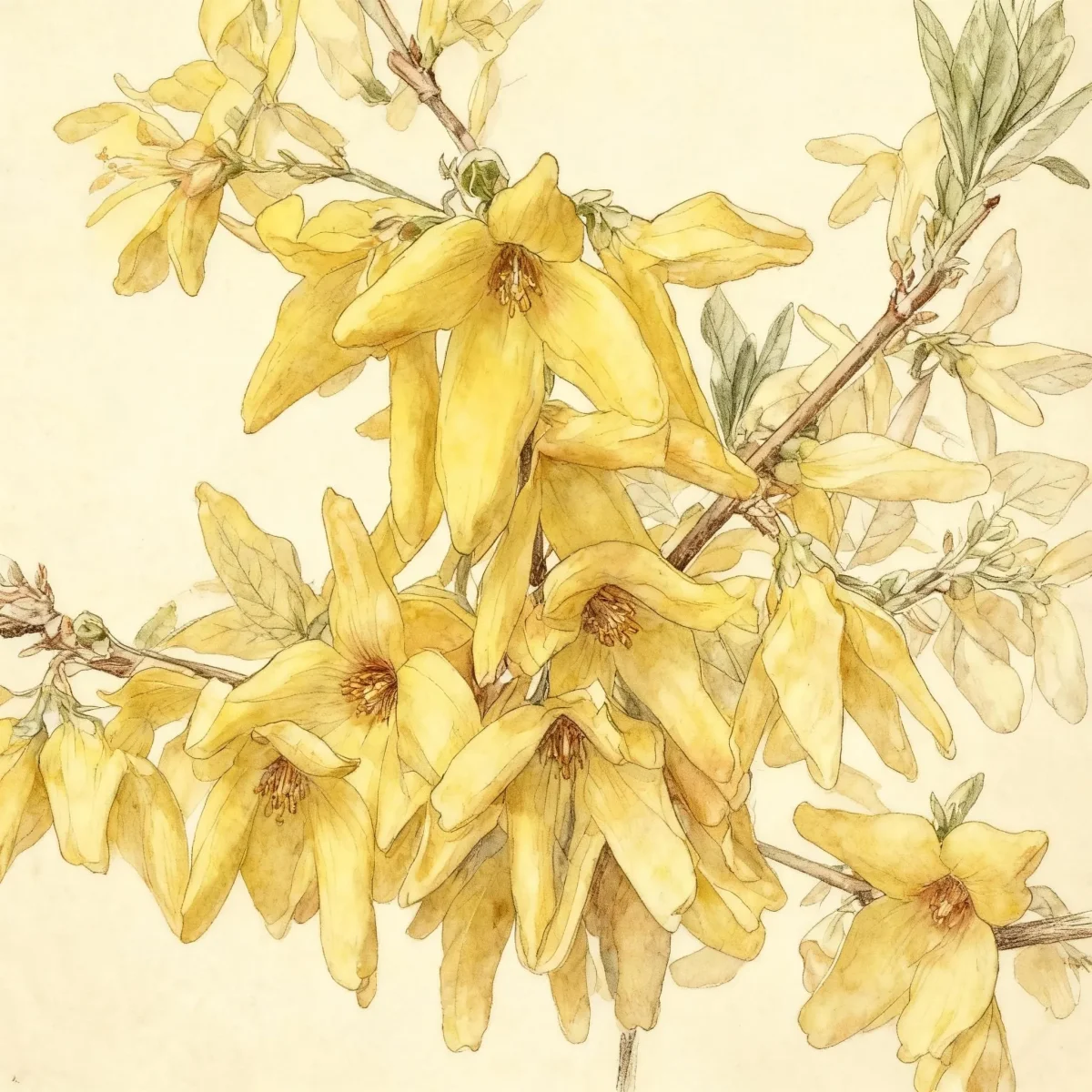
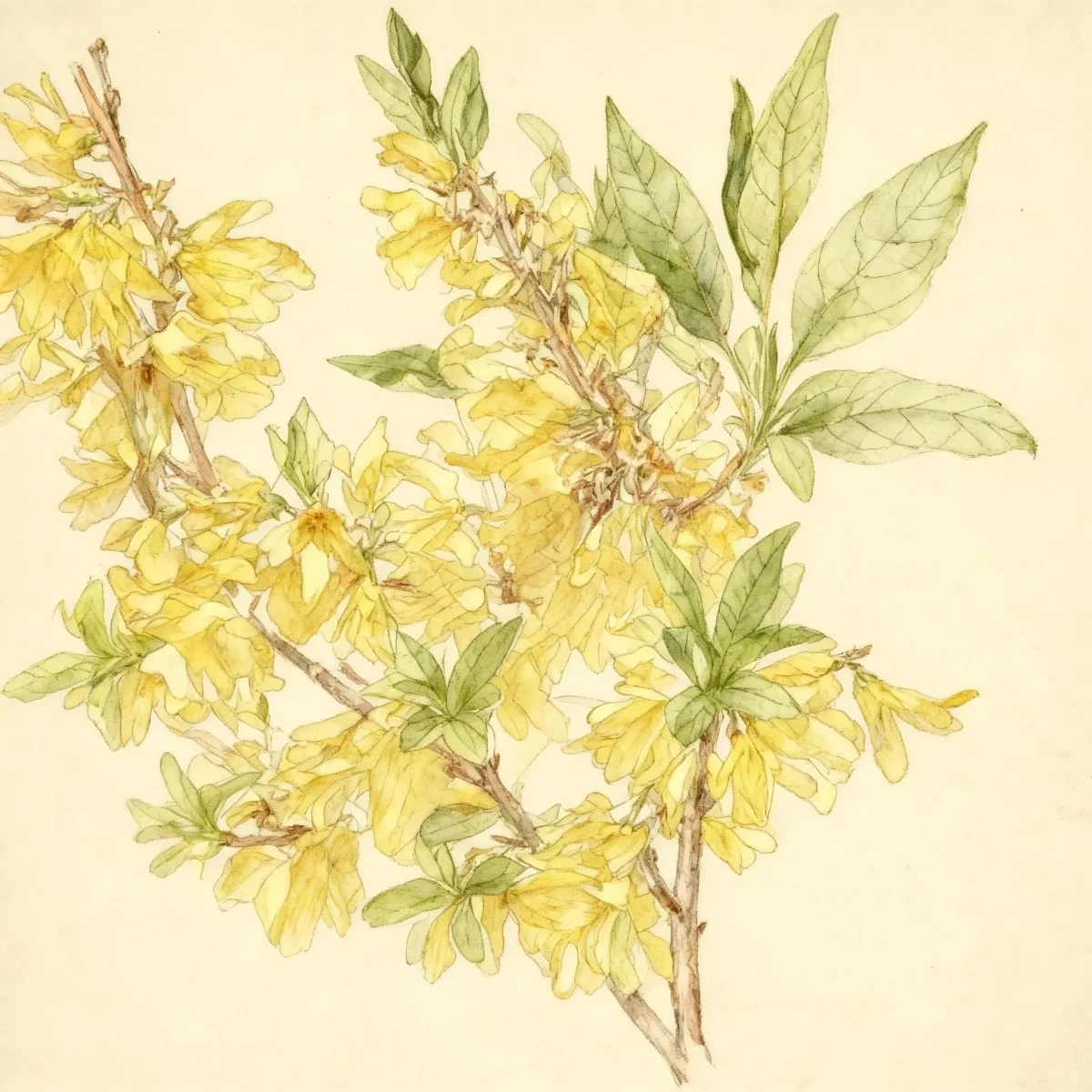
Winter jasmine (Jasminum nudiflorum)
Discover Winter jasmine (Jasminum nudiflorum), the viny shrub blooming bright yellow from late winter before the leaves emerge.
Scroll down to discover growing tips, care requirements, companion plants, and more
Complete Plant Information
Overview
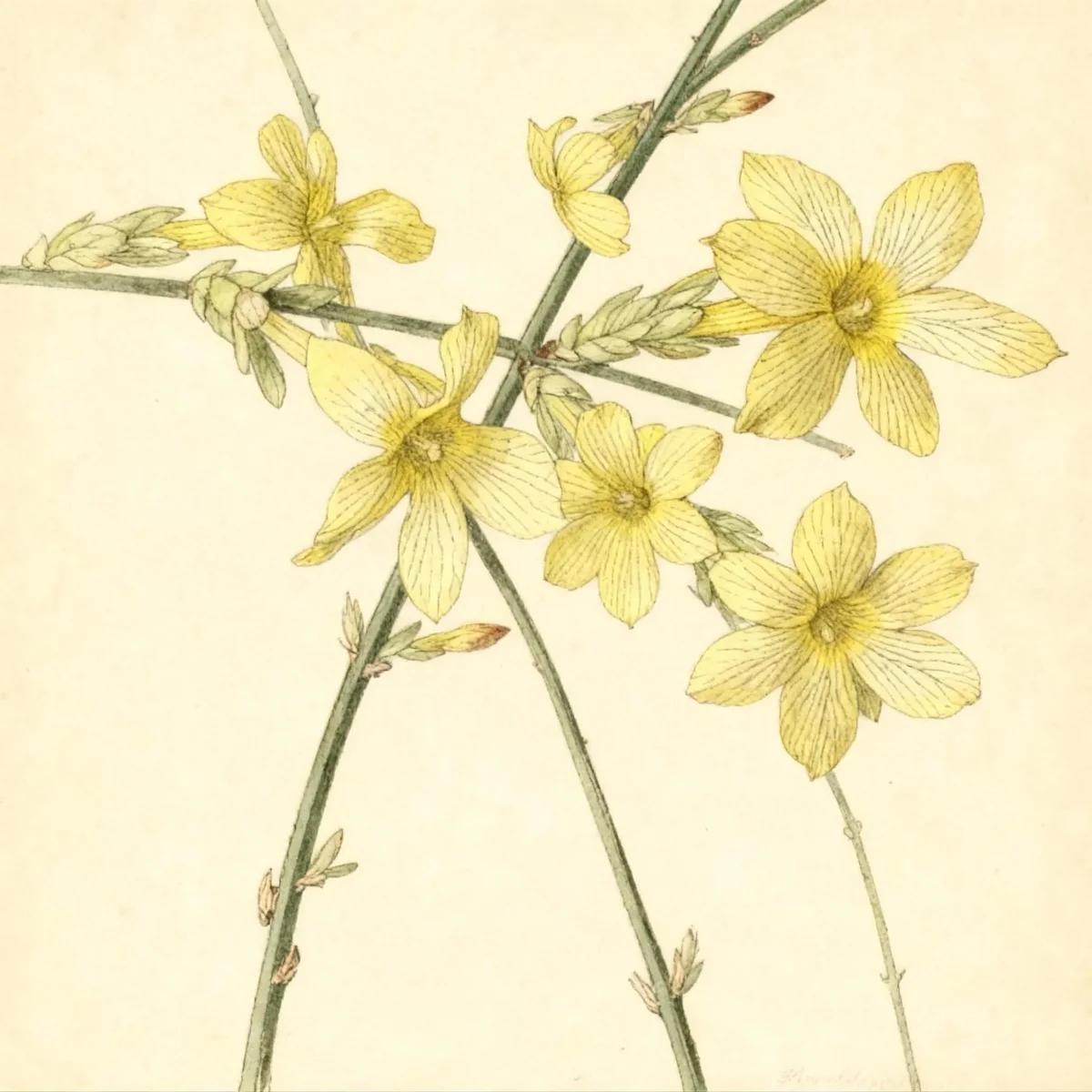
Jasminum nudiflorum, widely known as winter jasmine, offers a much-needed visual spectacle when most gardens are dormant. This trailing or viny shrub is prized because its bright, clear yellow flowers illuminate the landscape during late winter and early spring, often appearing before any foliage emerges. Gardeners value this plant for its adaptability, serving effectively as both a sprawling ground cover or a trained vine against structures.
As a member of the Oleaceae family native to Northern China, Jasminum nudiflorum thrives across a broad range of conditions, though it prefers well-drained soil. Its gracefully arching, willowy green stems provide considerable winter interest, complementing the non-fragrant but profuse bloom. Utilizing Winter jasmine offers a low-maintenance splash of color during the chilliest months.
Whether you allow Jasminum nudiflorum to cascade dramatically over a wall or use it to stabilize a difficult slope, its versatility makes it a practical choice. It requires relatively little attention once established, fitting perfectly into landscape designs prioritizing ease of care and reliable seasonal performance.
Fast Facts
- Plant Family: Oleaceae
- Plant Type: Vine
- Native Range: Northern China
- Hardiness Zones: USDA Zones 6-10
- Size at Maturity:
- Height: 10-15 ft
- Spread: 3-6 ft
- Bloom Time: March to April
- Bloom Description: Yellow
- Sun Exposure: Full sun to part shade
- Water Needs: Medium
- Maintenance Level: Low
How to Grow
For optimal flowering, plant Winter jasmine in early spring or fall in a location receiving full sun, though it tolerates partial shade well. If you are training it as a vine, situate it against a south-facing wall or structure to maximize winter sun exposure, encouraging better bloom set. This species is remarkably tolerant of various soil types, making well-drained sandy loams ideal, provided regular moisture is supplied during establishment.
Watering should remain consistent, meeting its medium water needs, especially for young plants or those grown in hot, dry exposures. Fertilization is generally unnecessary, as this plant thrives even in lean soils, particularly when used as a ground cover where aggressive spreading is not desired. Pruning should be performed immediately after the flowering period concludes in early spring, allowing the plant time to set next year’s wood.
If renovation or size reduction is necessary, old, woody stems on Jasminum nudiflorum can be cut back hard to 18–24 inches. Its adaptable nature allows it to be grown as a sprawling mass or trained upward, providing structural definition throughout the year due to its attractive green winter stems.
Landscape Uses
The sweeping, cascading habits of Winter jasmine make it excellent for softening hard landscape edges. Train this vigorous vine on support structures like pergolas or arbors to showcase its branching architecture, or let it gracefully trail over stone walls where blossoms can hang freely. As a ground cover recommendation, it excels at covering slopes and banks, naturallyizing the area while controlling erosion.
If you are seeking year-round evergreen structure, perhaps avoid using Jasminum nudiflorum as the main structural element, as its primary appeal is its spectacular winter bloom followed by light green foliage. Instead, consider pairing it with later-blooming, deeply colored shrubs or perennials that offer textural contrast once the spring flowers appear. This vibrant yellow performer is perfect for brightening the winter entryway or framing a walkway before the traditional spring bulbs emerge.
Standout Features
Flower Qualities
- Showy
Noteworthy Characteristics
Jasminum nudiflorum, commonly called winter jasmine, is a trailing, viny shrub that grows from a central crown. As a shrub, it typically grows in a sprawling mound to 4’ tall with arching branches, and spreads by trailing branches that root as they go along the ground. As a vine, it typically grows to 10-15’. Willowy green stems are attractive in winter. Non-fragrant, bright yellow flowers bloom along the stems in late winter before the leaves. Compound, trifoliolate, dark green leaves with ovate leaflets (to 1.25” long).Genus name is a medieval Latin name for the Persian name yasmin or yasamin.Specific epithet means with flowers coming before the leaves.
Tolerances
- Heavy Shade
Potential Problems
Winter jasmine generally boasts a clean bill of health, possessing no serious, recurring insect or disease problems that plague many other flowering shrubs. Gardeners should, however, keep an eye out for common pests such as the Japanese beetle, which may sample the foliage once the leaves emerge later in the spring. Regular monitoring and prompt manual removal are typically sufficient to manage minor outbreaks of pests like this one.
Frequently Asked Questions
What hardiness zones is Winter jasmine suitable for?
Winter jasmine (Jasminum nudiflorum) is reliably hardy in USDA Zones 6 through 10.
How large does Winter jasmine grow?
This plant is versatile, growing anywhere from 10 to 15 feet tall when trained as a vine, with a spread generally ranging from 3 to 6 feet.
When does Winter jasmine bloom?
The distinctive yellow blossoms of Jasminum nudiflorum typically appear from March to April, blooming along the leafless stems.
What sun exposure does Winter jasmine need?
It performs best in full sun to part shade; however, it can tolerate heavy shade, though flowering will be significantly reduced in darker conditions.
Conclusion
With its unique ability to deliver brilliant yellow flowers during the cold season, Winter jasmine is an indispensable asset for winter interest in the temperate garden. Its low maintenance requirements and flexible growth habit—whether trailing or climbing—make Jasminum nudiflorum an excellent choice for difficult spots like banks or walls. Before planting, confirm that your garden falls within Zones 6-10 and plan your clean-up pruning immediately following its spring bloom.
Propagation Tips
Propagating Jasminum nudiflorum is straightforward, often achieved through the plant’s natural tendency to root. Since the trailing branches root easily as they touch the soil, layering is a highly effective method; simply bury a section of stem under a small mound of soil and wait for it to establish roots before cutting it from the mother plant. Alternatively, cuttings taken during the summer months root readily in moist, sandy soil under standard nursery procedures, providing an easy way to increase your stock.
Companion Planting
Because Winter jasmine demands pruning correction in early spring immediately after flowering, it pairs well with plants that follow a different care or bloom schedule. Consider planting it near later-blooming spring bulbs, like Narcissus or Tulips, which will emerge and bloom as the jasmine finishes its floral display. For year-round structure, situate it near slow-growing evergreen shrubs that do not require heavy spring shearing, as you want to avoid cutting into any new basal growth the jasmine might be trying to put on.