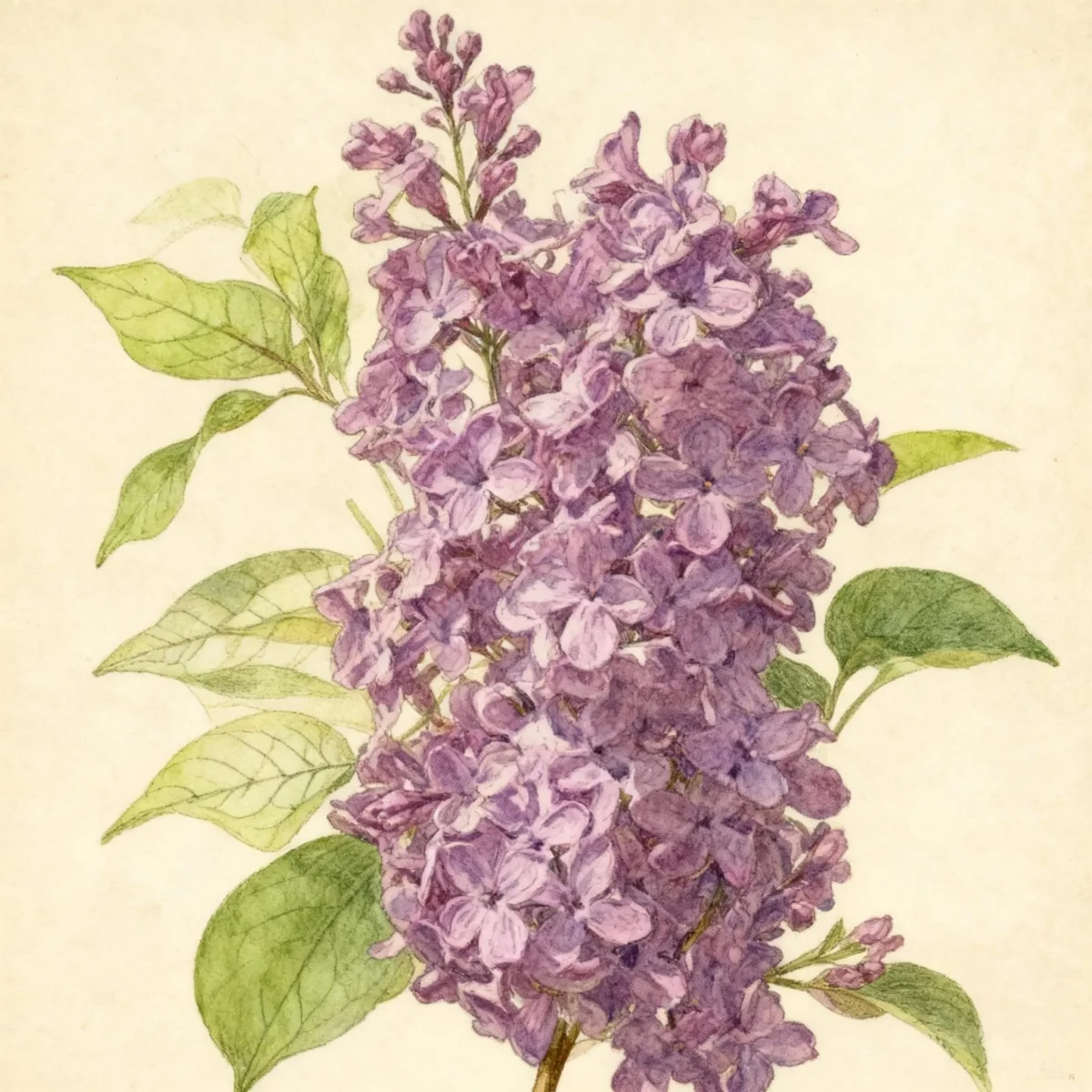
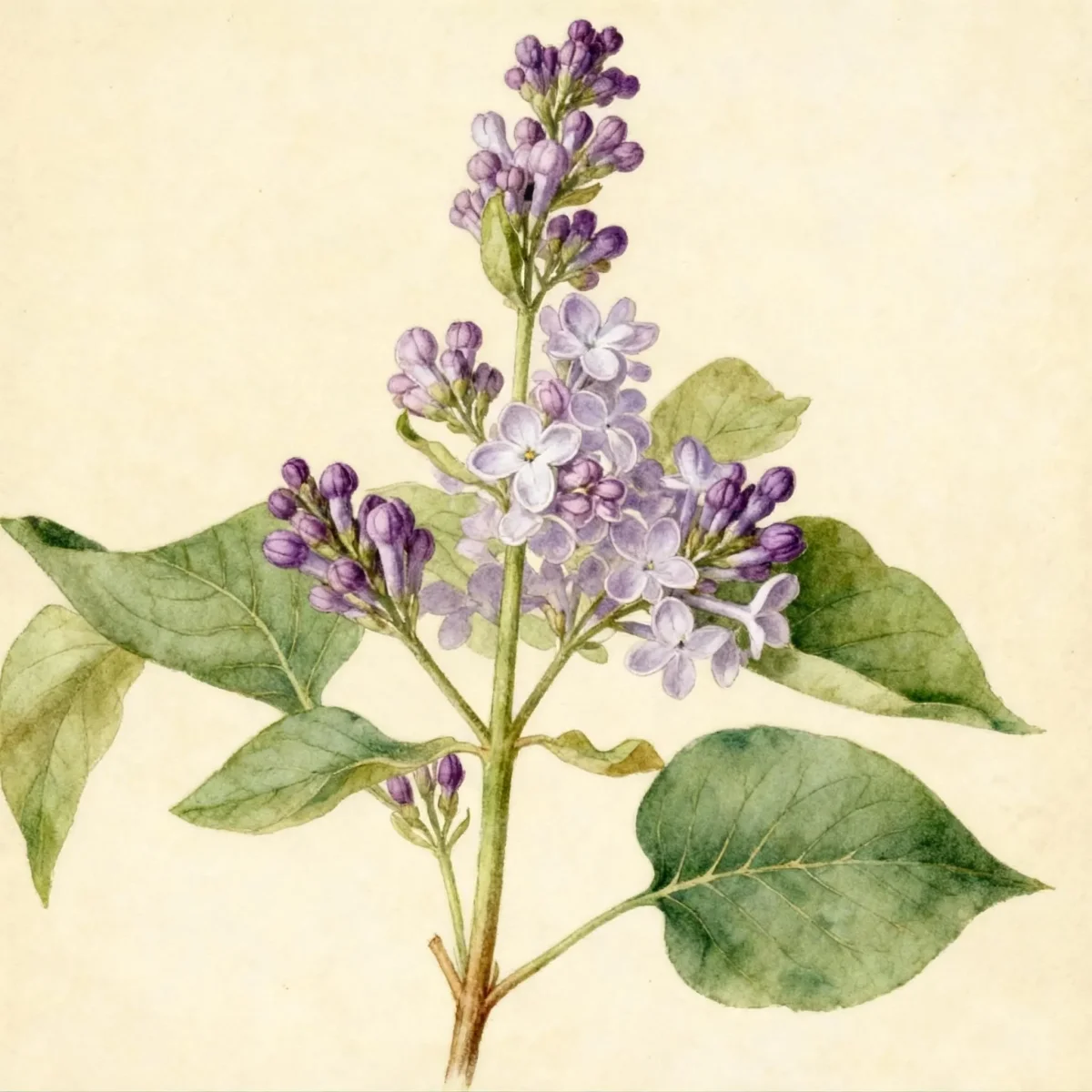
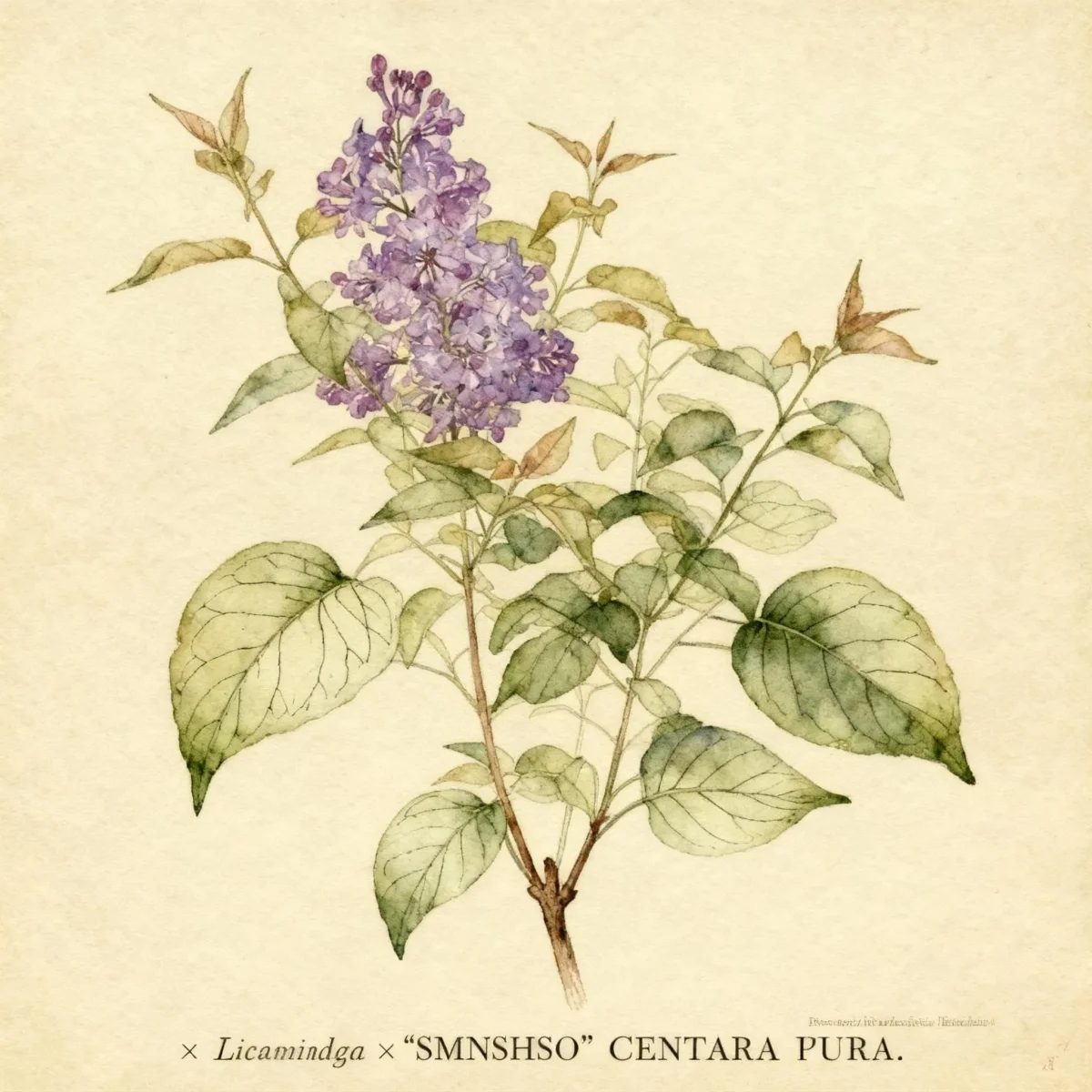
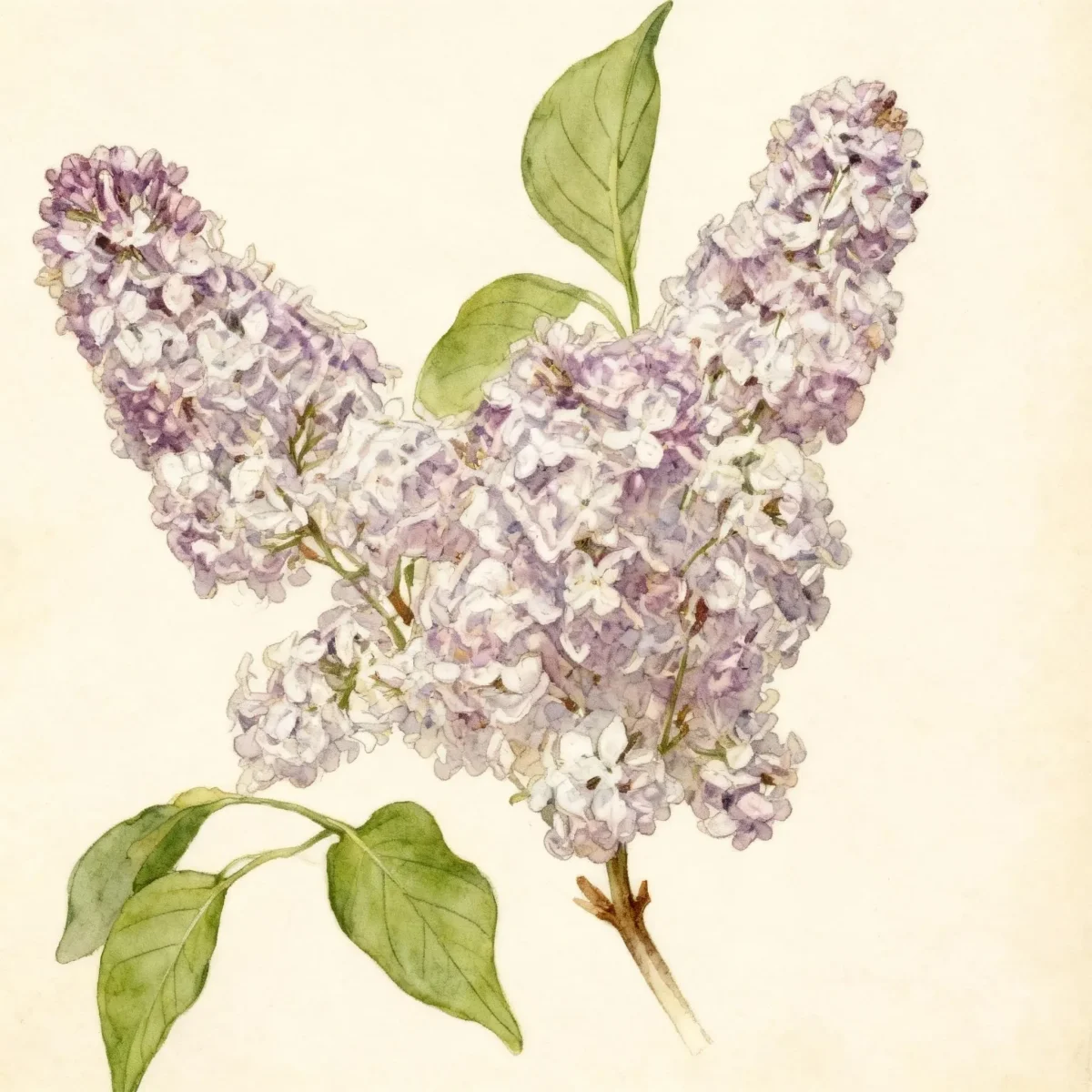
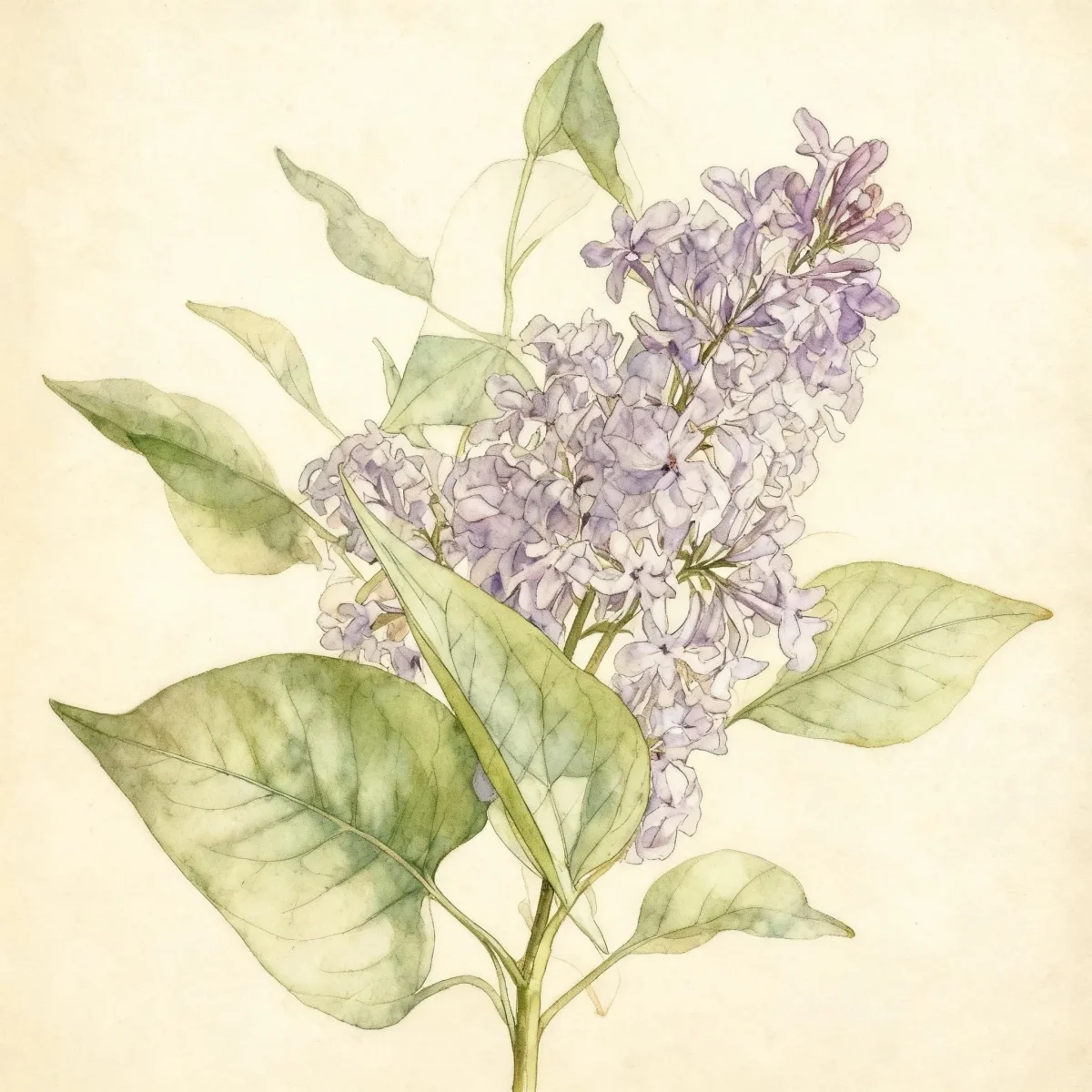
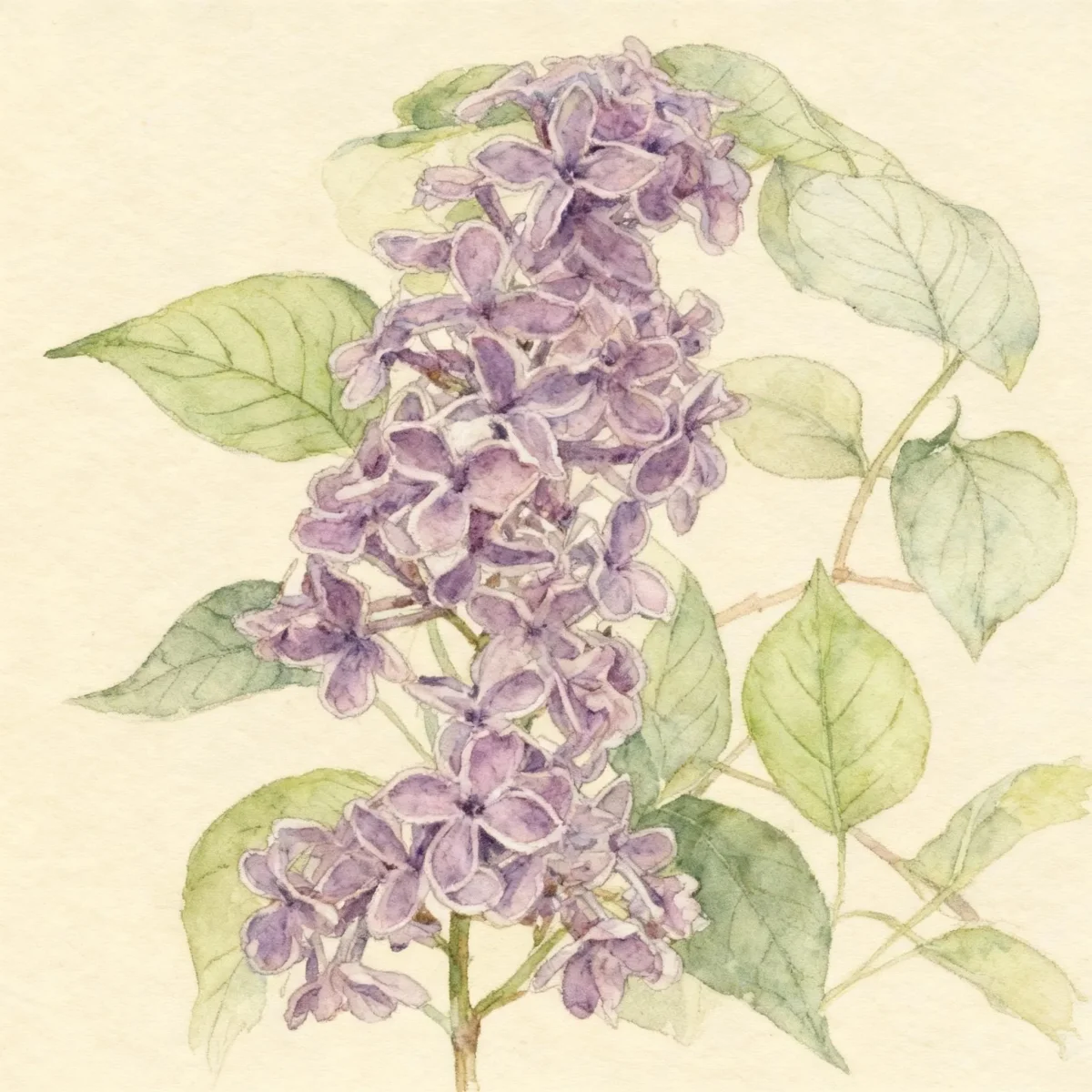
Common lilac (Syringa vulgaris)
The iconic Common lilac (Syringa vulgaris) offers stunning, fragrant spring blooms and is highly valued for specimen planting in cooler climates.
Scroll down to discover growing tips, care requirements, companion plants, and more

Complete Plant Information
Overview
The Common lilac, scientifically known as Syringa vulgaris, is celebrated globally for its intensely fragrant, mid to late spring flowers. This upright, multi-stemmed shrub provides remarkable aesthetic value, making it a staple in traditional and cottage gardens across compatible zones. While noted for its spectacular bloom, gardeners must ensure proper conditions to encourage prolific flowering.
Native to the rocky hills and open woodlands of southeastern Europe, Syringa vulgaris has naturalized extensively in North America since its introduction centuries ago. It is a reliable backbone plant in cold winter landscapes, maturing into a substantial, medium-sized shrub that can serve as an informal screen or hedge.
Beyond its classic lilac-purple display, this plant offers structural interest, although its post-bloom ornamental features can be limited by common summer mildew issues. For gardeners seeking powerful fragrance and reliable spring color, the Common lilac remains an excellent choice, provided the climate offers sufficient winter chilling.
Fast Facts
- Plant Family: Oleaceae
- Plant Type: Deciduous shrub
- Native Range: Southeastern Europe
- Hardiness Zones: USDA Zones 3-7
- Size at Maturity:
- Height: 12-16 ft
- Spread: 8-12 ft
- Bloom Time: May
- Bloom Description: Lilac-purple
- Sun Exposure: Full sun
- Water Needs: Medium
- Maintenance Level: Medium
How to Grow
Syringa vulgaris thrives when planted in full sun to ensure the best possible bloom set; while it tolerates light shade, full shade will severely limit flower production. Ideally, plant this shrub in average, medium moisture conditions, ensuring the soil is well-drained. The Common lilac prefers fertile, organically rich soils that are slightly acidic to slightly alkaline, and it definitely requires good air circulation to mitigate potential disease issues.
Watering should be consistent, maintaining medium soil moisture, especially during establishment, but avoid waterlogged conditions, as soggy soil is detrimental. Fertilizing is rarely necessary if planted in rich soil, but maintenance includes prompt removal of faded flower panicles immediately after flowering to encourage bud development for the following year. Promptly remove root suckers, especially on grafted varieties, to maintain the desired single-shrub form and prevent unwanted colonial spread.
Pruning should be performed strategically, ideally right after the flowering period concludes; this timing ensures you do not accidentally remove next year’s flower buds. Gardeners in hot, humid Zones 8 and above should be cautious, as insufficient winter chilling can lead to unreliable or absent blooming in the magnificent Syringa vulgaris.
Landscape Uses
The primary appeal of the Common lilac lies in its utility as a reliable spring feature in cold landscapes. Excellent as a specimen or accent, the powerful fragrance draws visitors to specific areas of the garden. It is frequently employed in shrub borders or allowed to mature into informal hedges or screens due to its robust, upright growth habit.
For a classic cottage garden aesthetic, group several Syringa vulgaris shrubs together, perhaps alongside early spring bulbs. They also work well in the margins of woodland gardens where sunlight filters through the canopy. Because of their excellent flower quality, they are highly valued as a source for good cut flowers, provided you can accommodate their mature size.
Standout Features
Flower Qualities
- Showy
- Fragrant
- Good Cut
Noteworthy Characteristics
Syringa vulgaris, commonly known as common lilac, is an upright, multi-stemmed, suckering, deciduous shrub in the olive family that typically matures to 12-16’ tall with a spread to 8-12’ wide. It is particularly noted for its mid to late spring (May) bloom of very fragrant, tubular, 4-lobed, lilac to purple flowers which bloom in large conical panicles. The genus name is derived from the Greek word syrinx, referencing the hollow stems found in some related species.
Tolerances
- Rabbit
- Deer
- Clay Soil
Potential Problems
The most frequent challenge faced by gardeners growing Syringa vulgaris is powdery mildew, which typically appears in summer. Powdery mildew creates unsightly whitish-gray patches on foliage, though it rarely causes permanent damage to the shrub’s overall health. To manage this, ensure excellent air circulation during planting and consider selecting mildew-resistant cultivars introduced in modern breeding programs.
The Common lilac is susceptible to various other issues, including blights, leaf spots, wilts, ring spot virus, and honey fungus. Potential insect pests requiring monitoring include borers, scales, leaf miners, thrips, and caterpillars. While deer tend to graze elsewhere, vigilance against pests and fungal issues is key to maintaining healthy foliage throughout the season.
Frequently Asked Questions
What hardiness zones is Common lilac suitable for?
The Syringa vulgaris is well-suited for USDA Hardiness Zones 3 through 7, requiring significant chill hours for reliable spring flowering.
How large does Common lilac grow?
This deciduous shrub typically reaches a mature height of 12 to 16 feet, with a spread generally growing between 8 and 12 feet wide.
What sun exposure does Common lilac need?
Syringa vulgaris absolutely requires full sun exposure for the best and showiest bloom display, although it can tolerate minimal light shade.
When does Common lilac bloom?
The signature bloom time for this shrub is May, offering panicles of lilac-purple flowers.
Conclusion
The incomparable fragrance and dependable spring performance cement the Common lilac (Syringa vulgaris) as an essential landscape plant for cooler regions. Its ability to tolerate clay soil and deer browsing makes it a surprisingly versatile addition to many properties. Before incorporating this classic shrub, verify your growing zone compatibility and plan your site selection to ensure maximum sun exposure for glorious May blooms.
Companion Planting
When designing a border featuring the Common lilac, consider pairing it with plants that share similar cultural requirements for sun and drainage. Plants that enjoy full sun and medium moisture, even if they bloom at different times, help create balanced visual interest. Early spring bulbs like tulips and daffodils look wonderful planted beneath the shrub, as they bloom before the lilac fully leafs out, taking advantage of the sun exposure before the canopy develops.
For mid-summer contrast, position lower-growing perennials near the front edge of the planting to draw the eye. Consider plants that offer bright flowers to offset the often-leggy appearance of the lilac in late summer. Good companions that can handle similar soil conditions include peonies or certain varieties of Siberian Iris.
Seasonal Care Calendar
Spring is the most critical time for Syringa vulgaris. Immediately following flowering in May, deadhead spent blooms to direct energy away from seed production and towards next year’s buds. If the shrub is becoming overly dense or leggy, this is the optimal time for corrective pruning, cutting back older wood to improve air circulation.
Throughout the summer, monitor the foliage closely for signs of powdery mildew. Avoid overhead watering in the late afternoon to keep leaves drier, which can slightly reduce fungal outbreaks. In autumn, resist the urge to heavily prune; focus on removing any dead or diseased wood only. Consistent care ensures robust winter hardiness for the coming season.