California poppy (Eschscholzia californica)
Discover the iconic Eschscholzia californica, the California poppy. A low-maintenance, sun-loving bloom producer for Zones 6-10.
Scroll down to discover growing tips, care requirements, companion plants, and more
Complete Plant Information
Overview
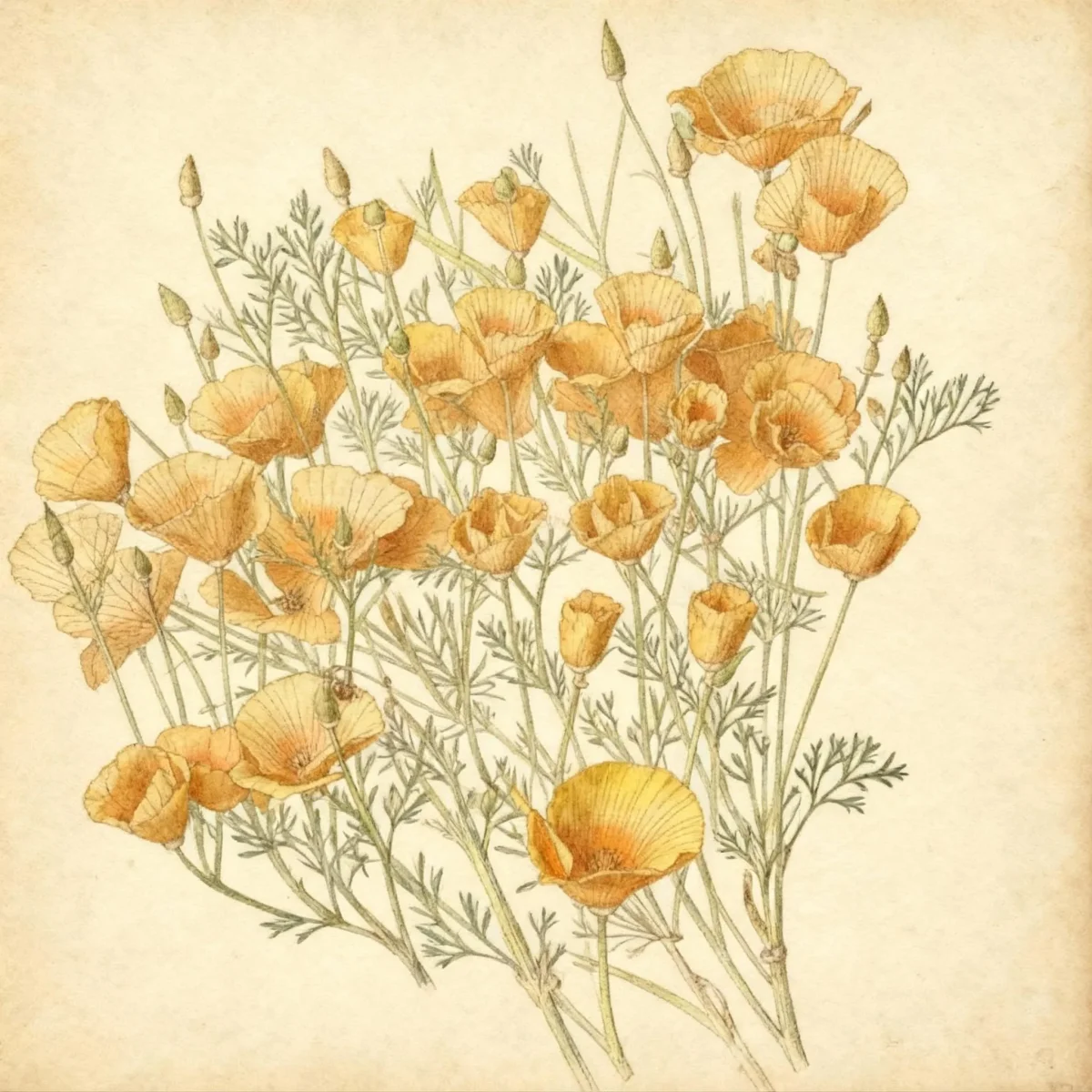
The California poppy (Eschscholzia californica) is celebrated for its vibrant, silky, cup-shaped flowers that blanket landscapes in shades of orange and yellow. As the official state flower of California, this plant brings iconic Western sunshine into any garden setting, functioning beautifully as a cool-weather annual or a short-lived perennial depending on your climate. It is highly valued for its drought tolerance once established and its remarkably low maintenance needs, thriving where many other ornamentals struggle.
This species forms loose mounds of finely divided, blue-green foliage, providing excellent texture contrast against its bright blooms floating on long stems. Eschscholzia californica is easy to establish via direct seeding and possesses an endearing habit of closing its flowers during cloudy weather or at night, only to reopen them faithfully with the morning sun. Gardeners appreciate the spectacular display the California poppy offers from late spring through mid-summer.
While known for its signature orange, cultivars of Eschscholzia californica expand the color palette to include pinks, whites, and reds. Its tolerance for poor soils makes it an undemanding addition to hot, dry borders or naturalized meadows where its ability to self-seed is a welcome characteristic.
Fast Facts
- Plant Family: Papaveraceae
- Plant Type: Herbaceous perennial
- Native Range: Western United States
- Hardiness Zones: USDA Zones 6-10
- Size at Maturity:
- Height: 1-1.5 ft
- Spread: 1-1.5 ft
- Bloom Time: June to July
- Bloom Description: Orange to orange-yellow
- Sun Exposure: Full sun
- Water Needs: Medium
- Maintenance Level: Low
How to Grow
Planting the California poppy is best achieved by sowing seed directly into the garden after the danger of the last spring frost has passed. In USDA Zones 6 through 10, however, you can sow seeds successfully in the fall for earlier spring color. Eschscholzia californica requires full sun and, critically, sharp soil drainage; it dislikes heavy or consistently wet conditions. It grows readily in sandy, poor to average soils, demonstrating resilience in less-than-ideal growing mediums.
Once established, water needs are moderate. While it prefers consistent moisture during establishment, mature plants show considerable drought tolerance, aligning with its native habitat on dry hillsides. Avoid high-nitrogen fertilizers, as these often encourage excessive foliage growth at the expense of blooms.
To maximize the summer flowering period of this low-maintenance plant, deadhead spent flowers regularly throughout the season. Be mindful, however, to leave some flowerheads to dry and shatter naturally; the California poppy readily self-seeds, ensuring its return next year, particularly where it can perform as a short-lived perennial in Zones 8-10.
Landscape Uses
The bright, cheerful nature of the California poppy makes it an excellent choice for softening hardscape edges or adding immediate color to borders. Its relatively compact height (1 to 1.5 feet) ensures it never overpowers smaller companion plants, making it ideal for border fronts or mingling within rock gardens. For large-scale impact, allow Eschscholzia californica to naturalize freely in open areas or along pathways where its ephemeral nature can carpet the ground with warm color.
Its tolerance for dry, lean soils makes it a perfect partner for other sun-worshipping, drought-tolerant perennials and native grasses. Consider planting it alongside Sedum, Yarrow, or various types of ornamental Salvia, which share similar cultural demands and bloom times, creating a consistently sunny, low-water display.
This adaptable plant also performs wonderfully in containers, where gardeners can easily control the soil drainage crucial for its success. Remember that the foliage of the California poppy will turn straw-brown after the primary flowering session concludes, so ensure it is interplanted with summer bloomers that can take over as the poppies naturally go dormant.
Standout Features
Flower Qualities
- Showy
Noteworthy Characteristics
The genus name honors Johann Friedrich Eschscholtz. Eschscholzia californica, the famed California poppy, is recognized by its finely divided, fern-like, blue-green leaves which contrast beautifully with its typically bright orange, silky, 4-petaled flowers, measuring about 3 inches in diameter. These flowers bloom from late spring into early summer, generally closing up during rain or at night before giving way to dehiscent seed capsules.
Tolerances
Potential Problems
The California poppy is fortunate to have virtually no serious insect or disease problems, contributing significantly to its low maintenance requirements in the garden. Gardeners should focus primarily on ensuring excellent drainage, as wet feet are the most common cause of poor performance or root issues. Avoid over-fertilizing, which can lead to floppy, unproductive growth instead of abundant blooms.
Frequently Asked Questions
What hardiness zones is California poppy suitable for?
The Eschscholzia californica is hardy in USDA Zones 6 through 10, though it often performs best as an annual outside of Zones 8-10 where it has a better chance of returning the following season.
How large does California poppy grow?
When mature, the California poppy typically reaches a height between 1 and 1.5 feet, with a similar spread of 1 to 1.5 feet, forming loose, free-branching mounds.
When does California poppy bloom?
This popular annual blooms from June to July, offering masses of characteristic orange to orange-yellow flowers that are highly visible throughout the early summer landscape.
What sun exposure does California poppy need?
Eschscholzia californica requires full sun exposure to produce its best flowering display and maintain compact growth habits.
Conclusion
The easy-going nature, brilliant color saturation, and native appeal of the California poppy (Eschscholzia californica) make it an essential element for sunny, dry garden spaces. Its ability to thrive in poor soil with minimal water input saves time and resources while delivering spectacular early summer color. Check your local frost dates and plan to direct-sow your seeds for the best results with this iconic Western native.
Companion Planting
When designing drifts of sun-loving, drought-tolerant species, the low-growing structure of Eschscholzia californica serves as an excellent living mulch layer. Pair it with plants that appreciate well-drained conditions and full summer sun, such as Lavender (Lavandula spp.) or Russian Sage (Perovskia atriplicifolia). These heavier companions will provide structural interest later in the season while the California poppy provides the initial burst of color.
For meadow-style plantings, consider interspersing the poppies with native grasses that have similar low fertility requirements. Look for native coneflowers or coreopsis varieties that complement the warm tones of the orange flowers without competing heavily for nutrients or water, creating a cohesive, low-input landscape.
Propagation Tips
One of the greatest advantages of growing the California poppy is its simple propagation method. Plants are grown most reliably by sowing seed directly into the garden bed as mentioned previously. If you wish to start seeds early indoors, use biodegradable pots to minimize transplant shock, as the root system is somewhat delicate.
When the flowers are spent, allow the resulting seed capsules to dry completely on the plant before harvesting them. The seed capsule, once ripe, will split open readily to release the small black seeds, which should be stored in a cool, dry place until the appropriate planting time arrives. Allowing some seeds to drop naturally in the garden is the simplest way to ensure continuous coverage year after year.