Pokeweed (Phytolacca americana)
Vigorous herbaceous perennial, Phytolacca americana (Pokeweed), features showy reddish-purple stems and dark berries. Low maintenance for zones 4-8.
Scroll down to discover growing tips, care requirements, companion plants, and more
Complete Plant Information
Overview
Phytolacca americana, widely known as Pokeweed, is a striking and aggressively fast-growing herbaceous perennial native to clearings and roadsides throughout the Southeastern United States. Despite its common classification as a weed due to its size and toxicity, it offers significant ornamental appeal with its tall stature and dramatic late-season fruit display. For gardeners interested in bold texture and native vigor, this plant certainly stands out with its reddish-purple stems.
This plant thrives easily in average garden conditions, preferring medium moisture and well-drained soil. A key characteristic of Phytolacca americana is its tendency to naturalize freely by self-seeding, making it a low-maintenance choice when its location is carefully considered. Grow this plant where its height, rapid growth, and the dramatic color of its mature berries can be appreciated, while respecting its poisonous nature.
Bird populations highly favor the berries produced by Pokeweed, though gardeners must use caution. All parts of the mature Phytolacca americana are toxic to humans, including the roots and dark berries, though historically, the young shoots were prepared as a vegetable green known as poke sallet.
Fast Facts
- Plant Family: Phytolaccaceae
- Plant Type: Herbaceous perennial
- Native Range: Southeastern United States
- Hardiness Zones: USDA Zones 4-8
- Size at Maturity:
- Height: 4-10 ft
- Spread: 2-3 ft
- Bloom Time: July to September
- Bloom Description: Greenish-white
- Sun Exposure: Full sun to part shade
- Water Needs: Medium
- Maintenance Level: Low
How to Grow
Phytolacca americana is known for being exceptionally easy to establish. The best time for planting seeds or divisions is typically in spring after the danger of hard frost has passed. Ensure the planting location provides plenty of space, accommodating its potential height of up to 10 feet, and guarantees good drainage, as standing water is detrimental. Although it prefers consistently moist soil, this robust species can handle short dry spells once established.
Maintenance for Pokeweed is generally low, aligning with its status as a vigorous self-seeder. No special fertilization is usually required; average garden fertility is sufficient. If you choose to propagate, seeds or cuttings can be used, but be aware that the plant develops a very large taproot, which can make transplanting established specimens difficult.
Due to its massive taproot and aggressive reseeding, management often focuses more on containment than cultivation. If you wish to restrict spread, cut back flower stalks before the green berries fully ripen and darken. While it is cold-hardy, cutting back dead foliage in late fall or early spring tidies the appearance after winter dormancy.
Landscape Uses
The primary suggested use for Phytolacca americana is to naturalize it in large, unmanicured areas where its aggressive growth habit is an asset rather than a liability. It works perfectly in native plant areas, meadow borders, or along property edges where it can create a dense, tall screen without intensive care. Think twice before introducing it near vegetable patches, children’s play areas, or where pets frequently graze due to its toxicity.
While it is an imposing specimen, its dramatic flowers and eventual dark purple fruits attract various birds native to the region. Consider planting Phytolacca americana along a fence line where its height is less conspicuous, allowing its ornamental features to take center stage without dominating smaller, less vigorous perennials. It creates a wonderful, informal backdrop for shorter, colorful summer bloomers.
Flower Qualities
- Showy
Fruit Qualities
- Showy
Noteworthy Characteristics
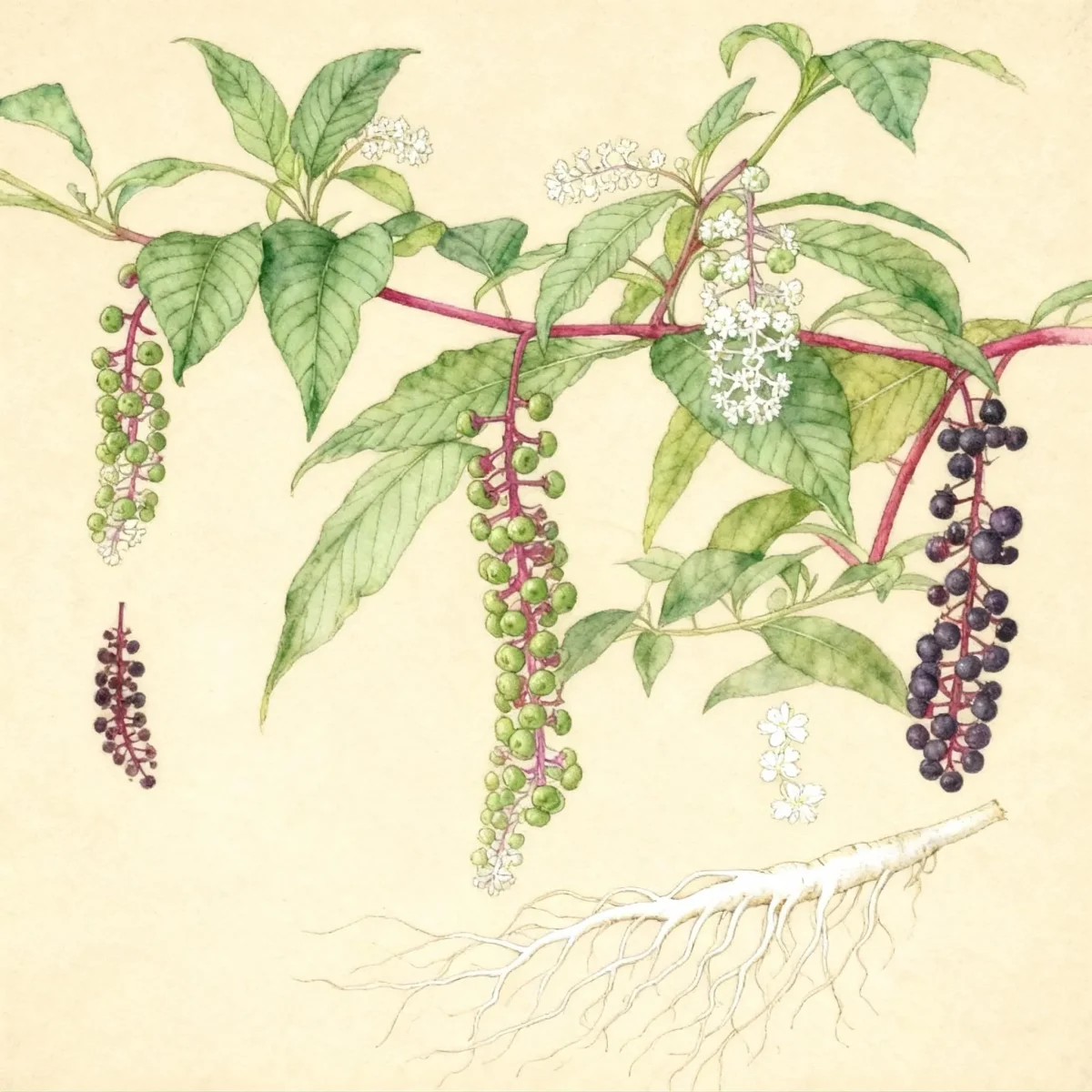
Phytolacca americana, commonly known as pokeweed, features showy reddish-purple stems and large alternate green leaves that can emit an unpleasant odor when bruised. Its summer bloom consists of greenish-white flowers in slender racemes, developing into grape-like, deep reddish-purple fruits about 30 days later. This vigorous perennial is widespread across eastern North America, possessing large taproots, but caution is required as all mature parts are poisonous, contrasting sharply with the historical local tradition of eating its young shoots.
Tolerances
- Rabbit
Potential Problems
Phytolacca americana is remarkably free of serious insect pests or common diseases, making it structurally quite hardy. The primary concern noted is susceptibility to mosaic virus, which could potentially impact leaf quality. If viral infection occurs, management usually involves removing and destroying the infected plant material to prevent further spread, as chemical treatments are often ineffective in the home garden setting.
Frequently Asked Questions
What hardiness zones is Pokeweed suitable for?
Phytolacca americana is winter-hardy and thrives across a wide range, suitable for USDA Zones 4 through 8.
How large does Pokeweed grow?
This herbaceous perennial is quite substantial, typically reaching a height between 4 and 10 feet, with a spread ranging from 2 to 3 feet wide.
What sun exposure does Phytolacca americana need?
This plant performs best when situated in locations that receive full sun to part shade, making it quite adaptable to various light conditions across the landscape.
When does Pokeweed bloom?
The bloom time for Phytolacca americana stretches through mid to late summer, specifically from July to September, producing attractive, greenish-white flowers.
Conclusion
Phytolacca americana, or Pokeweed, offers gardeners a low-maintenance, high-impact native that commands attention with its towering stature and showy fruit display, particularly beneficial for attracting local birdlife. While its vigor and toxicity require mindful placement, its hardiness in Zones 4-8 ensures wide applicability across the Southeast. Ensure you check your local regulations and plan placement carefully to harness the power of this unique perennial.
Companion Planting
When establishing Phytolacca americana in a naturalized area, consider pairing it with fast-growing native grasses or robust perennials that can compete for space and mask the plant’s sparser lower growth. Rudbeckia species thrive in similar sunny to partially shaded, well-drained conditions and offer a strong visual contrast to the darker stems of Pokeweed. Planting larger, less manageable specimens near existing thickets or woodland edges helps contain self-seeding without requiring constant intervention.
Propagation Tips
Propagating Phytolacca americana is best done via seed, though this requires patience as the seeds mature through the summer on those characteristic drooping racemes. Alternatively, division of the substantial, fleshy taproot is possible, but this should only be attempted early in the spring before the main growth flush begins, as the large root is easily damaged. Due to the vigorous nature of this species, many gardeners find that simply allowing the plant to self-seed in areas where its size is welcome is the easiest propagation method.