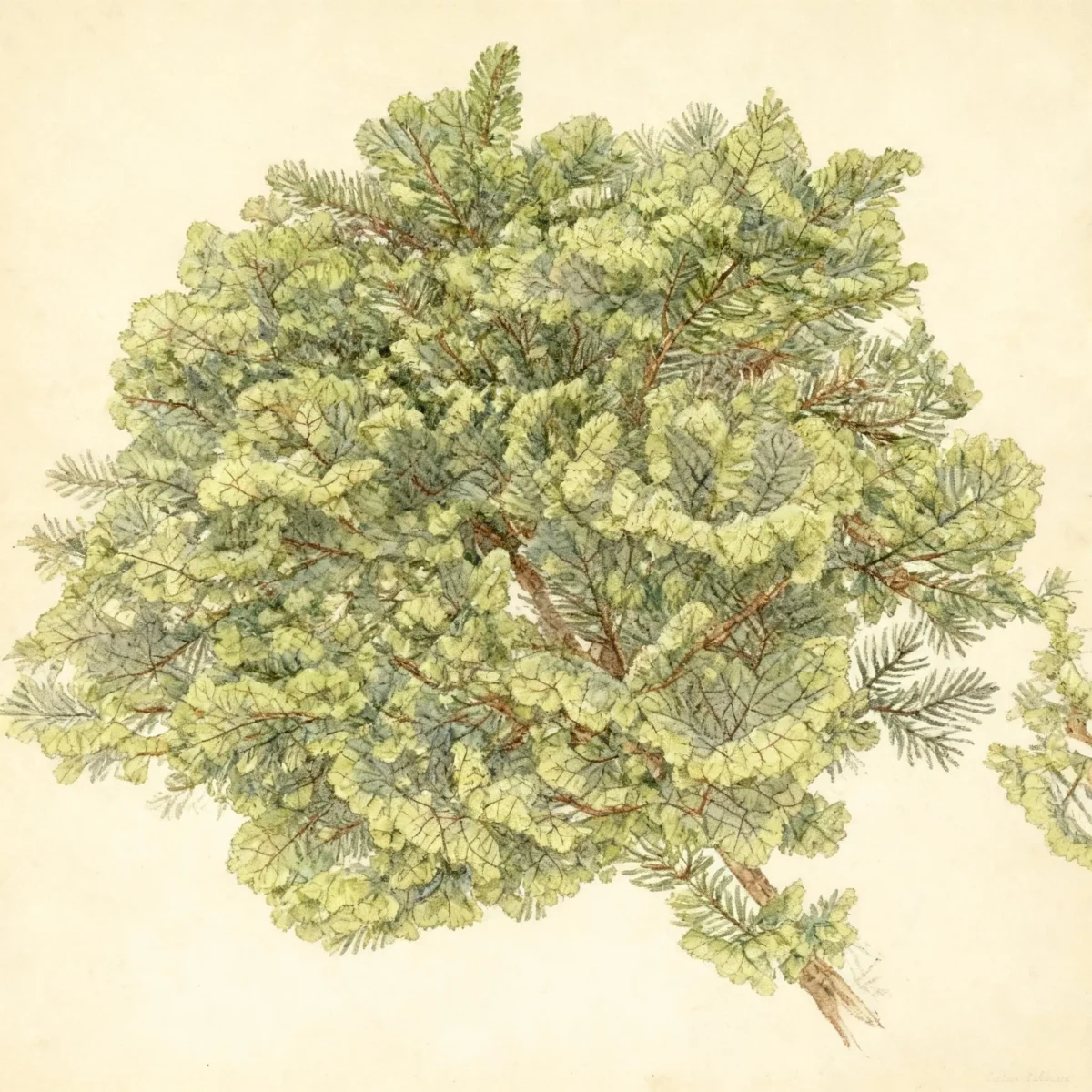
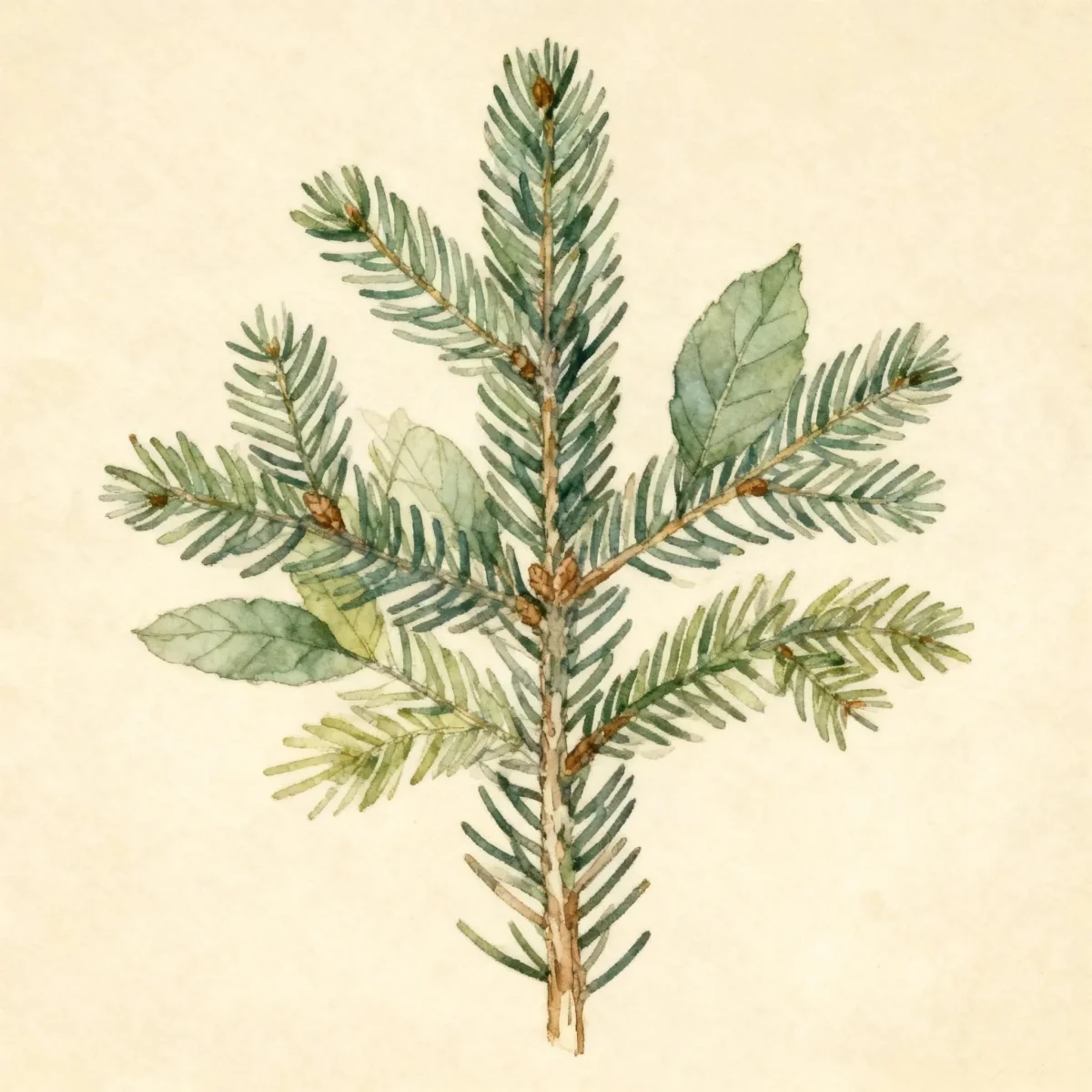
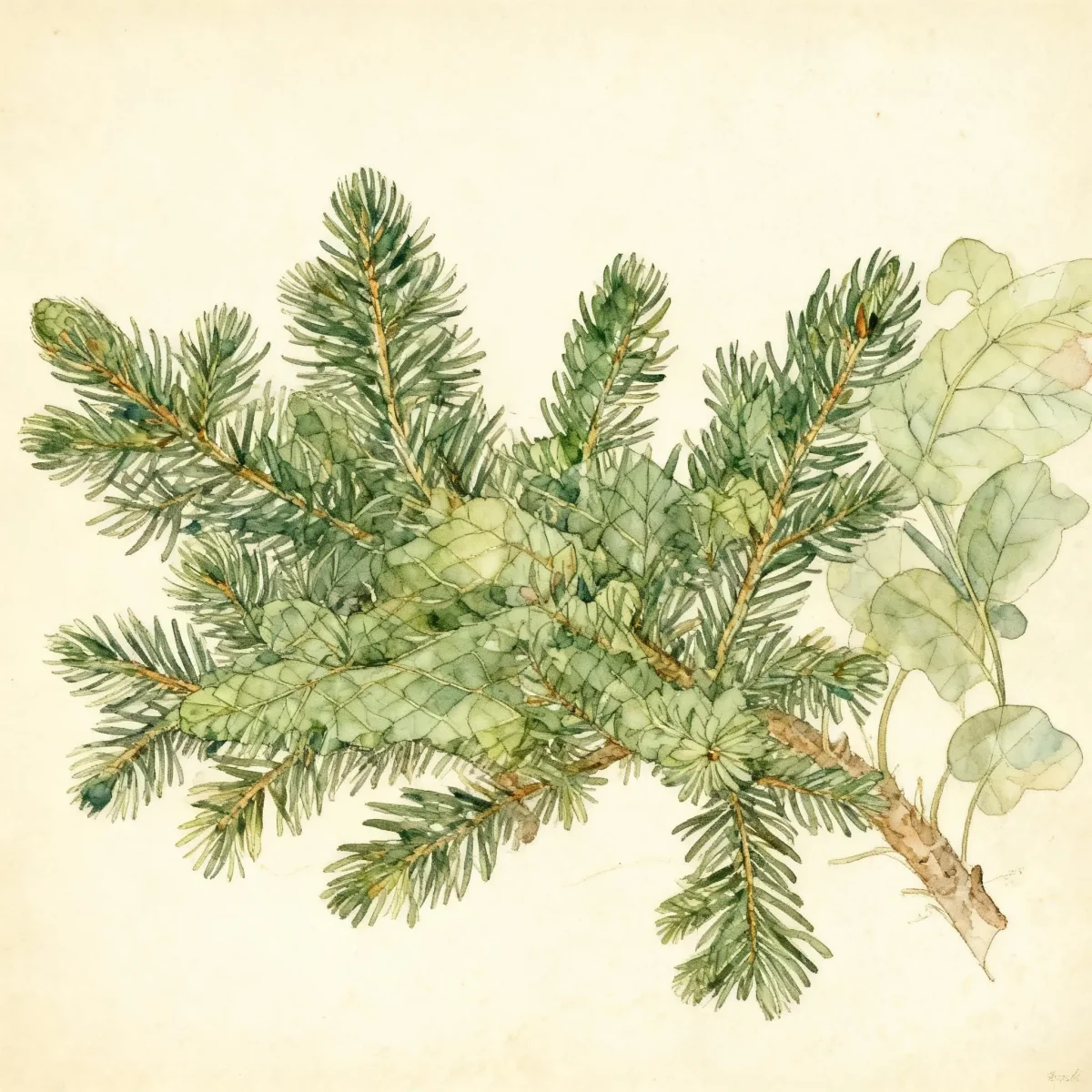
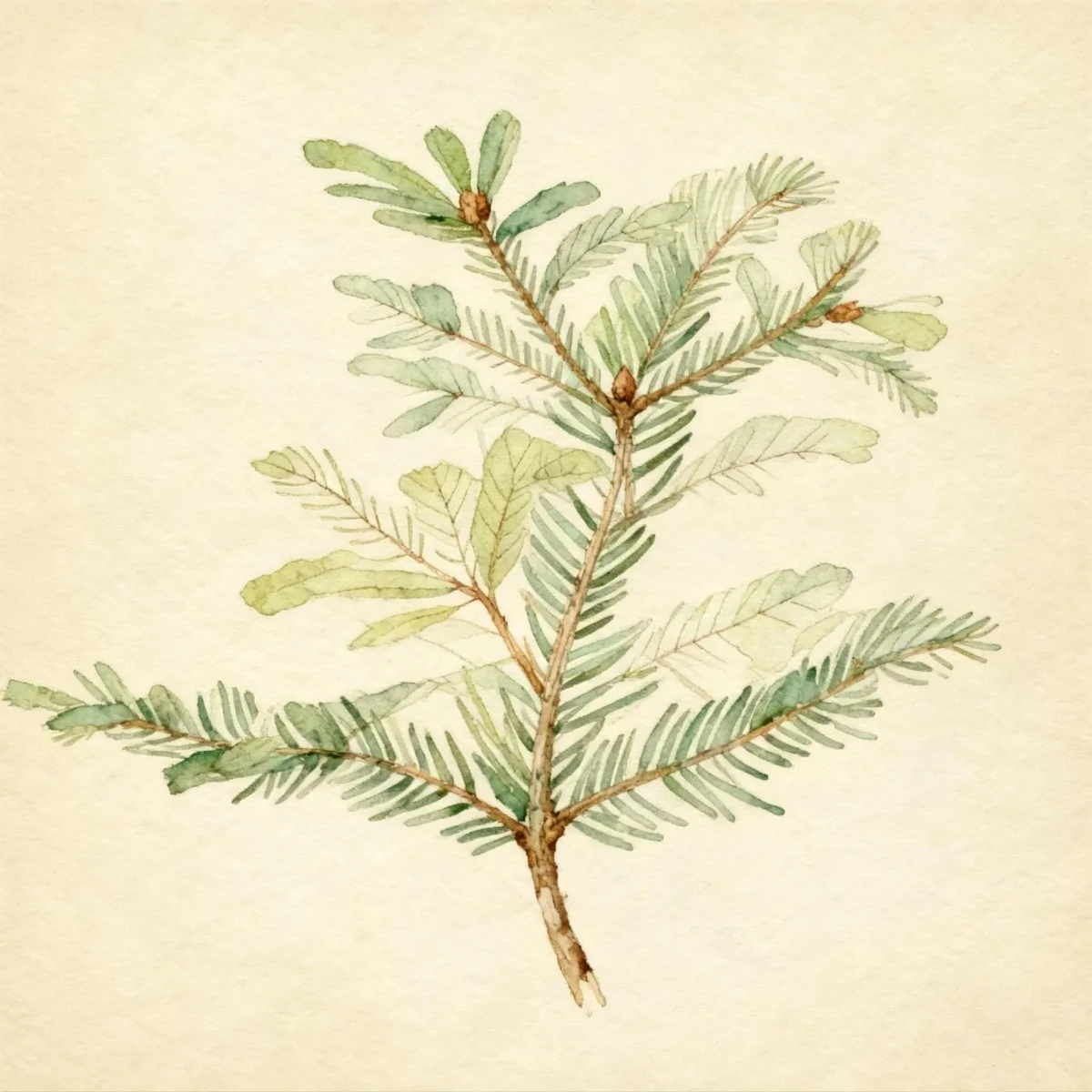
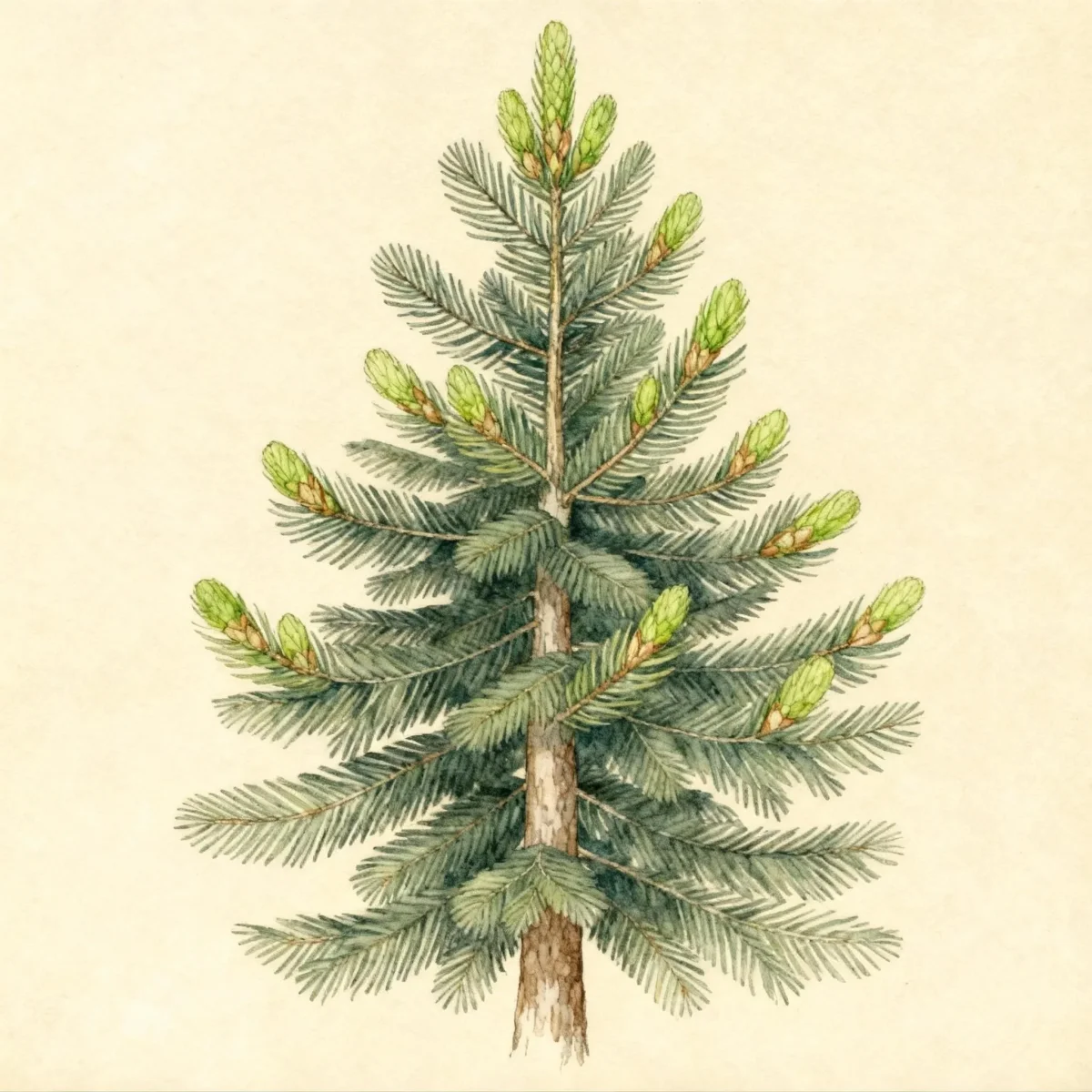
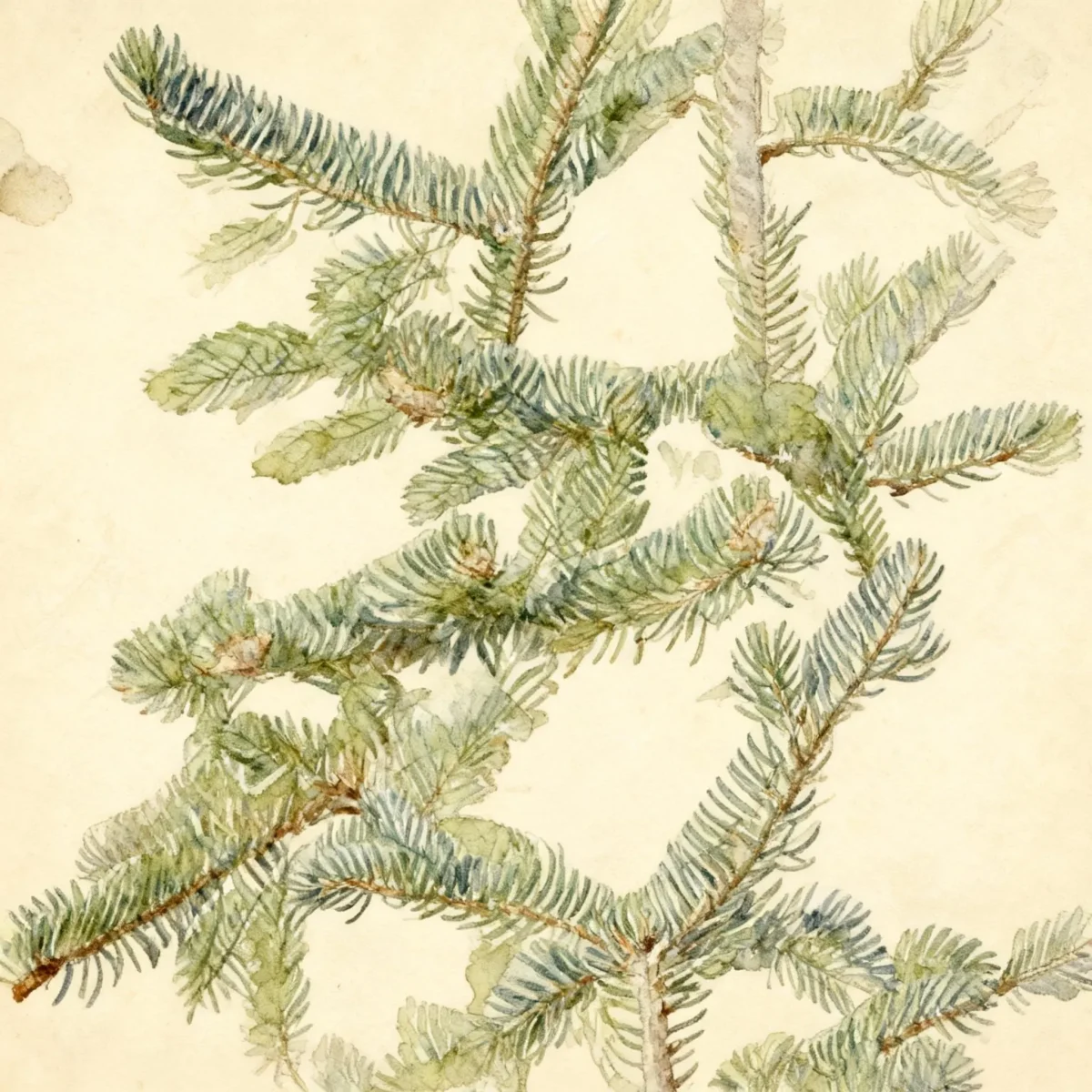
Balsam fir (Abies balsamea)
Discover Abies balsamea, the aromatic Balsam fir. A native conifer, perfect for cool climates in USDA Zones 3-6.
Scroll down to discover growing tips, care requirements, companion plants, and more
Complete Plant Information
Overview
The Balsam fir (Abies balsamea) is a quintessential North American native, highly valued for its classic symmetrical, pyramidal shape and intensely fragrant foliage. This aromatic conifer is a primary component of the colder boreal forests, offering year-round deep green structure to the landscape. Gardeners seek out Abies balsamea for its stately presence and its pleasing scent, especially when used as a specimen tree.
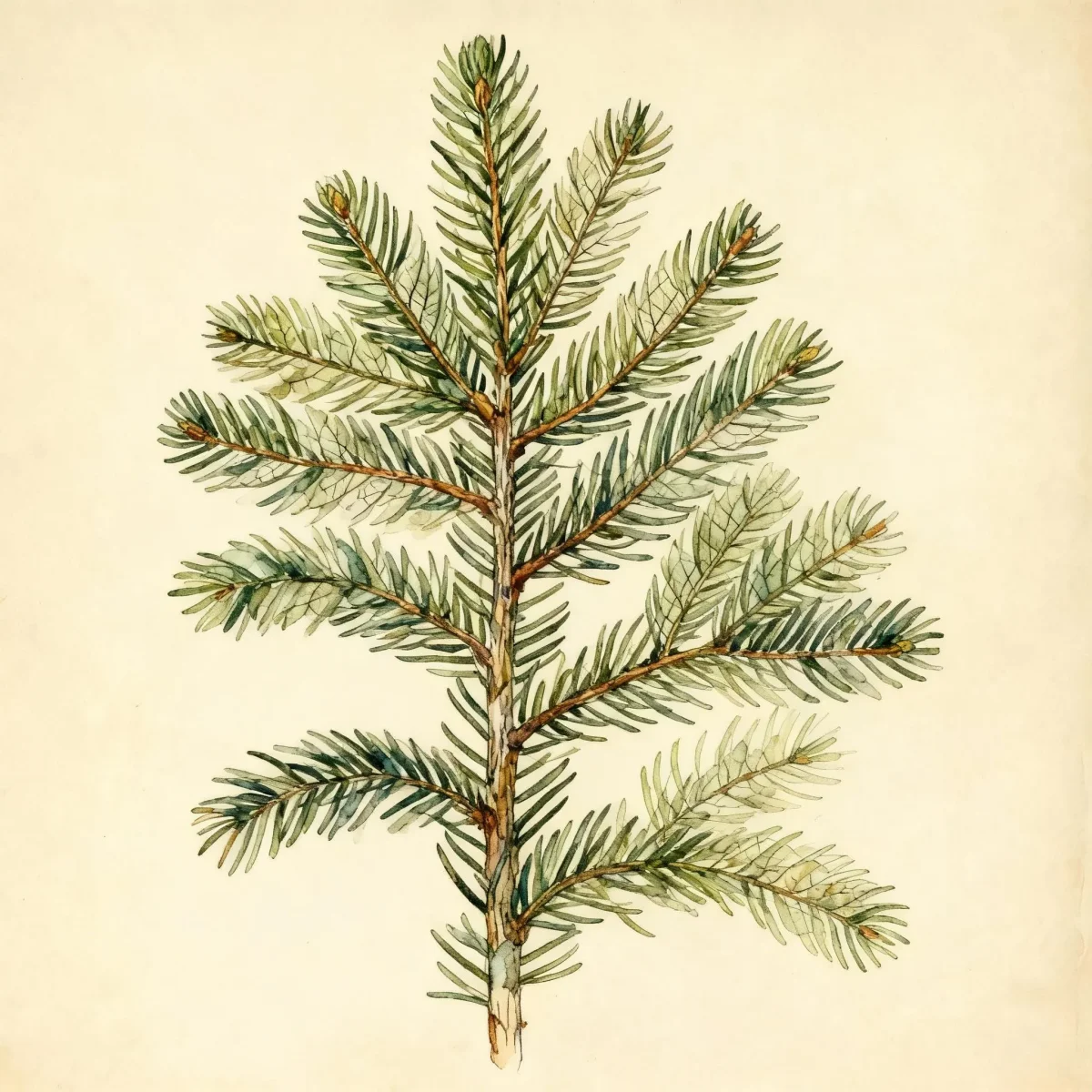
This evergreen conifer typically reaches heights between 50 and 70 feet, maintaining a relatively narrow profile ideal for larger properties. Its needles are flat, shiny, and dark green above, often displaying two bright white bands beneath, contributing to its overall visual appeal. The sticky resin found beneath the bark, which gives the Abies balsamea its specific epithet, is historically recognized for its pleasant fragrance.
While celebrated for its beauty, successful cultivation of the Balsam fir requires mirroring its cool, moist, native habitat. It thrives in rich, slightly acidic, well-drained soils and requires medium moisture. Due to its sensitivity to heat and humidity, it is crucial to assess local climate conditions before planting this magnificent species outside its ideal hardiness range.
Fast Facts
- Plant Family: Pinaceae
- Plant Type: Needled evergreen
- Native Range: North America
- Hardiness Zones: USDA Zones 3-6
- Size at Maturity:
- Height: 50-70 ft
- Spread: 15-25 ft
- Bloom Time: Non-flowering
- Bloom Description: Non-flowering
- Sun Exposure: Full sun to part shade
- Water Needs: Medium
- Maintenance Level: Medium
How to Grow
For optimal establishment, plant Abies balsamea during the cooler seasons—early spring or fall—to minimize transplant stress. Site selection is critical; choose a location that guarantees rich, consistently moist, and well-drained soil. This species strongly prefers slightly acidic conditions. While it tolerates part shade, the Balsam fir performs best when situated in full sun, provided the summer heat is not excessive.
Maintain medium water needs, ensuring soil remains consistently damp but never waterlogged, especially during dry spells. Avoid heavy clay soils entirely, as drainage is notoriously poor in such media, leading to root issues. Fertilizing is rarely necessary if the soil preparation was correct; excessive inputs can sometimes encourage weak, disease-prone growth.
As this tree is native to cool climates, gardeners in warmer regions (south of USDA Zone 5) should exercise extreme caution; high heat and humidity significantly stress the Abies balsamea. Pruning should be minimal, focusing only on removing dead or damaged lower limbs as the tree matures, as shearing can damage the natural pyramidal form. Winter protection against drying winter winds is advisable in the northernmost edges of its range.
Landscape Uses
The Balsam fir excels as a stately specimen fir, anchoring the landscape with its deep green texture throughout the year. Its symmetrical, narrow pyramidal habit makes it an excellent focal point where vertical interest is desired, provided ample space is available for its mature spread of up to 25 feet. Commercially, it is renowned as a popular Christmas tree due to its attractive fragrance and excellent needle retention after cutting.
When planning your landscape design, consider placing the Abies balsamea where its fragrance can be appreciated—near walkways or outdoor living spaces. Due to its eventual significant size, plan groupings carefully, spacing specimens far enough apart to allow the crowns to develop fully without crowding. While not ideally suited for small urban settings, in rural or large suburban gardens in zones 3 through 6, it provides superb screening and backdrop texture.
Design companions should share similar cultural needs, favoring slightly acidic, cooler, moist soils. Pairing the upright form of the Balsam fir with lower-growing, mounding shrubs that enjoy similar conditions can create beautiful textural contrast without competition. Note, however, that this specific variety is generally not recommended for areas experiencing prolonged hot, humid summers.
Standout Features
Noteworthy Characteristics
Abies balsamea, commonly called balsam fir, is native to moist woods and bottomlands from Labrador to Alberta south to northern Minnesota, Wisconsin, New England, New York and further south in the Appalachians to Virginia. This is an aromatic, symmetrical, narrow, pyramidal to conical evergreen conifer with a spire-like crown, typically growing to 50-70’ tall. Resinous branches are densely clad with flattened, shiny, dark green needles, and its distinctive upright cones disintegrate after ripening, leaving only the central spike.
Tolerances
- Trees are generally intolerant of urban pollution
Potential Problems
The Balsam fir faces several biotic threats that require vigilant monitoring, particularly regarding insects. Key insect pests to watch for include the devastating Balsam woolly adelgids, bark beetles, and spruce budworms. Less severe, but still present, are aphids, bagworms, and various scales. Spider mites may become an issue if the tree is stressed by hot environmental conditions.
Diseases can also compromise the health of Abies balsamea. Common fungal issues include cankers, various forms of rot (heart rot and root rot), needle rust, and twig blight. Avoiding planting in heavy clay or areas with poor air circulation can help mitigate some disease pressure.
Management involves integrated pest management strategies, including timely scouting for early signs of infestation. Since this species is intolerant of urban pollution, site selection near heavy roadways or industrial areas should be strictly avoided to reduce overall environmental stress that predisposes the tree to attack.
Frequently Asked Questions
What hardiness zones is Balsam fir suitable for?
The Balsam fir (Abies balsamea) is reliably hardy in USDA Zones 3 through 6.
How large does Balsam fir grow?
This species typically matures to a height between 50 and 70 feet, with a spread ranging from 15 to 25 feet wide.
What sun exposure does Abies balsamea need?
Abies balsamea prefers full sun for the best growth, though it can tolerate light, filtered partial shade conditions.
When does Balsam fir bloom?
This plant is a conifer and is non-flowering; instead, it produces upright seed cones.
Conclusion
The Abies balsamea, or Balsam fir, is a magnificent choice for gardeners situated in cool, northern climates seeking a classic, aromatic evergreen structure. Its symmetrical beauty makes it a commanding specimen, provided its requirements for rich, moist, acidic soil are met. Before planting, ensure your location falls within USDA Zones 3-6 and offers adequate space for this substantial tree to reach its full, fragrant potential.
Companion Planting
Selecting suitable neighbors is crucial for maintaining the health of Abies balsamea, given its strict soil moisture and pH preferences. Plants that thrive in cool, moist, rich, and slightly acidic woodlands make excellent companions. Consider groundcovers like Wintergreen (Gaultheria procumbens) or shade-tolerant ferns that enjoy similar understory conditions, as they will not compete aggressively for topsoil nutrients.
Avoid shallow-rooted, high-pH-loving shrubs near your Balsam fir, as competition for water and unsuitable soil chemistry will stress the tree. Generally, large masses of deciduous trees that naturally occur alongside firs in boreal or moist Appalachian forests—such as certain maples or birches—can create a beneficial microclimate, though root competition must still be managed during establishment.
Design Ideas
The formal, narrow habit of the Balsam fir lends itself well to classical or colonial landscape designs where symmetry and structure are paramount. Plant a single Abies balsamea as a majestic centerpiece in a large lawn or use a staggered grouping of three along a long property line to create a solid, imposing winter screen. Its deep green provides a perfect, neutral backdrop against which to showcase brightly colored flowering shrubs in the spring and summer.
For a more naturalistic, woodland-edge planting, incorporate native rhododendrons or azaleas, which share the affinity for acidic soil. Ensure these flowering shrubs are placed slightly to the side or front of the fir, allowing its lower branches room to develop naturally without permanent shading or obstruction. The cones, which appear purple when young and stand upright, offer subtle visual interest high in the canopy.