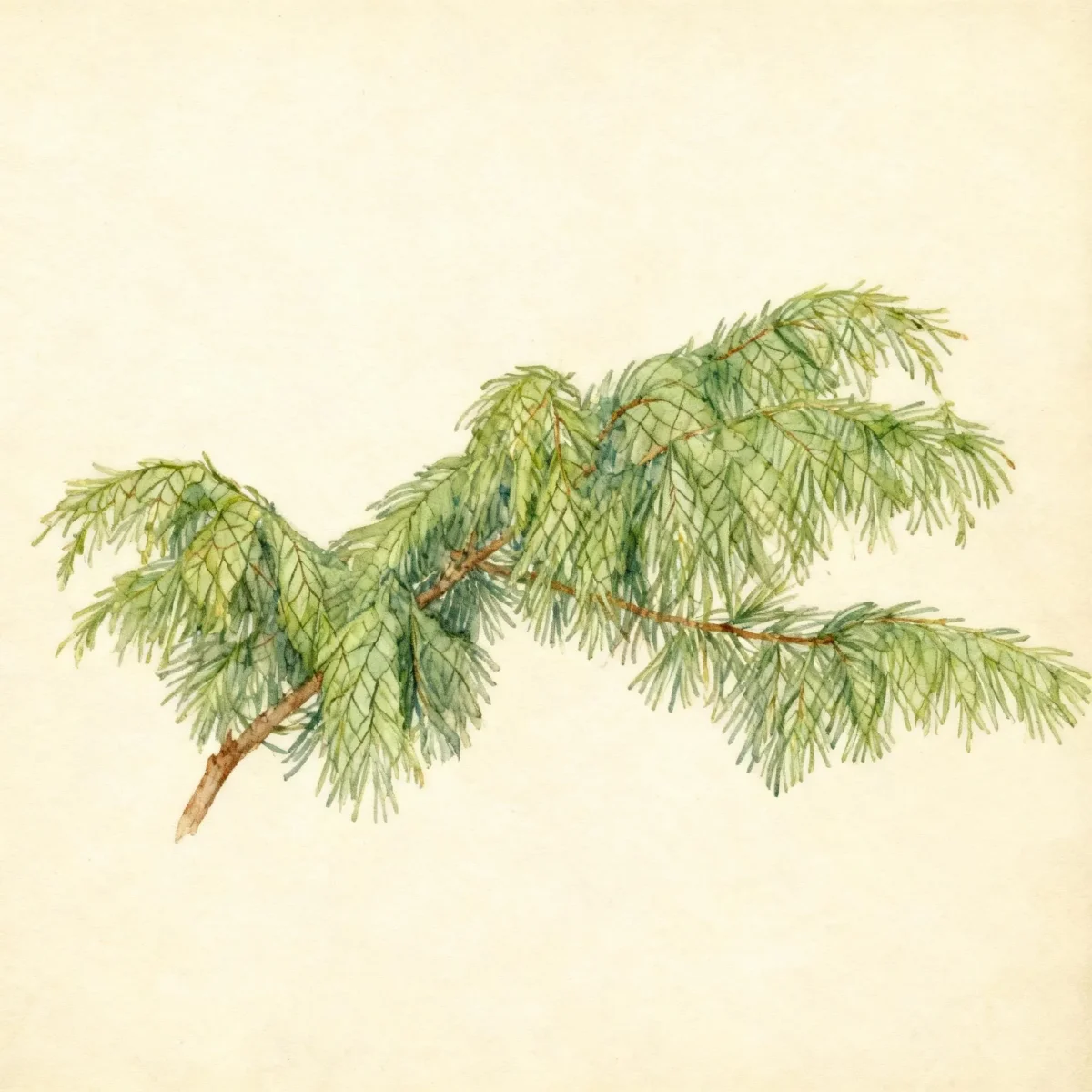
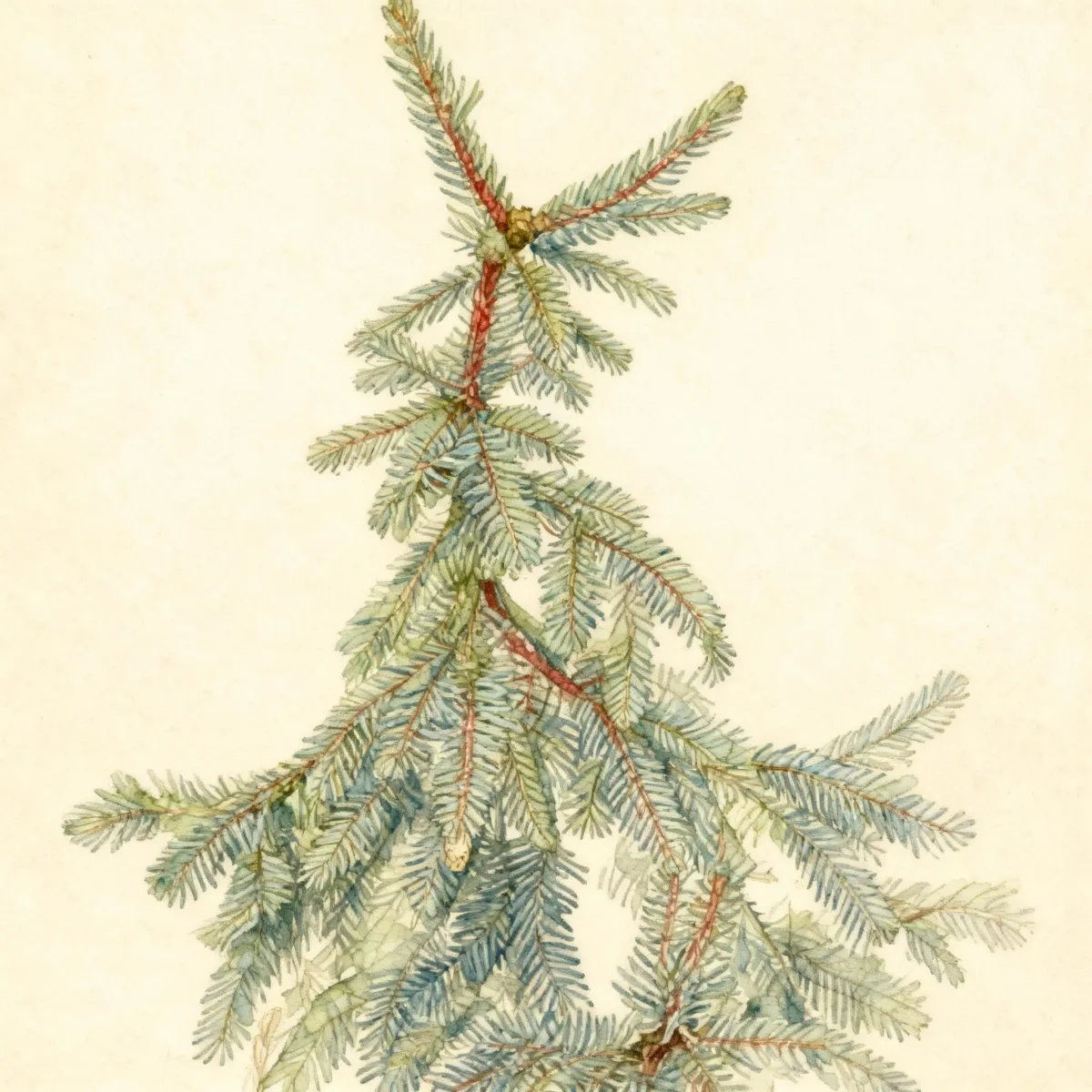
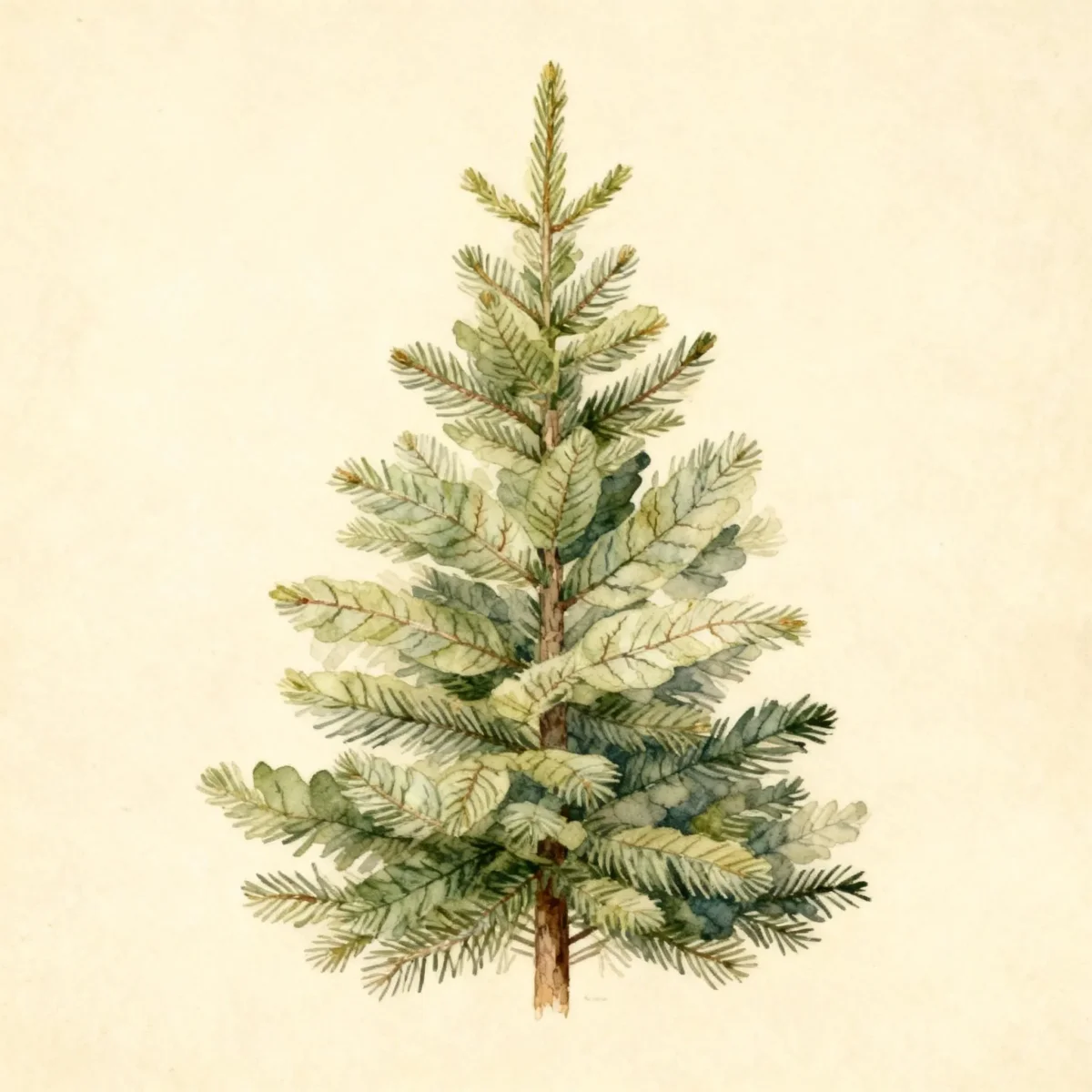
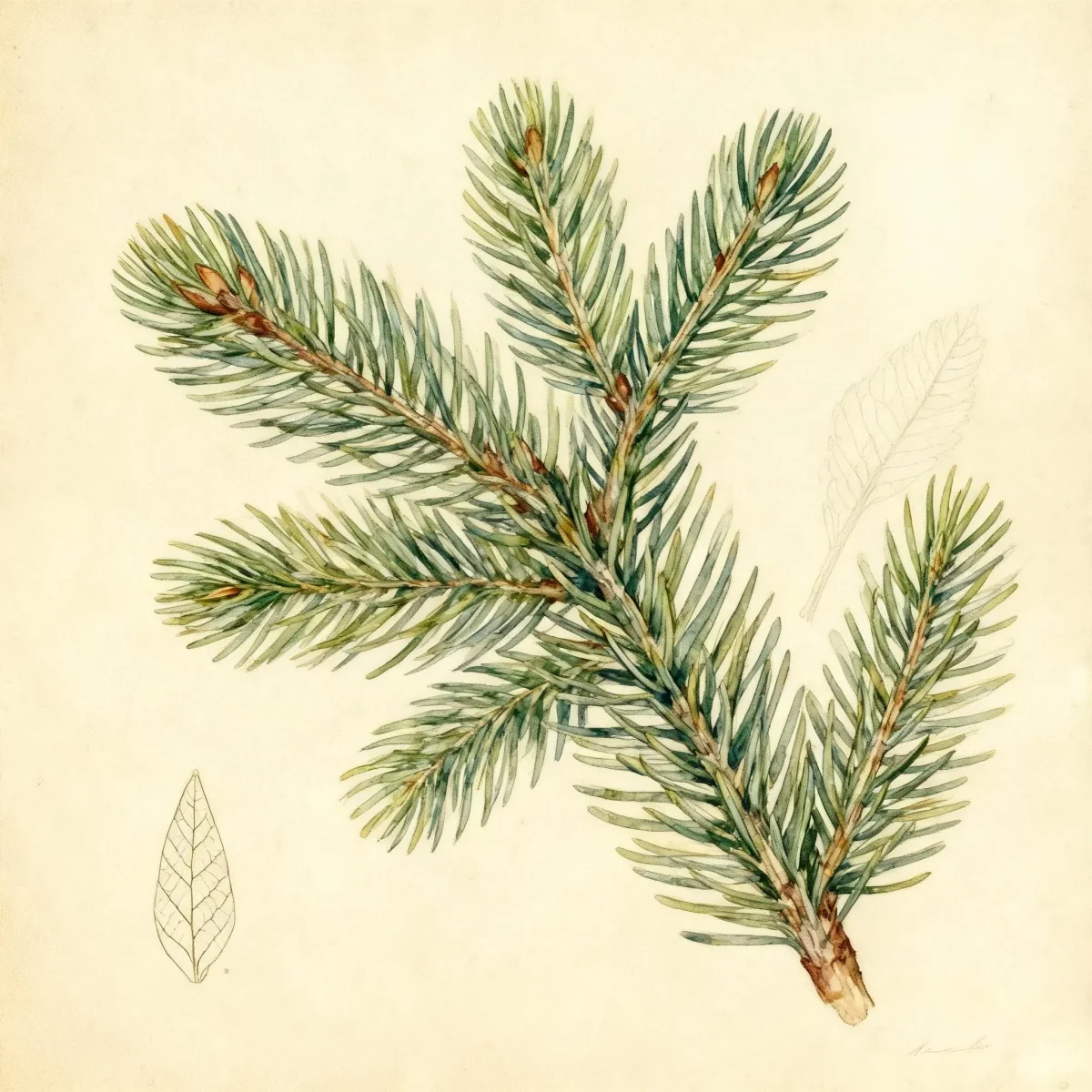
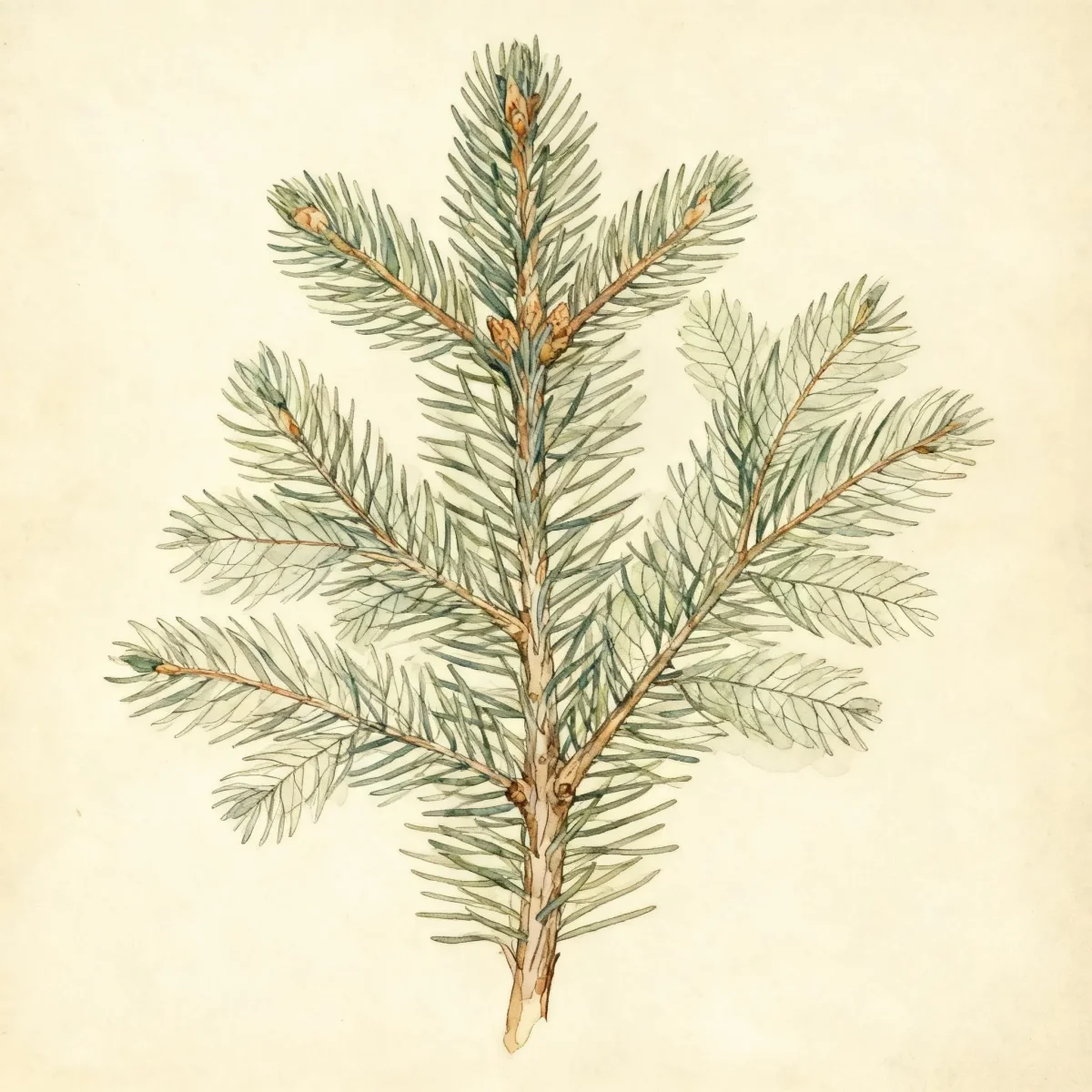
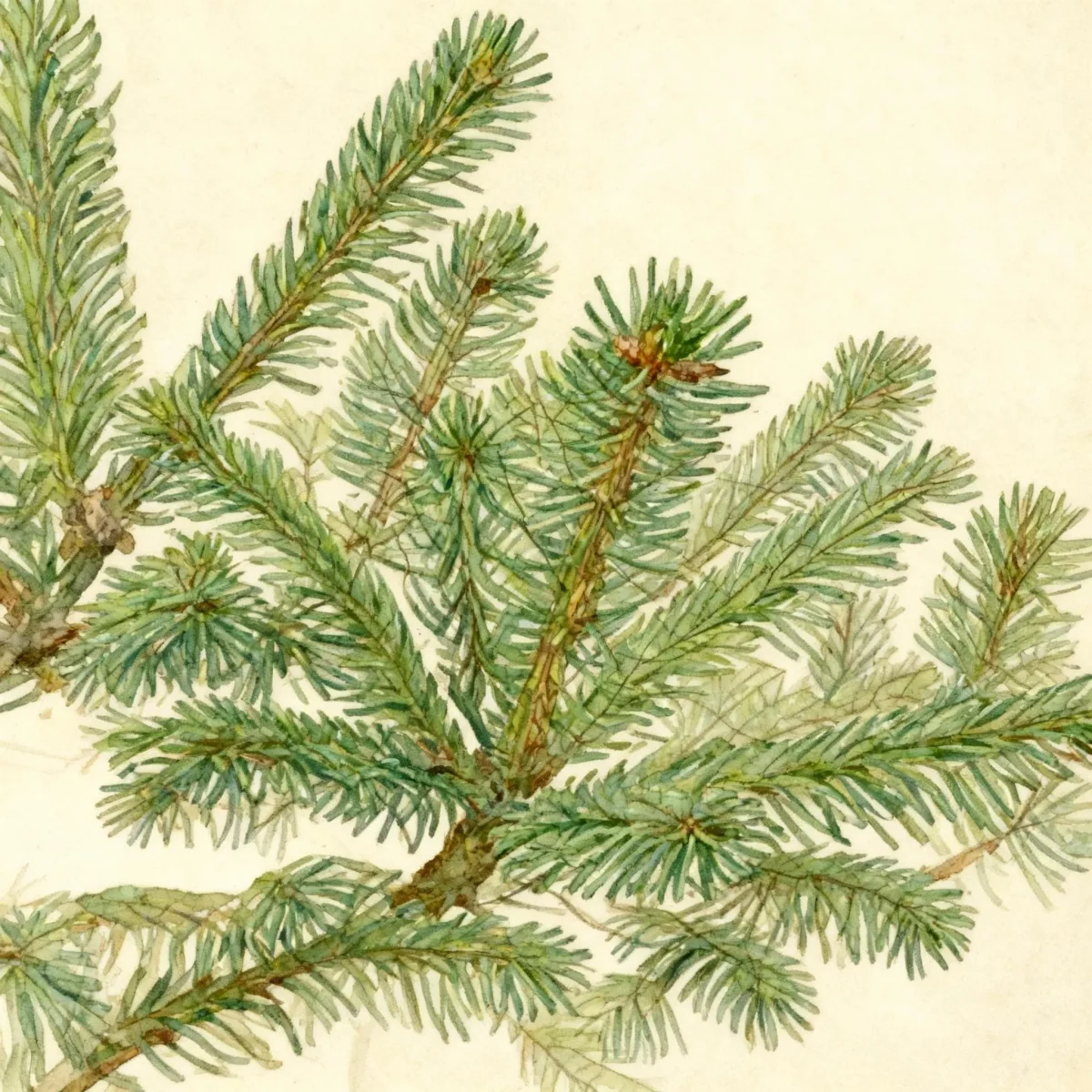
Douglas fir (Pseudotsuga menziesii)
The imposing Douglas fir (Pseudotsuga menziesii) is a massive conifer known for unique cone bracts and fragrant needles. Hardy in Zones 4-6.
Scroll down to discover growing tips, care requirements, companion plants, and more
Complete Plant Information
Overview
The Douglas fir, scientifically known as Pseudotsuga menziesii, stands out as a truly magnificent conifer, capable of reaching colossal sizes in its native habitat. Its most recognizable features are the unique, trident-shaped, forked bracts protruding from its upright cones, easily distinguishing it from true hemlocks. While primarily famed as a critical timber species in the Pacific Northwest, it offers dramatic pyramidal structure when young, maturing into a stately silhouette.
Cultivated Pseudotsuga menziesii maintains impressive size, typically reaching 40 to 80 feet tall, demanding significant space in the landscape. Successful cultivation relies heavily on providing full sun and consistent moisture, as this tree prefers abundant air and soil humidity. Gardeners should recognize that this species thrives best in its native cool, wet environments and may struggle dramatically in hot, humid summers prone to drought.
Although challenging for average residential landscaping due to its sheer scale and high care requirements, the sheer presence of a well-grown Douglas fir commands attention. Its flat, dark green needles are pleasantly fragrant when bruised, adding a sensory element to its imposing visual impact. If you reside in the cooler, wetter regions of the Northwest, this superb evergreen warrants consideration for large estate plantings.
Fast Facts
- Plant Family: Pinaceae
- Plant Type: Needled evergreen
- Native Range: Southwestern British Columbia to western central California
- Hardiness Zones: USDA Zones 4-6
- Size at Maturity:
- Height: 40-80 ft
- Spread: 12-20 ft
- Bloom Time: Non-flowering
- Bloom Description: Non-flowering
- Sun Exposure: Full sun
- Water Needs: Medium to wet
- Maintenance Level: High
How to Grow
Planting the Douglas fir should occur during cooler seasons—mid-fall or early spring—to minimize transplant shock, especially in non-native regions. It requires full sun exposure for robust growth and development. Most importantly, ensure the planting site offers medium to wet, well-drained soils; this species cannot tolerate prolonged dry spells. Sites with good air circulation are preferable to help mitigate fungal risk.
Watering Pseudotsuga menziesii demands consistency, leaning toward medium to wet conditions daily or weekly depending on the immediate climate, though drainage is crucial to prevent root saturation. Fertilization is generally not necessary for established trees in ideal native conditions, but monitor soil health. Pruning is rarely required except to remove dead or damaged lower limbs as the tree naturally sheds them while maturing.
For gardeners outside the Pacific Northwest, selecting the Rocky Mountain variety (var. glauca) is highly recommended due to its superior cold tolerance and adaptation to drier conditions compared to the coastal species. Avoid planting this native of the cool West in areas known for intense summer heat combined with drought, such as the St. Louis climate described. Proper siting is the most crucial maintenance step for long-term success.
Landscape Uses
The Pseudotsuga menziesii is fundamentally one of the largest tree species available, making its use in standard city or town landscaping highly ill-advised due to space constraints and intense water needs. Its best role is as a dominant specimen in expansive arboreal collections, large rural properties, or functioning as a prime forest tree where its timber value can eventually be realized. It provides an unmatched vertical anchor in large-scale naturalistic designs.
When space permits, its pyramidal shape works well when viewed from a distance, creating a strong evergreen backdrop that contrasts nicely with deciduous trees shedding leaves in winter. Because of its inability to handle fluctuating moisture and heat well outside of its optimal range, selecting appropriate companion plants is vital; pair it only with other resilient conifers or large native trees that share a preference for consistently moist, cool root zones. Avoid trying to use this magnificent tree in constrained environments.
Standout Features
Fruit Qualities
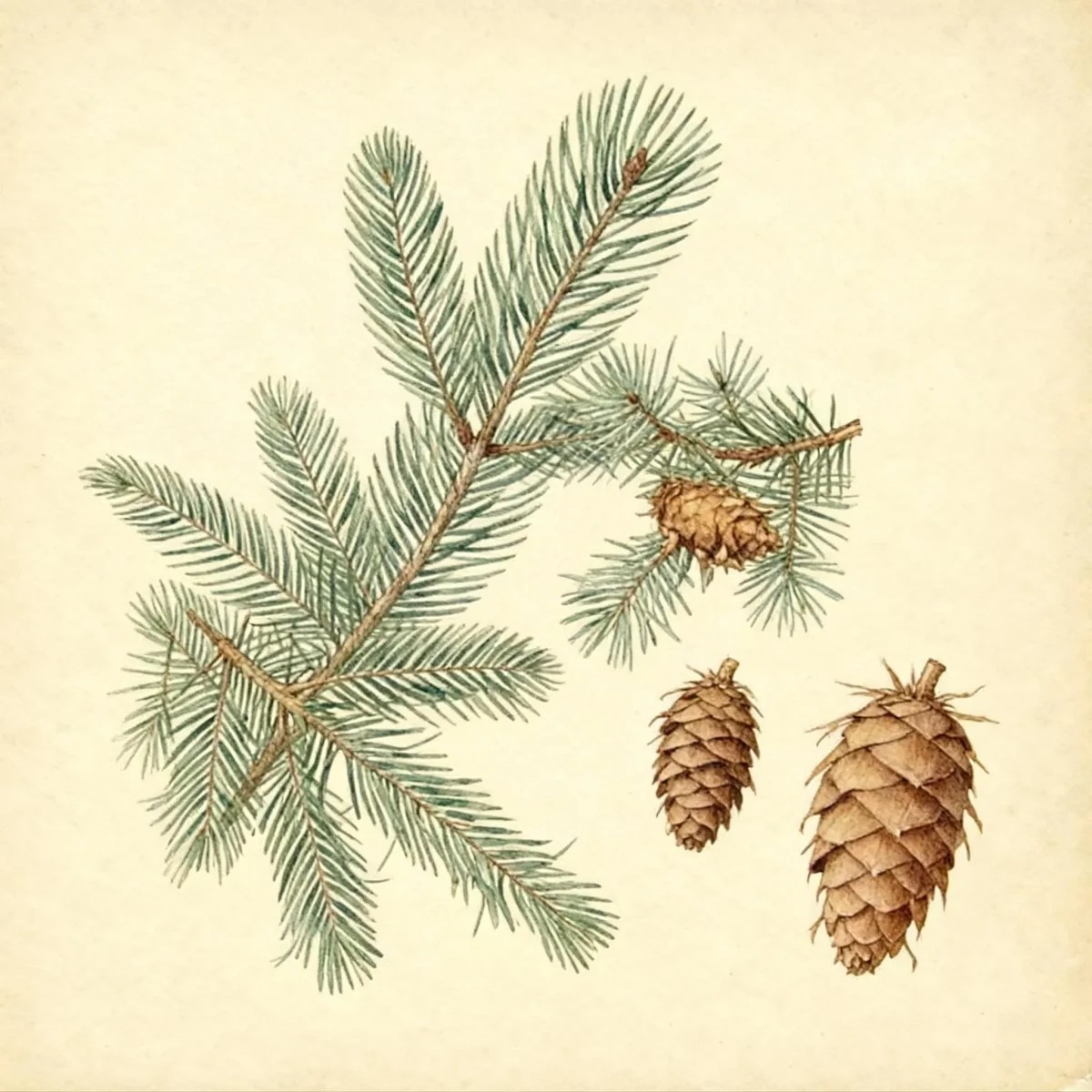
- Cones (to 4.5” long) are pendulous with protruding trident-shaped bracts.
Noteworthy Characteristics
Pseudotsuga menziesii, commonly called Douglas fir, is a very large conifer that grows 50-80’ tall in cultivation, but to 300+’ tall in the wild. Unique forked cone bracts distinguish this tree from all other conifers. The species is indigenous to coastal areas and up to 5500’ in elevation in the mountains from British Columbia south to central California. Needles are fragrant when bruised, and young trees possess a narrow pyramidal shape, becoming more cylindrical with age.
Tolerances
- Medium to wet soils
- Full sun
Potential Problems
Fungal diseases represent the most significant threat to the health of the Douglas fir, particularly when plantings are dense or monocultures. Shoestring root rot and laminated root rot can severely damage or kill established trees by attacking the root system. Additionally, localized pests like the Douglas-fir beetle can cause decline, while red ring rot impacts wood quality. To mitigate these risks, ensure excellent soil drainage, provide ample space between neighboring conifers to maximize air movement, and avoid high-stress sites where the tree cannot receive consistent moisture.
Frequently Asked Questions
What hardiness zones is Douglas fir suitable for?
The Pseudotsuga menziesii species is reliably hardy in USDA Zones 4 through 6, though selecting geographic variants may extend this range slightly.
How large does Douglas fir grow?
In cultivation, expect the Douglas fir to reach heights between 40 and 80 feet, though its spread is relatively narrow, occupying 12 to 20 feet of width.
What sun exposure does Douglas fir need?
This conifer requires full sun conditions to maintain dense foliage and vigorous growth throughout the year.
When does Douglas fir bloom?
The Douglas fir is a non-flowering conifer; it reproduces via cones rather than traditional flowers.
Conclusion
The Douglas fir (Pseudotsuga menziesii) remains an unparalleled choice for gardeners with ample space seeking a commanding, fragrant evergreen presence that echoes the great forests of the West. Its requirements for consistent moisture and full sun classify it as high-maintenance outside of its ideal climate range. Before planting, rigorously assess your soil conditions and long-term space planning to ensure this magnificent species can thrive for centuries.
Companion Planting
When integrating Pseudotsuga menziesii into a large landscape, focus on companions that share its preference for cool, moist soil conditions, especially avoiding those that demand sharp drainage or high heat tolerance. Consider planting moisture-loving rhododendrons or azaleas to utilize the filtered light that might reach ground level beneath mature specimens, provided the soil pH is acceptable for both. In native settings, associating the Douglas fir with other moisture-dependent Western natives such as Western Red Cedar or various ferns can recreate its native aesthetic successfully.
Varieties to Consider
For gardeners seeking the beauty of the Douglas fir but residing in colder regions or those with slightly drier summer conditions, it is highly worthwhile to investigate Pseudotsuga menziesii var. glauca. This Rocky Mountain variety exhibits greater resilience to cold, boasting hardiness down to USDA Zone 4, which is superior to the species’ Zone 6 minimum. Furthermore, var. glauca typically features shorter cones and attractive blue-green needles, making it a better-adapted choice for many areas outside the immediate Pacific Northwest.