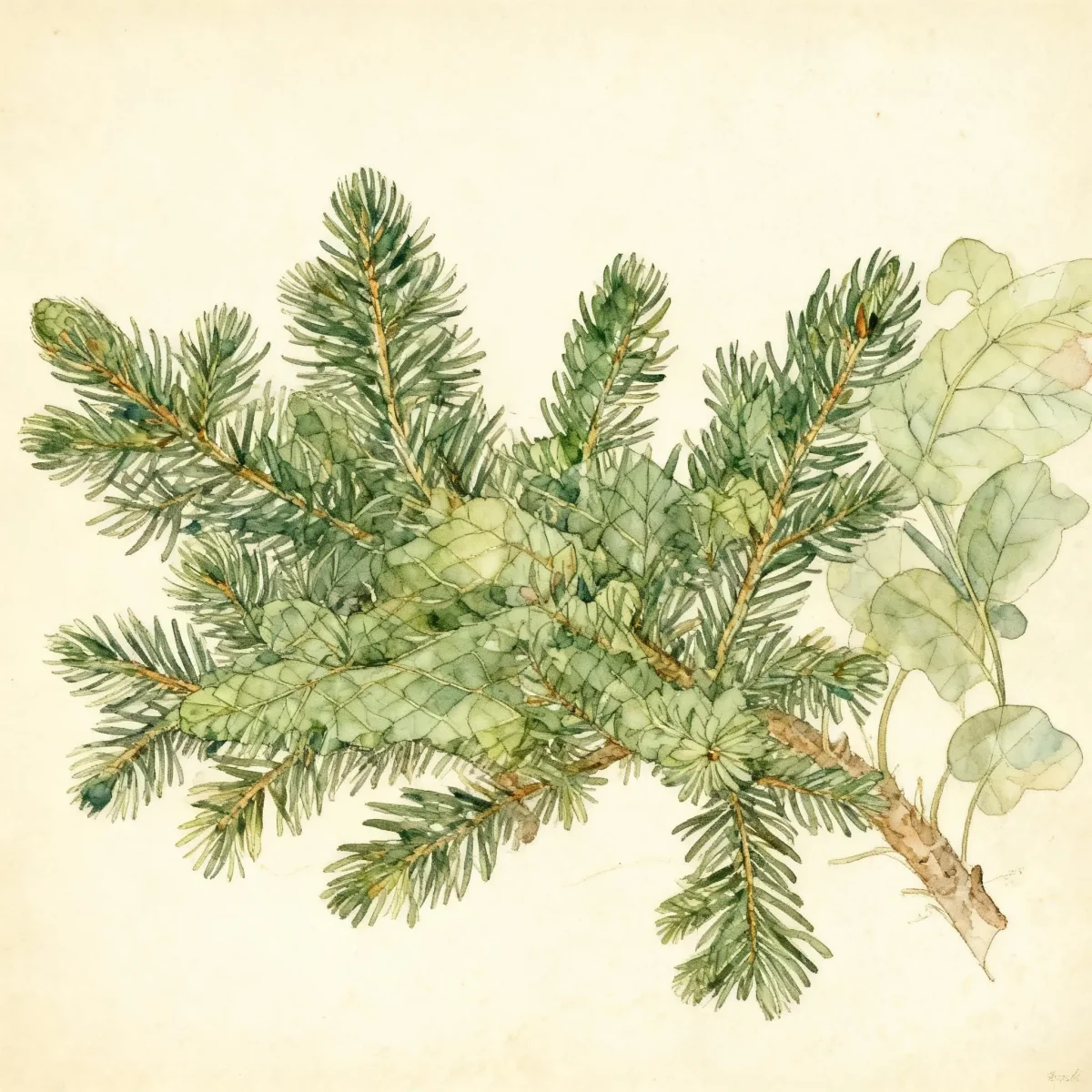
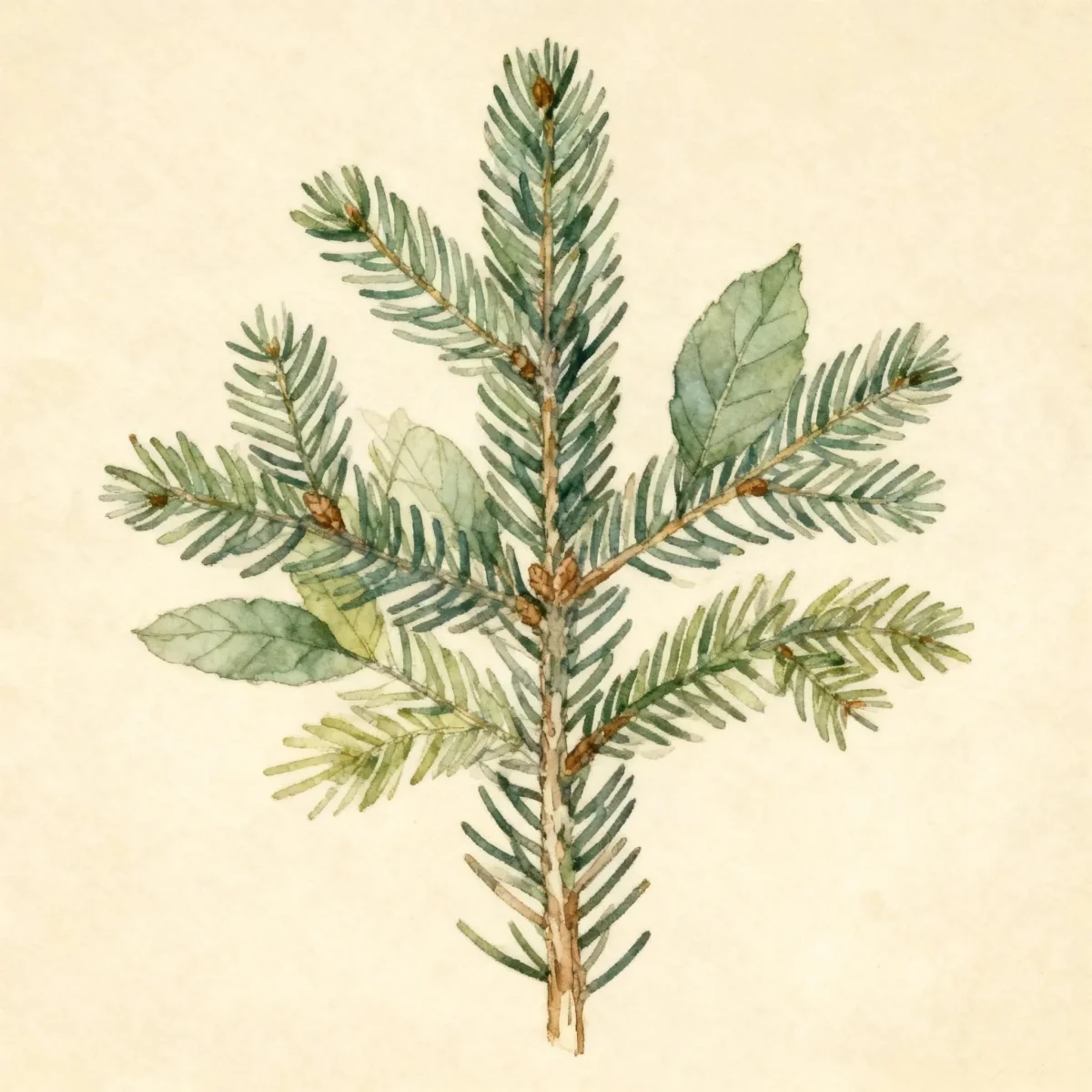
Caucasian fir (Abies nordmanniana subsp. equitrojani)
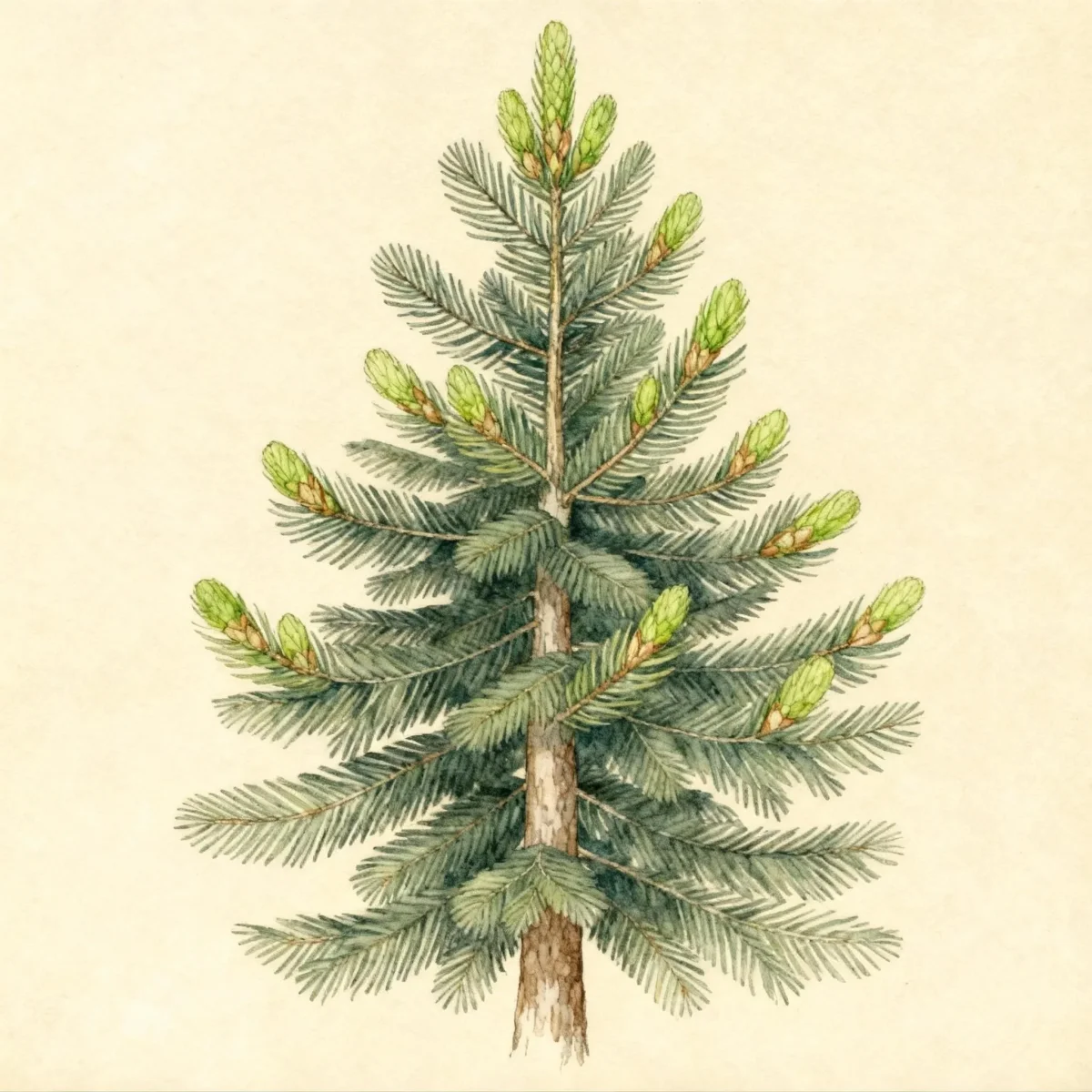
The Caucasian fir, Abies nordmanniana subsp. equitrojani, is a dense, pyramidal conifer noted for rich dark green needles.
Scroll down to discover growing tips, care requirements, companion plants, and more
Complete Plant Information
Overview
The Caucasian fir, specifically the variety Abies nordmanniana subsp. equitrojani, offers significant ornamental value as a dense, pyramidal conifer for larger landscapes. This subspecies, often called Trojan fir, originates from the cooler mountainous regions of northwestern Turkey, bringing a touch of alpine structure to the garden. Gardeners value this fir for its glossy, dark green needles that remain evergreen year-round.
This is a substantial evergreen, maturing typically between 35 to 50 feet high in cultivation, making it an imposing specimen. While generally pyramidal, the Abies nordmanniana subsp. equitrojani usually remains densely branched to the ground, providing excellent visual screening when young.
Though it requires medium maintenance, its striking foliage and upright form reward the dedicated grower. For successful establishment, it is crucial to site the Caucasian fir where it receives sufficient sun but is protected from the intense heat and humidity common outside its preferred climate range.
Fast Facts
- Plant Family: Pinaceae
- Plant Type: Needled evergreen
- Native Range: Turkey
- Hardiness Zones: USDA Zones 4-6
- Size at Maturity:
- Height: 35-50 ft
- Spread: 15-25 ft
- Bloom Time: Non-flowering
- Bloom Description: Non-flowering
- Sun Exposure: Full sun to part shade
- Water Needs: Medium
- Maintenance Level: Medium
How to Grow
Planting the Abies nordmanniana subsp. equitrojani is best done in the spring or fall when temperatures are mild, allowing the root system time to establish before extreme seasonal changes. Select a site that provides rich, consistently moist, acidic, and well-drained soils. Optimal growth occurs in full sun, though partial shade is tolerated, especially in hot climates. Avoid planting in heavy clay soils, as this variety struggles with poor drainage.
Water needs are medium; ensure consistent moisture, particularly for young trees. Never allow the soil to completely dry out, but avoid overly saturated ground which can lead to root rot. Fertilization is rarely necessary if the native soil conditions are met, but a slow-release feed formulated for acid-loving evergreens can support growth in poor soils. Minimal pruning is needed; only remove dead or damaged limbs as necessary.
It is critical to note that this variety is native to cool climates. Therefore, Abies nordmanniana subsp. equitrojani is not recommended for planting in hot and humid summer conditions south of USDA Zone 6. In colder areas (Zones 4-5), ensure the area is protected from severe winter windburn, which can damage needles.
Landscape Uses
The sheer scale and stately symmetry of the Caucasian fir make it an outstanding specimen fir for the landscape where space allows. It functions beautifully as an ornamental yard tree, acting as a vertical anchor point in the design. Plant it well away from structures due to its mature spread of up to 25 feet.
In larger estates or parks, groupings of Abies nordmanniana subsp. equitrojani can create a dramatic evergreen screen or backdrop that provides year-round texture. Companion planting should focus on acid-loving shrubs like rhododendrons or azaleas, ensuring all surrounding plants share the requirement for well-drained, moist soil. Avoid using this fir in restricted urban settings due to its intolerance of pollution and its ultimate size.
Standout Features
Noteworthy Characteristics
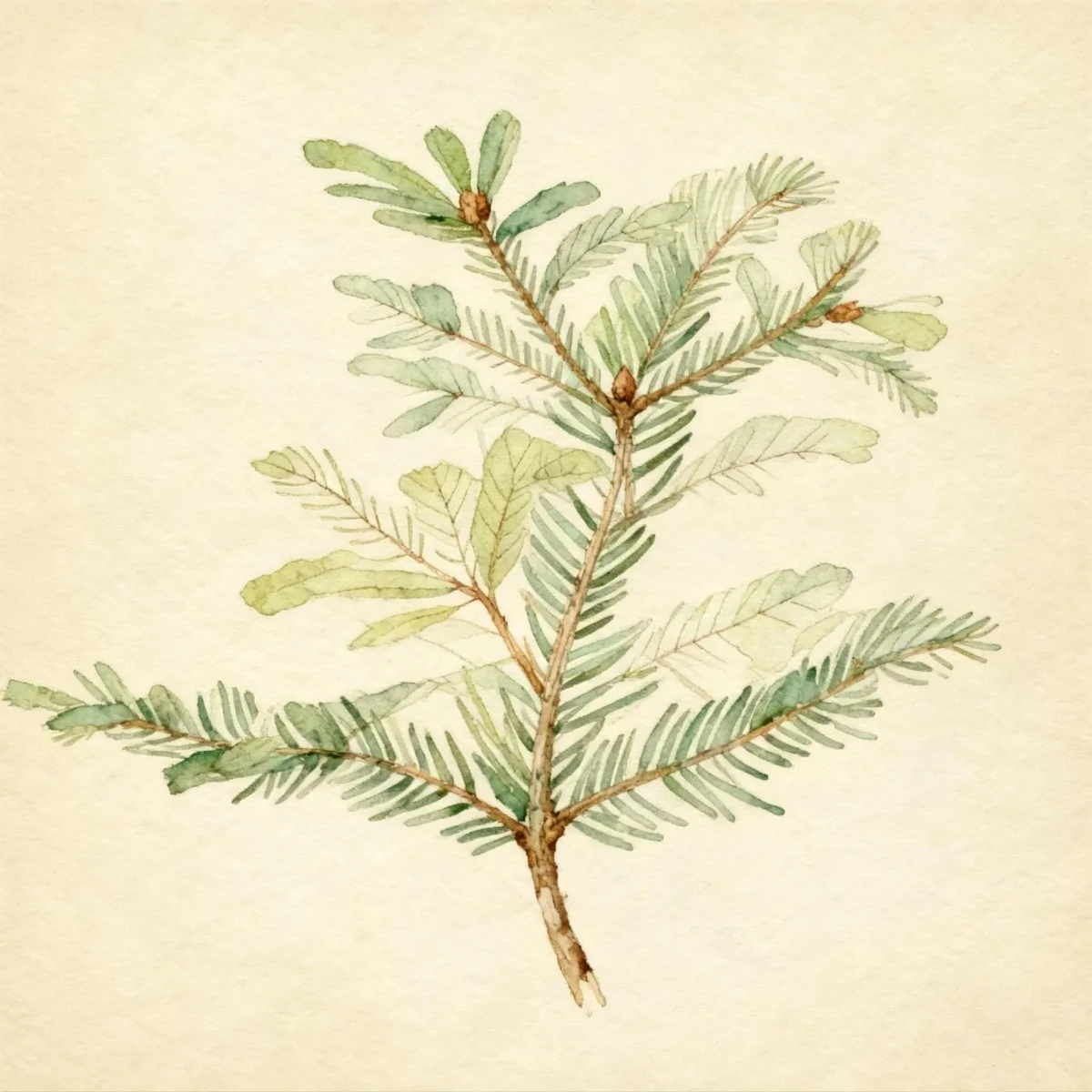
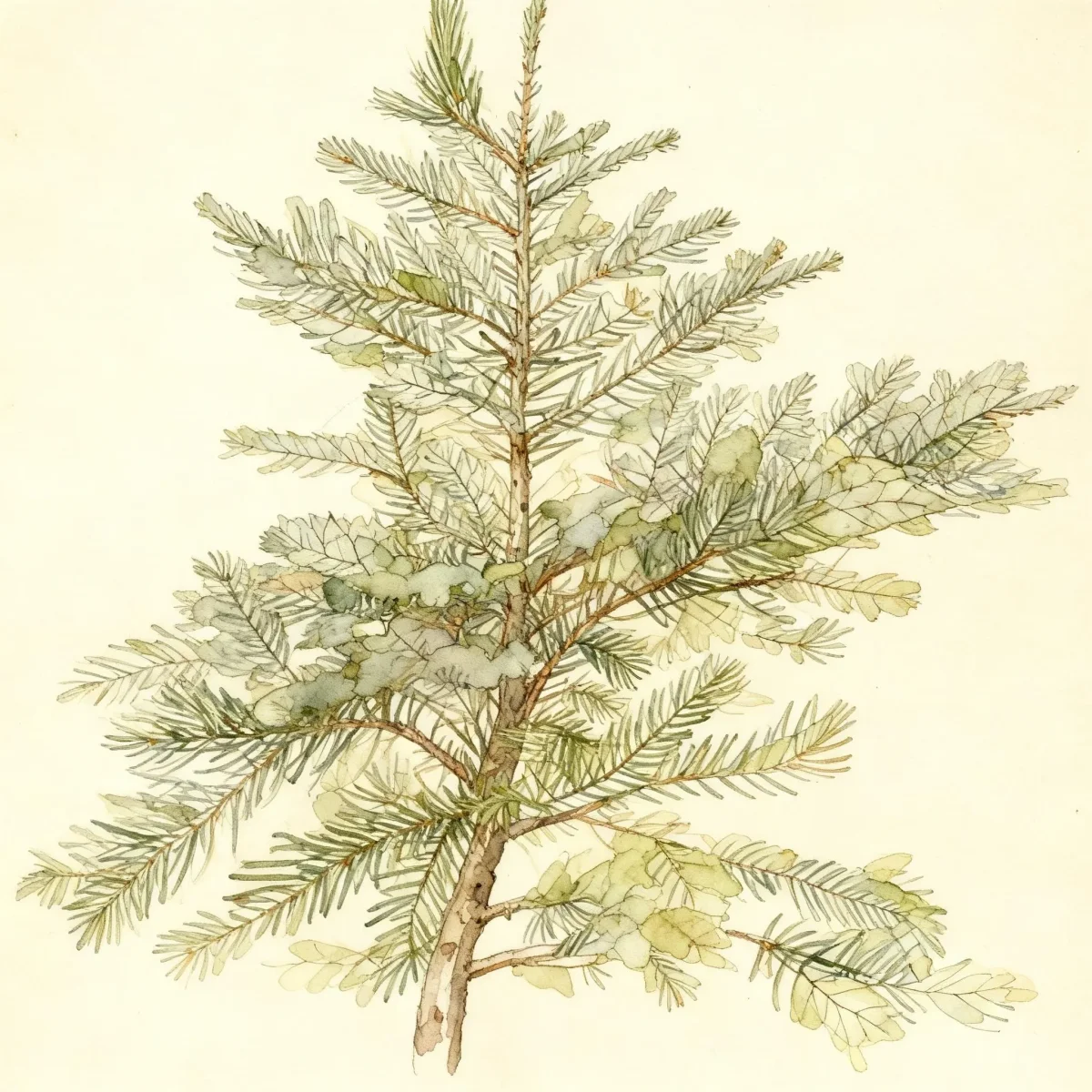
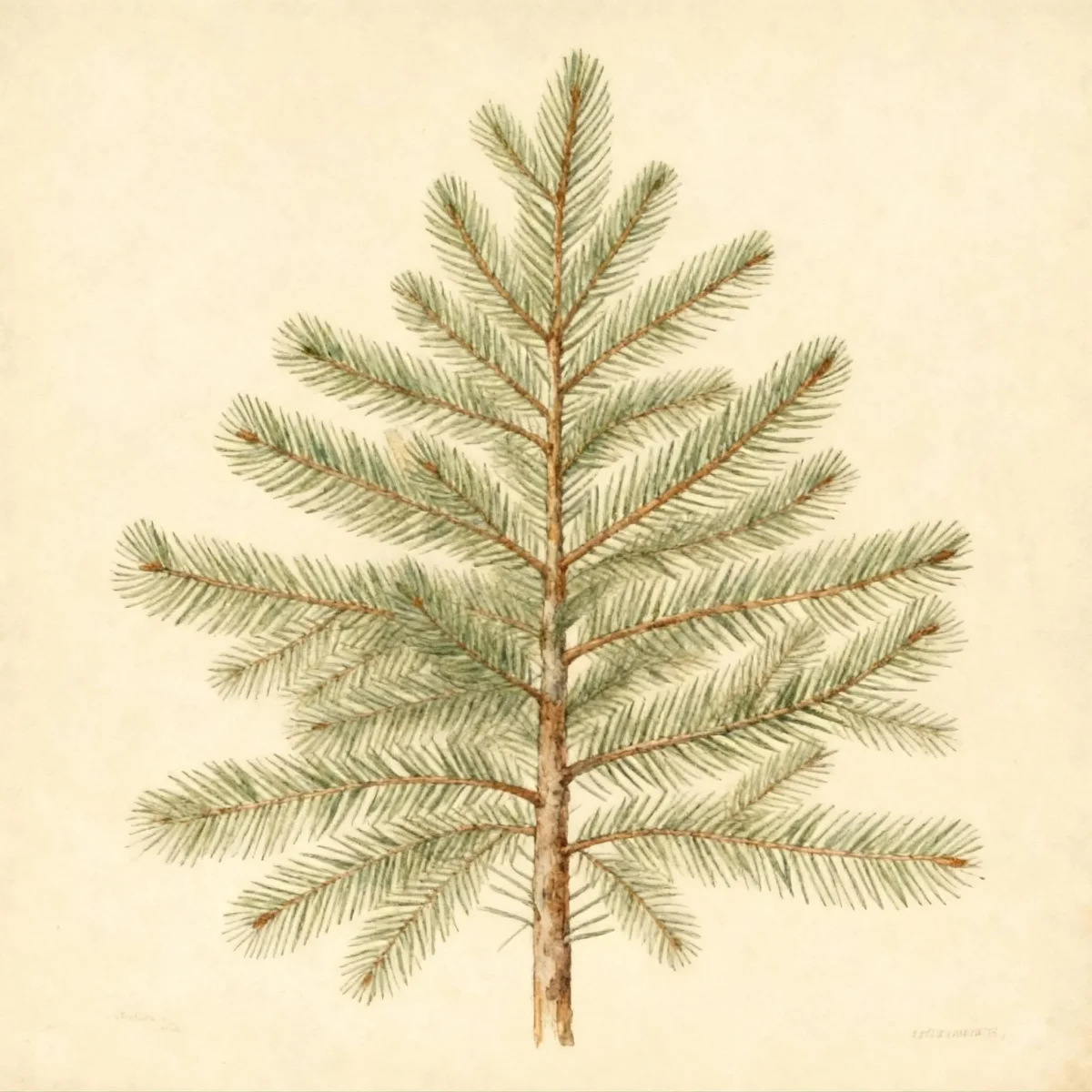
Abies nordmanniana, commonly called Caucasian fir or Nordmann fir, is native to the Caucasus Mountains. This is a dense, pyramidal conifer that typically grows to 50’ tall and 20’ wide in cultivation, but may reach 200’ tall in its native habitat. Branches are densely clad with flattened, glossy dark green needles (to 1 1/4” long); needles have two white bands underneath. Subsp. Equi-trojani, sometimes commonly called trojan fir, is native to northwestern Turkey and is distinguished by denser, blunter needles forming V-shaped grooves above the twigs. Cones appear upright on the branches and disintegrate as the seeds ripen.
Potential Problems
Pest management is generally straightforward, as the Caucasian fir has no serious insect or disease problems when sited correctly. Potential insect threats include balsam woolly adelgids, aphids, scale, and bagworms. Spider mites can appear if the tree experiences prolonged hot, stressful conditions.
Disease threats center on fungal issues like cankers, heart rot, and needle rust, often exacerbated by poor air circulation or wet conditions. If you notice dieback, inspect the roots for signs of waterlogging or root rot, as this species is very intolerant of heavy, poorly drained soils. Trees are generally intolerant of urban pollution, so place this fir in cleaner air environments when possible.
Frequently Asked Questions
What hardiness zones is Caucasian fir suitable for?
The Abies nordmanniana subsp. equitrojani is hardy across USDA Zones 4 through 6.
How large does Caucasian fir grow?
In cultivated settings, the Caucasian fir reaches heights generally between 35 and 50 feet, with a corresponding spread of 15 to 25 feet wide.
What sun exposure does Abies nordmanniana subsp. equitrojani need?
This conifer prefers full sun exposure but can tolerate part shade; however, consistent full sun promotes the best density and overall health.
When does Abies nordmanniana subsp. equitrojani bloom?
This plant is a needled evergreen and is classified as non-flowering in the traditional sense.
Conclusion
The Abies nordmanniana subsp. equitrojani provides outstanding, uniform pyramidal structure and rich, dark green foliage, making it a premier specimen tree for cooler environments. Success with this Caucasian fir hinges on providing acidic, moist, and perfectly drained soil away from intense summer stress. Before planting, confirm that your USDA zone falls within 4 to 6 and plan for significant future vertical and horizontal space.
Companion Planting
When designing a space for Abies nordmanniana subsp. equitrojani, focus on plants that thrive in acidic soil profiles and appreciate similar moisture regimes. Companion choices that appreciate the dappled light cast by a mature fir include various types of Rhododendrons and Azaleas, whose broad, evergreen leaves contrast beautifully with the fir’s narrow needles. Low-growing ground covers like Hellebores can be useful beneath the canopy during early spring before the fir fully shades the area.
If you are utilizing the fir as a specimen tree in a woodland garden setting, consider Japanese Maples (Acer palmatum cultivars) for their delicate texture and seasonal color shifts, provided the maple’s roots are not competing unduly with the moisture needs of the fir. Due to the Abies nordmanniana subsp. equitrojani’s intolerance for heavy clay, all accompanying plants should also share that preference for light, well-aerated soil.
Seasonal Care Calendar
Spring is the prime time to inspect the Caucasian fir for any winter damage. Remove any broken or dead branches after the threat of heavy frost has passed, ensuring clean cuts back to healthy wood. If utilizing fertilizer, apply it just as new growth begins to emerge in mid-spring, following product direction for acid-loving trees.
Summer care centers entirely on moisture management. While the fir only requires medium water, consistency is key; deep, infrequent watering during dry spells is preferred over shallow sprinkling. Monitor for spider mites during peak heat, as they are a sign of environmental stress. In autumn, avoid heavy fertilization, allowing the tree to prepare for dormancy naturally. Little to no winter preparation is needed if the tree is fully established within USDA Zones 4-6.