London plane tree (Platanus × acerifolia)
The stately London plane tree (Platanus × acerifolia) offers massive shade and unique exfoliating bark, thriving in city environments.
Scroll down to discover growing tips, care requirements, companion plants, and more
Complete Plant Information
Overview
The London plane tree, scientifically known as Platanus × acerifolia, is celebrated worldwide as a superior urban specimen, prized for its remarkable tolerance to challenging city conditions. This hybrid excels where many other large trees fail, making it indispensable for large landscape designs requiring significant overhead canopy. Its highly distinctive, mottled bark—which exfoliates to reveal creamy white inner layers—provides year-round aesthetic appeal.
Originating from a cross between the American sycamore and the Oriental planetree, Platanus × acerifolia matures into a monumental tree, typically towering 75 to 100 feet tall with a broad, rounded habit. While its size mandates ample space, its capacity to thrive in average to wet soils and withstand significant air pollution makes it a powerful choice for providing vast areas of summer shade. Gardeners must recognize the high maintenance commitment required for this majestic species.
Fast Facts
- Plant Family: Platanaceae
- Plant Type: Tree
- Hardiness Zones: USDA Zones 4-8
- Size at Maturity:
- Height: 75-100 ft
- Spread: 60-75 ft
- Bloom Time: April
- Bloom Description: Yellow (male) and red (female)
- Sun Exposure: Full sun
- Water Needs: Medium to wet
- Maintenance Level: High
How to Grow
The best time to establish a London plane tree is when the plant is dormant, typically in late fall or early spring, prioritizing deep, consistent watering during establishment. This species demands rich, humusy soil but is generally adaptable, provided conditions are medium to wet and well-drained. While it prefers full sun, it tolerates light shade, though growth may be less vigorous in dimmer locations.
Once established, Platanus × acerifolia requires a consistent water supply, especially during dry spells, to support its massive canopy. Pruning should focus primarily on removing dead, damaged, or crossing limbs to maintain strong structure, although high maintenance levels often involve managing the significant leaf and seed litter produced in autumn. Avoid heavy fertilization unless soil deficiencies are confirmed, as excessive feeding can encourage too-rapid, weak growth.
Remember that the London plane tree is renowned for its tolerance to urban pollutants, making it an excellent candidate for areas with poor air quality. Be aware that while it is large, general cleanup around the base is necessary throughout the year due to falling debris from twigs, leaves, and the persistent, spherical fruiting balls.
Landscape Uses
The sheer scale of Platanus × acerifolia dictates its use: it requires enormous space and is generally considered far too large and messy for confined residential yards or standard street tree planting where clearance is limited. Consequently, it excels in large parks, expansive estates, or institutional grounds where a dominant, stately shade feature is desired. Its massive limb structure creates exceptional overhead coverage perfect for cooling large paved areas or seating zones.
When integrating this tree, focus on companion plants that can handle similar moisture levels and can tolerate some shade cast by the mature canopy. Consider understory plantings like hardy ferns or robust groundcovers that can cope with root competition near the base. Due to the prolific litter, placing it away from pristine formal beds where seasonal clean-up is difficult is advisable. The incredible bark display also means it can serve as a magnificent specimen tree visible across vast open landscapes.
Standout Features
Flower Qualities
- Insignificant
Fruit Qualities
- Showy
Noteworthy Characteristics
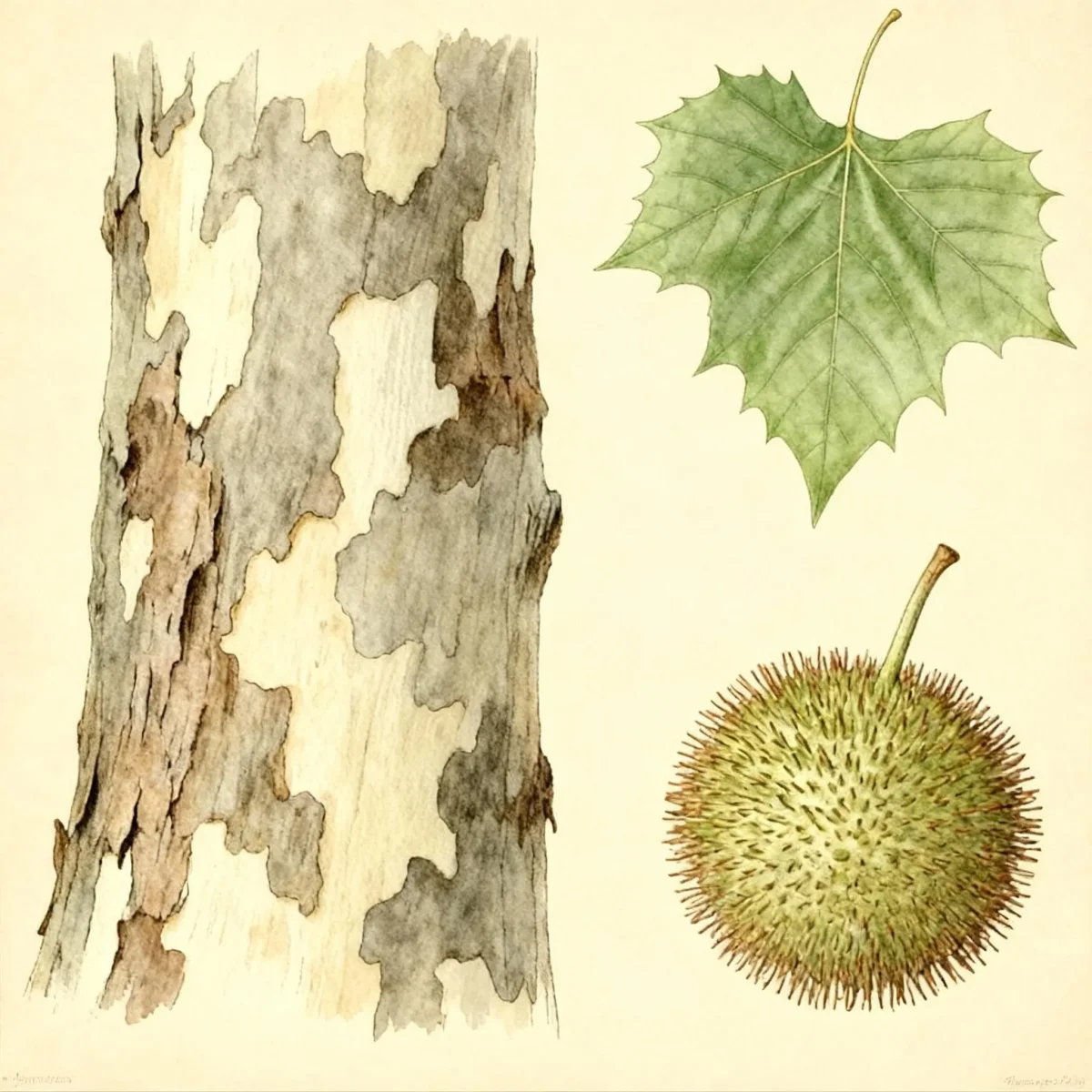
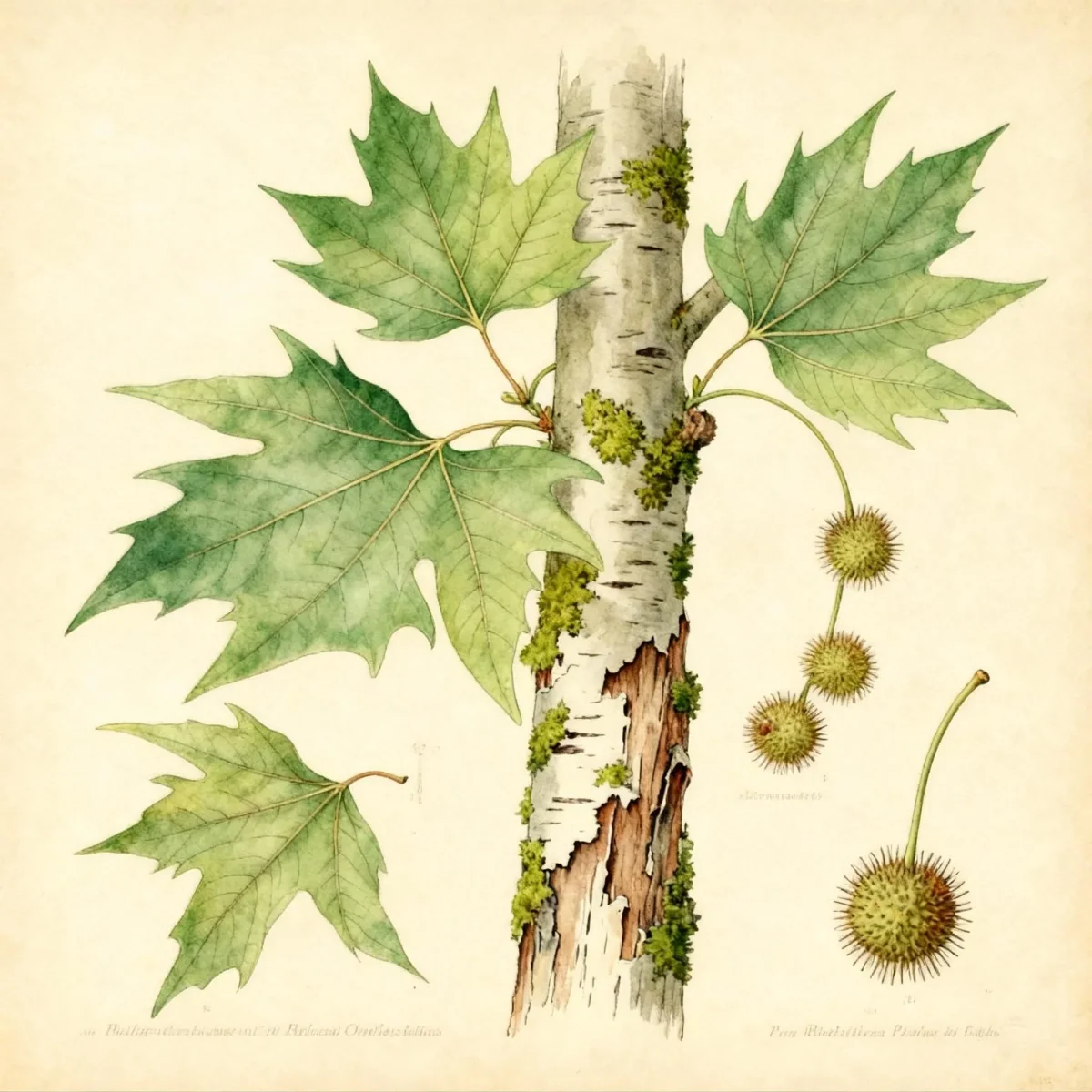
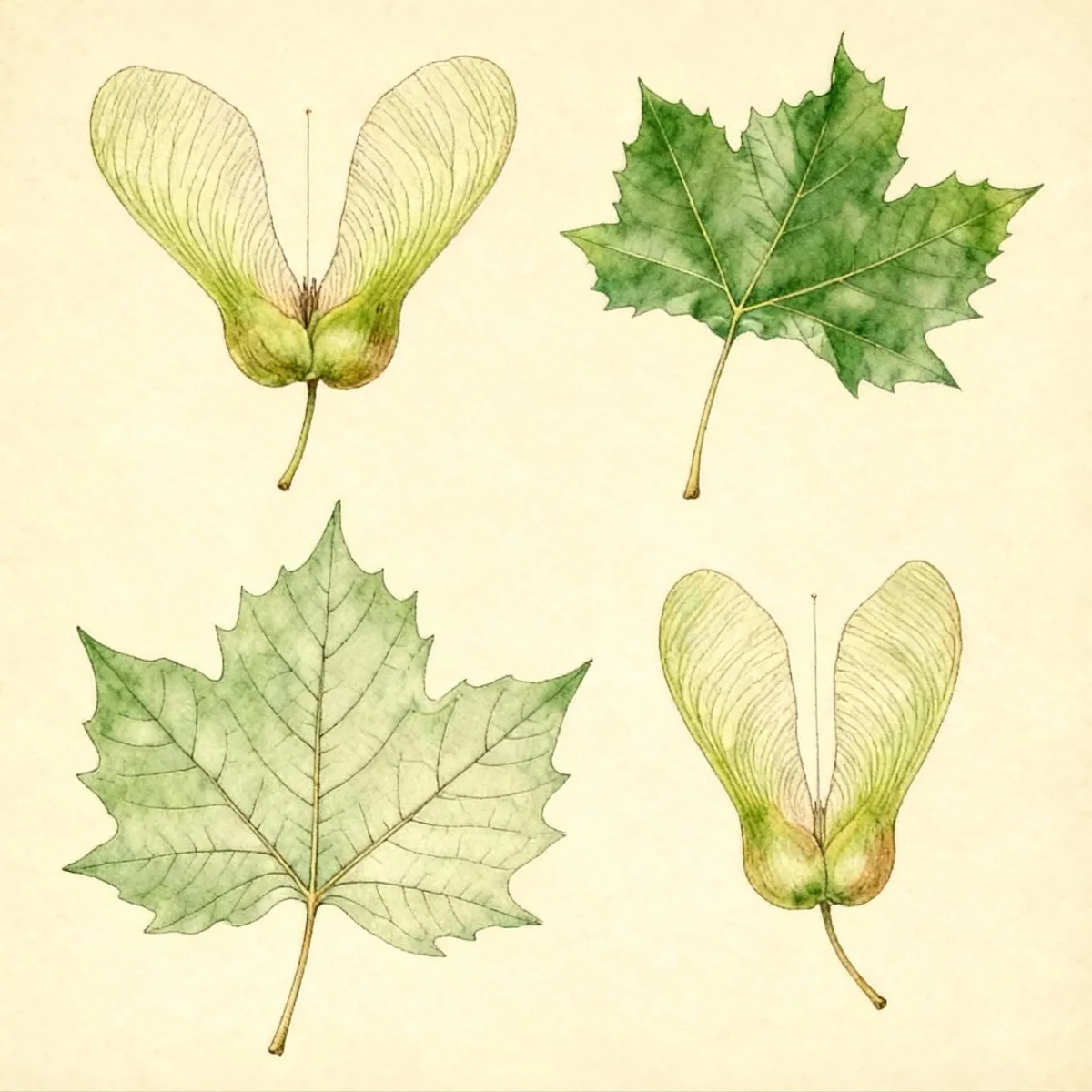
Platanus × acerifolia, commonly called London planetree, is a hybrid cross between American sycamore (P. Occidentalis) and Oriental planetree (P. Orientalis). Distinguishing features from its American parent include leaves with deeper sinuses and fruiting balls that typically appear in pairs. The signature ornamental feature of this huge tree is its brown bark which exfoliates in irregular pieces to reveal creamy white inner bark, resulting in mottled white bark on mature specimens.
Tolerances
- Deer
- Clay Soil
- Air Pollution
Potential Problems
The London plane tree was initially believed to be highly resistant to sycamore anthracnose, but resistance levels now appear variable across different hybrid forms; planting resistant cultivars like ‘Columbia’ or ‘Liberty’ may mitigate this risk. A more serious threat is cankerstain, a fungal disease that can prove fatal to the tree. Additional minor issues include canker, leaf spot, and powdery mildew, which rarely cause severe damage.
Control insect pests like borers, scale, Japanese beetles, caterpillars, and mites through regular inspection and targeted treatment if infestations become heavy. The biggest practical problem for groundskeepers is the sheer volume of litter: twigs, large leaves, and the persistent, fuzzy fruiting balls require significant cleanup efforts, particularly when the tree is planted near lawns or walkways.
Frequently Asked Questions
What hardiness zones is London plane tree suitable for?
The London plane tree is suitable for USDA Hardiness Zones 4 through 8.
How large does London plane tree grow?
This tree typically matures to a height between 75 and 100 feet, with a potential spread ranging from 60 to 75 feet wide.
When does Platanus × acerifolia bloom?
Platanus × acerifolia produces its relatively inconspicuous flowers in April, with male flowers appearing yellow and female flowers appearing reddish.
What sun exposure does London plane tree need?
It requires full sun for the best growth habit but can tolerate light shade, making it adaptable to various placements within its hardiness range.
Conclusion
The London plane tree remains an iconic choice for large-scale planting due to its exceptional urban tolerance and stunning exfoliating bark, providing unmatched shade capabilities. While the Platanus × acerifolia demands high maintenance and significant space, its long-term visual impact in appropriate settings is undeniable. Before planting, confirm you have the space needed for this giant, and check your local climate against USDA Zones 4-8 compatibility.
Companion Planting
When designing landscapes around a massive London plane tree, select plants that appreciate consistent moisture and can tolerate the dappled shade cast by the dense canopy once it matures. Beneath the canopy, large, robust hostas or various shade-loving ornamental grasses can provide texture without competing aggressively for nutrients. For areas receiving more light slightly further from the trunk, consider hardy flowering shrubs that naturally occur in moist woodland edges.
For soil health, companioning the Platanus × acerifolia with deep-rooted, moisture-loving perennials can help stabilize soil structure, particularly given that this tree often performs best in rich, humusy conditions. Avoid shallow-rooted annuals that require constant tending near the established root zone of this behemoth.
Seasonal Care Calendar
Spring is the critical time for monitoring the London plane tree for early signs of fungal issues like anthracnose or powdery mildew; apply preventative treatments recommended for Platanus × acerifolia based on local conditions. Summer months focus entirely on deep, infrequent watering, especially when the tree is young, ensuring the large root ball receives sufficient moisture to support the vast leaf surface area.
As autumn transitions to winter, prepare for the heavy cleanup associated with this species, removing leaf litter and the spherical fruiting balls to prevent slick hazards on walkways. Winter protection is rarely required once established in Zones 4-8, but young specimens benefit from mulching around the base to insulate the root system against extreme temperature fluctuations.