Big blue stem (Andropogon gerardii)
Discover Big blue stem (Andropogon gerardii), a tall, low-maintenance prairie grass known for its striking seasonal color and drought tolerance.
Scroll down to discover growing tips, care requirements, companion plants, and more
Complete Plant Information
Overview
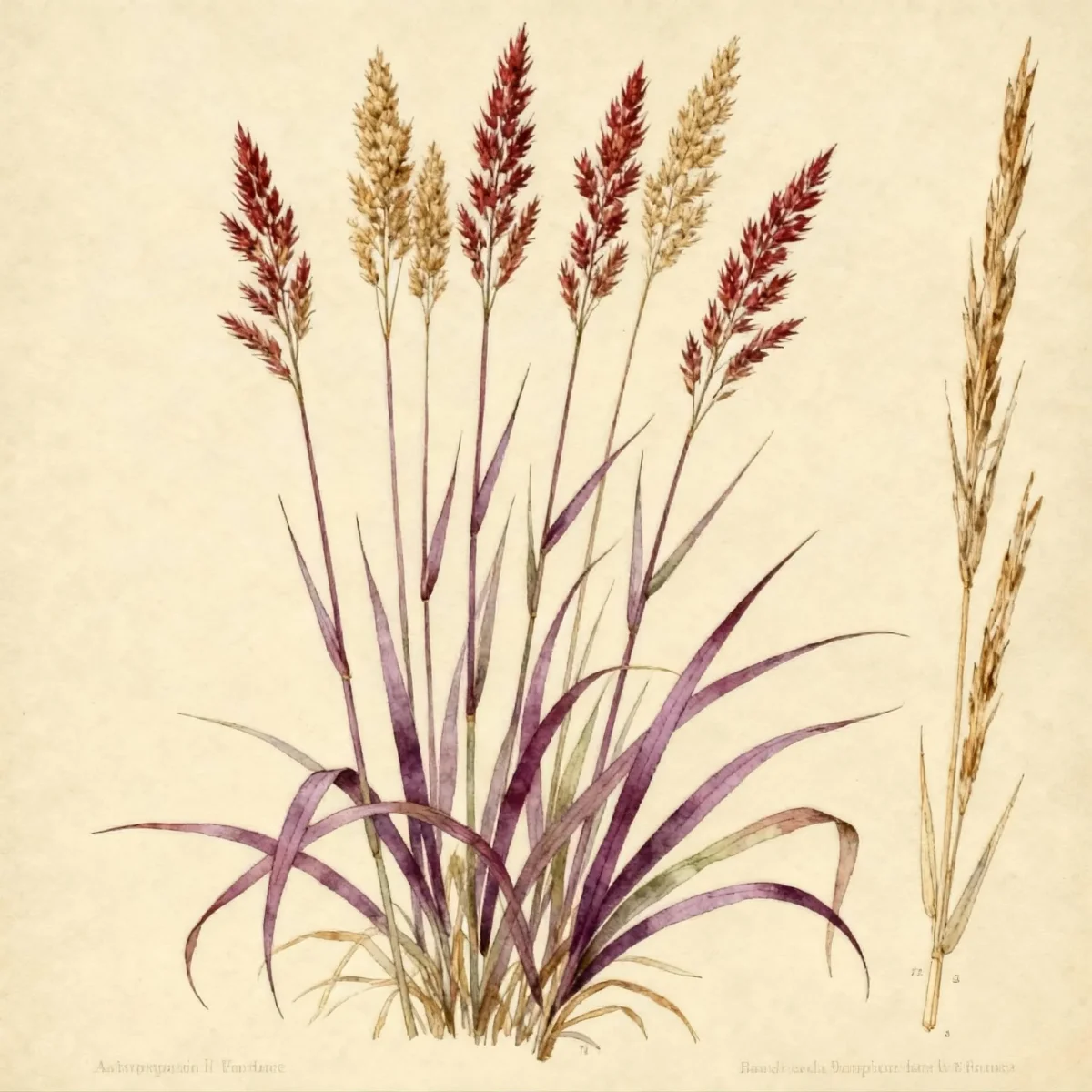
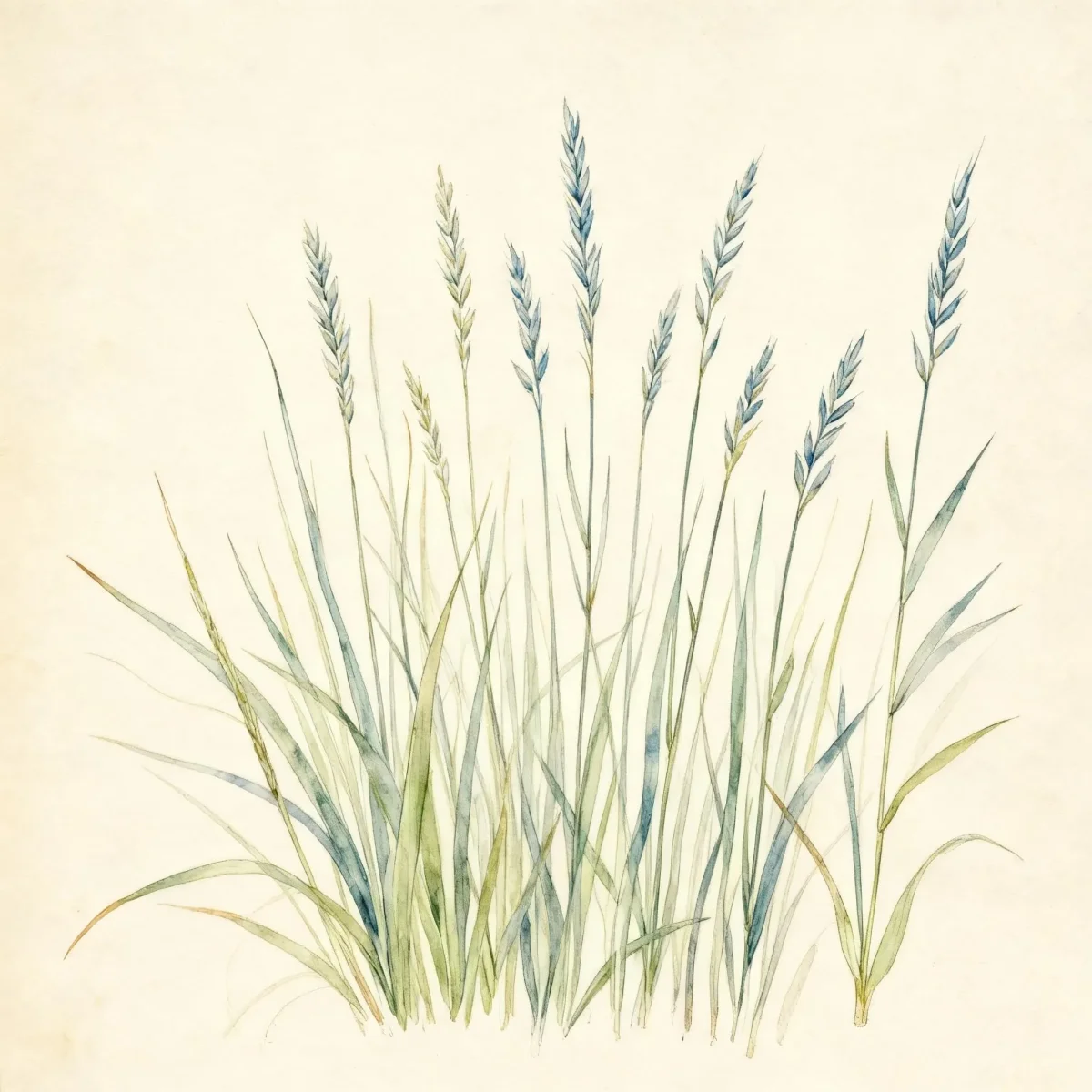
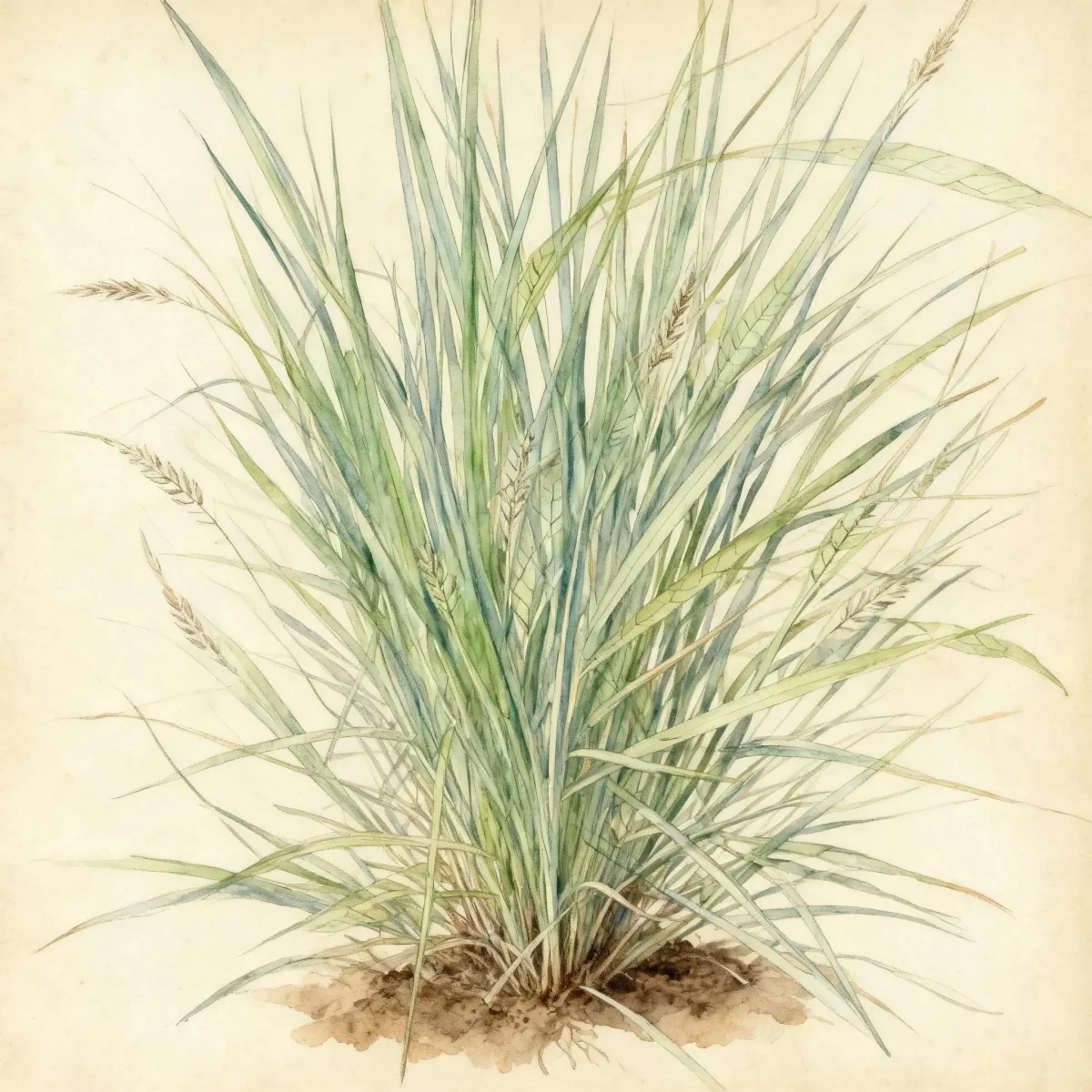
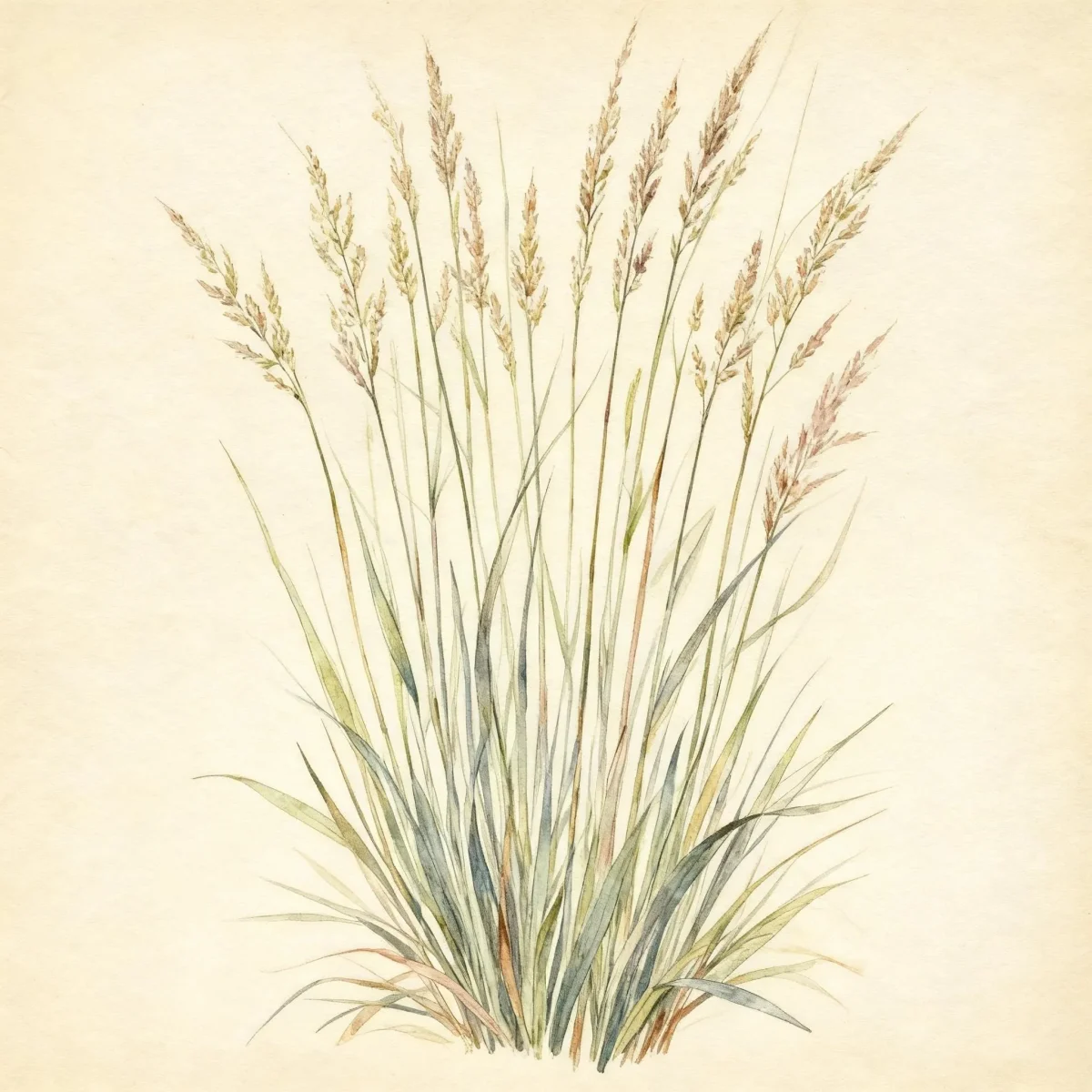
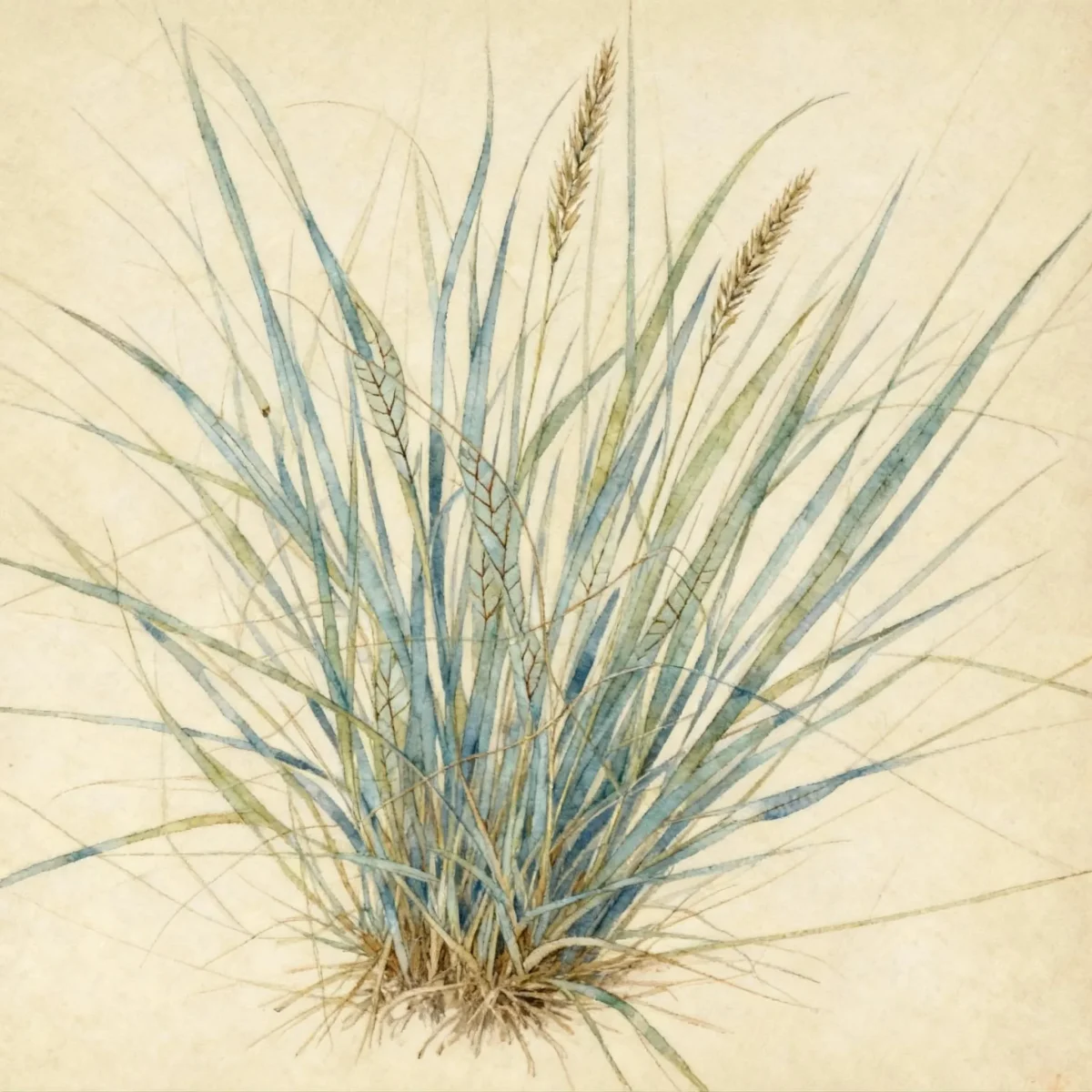
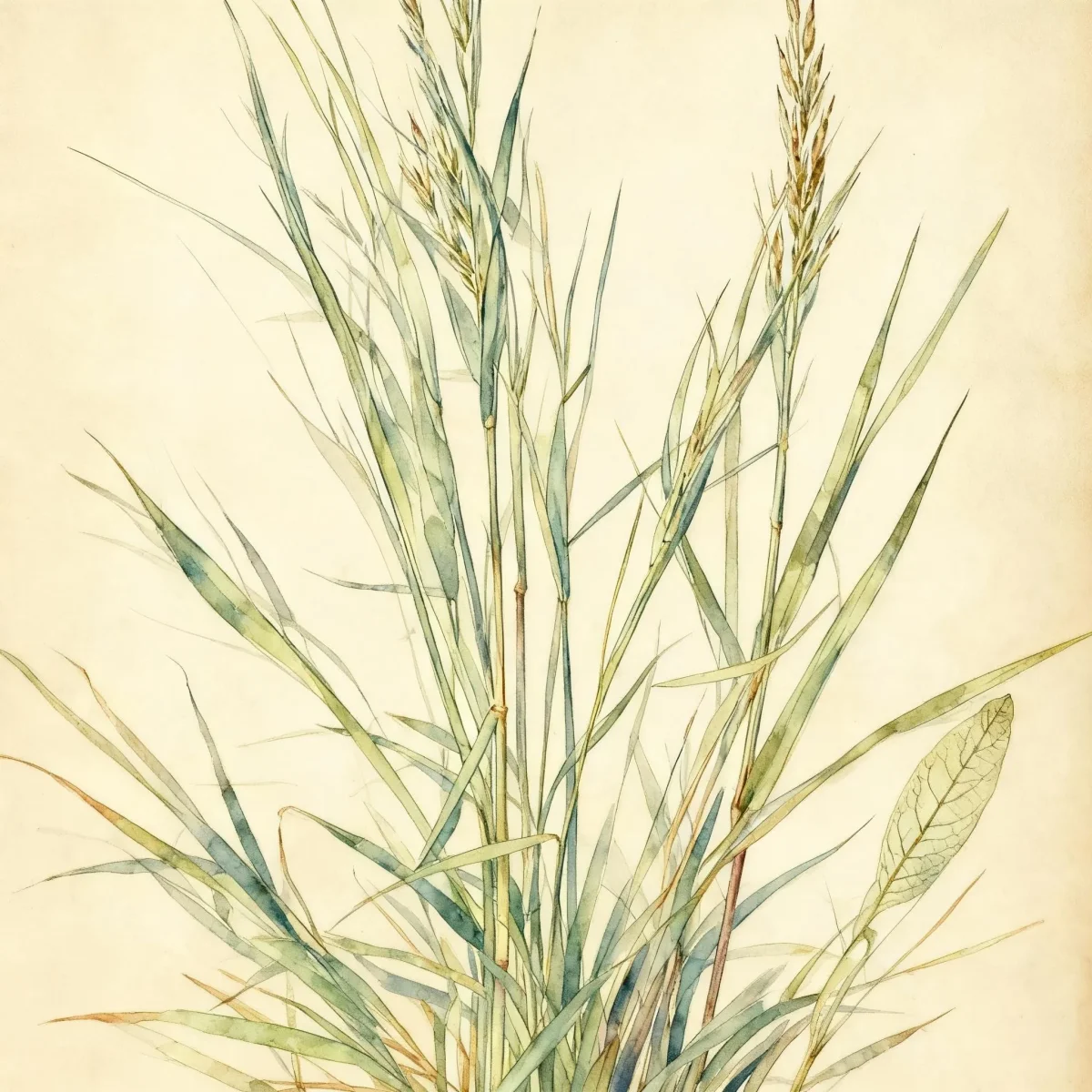
Andropogon gerardii, commonly known as big bluestem, is a majestic, tall perennial grass native to the North American tallgrass prairie. It is highly valued by gardeners for providing strong vertical architectural structure throughout the growing season. This remarkable plant features striking foliage that shifts from blue-green in spring to deep green with red highlights in summer, culminating in brilliant reddish-bronze tones after the first frost.
As a defining native species, Big blue stem offers significant ecological benefits, anchoring soil with its deep root system, making it a powerhouse for erosion control. Once established, this ornamental grass requires very little input, thriving in full sun and tolerating dry conditions well, which reduces necessary resource management.
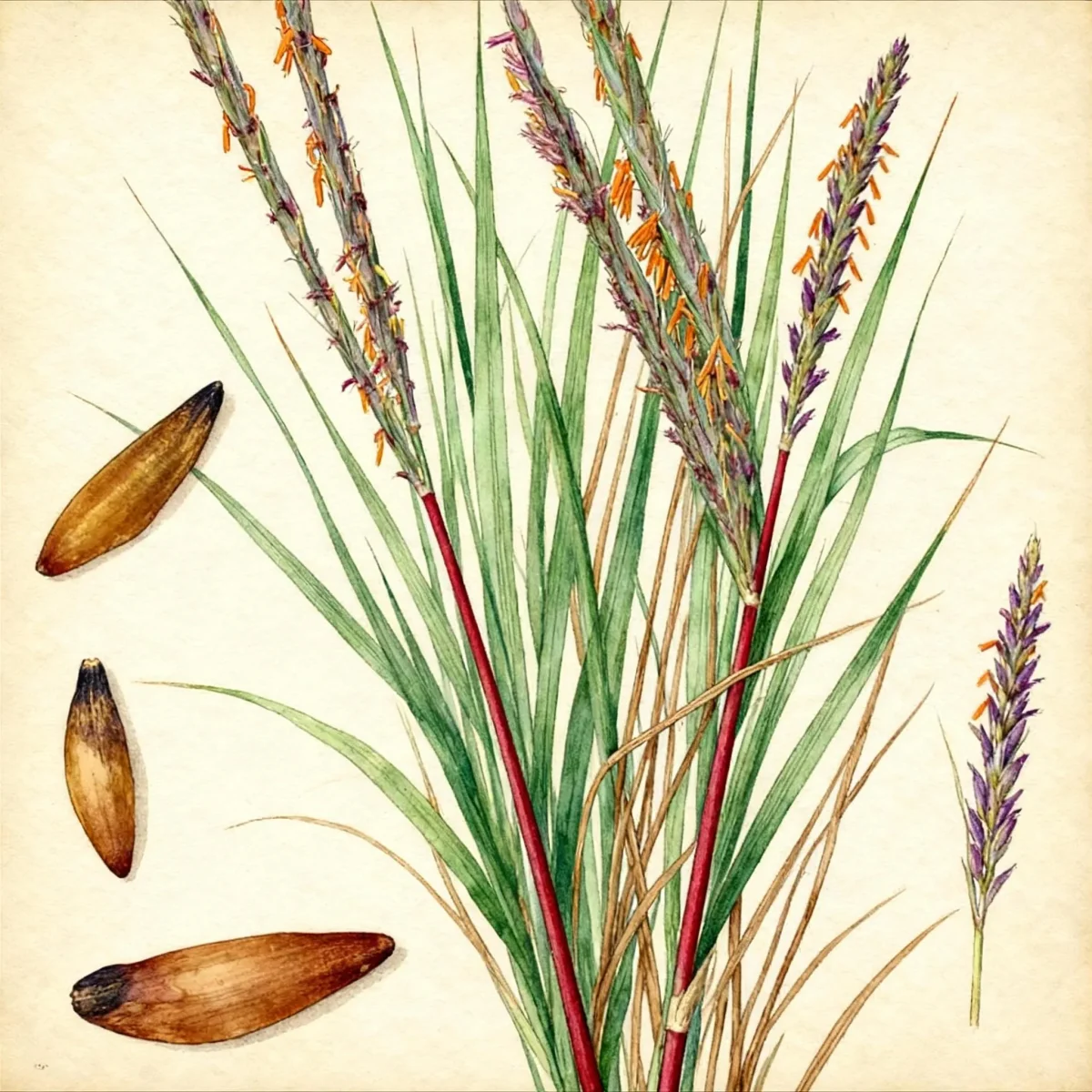
The plant earns its poetic common name “turkey foot” from its distinctive, three-parted flower/seed clusters that emerge late in the season. Planting Andropogon gerardii ensures year-round visual interest, even through winter dormancy.
Fast Facts
- Plant Family: Poaceae
- Plant Type: Ornamental grass
- Native Range: Canada to Mexico
- Hardiness Zones: USDA Zones 4-9
- Size at Maturity:
- Height: 4-6 ft
- Spread: 2-3 ft
- Bloom Time: September to February
- Bloom Description: Purplish-red
- Sun Exposure: Full sun
- Water Needs: Dry to medium
- Maintenance Level: Low
How to Grow
Big bluestem should be planted in full sun, as insufficient light leads to weaker stems that are prone to flopping. It thrives in average, well-drained soils, though it shows excellent adaptability to various conditions. While it flourishes in moist, fertile soils, planting in drier, less fertile locations often results in a more compact, upright habit, which is usually preferred for ornamental appeal.
Establishment can be slow due to the development of its extensive root system, so patience is key during the first year or two. Watering needs are minimal once established; the grass handles drought conditions admirably, requiring only occasional supplemental water during prolonged dry spells. Fertilization is generally unnecessary and can even be counterproductive, encouraging excessive top growth.
Maintenance for Andropogon gerardii is refreshingly low. The primary task involves cutting the stems down to the ground level late in the winter, ideally just before the new spring growth begins. This pruning prepares the clump for vibrant new growth and maintains neatness in the garden border.
Landscape Uses
Big blue stem excels when planted en masse, perfectly mimicking the sweeping beauty of native prairies and wildflower meadows. Its height makes it an ideal choice for the rear of borders, where it acts as a dynamic, airy screen without feeling too solid or heavy. For gardeners focused on native landscapes, this grass is foundational.
Due to its impressive stature and drought tolerance, consider using Andropogon gerardii as an accent plant against solid walls or in contemporary minimalist designs that require strong vertical lines. Its extensive fibrous root system also makes it highly effective when used specifically for slope stabilization and erosion control in challenging areas.
Consider pairing the rustling movements of big bluestem with shorter, contrasting textures, such as coneflowers (Echinacea) or native sedges, allowing the changing seasonal colors of the grass to frame lower flowering perennials beautifully.
Standout Features
Flower Qualities
- Insignificant
- Good Dried
Noteworthy Characteristics
Andropogon gerardii, commonly called big bluestem grass, is a tall, Missouri native, perennial, warm season grass that was the dominant grass of the tallgrass prairie which once covered large parts of the Midwest. It may be grown as an ornamental grass because of its attractive foliage which changes color seasonally, its good architectural height and its interesting flower/seed heads. It features an upright clump of stems with flattened leaves (to 2’ long and 3/8” wide) which emerge gray to blue green in spring, mature to green with red tinges in summer and turn reddish bronze with lavender tones in autumn after frost. Flowering stems rise in late summer above the foliage clump bearing purplish 3-parted, finger-like flower clusters (to 4” long) purportedly resembling turkey feet (hence the additional common name of turkeyfoot grass for this species). Flowering stems bring total height of this grass to 4-8’ tall (typically at the taller end in moist soils and the shorter end in dry soils).Genus name comes from the Greek words aner or andros meaning man and pogon meaning beard in reference to the hairs on the spikelets of some species in the genus.Specific epithet honors Louis Gerard (1733-1819), French physician and botanist.
Tolerances
- Deer
- Drought
- Erosion
- Dry Soil
- Black Walnut
- Air Pollution
Potential Problems
Big bluestem generally presents no serious insect or disease problems, making it exceptionally well-suited for low-maintenance gardens. Gardeners should remain aware that management issues usually stem from improper cultural practices rather than pest pressure. Over-fertilizing or planting in overly rich or constantly wet soil can lead to weak, floppy stems, particularly as the plants gain height in mid-summer.
To mitigate flopping, ensure the planting site adheres strictly to the full sun requirement and avoid amending poor soils excessively. Minimal intervention is needed; let the plant dictate its own structural stability based on the dryness of its environment.
Frequently Asked Questions
What hardiness zones is Big blue stem suitable for?
Big blue stem (Andropogon gerardii) is highly adaptable and thrives across USDA Zones 4 through 9, offering reliable perennial structure across a wide range of climates.
How large does Big blue stem grow?
This stately grass typically reaches heights between 4 and 6 feet, with a moderate spread of 2 to 3 feet, forming an upright clump that provides excellent vertical accent.
What sun exposure does Big blue stem need?
Andropogon gerardii requires full sun exposure to perform optimally, ensuring strong stems and the best seasonal color changes.
When does Big blue stem bloom?
The purplish-red flower structures of this ornamental grass appear late in the season, blooming generally from September through February.
Conclusion
Big blue stem stands out as a premier choice for adding drama, structure, and resilience to any landscape design. Its low maintenance needs, combined with outstanding drought and pollution tolerance, make Andropogon gerardii indispensable for naturalized areas and mixed borders. Before planting this magnificent native grass, confirm that your location meets the full sun requirement and that your soil offers adequate drainage.
Companion Planting
Successful companion planting with Big blue stem focuses on species that share its love of full sun and dry to medium moisture requirements. Native perennials like Purple Coneflower (Echinacea purpurea), Stiff Goldenrod (Solidago rigida), and various native milkweeds (Asclepias species) are excellent partners. These plants bloom at different times than the grass, ensuring continuous visual interest as the stately plumes of the Andropogon gerardii emerge and develop.
In drier native meadow designs, group it with other tall grasses such as Switchgrass (Panicum virgatum) cultivars for textural contrast. Allowing these species to mingle naturally emphasizes the authentic prairie aesthetic while maintaining manageable garden borders.
Seasonal Care Calendar
Late Winter (February/Early March) is the critical time for maintaining Big blue stem. Before new shoots emerge, use sharp shears or a string trimmer to cut all the prior year’s growth down to about 2-4 inches above the soil line. This removes the old seed heads and stems cleanly for the coming season.
Spring dictates patience; avoid disturbing the soil around the base of the Andropogon gerardii clump, as its deep roots do not need summer feeding. Focus instead on weeding around the base while the grass is dormant to reduce competition for moisture when it begins its slow spring ascent.
Summer is largely hands-off for this drought-tolerant stalwart once established. Monitor for excessive lean if rainfall is heavy, but generally, no watering or pruning is required. Enjoy the deepening green and summer hints of red through August.