Northern sea oats (Chasmanthium latifolium)
Northern sea oats (Chasmanthium latifolium) is a stunning ornamental grass valued for its fluttering, oat-like seed heads and shade tolerance.
Scroll down to discover growing tips, care requirements, companion plants, and more
Complete Plant Information
Overview
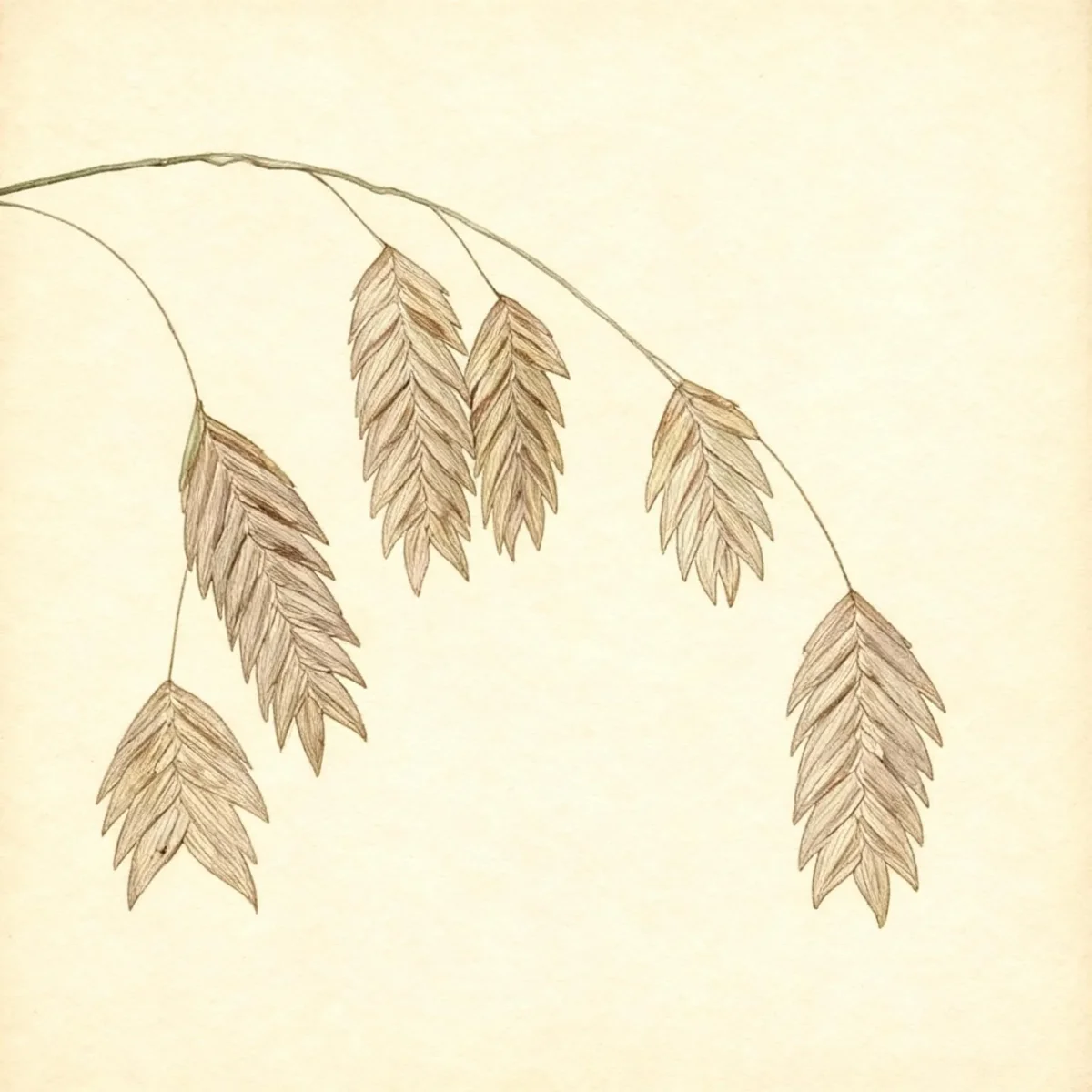
Northern sea oats (Chasmanthium latifolium) is a highly valued native ornamental grass celebrated for its unique, flat, drooping seed heads that resemble oats. These distinctive structures emerge green and mature to an attractive purplish bronze, providing dynamic texture throughout the late summer and fall landscape. As a Missouri native grass, Chasmanthium latifolium is reliable in a wide range of conditions found across the Eastern United States and Northern Mexico.
This upright, clump-forming grass offers significant aesthetic appeal even after frost when the foliage turns coppery before fading. Unlike many ornamental grasses, Northern sea oats exhibits remarkable shade tolerance, making it an excellent choice for difficult, moist areas where other sun-lovers fail. Its low maintenance requirements, combined with its long season of interest, establish it as a versatile staple for naturalized plantings and shaded borders.
Gardeners appreciate the low care demands of Chasmanthium latifolium. While it prefers moist, fertile soil, it adapts well to average conditions and handles wet soil better than many counterparts. Be aware that Northern sea oats will self-seed, often spreading to create attractive mass plantings, though this necessitates monitoring if strict containment is desired.
Fast Facts
- Plant Family: Poaceae
- Plant Type: Ornamental grass
- Native Range: Eastern United States, northern Mexico
- Hardiness Zones: USDA Zones 3-8
- Size at Maturity:
- Height: 2-5 ft
- Spread: 1-2.5 ft
- Bloom Time: August to September
- Bloom Description: Green
- Sun Exposure: Full sun to part shade
- Water Needs: Medium to wet
- Maintenance Level: Low
How to Grow
For best results, plant Chasmanthium latifolium in the spring after the danger of hard frost has passed. It thrives in average, medium to wet, well-drained soil, performing admirably even in poor soils, though fertility enhances vigor. Ideal placement allows for full sun exposure, though this grass is one of the more shade-tolerant ornamental varieties, successfully gracing woodland edges or partial shade areas.
Watering should be consistent, leaning toward medium to wet, especially during establishment or periods of drought. Fertilizing is rarely necessary; healthy growth is usually maintained through the moisture content of the site. Be vigilant regarding spread, as Northern sea oats tends to self-seed and may naturalize aggressively across the landscape.
Maintenance for Chasmanthium latifolium is minimal. Resist the urge to cut back foliage in the fall; leaving the stems standing throughout winter adds crucial architectural interest and helps insulate the crowns against cold temperatures, beneficial in the colder end of its hardiness range. Conduct a hard prune, cutting the entire clump back to the ground in early spring before new shoots emerge.
Landscape Uses
The texture and enduring interest provided by Northern sea oats make it extremely versatile for design in wetter or partially shaded gardens. Its somewhat arching stems and dramatically drooping seed heads offer excellent contrast when placed near broad-leafed perennials or fine-textured shrubs. This grass performs magnificently when utilized to naturalize areas, stream banks, or the periphery of a water garden, living up to its common names like River oats or Creek oats.
Due to its tendency to spread, large, mass plantings are often the most effective way to utilize Chasmanthium latifolium in home landscapes, creating a fluid, moving tapestry of green turning coppery gold. It serves beautifully as an informal screen or as an accent plant where movement in the slightest breeze can be appreciated. This grass is also specifically recommended for native plant gardens due to its provenance.
Standout Features
Flower Qualities
- Showy
- Good Cut
- Good Dried
Noteworthy Characteristics
Chasmanthium latifolium, a clump-forming, upright, ornamental grass, is a Missouri native plant which typically grows 2-5’ and most often occurs in rich woods or rocky slopes along streams and on moist bluffs. This grass is perhaps most distinguished by the flat, drooping seed heads which hang in terminal clusters on thread-like pedicils from slightly arching stems. Seed heads will flutter when caressed by even the softest of breezes, and the foliage transforms beautifully after frost.
Tolerances
- Black Walnut
Potential Problems
Chasmanthium latifolium experiences virtually no serious insect or disease problems, confirming its low-maintenance profile. The primary management consideration is related to its vigor; if the plant spreads too far into unwanted areas through self-seeding, manual removal or containment measures will be necessary. In settings where the plants become very tall (near the 5-foot max), they might occasionally require staking or other physical support if grown in very rich soil or extremely windy spots, although they are generally self-supporting.
Frequently Asked Questions
What hardiness zones is Northern sea oats suitable for?
Northern sea oats (Chasmanthium latifolium) is suitable for USDA Zones 3 through 8.
How large does Northern sea oats grow?
This ornamental grass typically reaches a height of 2 to 5 feet with a spread between 1 and 2.5 feet at maturity.
What sun exposure does Chasmanthium latifolium need?
Chasmanthium latifolium prefers full sun to part shade conditions to achieve its best performance.
When does Northern sea oats bloom?
The blooms of Northern sea oats appear from August through September, starting as green structures before maturing.
Conclusion
The textural contrast and enduring fall/winter interest provided by the flat, fluttering seed heads confirm Chasmanthium latifolium as an essential component in naturalistic and partially shaded landscapes. This reliable, low-maintenance Northern sea oats brings dynamic movement to the garden from summer well into the next spring. Before planting, verify that your site conditions—especially moisture levels—align with its medium to wet needs within hardiness zones 3 through 8.
Companion Planting
Due to its preference for moist, average to rich soils and its tolerance for partial shade, Chasmanthium latifolium integrates beautifully with other moisture-loving, shade-tolerant natives. Grouping it alongside large ferns, such as various Dryopteris species, creates a lush, woodland effect where the grass’s vertical texture contrasts sharply with the fern’s broad fronds. Astilbes and Rodgersia are excellent perennial companions, as they share similar soil moisture requirements and thrive in the dappled light that Chasmanthium latifolium handles so well.
Design Ideas for Movement and Texture
The visual impact of Northern sea oats is magnified when massed, utilizing its tendency to naturalize effectively. Consider planting it on a gentle slope where the slightest breeze will cause the seed heads to dance, drawing the eye across the landscape. For a formal garden needing transitional structure, use Chasmanthium latifolium as a soft, naturalized edge near a walkway or patio, contrasting its airy structure against rigid hardscaping materials like stone or gravel. Its autumn color shift to coppery bronze looks spectacular when backlit by the setting sun.