Cup and saucer vine (Cobaea scandens)
Grow the vigorous Cobaea scandens, Cup and saucer vine, for rapid coverage. This annual features showy, fragrant, bell-shaped flowers.
Scroll down to discover growing tips, care requirements, companion plants, and more
Complete Plant Information
Overview
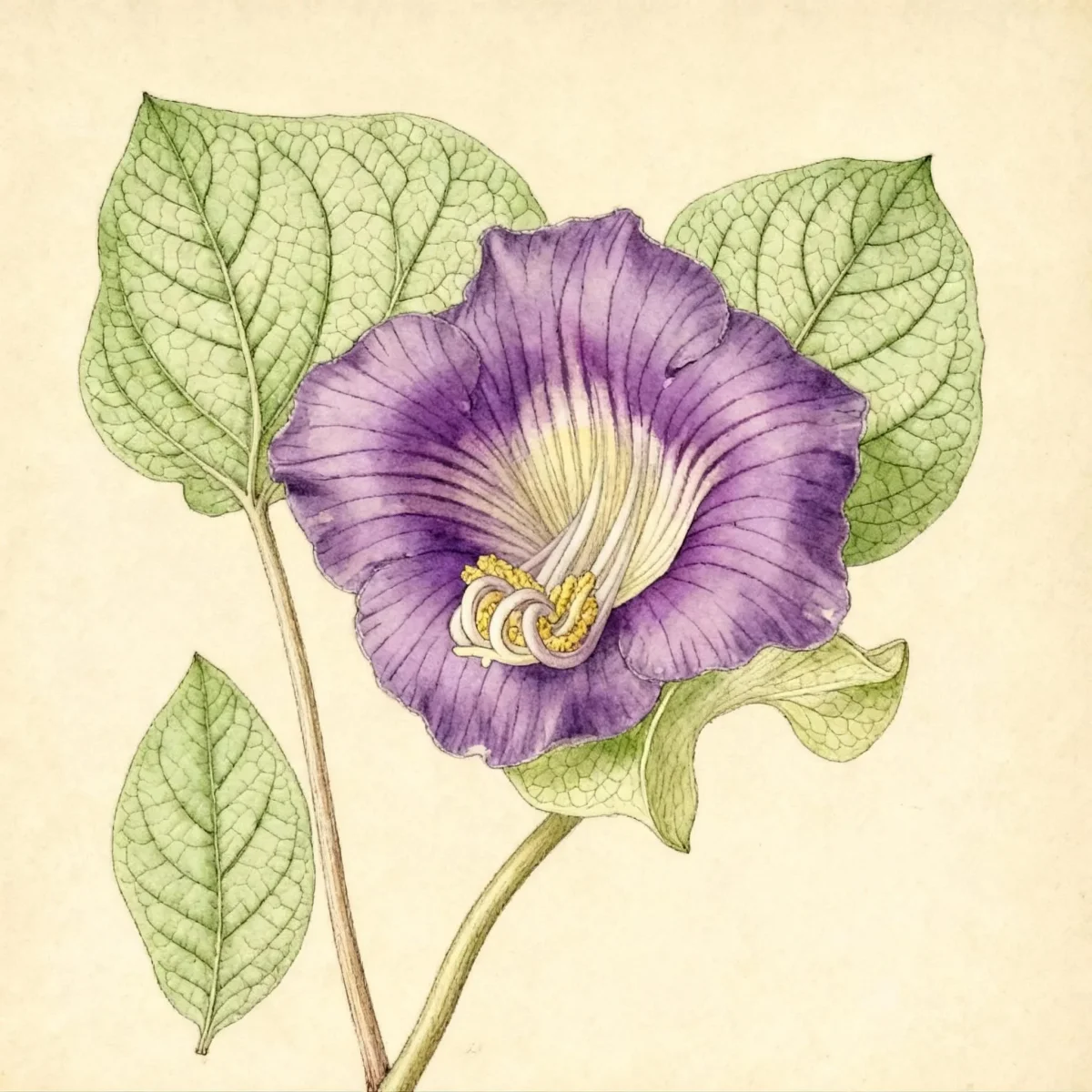
The Cup and saucer vine (Cobaea scandens) is a standout choice for gardeners needing fast, dramatic vertical coverage during the growing season. As a vigorous, tendril-climbing vine, it can easily scale structures, making it ideal for quickly masking unsightly features or filling arbors. Its unique appeal lies in the distinctive, bell-shaped flowers, which are subtended by a saucer-like green calyx.
Native to Mexico, Cobaea scandens performs well as a subtropical tender perennial in warmer climates (Zones 9-11) but is widely grown as a reliable annual elsewhere. When planted in the late spring, this vine establishes rapidly, often reaching significant heights within one growing season. Gardeners appreciate the textural foliage and the unique bloom progression of this plant.
The flowers of the Cup and saucer vine start green before maturing through shades of purple, often displaying a pleasant, musky fragrance. For gardeners seeking a fast-growing annual solution that offers both height and interesting floral structure, Cobaea scandens delivers exceptional visual impact from late summer into the fall.
Fast Facts
- Plant Family: Polemoniaceae
- Plant Type: Vine
- Native Range: Mexico
- Hardiness Zones: USDA Zones 9-11
- Size at Maturity:
- Height: 10-20 ft
- Spread: 3-6 ft
- Bloom Time: Seasonal bloomer
- Bloom Description: Green maturing to purple
- Sun Exposure: Full sun
- Water Needs: Medium
- Maintenance Level: Medium
How to Grow
Starting Cup and saucer vine is best achieved via seed, requiring gardeners to start seeds indoors in late winter, approximately 8 to 10 weeks ahead of the last expected frost date. Once the danger of frost has passed, transplant these vigorous seedlings into average, medium, well-drained soils. While Cobaea scandens tolerates full sun, high heat areas benefit from the inclusion of some afternoon shade to prevent scorching.
This vine demands substantial vertical support immediately upon planting, such as trellises, fences, or poles, as it uses tendrils to climb. Watering should be maintained consistently at a medium level; avoid allowing the soil to dry out completely, especially during hot, dry spells. Fertilization needs are generally moderate; an all-purpose fertilizer applied monthly during the peak growing season supports its rapid growth rate.
Since this species is only hardy as a perennial in Zones 9 through 11, most gardeners treat Cobaea scandens as a swift-growing annual. In cooler regions, simply remove the entire plant after the first hard frost. If overwintering is attempted in marginal zones, ensure planting sites provide excellent drainage, as moisture combined with cold is detrimental.
Landscape Uses
The primary functional role of Cup and saucer vine is rapid vertical screening. This fast-growing annual vine provides excellent, dense cover for temporary structures like construction screens, or permanent features like arbors, pergolas, or boundary fences that require quick greening. It also adapts well to large containers, provided the container offers sufficient depth and immediately incorporates a sturdy support cage or trellis.
Due to its height and bold texture, use Cobaea scandens as a dramatic backdrop element rather than a foreground plant. Consider pairing it with shorter, sun-loving annuals that complement the vine’s deep green foliage and purple-tinged flowers, perhaps complementing it with zinnias or marigolds at the base for sustained color below the vine’s canopy. The impressive height makes it a perfect focal point for summer entertainment areas.
Standout Features
Flower Qualities
- Showy
- Fragrant
Noteworthy Characteristics
The descriptive name, Cup and saucer vine, refers directly to the flower structure: a distinct, bell-shaped cup strongly subtended by a large, saucer-like green calyx. Native to Mexico, this species is recognized for its vigorous nature, climbing rapidly via tendrils to cover tall supports in a single season when grown as an annual. The flowers emerge green, maturing to purple, and are known to possess a musky fragrance, historically noted to attract nocturnal pollinators like bats.
Tolerances
- No serious insect or disease problems
Potential Problems
A significant advantage of growing Cobaea scandens is its general resistance to major pest and disease issues that often plague other fast-growing vines. Gardeners rarely report serious insect infestations or debilitating fungal diseases when providing proper cultural conditions. This low-problem profile contributes to its ease of use as a temporary annual feature. Ensure adequate air circulation if planting in humid conditions to help prevent any potential minor leaf spot issues, though significant problems are rare.
Frequently Asked Questions
What hardiness zones is Cup and saucer vine suitable for?
The Cup and saucer vine (Cobaea scandens) is winter hardy in USDA Zones 9 through 11, where it can be grown as a tender perennial. In all other zones, it is best managed as a vigorous annual.
How large does Cup and saucer vine grow?
When successfully grown as an annual vine, Cobaea scandens typically achieves a height between 10 and 20 feet in a single season, with a spread reaching 3 to 6 feet wide.
What sun exposure does Cup and saucer vine need?
This vine requires full sun to thrive and produce the best flowering display. However, gardeners in extremely hot climates should provide some protection from intense afternoon sun to reduce temperature stress.
When does Cup and saucer vine bloom?
Cobaea scandens acts as a seasonal bloomer, typically starting its display late in the summer and continuing into the early fall. The flowers are notable for maturing from green to shades of purple upon opening.
Conclusion
The Cup and saucer vine offers an unparalleled combination of rapid growth, appealing foliage, and unique, fragrant flowers, making it one of the best annual vines for vertical impact. Whether you are masking an unsightly structure or adding exotic interest to a trellis, Cobaea scandens provides swift results. If you live outside Zones 9-11, plan to start your seeds indoors 8 to 10 weeks before your target transplant date to maximize seasonal growth.
Companion Planting
Selecting companions for Cup and saucer vine involves choosing other plants that share its need for full sun and medium water requirements. Because Cobaea scandens climbs aggressively, its best partners are low-growing annuals that can cascade or mound neatly at the base without competing heavily for the vine’s vertical space. Consider planting calibrachoa or lobelia beneath supports to provide a carpet of color that contrasts with the large, green leaves of the vine itself.
Design Ideas
For dramatic effect, train the Cup and saucer vine over a simple wooden arbor or metal archway at an entryway. The height potential (up to 20 feet) ensures that the structure is completely cloaked in foliage by mid-summer. For a slightly less sprawling look, containing the growth in a large container on a patio allows the heavy tendrils to spill slightly over the edge before aggressively seeking the installed support, creating a lush, slightly wild focal point.