Cyclamen (Cyclamen persicum)
Cyclamen persicum, the Florist's Cyclamen, offers stunning winter blooms in vibrant pinks, reds, and whites. A beautiful bulb for cool indoor displays.
Scroll down to discover growing tips, care requirements, companion plants, and more
Complete Plant Information
Overview
The Cyclamen, specifically Cyclamen persicum, is treasured by gardeners for its vibrant, winter-blooming flowers that provide much-needed color when most other plants are dormant. Typically grown as a houseplant outside of mild climates, the florist’s cyclamen dazzles with deeply colored, reflexed petals atop heavily marbled foliage. This bulbous perennial offers exceptional aesthetic value, bringing a touch of Mediterranean charm indoors during the coldest months.
Cyclamen persicum thrives when treated as a cool-season annual indoors or as a tender perennial outdoors in specific zones. Its distinctive growth habit involves basal leaves emerging from a rounded tuber, followed by striking, solitary flowers displayed above the foliage. Successful cultivation relies heavily on mimicking its native rocky, well-drained habitat.
While many associate the term Cyclamen with the hardy outdoor species, Cyclamen persicum hybrids are frost-tender beauties prized for containers and indoor settings. Providing the right cool temperatures during winter flowering is key to maximizing the display of this unique and elegant bulb.
Fast Facts
- Plant Family: Primulaceae
- Plant Type: Bulb
- Native Range: Northern Africa, western Asia, Greece
- Hardiness Zones: USDA Zones 9-11
- Size at Maturity:
- Height: 0.5-0.75 ft
- Spread: 0.5-0.75 ft
- Bloom Time: November to March
- Bloom Description: Pink, red, violet, lavender and white
- Sun Exposure: Part shade
- Water Needs: Medium
- Maintenance Level: Medium
How to Grow
For optimal results, Cyclamen persicum should be planted where it receives light, organically rich, and exceptionally well-drained soil. If growing as an indoor plant, utilize pots, ensuring drainage is perfect, as saturated soil is a prime cause of tuber rot. Outdoors in Zones 9-11, locate plants in part shade to full shade, protected from intense afternoon sun which can cause leaf scorch.
Watering for these plants is critical, especially when grown indoors. Maintain medium moisture during the active growing and blooming season from fall through spring. When the heat of summer arrives, Cyclamen plants enter summer dormancy, losing most or all of their foliage. During this dormant period, watering should be infrequent to prevent the tuber from rotting while it rests.
As cool fall temperatures return, resume regular watering and introduce fertilization to encourage new growth and abundant winter blooms. Seeds started in late summer can sometimes produce blooms the following winter, though this process typically takes about 18 months until the first significant flowering. They prefer cool indoor locations, ideally around 65°F, while blooming intensely.
Landscape Uses
While most commonly recognized as an Indoor pot subject, Cyclamen persicum can function as a cheerful, colorful annual where winter temperatures dip below Zone 9. In containers or mixed plantings, they offer fantastic color contrast against evergreen foliage or silvery groundcovers. Their compact size makes them ideal for window boxes or patio groupings that receive bright, indirect light.
When using Cyclamen as a temporary feature, pair them with plants that share similar cool-season requirements. Think about companions like winter pansies or ornamental cabbages if used in outdoor containers in mild areas. The focus remains on the dramatic, short-season performance of the Cyclamen persicum foliage and flowers.
Standout Features
Flower Qualities
- Showy
Noteworthy Characteristics
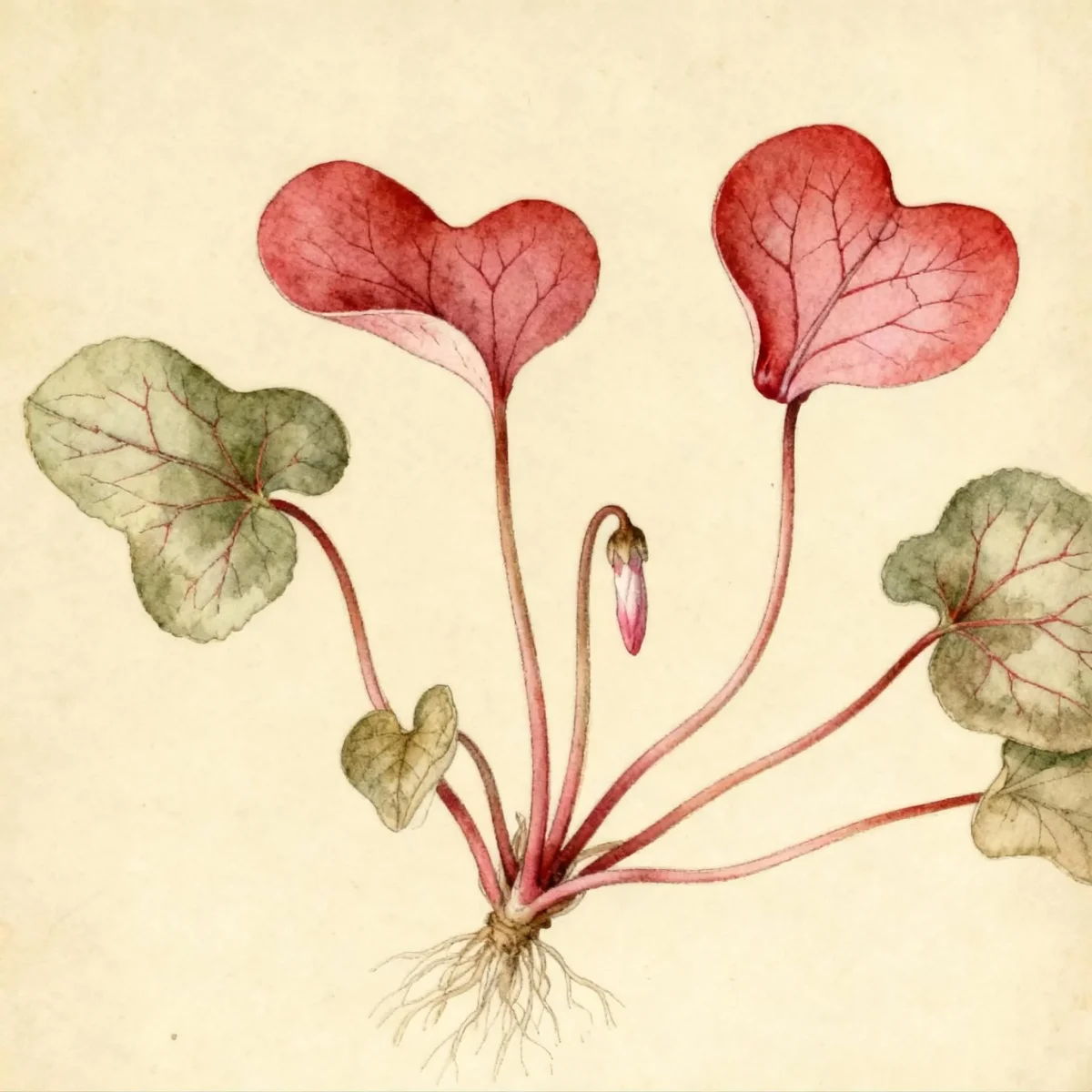
C. Persicum is native to open, rocky soils and crevices in parts of the eastern and southern Mediterranean. Species flowers are rose-pink to lavender-white or white. Florist’s cyclamen are frost-tender hybrids derived from C. Persicum. They feature clumps of long-stalked basal dark green leaves often variegated with silver blotching or veining. Solitary flowers with twisted and reflexed petals bloom from winter to spring atop leafless stems rising 6-9” tall. These hybrids offer a much greater range of flower colors than the species, including violet, lavender, purple, pink, rose, red and white, often with red centers. In contrast to florist’s cyclamen, the other type of cyclamen, species cyclamen, consists of a number of different species plants that typically are smaller (2-5” tall) and usually have much better winter hardiness (USDA Zones 5 to 8). C. Hederifolium, for example, may be grown in the ground year-round in St. Louis with a protected location and winter mulch. Genus name comes from the Greek word presumably from kylos meaning circle and referring to the rounded tubers. Specific epithet means Persian.
Tolerances
- Susceptible to bacterial soft rot of the tubers
- Pythium root rot
- Fusarium wilt
- Botrytis
- Powdery mildew
- Various mosaic and ringspot viruses
Potential Problems
Cyclamen persicum requires attentive care regarding pathogens, as it is susceptible to bacterial soft rot of the tubers, pythium root rot, and fusarium wilt, all exacerbated by overly wet conditions. Fungal issues like botrytis and powdery mildew can also occur, particularly if air circulation is poor, which is common in indoor settings. Mosaic and ringspot viruses pose a threat, requiring immediate isolation of infected plants.
Invertebrate pests are a major concern, with Cyclamen mites being by far the most damaging to florist cyclamen, causing severe puckering, stunting, and deformation of new foliage and flowers. Gardeners should also diligently watch for common pests like aphids and spider mites. Proper cultural care, such as ensuring excellent drainage and avoiding excessive humidity, is the primary defense against disease and pest outbreaks for your Cyclamen.
Frequently Asked Questions
What hardiness zones is Cyclamen suitable for?
Cyclamen persicum is winter hardy only in USDA Zones 9 through 11, best treated as an annual or indoor houseplant elsewhere.
How large does Cyclamen grow?
This plant typically reaches a mature height between 0.5 and 0.75 feet and spreads between 0.5 and 0.75 feet.
What sun exposure does Cyclamen need?
The ideal light setting for Cyclamen persicum is part shade; indoors, they benefit from intense indirect light but must be shielded from direct, harsh sun.
When does Cyclamen bloom?
This plant produces its characteristic pink, red, violet, lavender and white flowers most actively between November and March.
Conclusion
The charm of Cyclamen persicum lies in its ability to provide vibrant color during the winter months, making it an exceptional choice for container gardening or indoor display. Successful cultivation hinges on respecting its need for cool temperatures and perfectly drained soil to prevent tuber rot and disease. Before bringing home your next Cyclamen, confirm your environment can meet its specific cool-season demands.
Companion Planting
When growing Cyclamen persicum indoors, pairing it with other plants that prefer similar cool conditions and medium moisture is beneficial. Consider companion plants that don’t require intense heat or high humidity. For example, in a mixed indoor display, look for other cool-tolerant foliage plants or bulbs that are also resting during high summer.
If growing outdoors in a frost-protected area within Zones 9-11, Cyclamen pairs well with early spring ephemerals or hardy groundcovers that can tolerate dappled shade. The compact nature of the Cyclamen allows it to tuck neatly under developing spring perennials, providing early-season interest before they fully emerge.
Seasonal Care Calendar
For indoor growers, the care calendar for Cyclamen revolves around temperature management. From late fall through early spring, keep the environment cool (ideally 55°F to 65°F) and provide consistent, even moisture. Fertilize lightly every two weeks during active blooming with a balanced fertilizer diluted to half strength.
Summer care centers on dormancy. As temperatures rise and the plant begins dropping its leaves, gradually reduce watering significantly—water only enough to prevent the tuber from completely drying out. Store the pots in a cool, dry, shaded location until the cooling trend of early autumn signals it is time to resume regular watering and feeding cycles to initiate the next bloom period.