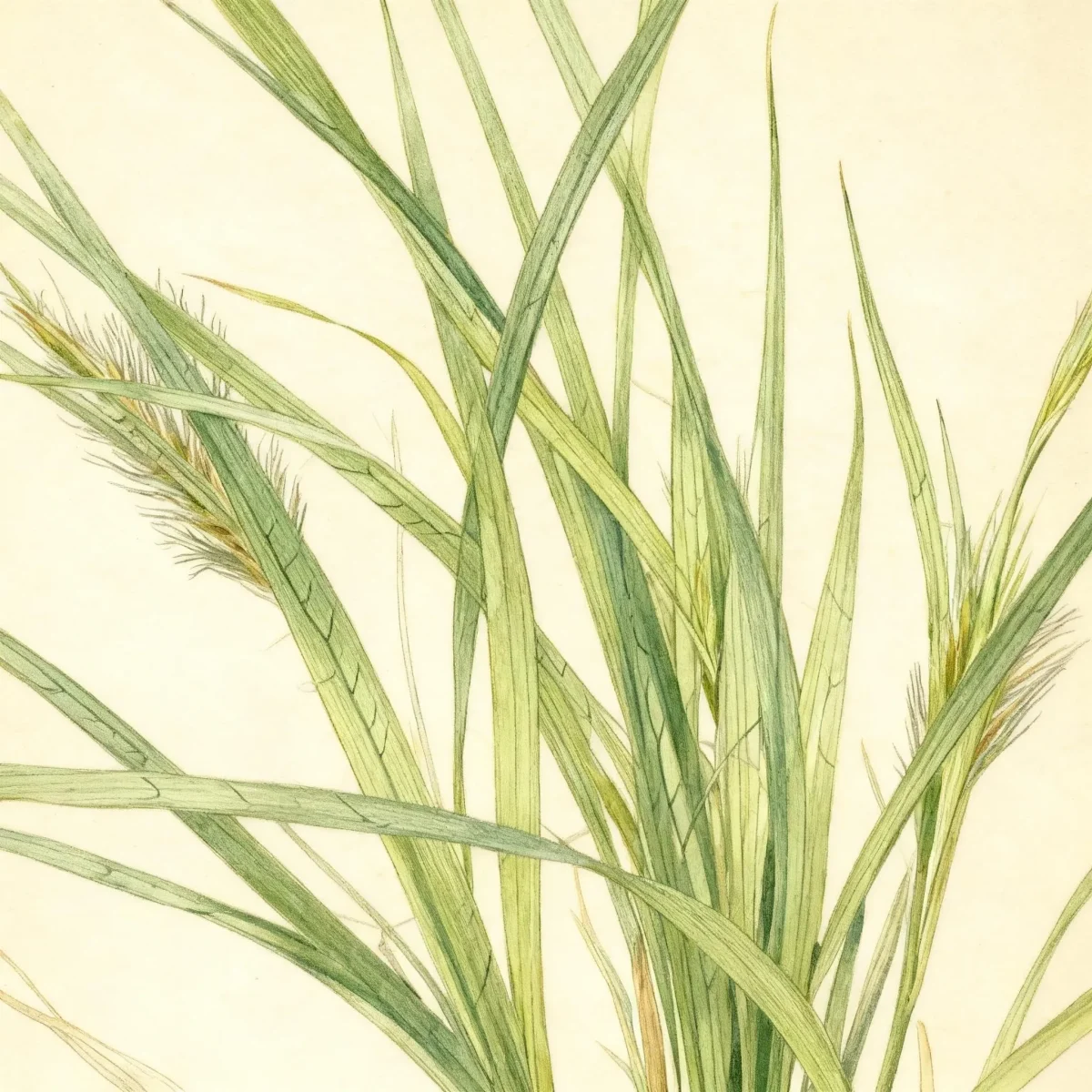
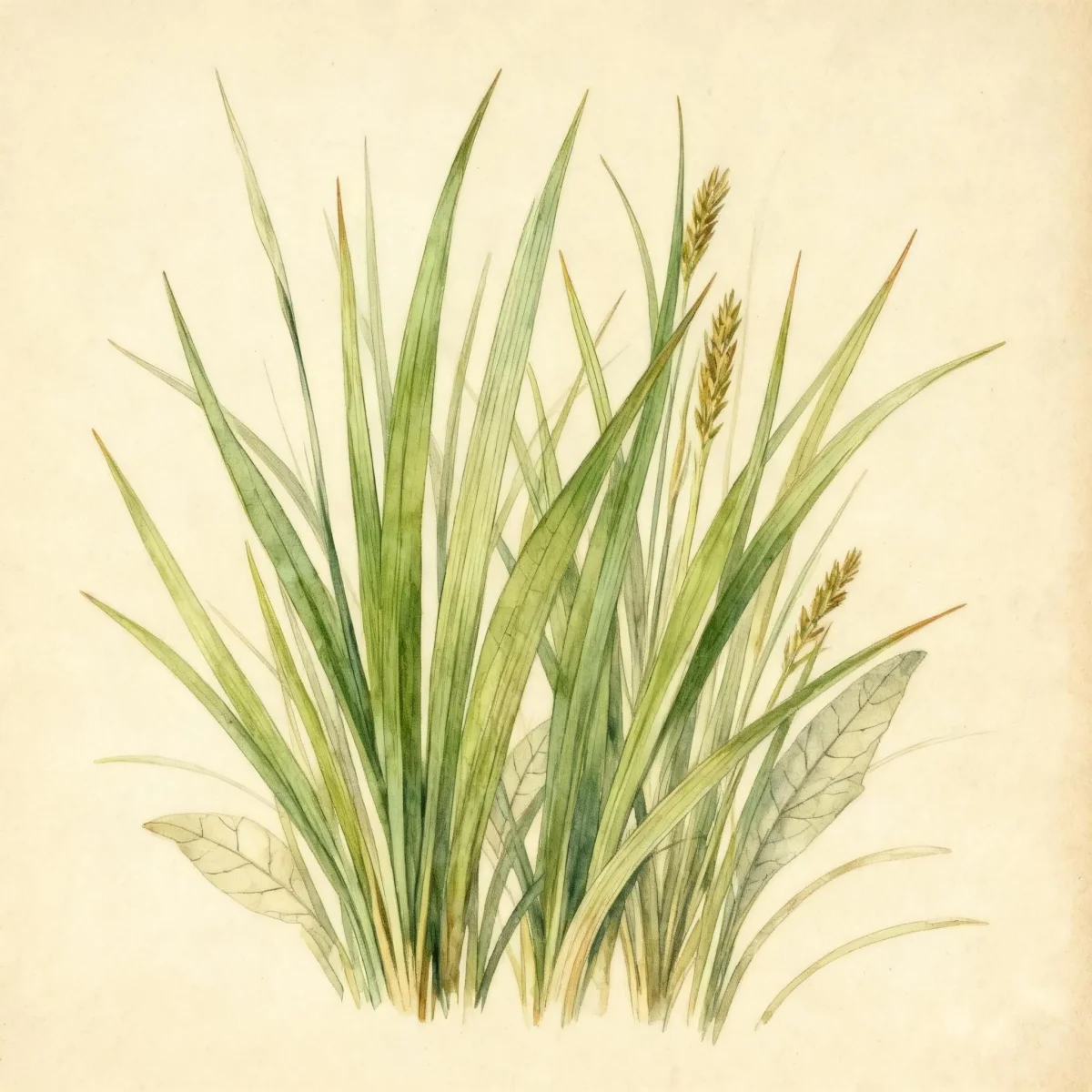
Scouringrush horsetail (Equisetum hyemale)
Equisetum hyemale, or Scouringrush horsetail, is a prehistoric, non-flowering perennial, valued for its strong vertical, evergreen stems. Thrive in wet and shady spots.
Scroll down to discover growing tips, care requirements, companion plants, and more
Complete Plant Information
Overview
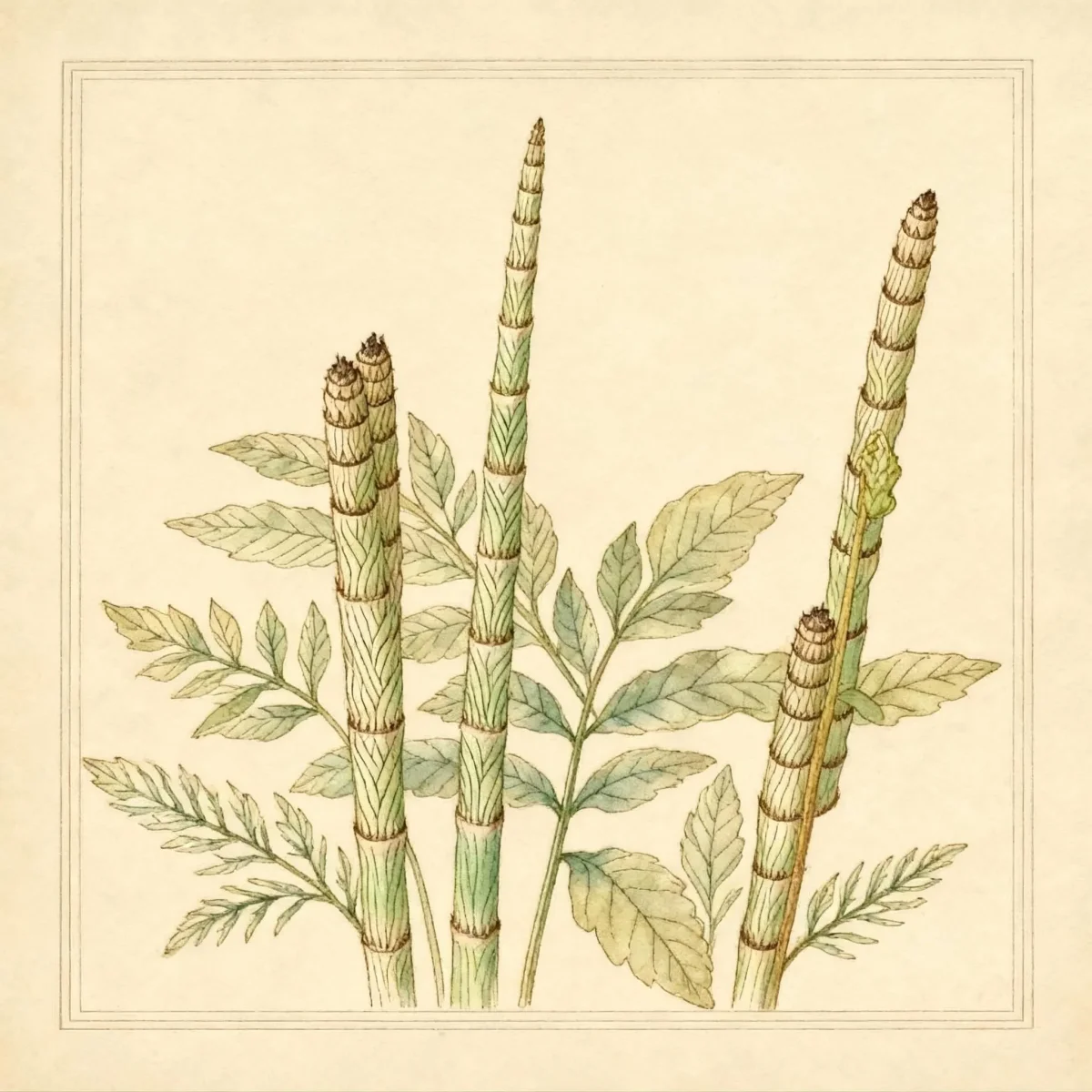
Equisetum hyemale, commonly known as Scouringrush horsetail, is a distinctive, primitive perennial celebrated for its strongly vertical, rush-like architecture. It offers excellent evergreen structure, making it a reliable accent, especially during winter months when other foliage has died back. This plant is technically a fern ally, reproducing via spores rather than flowers, and brings an ancient texture to the modern landscape.
While highly attractive, gardeners must respect the powerful growth habit of Equisetum hyemale. It spreads aggressively via creeping rhizomes, quickly forming dense colonies in ideal, wet conditions. Successful cultivation involves planning for containment to ensure this vigorous perennial remains where desired.
The rough, silica-rich stems give rise to its common name, Scouring rush, reflecting historical use for polishing. Utilize Equisetum hyemale where its need for moisture and containment can be managed, providing strong vertical interest in bog plantings or water gardens.
Fast Facts
- Plant Family: Equisetaceae
- Plant Type: Rush or Sedge
- Native Range: Eurasia, North America
- Hardiness Zones: USDA Zones 4-9
- Size at Maturity:
- Height: 2-4 ft
- Spread: 1-6 ft
- Bloom Time: Non-flowering
- Bloom Description: Non-flowering
- Sun Exposure: Full sun to part shade
- Water Needs: Medium to wet
- Maintenance Level: Medium
How to Grow
Planting Equisetum hyemale should ideally occur in spring or fall. Locate it where soil moisture is consistently medium to wet, though it tolerates a broad range of soil types. While it thrives in full sun to part shade, be mindful that vigorous spreading is encouraged by high light exposure and ample water.
Watering is crucial; this plant can handle up to four inches of standing water, making it superb for rain gardens and pond edges. Fertilizing is rarely necessary as it is adapted to nutrient-poor environments. Maintenance centers not around feeding, but around control, as this aggressive spreader can quickly overrun less-ambitious neighbors.
To manage the spread of Equisetum hyemale, preventative measures are paramount. Use sturdy soil barriers inserted deep into the ground to restrict the branched, creeping rhizomes. Alternatively, for water gardens or tubs, planting the horsetail directly into pots sunk to the bottom of the water body will effectively contain both its height and lateral spread.
Landscape Uses
The strong vertical lines provided by this non-flowering perennial make it ideal for structural roles in landscape design. Suggested uses include framing the peripheries of streams, ponds, or bog gardens where consistent moisture is guaranteed. Its height offers excellent contrast against lower-growing groundcovers or ornamental grasses.
For contemporary designs, planting Scouringrush horsetail in large, restricted containers on patios can bring its unique texture and height into smaller spaces without risking landscape invasion. It is also excellent for naturalizing moist, low-lying areas on a property where turfgrass struggles, providing reliable green coverage year-round.
Companion planting should focus on species that share its high moisture requirements, such as irises, ferns, or cardinal flowers. When placed near Japanese garden elements, the tall, segmented stems of Equisetum hyemale add a dramatic, prehistoric accent.
Standout Features
Flower Qualities
- Insignificant
Noteworthy Characteristics
Equisetum hyemale, commonly called scouring rush or rough horsetail, is a non-flowering, rush-like, rhizomatous, evergreen perennial which typically grows 3-5’ tall and is native to large portions of Eurasia, Canada and the U.S., including Missouri. This species features rigid, rough, hollow, vertically-ridged, jointed-and-segmented, bamboo-like, dark green stems which rise up from the plant rhizomes. The evergreen stems are particularly noticeable in winter and can provide significant interest to the landscape, a trait that lends to its specific epithet, meaning of winter.
Tolerances
- Heavy Shade
Potential Problems
The primary concern when growing Scouringrush horsetail is its extreme vigor; it is a very aggressive spreader. No serious insect or disease problems are typically noted, allowing its beauty to remain unimpeded by pests. If uncontrolled, management shifts entirely to eradication, which is difficult due to its deep and wide-spreading rhizome system, where small fragments left behind can regenerate new plants.
Frequently Asked Questions
What hardiness zones is Scouringrush horsetail suitable for?
Equisetum hyemale is suitable for gardeners in USDA Zones 4 through 9.
How large does Scouringrush horsetail grow?
This perennial typically reaches a height between 2 and 4 feet, with a spread ranging from 1 to 6 feet, depending on growing conditions and containment efforts.
What sun exposure does Equisetum hyemale need?
It performs well in conditions ranging from full sun to partial shade, requiring less sunlight if soil moisture remains consistently high.
When does Scouringrush horsetail bloom?
Equisetum hyemale is a non-flowering plant; it produces no flowers or visible fruits.
Conclusion
The powerful vertical accent and evergreen presence of Equisetum hyemale offer year-round architectural interest unmatched by softer perennials. Understanding and proactively managing the aggressive rhizomes of Scouringrush horsetail is the key to enjoying its unique form. Before planting, confirm your USDA zone compatibility and ensure you have adequate subterranean barriers planned for success with this ancient specimen.
Companion Planting
When integrating Equisetum hyemale into a water garden setting, pair it with other moisture lovers that appreciate similar sun exposure. For an informal or naturalized look, consider Water Forget-Me-Nots (Myosotis scorpioides) or various moisture-loving ferns that can handle damp soil around the edges of the colonization zone.
For drier garden areas where you wish to contain the horsetail within a sunk container, use the surrounding space for plants that offer bright color contrast against the dark green stems. Astilbe or various ornamental sedges work well, provided their environmental needs are met, creating a dynamic textural juxtaposition.
Design Ideas: Vertical Accents
The use of Equisetum hyemale is highly effective where a dramatic vertical element is required without the bulk of true bamboo. A tight grouping of Scouringrush horsetail placed near the entrance of a pathway draws the eye upward and creates a strong axial focus. In modern minimalist gardens, singular, highly contained specimens can act as living sculptures.
Since the stems have thin, black banding at the joints, they complement modern hardscaping materials like dark slate or black metal edging beautifully. For a truly Japanese-inspired aesthetic, place individual stems in raked gravel beds, utilizing the strong verticality to contrast the horizontal plane.