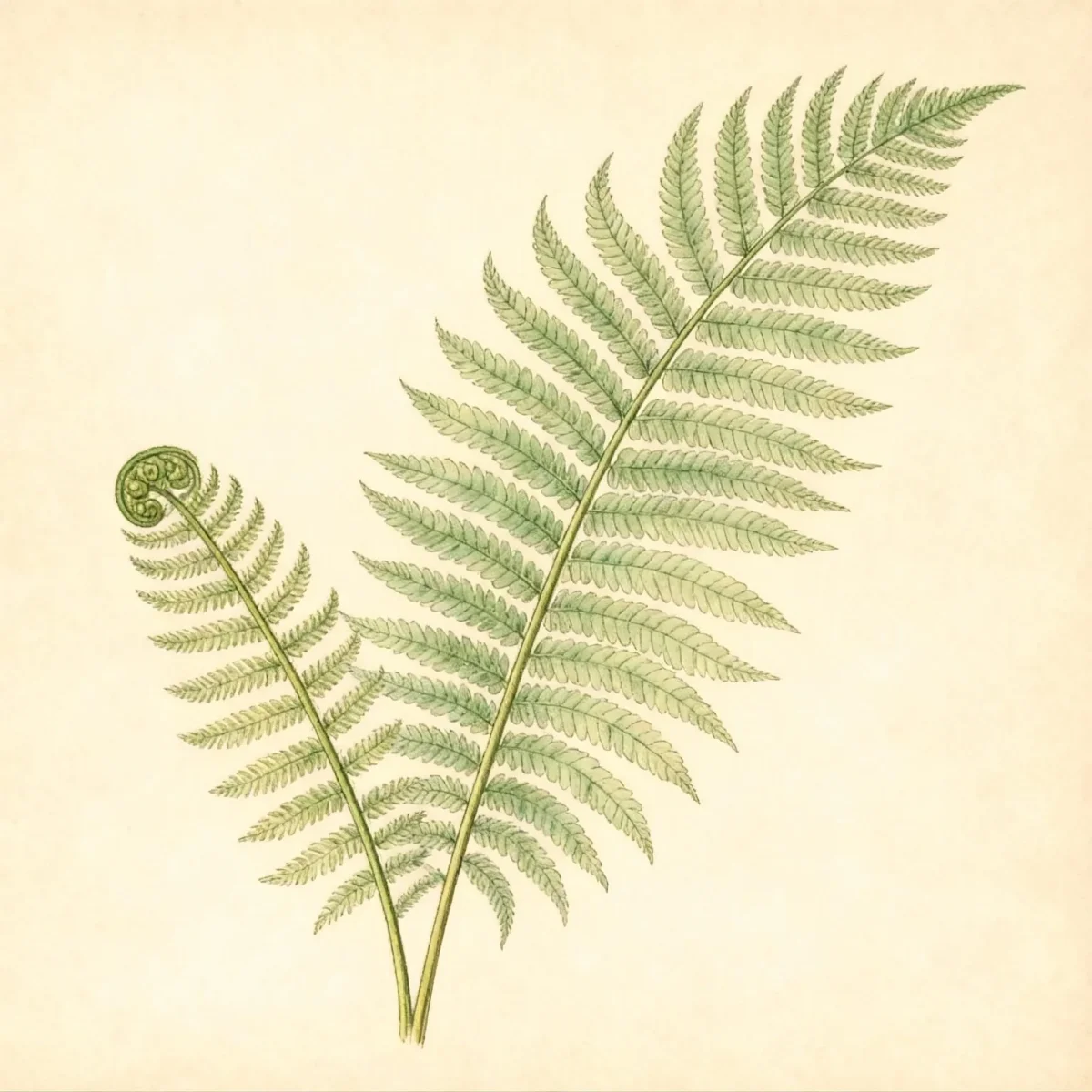
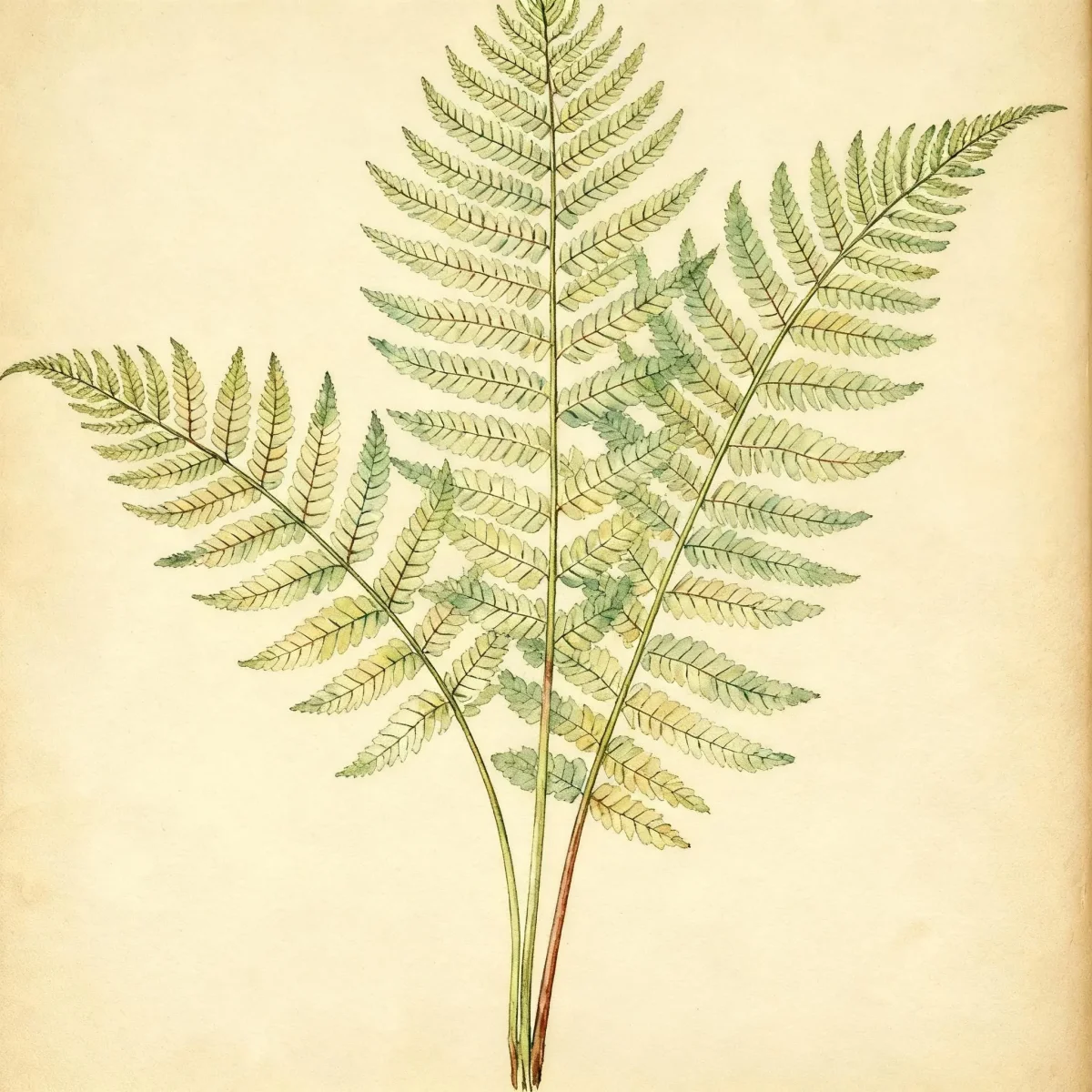
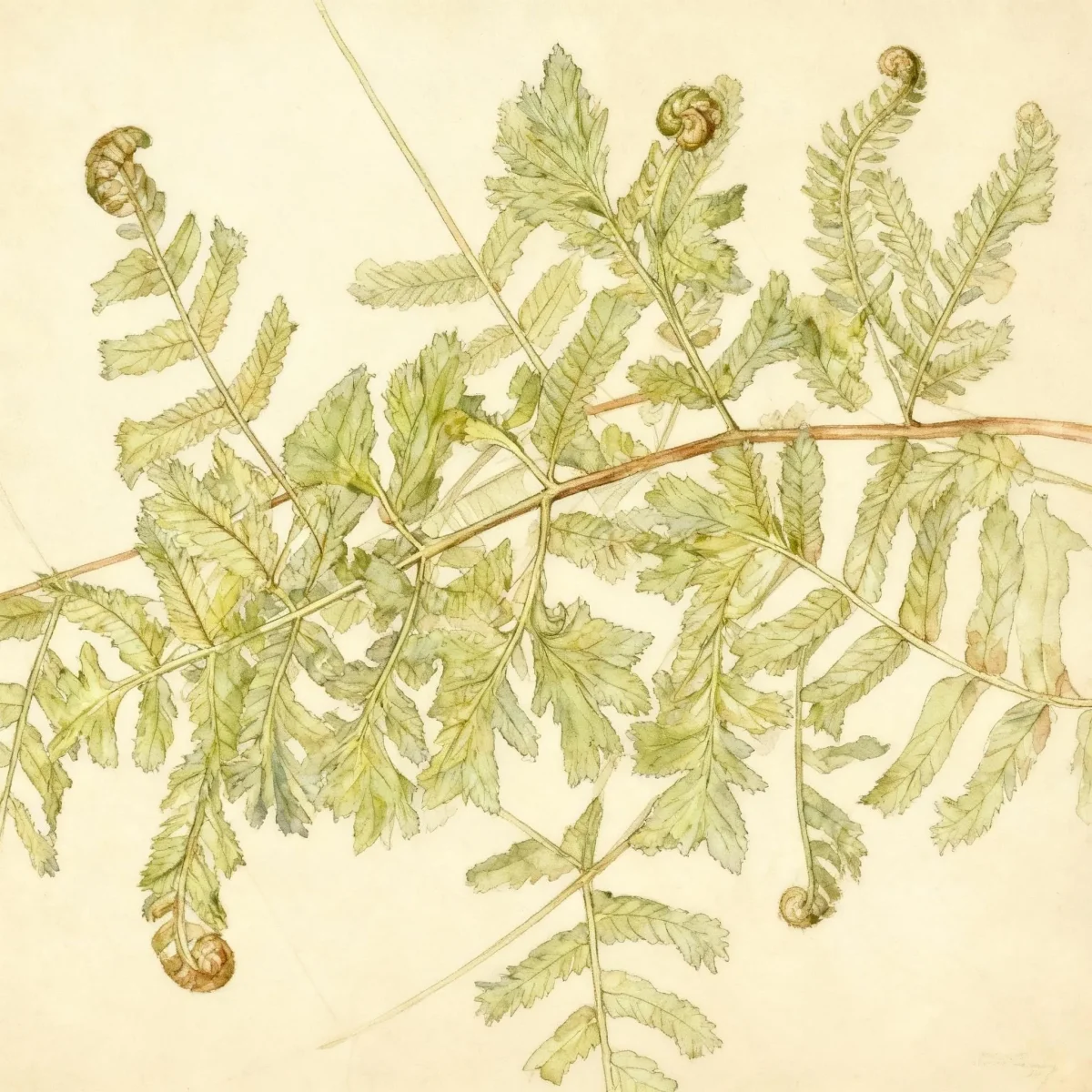
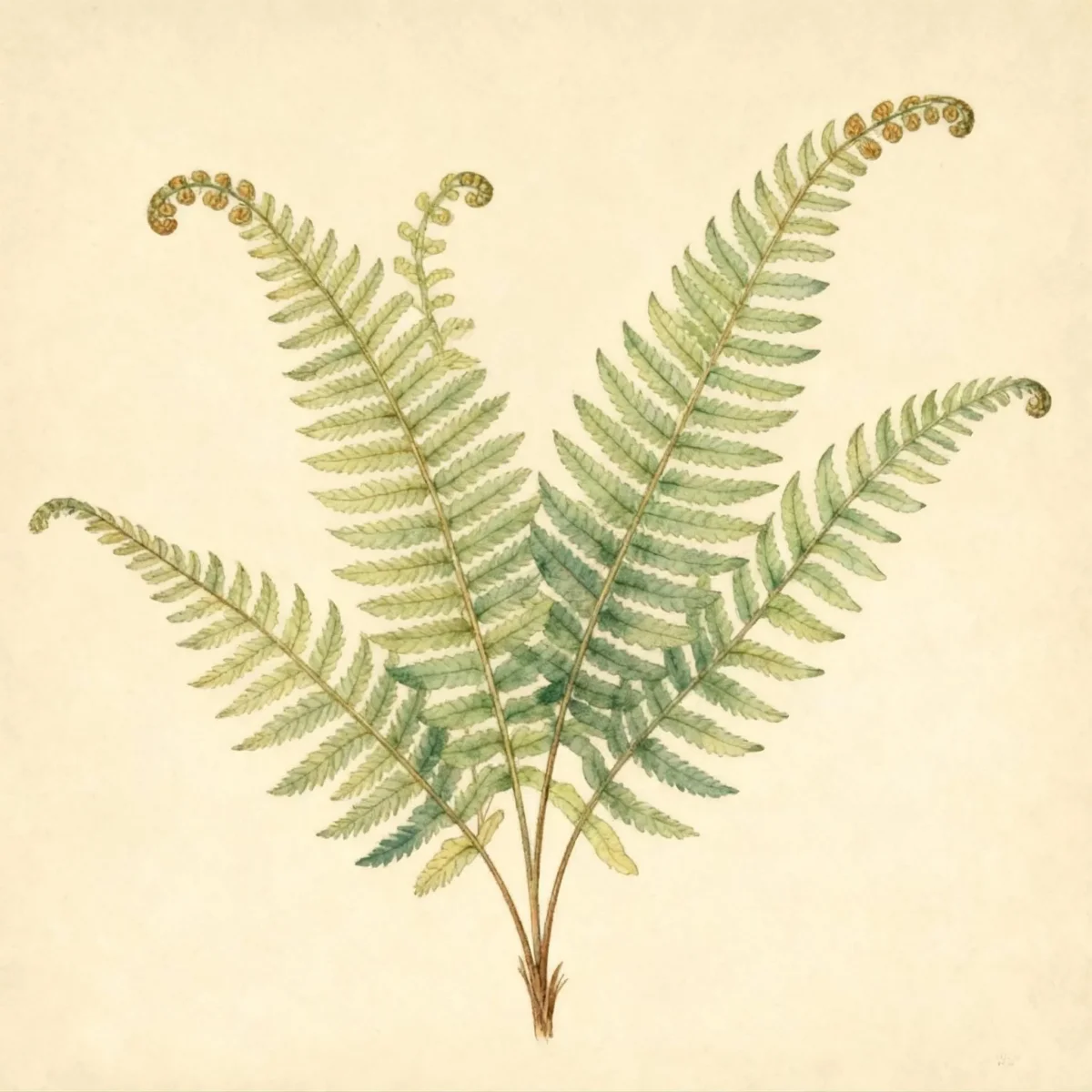
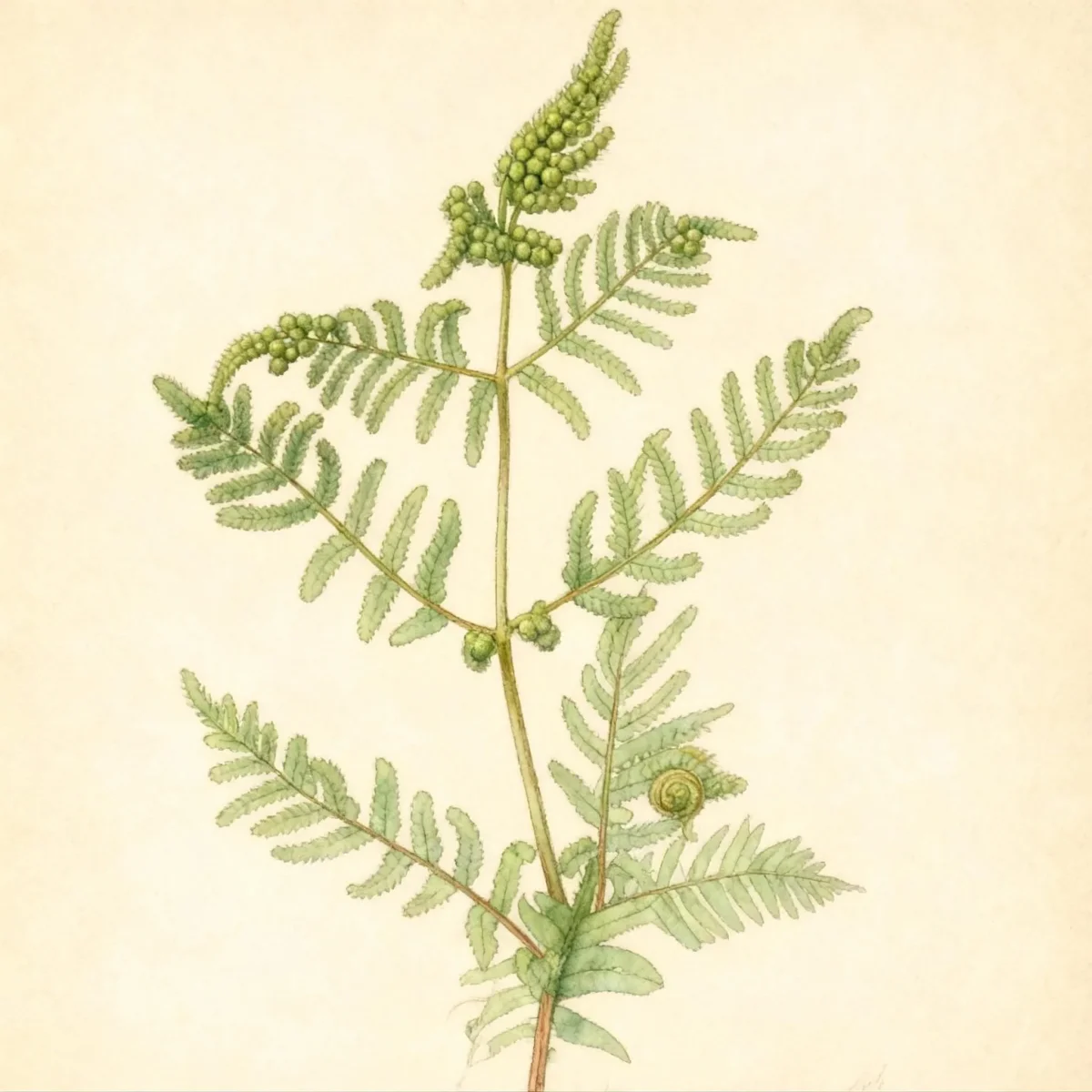
Sensitive fern (Onoclea sensibilis)
The deciduous Onoclea sensibilis, or Sensitive fern, thrives in shade and wet soils, forming a dense ground cover in USDA Zones 4-8.
Scroll down to discover growing tips, care requirements, companion plants, and more
Complete Plant Information
Overview
The Sensitive fern, scientifically known as Onoclea sensibilis, is a highly recognizable, large, deciduous fern valued for its tolerance of deep shade and consistently moist conditions. It is a staple for brightening up wet, shaded woodland garden areas where few other plants thrive. Its lush, bright green sterile fronds provide excellent texture and coverage throughout the growing season.
Native to the damp woodlands and marshes of Eastern North America, Onoclea sensibilis spreads via rhizomes and spores, quickly fulfilling roles as a ground cover or naturalized planting. While its name suggests fragility, the ‘sensitive’ quality refers primarily to its susceptibility to drought and the very first hard autumnal frost, which quickly turns the foliage brown.
Functionally, the Sensitive fern is indispensable in ecological landscaping, offering cover for amphibians and thriving where rain gardens are needed. Gardeners should note that while it tolerates average soil, its best performance and largest stature are achieved when moisture is readily available, making it an excellent choice for low spots or near water features.
Fast Facts
- Plant Family: Onocleaceae
- Plant Type: Fern
- Native Range: Eastern North America
- Hardiness Zones: USDA Zones 4-8
- Size at Maturity:
- Height: 3-4 ft
- Spread: 3-4 ft
- Bloom Time: Non-flowering
- Bloom Description: Non-flowering
- Sun Exposure: Part shade to full shade
- Water Needs: Medium to wet
- Maintenance Level: Medium
How to Grow
The best time to plant Onoclea sensibilis is in the spring, allowing it time to establish before summer heat sets in. Select a location receiving part shade to full shade, mimicking its native woodland habitat. This fern performs best in organically rich, well-drained soil, though it is highly adaptable to clay soils provided moisture is supplied.
Care centers heavily around hydration; ensure consistent moisture is maintained, especially during dry spells, as the fronds are sensitive to desiccation. Although native to swampy areas, it adapts well to average garden soil, but never permit the soil to completely dry out. Fertilization is rarely necessary if the soil retains good organic matter; focus cultural efforts on managing moisture levels rather than feeding.
This plant spreads readily by creeping rhizomes and spores, which means it may become aggressive under optimal, very wet conditions, perhaps requiring management to keep it contained. There is minimal pruning required; the brown, persistent fertile stems can be left through winter for visual interest, or cut back in early spring just before new growth emerges.
Landscape Uses
Onoclea sensibilis is expertly suited for large-scale applications where dense ground cover is desired in challenging shady spots. Its vigor makes it highly recommended for naturalized plantings, allowing it to spread and carpet the forest floor aesthetic along streams, pond edges, or in damp woodland gardens. It functions perfectly as a foundational plant in rain gardens, effectively utilizing and filtering excess runoff due to its love for medium to wet soil conditions.
When designing with the Sensitive fern, consider pairing it with plants that offer contrasting textures or evergreen foliage to maintain interest when Onoclea sensibilis goes dormant. It pairs exceptionally well with the evergreen Christmas fern (Polystichum acrostichoides), offering year-round structure in the shade garden. Use it to soften hardscaping near water features or as a lush, low border in shaded borders.
Standout Features
Noteworthy Characteristics
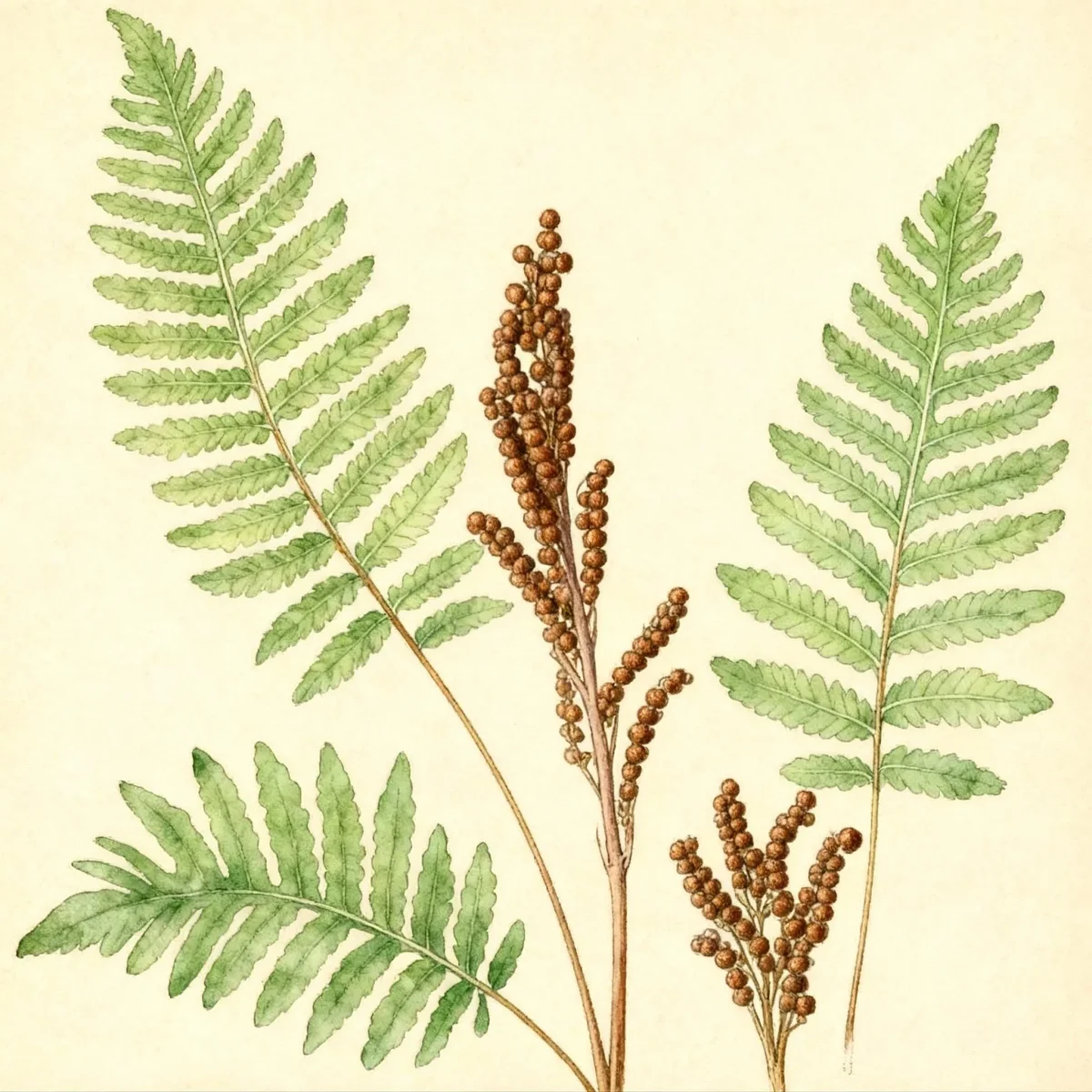
Onoclea sensibilis, commonly called sensitive fern, is a large, deciduous fern native to eastern North America where it is typically found in wet woods and thickets, open swamps, marshes, and in moist soils along streams and springs. It features long-stalked, deeply pinnatifid, bright green, sterile fronds, while shorter, erect, woody-like fertile fronds bear bead-like segments that often persist standing through winter. The genus name references the closely rolled fertile fronds, and the specific epithet highlights the fronds’ acute sensitivity to drought and early fall frost.
Tolerances
- Rabbit
- Heavy Shade
- Clay Soil
- Wet Soil
- Black Walnut
Potential Problems
The Sensitive fern generally exhibits robust health, suffering from no serious insect or disease problems when grown correctly. The primary cultivation challenge arises when heat combines with dry soil; foliage of Onoclea sensibilis can depreciate or scorch as the summer progresses if adequate moisture conservation methods are not in place. Prevent this by ensuring consistent watering or by placing the fern in a naturally wetter area of the landscape. Deer typically avoid consuming this plant, adding to its low-maintenance appeal.
Frequently Asked Questions
What hardiness zones is Sensitive fern suitable for?
The Onoclea sensibilis is reliably hardy in USDA Zones 4 through 8.
How large does Sensitive fern grow?
In good conditions, the Sensitive fern typically reaches a mature height and spread between 3 and 4 feet.
What sun exposure does Onoclea sensibilis need?
This fern prefers part shade to full shade conditions for optimal growth and performance.
When does Onoclea sensibilis bloom?
Like all true ferns, Onoclea sensibilis is non-flowering.
Conclusion
The reliable texture and tolerance for deep shade make the Sensitive fern an invaluable asset for challenging garden sites, particularly moist or wet low spots. Incorporating Onoclea sensibilis into your native ecosystem or rain garden design ensures rich, green coverage throughout the growing season. Before planting, confirm your site provides consistent moisture, as this is the most critical factor for preserving the beauty of this unique fern.
Propagation Tips
Propagation of Onoclea sensibilis is straightforward, primarily accomplished through the division of its creeping rhizomes in early spring or fall. Carefully dig up sections containing several healthy growth points and replant them immediately or pot them up for later placement in suitably moist soil. While spores are produced on the fertile stems, harvesting and sowing these requires specific knowledge of their dormancy cycle, making division the preferred method for securing exact plant characteristics.
Companion Planting
When selecting companions for the Onoclea sensibilis, prioritize other shade-loving, moisture-tolerant native plants to create a unified woodland scene. Look for plants with contrasting foliage shapes or colors to maximize visual interest alongside the lacy green fronds throughout the season. Excellent partners include various native sedges, moisture-loving woodland phlox, or low-growing ferns like the Evergreen Wood Fern, all of which share similar cultural requirements for shade and consistent moisture.