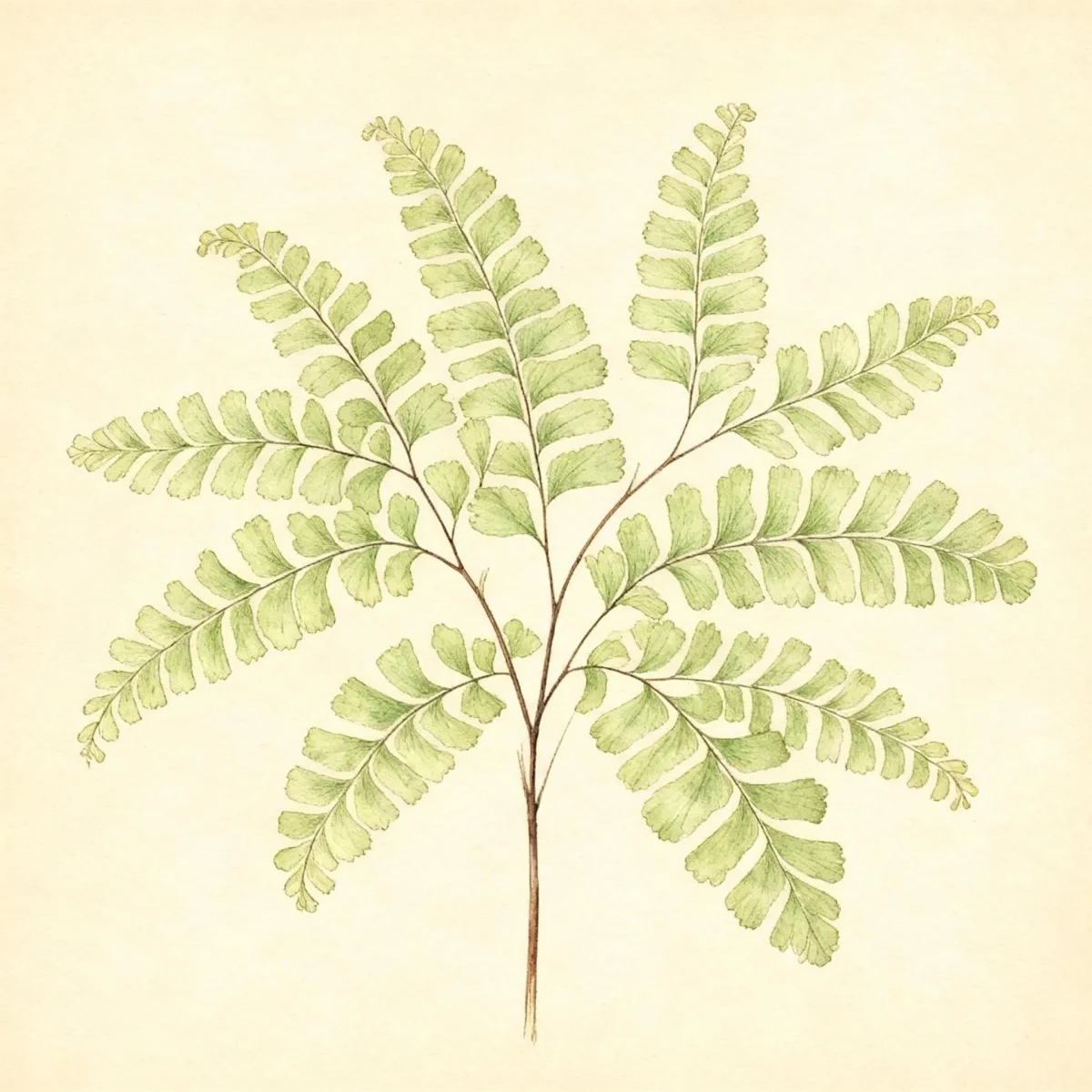
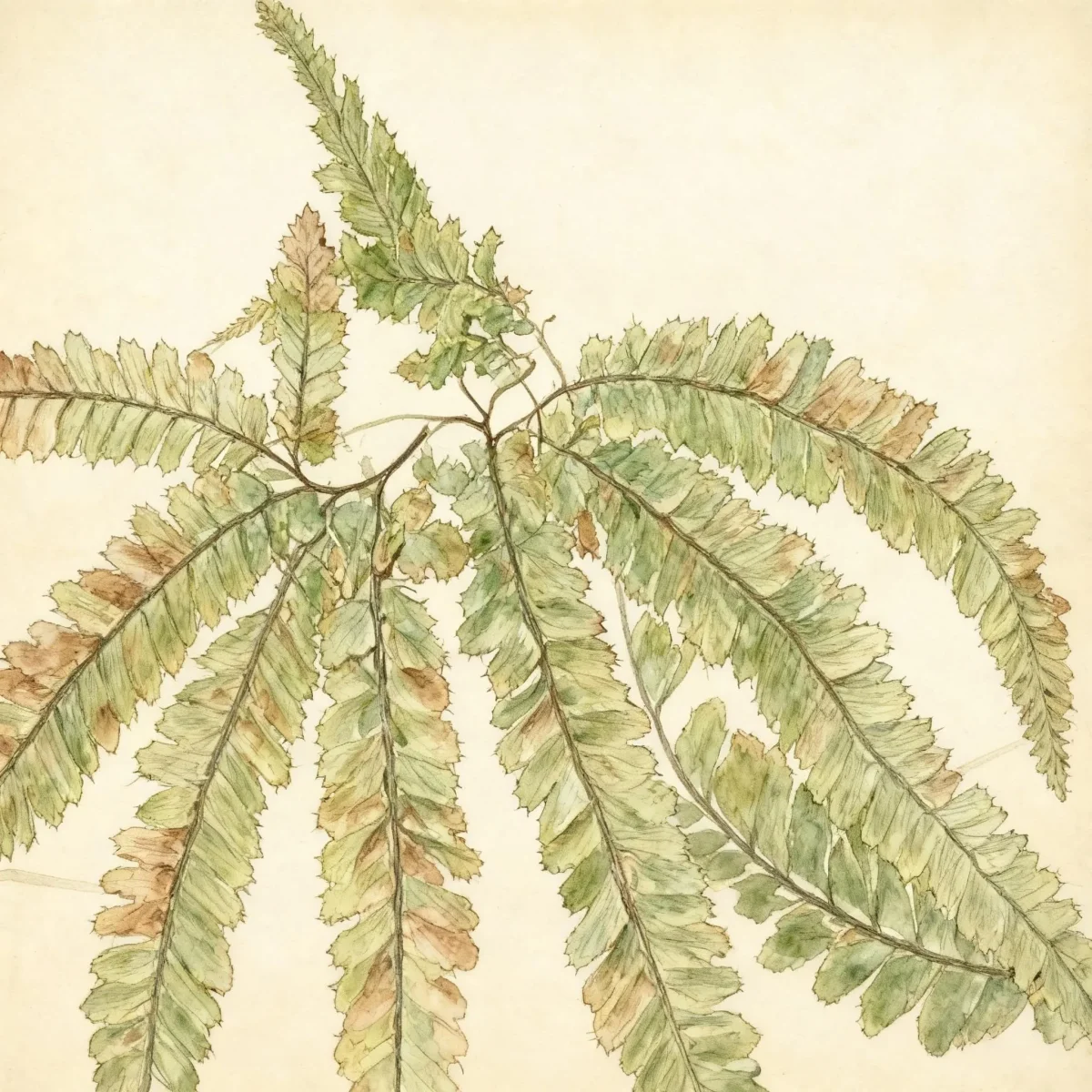
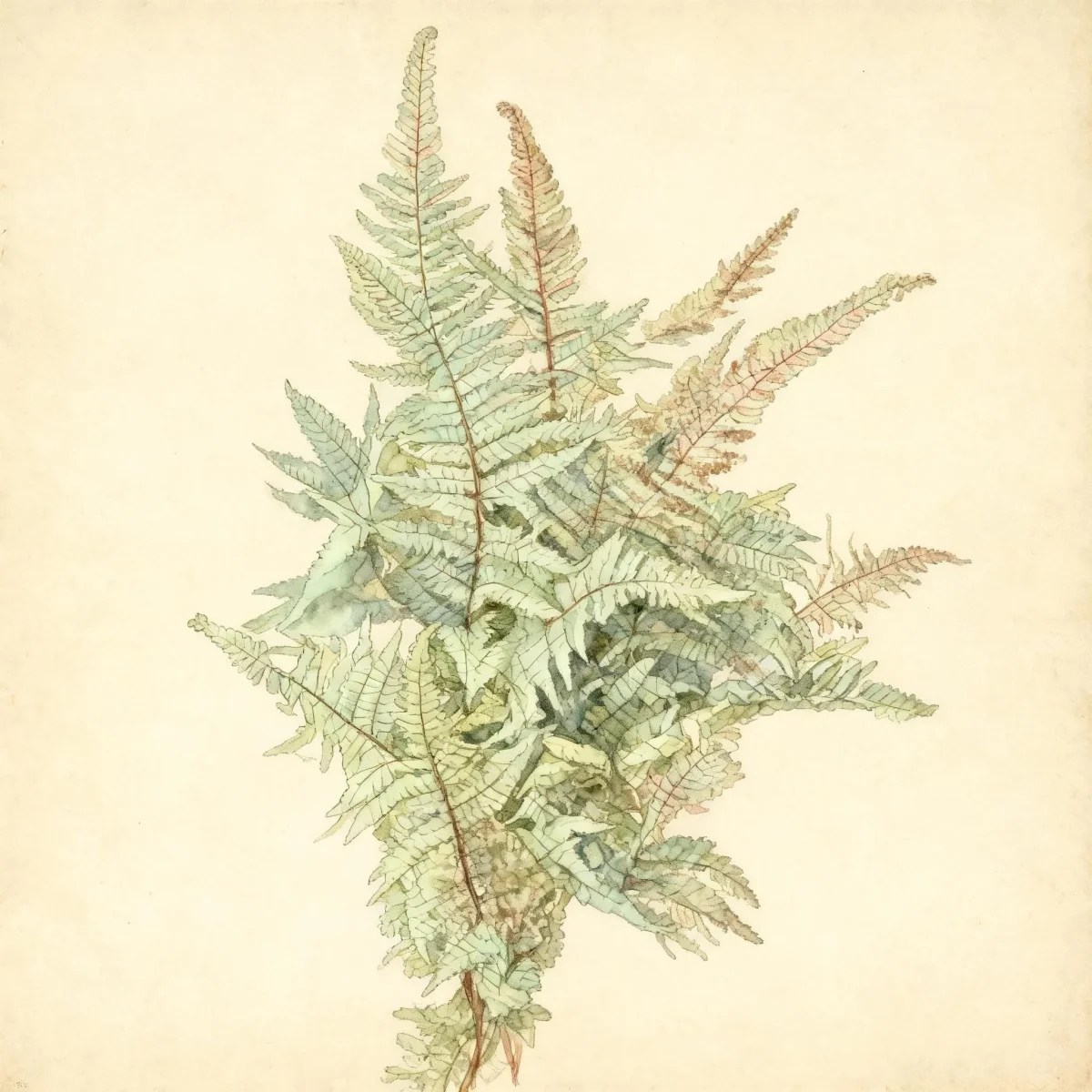
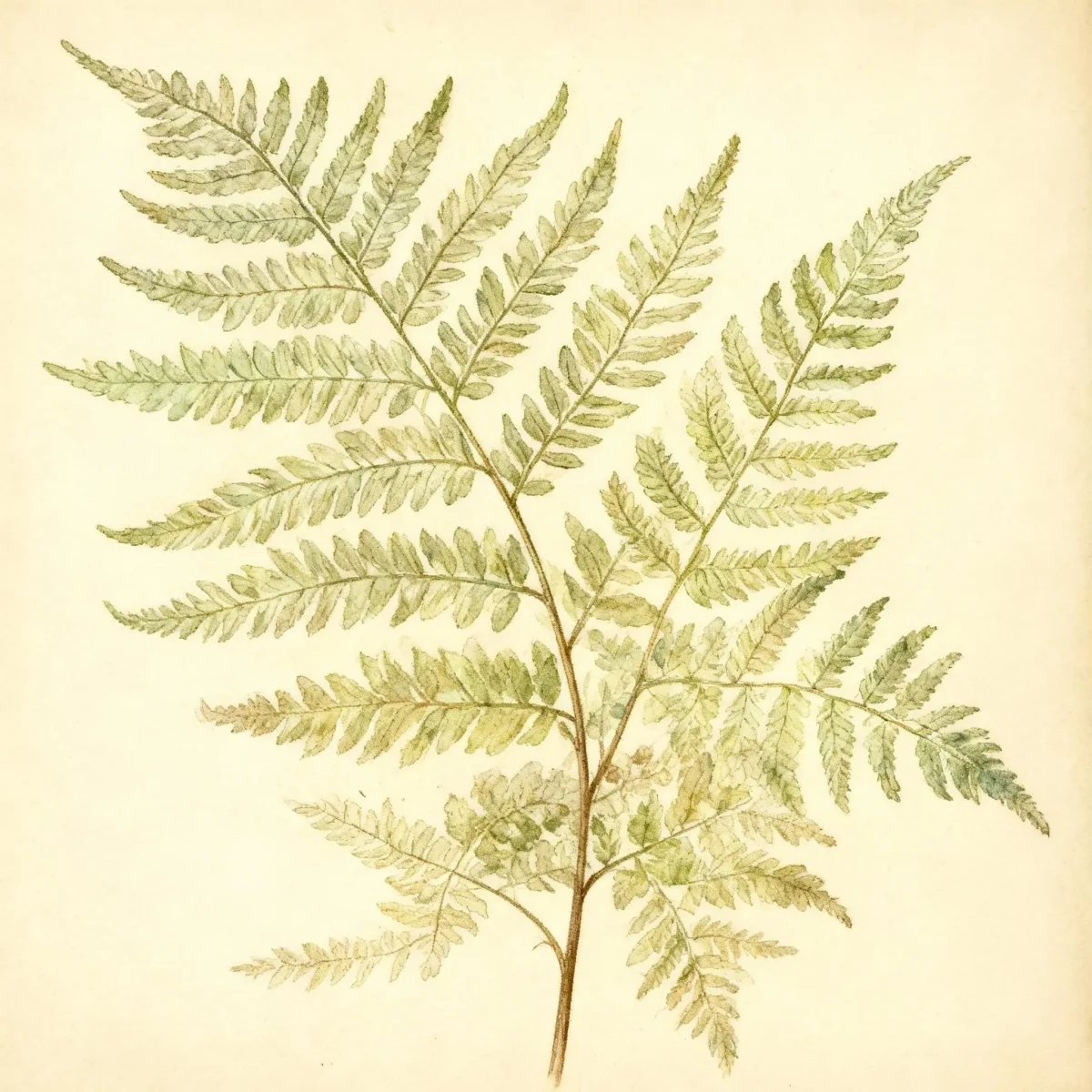
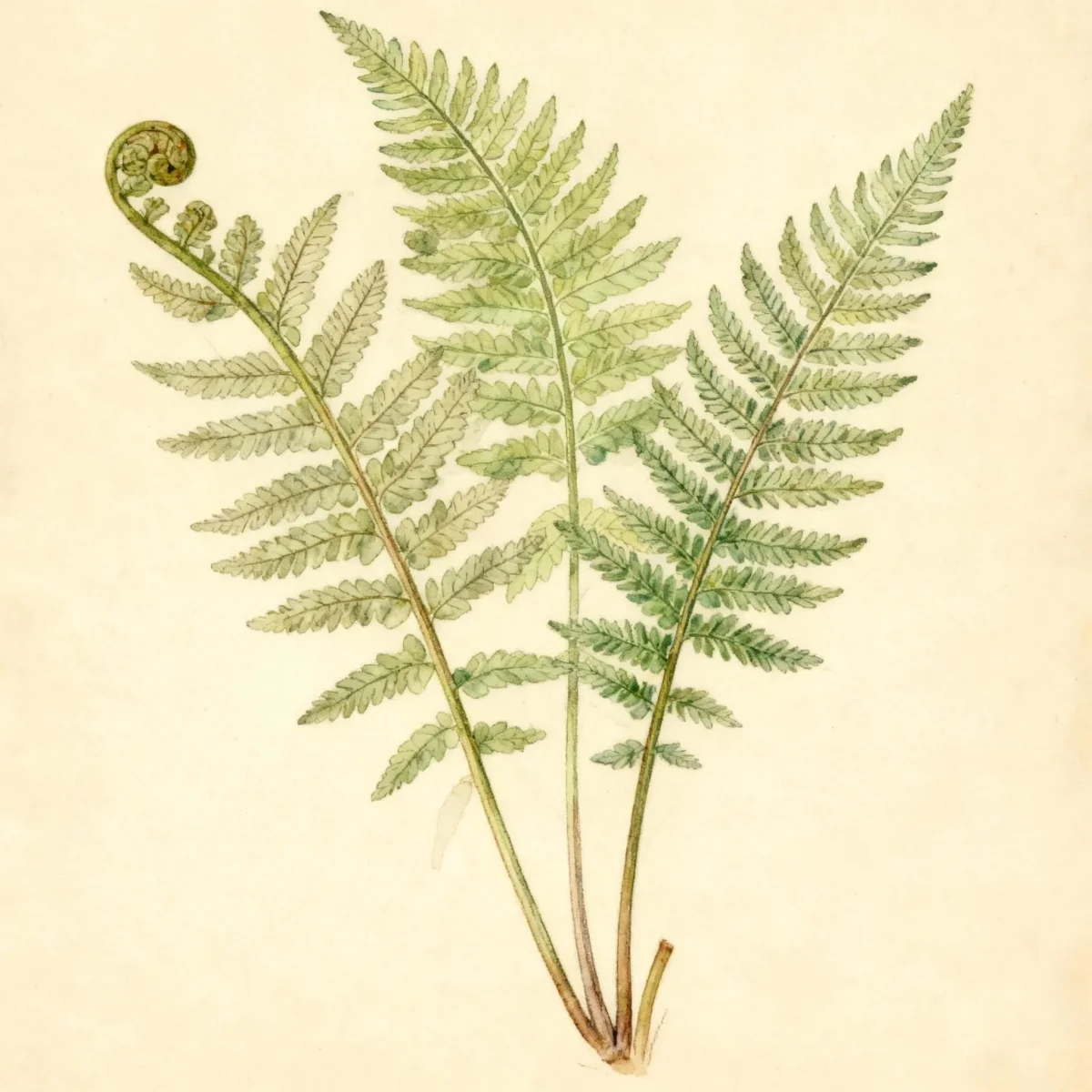
Maidenhair fern (Adiantum capillus-veneris)
Adiantum capillus-veneris features delicate, black-stemmed fronds, offering fine texture for shaded, moist gardens. A globally distributed Maidenhair fern.
Scroll down to discover growing tips, care requirements, companion plants, and more
Complete Plant Information
Overview
The Maidenhair fern, scientifically known as Adiantum capillus-veneris, is celebrated globally for its exquisitely delicate, lacy foliage contrasting sharply with wiry, black stems. This plant provides an unmatched fine texture, softening woodland edges and shaded garden corners. While appearing fragile, once established in suitable conditions, this clumping fern proves low maintenance.
Adiantum capillus-veneris thrives where many other plants struggle—in consistently moist, shaded environments. Its widespread native range speaks to its adaptability, though recreating its preferred natural habitat, often found near wet limestone outcroppings, can be the primary challenge for home gardeners. Gardeners seeking an elegant, arching accent for damp, darker locations will appreciate the timeless beauty of this species.
Often called Southern Maidenhair fern, Adiantum capillus-veneris spreads slowly via short rhizomes, forming attractive colonies over time. Its value lies chiefly in its aesthetic contribution, offering a vibrant green contrast when paired with coarser-textured shade perennials. Successful cultivation relies heavily on maintaining consistent moisture levels to keep the fronds crisp and attractive.
Fast Facts
- Plant Family: Pteridaceae
- Plant Type: Fern
- Native Range: Temperate and tropical regions worldwide
- Hardiness Zones: USDA Zones 5-8
- Size at Maturity:
- Height: 0.75-1.5 ft
- Spread: 0.75-1.5 ft
- Bloom Time: Non-flowering
- Sun Exposure: Part shade to full shade
- Water Needs: Medium
- Maintenance Level: Low
How to Grow
Planting the Maidenhair fern is best done in spring after the danger of frost has passed, ensuring it is placed in a location receiving part shade to full shade throughout the day. The critical cultural requirement for Adiantum capillus-veneris is the soil; it demands consistently moist, neutral to alkaline conditions. If possible, incorporate aged leaf mold or compost to mimic woodland soils, paying close attention to pH preference.
Watering must be consistent, as fronds die back rapidly if the soil dries out, which is its main sensitivity. A medium water requirement means checking the soil frequently in hot, dry periods, though established plants benefit from even moisture rather than erratic soaking and drying cycles. Fertilization is rarely necessary; too much rich additive can negatively alter the soil chemistry this fern prefers.
Pruning is minimal, usually confined to removing any fronds that scorch or die back during unexpected dry spells. Gardeners in USDA Zone 5 should exercise caution, as winter hardiness may be tenuous; providing a heavy mulch layer after dormancy sets in can help insulate the rhizomes against extreme cold snaps. Duplicating wild Missouri growing conditions, often involving damp limestone, requires careful soil amendment management.
Landscape Uses
The primary role of the Maidenhair fern in the landscape is as a decorative accent ideal for shaded areas. Its graceful structure makes it perfect for softening the edges of woodland gardens, providing year-round green texture. It naturalizes well where conditions are consistently damp, allowing you to create swaths of delicate foliage beneath larger canopy trees.
Consider placing this fern near water features, allowing runoff or high humidity to aid its growth. Pairing Adiantum capillus-veneris with plants featuring coarse or bold textures, such as Hostas, large woodland Phlox, or ornamental grasses tolerant of shade, enhances its fine, airy quality. It works beautifully along shaded paths or tucked into rock garden crevices where moisture collects.
Standout Features
Noteworthy Characteristics
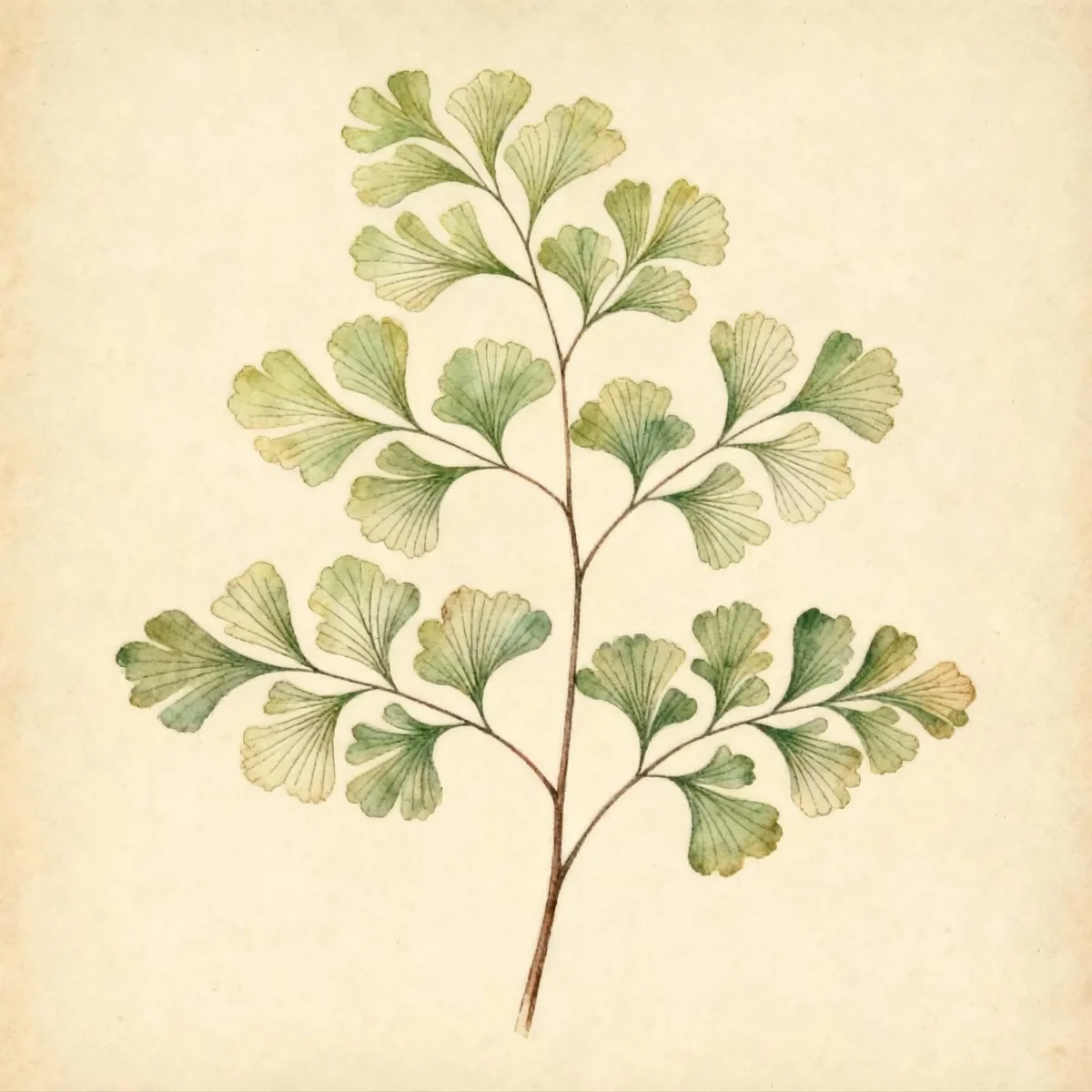
Adiantum capillus-veneris, commonly called southern maidenhair fern, is a deciduous, clumping fern with a drooping habit that grows to 12-18” tall and slowly spreads by short creeping rhizomes. It features bipinnate to tripinnate fronds with wiry, black stems that are distinctively arching to pendent. Small pinnae (each to 1/2” long) are fan-shaped, having wedge-shaped bases and irregular lobing at the apex. Genus name comes from the Greek word adiantos meaning unwetted in reference to the water repellent foliage; the specific epithet refers to Venus’s hair.
Tolerances
- Heavy Shade
Potential Problems
This plant generally suffers from few serious insect or disease problems, making Adiantum capillus-veneris relatively carefree when sited correctly. The most immediate threat is desiccation; fronds will collapse quickly if the soil is allowed to dry out, which requires vigilant watering management. Furthermore, exposure to direct, intense sunlight will cause the attractive foliage to scorch, turning the delicate pinnae brown and unattractive. Prevention focuses entirely on site selection and moisture control.
If you observe scorching, immediately check your watering schedule and move any potted specimens to deeper shade. Ensure the soil pH is leaning slightly alkaline to neutral, mimicking its preference in native habitats like damp limestone bluffs, which can help ward off subtle cultural stresses.
Frequently Asked Questions
What hardiness zones is Maidenhair fern suitable for?
The Maidenhair fern (Adiantum capillus-veneris) is generally hardy in USDA Zones 5 through 8. Gardeners in Zone 5 should monitor winter conditions closely for the best survival rates.
How large does Maidenhair fern grow?
This fern typically reaches a mature height between 0.75 and 1.5 feet tall, with a similar spread of 0.75 to 1.5 feet, forming a neat, attractive clump.
What sun exposure does Maidenhair fern need?
This species prefers part shade to full shade conditions. Avoid harsh afternoon sun, which is known to scorch the delicate fronds of the Adiantum capillus-veneris.
When does Maidenhair fern bloom?
Maidenhair fern is a non-flowering plant. As a true fern, its reproductive structures are sori (spores) found on the undersides of the mature fronds.
Conclusion
The Maidenhair fern remains a top choice for adding refined, ethereal texture to deeply shaded garden spaces due to its fine fronds and dark wiry stems. Cultivating successful Adiantum capillus-veneris relies on consistently meeting its need for moisture and avoiding harsh sun exposure. Before planting, verify your soil pH leans neutral to alkaline and ensure you can commit to its medium water needs throughout the growing season.
Companion Planting
Choosing companions that share the preference for consistent moisture and shade will greatly enhance the display of your Maidenhair fern. Look for plants with contrasting leaf shapes and sizes. Large-leaved Hostas provide an excellent counterpoint to the fern’s delicate structure, while woodland ephemerals like Trillium or Bloodroot thrive in similar dappled light conditions.
For slightly wetter areas, consider incorporating moisture-loving groundcovers such as wild ginger (Asarum species) or Tiarella (Foamflower). These companions establish quickly and help keep the soil cool and evenly moist around the shallow roots of the Adiantum.
Design Ideas for Shade Gardens
The arching, black stems of Adiantum capillus-veneris provide strong vertical and cascading lines, making it excellent for framing the edge of a shade border or softening retaining walls. In Japanese-inspired or contemplative shade gardens, use it to mimic mosses and natural undergrowth near stone lanterns or stepping paths.
To highlight the unique texture of Venus maidenhair fern, plant it against a dark mulch or dark-colored stone to make the bright green foliage “pop.” Because it forms slow-spreading clumps, it doesn’t become aggressively invasive, allowing for precise, architectural placement within a complex shade tapestry.