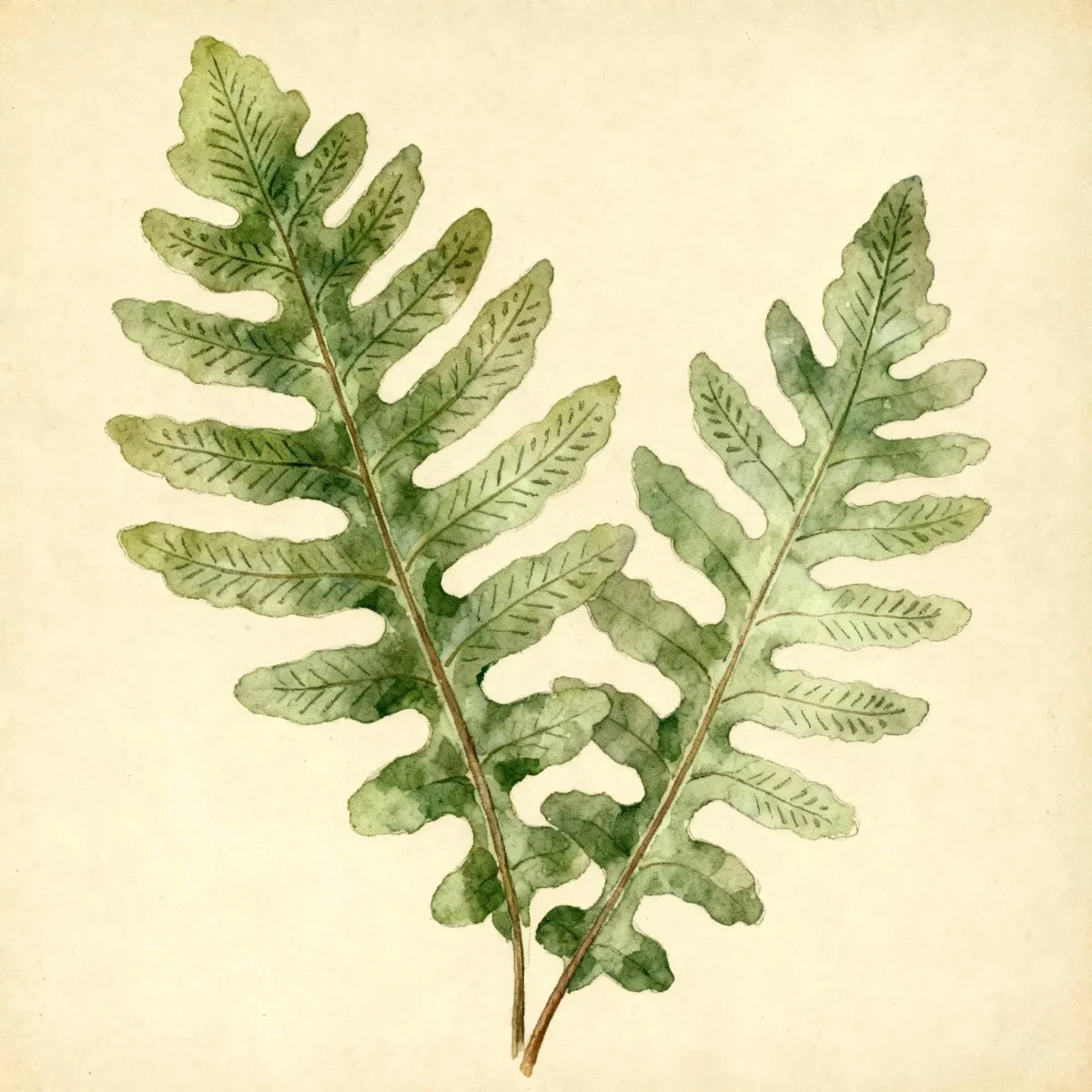
Wart fern (Phymatosorus scolopendria)
Discover Phymatosorus scolopendria, the robust Wart fern, excellent for ground cover in warm climates (Zones 10-11).
Scroll down to discover growing tips, care requirements, companion plants, and more
Complete Plant Information
Overview
The Wart fern, scientifically known as Phymatosorus scolopendria, offers exceptional texture and resilience for tropical and subtropical landscapes. Its distinctive foliage features deeply sunken sori on the undersides, which appear as curious, wart-like bumps on the upper surface, earning it its memorable common name. This strongly rhizomatous fern is highly valued for its spreading habit, making it a superb, low-maintenance ground cover where conditions allow.
Phymatosorus scolopendria thrives across a wide native range spanning tropical regions of Africa, Asia, Australia, and Polynesia. It provides graceful coverage, able to creep along the ground, climb walls, or drape beautifully from hanging containers. Gardeners appreciate the reliable texture and the fact that the Wart fern generally resists serious pest or disease issues.
For those gardening in suitable warm zones, this plant establishes quickly and effectively covers bare soil, minimizing weed competition. Whether used to naturalize a woodland edge or potted on a patio, the Wart fern provides consistent, lush tropical greenery throughout the year.
Fast Facts
- Plant Family: Polypodiaceae
- Plant Type: Fern
- Native Range: Tropical Africa, Tropical Asia, Tropical Australia, Polynesia, East Indies
- Hardiness Zones: USDA Zones 10-11
- Size at Maturity:
- Height: 1-2 ft
- Spread: 1-2 ft
- Bloom Time: Non-flowering
- Bloom Description: Non-flowering
- Sun Exposure: Full sun to part shade
- Water Needs: Medium
- Maintenance Level: Medium
How to Grow
Planting the Phymatosorus scolopendria is best done when the threat of frost has passed in Zones 10 and 11, or when starting indoors in cooler climates. Choose a location providing full sun to part shade. The key requirement is soil that remains evenly moist but remains well-drained; this fern dislikes soggy feet.
Maintenance for the Wart fern is generally straightforward. Ensure consistent moisture, particularly during dry spells, as this plant requires medium water input to maintain its lush appearance. Fertilization is usually unnecessary if the soil retains some fertility, but a balanced, slow-release fertilizer formulated for ferns can be applied lightly in spring if growth seems sluggish.
Pruning is minimal, usually involving only the removal of old, tattered fronds in late winter or early spring before new growth emerges. Propagation is easily achieved through rhizome division when you wish to control its spread or create new colonies.
Landscape Uses
The versatility of the Wart fern makes it an excellent choice for numerous landscape applications. As a ground cover, it rapidly blankets sunny slopes or shady borders, suppressing unwanted weeds effectively. Since Phymatosorus scolopendria will naturalize readily, it is perfect for transforming large, informal garden spaces into lush carpets of green.
Beyond ground planting, this fern is highly popular in containers and hanging baskets due to its gracefully drooping fronds. Use cut fronds from the Wart fern for unique texture in fresh flower arrangements, adding an exotic touch to your bouquets. It pairs well visually with broad-leaved tropicals or contrasting foliage plants needing similar partial shade and moisture levels.
Standout Features
Noteworthy Characteristics
The deeply sunken sori on the undersides of the leaves are responsible for the bumpy, wart-like appearance on the fronds of the Wart fern. This strongly rhizomatous species exhibits an aggressive, sprawling habit, allowing it to crawl across surfaces or climb trunks in its native environment. Although not indigenous to Hawaii, Phymatosorus scolopendria is widely cultivated there, valued for its tough nature and decorative qualities.
Tolerances
Potential Problems
The Wart fern generally avoids serious insect or disease issues, contributing to its low-maintenance appeal. Monitoring for overly wet soil conditions is the most important preventative measure, as constant saturation can lead to rot, a common issue for many rhizomatous plants. Good drainage management is crucial for preventing cultural problems.
Frequently Asked Questions
What hardiness zones is Wart fern suitable for?
Phymatosorus scolopendria is winter hardy only in USDA Zones 10 through 11.
How large does Phymatosorus scolopendria grow?
This fern typically reaches a height between 1 and 2 feet, with a corresponding spread of 1 to 2 feet.
What sun exposure does Wart fern need?
The Wart fern adapts well to conditions ranging from full sun to part shade, provided soil moisture is adequate.
When does Phymatosorus scolopendria bloom?
This plant is a fern and is non-flowering.
Conclusion
The Phymatosorus scolopendria offers dynamic texture and excellent coverage, proving itself a dependable favorite, especially in warmer climates. Its unique, warted fronds and aggressive ground-covering nature make the Wart fern a valuable asset for softening hardscapes or filling in large areas naturally. Before planting, confirm your location falls within USDA Zones 10 or 11, and prepare well-drained soil to ensure vigorous establishment of this resilient fern.
Companion Planting
When selecting neighbors for the Wart fern, focus on plants that share similar needs for steady moisture and partial shade protection in brighter conditions. Hostas, although typically temperate, are excellent visual companions if you are growing Phymatosorus scolopendria as a containerized houseplant or in the cool, shaded parts of a Zone 10 garden. In tropical beds, pair it with Caladiums or various shade-loving Calathea varieties to enhance the lush, layered look.
Container Growing
Growing the Wart fern in containers is highly effective, especially if you wish to move it to shelter during brief dips in temperature or control its naturalizing tendency. Use a high-quality potting mix amended with extra peat or coir to help retain essential moisture. Ensure the container has excellent drainage holes; while it requires medium water, stagnant water is detrimental to the rhizomes. Let the top inch of soil dry slightly between waterings to maintain balance.