Marsh marigold (Caltha palustris)
Brilliant spring color! Marsh marigold (Caltha palustris) offers wet-soil tolerance and showy yellow blooms perfect for pond edges.
Scroll down to discover growing tips, care requirements, companion plants, and more
Complete Plant Information
Overview
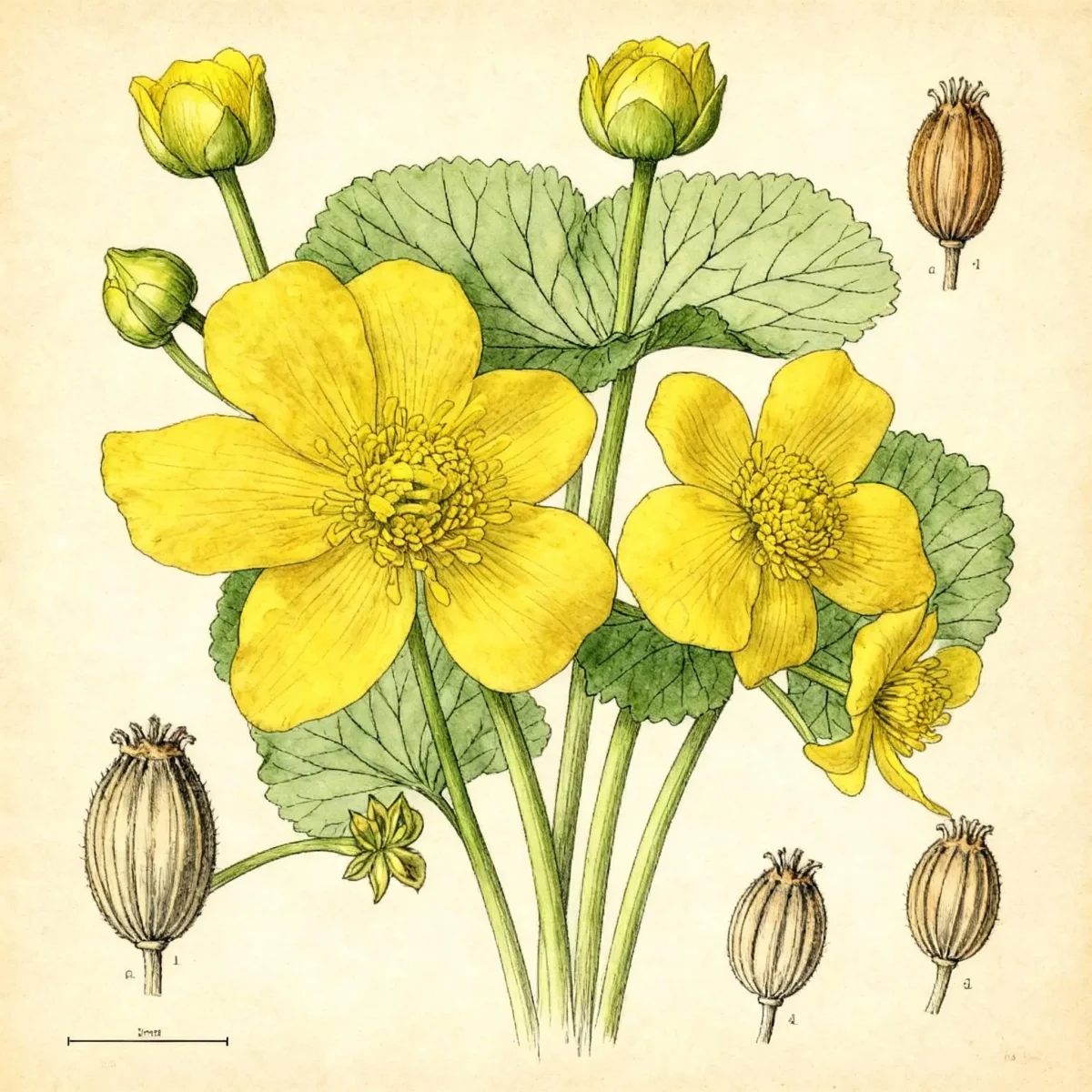
The Marsh marigold, scientifically known as Caltha palustris, is a glorious sign of early spring, often blooming before many other garden perennials emerge. Its value lies in its reliable display of intensely glossy, cup-shaped yellow flowers, providing vibrant color in damp, shaded environments where few other plants thrive. This rhizomatous perennial is perfectly suited for aquatic edges or consistently saturated ground.
Although its common name suggests a link to marigolds, Caltha palustris actually belongs to the buttercup family (Ranunculaceae). It thrives from full sun down to partial shade, provided its preferred “wet” soil conditions are maintained. Gardeners appreciate this plant for its low maintenance requirement and its ability to naturalize gracefully along streams or pond margins, creating a beautiful, native backdrop.
Functionally, the Marsh marigold excels in boggy areas or rain gardens where persistent moisture is guaranteed. Its striking foliate structure and bright flowers offer significant early-season interest, making it indispensable for water gardening enthusiasts looking for resilient native flora.
Fast Facts
- Plant Family: Ranunculaceae
- Plant Type: Herbaceous perennial
- Native Range: Northern temperate regions
- Hardiness Zones: USDA Zones 3-7
- Size at Maturity:
- Height: 1-1.5 ft
- Spread: 1-1.5 ft
- Bloom Time: April to June
- Bloom Description: Yellow
- Sun Exposure: Full sun to part shade
- Water Needs: Wet
- Maintenance Level: Low
How to Grow
Plant Caltha palustris in the spring or early fall, ideally establishing it in its permanent location where its wet soil needs can be met consistently. It thrives when situated at the margins of ponds or water features, submerged only an inch or two, or directly in heavy, wet, boggy soil beds. While full sun promotes the best flowering, be mindful that in hotter climates requiring zones 6 or 7, afternoon shade will prevent summer dormancy.
Watering requirements are straightforward: keep the soil saturated at all times. Fertilization is generally unnecessary; excessive nutrients can lead to weak growth or excessive foliage production at the expense of flowers. If growth seems sluggish over several years, a light application of balanced, slow-release fertilizer in early spring may be beneficial.
Maintenance for the Marsh marigold is minimal. After the blooms fade in early summer, the foliage may start to look tired, especially if the summer proves arid or hot, which can lead to foliage dieback. Do not cut back the foliage until it naturally yellows, as the plant needs this time to store energy in its rhizomes for next year’s display.
Since Caltha palustris can be grown from seed, scatter fresh seeds on moist soil surfaces in late spring or early summer, as they typically require cool stratification to germinate. This helps spread this spring ephemeral across wet garden sections over time.
Landscape Uses
The primary value of the Marsh marigold lies in wet landscape functionality. It is highly recommended for water or bog gardens, creating an immediate planting solution right where water collects or stands. Use it to soften the hard edges of swimming ponds or container water features, allowing the lush green leaves and bright yellow flowers to spill gently over the water surface.
For naturalizing landscapes, Caltha palustris performs exceptionally well along stream banks, ditches, or in low-lying meadow areas that retain moisture throughout the growing season. Its early bloom time means it pairs beautifully with later-emerging marginal plants like irises or hostas that enjoy similar moist conditions but provide contrast in structure and timing. Utilizing this plant effectively transforms wet, often underutilized spaces into vibrant ecosystems.
In rain garden design, Caltha palustris serves as an excellent anchor species, handling periods of saturation perfectly while still looking attractive during drier spells (though it must never dry out completely). Its requirement for wet soil makes it easy to group with other moisture-loving perennials to create a cohesive, resilient planting scheme.
Standout Features
Flower Qualities
- Showy
Noteworthy Characteristics
Caltha palustris, commonly called marsh marigold, is a rhizomatous perennial that in North America is native to marshes, swamps, wet meadows and stream margins from Newfoundland to Alaska south to Nebraska, Tennessee and North Carolina. The genus name references the Latin name for a yellow-flowered plant, likely Calendula, while the specific epithet means marsh-loving, accurately describing its preferred habitat. Its bright flowers contrast beautifully with the large, glossy basal leaves, providing essential early color before deciduous trees leaf out completely.
Tolerances
- Deer
- Wet Soil
Potential Problems
The Marsh marigold generally avoids severe pest infestations, contributing to its low maintenance profile. However, in crowded conditions or when heat stress occurs, gardeners may observe powdery mildew or rust affecting the foliage later in the season. To manage fungal issues, ensure good air circulation around the plants, even in wet locations. If mildew appears, promptly remove the affected leaves and ensure the plant is not overcrowded by neighboring bog inhabitants.
Frequently Asked Questions
What hardiness zones is Marsh marigold suitable for?
Caltha palustris is reliably hardy across USDA Zones 3 through 7, making it adaptable across much of the temperate north.
When does Marsh marigold bloom?
This perennial starts displaying its signature yellow flowers early in the season, typically blooming consistently from April through June.
How large does Caltha palustris grow?
When fully mature, this plant generally reaches a height between 1 and 1.5 feet, with a spread of 1 to 1.5 feet.
What sun exposure does Caltha palustris need?
For the most vibrant blooms, provide full sun, though partial shade is tolerated, especially as summer heat increases.
Conclusion
The vibrant, early-season color provided by the Marsh marigold makes Caltha palustris a cornerstone for any successful water or bog garden design. Its striking yellow flowers and glossy foliage offer immediate visual impact in otherwise dormant spring landscapes. Evaluate your site’s moisture levels and ensure you are planting within USDA Zones 3 to 7 to guarantee a successful, low-maintenance display of this beautiful wetland native.
Companion Planting Success
When establishing Caltha palustris, pairing it with other moisture-loving champions maximizes landscape continuity. Consider plants like Candelabra Primulas, which share similar light needs and bloom slightly later, extending the color palette along the water’s edge. Ferns such as the Ostrich fern (Matteuccia struthiopteris) provide excellent structural contrast with their upright fronds against the mounding leaves of the Marsh marigold in partial shade.
For drier edges leading toward the bog environment, moisture-tolerant astilbes or taller cardinal flowers (Lobelia cardinalis) can be integrated, creating soft transitions from fully saturated ground to moist garden beds. Always prioritize companions that are equally unbothered by perpetually wet roots, ensuring the health of your entire water garden ecosystem.
Seasonal Care Calendar
Spring is critical for Caltha palustris; this is when you should observe and ensure adequate moisture levels following winter dormancy. If blooms appear sparse, this is the time to consider a very balanced, dilute fertilizer application around the base, though this is rarely necessary. During the transition into early summer, watch for mildew if humidity is high and prune any heavily affected foliage to help the plant redirect energy.
As summer temperatures peak, the foliage of the Marsh marigold may naturally begin to decline, especially if sited in full sun outside of cooler regions. Resist the urge to shear it back immediately; allow the leaves to yellow naturally as they feed the rhizomes for the following year. In late fall or early winter, you can tidy up any remaining dead stalks before the ground freezes, preparing the area for the next year’s welcome burst of color from your dependable bog perennial.