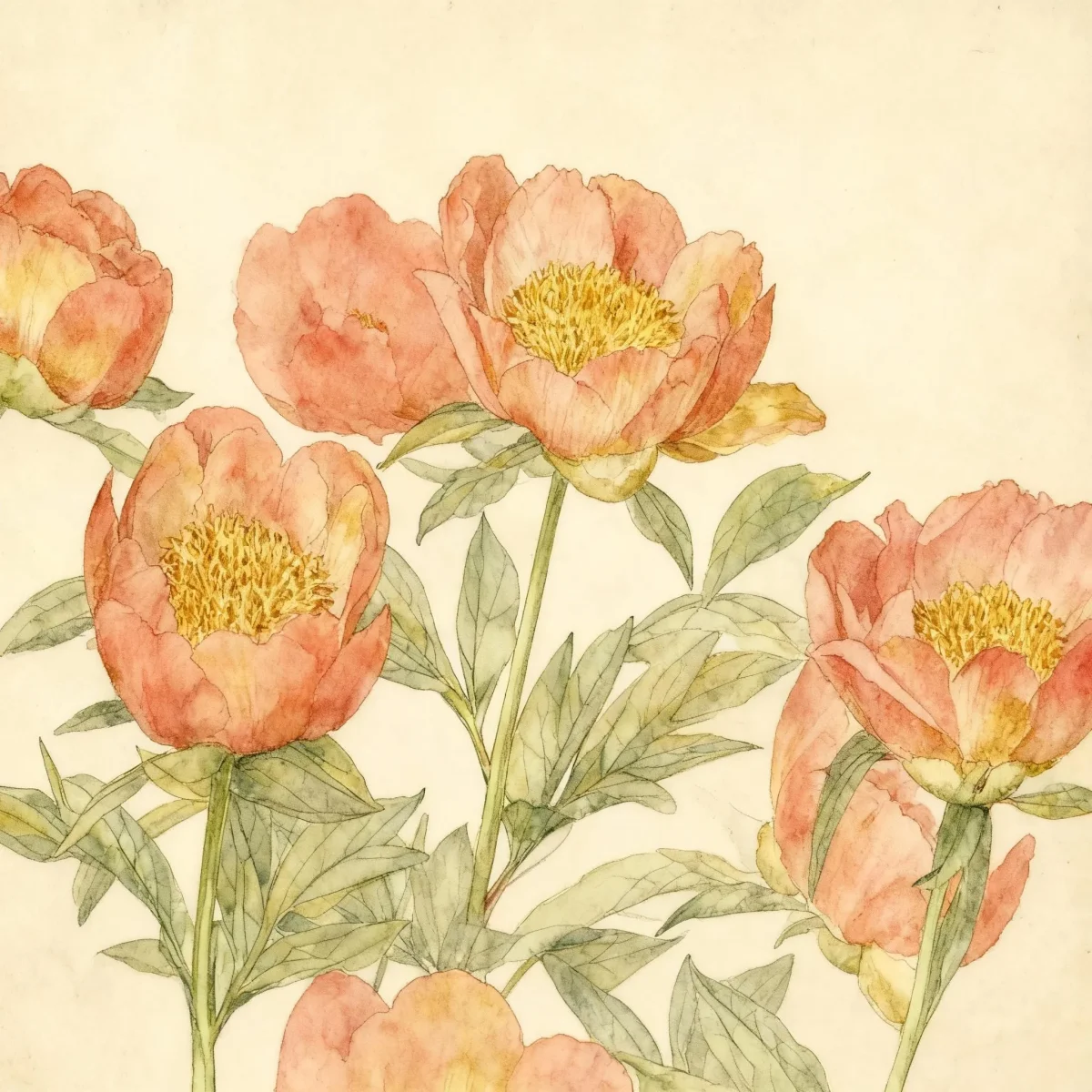
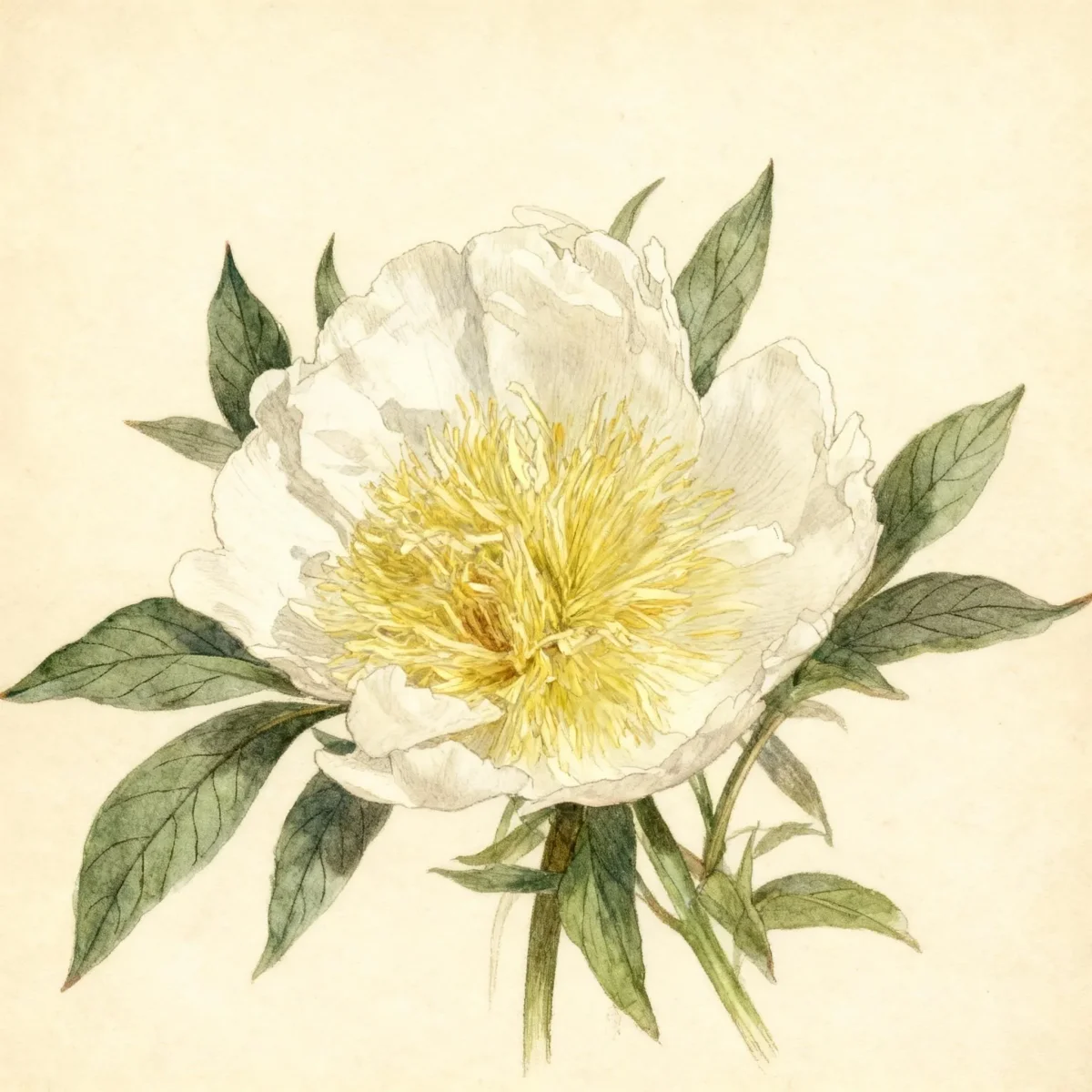
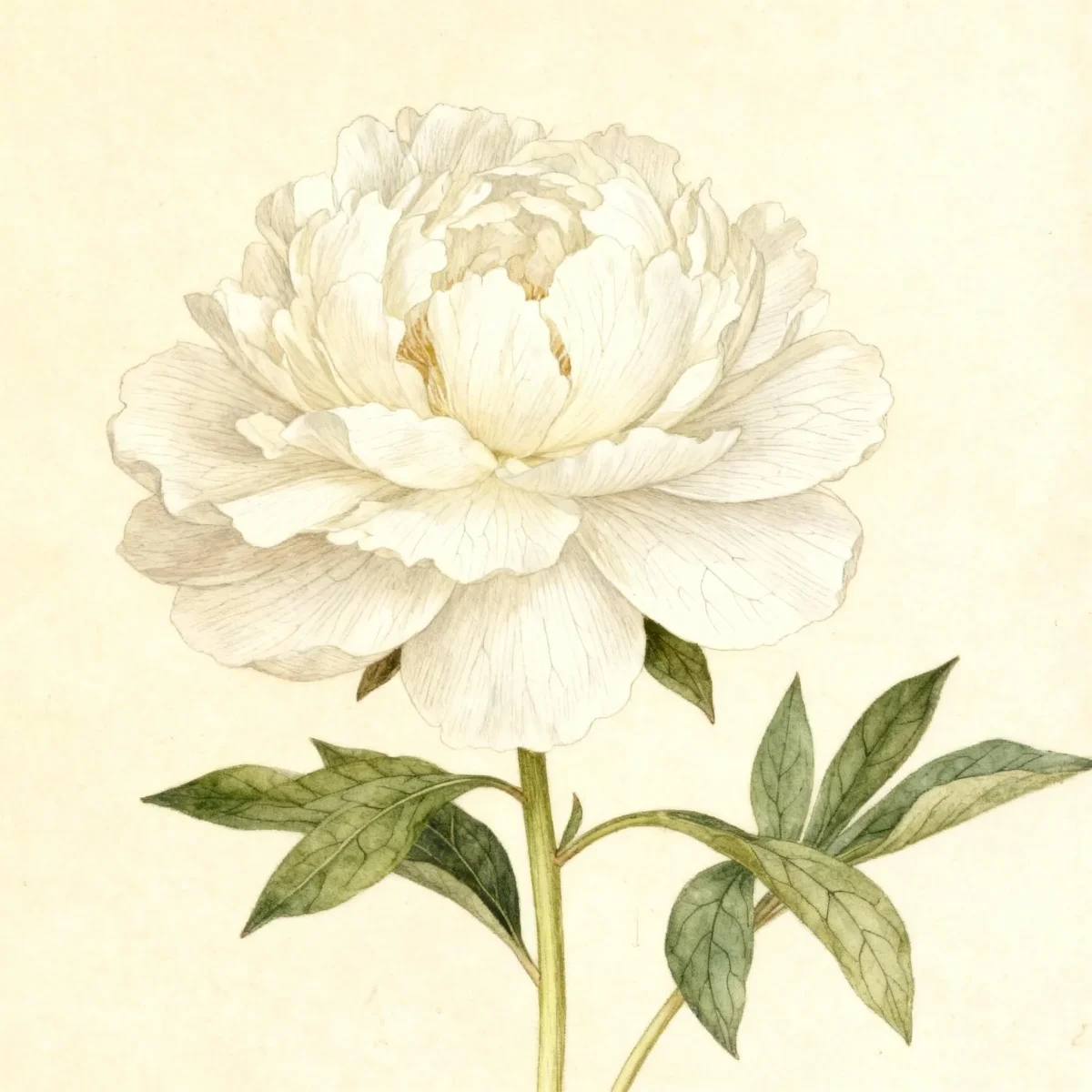
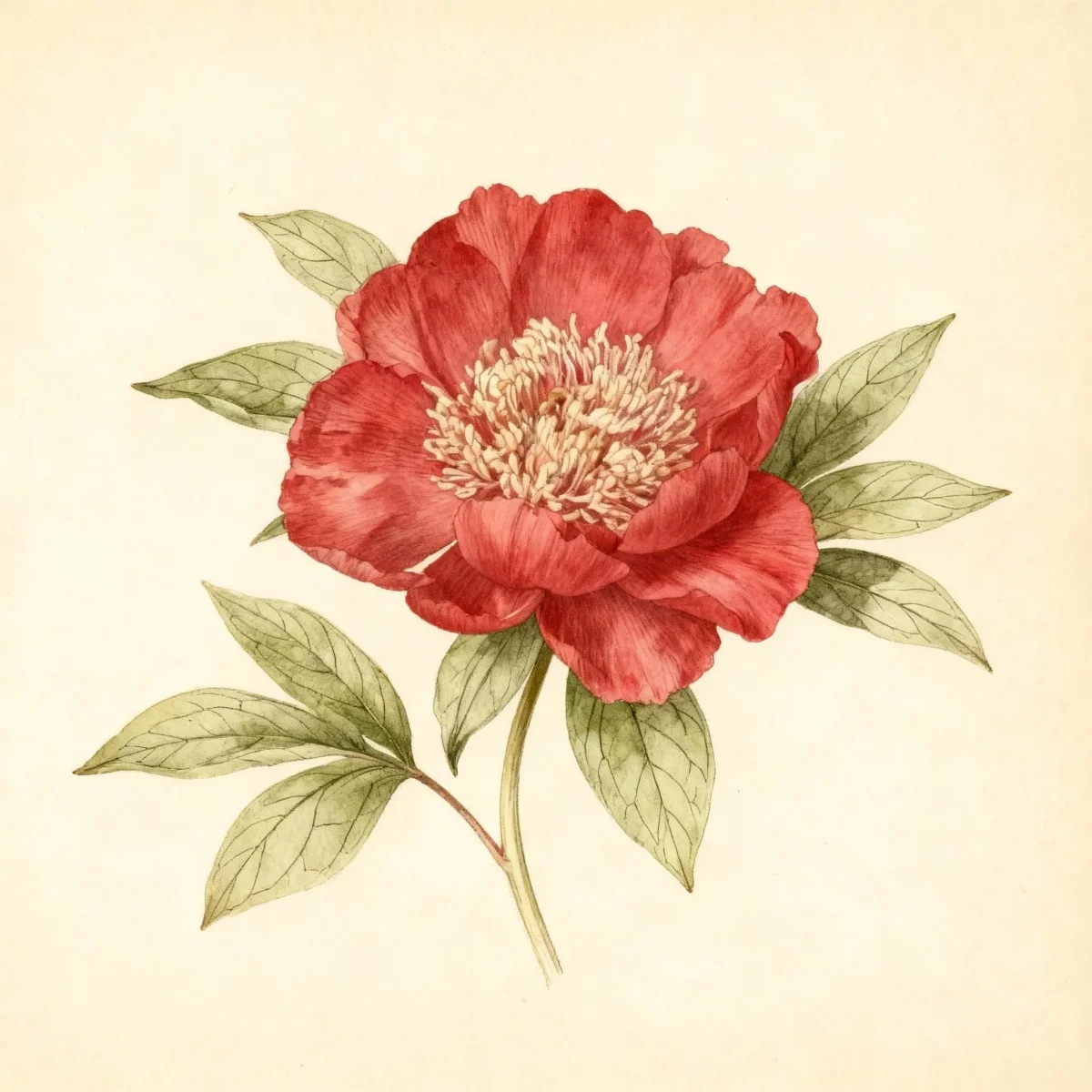
Peony (Paeonia tenuifolia)
Discover Paeonia tenuifolia, the fernleaf peony, featuring needle-like foliage and showy dark red blooms in May. Ideal for borders in Zones 4-8.
Scroll down to discover growing tips, care requirements, companion plants, and more
Complete Plant Information
Overview
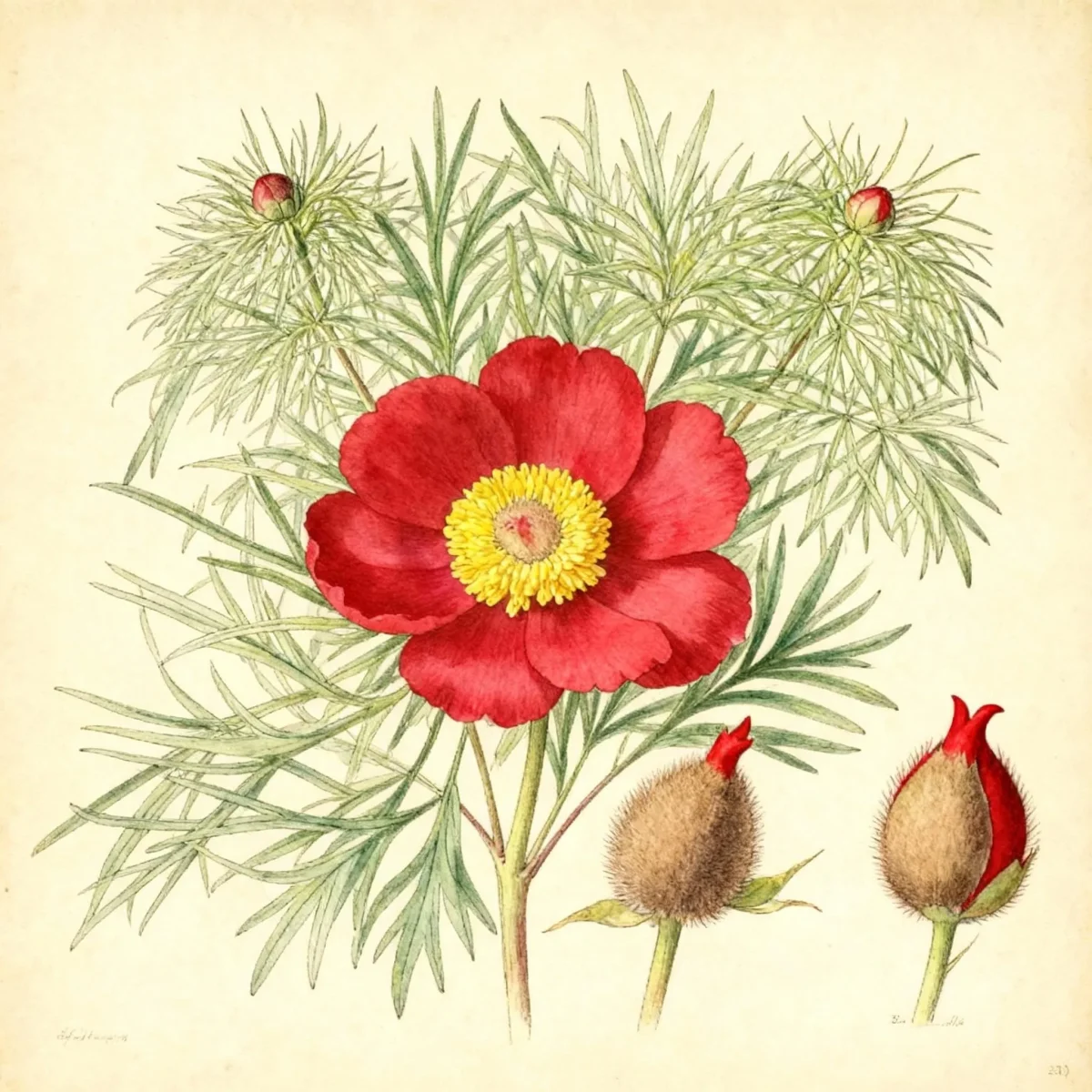
The Paeonia tenuifolia, or fernleaf peony, is celebrated by gardeners for its distinctly fine, feathery foliage that gives it an airy texture unlike many more common Peony cultivars. This shrubby, herbaceous perennial presents a striking contrast between its delicate leaves and the deep, showy crimson flowers it produces early in the season.
This species is valued for its reliable growth habit, typically reaching 1 to 2 feet tall before dying back to the ground following the first hard frost. Its unique foliage provides visual interest throughout the summer and early fall, even after the brief but spectacular bloom period concludes in May.
Gardeners seeking historic or specimen plants will appreciate the longevity of the Peony. This plant offers excellent structure for borders and is highly resistant to common pests, making the care level manageable for most cultivation settings.
Fast Facts
- Plant Family: Paeoniaceae
- Plant Type: Herbaceous perennial
- Native Range: Eastern Europe
- Hardiness Zones: USDA Zones 4-8
- Size at Maturity:
- Height: 1-2 ft
- Spread: 0.75-1.5 ft
- Bloom Time: May
- Bloom Description: Dark red
- Sun Exposure: Full sun to part shade
- Water Needs: Medium
- Maintenance Level: Medium
How to Grow
Establish your Paeonia tenuifolia in rich, fertile, medium moisture, well-drained soil. While it thrives in full sun, it can tolerate part shade, though flowering might be reduced in dimmer locations. Incorporate compost before planting to ensure optimal soil fertility for this long-lived perennial.
Watering should be consistent, maintaining medium moisture levels, especially during the growing season. These plants are exceptionally long-lived and rarely require dividing; they prefer to be left undisturbed for many years. Remove spent flowers promptly after they fade to maintain tidiness.
A crucial late-season task for the fernleaf peony is cutting the foliage back to the ground after the first autumnal frost. This practice helps manage disease carryover and prepares the plant for dormancy. Remember that the bloom period for this specific Peony is short, usually about 7-10 days; plan companion plantings with staggered bloom times to extend your garden’s floral display.
Landscape Uses
The distinct texture of the Paeonia tenuifolia makes it an excellent choice for adding architectural contrast in mass plantings or when used singularly as a specimen accent. Its manageable size is perfect for incorporating into perennial borders where its delicate, fern-like foliage remains attractive all season long.
Due to its refined appearance, this fine-leaved peony works beautifully as an edging plant along walkways or fences, or as a small, soft herbaceous hedge near driveways or along retaining walls. Groupings of this plant create a subtle, yet impactful landscape feature that draws attention to its unique form.
Standout Features
Flower Qualities
- Showy
Noteworthy Characteristics
Paeonia tenuifolia, commonly called fernleaf peony, is a shrubby, herbaceous (soft-stemmed) plant that, each year, will typically grow to 1-2’ tall by mid-spring, display attractive foliage throughout the summer and early fall, and then die to the ground after frost. This species features crimson flowers (to 3” across) which bloom in mid-season (usually May in the St. Louis area). Attractive green foliage is deeply divided and lobed into needle-like, ferny segments.
Tolerances
- Rabbit
- Deer
Potential Problems
Peonies, including this variety, are generally revered for being relatively pest-free. The most commonly noticed visitors are ants on the flower buds; rest assured, these are totally harmless and should be left alone as they may help protect the buds.
However, be watchful for fungal issues such as Botrytis blight and Phytophthora blight, which can sometimes affect the plant. Good air circulation, achieved through proper spacing, is key to prevention. If your Peony fails to flower, check the planting depth—too deep or too shallow is a common culprit—or consider if sun exposure is adequate or if the plant is recently moved.
Frequently Asked Questions
What hardiness zones is Peony suitable for?
The Paeonia tenuifolia thrives across a wide range, suitable for USDA Zones 4 through 8.
When does Peony bloom?
This early-flowering variety typically enters its bloom phase in May, presenting deep, dark red flowers.
How large does Paeonia tenuifolia grow?
Expect the fernleaf peony to reach a mature height between 1 and 2 feet, with a spread of 0.75 to 1.5 feet.
What sun exposure does Paeonia tenuifolia need?
For the best flowering display, ensure the Paeonia tenuifolia receives full sun, though it can tolerate part shade locations.
Conclusion
The remarkable, finely dissected foliage and early dark red blooms secure the Paeonia tenuifolia as a truly special addition to any spring garden. This long-lived Peony variety requires medium maintenance and offers excellent visual texture throughout the warmer months. Before planting, verify that your garden location matches the USDA hardiness zones 4-8 requirements and provides adequate sun exposure.
Companion Planting
When selecting companions for the fernleaf peony, focus on plants that share its requirement for medium water and well-drained soil, ideally filling in the gaps left when the peony foliage dies back in late fall. Early spring bulbs, like daffodils or early tulips, provide excellent color synergy just before the peony blooms. For summer interest after the bloom fades, consider planting late-season perennials such as Catmint (Nepeta) or ornamental grasses which appreciate the same sun exposure.
Design Ideas
The delicate nature of the foliage in Paeonia tenuifolia pairs exceptionally well with broad-leaved or coarser textures to create dynamic visual tension in a perennial border. Consider placing it near slower-spreading, mid-height shrubs that can offer structure during the peony’s dormant phase. Its small stature also makes it an outstanding choice for rock gardens, provided the soil remains rich, or for defining the front edge of a mixed border where its unique leaf structure can be appreciated up close.