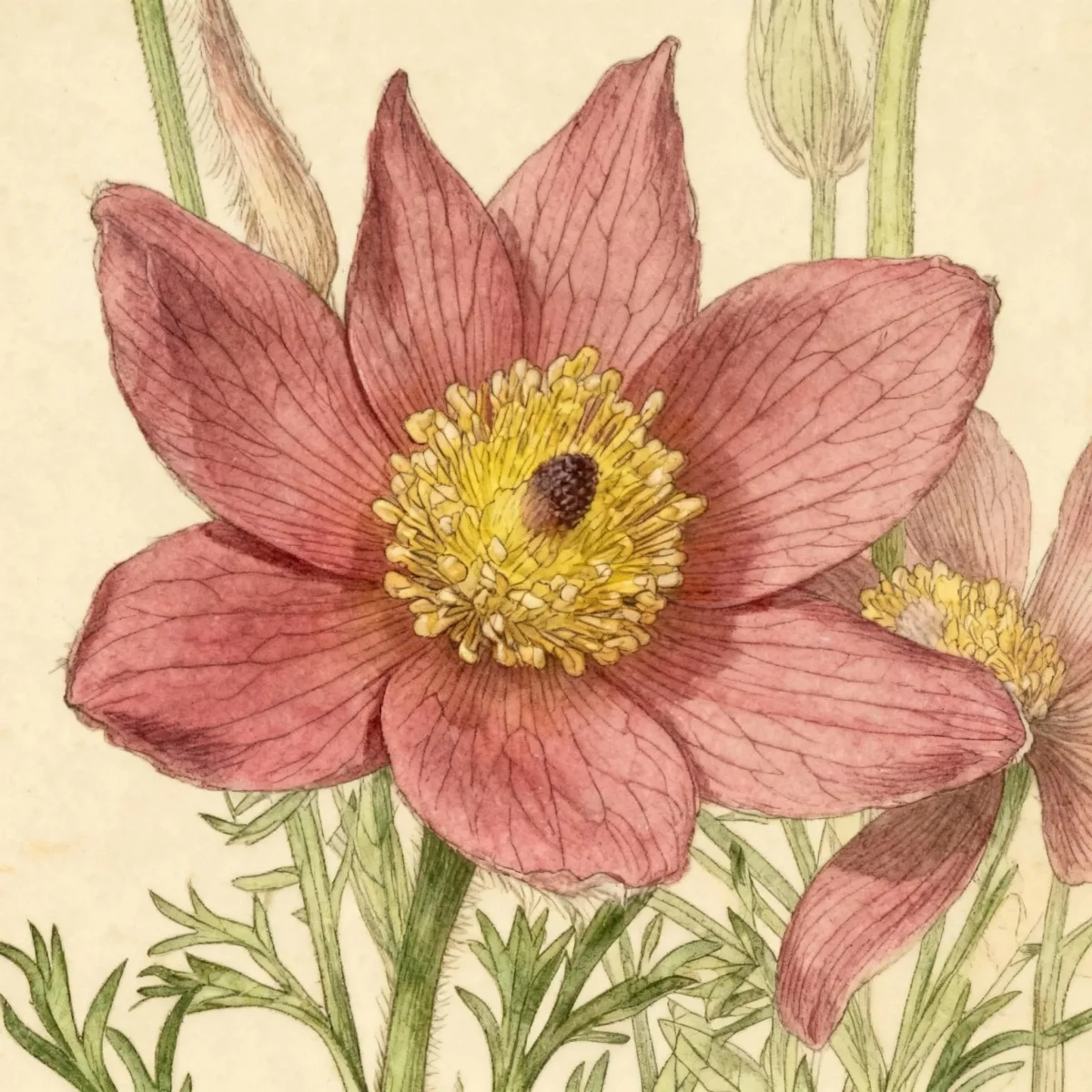
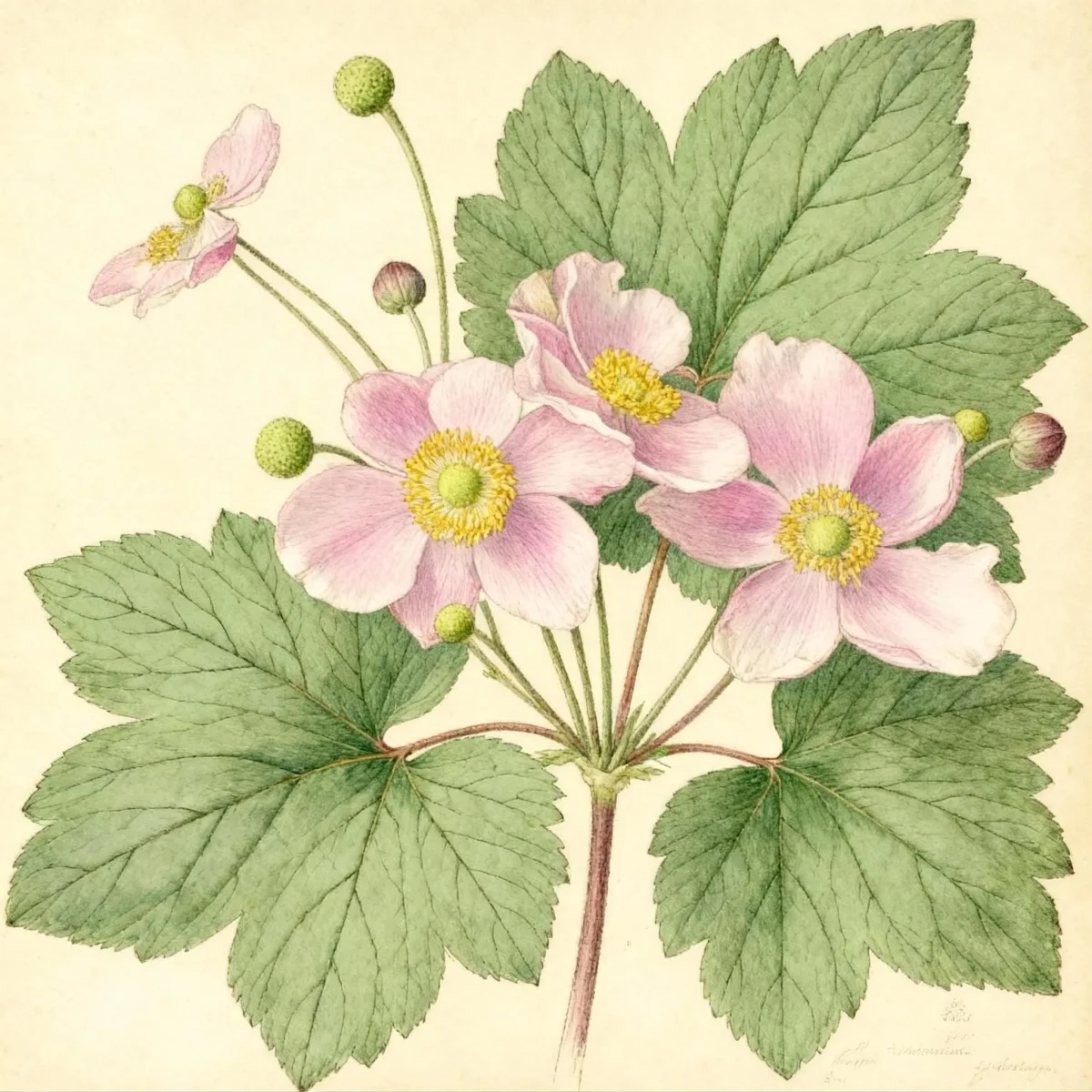
Japanese thimbleweed (Anemone hupehensis)
Anemone hupehensis, Japanese thimbleweed, offers late-season pink beauty. A low-maintenance perennial thriving in partial shade.
Scroll down to discover growing tips, care requirements, companion plants, and more
Complete Plant Information
Overview
The Anemone hupehensis, widely known as Japanese thimbleweed, provides essential color late in the growing season when many other perennials begin to fade. This herbaceous perennial brings upright, graceful stems topped with charming, cup-shaped flowers, extending blooms well into the autumn months. Its foliage forms a neat mound, allowing the flowers to float elegantly above, creating texture in the late-summer garden.
Native to Central China, where it grows naturally near scrub and streamsides, Anemone hupehensis has naturalized extensively, historically leading to its common nomenclature as Japanese anemone. Gardeners value this plant for its reliability and low maintenance requirements when situated correctly. It establishes colonies over time via fibrous suckering roots, adding depth to perennial beds.
Despite its robust nature, the Japanese thimbleweed benefits from specific conditions to prevent flopping and leaf scorching. Providing consistently moist, well-drained soil and partial shade helps ensure strong vertical growth and vibrant late-season displays from this resilient Anemone hupehensis.
Fast Facts
- Plant Family: Ranunculaceae
- Plant Type: Herbaceous perennial
- Native Range: Central China
- Hardiness Zones: USDA Zones 4-8
- Size at Maturity:
- Height: 1.5-2.5 ft
- Spread: 1-1.5 ft
- Bloom Time: August to September
- Bloom Description: Pink
- Sun Exposure: Full sun to part shade
- Water Needs: Medium
- Maintenance Level: Low
How to Grow
Planting should ideally occur in spring, allowing the Japanese thimbleweed ample time to establish its fibrous root system before facing winter dormancy or summer heat. Locate plants in sites that receive full sun to part shade, though partial shade is often preferred to mitigate leaf burn in hot, direct sun. The soil is crucial: it must be medium moisture, well-drained, fertile, and humus-rich, leaning towards neutral to slightly alkaline pH.
Watering should be consistent. The culture notes explicitly state that soils must not be allowed to dry out, especially during dry summer conditions prevalent when the plant is actively flowering. Avoid wet, poorly-drained soils, as winter wetness can prove fatal to dormant crowns. Fertilization can be minimal if the original soil is rich in organic matter.
Taller flowering stems of Anemone hupehensis may benefit from support if planted in deep shade, where they tend to stretch and flop. To maintain plant health and tidiness, remove spent foliage in late fall or early spring. Mulching during cold winters in northern zones helps protect the roots. Propagation is straightforward via division or root cuttings, although be aware that this plant will naturalize slowly by suckering.
Landscape Uses
The upright stature and late bloom time make Japanese thimbleweed an excellent structural element for perennial borders. Plant them toward the middle or back of the border, ensuring they are not overwhelmed by aggressive neighbors, as they perform best when given room to spread gradually into colonies. They integrate beautifully into cottage gardens, where their informal structure complements robust, traditional plantings.
For a dappled woodland garden setting, Anemone hupehensis thrives beneath the high canopy of deciduous trees, mimicking its native stream-side habitat. Grouping several plants together creates a more impactful drift of pink color late in the season, effective against evergreen backdrops or dark mulch. Their graceful movement in the breeze adds a dynamic quality to the composition.
Standout Features
Flower Qualities
- Showy
Noteworthy Characteristics
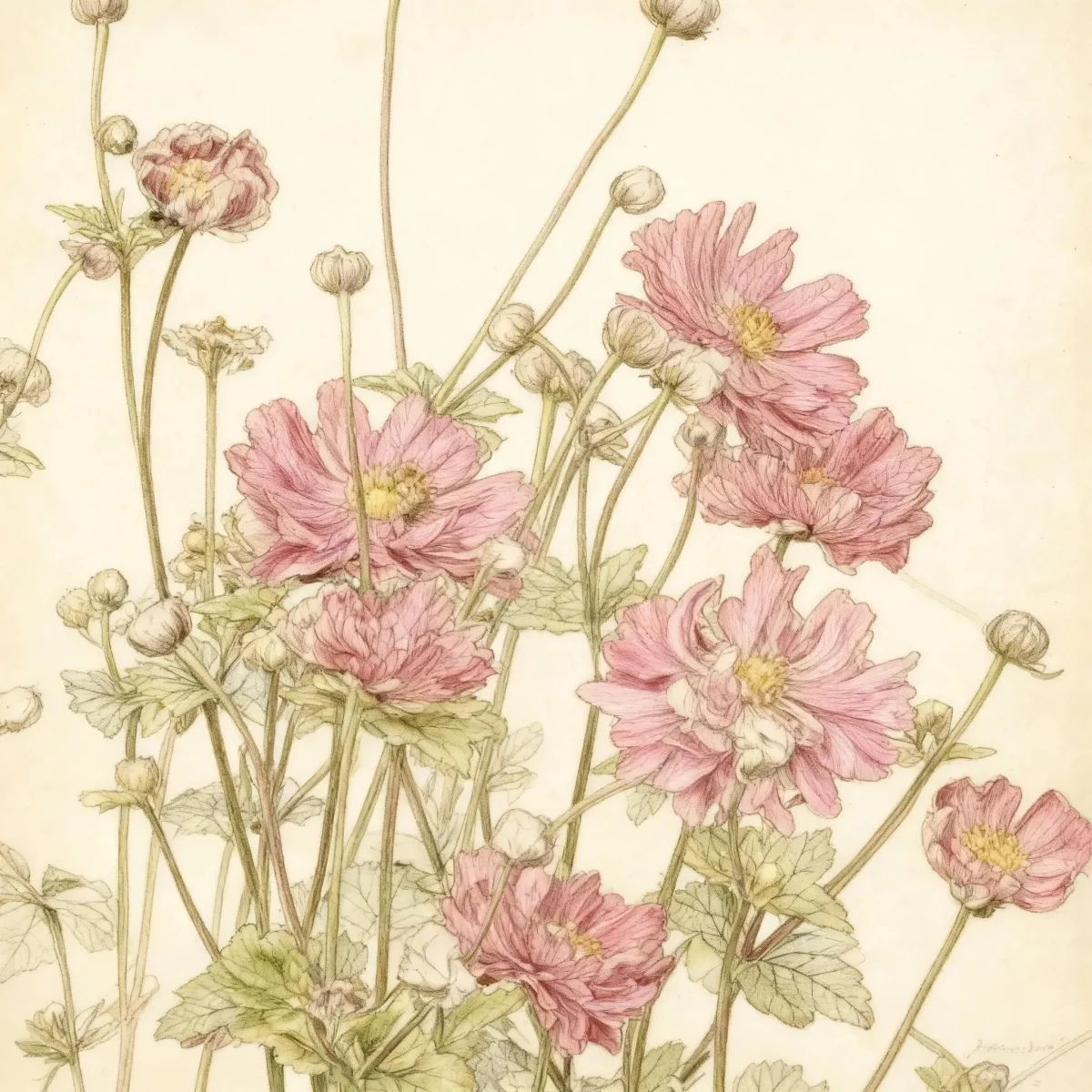
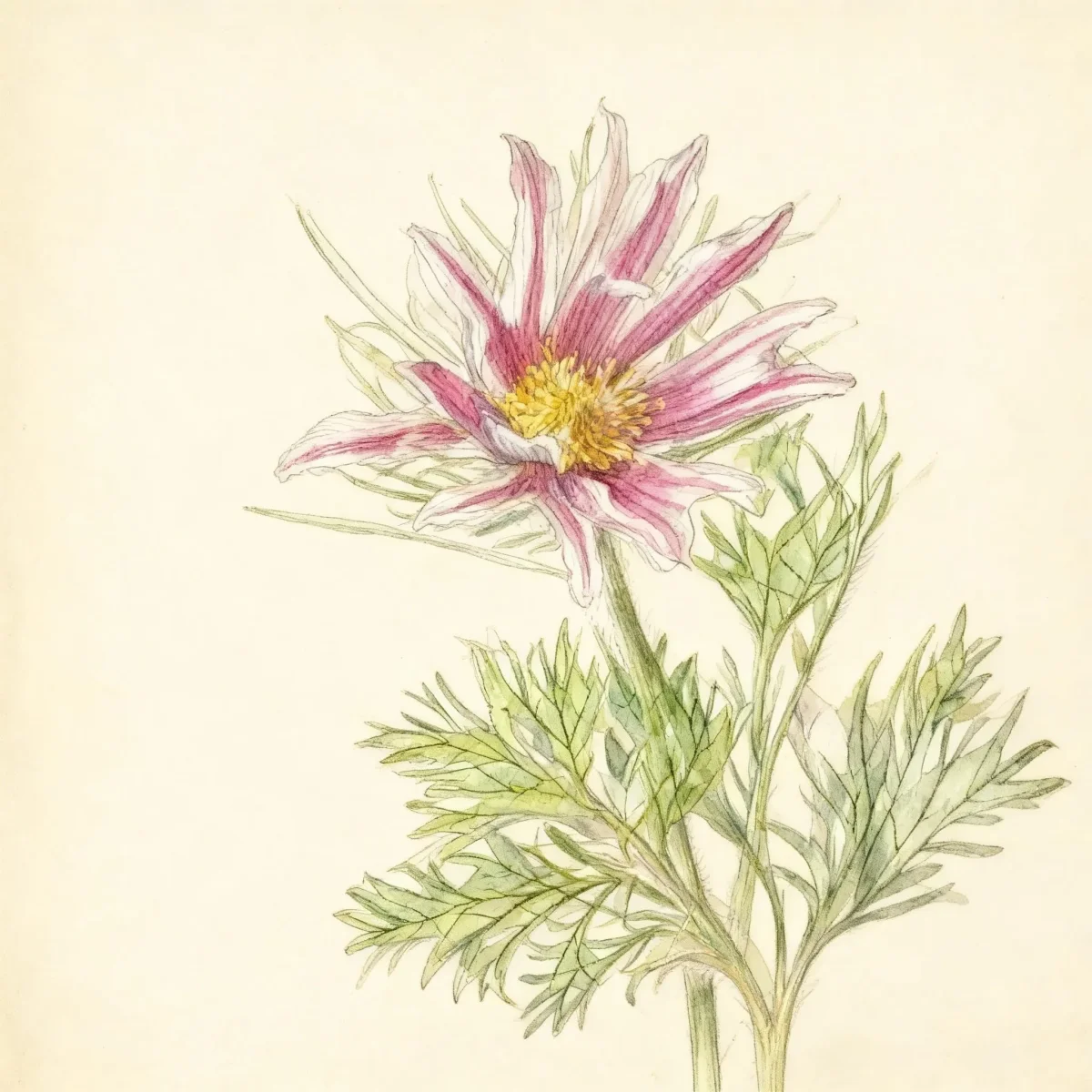
Anemone hupehensis, commonly called Japanese anemone, is a fibrous-rooted, woody-based late summer to fall flowering herbaceous perennial of the buttercup family that typically grows to 2-2 ½’ tall. Although native to scrubs, grassy slopes and streamsides in central and southwestern China, this anemone was cultivated in Japan for many years over which time it escaped gardens and naturalized to the point where it became mistakenly considered to be a Japanese native. Common name of Chinese anemone is sometimes used for this plant in reference to its true native habitat. This plant typically forms a basal foliage clump to 12” tall of 3-parted, dark green leaves on long petioles. Each leaf has large-toothed margins and is softly pubescent beneath. Long, upright, wiry-but-graceful, branching flower stems rise well above the foliage clump in late summer to 30” tall bearing single, cup-shaped, apetalous flowers (2-3” diameter). Each flower contains 5-7 showy, rounded, pinkish-white to pale rose-mauve tepals (modified petals) with a contrasting green button-like center surrounded by a ring of yellow stamens. Flowers bloom late summer into fall often extending to first frost (late July/August to October).Genus name is often said to be derived from the Greek word anemos meaning wind.Specific epithet comes from Hupeh (Hubei) Province in Central China where this plant is native.Windflower is a common name for plants in the genus Anemone because upright flower stems typically sway in the breeze.
Tolerances
- Deer
Potential Problems
This plant generally suffers from no serious insect or disease problems, contributing to its low maintenance rating. However, taller specimens may occasionally require staking or support to maintain an upright habit, especially if they receive insufficient sunlight. Watch for common fungal issues like leaf spot, downy mildew, powdery mildew, and rust, often exacerbated by overly humid or wet conditions that must be mitigated by ensuring good air circulation and drainage when siting your Anemone hupehensis.
Pest issues are usually minor, though gardeners should inspect foliage for signs of caterpillars, flea beetles, weevils, and slugs, particularly when the plant is young or establishing. Foliar nematodes present a more internal threat, feeding within the leaf tissue. As a precautionary note, be aware that the plant is poisonous if ingested, so placement should be considered if pets or small children have access to the foliage.
Frequently Asked Questions
What hardiness zones is Japanese thimbleweed suitable for?
Japanese thimbleweed (Anemone hupehensis) is suitable for USDA Zones 4 through 8, offering resilience in many temperate climates.
How large does Japanese thimbleweed grow?
This perennial typically matures to a height between 1.5 and 2.5 feet, spreading to occupy an area 1 to 1.5 feet wide.
What sun exposure does Japanese thimbleweed need?
Anemone hupehensis performs best in a location receiving full sun to part shade, though it benefits from afternoon shade in hotter regions to prevent leaf scorch.
When does Japanese thimbleweed bloom?
The characteristic pink blooms appear relatively late in the season, generally starting in August and continuing through September.
Conclusion
The Japanese thimbleweed offers gardeners exceptional late-season visual interest with its sturdy, airy blooms and easy-going nature. Its pink flowers provide necessary color contrast as summer ends, and its low maintenance profile makes it a reliable choice for borders and cottage gardens through USDA Zones 4-8. Be sure to provide consistently moist, well-drained soil rich in humus, and plan to situate your Anemone hupehensis soon to enjoy its dependable autumn performance.
Companion Planting
When selecting neighbors for the Japanese thimbleweed, focus on plants that appreciate similar medium moisture levels and partial shade conditions, complementing its late-season bloom window. Excellent companions include Hosta varieties, which provide contrasting foliage texture during the summer while the anemones are establishing their flower stems. Additionally, late-flowering Sedum (Hylotelephium) or ornamental grasses work well, providing sturdy, complementary structures that coexist happily with the spreading roots of Anemone hupehensis.
Consider plants that die back earlier to allow the spreading roots of the anemone to establish dominance without competition. Ferns, hellebores, and woodland phlox are ideal foreground choices, offering spring interest before the Japanese thimbleweed emerges prominently in mid-summer. The key is ensuring the soil maintains consistent moisture across all these companions, preventing the Anemone hupehensis culture requirements from being compromised.
Propagation Tips
While Anemone hupehensis will slowly naturalize by self-suckering fibrous roots, gardeners can intentionally propagate new plants through division, which is best done in early spring right as new growth is emerging. Lift the clump carefully, taking care to keep the root sections intact, and replant divisions immediately into prepared soil. Root cuttings offer another viable method for vegetative propagation.
For root cuttings, take pencil-thick root sections in late winter or early spring before active growth begins. Ensure each section is at least 3 to 4 inches long and place these pieces horizontally or vertically about 1-2 inches deep in a potting mix kept consistently moist in a cold frame or protected spot. New shoots should appear, allowing you to harden off the new plants before transplanting them to their final location.