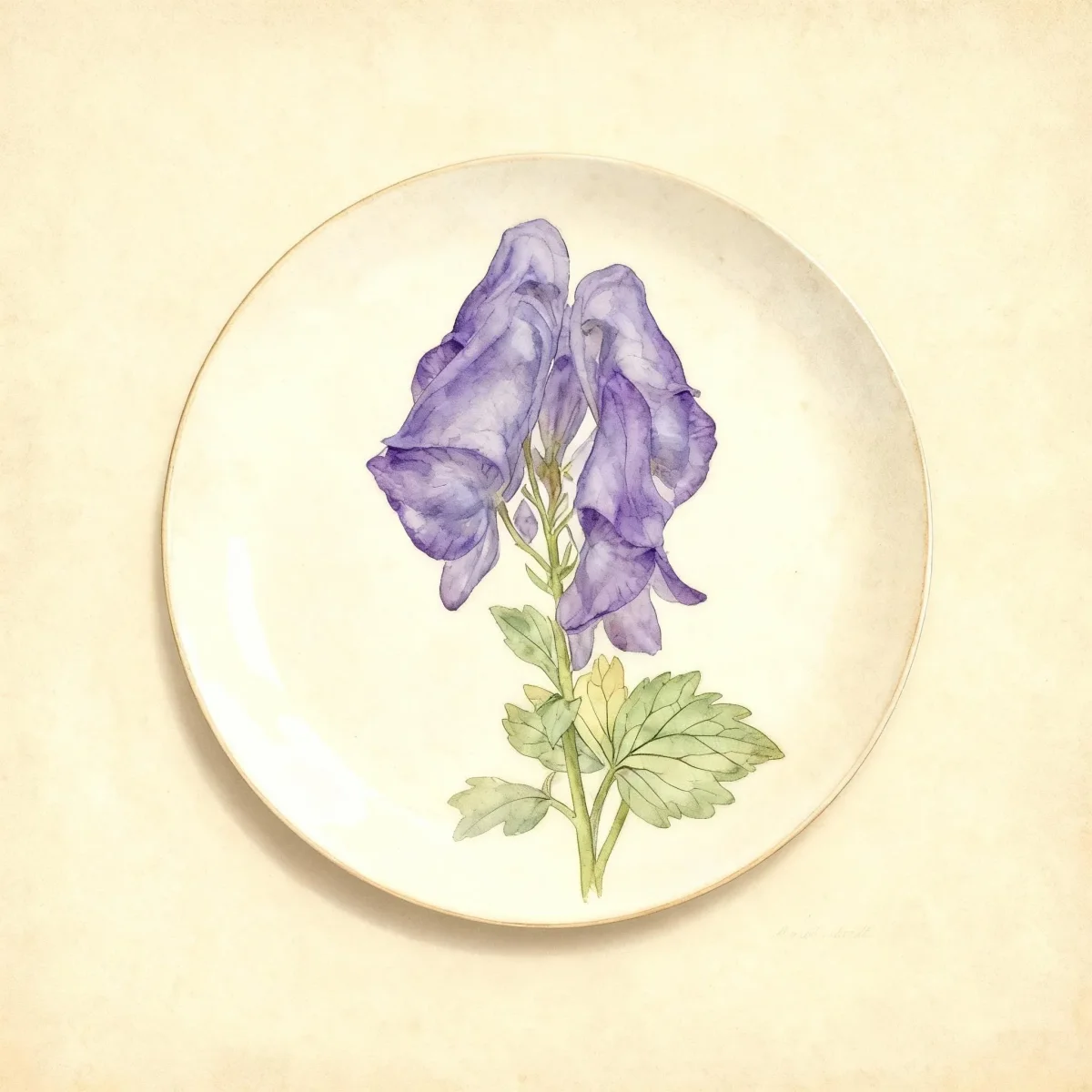
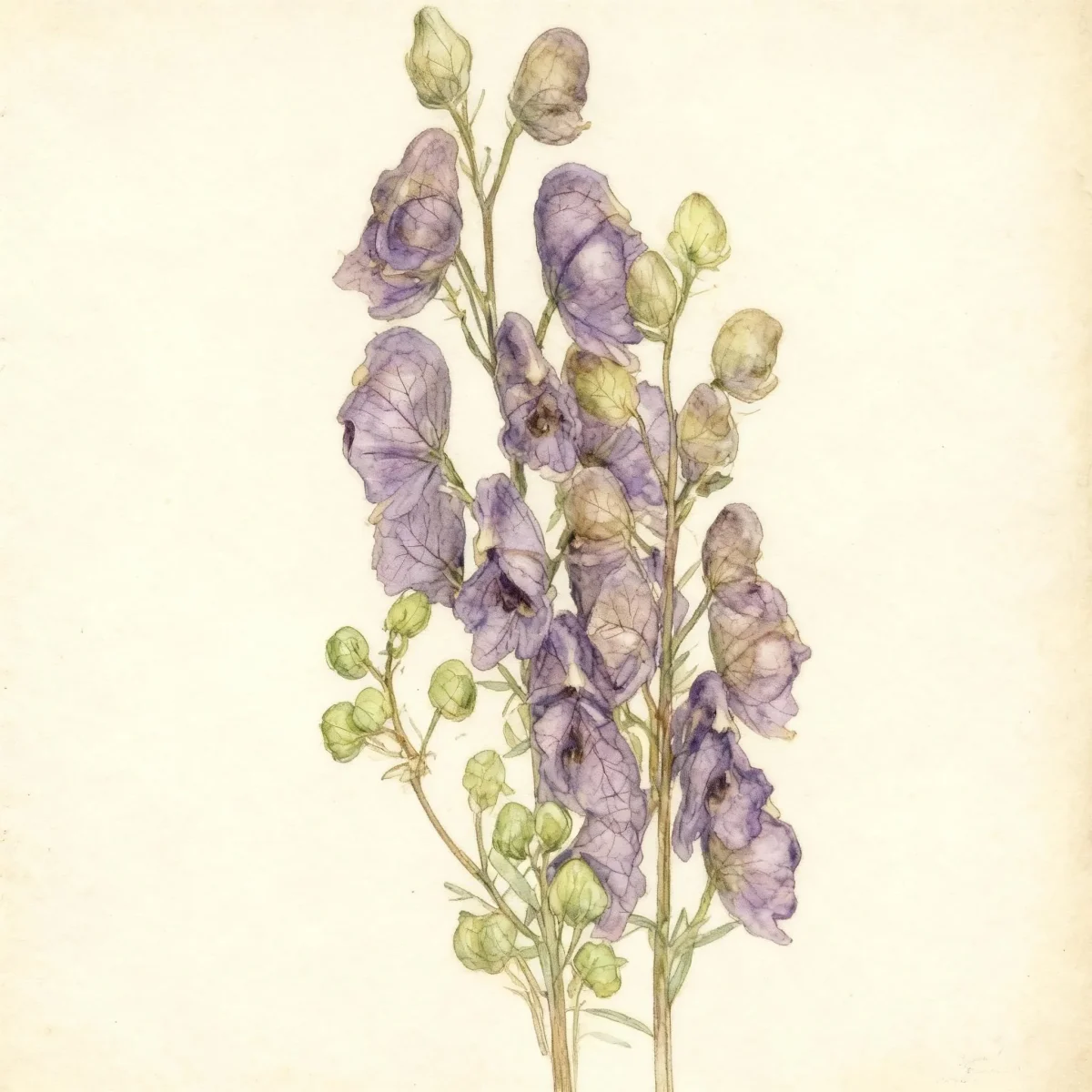
Monkshood (Aconitum napellus)
Discover Monkshood (Aconitum napellus), an erect perennial grown for deep blue, hooded flowers. Hardy zones 3-7.
Scroll down to discover growing tips, care requirements, companion plants, and more
Complete Plant Information
Overview
Aconitum napellus, commonly known as Monkshood, is cherished in cottage and woodland gardens for its striking vertical accent and intense, deeply colored flowers. This erect, tuberous-rooted perennial stands tall on stiff, leafy stems, delivering dense terminal racemes of hooded blooms in mid-to-late summer. Cultivating Aconitum napellus requires attention to consistent moisture, especially in warmer climates, as it performs best when soil conditions mimic its native moist mountainous environments in Europe. While highly ornamental, gardeners must respect its potent toxicity, ensuring placement away from areas accessible to pets or children.
This plant offers substantial vertical interest, typically reaching heights between 2 and 4 feet. The dramatic, helmet-like structure of the flowers—which gives Monkshood its memorable common name—provides crucial late-season color when many spring bloomers have faded. Its foliage is dark green and deeply cut, providing a fine textural contrast to its bold flowers.
Successful cultivation of Aconitum napellus hinges on providing ample water and rich, well-drained soil. It thrives in the cooler edges of the garden border, particularly where it can benefit from afternoon shade during hot summers. Integrating Monkshood into stream-side plantings or moist woodland areas allows gardeners to best meet its specific cultural needs while enjoying one of the season’s most architecturally interesting blooms.
Fast Facts
- Plant Family: Ranunculaceae
- Plant Type: Herbaceous perennial
- Native Range: Europe
- Hardiness Zones: USDA Zones 3-7
- Size at Maturity:
- Height: 2-4 ft
- Spread: 1-1.5 ft
- Bloom Time: July to August
- Bloom Description: Deep purplish blue
- Sun Exposure: Full sun to part shade
- Water Needs: Medium
- Maintenance Level: Medium
How to Grow
Plant Aconitum napellus during the appropriate season (typically spring or early fall) in a location that benefits from full sun to part shade, depending on the summer heat. The key requirement is soil: it must be moist, organically rich, and exceptionally well-drained. Do not allow the soil to dry out completely, but conversely, ensure it drains well enough to prevent waterlogging, which can lead to root issues.
When caring for your Monkshood, maintain consistent moisture levels, particularly during dry spells. While fertilization isn’t explicitly detailed, enriching the soil with compost at planting time supports its needs for organically rich media. Taller stems may require staking in exposed locations. A valuable seasonal tip is to cut back the stems immediately after the initial flowering ends in August; this often encourages the plant to produce a second, smaller flush of blooms later in the season.
Established plants can be divided, but be aware that Aconitum napellus can be slow to re-establish, meaning they are often best left undisturbed once situated. Gardeners must exercise caution; always wear protective gloves when handling this plant, especially when cutting back foliage or dividing tubers, due to the potent toxins present in all parts.
Landscape Uses
When incorporating Monkshood into the landscape, lean into its moisture requirements. It thrives beautifully in environments that mimic its native habitat, making it an excellent choice for planting along natural streams, the periphery of bog gardens, or near ponds where consistent moisture is guaranteed. While it can function in a standard border, success depends entirely on meeting its water demands; ensure surrounding plants have similar moderate needs.
Due to its height and dramatic late-summer flowers, Aconitum napellus works well as a mid-to-back-border specimen, providing vertical structure alongside taller ferns or robust summer perennials. Because of the inherent toxicity of the plant, exercising thoughtful placement is crucial. It should not be placed where small children frequently play, nor should its tubers be situated near areas designated for root vegetables in vegetable gardens where accidental ingestion poses a risk.
Standout Features
Flower Qualities
- Showy
Noteworthy Characteristics
The defining feature of Aconitum napellus is its deep purplish-blue, helmet-shaped flowers, which top rigid stems, earning it the name Monkshood. This erect, tuberous-rooted perennial is also known historically as wolfsbane due to its past use in poisons. Bear in mind that all parts of this plant, especially the roots and seeds, are extremely poisonous, necessitating careful handling while gardening.
Tolerances
- Rabbit
- Deer
Potential Problems
Monkshood generally exhibits good resistance to serious insect infestations, but certain fungal and soil-borne diseases can occasionally cause issues. Watch for crown rot, which signals poor drainage, as well as powdery mildew and verticillium wilt. To manage height-related instability, provide support for taller stems, especially in windy sites, preventing them from flopping over and potentially breaking. It is imperative to wear gloves when working with the plant, avoiding any contact between the plant’s sap and bare skin or open wounds due to its toxicity.
Frequently Asked Questions
What hardiness zones is Monkshood suitable for?
Aconitum napellus performs reliably in USDA Hardiness Zones 3 through 7, provided its soil moisture and temperature needs are met.
How large does Monkshood grow?
This perennial typically reaches a height between 2 and 4 feet, with a relatively narrow spread of 1 to 1.5 feet, offering significant vertical impact.
When does Aconitum napellus bloom?
Monkshood puts on its display of deep purplish-blue flowers from July into August, providing valuable color late in the growing season.
What sun exposure does Aconitum napellus need?
This plant prefers full sun but benefits significantly from part shade, especially in hotter climates where afternoon shade helps keep its root system cool.
Conclusion
Aconitum napellus, or Monkshood, remains a compelling choice for gardeners seeking dramatic vertical structure and intense blue color during the mid-to-late summer peak. Its growth habit and unique hooded flowers ensure it acts as an architectural focal point when properly sited. Before adding this perennial to your landscape, confirm your USDA Zone compatibility (3-7) and commit to providing the consistently moist, rich soil conditions that Monkshood requires for long-term success.
Companion Planting
When integrating Aconitum napellus into borders, select companions that appreciate similar consistently moist soil conditions and share a need for full sun to part shade exposure. Good partners include moisture-loving foliage plants like large Hostas, especially silver-leaved varieties which benefit from the contrast with the dark green leaves of Monkshood. Tall, moisture-loving astilbes or Ligularia species (like Leopard Plant) thrive alongside Aconitum napellus in partial shade, as they also dislike drying out during the summer heat.
Selecting companions with different bloom times can extend visual interest beyond the July to August window of Monkshood. Pairing it with robust foliage plants helps mask the base of the stems once the foliage matures or if the plant requires staking, creating a seamless, lush tapestry in partial shade borders.
Propagation Tips
Propagation of Aconitum napellus is primarily achieved through division of its tuberous roots, though this process requires patience. If dividing plants, it is usually best done in the early spring before significant new growth has emerged, or in the fall after the foliage has died back. Ensure that each division retains a healthy section of the root structure. Although propagation by division is possible, gardeners should be aware that Monkshood is often slow to establish at a new site, suggesting that division should be performed sparingly and only when necessary.