Early meadow-rue (Thalictrum dioicum)
Thalictrum dioicum, Early meadow-rue, offers lacy foliage and early spring blooms in shady borders. Hardy in Zones 4-7.
Scroll down to discover growing tips, care requirements, companion plants, and more
Complete Plant Information
Overview
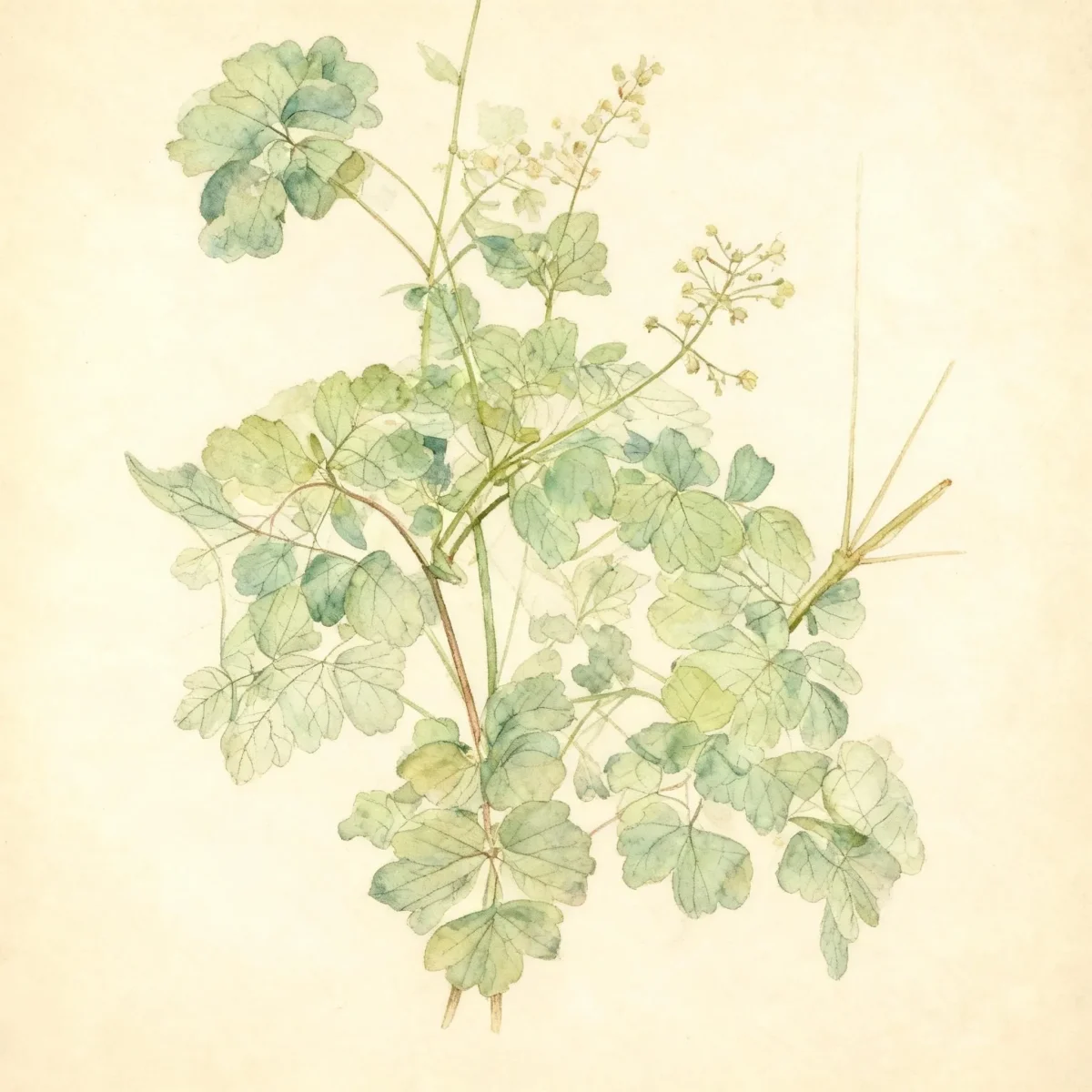
Early meadow-rue, or Thalictrum dioicum, is a highly valuable native perennial treasured for its delicate appearance and early seasonality. This species offers a fine-textured, almost ethereal contrast in the garden, emerging well before many other perennials reach their peak. Its value lies in providing structural interest with its cool, gray-green foliage early in the growing season.
This herbaceous perennial typically matures between one and two feet tall, fitting perfectly into the middle layer of a shaded border. Thalictrum dioicum requires average to rich, well-drained soil and performs best when protected from the harsh afternoon sun typical of hot, humid summers. Gardeners appreciate its unique structure and relatively low incidence of pest issues.
As a native plant across Central and Eastern North America, Early meadow-rue is an excellent choice for naturalized areas or wildflower gardens, bringing subtle color when the landscape needs it most. Whether used for its lacy foilage or its unique spring flowers, Thalictrum dioicum enhances diverse garden settings.
Fast Facts
- Plant Family: Ranunculaceae
- Plant Type: Herbaceous perennial
- Native Range: Central and eastern North America
- Hardiness Zones: USDA Zones 4-7
- Size at Maturity:
- Height: 1-2 ft
- Spread: 1-2 ft
- Bloom Time: April to May
- Bloom Description: Green white with a purplish tinge
- Sun Exposure: Full sun to part shade
- Water Needs: Medium
- Maintenance Level: Medium
How to Grow
Plant Thalictrum dioicum in the spring or fall, ensuring the location offers the preferred balance of sun. While adaptable to average, well-drained soil, this plant thrives best when provided with moist, rich, humusy soil, mimicking the conditions found on woodland slopes where it naturally occurs. Site selection is crucial, as it performs best with dappled sun, being intolerant of intensely hot and humid conditions.
Water needs are medium; maintain consistent moisture, especially during dry spells, but ensure soil drainage is excellent to prevent root issues. Fertilization is rarely required if the soil is amended richly with organic matter during planting. This plant does not generally require pruning, though cutting back spent flower stalks is an option for tidiness.
Be mindful of the plant’s height; taller specimens of Thalictrum dioicum may benefit from staking or support, especially if sited in a location that receives competition from surrounding, taller flora. In late winter or early spring, clean up any old foliage before new green growth emerges, preparing the area for the early spring color offered by Early meadow-rue.
Landscape Uses
The distinctive, fine texture of Thalictrum dioicum makes it an exceptional plant for providing contrast in the perennial border. Its cool, gray-green foliage offers an attractive backdrop or complement to later blooming perennials that demand fuller sun. Consider planting it in wildflower gardens or naturalized areas where its native charm can be fully appreciated without intensive maintenance.
This plant pairs beautifully with woodland companions that share similar moisture and shade requirements, such as hostas, ferns, and spring ephemerals. Because of its airy nature, it looks excellent planted near bold-textured foliage plants to create dynamic visual tension. Use Early meadow-rue where you need early spring color that transitions gracefully into the summer garden.
Standout Features
Flower Qualities
- Showy
- Good Cut
Noteworthy Characteristics
Thalictrum dioicum is an early meadow rue that grows 1-2’ tall, featuring lacy, fine-textured, gray-green, compound foliage resembling columbine or maidenhair fern. It produces panicles of tiny, drooping, greenish-white flowers with a purple tinge in late spring, noting that male and female flowers appear on separate plants (dioecious). This Missouri native is typically found near limestone outcroppings in wooded ravines.
Tolerances
- Deer
Potential Problems
Thalictrum dioicum generally enjoys good pest and disease resistance, presenting few serious issues for the gardener. Occasionally, susceptible plants may show signs of powdery mildew or rust, particularly if air circulation is poor or humidity is high. To mitigate fungal concerns, ensure adequate spacing when planting and avoid overhead watering late in the day. If taller stems become floppy, provide modest staking support, especially in rich soil that encourages rapid, leggy growth.
Frequently Asked Questions
What hardiness zones is Early meadow-rue suitable for?
Thalictrum dioicum is reliably cold-hardy in USDA Zones 4 through 7.
How large does Early meadow-rue grow?
This species typically achieves a mature height between 1 and 2 feet, with a similar spread of 1 to 2 feet wide.
When does Thalictrum dioicum bloom?
Early meadow-rue displays its characteristic greenish-white flowers with a purplish tinge between April and May, providing very early spring interest.
What sun exposure does Thalictrum dioicum need?
This plant prefers a location receiving full sun to part shade, ideally benefiting most from dappled sunlight conditions.
Conclusion
The lacy texture and early bloom time make Thalictrum dioicum an indispensable component for designers seeking structure and contrast in shaded areas. This low-maintenance gem, known commonly as Early meadow-rue, connects the spring season beautifully with the growing perennials that follow. Evaluate your garden’s soil richness and moisture levels, and plan to incorporate this wonderful native perennial during the next optimal planting window.
Companion Planting
When selecting companions for Thalictrum dioicum, prioritize plants that share its preference for moist, rich soil and partial shade. Pairing its fine texture with broad-leafed groundcovers creates immediate visual impact; consider Brunnera or Hosta varieties that feature lighter green or blue foliage. For blooms that follow the April–May flowering of the Early meadow-rue, Astilbe and Heuchera (Coral Bells) provide long-lasting color and contrasting structure once the wispy flowers of Thalictrum dioicum fade.
Design Ideas
The airy habit of Thalictrum dioicum makes it an excellent choice for softening the edge between a woodland border and an open lawn area. Because the flowers are subtle, use drifts of this plant rather than solitary specimens to maximize their effect, especially in wildflower meadows or woodland margins. Its ability to provide visual interest with foliage alone ensures that this plant contributes significantly to the landscape even when not in bloom, acting as an airy screen that keeps views soft.