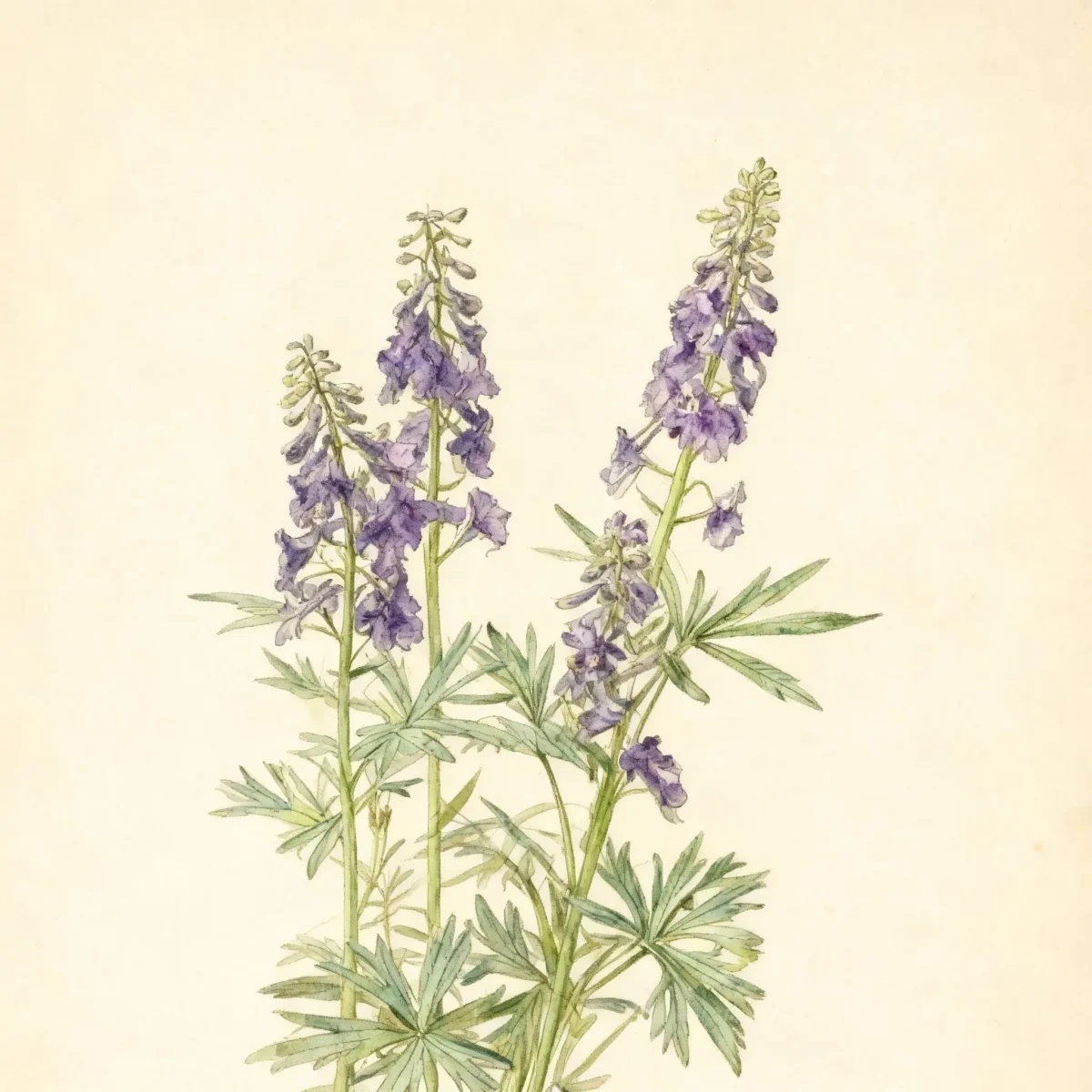
Trelease's larkspur (Delphinium treleasei)
Discover Trelease's larkspur (Delphinium treleasei), a rare Missouri native boasting showy blue-purple spikes. Low maintenance and deer tolerant.
Scroll down to discover growing tips, care requirements, companion plants, and more
Complete Plant Information
Overview
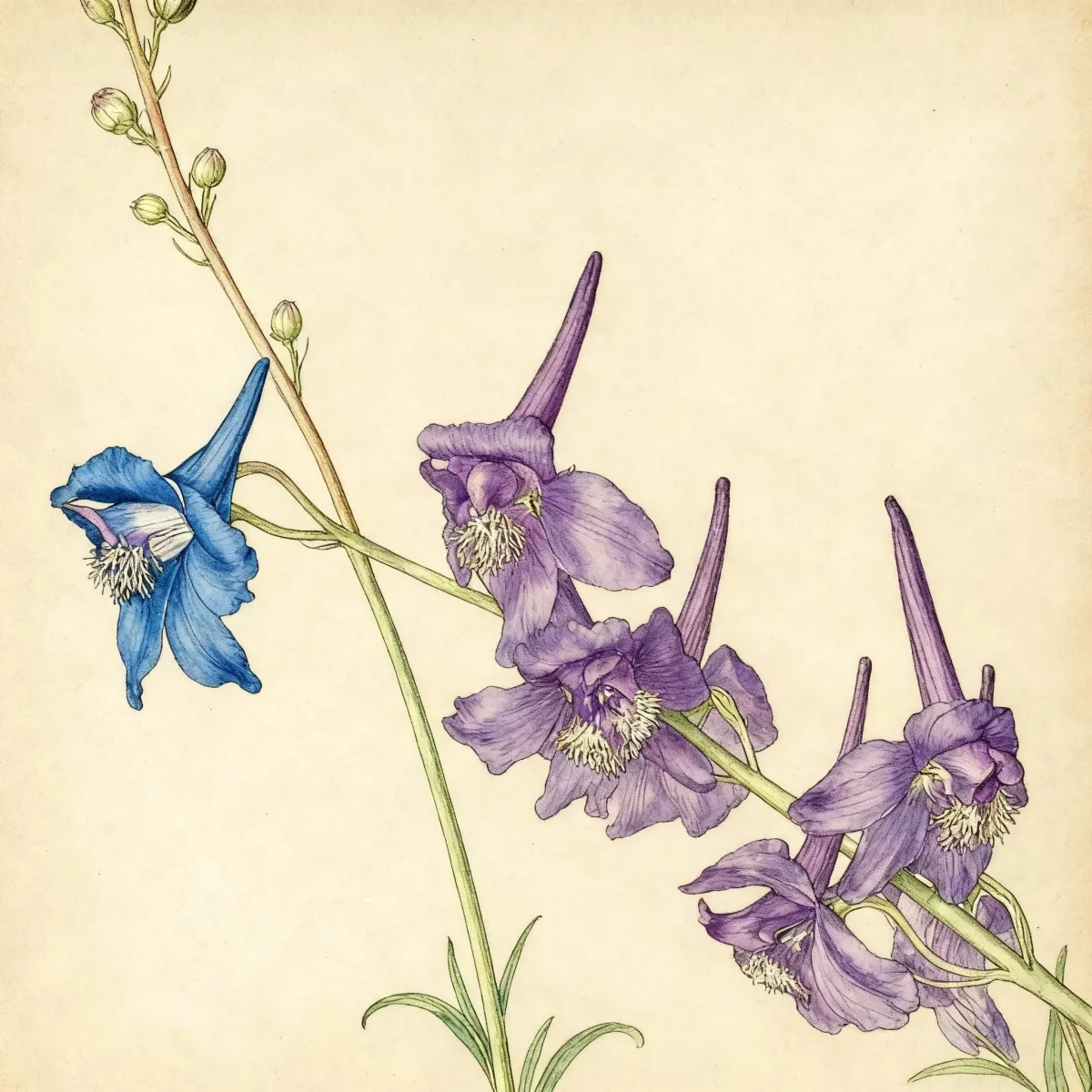
Delphinium treleasei, commonly known as Trelease’s larkspur, is a stunning but rare herbaceous perennial native to the limestone glades of the southwestern Ozarks in Missouri and Arkansas. This species is highly valued by gardeners for its loose terminal racemes covered in vibrant deep blue to bluish-purple flowers, providing a strong vertical accent in the spring garden. Unlike many cultivated delphiniums, Trelease’s larkspur is relatively low maintenance, provided its specific soil and climate needs are met.
This species offers showy blooms that feature characteristically spurred flowers, giving the genus its common dolphin association. Cultivating Delphinium treleasei successfully supports local ecology and offers gardeners a unique perennial specimen that thrives best when protected from harsh weather and excessive summer humidity. Its relatively compact size makes it versatile for smaller native gardens or specialized perennial borders.
Gardeners aiming to incorporate this showy beauty should recognize its native preference for rocky limestone soils and medium moisture. While it generally prefers full sun, appreciating afternoon shade in hotter regions, the success of Delphinium treleasei often hinges on reproducing its native, well-drained habitat conditions.
Fast Facts
- Plant Family: Ranunculaceae
- Plant Type: Herbaceous perennial
- Native Range: Missouri, Arkansas
- Hardiness Zones: USDA Zones 5-7
- Size at Maturity:
- Height: 2-4 ft
- Spread: 1-2.5 ft
- Bloom Time: May to June
- Bloom Description: Blue to bluish-purple
- Sun Exposure: Full sun
- Water Needs: Medium
- Maintenance Level: Low
How to Grow
Planting Delphinium treleasei is best done in spring or fall in locations that offer protection from strong winds, which can damage the tall flower spikes. The absolute key to success is replicating its endemic environment: choose sites with medium moisture, excellent drainage, and rocky limestone-based soils. While full sun is preferred, anticipate providing some protection from the hottest afternoon sun if planting in the southern extent of its range (Zone 7).
Watering requirements are classified as medium; ensure the soil remains consistently moist but never waterlogged, as poor drainage is a significant cultural threat. This species dislikes the high heat and humidity found in the deep South, though it handles St. Louis area conditions better than many hybridized larkspurs. Little formal fertilization is usually necessary if the soil is reasonably rich and well-drained.
Maintenance is generally low. After the primary bloom flush in late spring to early summer, immediately remove the spent flower spikes. This deadheading encourages a tidier appearance and may provoke a second, though significantly sparser, bloom later in the autumn. As with all members of the Ranunculaceae family, remember that all parts of Trelease’s larkspur are toxic if ingested.
Landscape Uses
Trelease’s larkspur is an outstanding choice for specialized garden areas where its soil preferences can be accommodated. It shines when integrated into native plant drifts, where it naturally complements other regional flora found in glade or savanna settings. Because of its upright habit, it works excellently placed in the middle to back of a border, adding vertical punctuation without overwhelming smaller companions.
This species looks particularly attractive when massed together in small groupings rather than scattered individually, creating a more impactful display of blue-purple color during May and June. Consider pairing Delphinium treleasei with late-spring flowering perennials that share similar moisture and sun needs, such as certain species of native Salvia or robust coreopsis varieties that can tolerate slightly drier conditions as summer progresses. It is also an excellent component for low-maintenance cottage gardens focused on regional natives.
Standout Features
Flower Qualities
- Showy
Noteworthy Characteristics
Delphinium treleasei, commonly called Trelease’s larkspur, is a rare species that is native to only a few counties in the southwestern Ozark region of Missouri where it is most often found on limestone glades. It grows 2-3’ (less frequently to 4’) tall, and features loose terminal racemes of deep blue to bluish-purple flowers which bloom in spring. Individual flowers (to 1” long) are complex and asymmetrical and feature five sepals, one of which is spurred into a distinctive prong resulting in the common name.
Tolerances
- Deer
Potential Problems
Larkspurs are generally susceptible to powdery mildew, botrytis blight, leaf spots and crown rot. Slugs and snails are sometimes visitors that feed on new growth. Taller plants sometimes need support, especially if grown in rich soil or exposed locations; staking or planting among sturdy companions will mitigate flopping. Larkspurs generally grow best in cool summer climates, however this native species, Delphinium treleasei, should do well in areas like the St. Louis region where it is indigenous. Control moisture fluctuations and ensure excellent air circulation to minimize fungal issues like powdery mildew.
Frequently Asked Questions
What hardiness zones is Trelease’s larkspur suitable for?
Trelease’s larkspur (Delphinium treleasei) performs best in USDA Hardiness Zones 5 through 7.
How large does Delphinium treleasei grow?
This herbaceous perennial typically reaches a height between 2 and 4 feet, with a spread ranging from 1 to 2.5 feet wide.
When does Trelease’s larkspur bloom?
Delphinium treleasei blooms primarily from May to June, showcasing vivid blue to bluish-purple flowers.
What sun exposure does Delphinium treleasei need?
This plant requires full sun exposure for optimal performance, although afternoon shade is beneficial in very hot summer climates.
Conclusion
Delphinium treleasei offers dedicated gardeners a chance to cultivate a rare, truly American native known for its striking blue-purple coloration and comparatively low maintenance profile. By respecting its crucial need for sharp drainage and limestone soil structure, you can successfully establish Trelease’s larkspur in your perennial collection. Ensure you check your local hardiness zone compatibility before planning your spring planting schedule for this unique western Ozark jewel.
Companion Planting
When selecting companions for Delphinium treleasei, prioritize plants that thrive in similar full sun exposure and medium moisture conditions, and which can tolerate potentially alkaline soil resulting from limestone substrates. Good pairings include drought-tolerant coneflowers (Echinacea), various native Coreopsis varieties, and many lighter-flowering members of the Asteraceae family. Avoid heavy feeders or plants that spread aggressively, as they can compete too fiercely with the larkspur’s root system, especially given its preference for rocky soil structure.
Design Ideas for a Native Display
Integrating Trelease’s larkspur into a garden requires thinking volumetrically, utilizing its height to anchor sections of a border. For a truly native Missouri or Arkansas-inspired scene, emulate the glade ecosystem by surrounding it with clump-forming grasses that offer textural contrast when the flowers fade. In cottage garden settings, use its vertical lines to break up the mounding forms of plants like Peonies or Siberian Irises, ensuring the color palette remains focused on blues, purples, and complementary yellows (like those on the flower beards) for high visual impact.