Persian buttercup (Ranunculus asiaticus)
Discover Ranunculus asiaticus, the stunning Persian buttercup, known for its peony-like blooms and late spring color. Ideal for zones 8-10.
Scroll down to discover growing tips, care requirements, companion plants, and more
Complete Plant Information
Overview
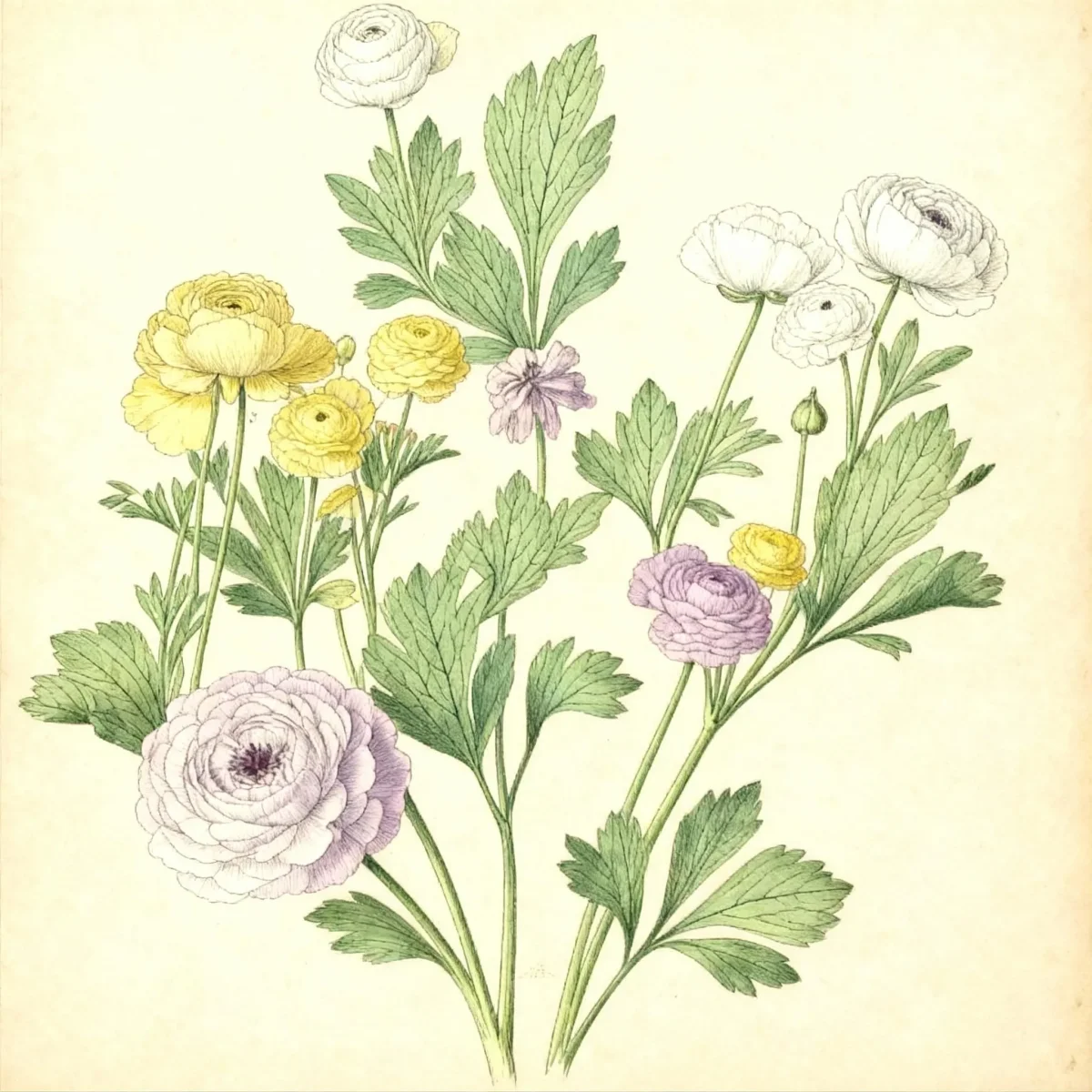
The Ranunculus asiaticus, widely known as the Persian buttercup, brings spectacular color to the late spring garden. This tuberous-rooted gem offers vibrant, cup-shaped, poppy-like flowers, or densely packed peony-like blooms in modern cultivars, making it highly desirable for cutting gardens and container displays. While technically hardy only in warmer climates, its relatively low cost often leads gardeners to treat the Ranunculus asiaticus as a striking annual.
Native to a wide swath encompassing North Africa, southwestern Asia, and Southern Europe, the Persian buttercup thrives when provided with cool spring weather and excellent sunlight. It requires consistent moisture but absolutely demands well-drained soil to prevent the sensitive tubers from rotting. These striking flowers emerge typically from May into June, lending a sophisticated look to borders before the intense heat of summer arrives.
Gardeners must manage expectations regarding its survival in hotter climates, as the plant enters dormancy quickly when temperatures consistently climb toward 90°F. Success hinges on managing the soil drainage and timing the planting correctly to maximize the bloom period of this beautiful bulb known specifically as Ranunculus asiaticus.
Fast Facts
- Plant Family: Ranunculaceae
- Plant Type: Bulb
- Native Range: Northern Africa, southwestern Asia, southern Europe
- Hardiness Zones: USDA Zones 8-10
- Size at Maturity:
- Height: 1-2 ft
- Spread: 1-2 ft
- Bloom Time: May to June
- Bloom Description: Red, pink, purple, yellow or white
- Sun Exposure: Full sun
- Water Needs: Medium
- Maintenance Level: Medium
How to Grow
Planting Ranunculus asiaticus requires attention to timing, especially outside of its core hardiness range. Where they are not winter-hardy (north of USDA Zone 8), plant the tubers in the spring, several weeks before your last anticipated frost date. Ensure tubers are set 2 inches deep with the root claws pointing downward, spaced about 6 to 8 inches apart in a location receiving full sun.
The prerequisite for success, especially for the Persian buttercup, is excellent soil drainage. These plants perform poorly in heavy, unamended clay soils that retain too much moisture. Water regularly to maintain medium soil moisture, but never allow the soil to become soggy, particularly as the plants approach dormancy. In regions like St. Louis, starting tubers indoors and transplanting in mid to late April helps ensure robust early flowering before extreme summer heat sets in.
Deadheading spent blossoms is crucial for extending the overall bloom period. As temperatures rise and the flowering season ends, the foliage will begin to yellow, signaling dormancy. At this point, unique to tuberous roots like those found in the Persian buttercup, you should cease watering, allow them to dry slightly, then carefully dig them up. Clean off the tops, dry the tubers completely, and store them layered in a dry medium in a cool environment until the following spring.
Landscape Uses
The vibrant colors and varied flower forms make the Persian buttercup an excellent vertical accent in mixed plantings. They are perfectly suited for traditional garden beds where their height (1–2 ft) allows them to stand above lower-growing annuals or perennials. Their strong stems also make them invaluable for creating stunning, long-lasting arrangements when used for cut flowers.
Consider mass plantings in borders to create blocks of saturated color during the late spring transition period. Alternatively, growing Ranunculus asiaticus tuberous roots in containers offers portability, allowing you to move them to prime viewing spots. While this method simplifies managing drainage, remember that successful winter storage of roots grown in pots remains challenging.
Standout Features
Flower Qualities
- Showy
Noteworthy Characteristics
Ranunculus asiaticus, commonly called Persian buttercup, is a tuberous-rooted plant that blooms in late spring to early summer in the St. Louis area. It features cup-shaped, poppy-like flowers (to 2” diameter) in red, pink, purple, yellow and white with distinctive purple-black anthers on stems typically growing 12-24” tall. Hybrids such as the popular Tecolote strain produce fully double, peony-like flowers (to 4” diameter) in a broader range of colors which also includes pastels and bicolored blooms.
Tolerances
Potential Problems
A significant hurdle for gardeners growing Ranunculus asiaticus outside of mild climates is managing the tuberous roots. Root rot is a common failure point, occurring particularly in wet, poorly drained soils where water pools. Furthermore, if high summer temperatures typical of May and June arrive early, the plants may cease flowering and enter summer dormancy prematurely.
To minimize storage difficulties, many gardeners opt to treat the Persian buttercup simply as a high-impact annual, discarding the roots after they yellow. If attempting to store them, ensure they are thoroughly dried after the foliage dies back, then carefully pack them in dry material like peat moss or vermiculite and keep them cool throughout winter to prevent desiccation or rot.
Frequently Asked Questions
What hardiness zones is Persian buttercup suitable for?
Ranunculus asiaticus is hardy in USDA Zones 8 through 10. For areas colder than Zone 8, it must be grown as an annual or the tubers must be carefully dug, dried, and stored indoors over winter.
How large does Persian buttercup grow?
This plant typically reaches a height between 1 and 2 feet, with a comparable spread of 1 to 2 feet at maturity.
What sun exposure does Ranunculus asiaticus need?
The Persian buttercup requires full sun to achieve its best performance and most abundant flowering.
Conclusion
The Ranunculus asiaticus provides immediate, high-impact floral rewards well-suited for cutting and display beds during the cool transition into summer. While its successful long-term overwintering requires specific care due to its tuberous nature, growing the Persian buttercup, even as an annual, is justified by the superb quality of its blooms. Before planting, confirm your local zone compatibility or plan your spring planting time to maximize bloom duration.
Container Growing
Growing the Persian buttercup in containers is an excellent solution for gardeners struggling with heavy native soils, as it allows complete control over the growing medium. Use a high-quality, light potting mix amended generously with grit or perlite to guarantee the essential sharp drainage required by these tuberous roots. Ensure the containers are deep enough to accommodate the 2-inch planting depth and provide ample space for the developing root mass.
Maintaining consistent, medium moisture levels in pots can be easier than in garden beds, though containerized plants often dry out faster on hot sunny days. This method is particularly useful in borderline Zone 8 gardens, as you can easily lift the entire container and move it to a cooler, partially shaded spot if excessive heat threatens to force premature dormancy.
Companion Planting
Since Ranunculus asiaticus demands full sun and excellent drainage, choose companions that share similar, less demanding cultural needs. Low-growing, drought-tolerant, sun-loving annuals make excellent edging plants that will not compete heavily for nutrients later in the season. Consider pairing the bold colors of the Persian buttercup with softer textures like creeping thyme or low-mounding Alyssum.
To ensure the Ranunculus asiaticus looks attractive even after it begins its summer dormancy, plant companions that take over the display later. Plants that appreciate similar spring moisture but can handle summer heat, like certain varieties of Coreopsis or Gaillardia, can be set toward the back of the border to fill in the space left when the ranunculus foliage declines.