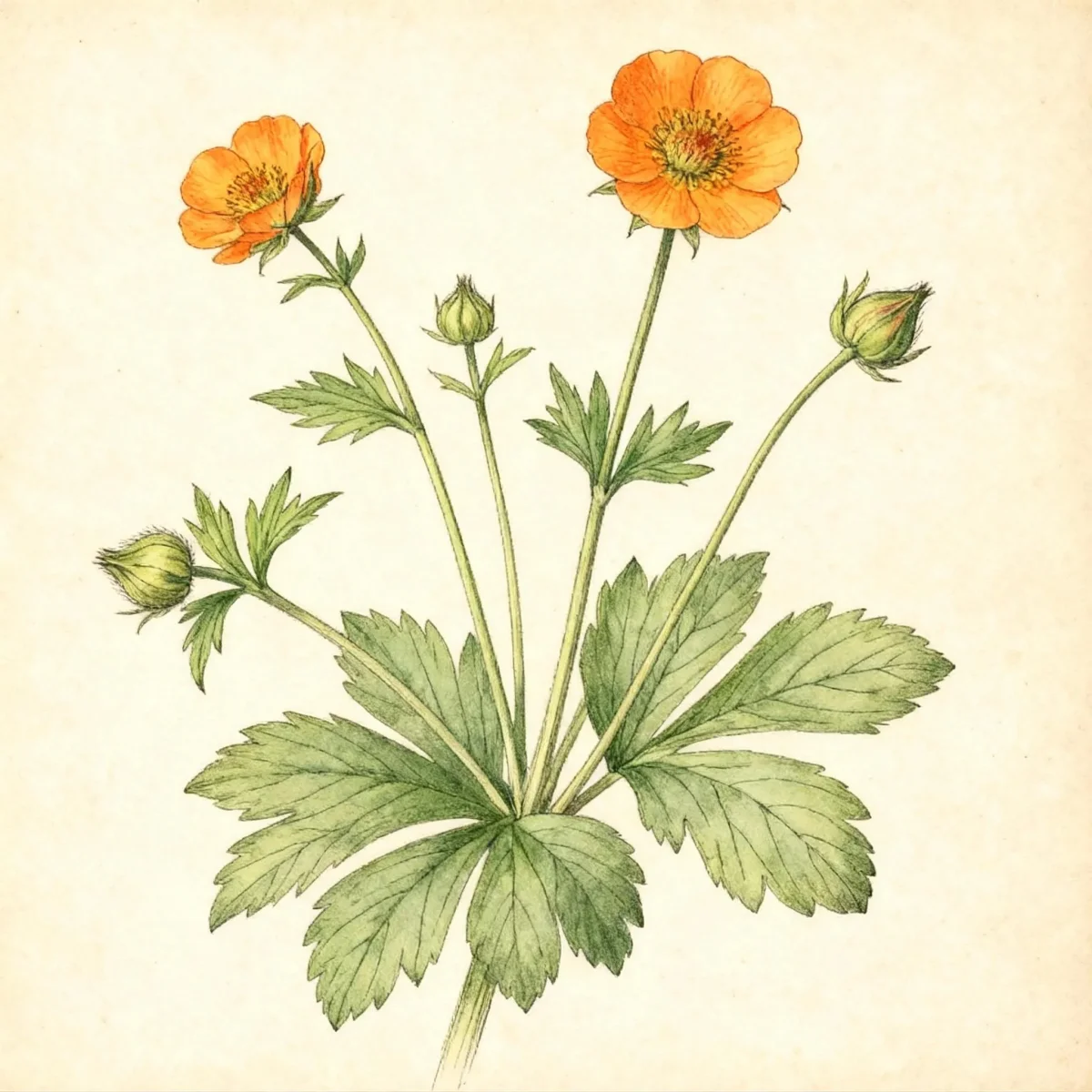
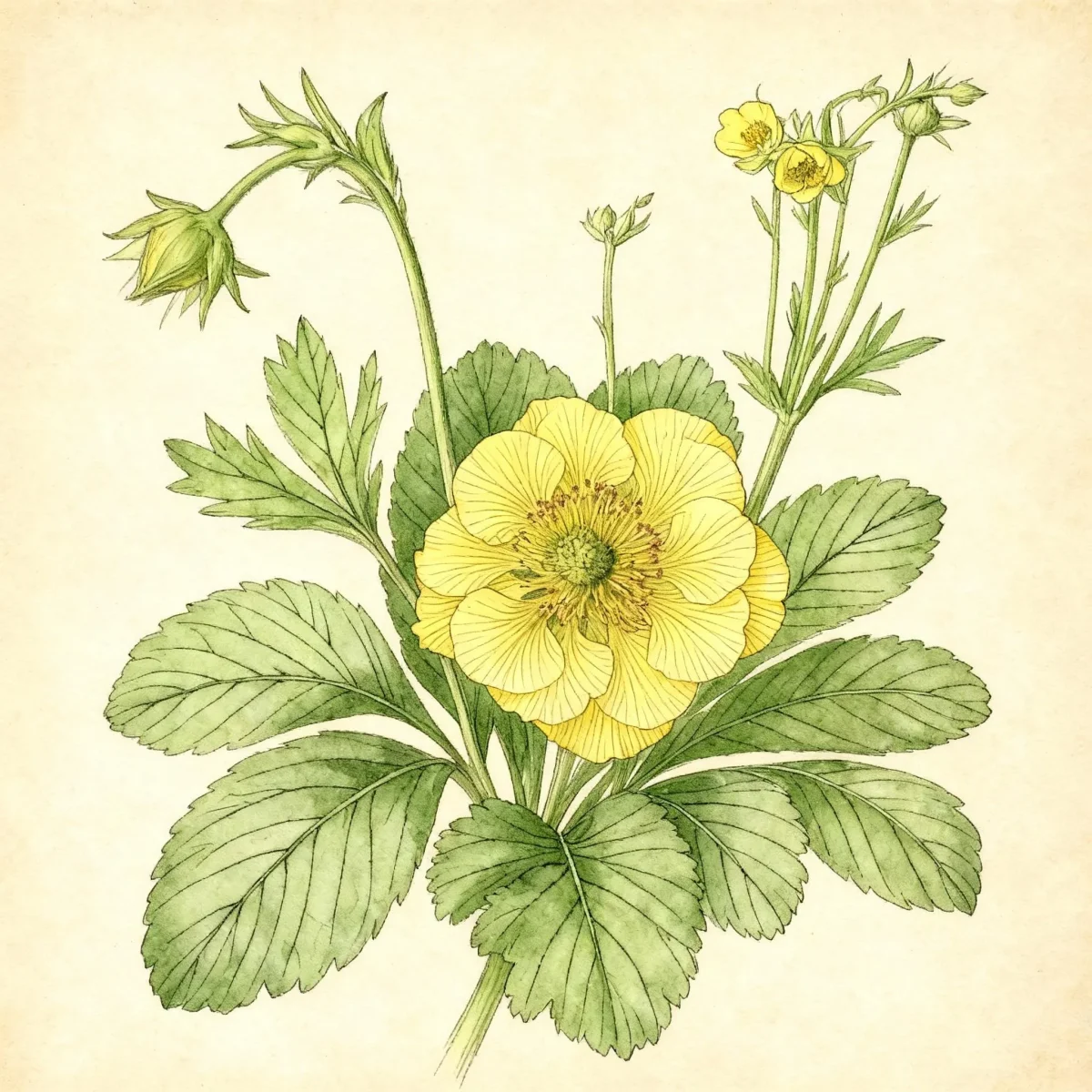
Avens (Geum coccineum)
Discover Avens (Geum coccineum), a low-maintenance perennial boasting fiery red-orange blooms from May to July.
Scroll down to discover growing tips, care requirements, companion plants, and more
Complete Plant Information
Overview
The Avens, scientifically known as Geum coccineum, offers reliable color for the perennial border starting in late spring. This herbaceous perennial is highly valued for its low maintenance needs and its charismatic, fiery red-orange blooms that appear atop wiry stems. Its dense basal foliage mound serves as an attractive green carpet throughout the growing season.
Geum coccineum thrives best in cooler summer climates, where it can maintain its vigor. Gardeners appreciate this plant for its ability to provide continuous summer interest, especially when promptly deadheaded to encourage reblooming. If you are looking for a sturdy specimen to anchor a cottage garden or rockery, this variety of Avens is an excellent choice provided your location falls within the recommended hardiness range.
This dependable Rosaceae family member forms neat clumps, rarely spreading aggressively, making it easy to integrate into structured garden designs. The combination of its vivid spring and early summer flowers and its evergreen foliage in milder zones ensures Geum coccineum remains a valuable component in the landscape scheme.
Fast Facts
- Plant Family: Rosaceae
- Plant Type: Herbaceous perennial
- Native Range: Southeastern Europe, Turkey
- Hardiness Zones: USDA Zones 5-7
- Size at Maturity:
- Height: 1-1.5 ft
- Spread: 0.75-1 ft
- Bloom Time: May to July
- Bloom Description: Red-orange
- Sun Exposure: Full sun to part shade
- Water Needs: Medium
- Maintenance Level: Low
How to Grow
Plant Geum coccineum in the spring or fall into medium moisture, well-drained soils. While it tolerates a range of conditions, it performs optimally in fertile soils. Aim for a location that receives full sun, though some afternoon shade is beneficial, particularly in hot summer climates like St. Louis, where the heat can stress the plant noted as potentially struggling south of Zone 7.
Water needs are medium; ensure the soil remains consistently moist, especially during dry spells. Avoid letting the area become waterlogged, as wet, poorly drained soils in winter are fatal to Avens. Maintenance is generally low; however, prompt deadheading of spent flowers will encourage sporadic rebloom throughout the remainder of the summer, particularly in cooler northern regions.
When dividing plants to maintain vigor, the best time is in the spring. This perennial offers the bonus of evergreen foliage during the winter months in its southern hardiness range. Consider leaving some late-setting flowers intact solely to enjoy the development of their curious, fluffy seed heads, which add textural interest.
Landscape Uses
The structure and color of Geum coccineum make it highly versatile in ornamental plantings. It excels when massed together along borders, offering a solid block of vibrant color that contrasts beautifully with finer textured foliage plants. Its modest height—typically 1 to 1.5 feet—ensures it doesn’t obscure shorter spring bloomers planted in front of it.
For a classic cottage garden aesthetic, plant Avens alongside plants that share similar sun and moisture preferences, such as hardy Geraniums or Alchemilla mollis (Lady’s Mantle). These companions help create a lush, layered look, ensuring continuous visual interest well past the main flush of Geum coccineum bloom.
Furthermore, the compact clumping habit of this perennial makes it an excellent choice for rock gardens where drainage is naturally good. The foliage also serves functionally as an attractive ground cover once the most prominent flowering period concludes.
Standout Features
Flower Qualities
- Showy
Noteworthy Characteristics
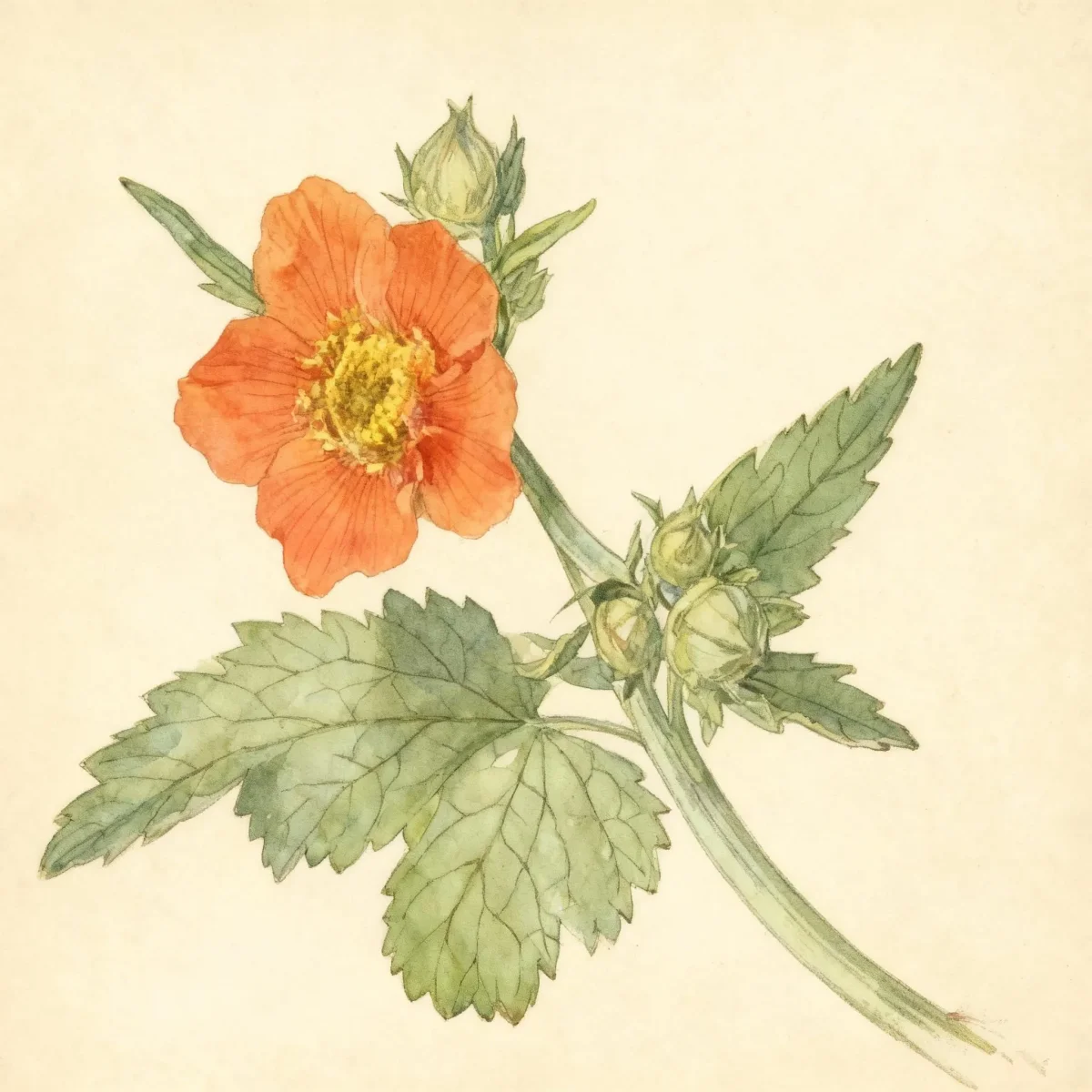
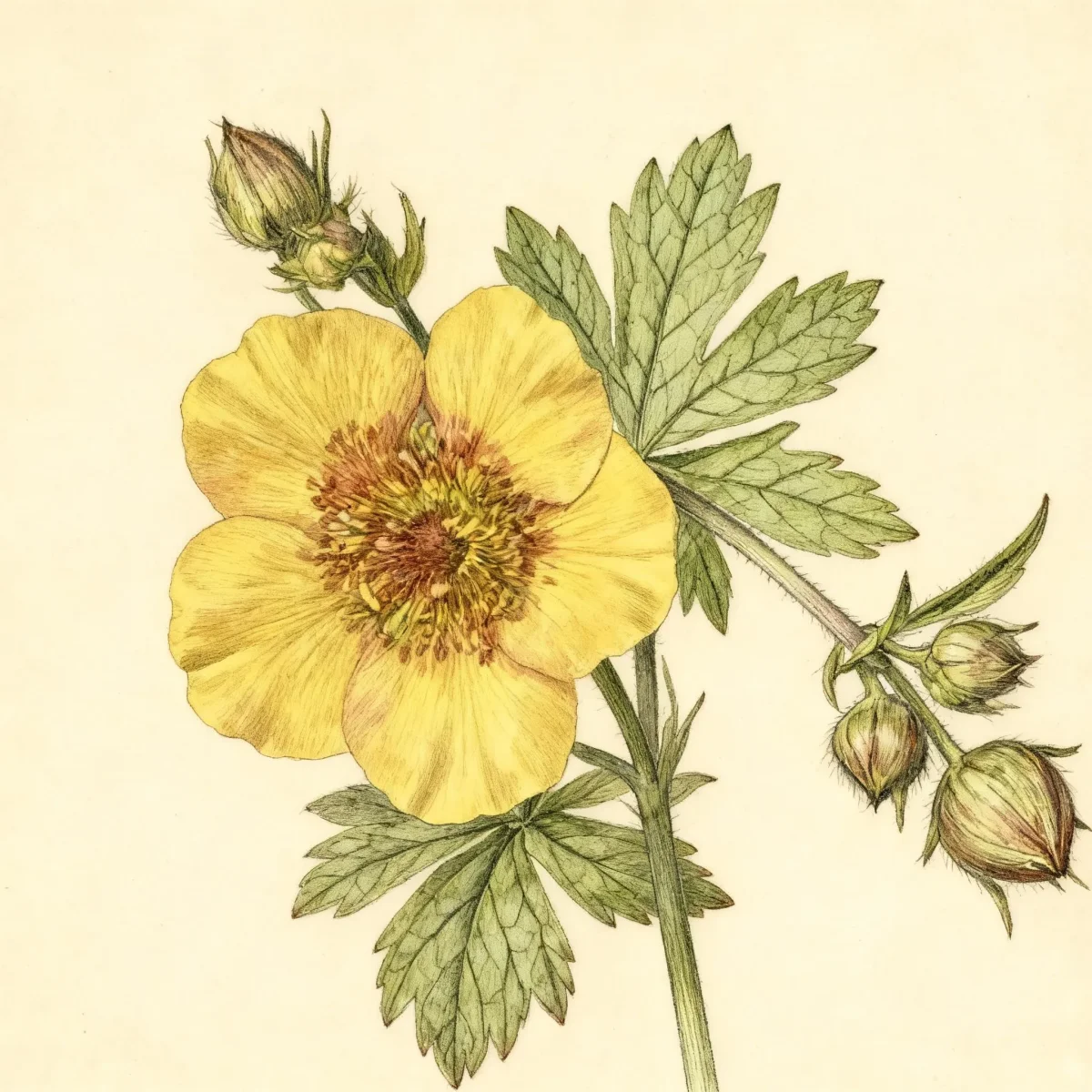
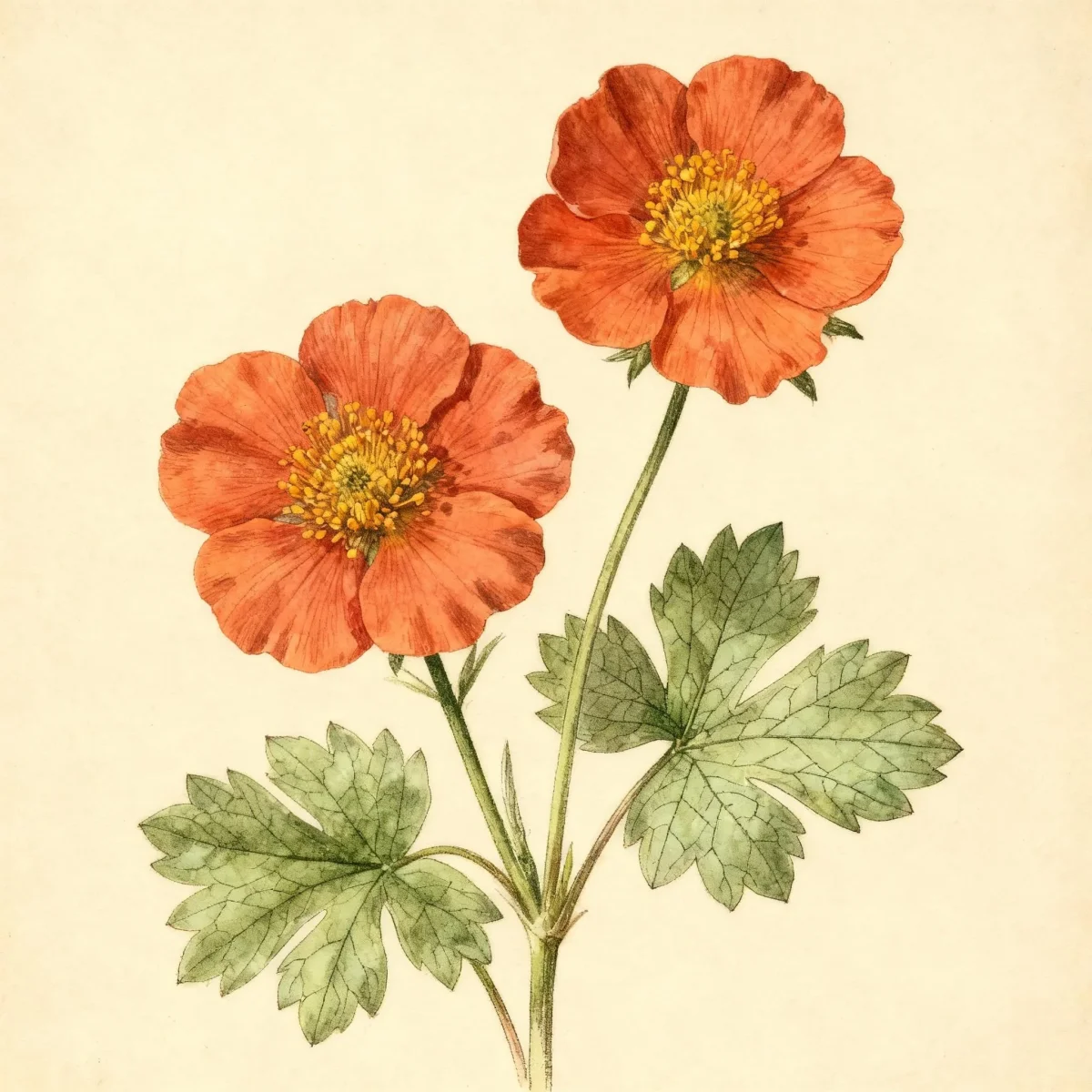
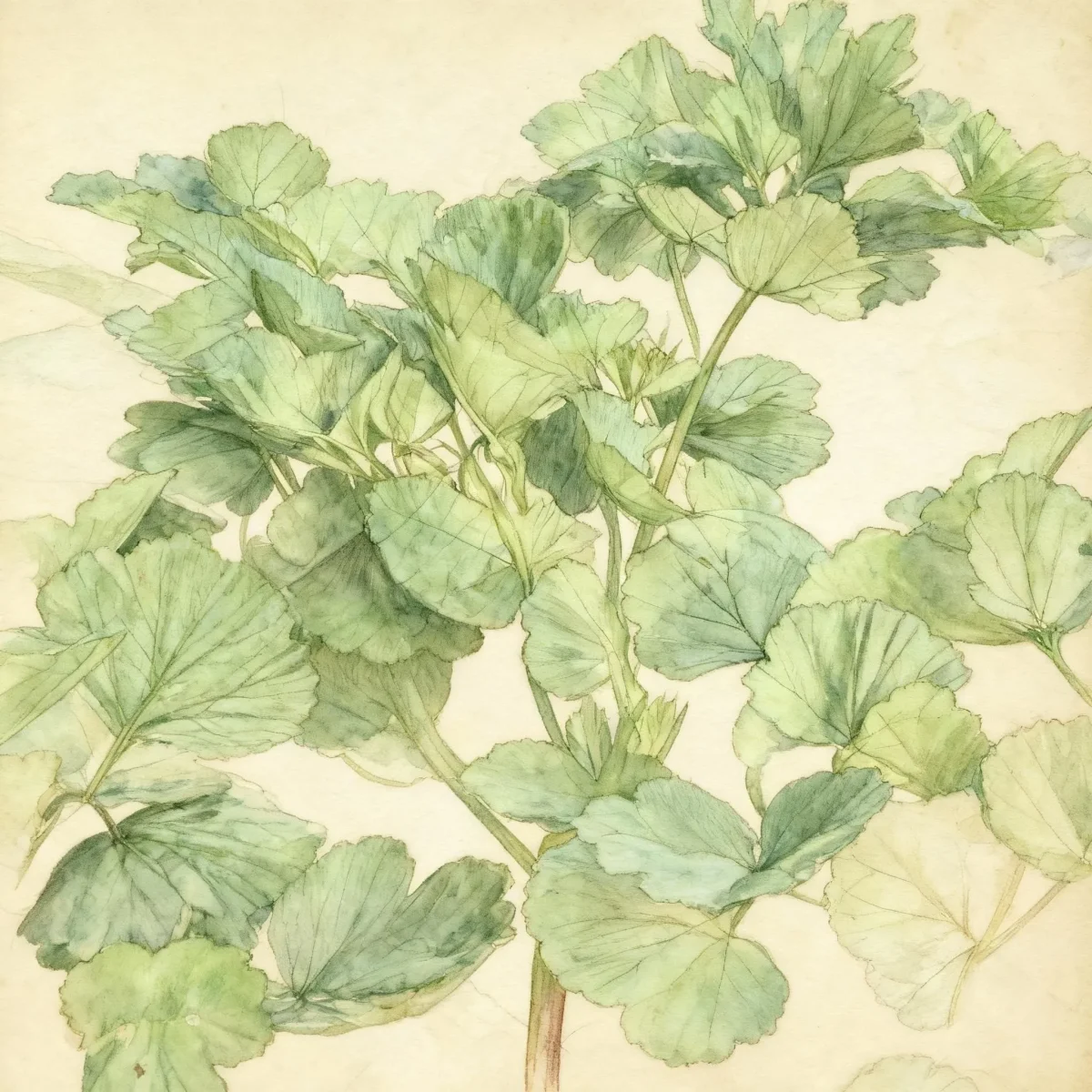
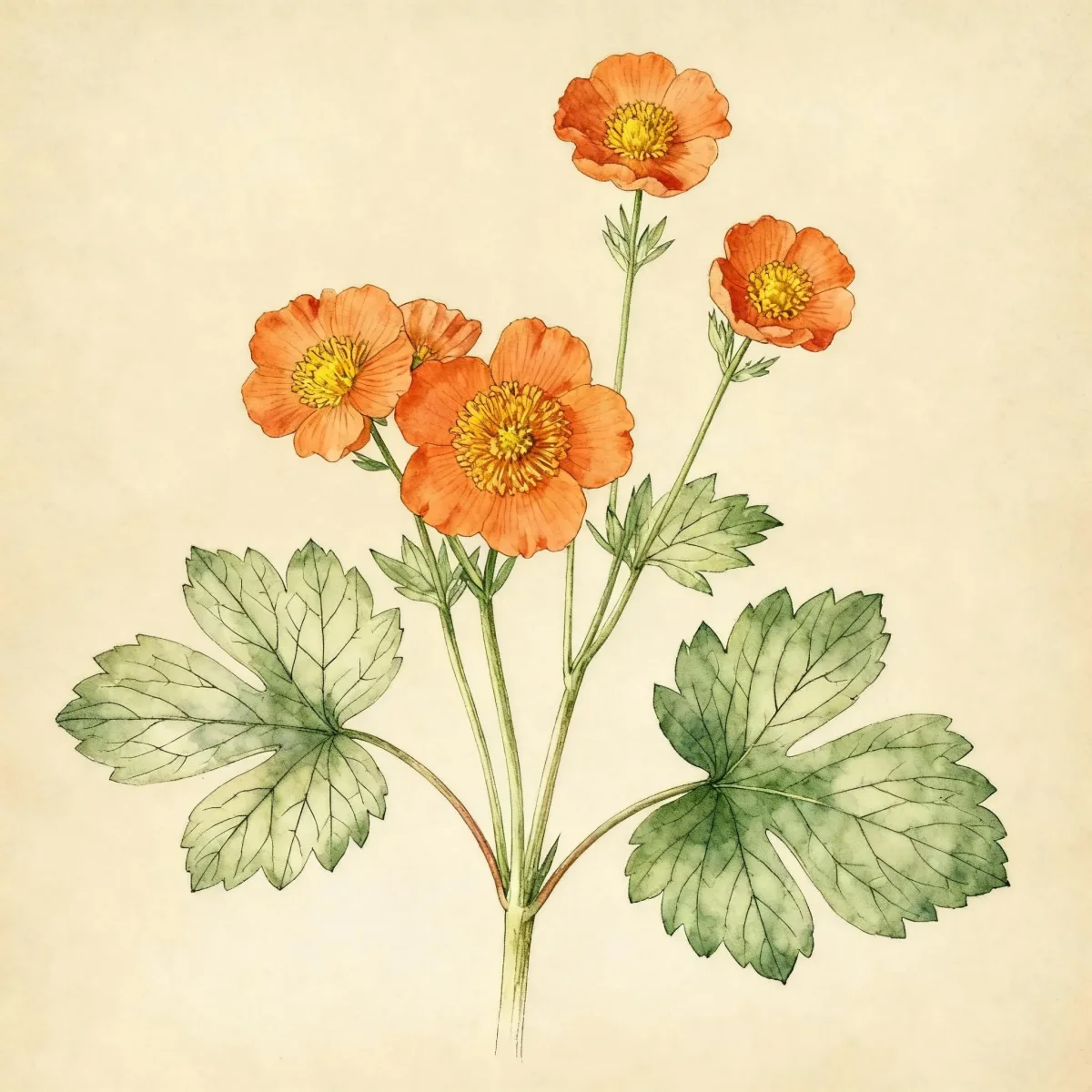
Geum coccineum, sometimes commonly called avens, is a clump-forming perennial which typically forms a basal foliage mound (to 6” high) of irregularly-lobed, hairy, 5-7 foliolate, medium green leaves with very large terminal leaflets. In late spring, erect, wiry, branching flowering stems rise above the foliage mound to 9-18” high carrying cymes of 5-petaled, brick red to red-orange flowers (to 1.5” diameter) with center clumps of yellow stamens. Primary bloom occurs from May to July. With prompt deadheading, sporadic rebloom may occur throughout the summer, particularly in northern areas where summers are cool. Flowers are followed by fluffy seed heads.
Tolerances
Potential Problems
Generally, Geum coccineum is quite robust, reporting no serious insect or disease problems under ideal conditions. The primary concern revolves around environmental stress rather than specific pests. Gardeners in hot, humid locales should anticipate shorter plant lifespans or poor performance during peak summer heat. It may also struggle or prove short-lived when situated in heavy clay soils that retain excessive moisture, especially during winter dormancy. Ensuring sharp drainage is the best preventive measure against these cultural stresses.
Frequently Asked Questions
What hardiness zones is Avens suitable for?
Geum coccineum is reliably hardy throughout USDA Zones 5 through 7. Ensure your planting site does not push the upper limits of this range, as the plant struggles with intense summer heat and humidity.
How large does Avens grow?
This perennial typically reaches heights between 1 and 1.5 feet tall, with a corresponding spread of 0.75 to 1 foot, forming a neat, basal mound of foliage.
When does Geum coccineum bloom?
The main blooming period for Geum coccineum is from May through July, featuring attractive red-orange flowers. Deadheading can sometimes prompt additional, sporadic blooms later in the season.
Conclusion
The Geum coccineum offers gardeners reliable, low-maintenance color with its characteristic red-orange display spanning late spring into midsummer. Its attractive foliage and adaptability to partial shade make this Avens a valuable addition to many garden settings. Before planting, confirm your local USDA Hardiness Zone falls between 5 and 7 to ensure the long-term success of this wonderful perennial.
Companion Planting
Selecting companions for Geum coccineum should focus on plants that share its preference for medium moisture and well-drained soils, while also harmonizing aesthetically. Excellent partners include spring-blooming bulbs that finish shortly before the Avens peaks, allowing the foliage to take over seamlessly. Consider low-growing Campanula varieties or Aster for textural contrast when the Geum coccineum flowers fade. The hairy, lobed leaves of this plant contrast nicely with the broad, smooth leaves of Hosta varieties grown in partial shade.
Propagation Tips
The most straightforward method for propagating healthy Geum coccineum clumps is by division, which is best performed in the spring before the major flush of new growth begins. Gently lift the entire clump out of the soil using a garden fork, taking care not to damage the roots excessively. Separate the clump into smaller sections, ensuring each new division has a healthy set of roots and adequate crown tissue. Replant these divisions immediately into prepared, moist soil at the same depth they previously occupied. This horticultural practice not only yields new plants but also rejuvenates the mother plant, maintaining robust flowering performance year after year.