European mountain ash (Sorbus aucuparia)
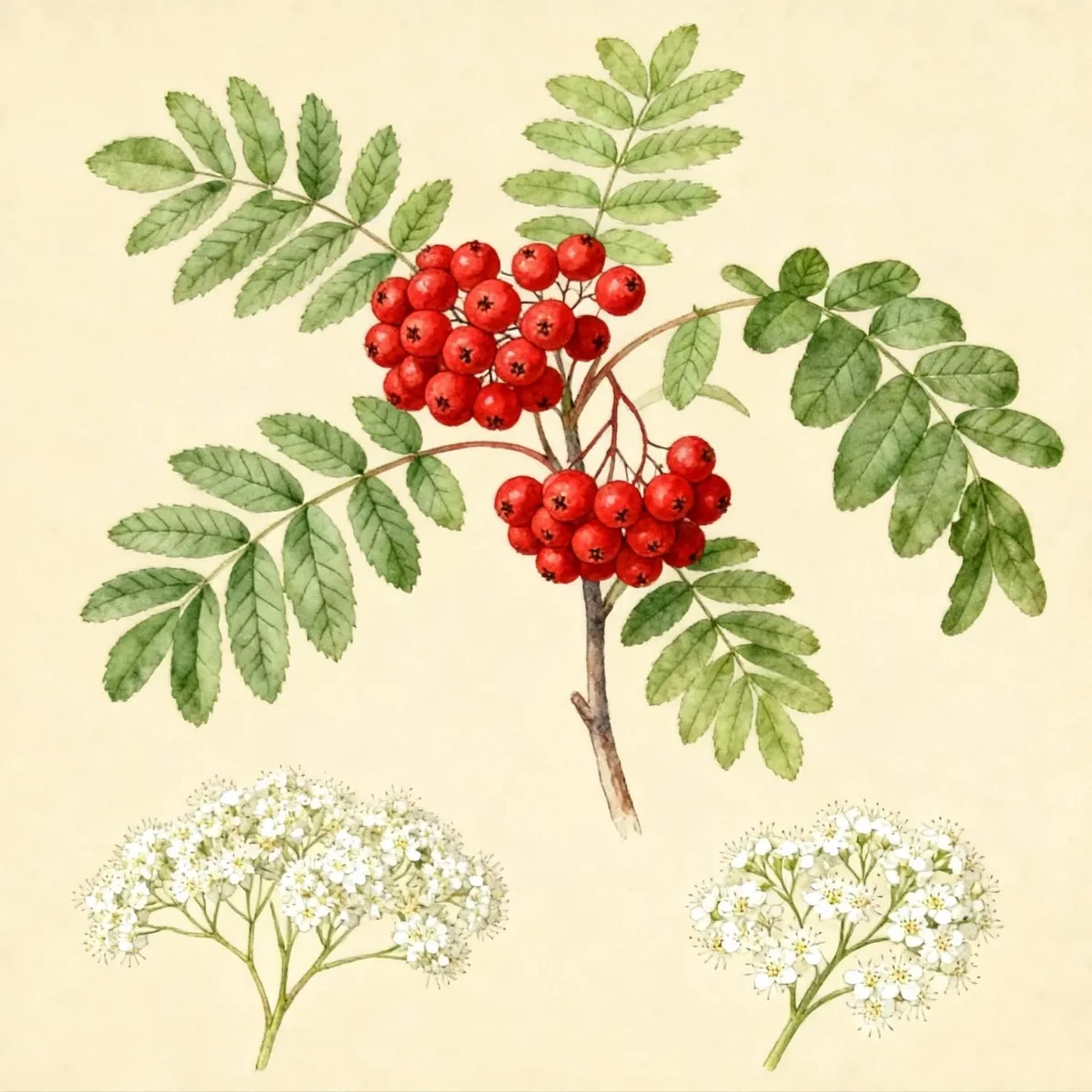
The European mountain ash (Sorbus aucuparia) is a striking deciduous tree prized for its bright orange-red fall fruit clusters.
Scroll down to discover growing tips, care requirements, companion plants, and more
Complete Plant Information
Overview
The European mountain ash, scientifically known as Sorbus aucuparia, brings brilliant seasonal interest to the landscape, especially through its vibrant clusters of fruit. This medium-sized, deciduous tree is highly valued in cooler climates for its ornamental appeal throughout summer and fall. As a member of the rose family, it offers delicate spring flowers before transitioning to its famous berry-like drupes.
Sorbus aucuparia establishes itself best in northern regions, providing structure and color even as temperatures drop. It is primarily celebrated for its compound foliage, which turns yellow to reddish-purple, complementing the persistent clusters of orange-red fruit that mature in late summer. While its common name suggests relation to true ashes, this distinction is important as Mountain ash belongs to the Rosaceae family.
Gardeners should select a location that accommodates its moderate size potential of 20-40 feet tall, ensuring adequate space for its somewhat narrow, upright-oval crown. The visual impact of the European mountain ash provides excellent focal points and seasonal markers in the garden design, provided local heat and humidity are manageable.
Fast Facts
- Plant Family: Rosaceae
- Plant Type: Tree
- Native Range: Asia, Europe
- Hardiness Zones: USDA Zones 3-6
- Size at Maturity:
- Height: 20-40 ft
- Spread: 8-20 ft
- Bloom Time: May
- Bloom Description: White
- Sun Exposure: Full sun
- Water Needs: Medium
- Maintenance Level: Medium
How to Grow
Plant the European mountain ash in the early spring or fall, allowing the roots time to establish before summer heat arrives. Success hinges upon selecting the right location: Sorbus aucuparia thrives in moist, acidic, well-drained soils and demands full sun exposure for best flowering and fruiting. This species is strictly a tree of cool mountain climates; it dislikes hot, humid summers and typically performs poorly south of USDA Zones 5 or 6.
Once established, maintain medium water requirements, ensuring the soil does not dry out completely, especially during dry spells. Fertilization is usually unnecessary if the soil conditions are naturally suitable. Pruning should be kept minimal, focused mainly on removing dead, damaged, or crossing branches to maintain the tree’s natural, attractive shape.
Seasonal care focuses heavily on monitoring for specific issues common to this species. Inspect branches regularly after blooming for signs of bacterial fireblight, which manifests as scorched branch ends. Due to its susceptibility to various leaf spot diseases and pests, maintaining good air circulation around the canopy is crucial for the health of your Sorbus aucuparia.
Landscape Uses
The European mountain ash is best utilized as a specimen tree or a small shade provider in regions where the climate is appropriately cool. Its upright-oval shape makes it an excellent choice for framing entrances or providing vertical contrast in mixed borders. Furthermore, the brightly colored fruit clusters attract birds well into the winter months, boosting garden wildlife value.
This tree can function effectively as a street tree in northern urban settings, provided winter de-icing salts are used sparingly near the root zone. If planting near structures, remember that the mature spread ranges up to 20 feet wide, requiring foresight regarding foundation placement. Sorbus aucuparia contrasts beautifully when paired with broadleaf evergreens or darker-leafed deciduous shrubs that highlight its bright fall fruit.
Standout Features
Flower Qualities
- Showy
Fruit Qualities
- Showy
Noteworthy Characteristics
Sorbus aucuparia, commonly called European mountain ash, is native to Europe and Asia and is cultivated for its attractive compound foliage and vibrant fruit clusters. It grows as a small, deciduous tree, typically reaching 20 to 40 feet tall with a crown that eventually rounds with age. The small white flowers appear in May, succeeded by persistent, pendant clusters of orange-red drupes that provide significant late-season interest against the medium green leaves.
Tolerances
- Road salt (infrequently applied)
Potential Problems
Bacterial fireblight represents a serious threat, causing leaves to appear scorched, particularly at branch tips. Scab is another common issue that can lead to significant defoliation later in the season, making good airflow essential. Additionally, watch for cankers and crown gall, which are exacerbated when the tree is stressed by adverse growing conditions. Stressed European mountain ash trees are the primary target for insect borers, so consistent, appropriate cultural care is the best preventive measure.
Frequently Asked Questions
What hardiness zones is European mountain ash suitable for?
The European mountain ash (Sorbus aucuparia) is hardy across USDA Zones 3 through 6, making it an excellent choice for cooler northern gardens.
How large does the European mountain ash grow?
This ornamental tree typically reaches mature heights between 20 and 40 feet, with a corresponding spread between 8 and 20 feet.
What sun exposure does European mountain ash need?
For optimal health, flowering, and fruiting, the tree requires a location that receives full sun daily.
When does European mountain ash bloom?
The tree produces small, white flowers during the month of May.
Conclusion
The Sorbus aucuparia offers unmatched seasonal variety, transitioning from delicate white spring blooms to eye-catching fall color and persistent bright orange-red fruit. If your garden resides within USDA Zones 3-6, the European mountain ash is a worthwhile addition, provided you can meet its demands for excellent drainage and cooler summer conditions. Verify your microclimate suitability before planning your planting this fall or spring.
Wildlife Benefits
The vibrant fruit clusters of the European mountain ash are a critical food source for numerous bird species migrating or overwintering in northern locales. These berry-like drupes remain attractive long after most other summer fruits have faded, offering late-season sustenance. While the flowers themselves are small, they provide nectar and pollen for early-season insects, supporting the local food web.
Companion Planting Considerations
When selecting understory or nearby plantings for Sorbus aucuparia, prioritize plants that share its need for acidic and well-drained soil. Companion choices should also tolerate or prefer cooler northern climates, avoiding plants that require deep drought conditions. Consider pairing the tree with low-growing rhododendrons or azaleas if soil pH adjustment is managed, as they share similar cultural preferences and thrive in similar light exposure.