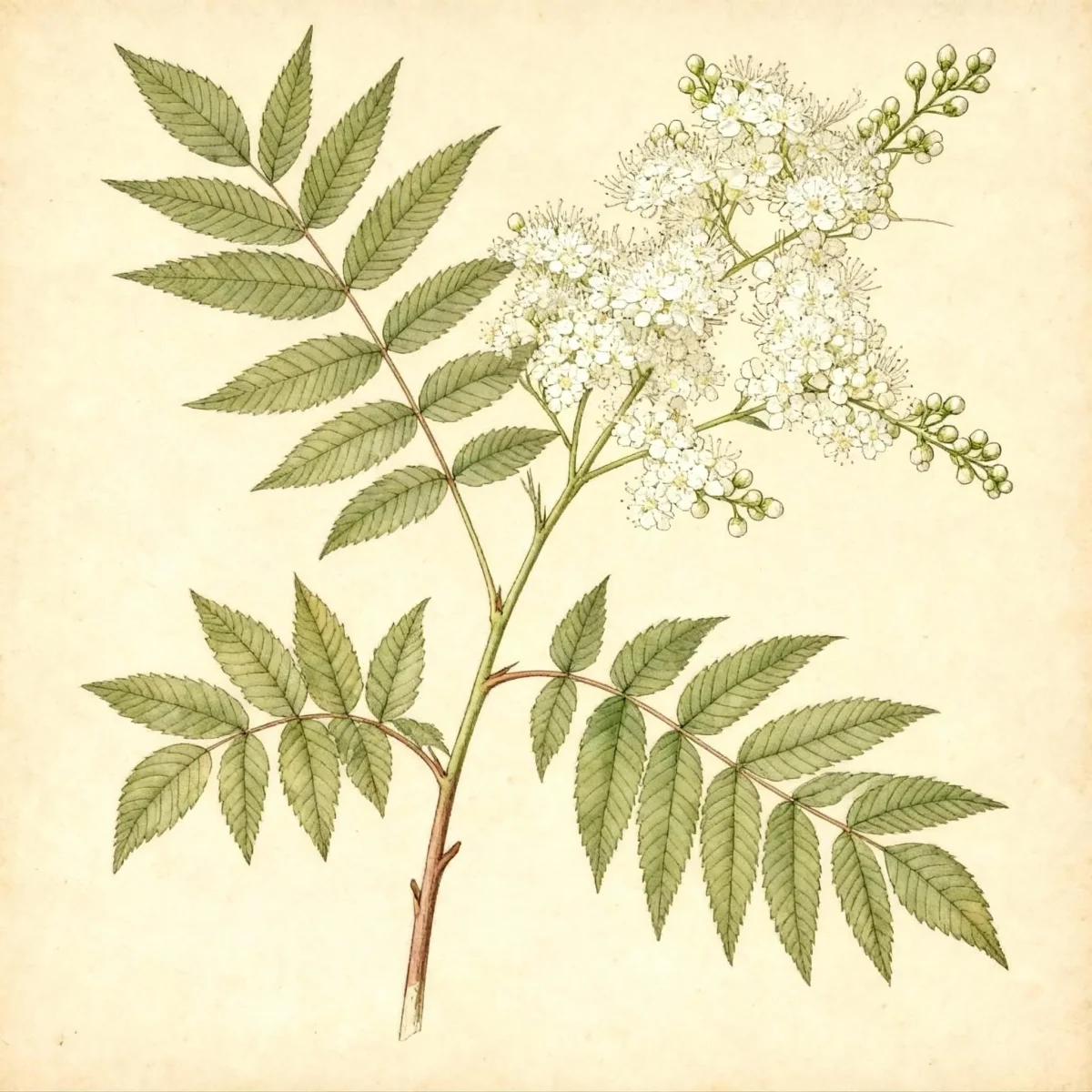
False spiraea (Sorbaria sorbifolia)
Sorbaria sorbifolia (False spiraea) is a tough, suckering shrub for massing, known for its white summer plumes and ash-like foliage.
Scroll down to discover growing tips, care requirements, companion plants, and more
Complete Plant Information
Overview
The False spiraea, scientifically known as Sorbaria sorbifolia, offers reliable texture and bloom, making it a valuable, albeit sometimes aggressive, addition to the landscape. This coarse, suckering deciduous shrub produces dense, terminal panicles of tiny white flowers in early summer, offering significant visual interest when many spring bloomers have faded. A defining characteristic of Sorbaria sorbifolia is its attractive, deep green, compound foliage, which bears a striking resemblance to that of mountain ash (Sorbus), providing texture contrast throughout the growing season.
Though it requires management to control its spread, the False spiraea excels in functional roles where robustness is required. It is a tenacious grower suitable for large areas, native to the challenging environments of Central and eastern Asia. Gardeners seeking a low-maintenance screen or an effective solution for stabilizing slopes should consider this tough specimen.
Fast Facts
- Plant Family: Rosaceae
- Plant Type: Deciduous shrub
- Native Range: Central and eastern Asia
- Hardiness Zones: USDA Zones 2-8
- Size at Maturity:
- Height: 5-10 ft
- Spread: 5-10 ft
- Bloom Time: June to July
- Bloom Description: White
- Sun Exposure: Full sun
- Water Needs: Medium
- Maintenance Level: Medium
How to Grow
Sorbaria sorbifolia thrives best when planted in average, organically rich soils that maintain medium moisture levels but remain well-drained. Locate the False spiraea in a position receiving full sun to ensure dense growth and optimal flowering display. Proper soil preparation, incorporating compost, will support the vigorous nature of this shrub.
Water needs are medium; establish deep watering during dry spells, especially for younger plants. Maintenance is generally considered medium due to its potential invasiveness. Gardeners must be diligent about removing root suckers promptly, especially if planted in looser soils, to prevent unwanted spread beyond the desired boundary.
Pruning of Sorbaria sorbifolia should be performed in late winter or early spring before new growth emerges. For rejuvenation, the entire plant can be cut close to the ground, which encourages a fresh flush of robust growth the following season. This ability to be cut back hard contributes to its low-maintenance appeal once its spread is contained.
Landscape Uses
The aggressive spreading habit of the False spiraea makes it an exceptional choice where mass planting is desirable. It is highly recommended for stabilizing banks and slopes to control erosion, fulfilling a key functional role in the landscape structure. Use screens of Sorbaria sorbifolia to quickly establish privacy or background definition in large shrub borders lacking other vertical elements.
Because it is so vigorous, avoid placing this shrub near delicate plantings that require similar moisture levels but cannot withstand its vigorous root competition. It serves well as a sturdy backdrop plant where its ash-like foliage can contrast with fine-textured perennials or smaller ornamental grasses placed in front.
Standout Features
Flower Qualities
- Showy
Noteworthy Characteristics
Sorbaria sorbifolia, called Ural false spirea, is a coarse, suckering, deciduous shrub which typically grows 5-8’ tall (less frequently to 10’) and as wide. Features tiny white flowers in dense, terminal, pyramidal panicles (to 10” long) in early summer. Compound, odd-pinnate, deep green foliage resembles that of mountain ash (Sorbus) to which it is related.
Tolerances
- Erosion
Potential Problems
This plant generally exhibits no serious insect or disease problems, which contributes to its easy landscape performance. The primary management concern for Sorbaria sorbifolia involves its tendency to spread aggressively by root suckers. This suckering is less invasive in heavy clay soils but can become problematic in looser, sandier soils. Consistent monitoring and removal of suckers are necessary to maintain defined borders.
Frequently Asked Questions
What hardiness zones is False spiraea suitable for?
Sorbaria sorbifolia is exceptionally cold-hardy, suitable for USDA Zones 2 through 8.
How large does False spiraea grow?
This shrub typically reaches a height and spread ranging between 5 to 10 feet at maturity.
What sun exposure does False spiraea need?
Sorbaria sorbifolia requires full sun exposure for best growth and flowering performance.
When does False spiraea bloom?
The plant produces its white flowers during the peak summer months, generally blooming from June to July.
Conclusion
The False spiraea offers gardeners significant texture, reliable white summer plumes, and phenomenal hardiness across a wide range of zones. While site selection demands consideration of its aggressive suckering nature, this controlled vigilance is a fair trade for the reliable structure provided by Sorbaria sorbifolia. Before planting, ensure you have adequate space or a plan for managing root spread to enjoy this tough landscape workhorse.
Companion Planting
When planting near Sorbaria sorbifolia, focus on companions that can tolerate its vigorous competition and similar moisture needs. Species that tolerate full sun and thrive in average to medium-moisture soil are ideal partners. Consider robust perennials such as Coneflowers (Echinacea), tall ornamental grasses like Switchgrass (Panicum virgatum), or hardy Astilbes, provided the area is kept consistently moist. These pairings allow the foliage of the False spiraea to serve as a stable, dense backdrop for more refined summer blooms.
Design Ideas
For large properties or informal plantings, utilize the height and spread of Sorbaria sorbifolia to create quick, dense visual screens. In more formal settings where containment is paramount, plant this shrub in large, underground root barriers to restrict rhizomatic spread effectively. Since the foliage is so similar to mountain ash, grouping it with actual Sorbus species can create an interesting textural dialogue, though cultural needs must still be carefully matched. Its tolerance for tough conditions also makes it suitable for naturalized areas or wildlife hedges.