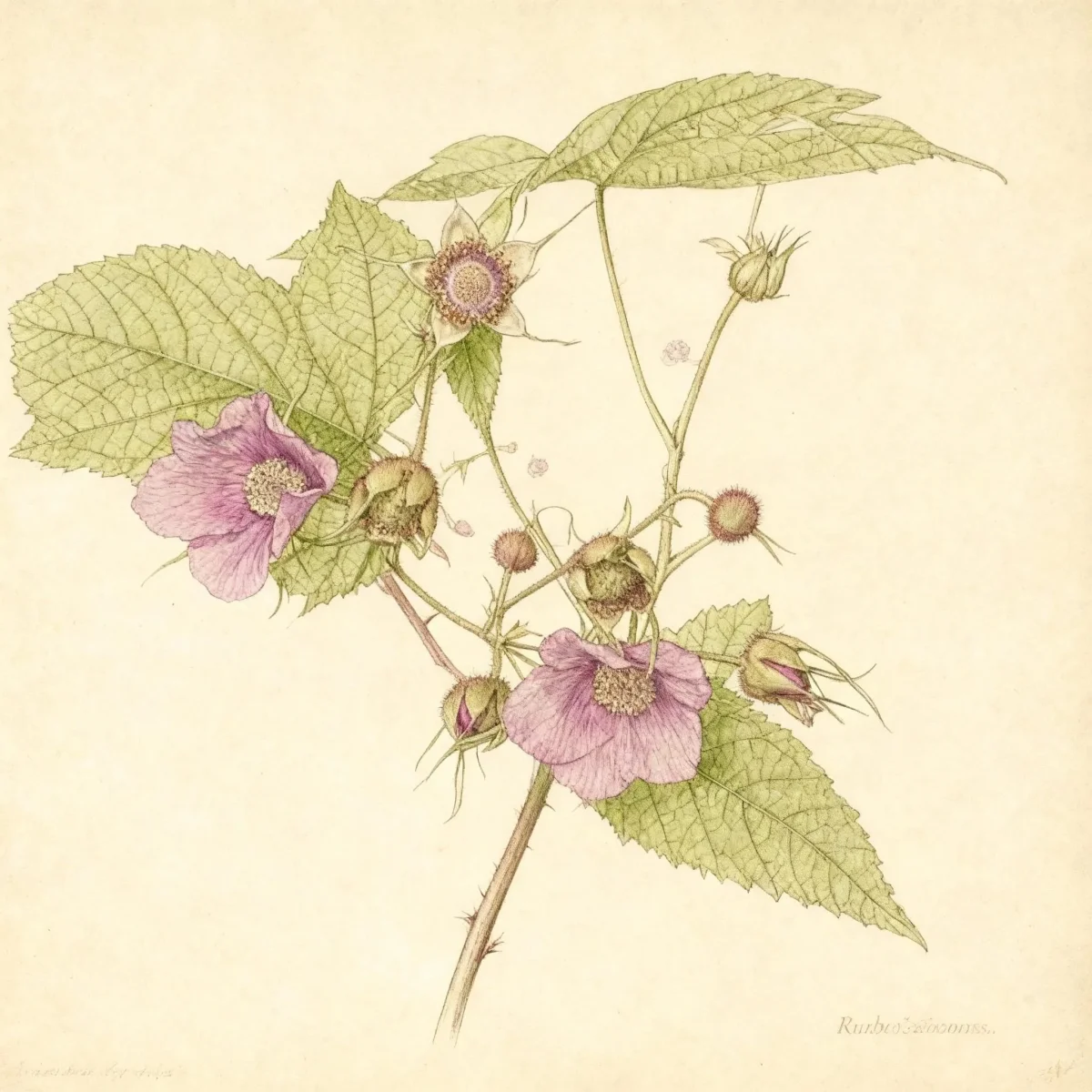
Purple-flowering raspberry (Rubus odoratus)
Discover Rubus odoratus, the Purple-flowering raspberry. This low-maintenance shrub yields fragrant flowers and edible fruit in Eastern North America.
Scroll down to discover growing tips, care requirements, companion plants, and more
Complete Plant Information
Overview
The Purple-flowering raspberry, Rubus odoratus, is a highly valuable native shrub cherished for its aesthetic contributions throughout the growing season. Unlike many brambles, this species is notable for having stems that are largely free of prickles, allowing for easier enjoyment of its striking features. Gardeners prize this deciduous shrub for its substantial, maple-like foliage and intensely fragrant flowers.
This plant originates from Eastern North America and offers reliable performance across a wide range of cold climates. Rubus odoratus typically matures between three and six feet tall, spreading out to form an attractive, coarse texture in the landscape. Its long bloom time, generally from June through August, ensures continuous visual interest alongside its edible, though somewhat dry, red fruits.
Establishing Rubus odoratus in a garden setting is straightforward due to its low maintenance profile and reasonable light requirements. It provides excellent texture and long-lasting color, making the Purple-flowering raspberry a versatile addition to naturalized settings or mixed shrub borders where its sweet-scented flowers can be appreciated.
Fast Facts
- Plant Family: Rosaceae
- Plant Type: Deciduous shrub
- Native Range: Eastern North America
- Hardiness Zones: USDA Zones 3-8
- Size at Maturity:
- Height: 3-6 ft
- Spread: 6-12 ft
- Bloom Time: June to August
- Bloom Description: Rose-Purple
- Sun Exposure: Full sun to part shade
- Water Needs: Medium
- Maintenance Level: Low
How to Grow
Planting the Purple-flowering raspberry is best done in the spring or fall to allow roots to establish before temperature extremes. Select a location that offers average soil conditions—it thrives in medium moisture and well-drained settings. Rubus odoratus performs well in full sun but has an excellent capacity for shade tolerance, offering flexibility in garden design.
Ongoing care for this species is minimal, fitting well into low-maintenance landscapes. Watering should be kept consistent, aiming for medium levels to mimic its native environment; deep watering during dry spells is appreciated. Since this is an ornamental raspberry, robust fertilizing is usually unnecessary unless soil fertility is poor.
The most important cultural practice for Rubus odoratus involves pruning. To manage its vigorous, suckering habit and encourage good air circulation, prune immediately after fruiting ceases. This prevents crowding on the canes and prepares the plant for optimal flowering the following season.
Landscape Uses
The Purple-flowering raspberry excels in settings where a natural, lush texture is desired. It is highly recommended for shade gardens, blending beautifully beneath taller trees where other flowering shrubs might struggle. Its ability to colonize via suckers makes it effective for stabilizing slopes or creating informal, protective shrub borders.
Consider using Rubus odoratus in native plant gardens to support local ecology while providing seasonal interest. Its coarse, maple-like leaves and rose-purple blooms offer a unique contrast against finer-textured ferns or hostas. While it spreads, its lack of serious prickles permits closer placement near pathways than traditional blackberries.
For a wild or naturalized area, the plant provides excellent ground coverage, forming a dense thicket over time. These areas require less intervention, allowing the Purple-flowering raspberry to fulfill its natural spreading potential, creating a robust screen or woodland edge effect.
Standout Features
Flower Qualities
- Showy
- Fragrant
Fruit Qualities
- Showy
- Edible
Noteworthy Characteristics
Rubus odoratus is a native of Eastern North America. It is a deciduous, coarse, suckering shrub with cane-like stems which typically grows 3-6’ tall and spreads 6-12’ wide. One of the best of the ornamental raspberries because of its rose-like, fragrant, 2” wide, rose-purple flowers which appear over a long summer bloom period and its palmate, 5-lobed, maple-like, medium green leaves (4-10” wide). This shrub has hairy stems but virtually no prickles. Flowers give way to 3/4” diameter, cup-shaped red fruits (raspberries) which are edible but somewhat dry, crumbly and unappetizing. Sometimes commonly called thimbleberry (though this common name is usually more appropriate for the similar but white-flowered Rubus parviflorus of the West). Genus name is the Latin name for brambles (blackberry and raspberry). Specific epithet means fragrant.
Tolerances
- Black Walnut
Potential Problems
This plant generally enjoys a reputation for having no serious insect or disease problems, which is a significant advantage. The main management challenge for Rubus odoratus is its aggressive, suckering habit. If left unchecked, this shrub can spread rapidly, colonizing areas quickly and becoming invasive in small garden beds.
To manage the spread, be diligent with pruning immediately following the fruiting period to control cane vigor. If containment is critical, consider planting the Purple-flowering raspberry near a physical barrier or root pruning the outer edges annually to restrict underground runners.
Frequently Asked Questions
What hardiness zones is Purple-flowering raspberry suitable for?
Rubus odoratus is remarkably resilient, suitable for garden planting across USDA Hardiness Zones 3 through 8.
How large does Purple-flowering raspberry grow?
This deciduous shrub typically reaches a height between 3 and 6 feet tall, with a corresponding spread ranging from 6 to 12 feet wide.
When does Purple-flowering raspberry bloom?
You can anticipate blooms from the Purple-flowering raspberry appearing consistently throughout the summer, specifically between June and August, showcasing lovely Rose-Purple flowers.
Conclusion
The Rubus odoratus offers gardeners a beautiful, low-maintenance native solution, distinguished by its fragrant flowers and unique foliage texture. As a tough, adaptable shrub tolerant of shade and competition from Black Walnut, it delivers significant visual appeal. Before planting, ensure you have adequate space for its 6-12 foot spread and plan your maintenance schedule around pruning immediately after fruiting.
Wildlife Benefits
As a native shrub from Eastern North America, Rubus odoratus provides valuable habitat and forage for local wildlife. The showy, fragrant flowers produced heavily throughout mid-summer are a significant nectar source for various pollinators, including bees and butterflies, occurring during a time when other summer blooms may be slowing down.
While the resulting red fruits are edible for humans, they are often consumed by birds and small mammals well before they dry out completely on the cane. Planting the Purple-flowering raspberry helps support biodiversity by offering food resources during the peak of summer activity.
Companion Planting
Due to its moderate light needs and medium water requirements, Rubus odoratus pairs well with other woodland edge or native shade-tolerant plants. Consider integrating it with large-leaved perennials like Hosta or Astilbe, which appreciate similar moisture levels and can complement the coarse texture of the raspberry foliage.
For a cohesive Eastern North American native section, consider planting companion species such as Oakleaf Hydrangea (Hydrangea quercifolia) or various native ferns like the Ostrich Fern (Matteuccia struthiopteris). These combinations create layers of texture and bloom that enhance the naturalized look.