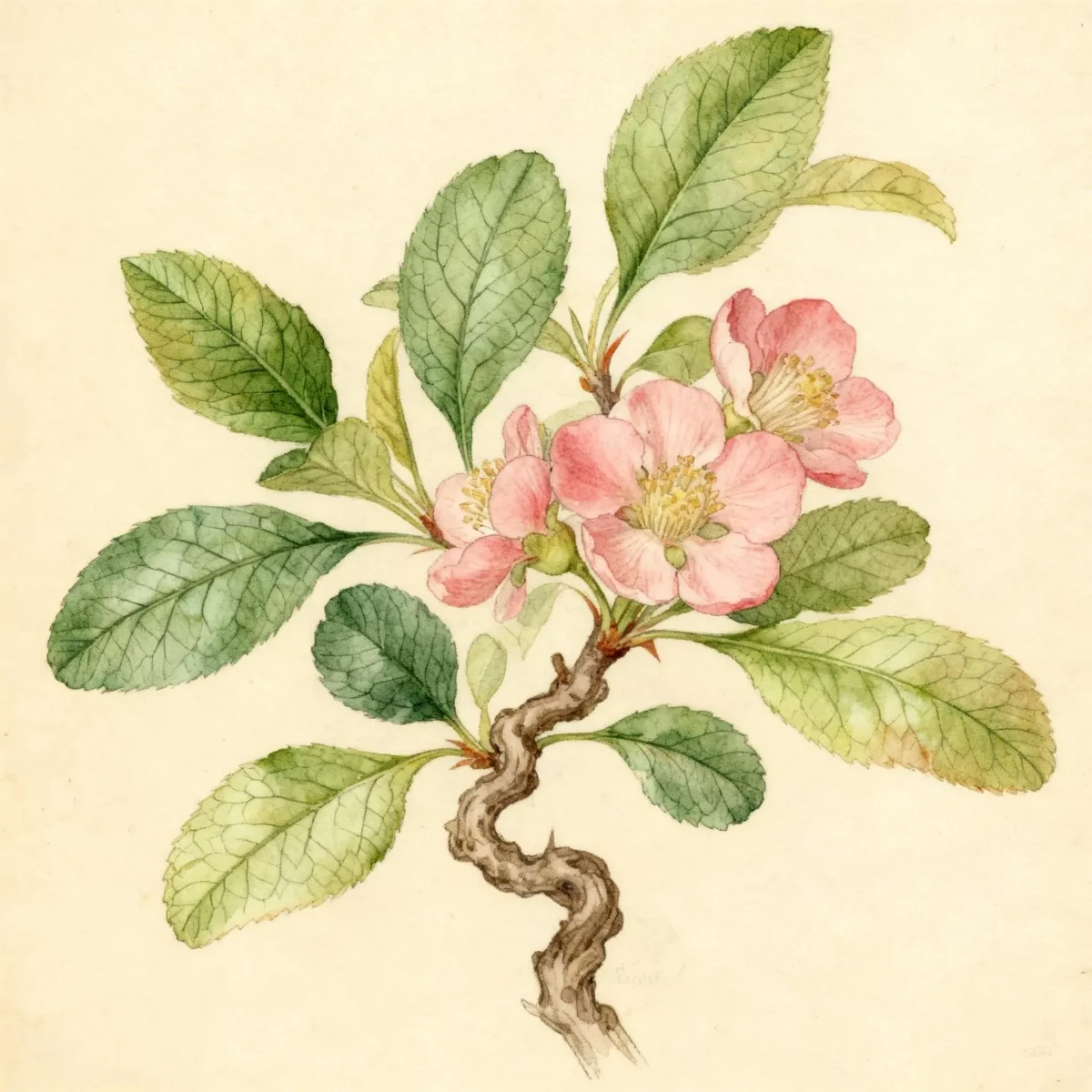
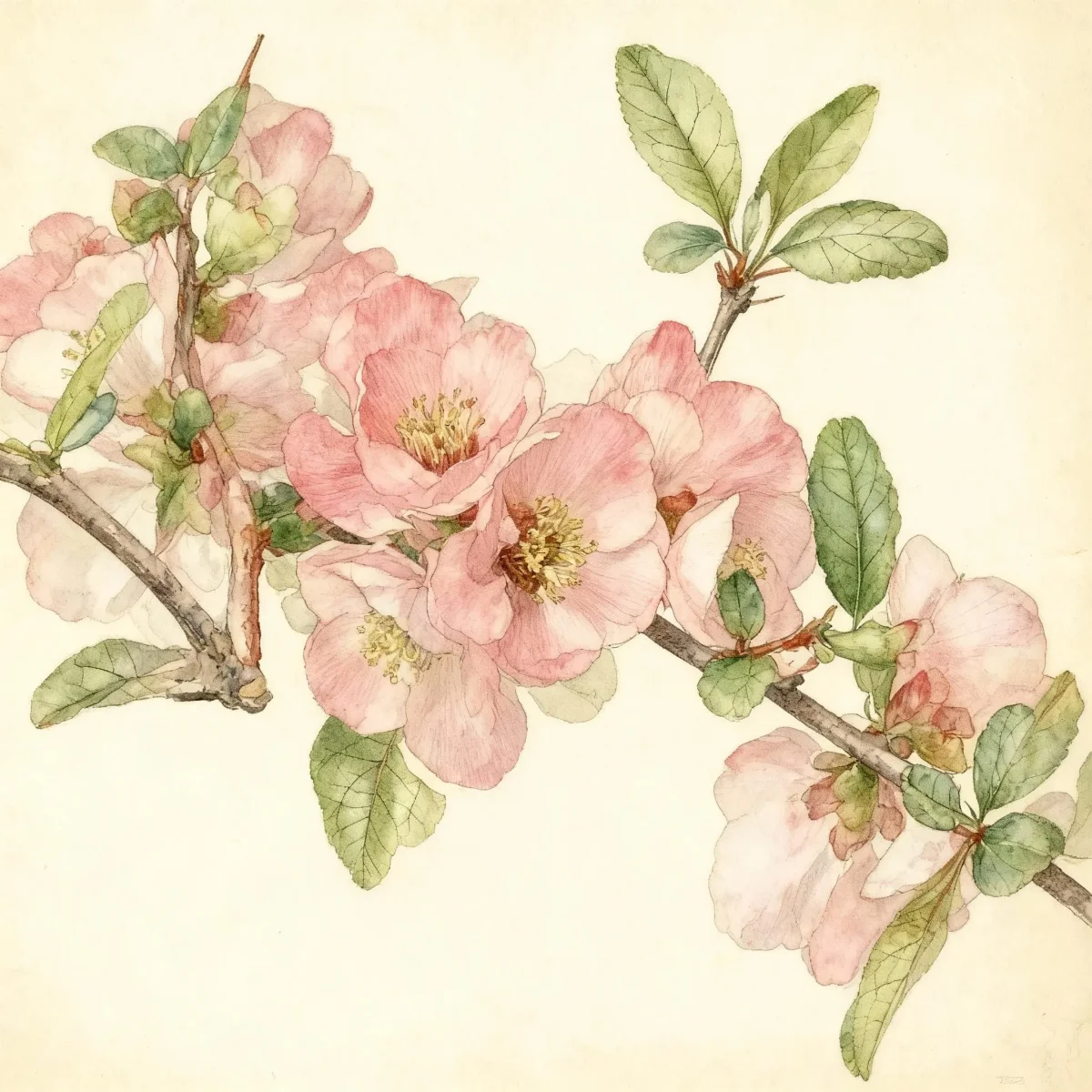
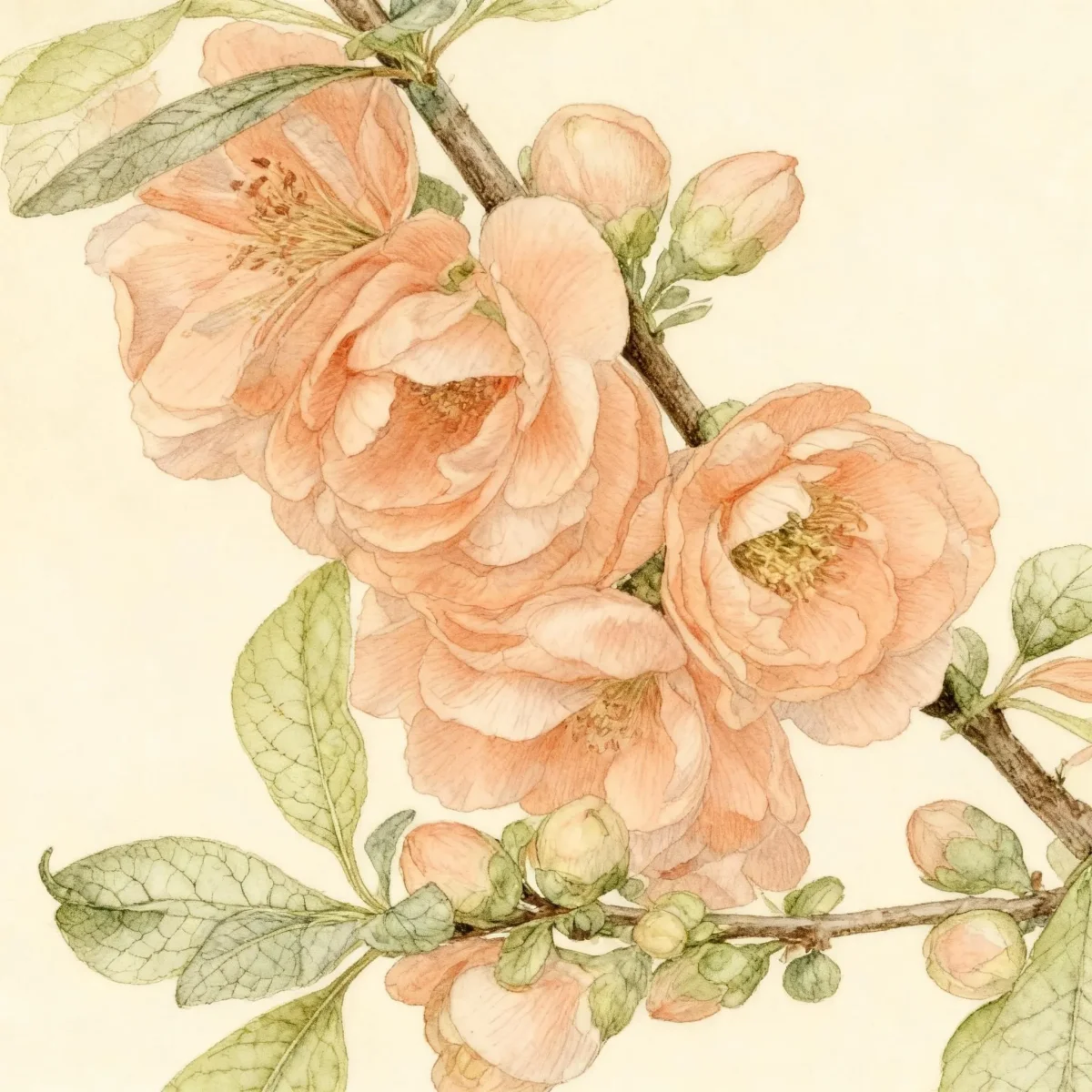
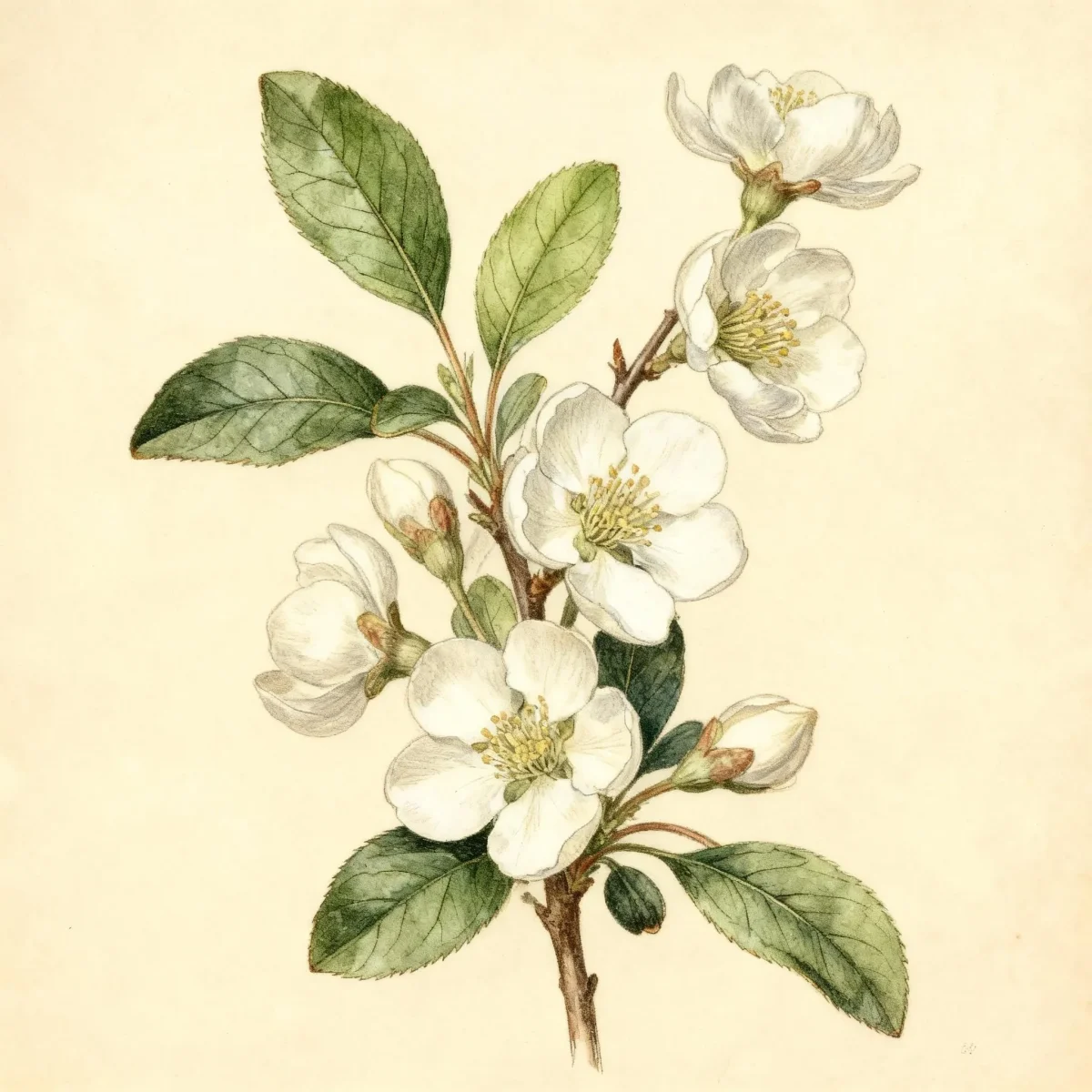
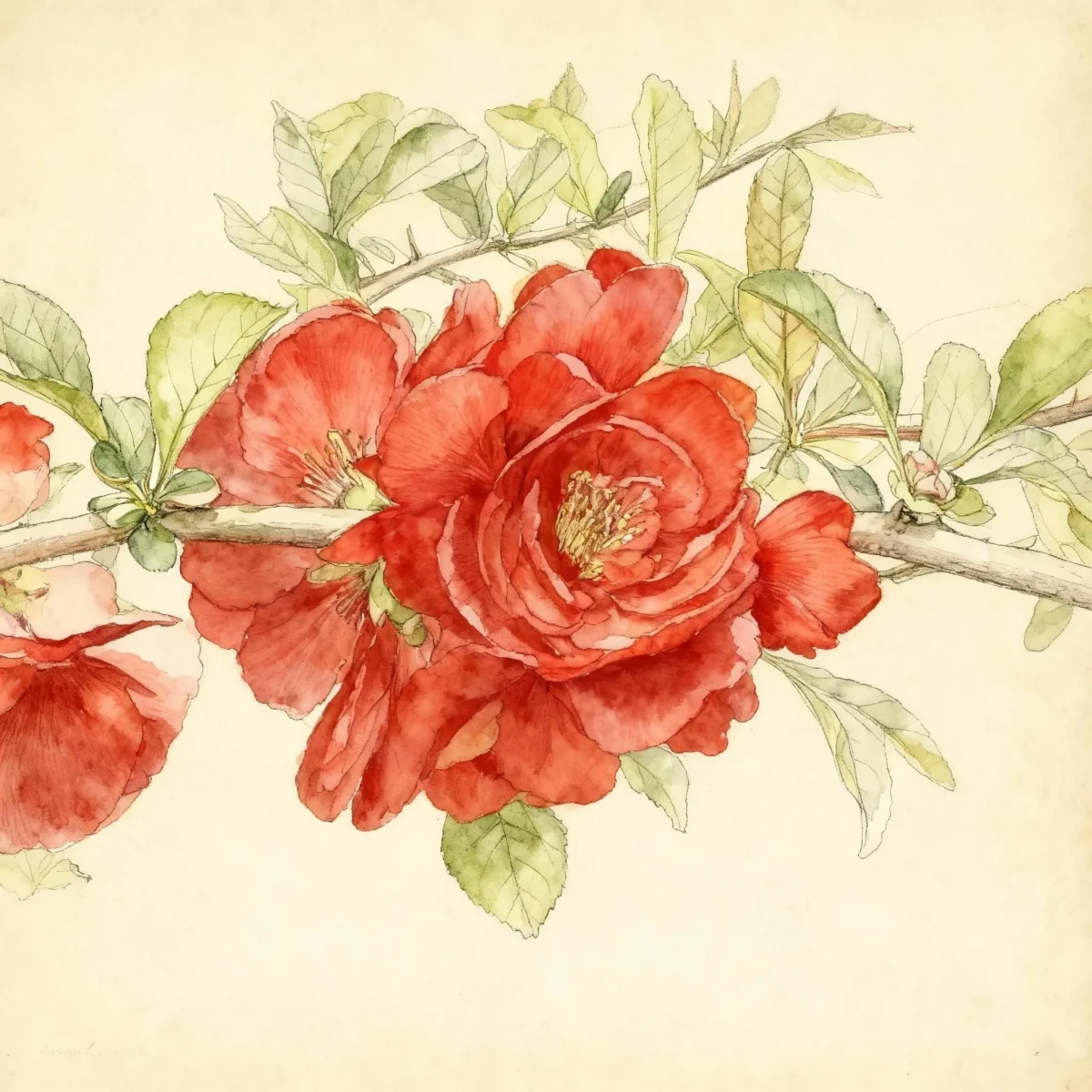
Flowering quince (Chaenomeles speciosa)
Chaenomeles speciosa, or Flowering quince, offers spectacular early bloom, edible fruit, and low maintenance for zones 4-8.
Scroll down to discover growing tips, care requirements, companion plants, and more
Complete Plant Information
Overview
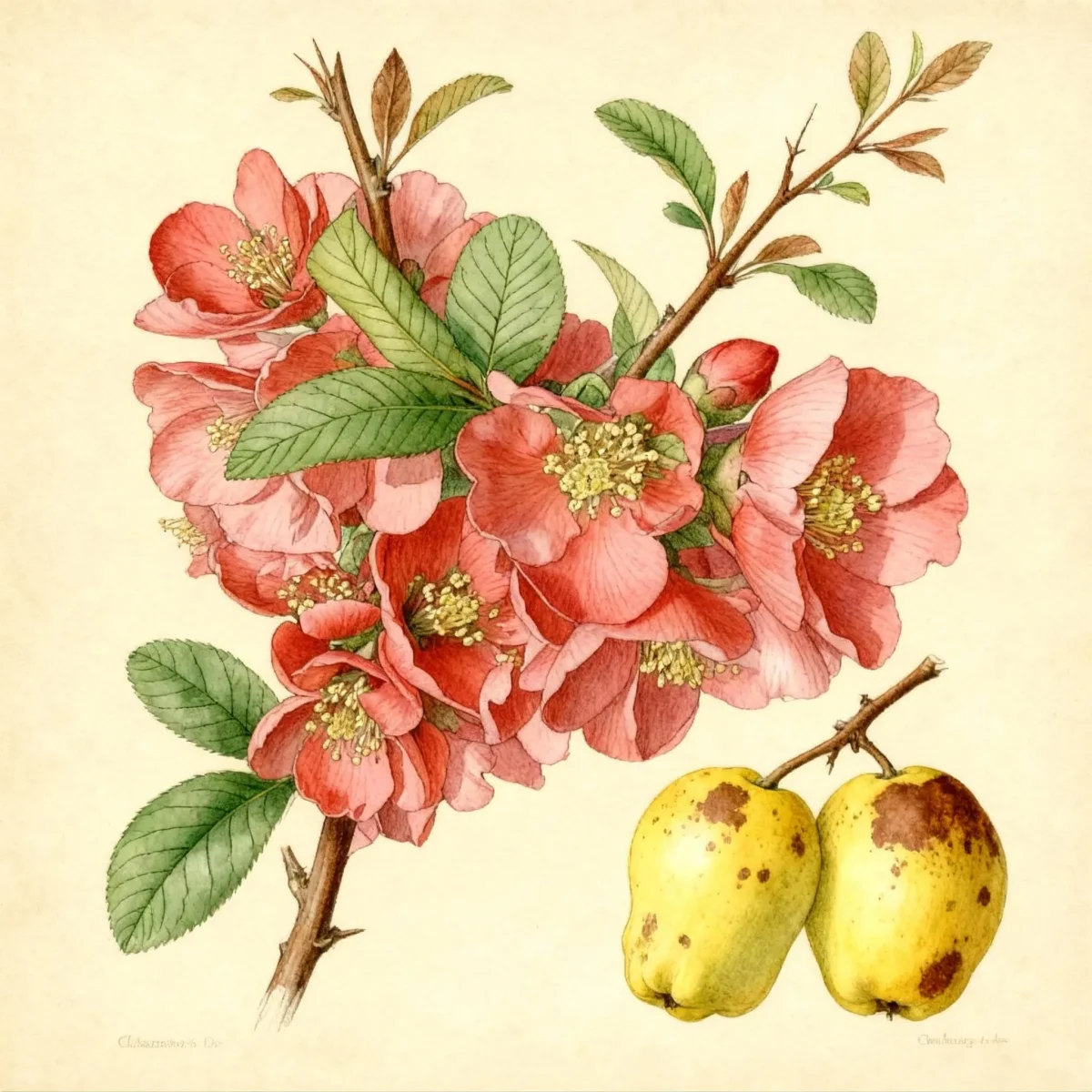
The Flowering quince, botanically known as Chaenomeles speciosa, is a prized, dense shrub celebrated for its vibrant, early spring display. Before most other landscape plants awaken, this species bursts forth with striking scarlet to red flowers, providing essential early color when gardeners need it most. It forms a broad, rounded silhouette supported by tangled, gray-brown, spiny twigs, making it an excellent naturally defensive specimen.
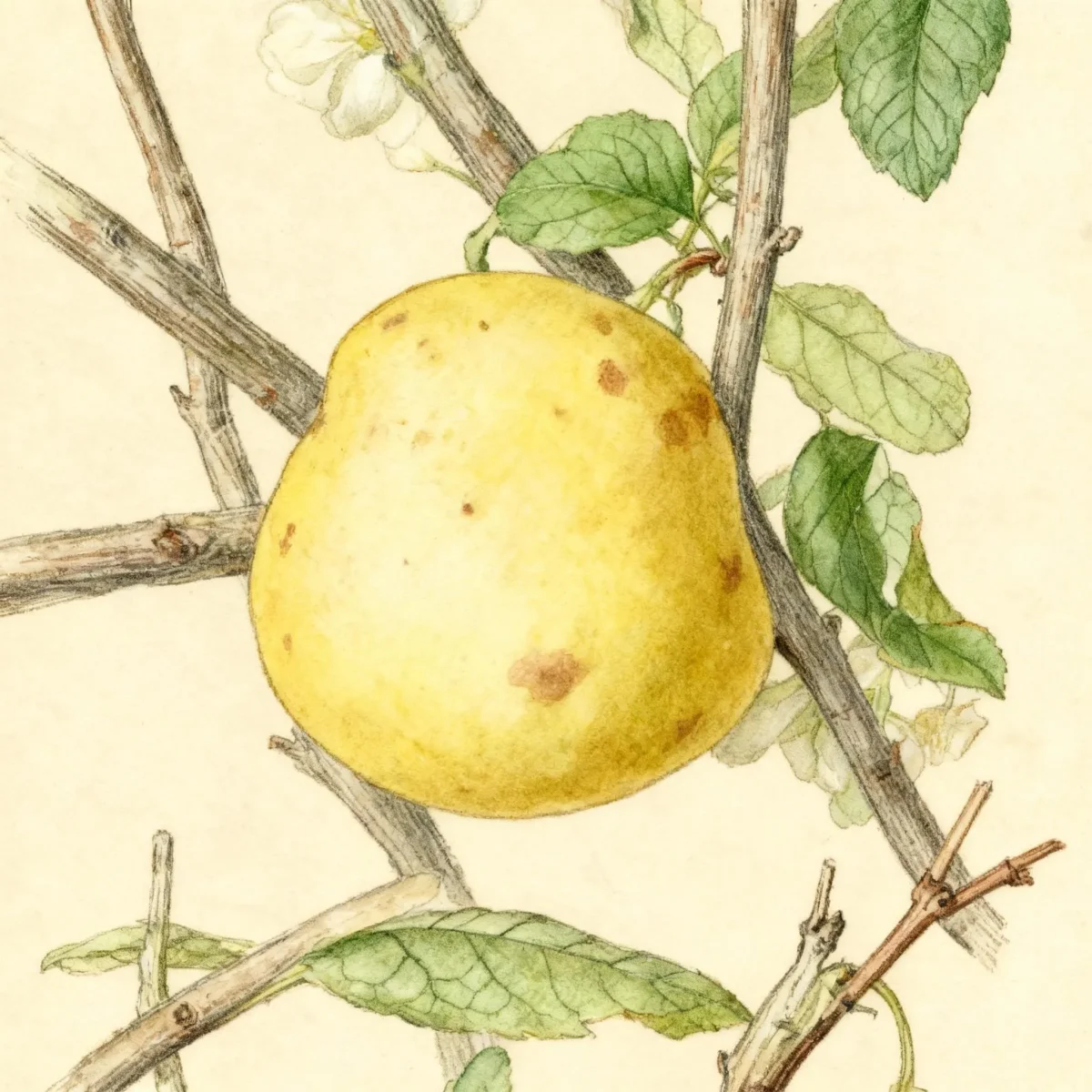
Beyond its ornamental value, the Chaenomeles speciosa offers practical benefits, including the production of hard, yellowish-green fruits suitable for preserves. This deciduous shrub is remarkably adaptable, thriving with low maintenance requirements once established. Its tough nature ensures it remains a cornerstone plant in cottage gardens and as a reliable barrier planting through USDA Zones 4 to 8.
Fast Facts
- Plant Family: Rosaceae
- Plant Type: Deciduous shrub
- Native Range: China
- Hardiness Zones: USDA Zones 4-8
- Size at Maturity:
- Height: “6-10 ft”
- Spread: “6-10 ft”
- Bloom Time: March to April
- Bloom Description: Scarlet to red
- Sun Exposure: Full sun to part shade
- Water Needs: Medium
- Maintenance Level: Low
How to Grow
Plant Chaenomeles speciosa in average, medium moisture, well-drained soil. While it adapts to various conditions, including clay, optimal flowering performance is achieved when sited in full sun. Avoid planting in areas prone to late spring frosts, as flower buds are vulnerable to damage, which can significantly reduce that year’s display.
Care for established Flowering quince is generally simple; established plants tolerate occasional drought and drier soils well, requiring only medium supplemental water during prolonged dry spells. Fertilization is rarely necessary due to its adaptability and low maintenance requirements. Avoid heavy pruning.
Pruning should be minimal and performed strategically in the spring immediately after flowering concludes. This timing stimulates the growth of flowering spurs that enhance bloom potential for the following year. Be aware that heavy shaping cuts during dormancy or mid-season will reduce the current year’s fruit set. Always promptly remove any root suckers that emerge to maintain the shrub’s intended size and shape.
Landscape Uses
The natural form and thorny branches of Chaenomeles speciosa make it perfectly suited for functional landscape roles. It excels when utilized as a dense hedge, providing an attractive, resilient boundary screen. Its structure also lends itself wonderfully to creating an impenetrable barrier plant where security or delineation is needed.
In mixed borders or cottage garden settings, plant the Flowering quince as a specimen or in small groups to maximize its early spring impact. The branches of Chaenomeles speciosa can be clipped and forced indoors, providing vivid color inside during the late winter months when few other materials are available.
Standout Features
Flower Qualities
- Showy
Fruit Qualities
- Showy
- Edible
Noteworthy Characteristics
Chaenomeles speciosa, commonly called flowering quince, is a dense, broad-rounded, deciduous shrub with often-tangled, spiny, gray-brown twigs. Its five-petaled flowers display a scarlet to red hue, blooming before the leaves fully unfold during the showy early spring window. The shrub produces hard, dot-speckled, edible fruits that, while bitter fresh, make excellent preserves and jellies.
Tolerances
- Drought
- Clay Soil
Potential Problems
The Chaenomeles speciosa is susceptible to several issues, primarily fungal diseases. In years with heavy spring rainfall, fungal leaf spot can cause considerable leaf defoliation. Fireblight and scab are also potential concerns in certain regions, requiring vigilance.
Insect pests, particularly aphids, can cause damage to tender new growth early in the season, while scale and mites may also appear. To prevent chlorosis (yellowing foliage), ensure the soil pH is not too high, as the plant struggles in alkaline conditions. Protect the early flower buds from unexpected hard frosts in late winter or early spring to ensure a robust bloom.
Frequently Asked Questions
What hardiness zones is Flowering quince suitable for?
The adaptable Flowering quince thrives across USDA Zones 4 through 8.
How large does Chaenomeles speciosa grow?
This shrub typically matures to a height and spread between 6 to 10 feet.
When does Flowering quince bloom?
You can expect the signature display of scarlet to red flowers on Chaenomeles speciosa from March into April.
What sun exposure does Chaenomeles speciosa need?
For the best flowering results, plant this shrub where it receives full sun, although it tolerates conditions down to part shade.
Conclusion
The Chaenomeles speciosa remains an indispensable specimen due to its tough constitution, low maintenance needs, and spectacular scarlet bloom timing. Whether used as a formal hedge or a cottage garden anchor, Flowering quince delivers reliable seasonal interest, including edible fruits. Check your local hardiness zone (4-8) and plan for spring pruning to ensure decades of vigorous landscape performance.
Companion Planting
When planning a springtime display alongside Chaenomeles speciosa, focus on plants that complement its deep red, early bloom and tolerate similar slightly drier or clay-heavy conditions. Consider early-to-mid season bloomers to follow the quince’s exit. Daffodils (Narcissus) and late-blooming tulips are excellent choices, as their upright bulbs provide vertical contrast beneath the shrub’s broad canopy.
For year-round structure, plant broadleaf evergreens like Japanese Andromeda (Pieris japonica), provided the soil acidity levels are maintained, although Chaenomeles speciosa is tolerant of a wide range. Groundcovers that manage weeds without competing heavily for water, such as creeping phlox, can soften the base of the shrub.
Seasonal Care Calendar
Winter preparation for Flowering quince is minimal, given its hardiness in Zones 4-8, though very new plantings may benefit from a protective mulch layer against extreme cold. The most critical task occurs in late winter or very early spring: be mindful of frost warnings, as unexpected freezes can destroy flower buds you were anticipating.
Spring is the season for maximizing the bloom; avoid any significant shaping pruning during this time. As soon as flowering finishes in mid-to-late spring, perform any necessary corrective pruning to shape the shrub and encourage next year’s spurs, always cutting back to an outward-facing bud.
Summer care focuses primarily on monitoring for pests like aphids and promptly treating any signs of fungal spotting that may appear after humid weather. Watering should remain consistent (medium needs) for young plants, but established shrubs should require little intervention unless drought is severe.
Wildlife Benefits
While not primarily known as a major pollinator magnet compared to other early bloomers, the flowers of Chaenomeles speciosa provide critical early-season sustenance for emerging bees. Since the bloom occurs before many other nectar sources are available, these early resources are valuable to local bee populations preparing for the summer surge.
The dense, often spiny nature of the shrub also offers excellent protective cover for small nesting birds, making it a functional addition to wildlife-friendly borders. Furthermore, the hard, pome fruits, though generally unpalatable to humans when raw, may be consumed by various birds later in the season after they soften or are processed into jellies.
Propagation Tips
The most reliable method for propagating Chaenomeles speciosa is via semi-hardwood cuttings taken in mid-summer. Select healthy, young, non-flowering shoots that have begun to firm up but still bend slightly when twisted. Cuttings should be about 4 to 6 inches long, with the lower leaves stripped off.
Prepare the cuttings by making a light scrape or shallow slice along the bottom inch of the stem to encourage rooting hormones to take hold. Dip the base into rooting hormone powder before setting them into a well-draining, moist medium, such as a 50/50 mix of peat and perlite. Keep the cuttings warm and humid, ideally under plastic or in a mist bench, until roots develop, usually by fall or the following spring.