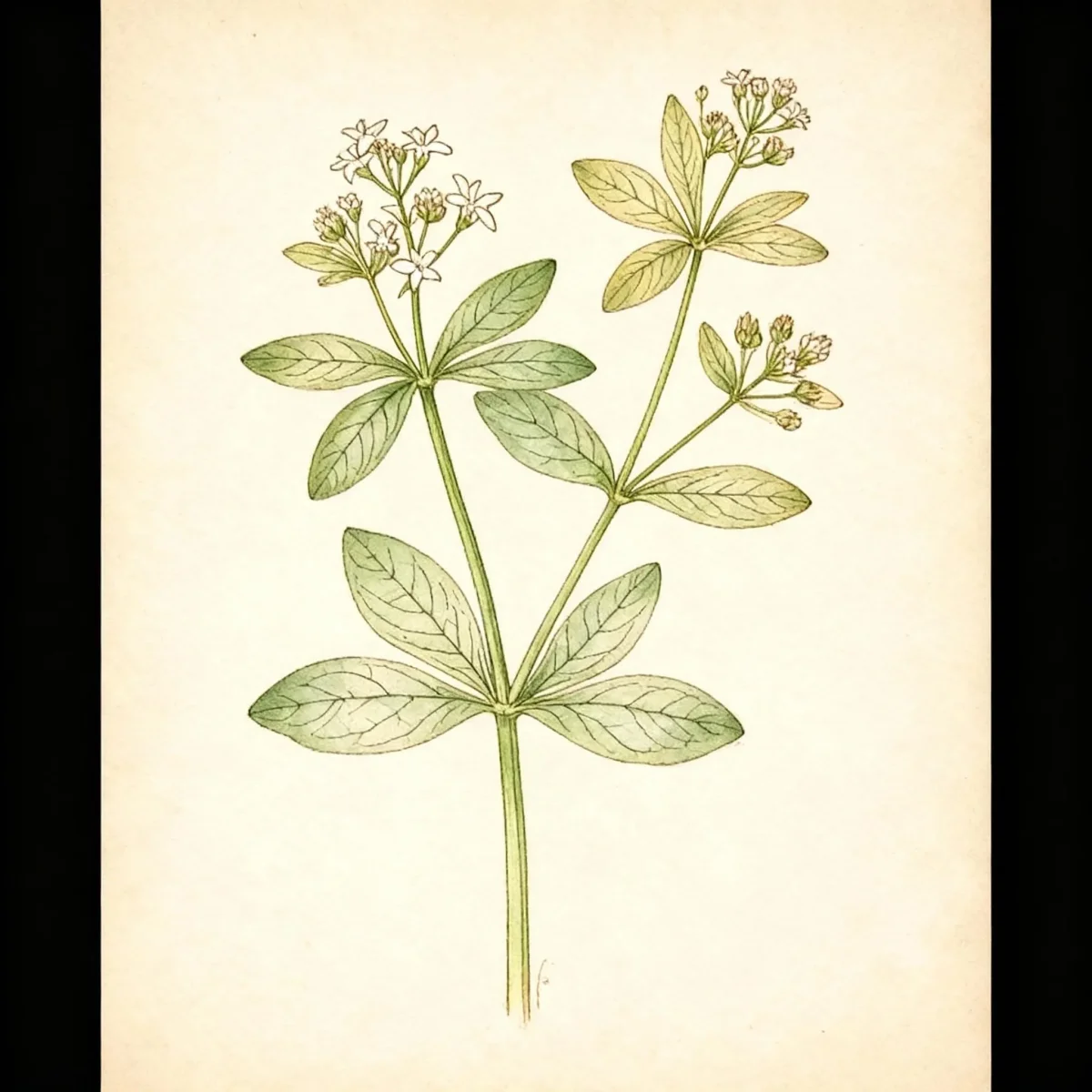
Sweetscented bedstraw (Galium odoratum)
Sweetscented bedstraw (Galium odoratum) is a low-maintenance, fragrant ground cover ideal for shady, moist garden areas.
Scroll down to discover growing tips, care requirements, companion plants, and more
Complete Plant Information
Overview
Galium odoratum, commonly known as Sweetscented bedstraw, is a valuable mat-forming ground cover highly prized for creating lush carpets in deep shade. Its main appeal lies in the delicate, whorled foliage and the sweet, hay-like fragrance released when the leaves are crushed or cut, making Galium odoratum indispensable for shaded borders. This herbaceous perennial spreads effectively via creeping roots, quickly establishing an attractive cover in moist, cool environments suitable for many woodland settings. Gardeners appreciate its low maintenance demands and its versatility in both ornamental beds and functional herb gardens.
Fast Facts
- Plant Family: Rubiaceae
- Plant Type: Herbaceous perennial
- Native Range: Northern Africa, Asia, Europe
- Hardiness Zones: USDA Zones 4-8
- Size at Maturity:
- Height: 0.5-1 ft
- Spread: 0.75-1.5 ft
- Bloom Time: April to May
- Bloom Description: White
- Sun Exposure: Part shade to full shade
- Water Needs: Medium to wet
- Maintenance Level: Low
How to Grow
Plant Sweetscented bedstraw in the spring or fall when soil temperatures are moderate, ensuring the location provides rich, average soil amended with organic matter to retain consistent moisture. It thrives where light is filtered, preferring part shade to full shade; avoid hot, dry, sunny exposures which can cause the plants to go dormant prematurely by mid-summer. Consistent moisture is key; water regularly to meet its medium to wet requirements, especially during establishment.
Maintenance for Galium odoratum is generally low once established, as it spreads naturally via creeping roots and self-seeding to form a dense ground cover. This aggressive spreading tendency means that restraint may sometimes be necessary. For large areas where containment is required, the patch can be successfully managed by mowing with a rotary mower set to a high setting in late summer or early fall. No routine fertilizing is usually necessary if the soil is reasonably healthy.
Ensure excellent drainage, even though it prefers wet conditions; standing water can lead to rot issues. When pruning or harvesting the fragrant foliage for drying or use in punches like May wine, do so when the plant is actively growing to encourage fresh flushes of growth.
Landscape Uses
Sweetscented bedstraw excels as a dependable ground cover, rapidly filling in challenging, moist, shady spaces where turf grass often fails. Its fine texture and whorled leaves create a beautiful contrast against bolder foliage plants in shady borders or woodland gardens. Consider using Galium odoratum as an informal edging plant alongside pathways where the texture can be appreciated up close.
The plant naturalizes readily, making it perfect for softening the base of mature trees or integrating into naturalized areas requiring year-round cover. When using it as an herb, plant it near the edge of a kitchen garden or rock garden where its fragrant qualities are easily accessible for culinary purposes. It pairs well with other shade lovers that appreciate consistent moisture, such as hostas, ferns, and hellebores.
Standout Features
Flower Qualities
- Showy
- Fragrant
- Good Dried
Noteworthy Characteristics
Galium odoratum, commonly called sweet woodruff, is a mat-forming perennial that is most often grown as a ground cover in shady areas. Plants typically grow 8-12” tall and feature fragrant, lance-shaped, dark green leaves in whorls of 6-8 along square stems. Small, fragrant, 4-petaled, white flowers appear in loose cymes in spring, and the foliage emits a strong odor of freshly mown hay when crushed, making it popular in potpourris.
Tolerances
- Heavy Shade
- Black Walnut
Potential Problems
No serious insect or disease problems are typically associated with growing Sweetscented bedstraw. Maintaining proper soil aeration and avoiding excessively waterlogged conditions are the best preventative measures against fungal issues. Due to its vigorous spreading nature, gardeners should closely monitor its placement to prevent it from encroaching on less aggressive neighbors.
Frequently Asked Questions
What hardiness zones is Sweetscented bedstraw suitable for?
Galium odoratum is hardy and adaptable across USDA Zones 4 through 8, offering reliable performance in shaded environments within these ranges.
How large does Galium odoratum grow?
This perennial generally achieves a height between 0.5 and 1 foot tall, with a corresponding spread that typically reaches 0.75 to 1.5 feet wide.
What sun exposure does Sweetscented bedstraw need?
This excellent ground cover requires part shade to full shade conditions to thrive and maintain its dense coverage throughout the growing season.
When does Galium odoratum bloom?
Sweetscented bedstraw displays its small, fragrant white flowers throughout the spring, specifically between April and May.
Conclusion
For gardeners seeking an aromatic, low-maintenance solution for dark, moist corners, Galium odoratum offers exceptional value as a reliable ground cover. The sweet fragrance and dense texture of Sweetscented bedstraw truly excel in woodland settings. Before planting, confirm your site provides consistent moisture and adequate shade to ensure this perennial performs optimally.
Companion Planting
When integrating Galium odoratum into landscape designs, select companions that share its preference for moist, shady conditions. Ferns, broadleaf hostas, and bleeding hearts (Dicentra spectabilis) create a classic woodland tapestry alongside the fine texture of Sweetscented bedstraw. These plants complement the low stature and shade tolerance of the Galium odoratum perfectly, resulting in a balanced, textural planting scheme. Avoid pairing it with aggressive sun-lovers, as the light competition and potential moisture demands will stress the woodruff.
Propagation Tips
While Galium odoratum spreads readily by its creeping, underground rootstock, propagation by division is the easiest method for gardeners wishing to control its spread or create new patches quickly. Divide the root masses of established plants in early spring or fall. Ensure each division has several segments of stem and roots attached; these divisions can be immediately transplanted to a new location while keeping the root zone consistently well-watered until the new plant is established. Simple stem cuttings taken during the growing season can also root successfully if kept moist.