Partridge berry (Mitchella repens)
Mitchella repens, or Partridge berry, is a low-growing, native evergreen ground cover ideal for deep shade with attractive red berries.
Scroll down to discover growing tips, care requirements, companion plants, and more
Complete Plant Information
Overview
Partridge berry (Mitchella repens) is a charming, prostrate, broadleaf evergreen perennial native to eastern North American woodlands. Its primary appeal lies in its ability to create a dense, low-growing mat that retains color through winter, providing constant textural interest. As a ground cover, Mitchella repens transitions beautifully through the seasons, offering fragrant spring flowers followed by persistent, bright red berries.
This plant spreads slowly by trailing stems that root readily at the nodes, forming colonies best suited for smaller, controlled areas rather than vast landscapes. While it is highly valued for its evergreen nature and tolerance for deep shade, establishing plantings of Mitchella repens can sometimes require patience.
For gardeners seeking plants for challenging, dark corners, the resilience and aesthetic charm of Partridge berry make it an excellent choice. It requires minimal tending once established, fitting perfectly into low-maintenance native or woodland garden designs.
Fast Facts
- Plant Family: Rubiaceae
- Plant Type: Broadleaf evergreen
- Native Range: North America
- Hardiness Zones: USDA Zones 3-8
- Size at Maturity:
- Height: 0-0.25 ft
- Spread: 0.5-1 ft
- Bloom Time: May to July
- Bloom Description: White
- Sun Exposure: Part shade to full shade
- Water Needs: Medium
- Maintenance Level: Low
How to Grow
The best time to establish Partridge berry is typically in the spring or early fall when temperatures are mild, allowing the plant to focus energy on root establishment. Mitchella repens performs best in organically rich, well-drained soils that maintain consistent medium moisture levels. Given its native environment under forest canopies, planting in part shade to full shade is crucial for optimal health.
While the plant tolerates some light drought once established, consistent watering is recommended, especially during dry spells, to encourage robust colony formation through rooting stems. Little formal pruning is required; simply remove any dead or damaged foliage in early spring to keep the mat tidy.
Be patient when establishing new plantings; sources indicate that getting Mitchella repens established can sometimes be challenging initially. Once happy, its self-rooting nature means it will slowly spread to cover the intended area, forming a dense, attractive ground layer. Avoid overly rich or overly wet soils, as this can hinder its progress.
Landscape Uses
Partridge berry functions superbly as a refined evergreen ground cover in woodland settings. Its low, creeping habit makes it ideal for planting under large, established trees where lawn grass struggles or where intense shade prevails. Use it to soften the edges of borders, introduce texture to rock gardens, or line the perimeter of small, shaded ponds.
Because Mitchella repens spreads slowly and does not aggressively overtake space, it is often preferred in smaller, intimate garden vignettes rather than large-scale naturalizing projects. Consider pairing this native species with other shade-tolerant woodland companions, such as ferns, small hostas, or bleeding hearts, for varied textural contrast throughout the year. The glossy foliage and persistent red fruit offer visual interest long after the spring bloom fades.
Standout Features
Flower Qualities
- Showy
- Fragrant
Fruit Qualities
- Showy
- Edible
Noteworthy Characteristics
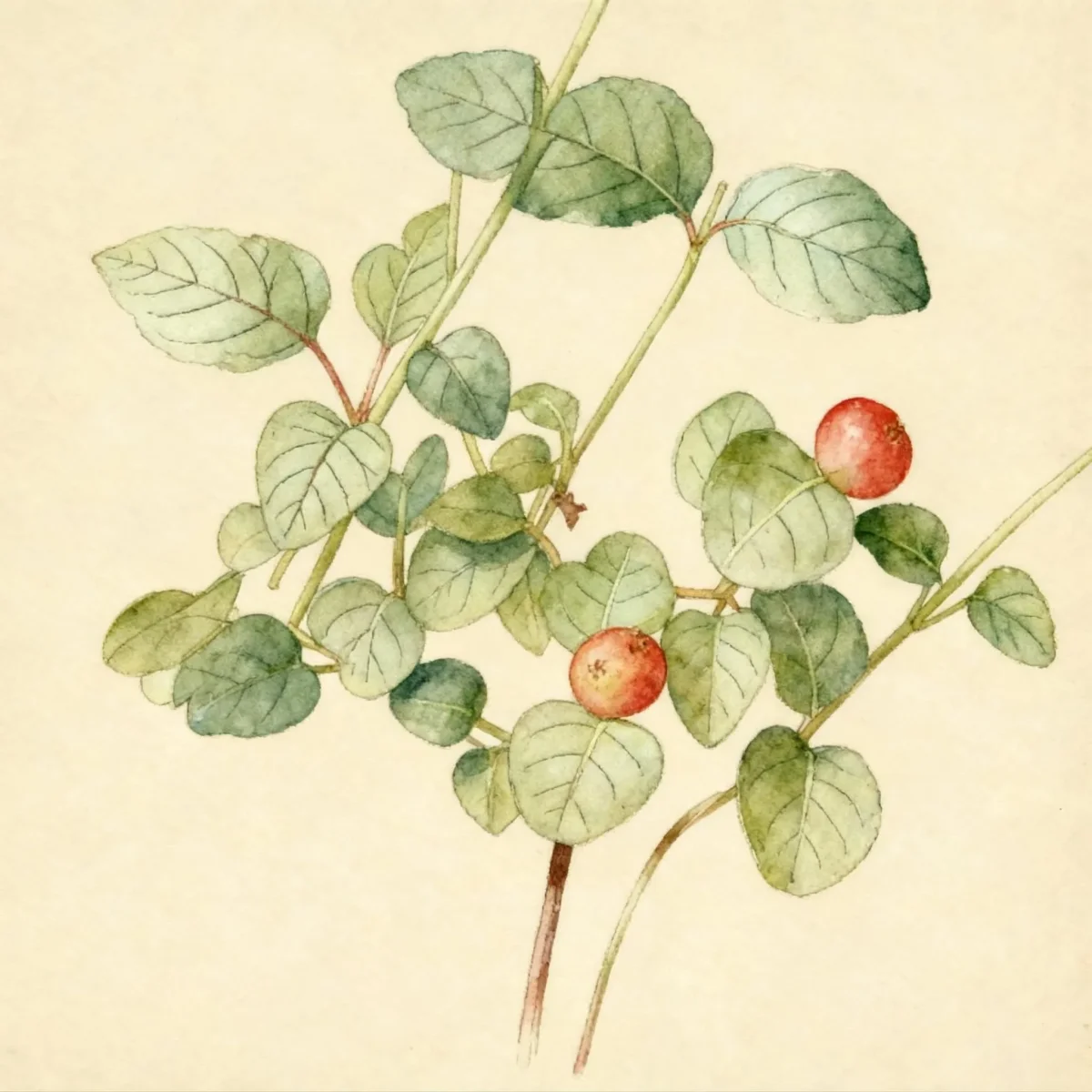
Mitchella repens, commonly called partridge berry, is an herbaceous, mat-forming, evergreen perennial that is indigenous to the woodlands of eastern North America. This prostrate plant reaches only about 2 inches tall but spreads by trailing stems, featuring oval, glossy, dark green leaves with distinct whitish veins. Fragrant, funnel-shaped white flowers bloom in spring, eventually giving way to round, bright red berries that often persist through the winter months, giving the plant extended seasonal appeal.
Tolerances
- Heavy Shade
- Dry Soil
Potential Problems
Generally, Mitchella repens is robust and faces no frequently occurring insect or disease problems, making it a gardener’s friend in the right location. Its primary challenge relates to establishment rather than pest pressure. Ensure the soil drains adequately, as sitting in constantly soggy soil will lead to root issues before pests become a concern. Proper siting in deep shade with rich, acidic soil typically prevents any significant decline.
Frequently Asked Questions
What hardiness zones is Partridge berry suitable for?
Partridge berry (Mitchella repens) is reliably hardy in USDA Zones 3 through 8, offering excellent cold tolerance for many regions.
How large does Partridge berry grow?
This ground cover remains very low-growing, reaching a maximum height of about 0.25 feet, but it can spread outward to cover an area between 0.5 and 1 foot wide.
When does Partridge berry bloom?
Mitchella repens produces its fragrant white flowers between May and July, followed by its signature bright red fruit later in the season.
What sun exposure does Partridge berry need?
This species thrives best when protected from direct afternoon sun, requiring conditions ranging from part shade to full shade to mimic its native woodland habitat.
Conclusion
The exceptional ability of Partridge berry to anchor deep shade with its evergreen foliage and persistent red fruit ensures its value in specialized garden niches. Whether utilizing Mitchella repens as a delicate textural element or a tough native cover, gardeners should prioritize rich, well-drained soil conditions for successful establishment. Check your regional USDA zone compatibility before planting this unique woodland floor dweller this coming autumn.
Propagation Tips
Since Mitchella repens spreads via rooting stems, vegetative propagation is straightforward once you have a healthy patch. To increase your coverage, lightly scratch the soil under a trailing stem, secure the stem to the ground using a U-shaped pin or landscape staple, and keep the area consistently moist. Once new roots have formed at a node, the new plant can be carefully separated from the parent in the following season.
For intentional propagation, especially when establishing new, separate colonies, take stem cuttings in mid to late summer. Cuttings should include several nodes and be placed in a moist, sandy substrate under humid conditions, ideally in a protected cold frame or greenhouse until roots develop. This method is more reliable for rapid multiplication than relying solely on natural spread.
Wildlife Benefits
While the berries of Partridge berry are technically edible, they are rather tasteless for human consumption, serving a much greater purpose for local wildlife. The persistent bright red drupes are a crucial late-season and winter food source for many bird species, including game birds like quail and grouse, which gives the plant its common name. Furthermore, the dense, low-growing mat provides excellent low cover and microhabitat for ground-dwelling insects and small reptiles in the shaded garden setting.