Rue (Ruta graveolens)
Ruta graveolens, or Rue, is a low-maintenance, drought-tolerant perennial prized for its aromatic, blue-green, fern-like foliage.
Scroll down to discover growing tips, care requirements, companion plants, and more
Complete Plant Information
Overview
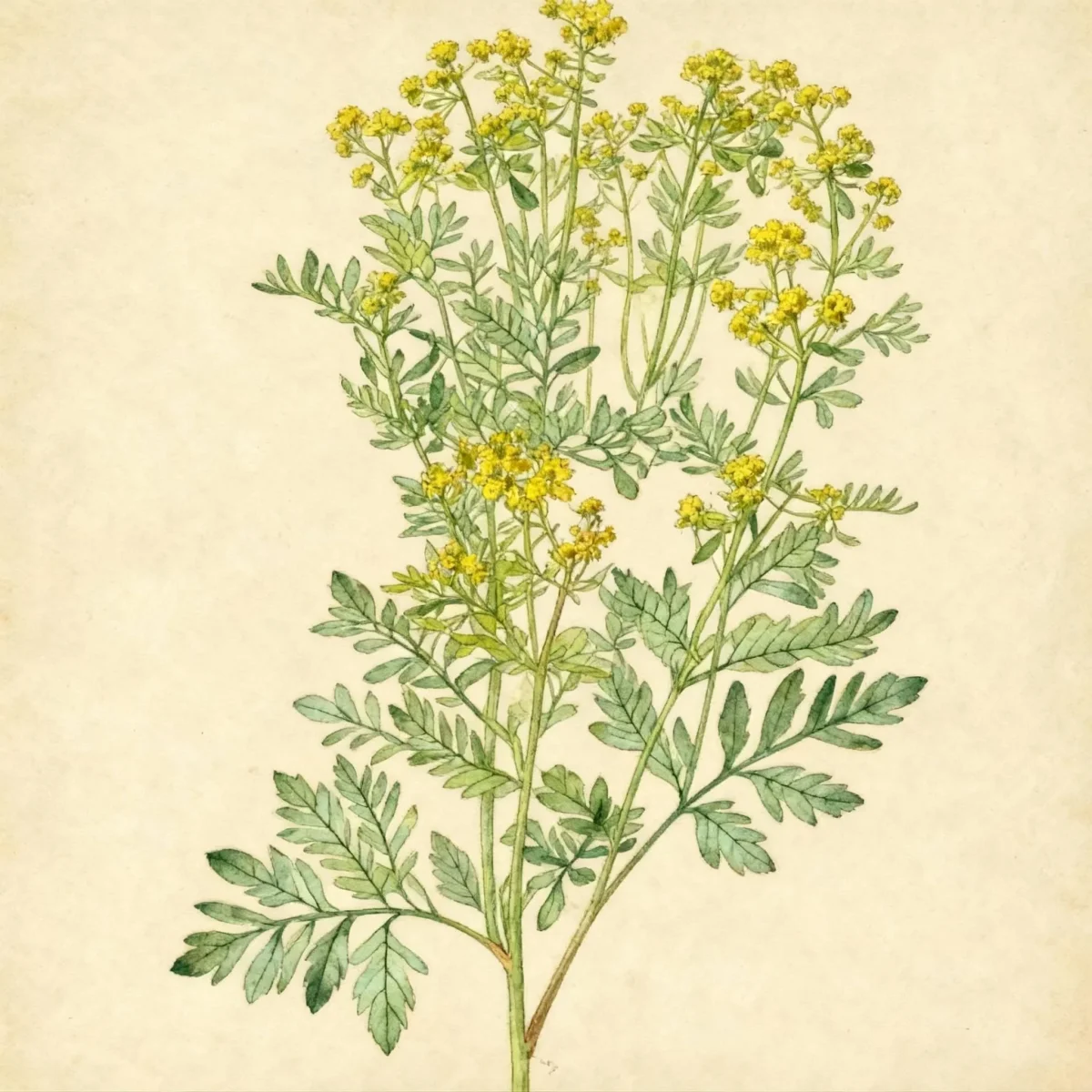
Ruta graveolens, commonly known as Rue, is highly valued in the garden primarily for its striking, silvery, blue-green foliage that maintains its color throughout the season. This woody-based perennial forms a pleasing mound, typically reaching 2 to 3 feet high and wide, offering excellent textural contrast among softer plantings. Though it produces small, dull yellow flowers in early summer, the true ornamental appeal of Ruta graveolens lies in its distinctive, fern-like leaves which possess a pungent, aromatic scent when crushed.
Native to Southeastern Europe, Rue thrives in hot, dry conditions once established, making it an ideal choice for resilient, low-input gardening schemes. It pairs functionality with aesthetics, often naturalizing gracefully in disturbed areas. Gardeners should respect its notable characteristics, particularly the toxicity of the foliage, ensuring it is positioned where handling is minimized.
Despite its historical medicinal applications, today Ruta graveolens is primarily grown for its undeniable ornamental texture and proven drought tolerance. Providing sharp drainage is crucial for long-term success, allowing this herb to bring its unique character to borders, rock gardens, and specialized herb collections.
Fast Facts
- Plant Family: Rutaceae
- Plant Type: Herbaceous perennial
- Native Range: Southeastern Europe
- Hardiness Zones: USDA Zones 4-8
- Size at Maturity:
- Height: 2-3 ft
- Spread: 2-3 ft
- Bloom Time: June to July
- Bloom Description: Dull yellow
- Sun Exposure: Full sun
- Water Needs: Dry to medium
- Maintenance Level: Low
How to Grow
Planting Rue thrives best when established in full sun, although it will tolerate periods of light shade. The most critical requirement for successful growth is excellent drainage; this plant performs poorly in wet soils, which can lead to root rot. Choose a location with moderately fertile soil, though Ruta graveolens is highly adaptable and tolerates poorer, well-drained soils readily.
Care throughout the season is minimal, reflecting its low maintenance nature. Once established, Rue is highly drought tolerant and enjoys hot, dry sites, requiring supplemental watering only during extended dry spells. No routine fertilizing is generally needed. The main yearly maintenance task involves pruning: prune back plants to the old wood in early spring to encourage dense, attractive new growth.
In colder climates within its range (Zones 4-5), providing a winter mulch is beneficial to protect the woody base over winter. Propagation is straightforward, either through sowing seeds or taking cuttings. Always wear appropriate protective clothing when handling or pruning this plant.
Landscape Uses
Ruta graveolens serves wonderfully as a rugged border plant, anchoring the edge of beds with its dense, silver-blue mounds. Its upright structure and low maintenance make it an interesting choice for low edging where formal structure needs to contrast sharply with looser perennials. It blends seamlessly into rock gardens, where its need for sharp drainage is easily met among stone features.
Because of its aromatic, somewhat rigid foliage, Rue functions excellently when naturalized in informal settings or used sparingly within an herb garden dedicated to tough, sun-loving specimens. It pairs well with Mediterranean herbs like Lavender or Thyme, which share similar preferences for dry, sunny conditions. Avoid planting it where children or pets might frequently brush against it due to potential skin irritation.
Standout Features
Flower Qualities
- Showy
Noteworthy Characteristics
Ruta graveolens, commonly called rue, is native to southern Europe. It is a glabrous, glaucous, woody-based, shrubby perennial with aromatic, fern-like, compound leaves perfect for ornamental value. Foliage has a pungent aroma when bruised, and small, dull yellow flowers bloom above the silvery-green foliage in early summer. Gardeners should be cautious, as handling the leaves may cause dermatitis, and ingestion is toxic.
Tolerances
- Deer
- Drought
- Dry Soil
- Shallow-Rocky Soil
Potential Problems
Ruta graveolens is generally free from serious insect or disease issues when site requirements are met. The primary threat to Rue is root rot, which occurs almost exclusively when the soil retains too much moisture or drainage is inadequate. Ensure the planting site is sharply drained. When pruning or handling the foliage of this perennial, always wear long sleeves and gloves as contact, especially in sunlight, may cause dermatitis in sensitive individuals.
Frequently Asked Questions
What hardiness zones is Rue suitable for?
Ruta graveolens is hardy and performs well in USDA Zones 4 through 8.
How large does Rue grow?
This herbaceous perennial typically matures into a mound 2 to 3 feet high and spreads to a similar width of 2 to 3 feet.
When does Ruta graveolens bloom?
Rue flowers appear mid-season, generally blooming from June into July, bearing dull yellow flowers positioned above the distinctive foliage.
What sun exposure does Rue need?
Rue requires full sun for the best growth and most compact habit, though it can tolerate some light shade.
Conclusion
For gardeners seeking dependable texture and unmatched drought tolerance in hot spots, Ruta graveolens is an outstanding, low-maintenance choice. The silvery-blue foliage of Rue provides year-round structure and contrast in the landscape. Before planting, confirm your site offers the necessary full sun and sharply draining soil conditions to ensure this unique perennial thrives.
Propagation Tips
Propagating Ruta graveolens can be achieved successfully through both seed and cuttings. Starting from seed allows you to gradually increase your stock, though growth can be slow initially. For faster results, take cuttings of semi-hardwood material, particularly during the mid-summer months.
Ensure cuttings are taken from healthy stock and placed in a well-draining medium, mimicking the preferred soil conditions of mature plants. While successful propagation is possible, many gardeners find that established plants self-seed moderately, allowing Rue to naturalize gently in ideal, undisturbed locations over time.
Companion Planting
Because Ruta graveolens demands excellent drainage and dislikes competition from thirsty neighbors, pairing it with other Mediterranean natives is highly recommended. Good companions include various hardy Lavenders (Lavandula spp.), Thyme (Thymus species), and drought-tolerant ornamental grasses. These plants appreciate the same full sun exposure and dry soils that keep Rue vigorous and disease-free.