American aspen (Populus tremuloides)
Populus tremuloides, the American aspen, offers striking white bark and golden fall color, ideal where cool summers prevail.
Scroll down to discover growing tips, care requirements, companion plants, and more
Complete Plant Information
Overview
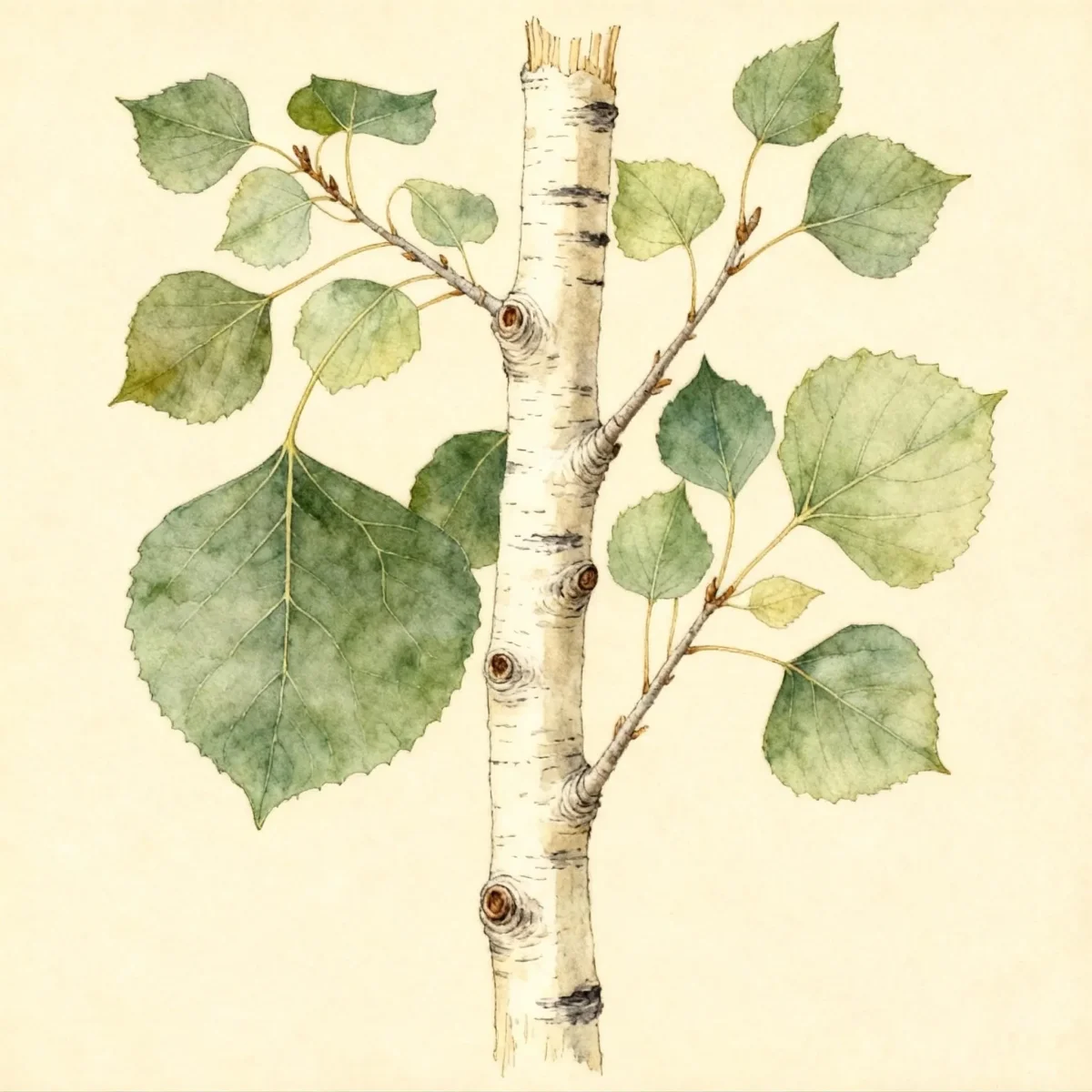
The American aspen, officially known as Populus tremuloides, is highly recognizable for its stunning visual attributes, particularly its smooth, chalky white bark that contrasts beautifully against the landscape. This deciduous tree also earns its common name, quaking aspen, from its unique oval leaves which flutter and tremble in the slightest breeze, creating a distinctive visual and auditory effect. Populus tremuloides is a vital component of North American forests, known for spreading via extensive underground root systems to form large, genetically identical colonies.
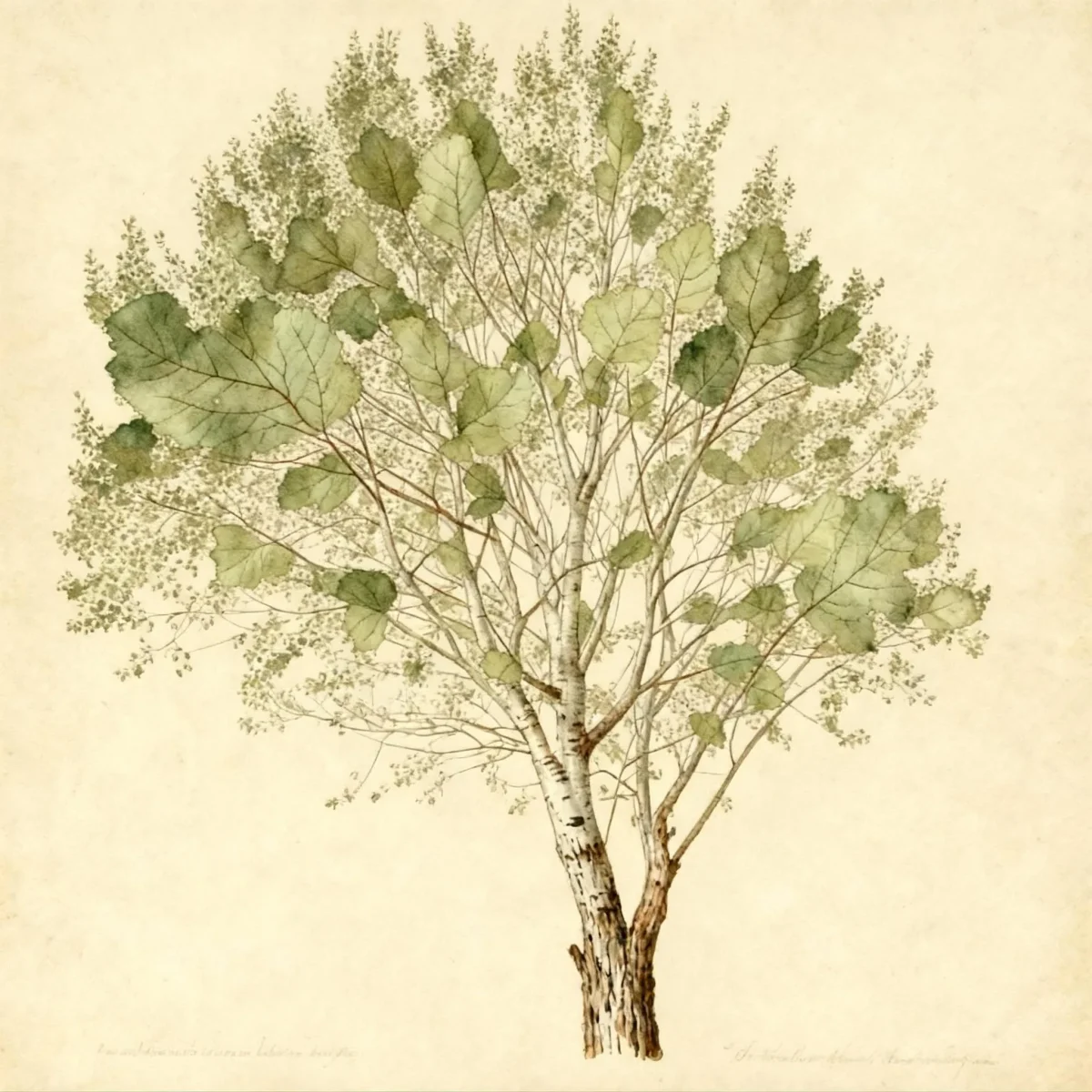
As a medium-sized deciduous tree, American aspen provides excellent vertical interest, typically reaching heights between 20 and 50 feet. While it possesses the widest geographical distribution of any North American tree, its success in cultivation is directly linked to climate; it thrives in cooler northern regions but often struggles significantly in areas with persistent summer heat and humidity. Gardeners seeking this species should prioritize its requirement for full sun and consistently moist, rich soil conditions.
The aesthetic appeal of Populus tremuloides extends into the autumn when its deep green foliage transforms into a vibrant golden yellow display. Although it is a high-maintenance plant susceptible to various pests and diseases, when planted within its preferred cool climate range, the visual rewards of the quaking aspen are undeniable, making it a prized naturalizing feature.
Fast Facts
- Plant Family: Salicaceae
- Plant Type: Tree
- Native Range: Canada to Mexico
- Hardiness Zones: USDA Zones 1-6
- Size at Maturity:
- Height: 20-50 ft
- Spread: 10-30 ft
- Bloom Time: April
- Sun Exposure: Full sun
- Water Needs: Medium
- Maintenance Level: High
How to Grow
For successful establishment, plant Populus tremuloides during the dormant season, ensuring it receives full sun exposure. The ideal cultural environment requires rich, humusy, consistently moist, and well-drained soils. While wild populations adapt to various soil types including clay and sandy loams, richness and moisture retention are key for cultivated specimens. Remember that this species absolutely thrives in cool northern climates and will likely struggle in areas prone to extreme summer heat and humidity.
Watering needs are medium; maintaining consistent soil moisture is crucial, especially while the tree is young or during dry spells, as stressed Populus tremuloides become highly vulnerable to disease and pests. Generally, fertilizing is unnecessary if the soil is rich, but deep, thorough watering during dry periods compensates for heat stress. Pruning should be minimal; focus on removing dead or damaged limbs promptly to prevent entry points for disease.
The natural growth habit of the American aspen involves forming extensive groves where multiple stems act as clones from a single root system. This clonal nature must be considered in landscape design. Since the trees are dioecious (male and female flowers on separate plants), both male and female clones may be present in a grove, leading to seed dispersal following the female flowers in late May.
Landscape Uses
The suggested use for Populus tremuloides in the landscape is naturalization due to its tendency to spread and colonize large areas via its root structure. When planted in appropriate cool summer climates, the American aspen creates a dramatic woodland effect, perfect for large properties or slopes where its clonal spreading can be managed or allowed to expand naturally. The brilliant white bark offers crucial year-round visual interest, acting as a stark contrast against evergreen plantings.
Planting these trees in groupings is highly recommended to emulate their wild habit, maximizing the visual impact of the quaking foliage and enhancing the visual texture of the grove. Because this tree is sensitive to urban pollutants and heat, avoid planting near paved areas or in highly localized hot microclimates. Its best use is where its cultural needs—cool temperatures and consistent moisture—can be strictly met.
Standout Features
Flower Qualities
- Insignificant
Noteworthy Characteristics
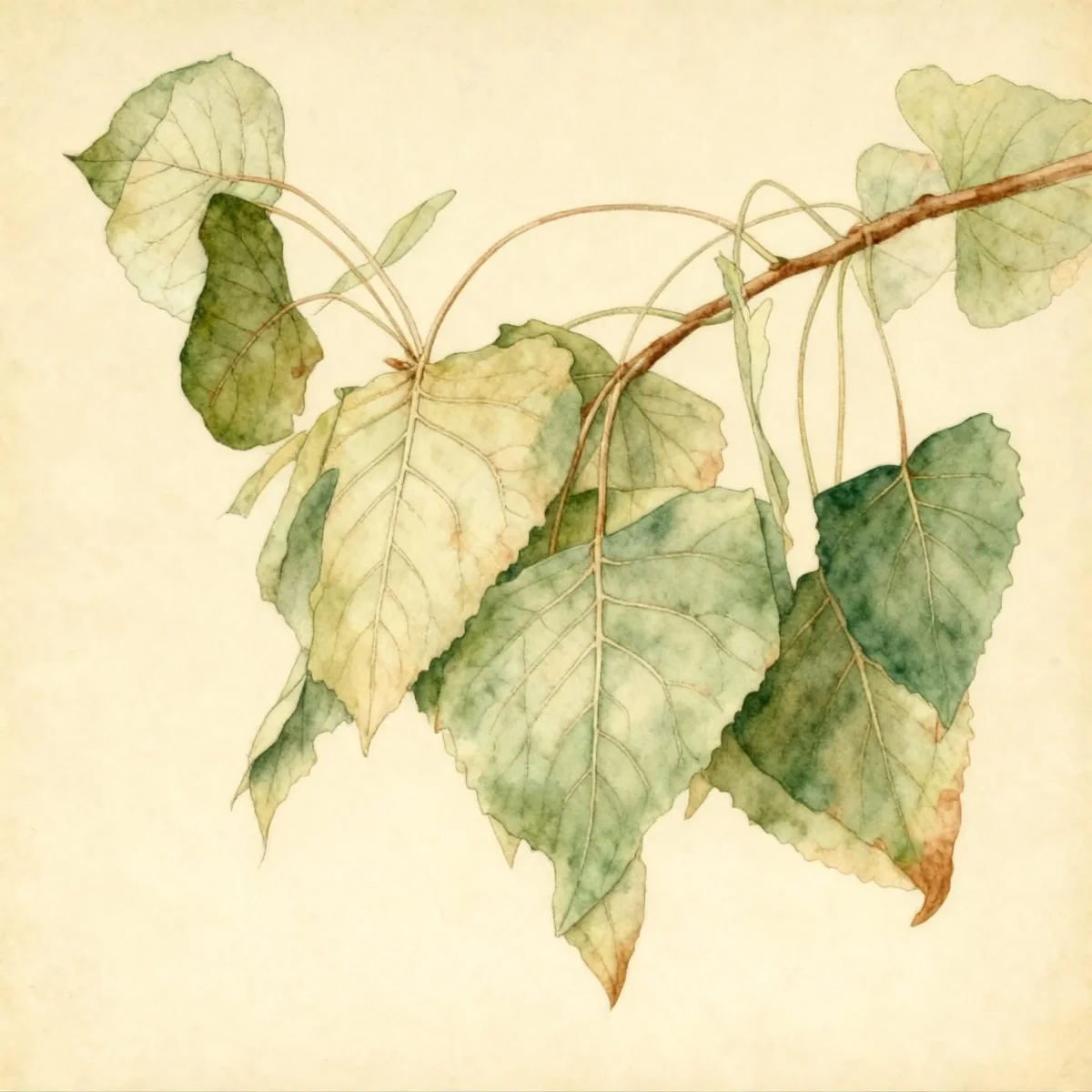
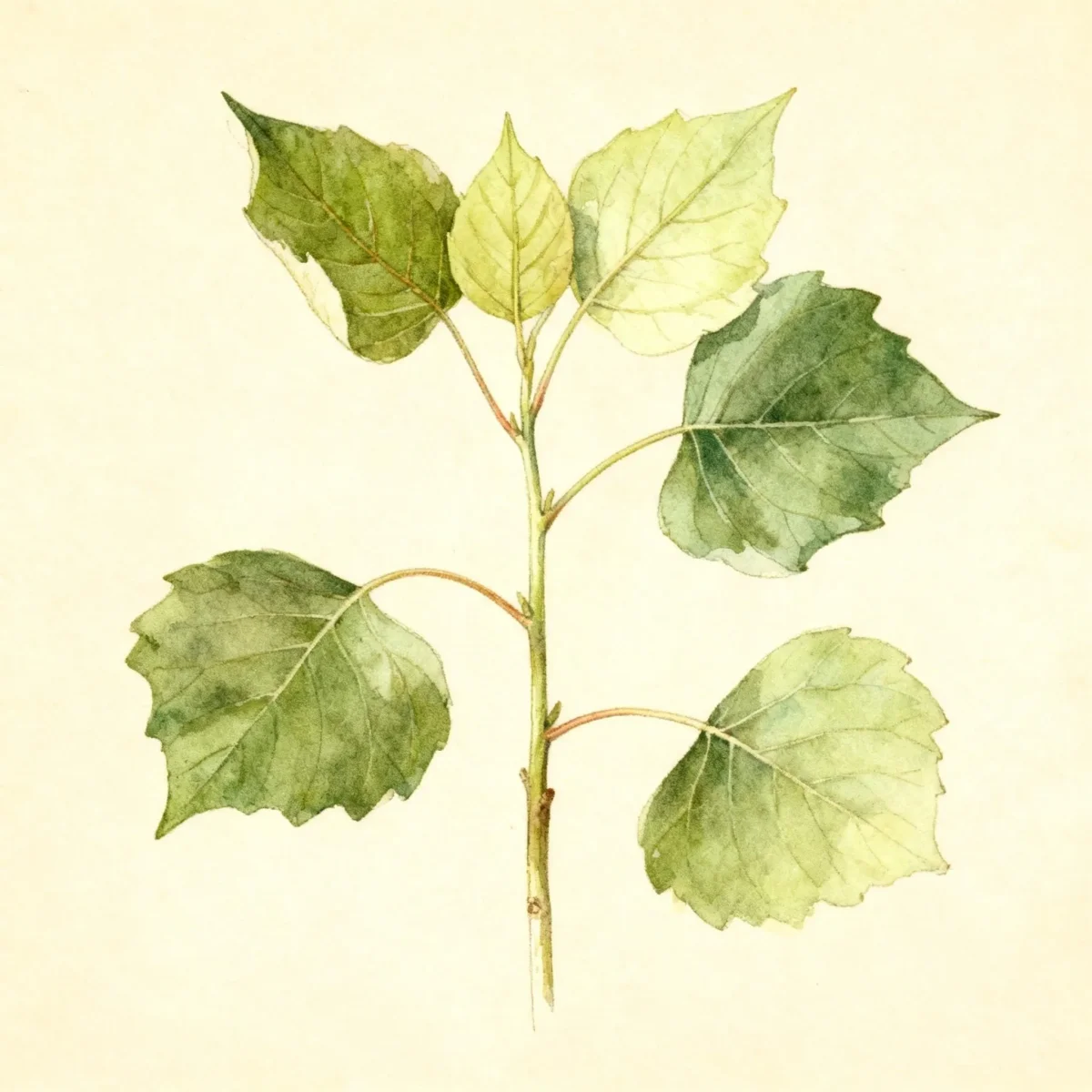
Populus tremuloides, commonly called quaking aspen, is perhaps most noted for its beautiful white bark, its deep green foliage that quakes in the slightest breeze and its golden yellow fall foliage color. It has the widest geographical distribution of any North American tree, being indigenous to Alaska and most of Canada, the Pacific Northwest, New England, the Great Lakes and south in the Rockies to New Mexico and Arizona. The tree typically grows 20-50’ tall with a narrow, rounded crown, featuring ovate-triangular, dark glossy green leaves whose flattened stalks cause them to flutter dramatically in the wind.
Tolerances
(No data provided to parse)
Potential Problems
Aspens are unfortunately susceptible to a large number of disease problems, including dieback, leaf spots, rusts, powdery mildew, and cankers; these stress agents often lead to premature leaf drop. Common insect visitors that attack the American aspen include caterpillars, borers, aphids, and scale, adding to the high maintenance requirements of this species. Trees growing outside their optimal cool climate—especially those stressed by summer heat and humidity—are particularly vulnerable to aggressive diseases such as dieback and borer infestations. Proactive cultural care, particularly ensuring adequate moisture without overwatering, is the best defense against these common problems.
Frequently Asked Questions
What hardiness zones is American aspen suitable for?
The American aspen (Populus tremuloides) is suitable for USDA Hardiness Zones 1 through 6.
How large does American aspen grow?
At maturity, Populus tremuloides typically reaches a height between 20 and 50 feet tall, with a comparable spread ranging from 10 to 30 feet wide.
What sun exposure does Populus tremuloides need?
Populus tremuloides requires full sun exposure to grow best and maintain dense foliage.
When does American aspen bloom?
The American aspen blooms relatively early in the season, typically during April, before the leaves fully emerge.
Conclusion
The Populus tremuloides, or American aspen, is valued for its striking white bark, vibrant quaking green leaves, and golden autumn display, making it an exceptional specimen in cool-climate landscapes. Due to its specialized climatic needs and high maintenance profile, careful site selection is paramount for the long-term success of this beautiful North American native. Always check your local climate suitability before planting Populus tremuloides to ensure it will thrive outside of its native, cooler range.
Companion Planting
When selecting companions for Populus tremuloides, focus on species that share similar preferences for rich, moist soil or those that can tolerate some shade when planted beneath the developing canopy. Evergreen conifers, such as certain Spruce (Picea) or Fir (Abies) varieties that naturally inhabit similar mountain ecosystems, create beautiful year-round contrast against the bright white bark. Low-growing, shade-tolerant perennials that enjoy moist conditions, like ferns or hostas (in suitable zones), can help shade the soil surface, maintaining root coolness which is vital for aspen health, particularly when managing heat stress.
Propagation Tips
The American aspen primarily propagates naturally through its extensive, interconnected root system, readily forming new stems (clones) through suckering behavior. Gardeners wishing to propagate Populus tremuloides intentionally should utilize root cuttings during the dormant season (late winter or early spring). Dig up roots approximately 1/4 to 1/2 inch thick, cut them into 4 to 6-inch lengths, and plant them horizontally about two inches deep in consistently moist potting medium. New shoots and roots will emerge from these segments, allowing for the intentional creation of desired male or female clones, provided the parent root was identified beforehand.