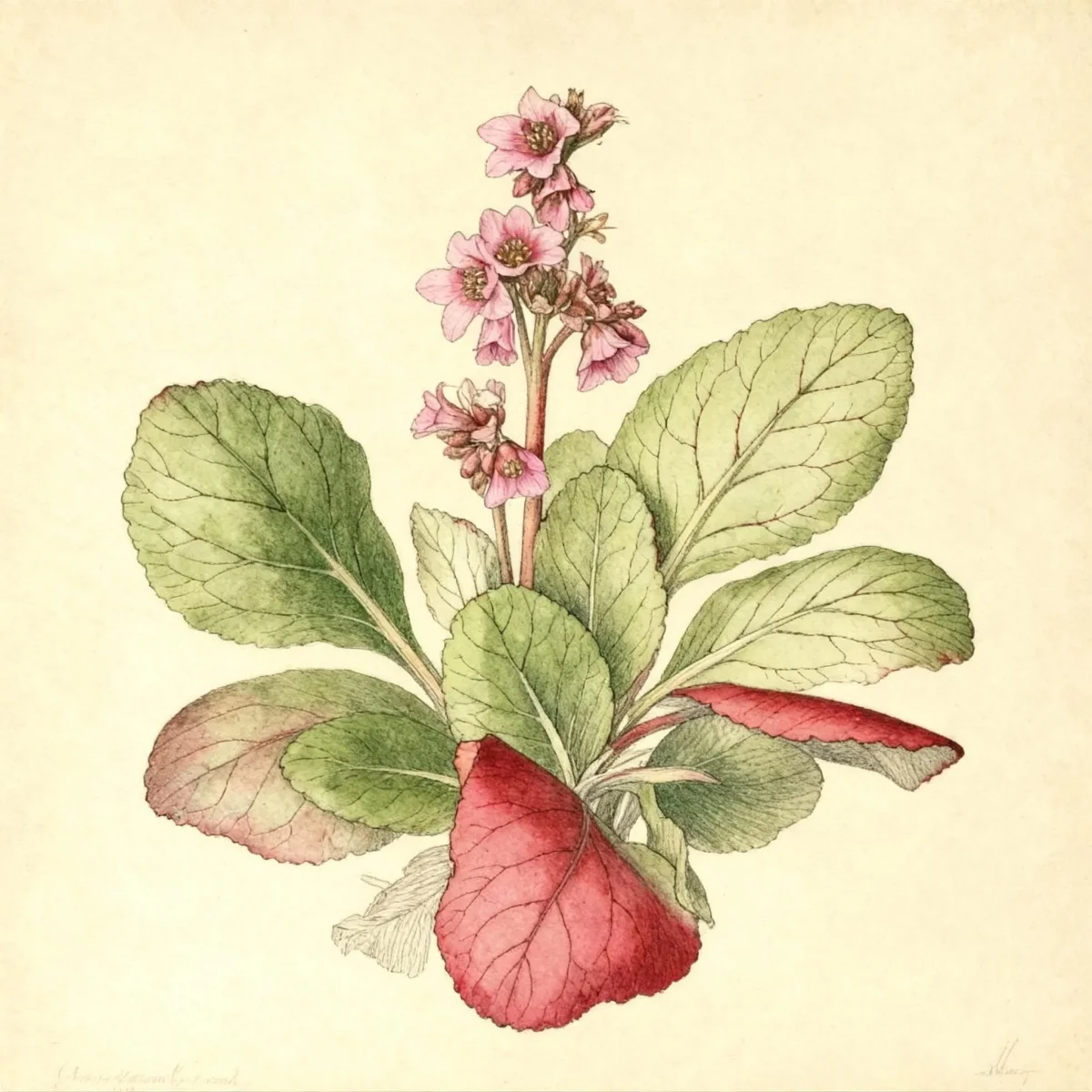
Pigsqueak (Bergenia crassifolia)
Bergenia crassifolia (Pigsqueak) is a tough, low-maintenance ground cover featuring succulent, leathery foliage and pink spring blooms.
Scroll down to discover growing tips, care requirements, companion plants, and more
Complete Plant Information
Overview
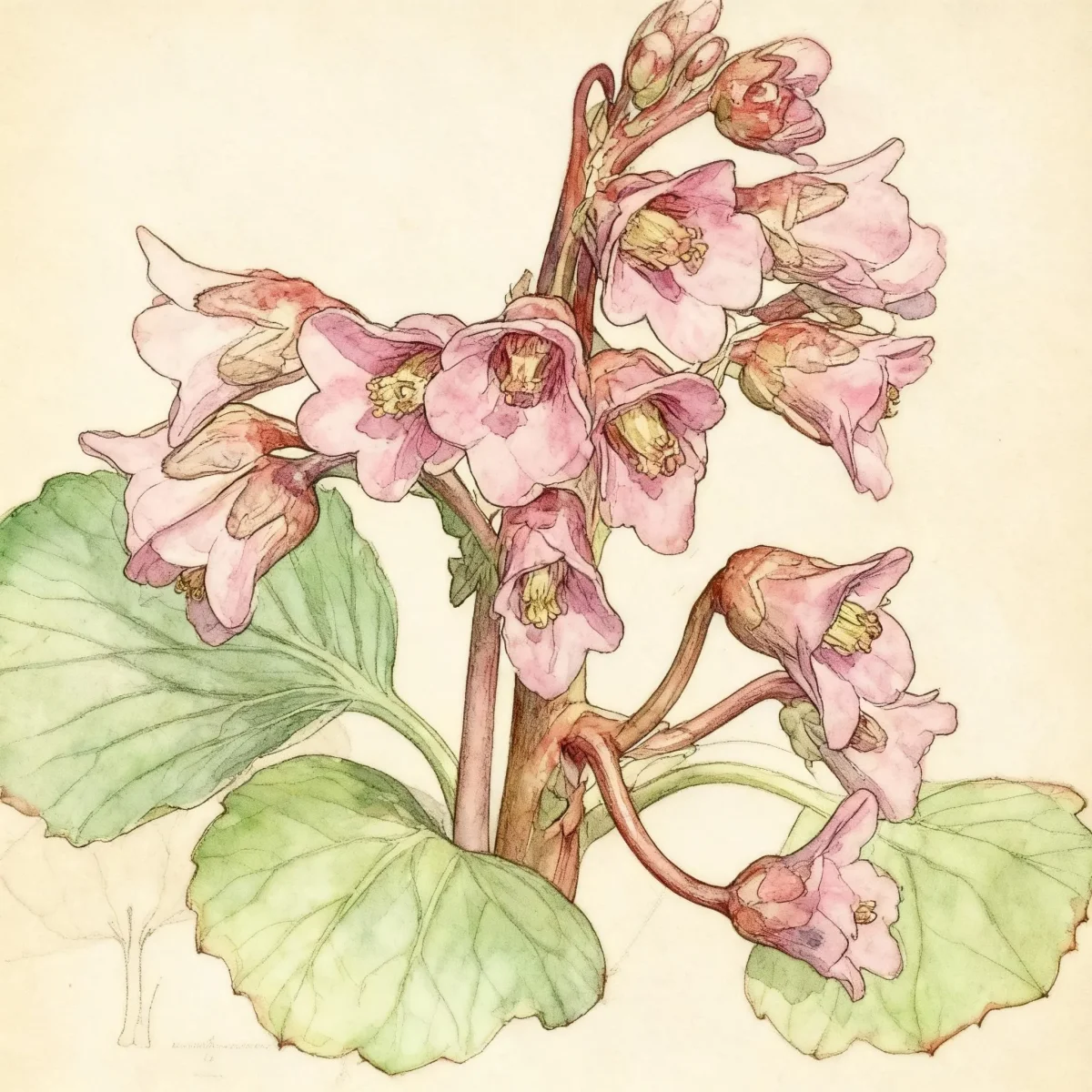
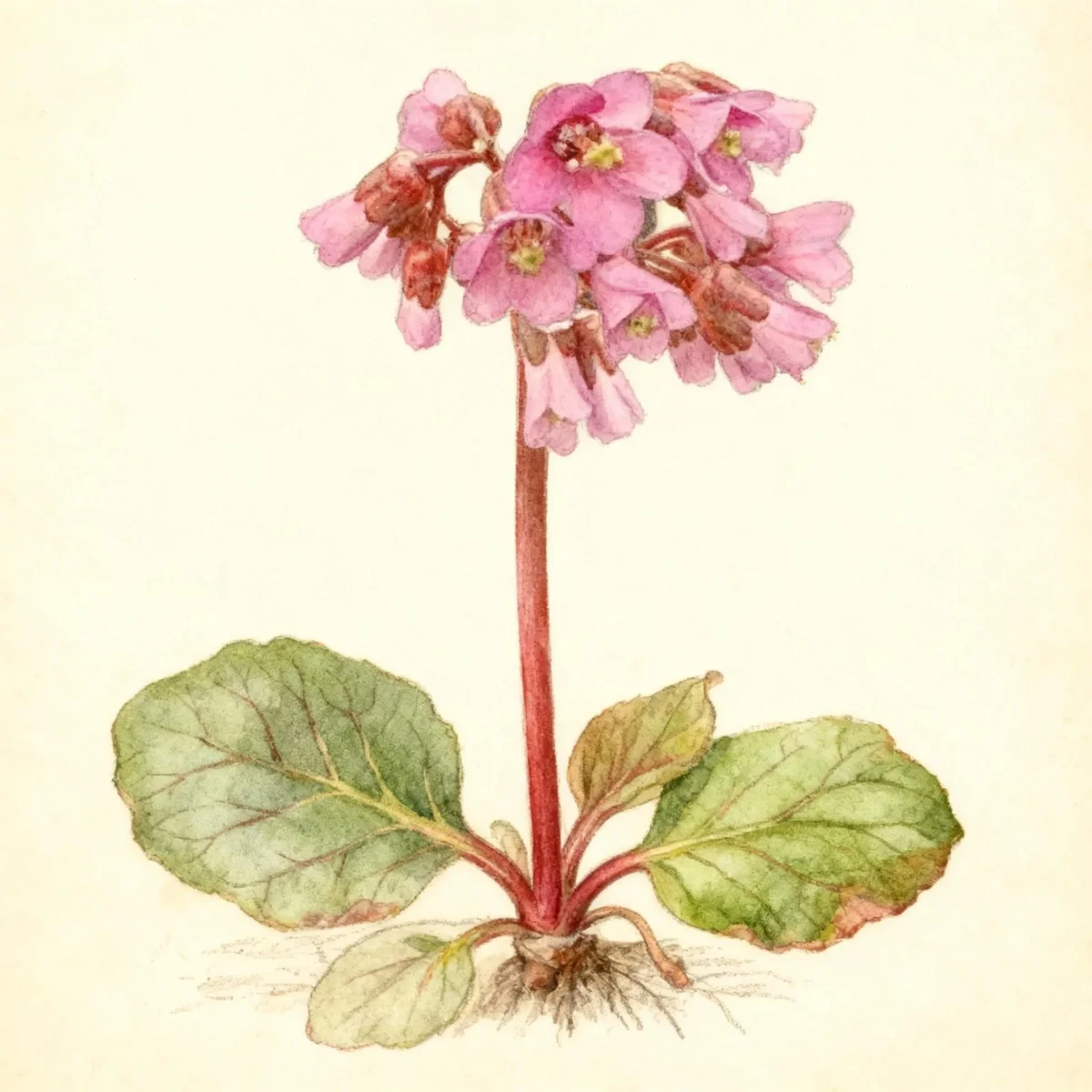
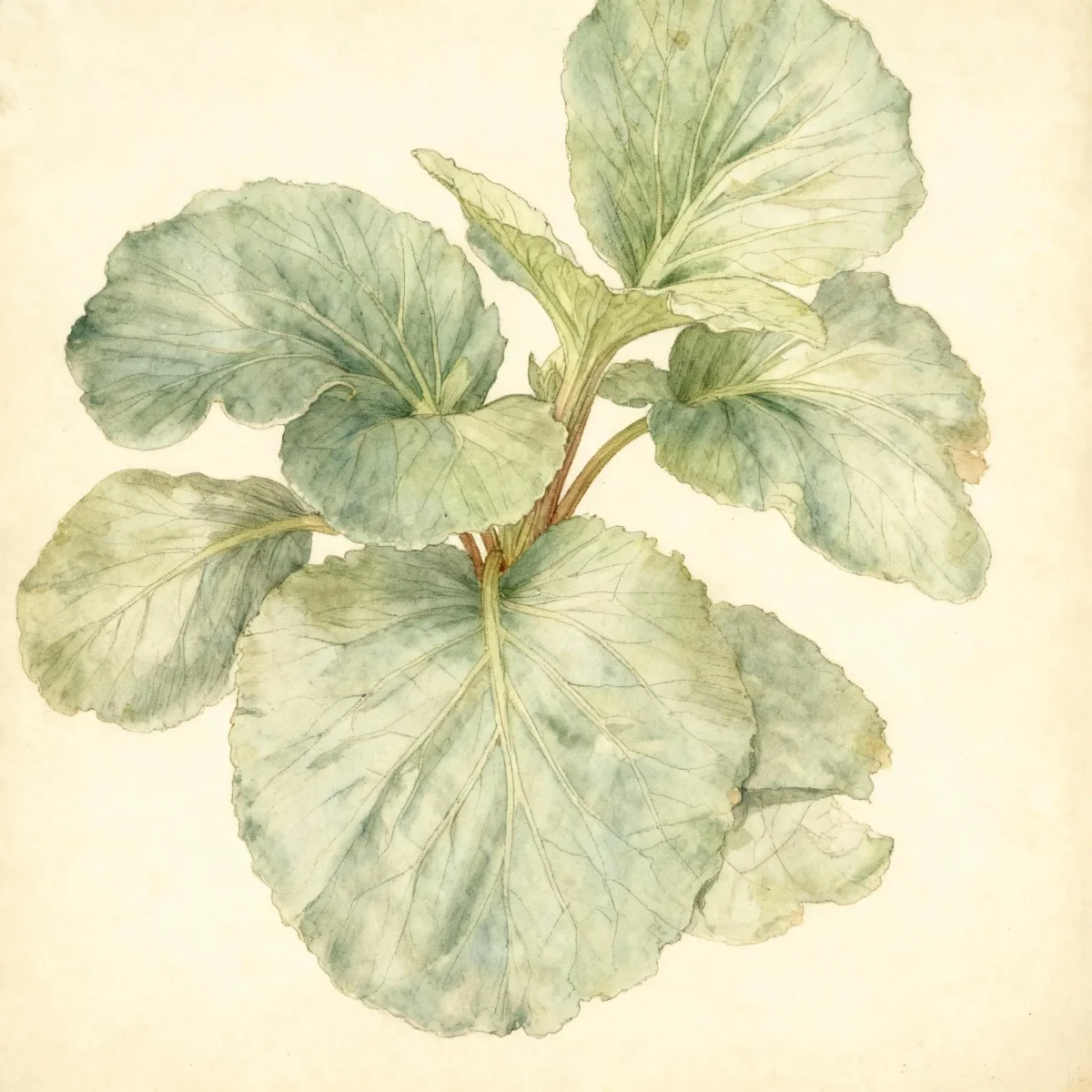
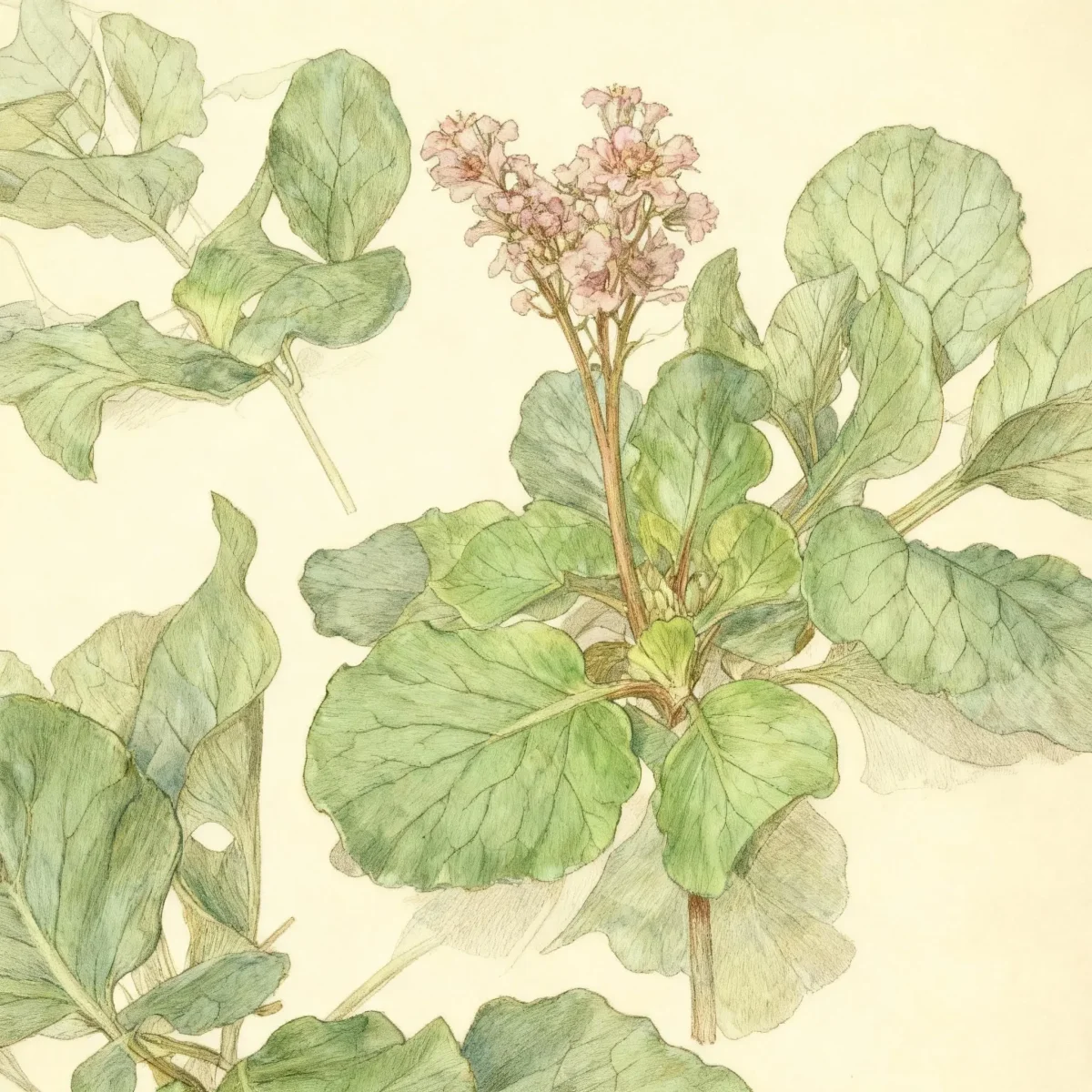
Bergenia crassifolia, often known by the charming name Pigsqueak, is a robust, large-leaved perennial valued for its evergreen structure and adaptability to shaded spaces. Its rosettes of thick, leathery leaves offer year-round interest, persisting even through harsh winter conditions, though some cosmetic damage may occur in colder regions. This reliable specimen forms dense, slowly spreading clumps, making it an excellent textural addition to the landscape.
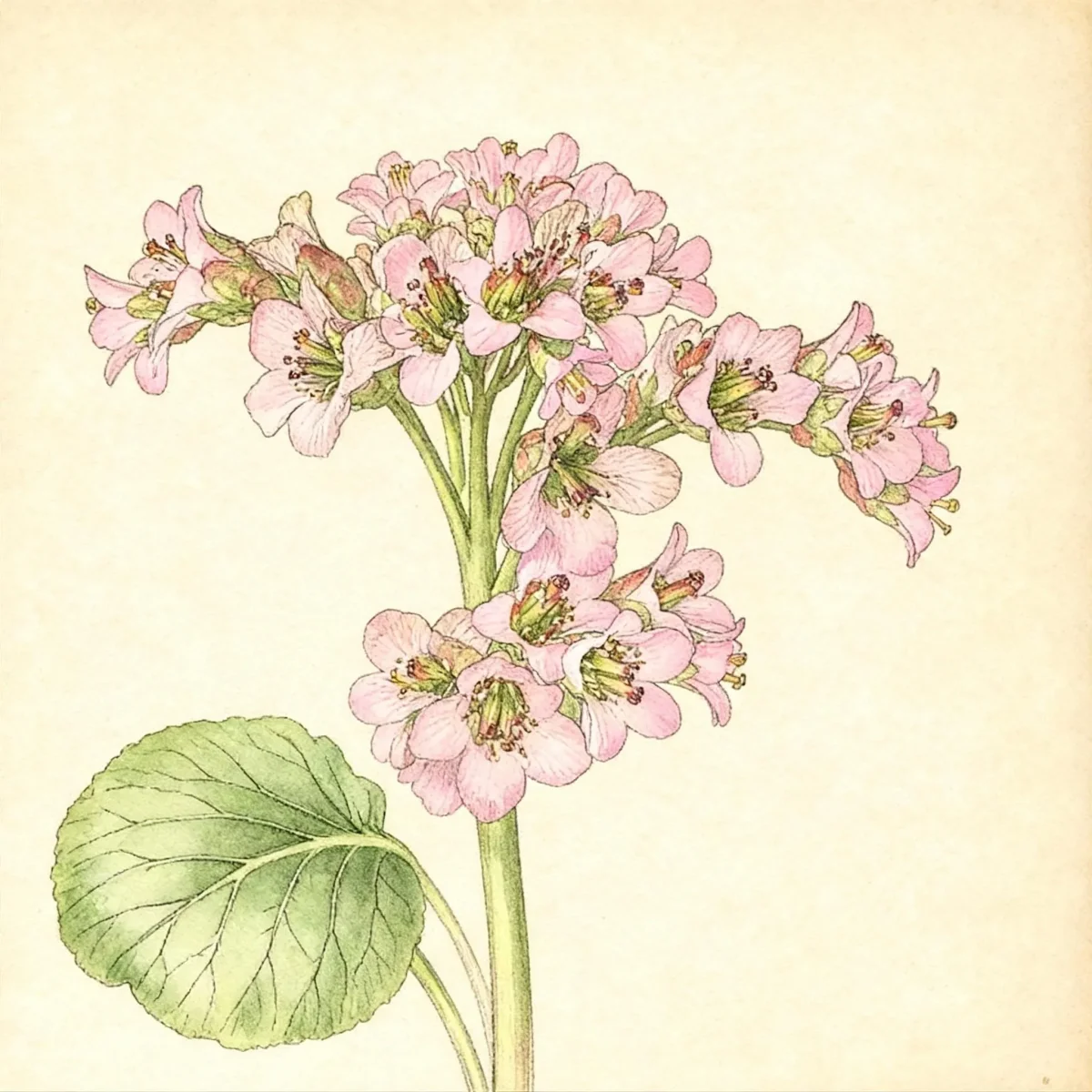
This plant delivers a welcome display of lavender-pink flowers in mid to late spring, emerging atop stiff stalks that rise above the basal foliage. Gardeners appreciate Bergenia crassifolia for its low-maintenance profile and striking texture, which contrasts beautifully with finer-leaved woodland plants. Whether used as a permanent groundcover or an edging accent, the structure provided by Bergenia crassifolia is invaluable in woodland or shade gardens.
The unique common name, Pigsqueak, is derived from the sound made when one rubs the leaves together, offering a memorable characteristic. As a native of rocky cliffs in Northeastern Asia, Bergenia crassifolia is inherently tough, tolerating periods of drought once established, though consistent moisture yields the best performance.
Fast Facts
- Plant Family: Saxifragaceae
- Plant Type: Herbaceous perennial
- Native Range: Northeastern Asia
- Hardiness Zones: USDA Zones 4-8
- Size at Maturity:
- Height: 1-1.5 ft
- Spread: 0.75-1 ft
- Bloom Time: April to May
- Bloom Description: Pink
- Sun Exposure: Part shade to full shade
- Water Needs: Medium
- Maintenance Level: Low
How to Grow
Start planting Pigsqueak in locations offering partial shade to deep shade, ensuring the soil is organically rich and drains well. While Bergenia crassifolia prefers consistently moist conditions, avoid waterlogged environments, which it tolerates poorly. Good drainage is crucial for preventing tuber rot and ensuring healthy rhizome development.
Maintenance is generally considered low for Bergenia crassifolia. Water mediumly, especially during dry spells, although this plant exhibits moderate drought tolerance if necessary. Fertilization is rarely required if the soil is amended well at planting; rich organic matter suffices for long-term health.
A primary seasonal task involves cleaning up the foliage. In late winter or early spring, prune away any leaves that were damaged or browned by winter severity, particularly in colder northern zones. Promptly deadhead spent flower stalks to maintain a tidy appearance, as this encourages energy retention for the next season’s display. Plants spread slowly via rhizomes, requiring little division, though propagation can easily be achieved through this method or by seed.
Landscape Uses
The structure of Bergenia crassifolia makes it an outstanding large-leaved ground cover, perfect for unifying woodland settings or shadowed borders where other plants struggle. Its dense, evergreen clumps effectively suppress weeds and provide crucial winter texture underneath taller shrubs. Consider using Pigsqueak along the edges of naturalized areas or water features, as it thrives near margins.
For border fronts, the foliage provides a solid base, contrasting beautifully with delicate ferns or hostas that share similar light requirements. Furthermore, the sturdy, thick leaves of Bergenia crassifolia are durable enough to be successfully utilized in casual floral arrangements, adding an unexpected sculptural element indoors. Edging paths and walkways with this plant offers a permanent, crisp line throughout the year.
Standout Features
Flower Qualities
- Showy
Noteworthy Characteristics
Bergenia crassifolia, commonly called leather bergenia or pig squeak, is a large-leaved evergreen perennial native to rocky cliffs from northwest China to Siberia. Rosettes of leathery, fine-toothed, obovate-rounded green leaves (up to 8” long by 7” wide) form dense, slowly-spreading clumps of foliage up to 12” tall. Fragrant lavender pink flowers bloom from March into early May in panicles atop rigid leafless stalks rising up to 18” tall, offering early spring color.
Tolerances
- Drought
- Heavy Shade
Potential Problems
This reliable perennial generally avoids serious insect or disease problems, contributing to its low maintenance reputation. Gardeners should primarily focus on aesthetic cleanup rather than active pest control. The main cosmetic issue arises from winter burn in harsh climates, where foliage can look tattered by early spring. Removal of this damaged foliage in late winter keeps the plant looking fresh for the spring bloom of Pigsqueak.
Frequently Asked Questions
What hardiness zones is Pigsqueak suitable for?
Bergenia crassifolia thrives in USDA Hardiness Zones 4 through 8, offering reliable performance across a wide range of temperate gardening environments.
How large does Bergenia crassifolia grow?
This perennial typically reaches heights between 1 and 1.5 feet tall, spreading slowly to occupy an area of 0.75 to 1 foot wide.
When does Bergenia crassifolia bloom?
The showy flowers appear relatively early in the season, blooming from April through May, displaying a pleasing shade of pink.
What sun exposure does Pigsqueak need?
Bergenia crassifolia flourishes best when sited in partial shade, although it is highly adaptable and tolerates full shade conditions well.
Conclusion
The combination of tough, evergreen foliage and early spring pink blossoms secures Bergenia crassifolia’s place as a garden staple. Its low maintenance needs and tolerance for shade make Pigsqueak an invaluable structural component for shaded garden designs. Assess your site conditions, ensuring adequate drainage, and plan your planting this fall or early spring to enjoy this dependable perennial.
Companion Planting
Selecting appropriate companions enhances the texture and visual appeal of the Pigsqueak planting area. Since Bergenia crassifolia prefers part shade and medium moisture, pair it with other shade-loving perennials whose foliage contrasts in texture or size. Good companions include various Hostas, especially cultivars with yellow or blue leaves to contrast the dark green of Bergenia crassifolia. Delicate ferns, such as Japanese Painted Ferns (Athyrium niponicum), offer a soft counterpoint to the thick, leathery leaves of Pigsqueak.
Consider plants that bloom slightly earlier or later than the April-to-May window of Bergenia crassifolia to ensure continuous seasonal interest. Scilla (Squill) provides early blue accents beneath the clumps, while Astilbe or Ligularia can take over the mid-summer color display as the Pigsqueak flowers fade. Always ensure companions share similar soil and water needs to maintain the overall health of the shaded border.
Seasonal Care Calendar
Spring cleanup is essential for maintaining the attractive appearance of Bergenia crassifolia. As soon as new growth begins to emerge in very early spring, cut back all the old, tattered, winter-battered foliage. This essential step maximizes light exposure for new shoots and reveals the flower scapes. Promptly deadhead the pink flower stalks once they are spent to focus the plant’s energy into root development and leaf quality.
Summer care revolves around vigilant moisture management. While Bergenia crassifolia tolerates drought, consistent medium watering yields the best leaf size and vigor, especially during peak heat. Avoid overhead sprinkling if possible to reduce the risk of fungal issues, though its tough leaves resist many common problems. Mulching deeply helps retain the cool, moist soil conditions it prefers.
Winter preparation for this tough perennial is straightforward, particularly in zones 4-8. Unlike many perennials, Bergenia crassifolia requires minimal protection; its evergreen nature is its best armor. However, if you experience significant leaf burn or expect heavy, prolonged snow cover in very cold areas, a light application of evergreen boughs placed near the crown can offer physical protection against wind desiccation.