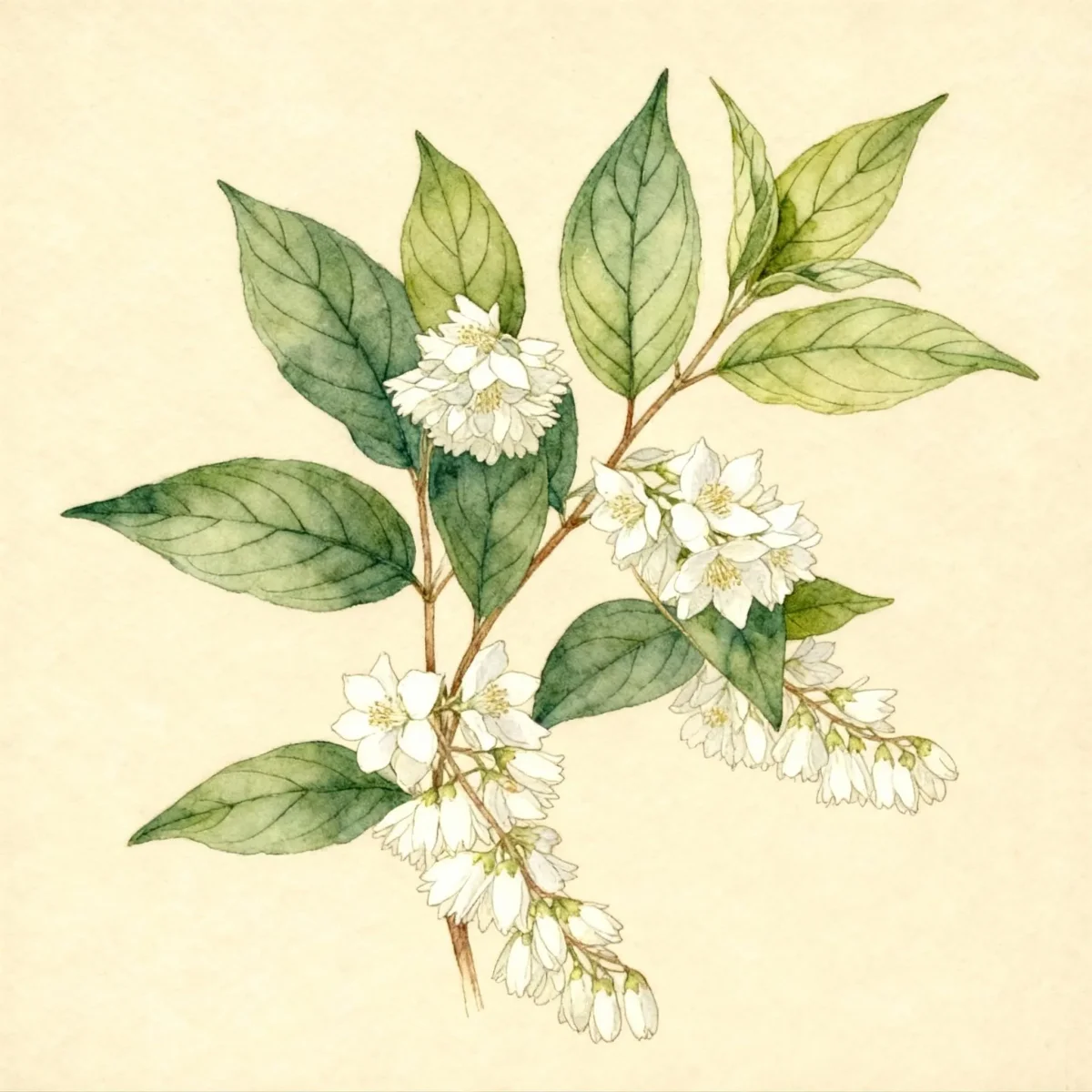
Fuzzy deutzia (Deutzia scabra)
The Fuzzy deutzia (Deutzia scabra) is a low-maintenance deciduous shrub from Japan, prized for its showy, fragrant white spring blooms.
Scroll down to discover growing tips, care requirements, companion plants, and more
Complete Plant Information
Overview
The Fuzzy deutzia, scientifically known as Deutzia scabra, is a highly desirable specimen for adding texture and bright spring color to the landscape. This upright, somewhat coarse deciduous shrub is native to Japan, reaching heights of 6 to 10 feet, making it noticeably substantial in the garden setting. Its mature branches offer added visual interest with exfoliating brown bark, contrasting nicely with the vibrant floral display.
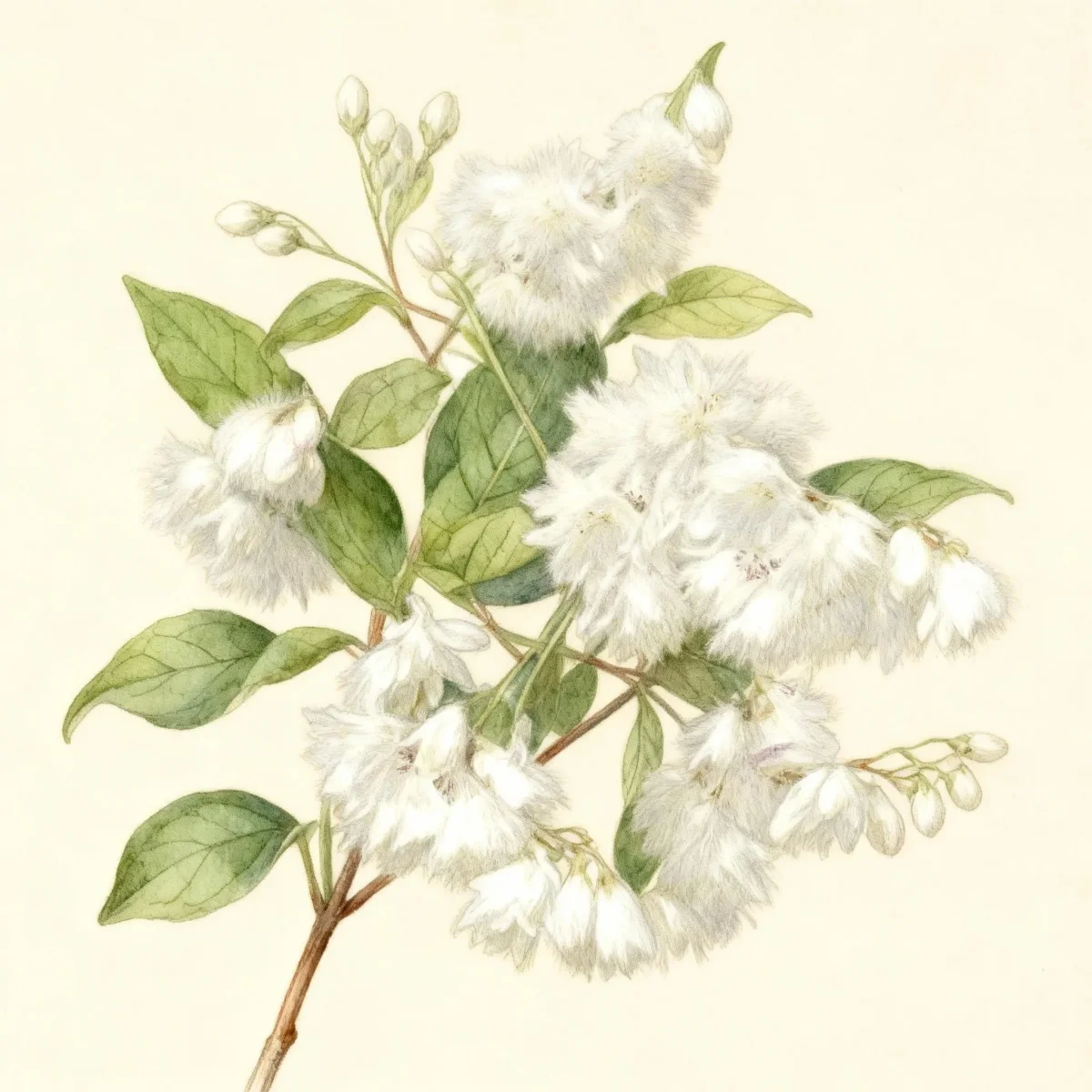
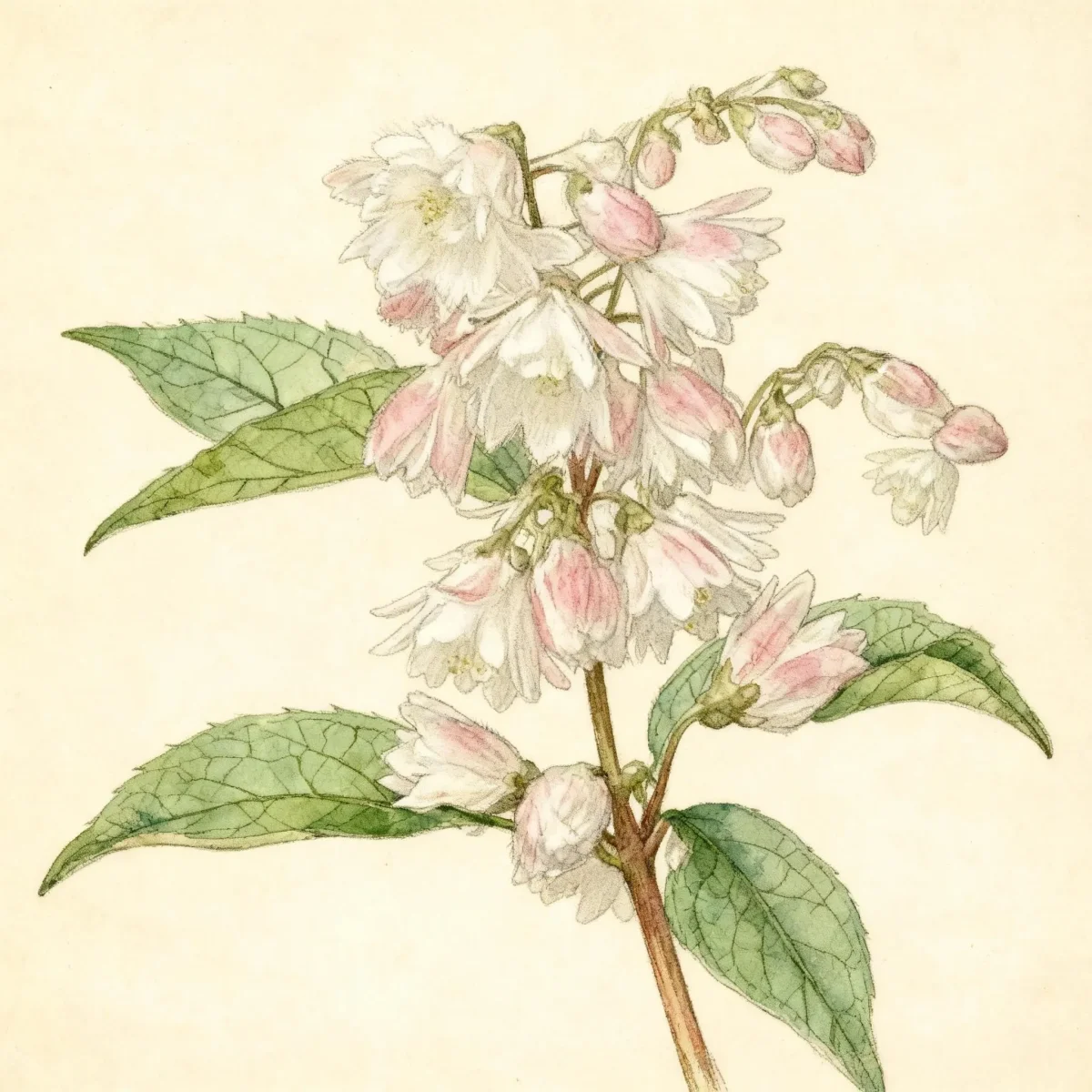
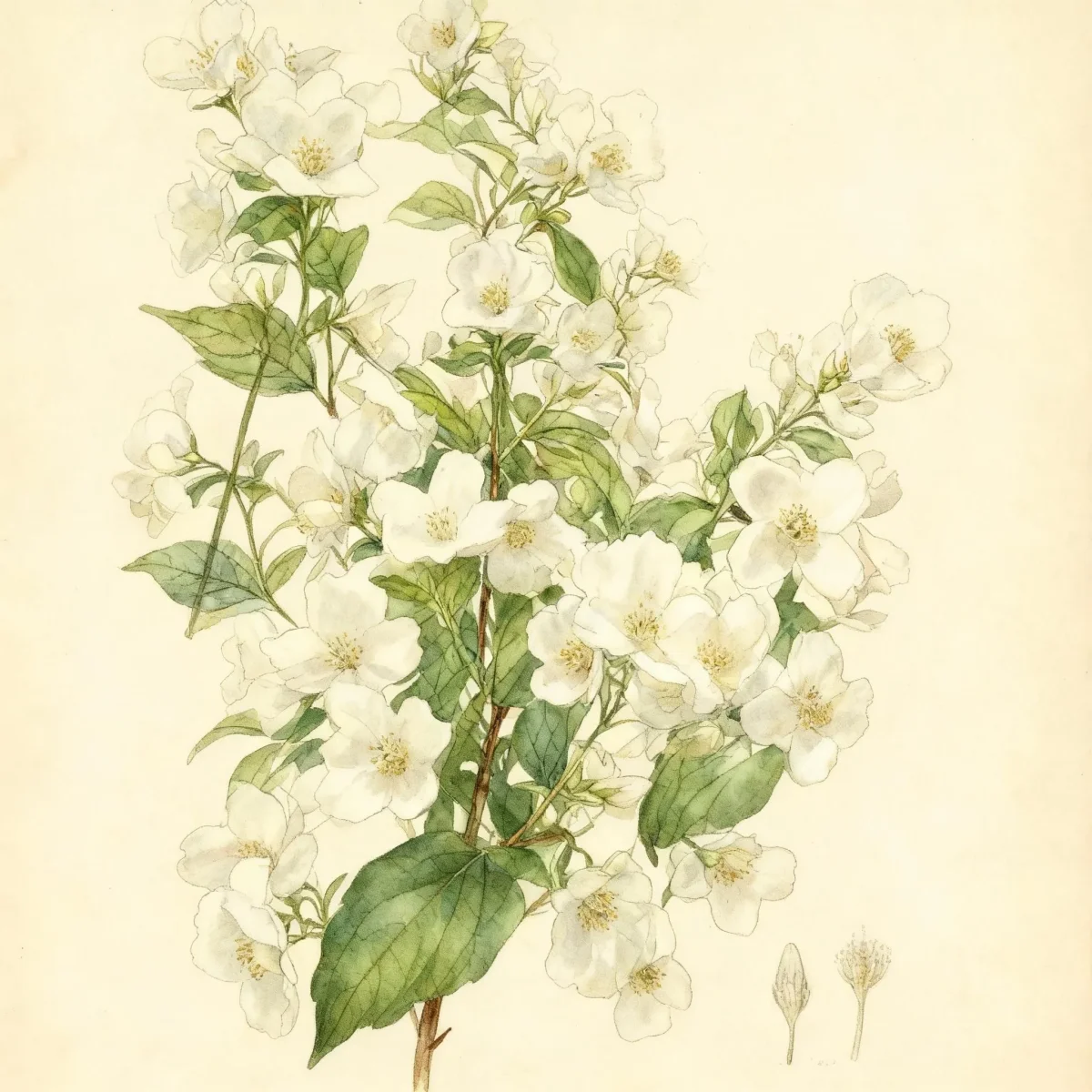
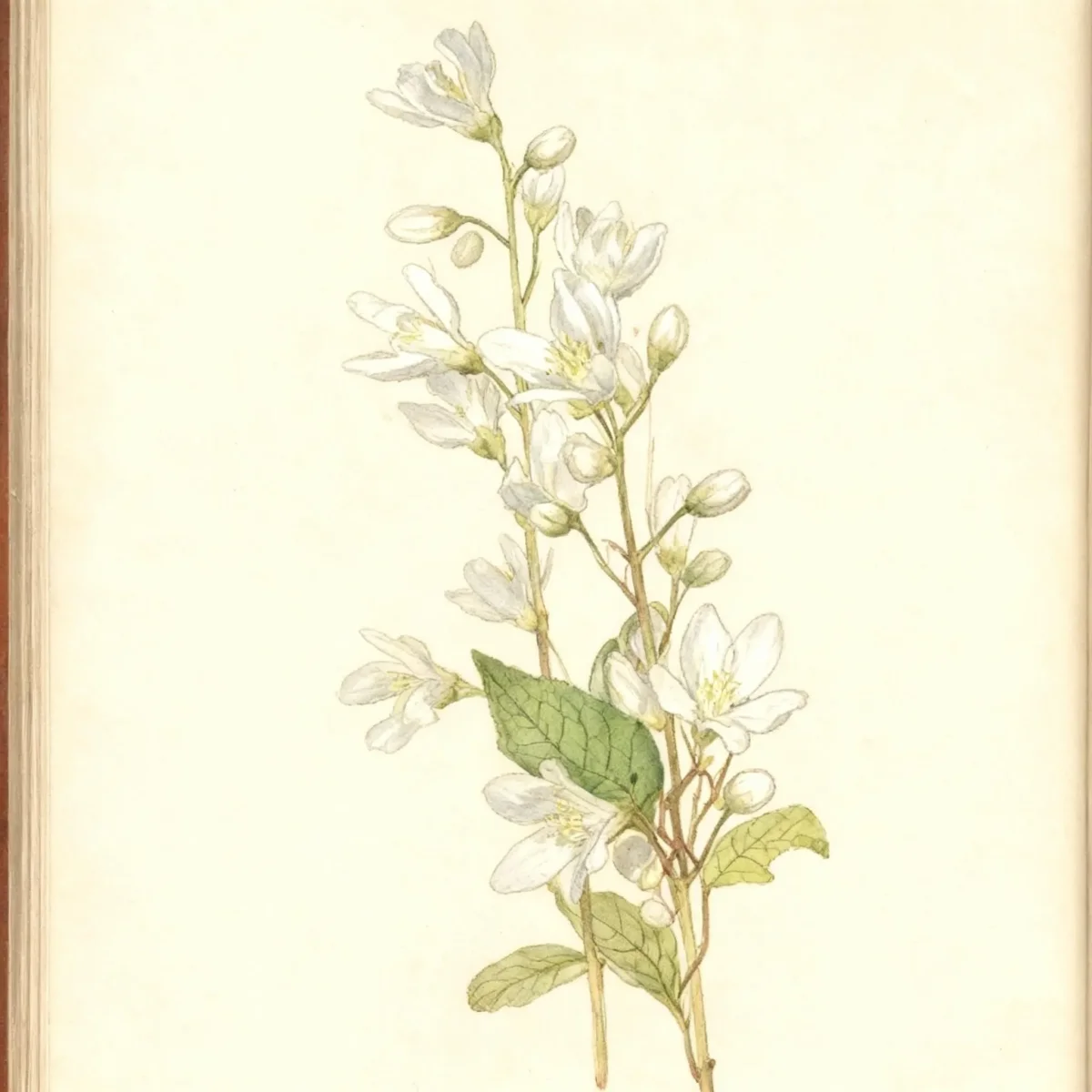
Gardeners favor Deutzia scabra for its reliable, low-maintenance nature and its profusion of tiny, star-shaped white flowers. These flowers appear densely packed in upright clusters across the shrub in late spring, creating a memorable two-week show. The common name, fuzzy deutzia, directly references the rough, hairy texture of its dull green leaves.
While generally tough, this plant performs best when given average moisture and well-drained soil, ensuring it can be successfully implemented in mixed shrub borders or as an informal hedge where year-round structure is needed. Its easygoing nature minimizes required input once established.
Fast Facts
- Plant Family: Hydrangeaceae
- Plant Type: Deciduous shrub
- Native Range: Japan
- Hardiness Zones: USDA Zones 5-8
- Size at Maturity:
- Height: 6-10 ft
- Spread: 4-8 ft
- Bloom Time: May to June
- Bloom Description: White
- Sun Exposure: Full sun to part shade
- Water Needs: Medium
- Maintenance Level: Low
How to Grow
For optimal establishment, plant Deutzia scabra in the spring or fall when conditions are cooler. This shrub establishes well in average, medium moisture, well-drained soil, though it exhibits a wide range of soil tolerance. While it tolerates partial shade, achieving the best flowering requires placement in full sun. If your site allows, providing moist, humusy soils will encourage robust growth.
Ongoing care for the Fuzzy deutzia remains simple. Maintain a medium watering schedule, ensuring the soil does not dry out completely, especially during hot, dry periods. Fertilization is usually unnecessary if the soil quality is decent; excessive feeding can lead to lax, leggy growth.
Pruning is perhaps the most important yearly task. Since the stems are somewhat short-lived, annual maintenance is necessary to remove dead branches. Perform this pruning immediately following the spring flowering period. Waiting until later in the summer will risk removing the wood that will carry next season’s blooms, so timing near the end of bloom time (late June) is critical for this Deutzia scabra.
Landscape Uses
The versatility of Deutzia scabra makes it an excellent structural plant in various landscape settings. It works perfectly when grouped in shrub borders, providing consistent seasonal structure and late-spring brightness. Furthermore, it performs admirably when used to create informal hedges, offering a softer, more naturalistic barrier compared to rigidly sheared plants.
Consider using the Fuzzy deutzia near foundations where its 6-10 foot height won’t overwhelm entryways, or allow it to naturalize slightly in open woodland areas where dappled light complements its aesthetic. Its coarse texture contrasts well with fine-leaved evergreens or broad-leafed perennials, adding depth to mixed plantings.
For effective massing, plant several specimens close enough to create a continuous screen or hedge effect. This shrub provides excellent background presence for lower-growing perennials such as Hostas, Astilbes (which appreciate similar moisture levels), or spring-blooming bulbs that will finish before the deutzia reaches peak flowering.
Standout Features
Flower Qualities
- Showy
- Fragrant
Noteworthy Characteristics
Deutzia scabra, commonly called fuzzy deutzia, is an upright, somewhat coarse, deciduous shrub that typically grows 6-10’ tall with spreading to arching branches that form a rounded crown. Tiny, fragrant, star-shaped, white flowers cover the shrub for about two weeks in an upright panicle display. Its leaves are notable for their rough, hairy texture, which gives the plant its common name.
Tolerances
- No serious insect or disease problems.
Potential Problems
The Fuzzy deutzia is generally regarded as pest and disease resistant, making it a reliable choice for the low-maintenance garden. However, under certain conditions, gardeners may observe occasional issues with aphids or minor leaf spots. Regular inspection during the active growing season can help catch minor infestations early.
If aphids appear, treatment with insecticidal soap or a strong spray of water is usually effective at knocking down populations. Poor air circulation or overly wet conditions may promote the development of leaf spots; ensuring proper spacing aligns with recommended height and spread will aid in prevention.
Frequently Asked Questions
What hardiness zones is Fuzzy deutzia suitable for?
This dependable shrub is suited for USDA Hardiness Zones 5 through 8, offering reliable performance across a wide temperate range.
How large does Deutzia scabra grow?
When mature, Deutzia scabra generally achieves a height between 6 and 10 feet tall, with a typical spread ranging from 4 to 8 feet wide.
When does Fuzzy deutzia bloom?
The characteristic white, fragrant flowers of the Fuzzy deutzia appear seasonally from late spring into early summer, specifically between May and June.
What sun exposure does Deutzia scabra need?
Deutzia scabra thrives best with full sun exposure, which encourages the most abundant flowering, but it will adapt well to partial shade conditions.
Conclusion
The Deutzia scabra, or Fuzzy deutzia, stands out due to its robust constitution and stunning, fragrant white blooms against textured foliage. Its low maintenance requirements and suitability for hedging or screening make it a practical asset for many gardens. Before planting, confirm that your garden falls within USDA Zones 5-8 and plan your pruning for immediately after the May-June bloom cycle concludes.
Companion Planting
Selecting appropriate neighbors for your Fuzzy deutzia enhances the overall texture and longevity of your shrub border. Consider pairing it with plants that enjoy similar medium moisture levels and well-drained soil, such as Hydrangeas, which share the same family background. Early spring bloomers like Daffodils or Tulips can provide foreground color that fades just as the Deutzia scabra begins its show.
For summer interest after the white flowers fade, incorporate perennials like Coral Bells (Heuchera) which offer contrasting foliage colors, or Japanese Forest Grass (Hakonechloa macra) for fine texture near the base of the shrub. Ensure there is enough space retained for good air movement around the deutzia to mitigate potential fungal issues.
Seasonal Care Calendar
Spring preparation involves clearing away any winter debris and ensuring the soil is consistently moist as new growth begins. This is also the ideal time to assess the shrub for any branches that may have died back over winter, though significant cosmetic pruning should wait.
Immediately following the May to June bloom, dedicate time to shaping the shrub and removing any older, less vigorous stems. Pruning after flowering is essential, as this signals the plant to put energy into next year’s flower buds rather than vegetative growth. During the summer, focus solely on watering needs, especially if rainfall is scarce.
Winter care is minimal for this hardy deciduous shrub. Avoid heavy fertilizing in late summer or fall, as this encourages soft new growth susceptible to early frost damage. A light layer of mulch can help moderate soil temperatures around the root zone.