Foam flower (Tiarella cordifolia)
Tiarella cordifolia (Foam flower) is a low-maintenance perennial bearing airy white flowers in May, perfect for shaded woodland gardens.
Scroll down to discover growing tips, care requirements, companion plants, and more
Complete Plant Information
Overview
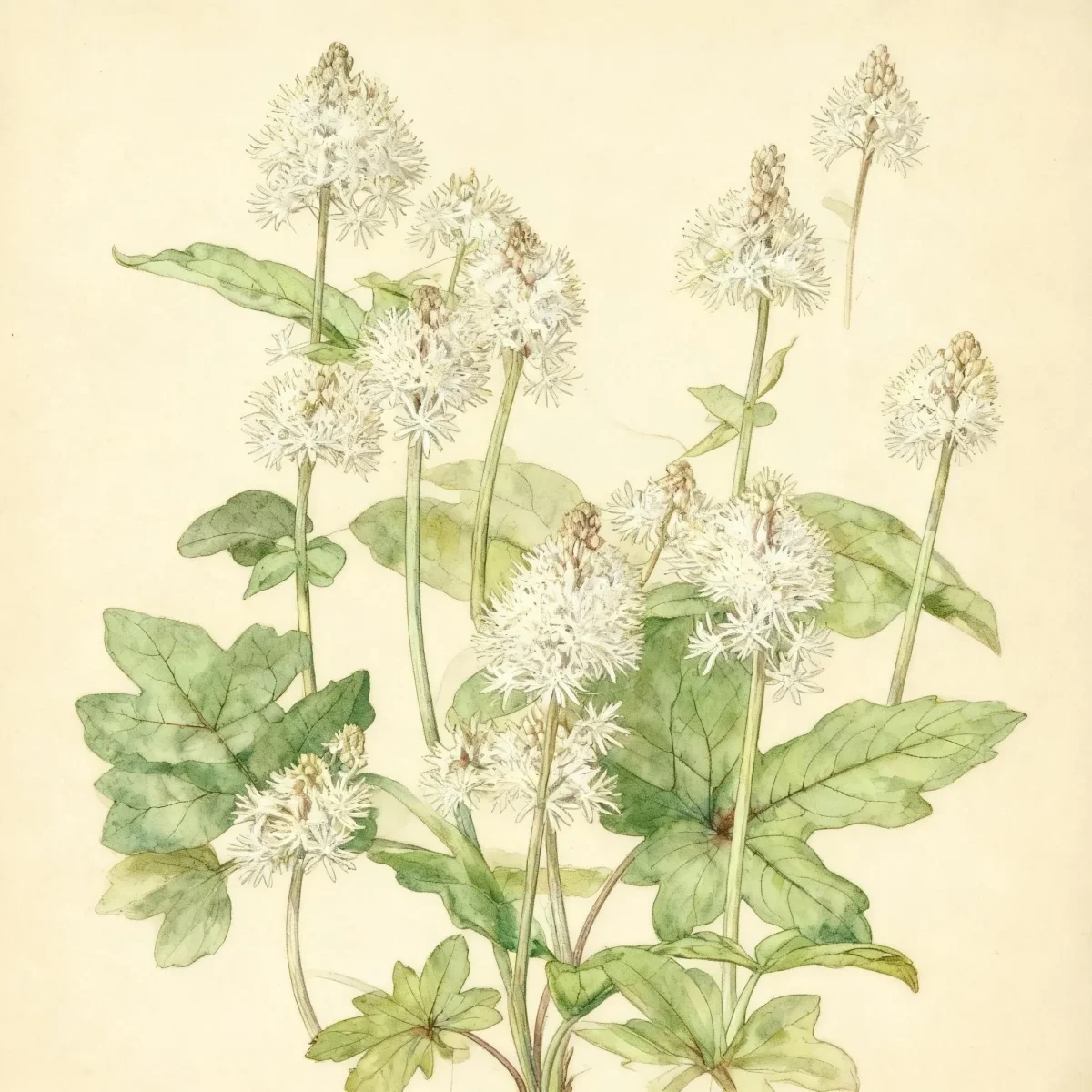
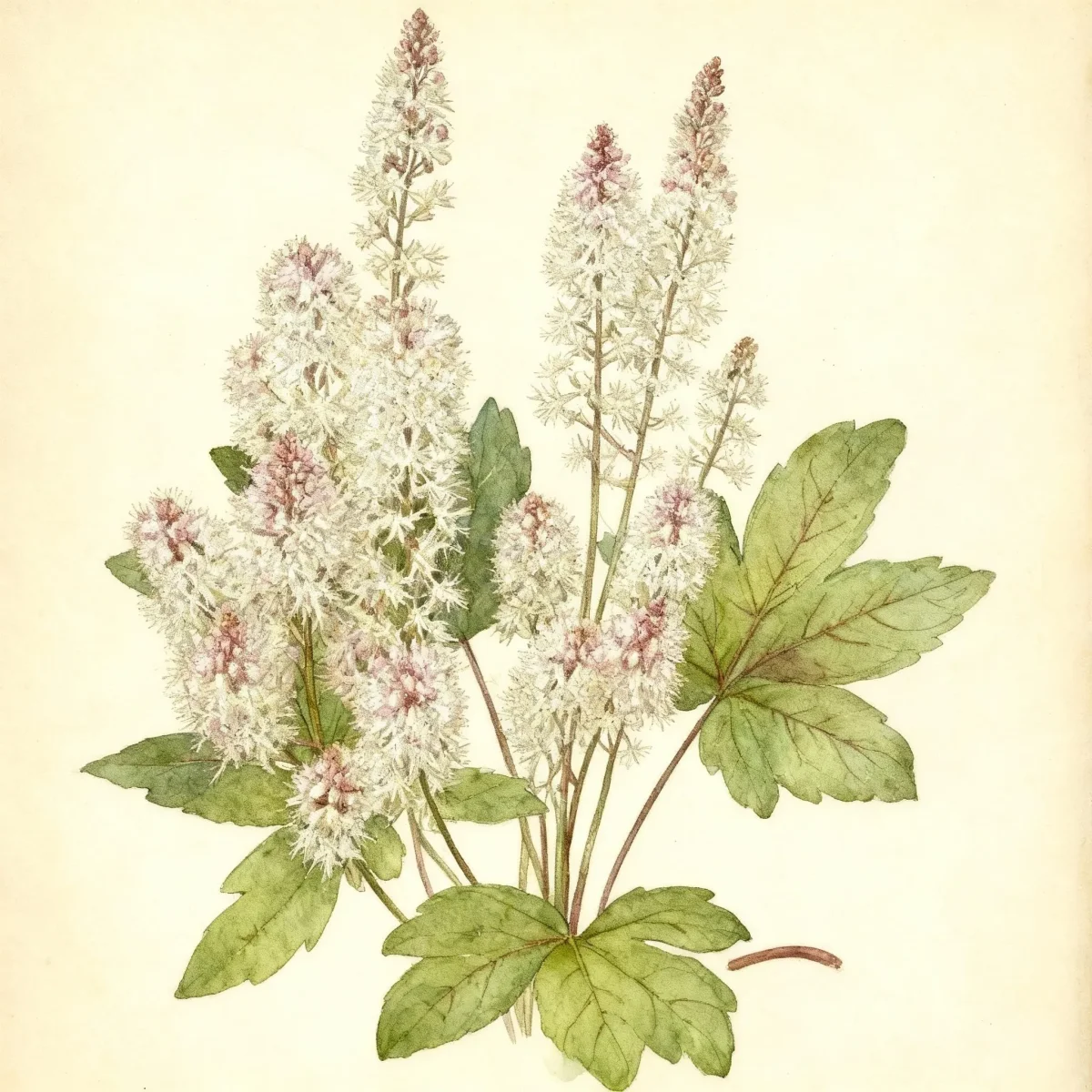
The Foam flower (Tiarella cordifolia) is a highly valued woodland native cherished for its delicate blooms and attractive foliage. This clump-forming perennial spreads gently via runners, quickly establishing dense ground coverage ideal for difficult-to-plant shaded areas. Its common name derives from the airy, frothy texture created by the masses of tiny white flowers held aloft on wiry stems in late spring.
As an herbaceous perennial native to Eastern North America, Tiarella cordifolia brings reliable, low-effort beauty to the shade garden. It thrives where many other flowering plants struggle, quickly forming attractive mounds of heart-shaped leaves that are semi-evergreen in milder climates. Gardeners appreciate the low maintenance requirements of the Foam flower.
For woodland renderings or naturalistic plantings, Tiarella cordifolia creates an exceptional effect. It blends well with ferns and other shade-lovers, providing seasonal interest that enhances biodiversity while suppressing unwanted weeds through its effective ground-covering habit.
Fast Facts
- Plant Family: Saxifragaceae
- Plant Type: Herbaceous perennial
- Native Range: Eastern North America
- Hardiness Zones: USDA Zones 4-9
- Size at Maturity:
- Height: 0.75-1 ft
- Spread: 1-2 ft
- Bloom Time: May
- Bloom Description: White or pink
- Sun Exposure: Part shade to full shade
- Water Needs: Medium
- Maintenance Level: Low
How to Grow
Plant Tiarella cordifolia during the spring or fall when temperatures are moderate. Select a location offering part shade to full shade; while it tolerates deeper shade, moderate light often yields better flowering. The ideal growing medium consists of average, medium quality soil that is well-drained but rich in organic matter.
Maintain consistently moist conditions for this plant; Foam flower prefers humusy, organically rich, and moisture-retentive soils. Ensure the soil does not dry out, especially during warmer months. Conversely, avoid poorly drained sites, as consistently wet soils, particularly during winter, can prove fatal to Tiarella cordifolia.
Maintenance is generally minimal. While the plant establishes, provide regular watering to keep the medium evenly moist. If you wish to maintain a neater appearance, remove the spent flower spikes after the bright bloom period finishes, which encourages a tidier foliage mound. In colder regions, the foliage may die back, but in milder zones, the leaves provide valuable semi-evergreen structure.
Landscape Uses
The primary strength of Foam flower lies in its capacity as a beautiful native ground cover, making it indispensable for softening large shaded areas. It is highly recommended for woodland gardens where its naturalistic habit allows it to spread via stolons, forming dense, attractive colonies that suppress weeds. Use Tiarella cordifolia along shaded border fronts or mass it near stream banks or moist niches.
For shaded rock gardens or naturalistic plantings, Tiarella cordifolia provides essential textural contrast to coarse-leaved shade companions. Consider planting it alongside hostas, bleeding hearts, or various native ferns. Its rapid clumping action ensures that challenging shady woodland floors become carpets of fine texture and seasonal white blooms.
Standout Features
Flower Qualities
- Showy
Noteworthy Characteristics
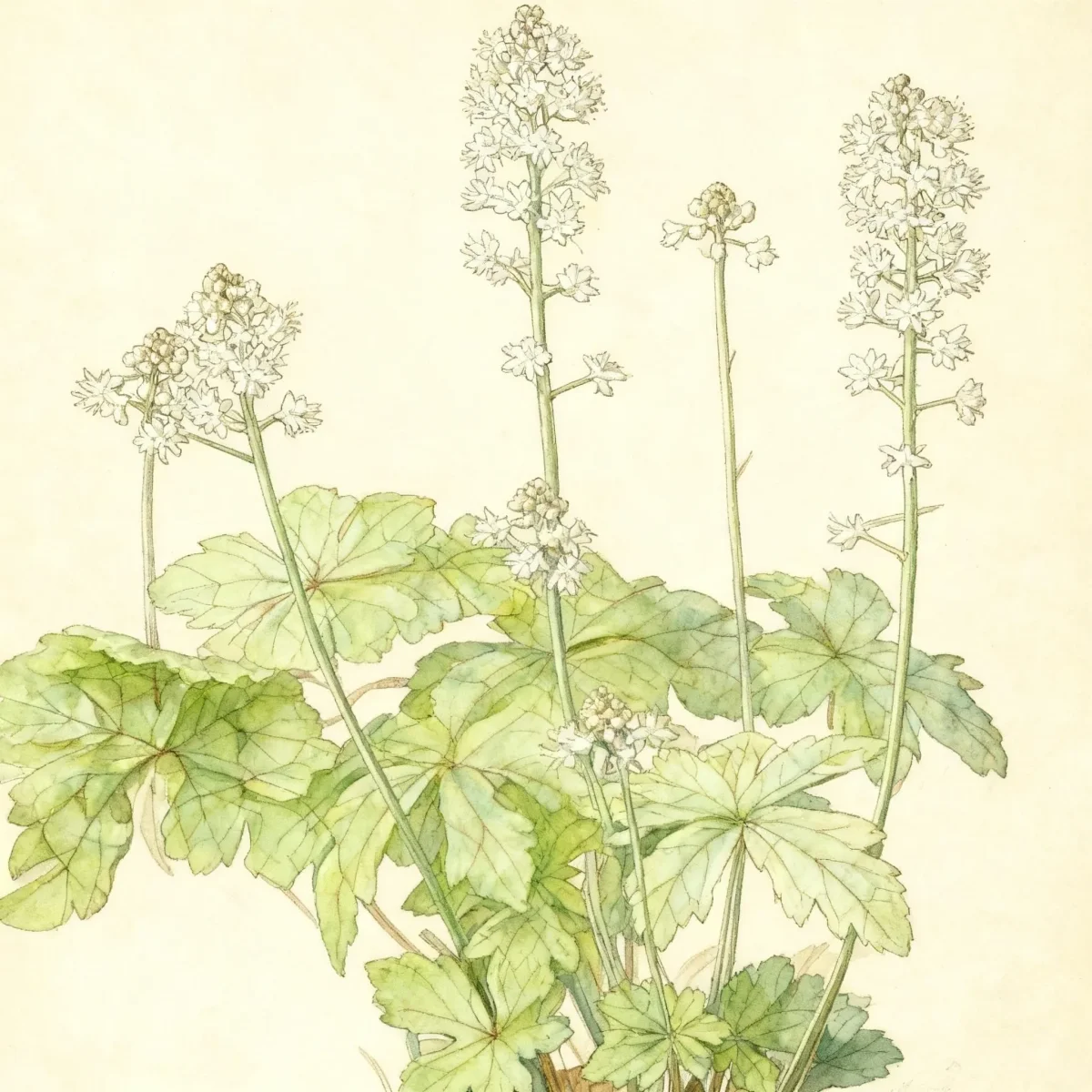
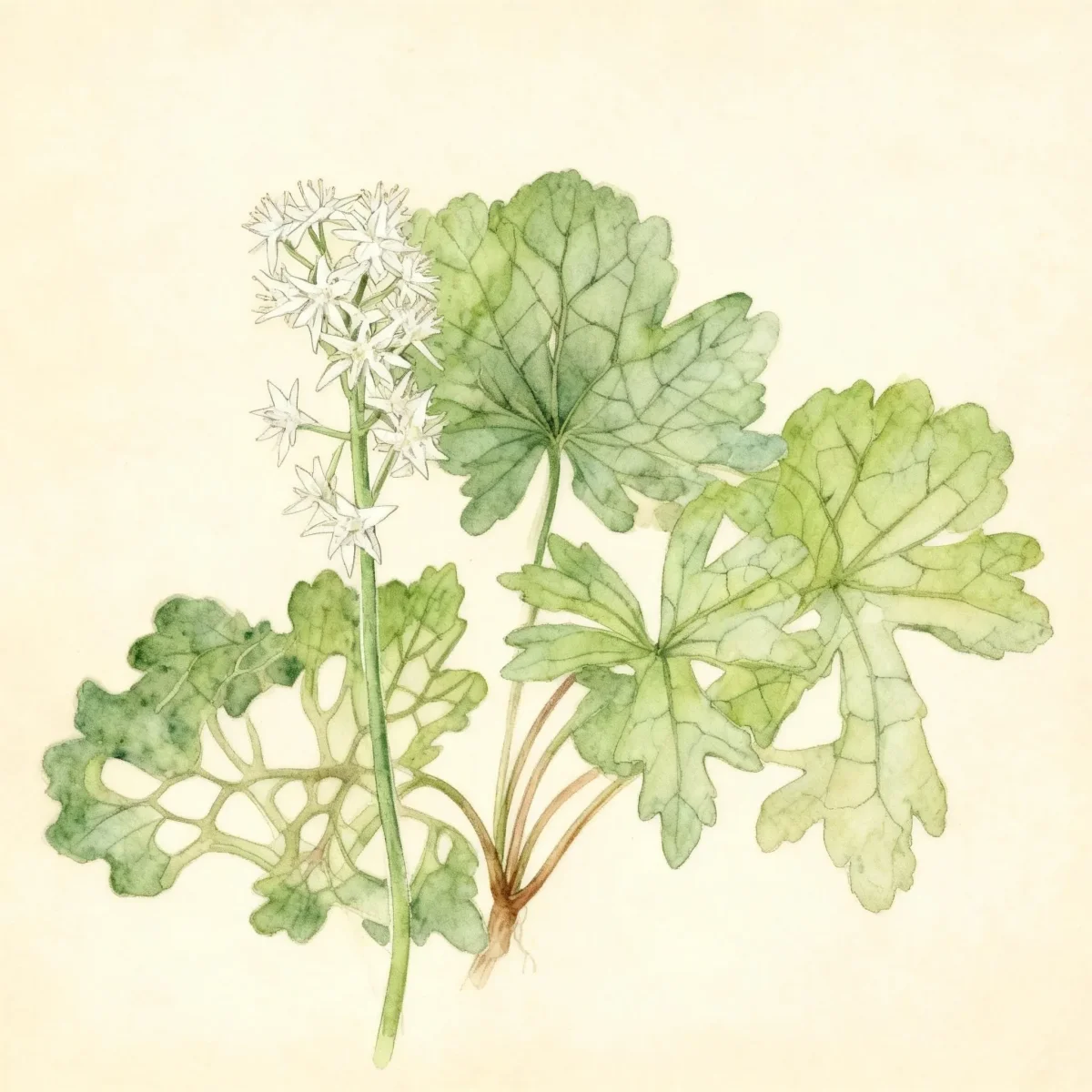
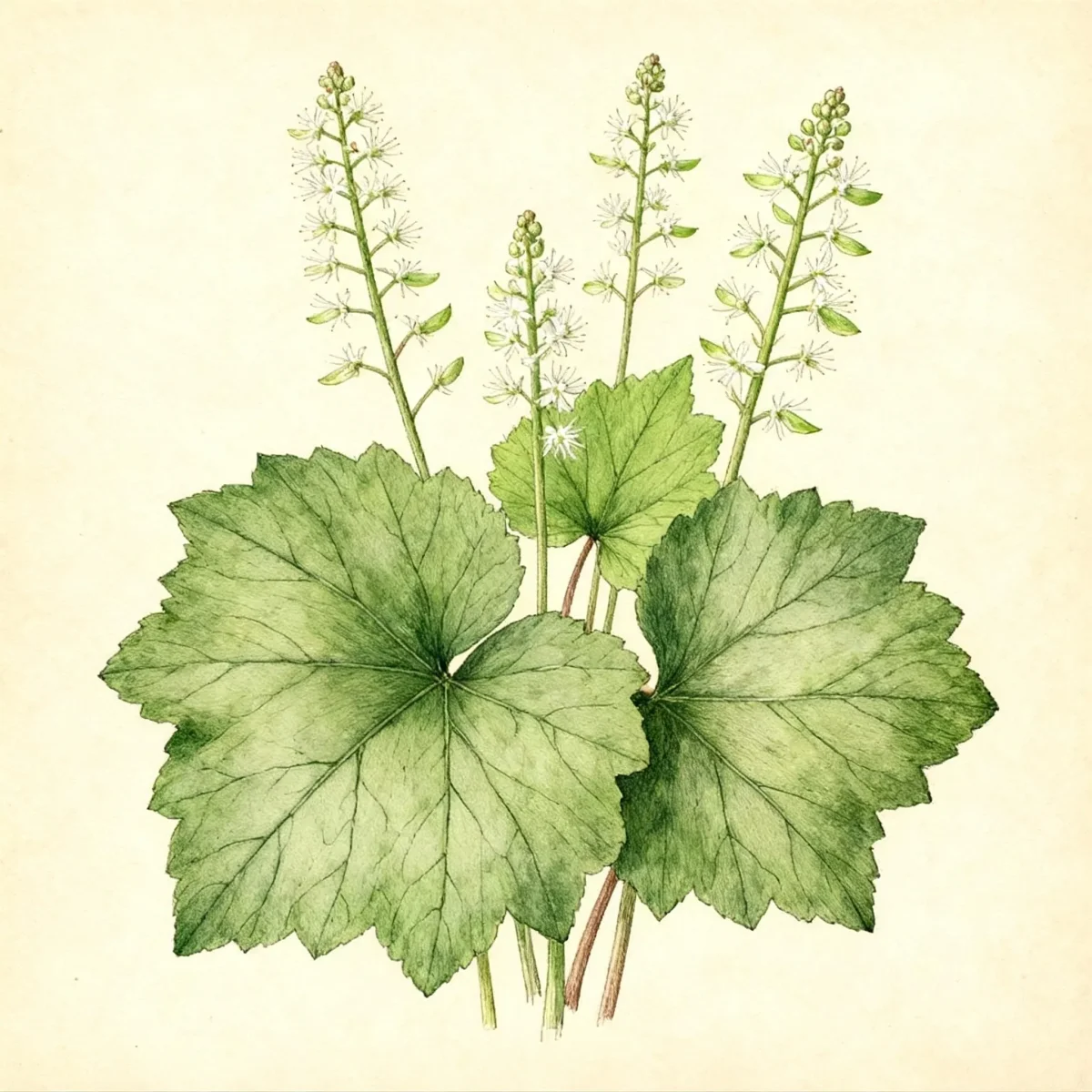
Tiarella cordifolia, commonly called foamflower, is clump-forming perennial which spreads rapidly by runners (stolons) to form dense, 1-2’ wide clumps of foliage. Plants are in the same family as and somewhat suggestive of Heuchera, Tellima and Mitella. Semi-glossy, heart-shaped, 3-5 lobed leaves (4” across) rise directly from the stolons, sometimes showing reddish variegation along the veins. Tiny, white flowers with very long stamens (giving the foamy texture) appear in airy racemes in spring for about six weeks on erect stems that rise well above the foliage clump.
Tolerances
- Rabbit
- Deer
Potential Problems
Tiarella cordifolia generally exhibits strong resilience, rarely suffering from serious insect or disease issues. Good air circulation and proper watering are key preventative measures for overall plant health in the shade. Avoid planting in heavy clay that remains waterlogged, as this is the most common cause of failure, often leading to root rot issues. Focus on amending soil with rich organic matter prior to planting to ensure ample drainage.
Frequently Asked Questions
What hardiness zones is Foam flower suitable for?
The Foam flower (Tiarella cordifolia) is reliably hardy in USDA Zones 4 through 9.
How large does Tiarella cordifolia grow?
This herbaceous perennial typically reaches a height between 0.75 and 1 foot tall, spreading to cover an area 1 to 2 feet wide.
When does Foam flower bloom?
Tiarella cordifolia produces its characteristic blooms in May, displaying airy racemes of small white or pink flowers.
What sun exposure does Tiarella cordifolia need?
Place your Foam flower where it receives part shade to full shade conditions for optimal growth.
Conclusion
The Foam flower, Tiarella cordifolia, offers gardeners a fantastic combination of low maintenance, appealing semi-evergreen foliage, and ethereal spring flowers. Its rapid growth as a spreading ground cover makes it an excellent solution for shady, native planting schemes. Ensure your garden site offers rich, well-drained soil before planting to maximize the impact of this beautiful woodland treasure.
Companion Planting
When designing a shaded border, select companions that share the medium water needs and preference for rich soil exhibited by Tiarella cordifolia. Excellent partners include various species of native ferns, which complement its fine texture with broader leaf shapes. Hosta cultivars provide bold foliage contrast, while spring ephemerals like Trillium or Epimedium pair well culturally and aesthetically with the spreading habit of the Foam flower.
Design Ideas
The primary role of Tiarella cordifolia is mass planting to achieve a cohesive ground cover effect under high canopy trees or along woodland edges. Use it as a living mulch to suppress weeds while framing later-blooming shade perennials, such as Astilbe or white-flowering Rodgersia. Its low stature makes it perfect for the front of a border, preventing taller plants from obscuring the delicate flowers of the Tiarella cordifolia in spring.