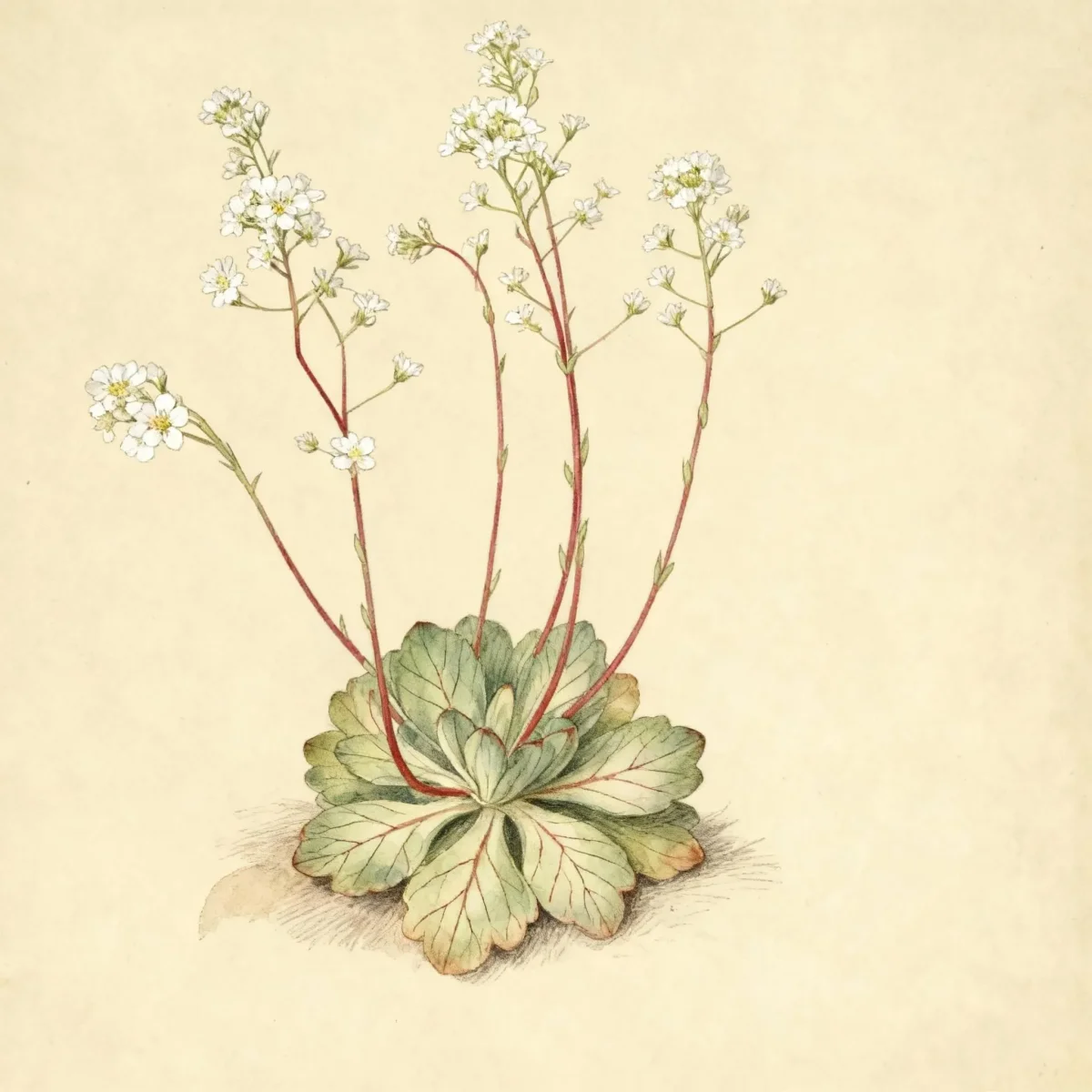
Fringe cup (Tellima grandiflora)
Tellima grandiflora, or Fringe cup, is a low-maintenance perennial native to Western North America, valued for its unique flowers.
Scroll down to discover growing tips, care requirements, companion plants, and more

Complete Plant Information
Overview
Tellima grandiflora, commonly known as Fringe cup, is an appealing herbaceous perennial cherished for its delicate, fringed flowers and attractive foliage structure. Native to the moist woodlands of Western North America, this plant brings reliable ground cover and woodland charm to shaded garden spaces. It forms dense colonies via spreading rhizomes, making it an excellent choice for naturalizing under tree canopies.
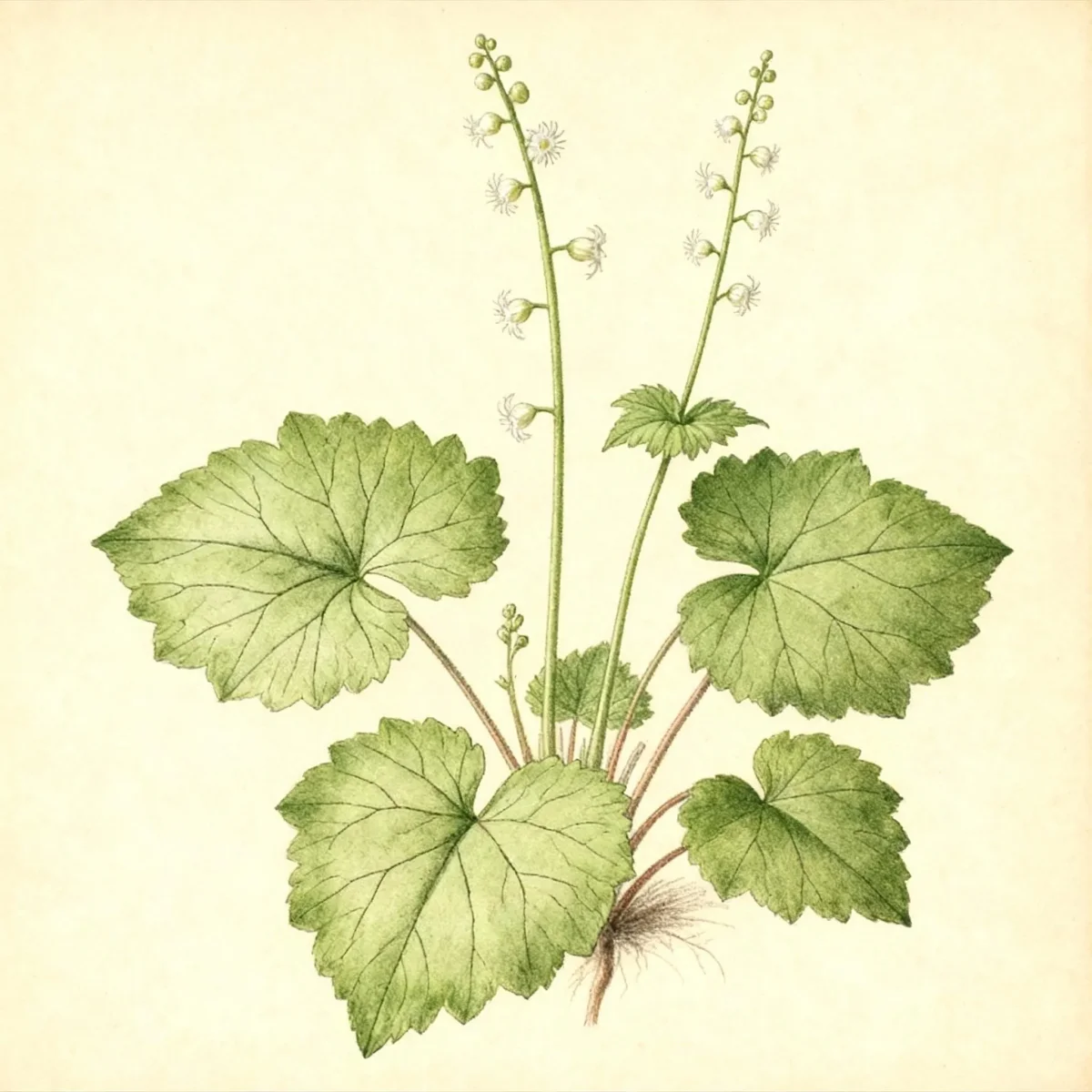
The primary aesthetic draw of Fringe cup is its unique spring bloom. Bell-shaped, greenish-white flowers, featuring distinctly reflexed and fringed petals, are held in airy racemes well above the basal mound of foliage. This spreading nature, combined with low maintenance requirements, makes Tellima grandiflora a highly practical addition for gardeners seeking sustainable beauty in dappled light areas.
For gardeners in cooler climates, Tellima grandiflora performs exceptionally well, thriving where hot, humid summers are infrequent. Its semi-evergreen leaves offer year-round structure, though they may require tidying in colder winter zones. Utilizing the Fringe cup effectively results in a lush, low-growing tapestry perfect for woodland and naturalistic plantings.
Fast Facts
- Plant Family: Saxifragaceae
- Plant Type: Herbaceous perennial
- Native Range: Western North America
- Hardiness Zones: USDA Zones 4-7
- Size at Maturity:
- Height: 1-2 ft
- Spread: 1-2 ft
- Bloom Time: April to May
- Bloom Description: White or pink
- Sun Exposure: Part shade
- Water Needs: Medium
- Maintenance Level: Low
How to Grow
The Fringe cup establishes best when planted in the cool seasons, ensuring it can settle its roots before summer heat arrives. Optimal placement requires part shade protection; avoid full afternoon sun, especially in hotter regions. Tellima grandiflora thrives in humus-rich, moisture-retentive soils that are consistently medium in moisture. Because it tolerates wet soils, it excels near stream banks or in perpetually moist woodland borders.
Maintenance for this reliable perennial is minimal. Water regularly to maintain medium soil moisture, especially during establishment. Fertilizing is rarely necessary if the plant is situated in rich garden soil or under deciduous trees that naturally drop leaf litter. Remove spent flower stems after blooming if you prefer a tidy ground cover appearance, although leaving them aids in natural reseeding.
Tellima grandiflora spreads slowly by underground rhizomes, gradually forming attractive colonies over time. Gardeners should note that this plant performs best in cooler climates; ensure adequate moisture and choose the shadiest available location if growing in the warmer limits of its hardiness range (Zone 7). Dividing established clumps is an easy method of propagation should you wish to control spread or relocate sections.
Landscape Uses
Tellima grandiflora is ideally suited for applications where a spreading, shade-loving groundcover is needed. Its ability to naturalize makes it perfect for softening large expanses beneath mature trees or integrating into wildflower gardens where hands-on care is difficult. Consider using Fringe cup on stream banks or pond edges, leveraging its tolerance for moist conditions.
This plant works beautifully as an edging element along shade borders, providing textural contrast against finer-leaved ferns or bold hostas. Because it stays relatively low (1-2 feet tall), it functions well as a mid-layer beneath taller flowering shrubs like rhododendrons or azaleas, creating layers of structure in a woodland garden setting. The slightly purplish tint some leaves take on adds seasonal complexity to the composition.
Standout Features
Flower Qualities
- Showy
Noteworthy Characteristics
Tellima grandiflora, commonly called fringecup, is a clump-forming but spreading perennial which is native to moist woods and slopes from Alaska to Idaho and central California. Fringecup is in the same family as and similar in appearance to Heuchera, Tiarella and Mitella (anagram of Tellima). Features a basal clump of toothed, shallowly-lobed, rounded, hairy, long-stalked, dark green leaves (to 4” across) which typically grow in a mound to 10” tall. Greenish-white, bell-shaped flowers appear in late spring in terminal racemes atop erect, wiry stems rising well above the foliage clump, bringing total height when flowering to about 24” tall.
Tolerances
- Tolerates wet soils
Potential Problems
This plant generally experiences no serious insect or disease problems, making the Fringe cup a low-risk choice for established landscapes. Its robust nature means it is seldom bothered by deer or rabbits. Prevention focuses on ensuring cultural needs are met; most issues arise from overly dry conditions or planting in scorching, full-sun locations, which stresses the foliage and weakens the plant’s natural resilience.
Frequently Asked Questions
What hardiness zones is Fringe cup suitable for?
Tellima grandiflora is reliably hardy in USDA Zones 4 through 7.
How large does Fringe cup grow?
This herbaceous perennial typically reaches a height and spread of 1 to 2 feet at maturity.
When does Tellima grandiflora bloom?
The unique flowers of Tellima grandiflora appear from April to May, displaying colors ranging from white to pink.
What sun exposure does Fringe cup need?
Tellima grandiflora prefers part shade conditions for the healthiest growth and best flower display.
Conclusion
The Fringe cup is a stellar choice for shaded, moist areas, offering low-maintenance care combined with intriguing spring flowers and attractive basal foliage. Integrating Tellima grandiflora into your woodland or shade garden provides reliable textural interest throughout the growing season. Ensure you check your USDA hardiness zone compatibility before planning your planting this fall or spring.
Companion Planting
Grouping Tellima grandiflora with other woodland natives enhances its aesthetic and cultural requirements. Excellent companions include various ferns, which appreciate the same moist, humus-rich soils and part shade. Consider pairing it with contrasting textures like Adiantum pedatum (Northern Maidenhair Fern) or shade-loving groundcovers like Tiarella species, its close relative.
These companions benefit from the root zone protection offered by the spreading rhizomes of the Fringe cup. Planting these shade-tolerant species together creates a layered, self-sustaining micro-ecosystem typical of moist, native North American woodlands. This strategy minimizes weeding needs while maximizing visual harmony.
Propagation Tips
The most straightforward method for increasing your stock of Tellima grandiflora involves division. Since the plant actively spreads via thick rhizomes, established clumps can be carefully dug up during the plant’s dormant season, typically early spring before new growth fully emerges or in early fall. Ensure each section separated retains numerous healthy roots and a few growing points.
Once divided, immediately replant the sections into their new locations, ensuring the crown sits at the same soil level as the parent plant. Water thoroughly after division to settle the soil and encourage new root establishment. This technique is highly effective for managing patches of Fringe cup that become too dense or for spreading coverage across a larger native garden area.