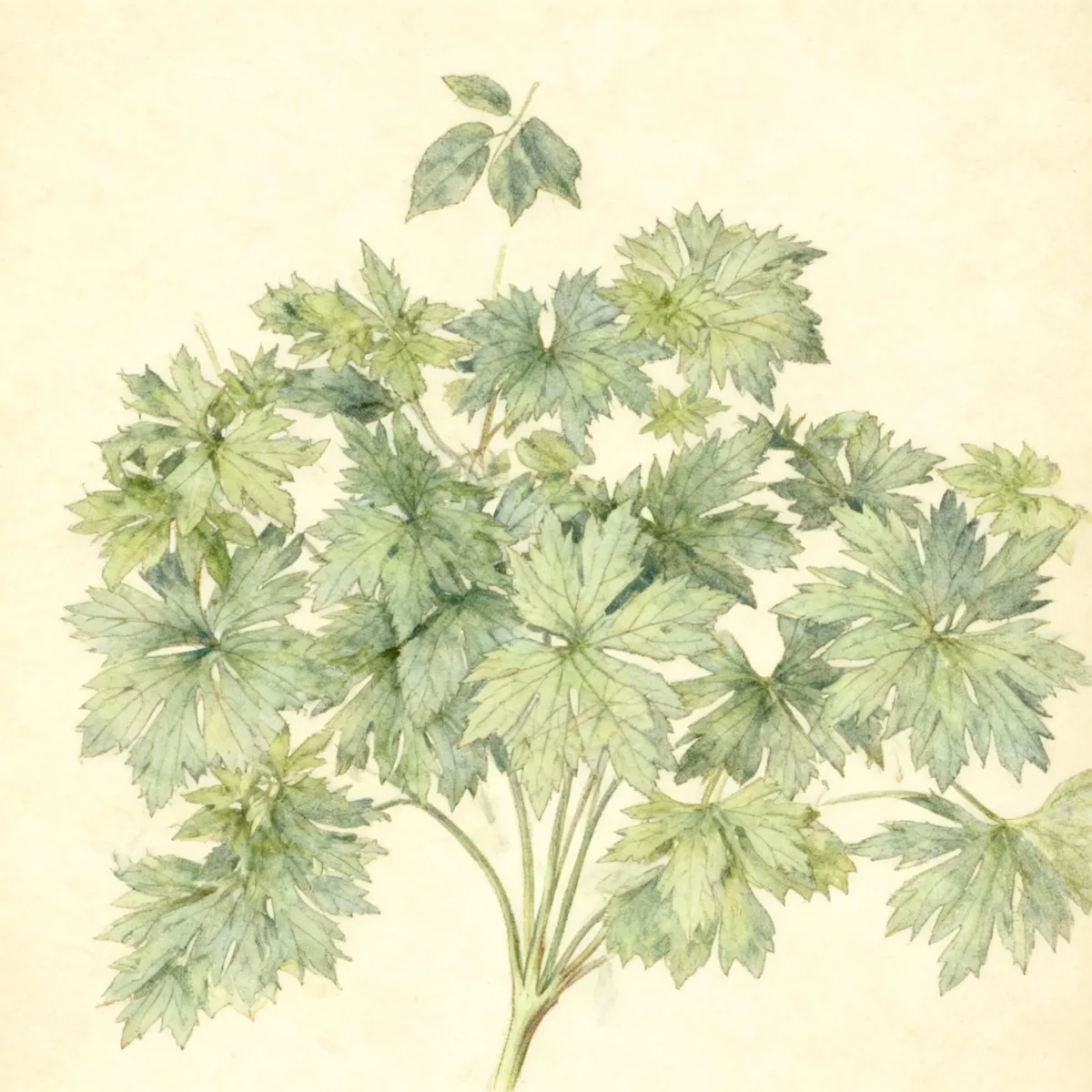
Creeping saxifrage (Saxifraga stolonifera)
Creeping saxifrage (Saxifraga stolonifera) forms attractive mats with silver-veined leaves. Ideal for shady ground cover in zones 6-9.
Scroll down to discover growing tips, care requirements, companion plants, and more
Complete Plant Information
Overview
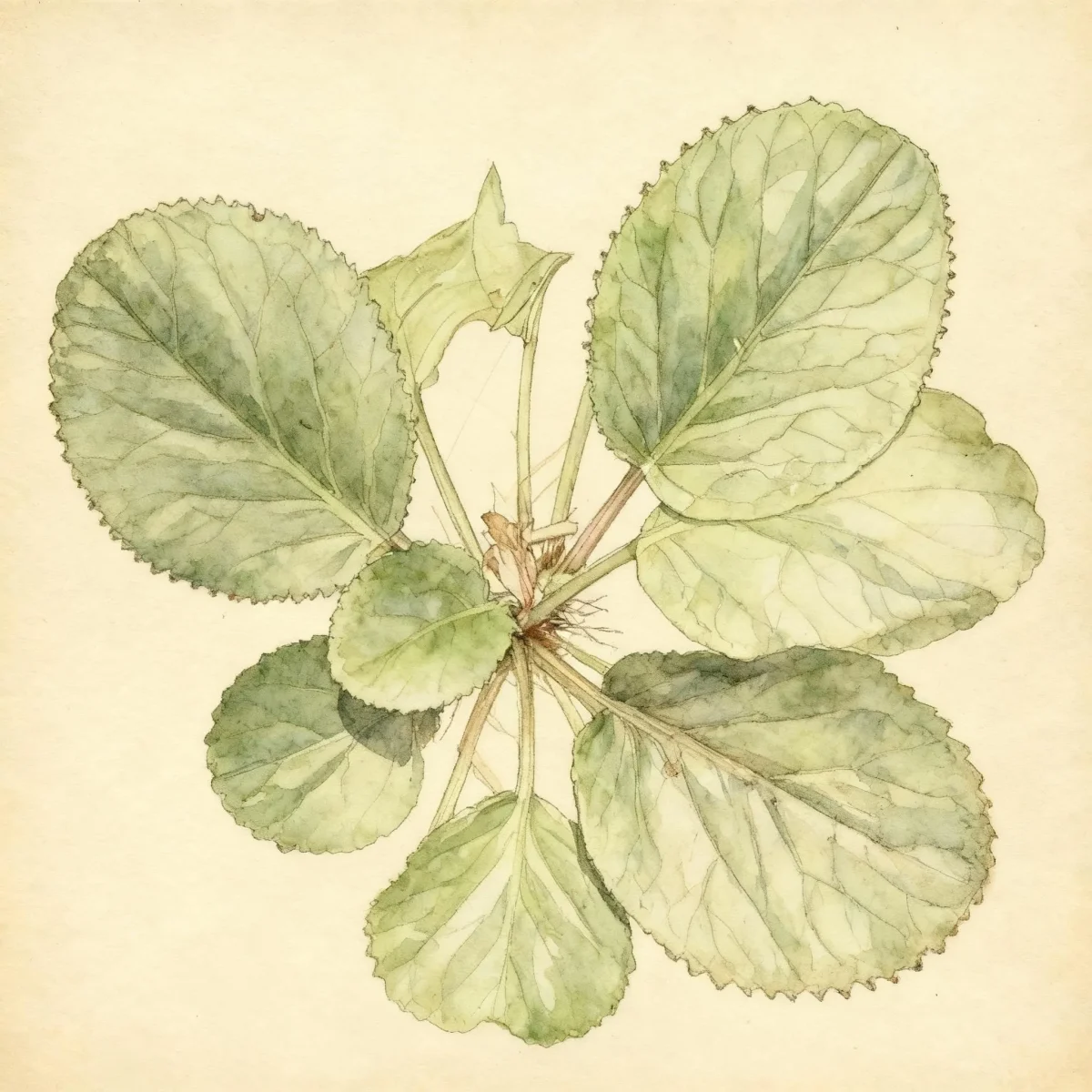
Creeping saxifrage, scientifically known as Saxifraga stolonifera, is a highly valued, mat-forming perennial celebrated for its attractive, year-round foliage. It is frequently misidentified, often called strawberry begonia or strawberry geranium due to its running habit, though it belongs firmly to the saxifrage family. This evergreen plant spreads quickly via fleshy stolons, making it an excellent choice for covering rocky or challenging shady areas where traditional turf struggles.
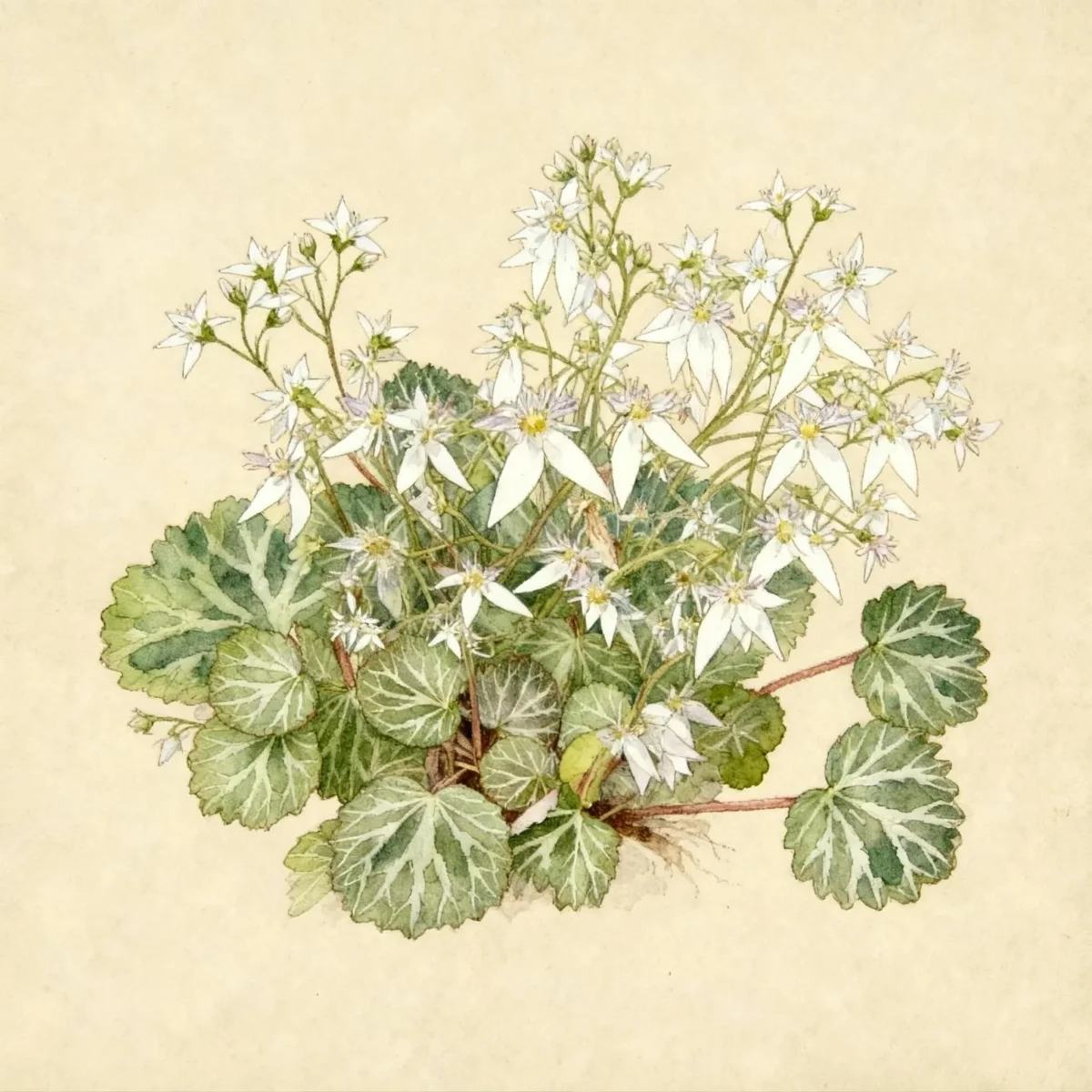
Native to eastern Asia, Saxifraga stolonifera thrives best when provided with consistent moisture and protection from intense sun. Its aesthetic appeal lies in the rounded leaves, which feature striking silver veining on the top surface and often show rich pink or red coloring underneath. The delicate, airy white flowers held high above the foliage throughout late spring add subtle vertical interest to shaded garden rooms.
Gardeners appreciate Creeping saxifrage for its versatility and low-impact maintenance once established. Whether used as a living mulch, softening the edges of a woodland path, or happily trailing from a container, this stoloniferous perennial brings texture and movement to deep shade environments across USDA Zones 6 through 9.
Fast Facts
- Plant Family: Saxifragaceae
- Plant Type: Herbaceous perennial
- Native Range: China, Japan, South Korea
- Hardiness Zones: USDA Zones 6-9
- Size at Maturity:
- Height: 0.5-1.5 ft
- Spread: 1-2 ft
- Bloom Time: May to June
- Bloom Description: White
- Sun Exposure: Part shade to full shade
- Water Needs: Medium
- Maintenance Level: Medium
How to Grow
The optimal time for planting Saxifraga stolonifera outdoors is typically spring or fall, ensuring the plant can establish roots before extreme weather hits. This plant requires organically rich, light, and well-drained soil to prevent compaction and waterlogging. When planting into the garden, aim for a location offering partial to full shade; intense, direct afternoon sun can scorch the leaves.
Water needs are medium; Saxifraga stolonifera prefers consistently moist soil, so regular watering is crucial, especially during dry spells or high heat. Avoid letting the soil fully dry out, though excellent drainage is the key safeguard against root rot. Fertilization is generally unnecessary if the soil is rich; otherwise, light feeding with a balanced liquid fertilizer in spring may be beneficial.
If growing in the cooler end of its range (Zone 6), provide winter protection by applying a thick layer of mulch around the base of the plant after the ground freezes to insulate the roots. Indoors, provide bright, indirect light—though slight exposure to less intense sun can enhance the reddish coloration on the leaves. Propagation is exceptionally easy; simply snip off the plantlets formed at the ends of the runners and root them directly into potting mix.
Landscape Uses
The primary role of Creeping saxifrage in the garden is outstanding as a dense, attractive ground cover for shady vistas. Where winter hardy, it excels at suppressing weeds and creating an evergreen tapestry beneath tree canopies or along shaded borders. Its spreading nature allows for naturalizing into woodland settings, offering a carpet of silver-veined texture flowing over slopes or alongside streams and water features.
This plant pairs beautifully with other shade-loving perennials that thrive in similar moisture profiles, such as Hostas, Ferns, or Japanese Forest Grass. For a formal look, use Saxifraga stolonifera as a softening edge along stone pathways or rock gardens, letting the trailing plantlets cascade artfully over the edges.
When winter hardiness is a concern outside Zones 6-9, or for container enthusiasts, this species offers exceptional performance. Plant Creeping saxifrage in hanging baskets or window boxes, allowing the long, thread-like stolons, tipped with miniature rosettes, to create a dramatic living spill. Indoors, it functions perfectly as a low-light houseplant, bringing its unique foliage to windowsills throughout the year.
Standout Features
Flower Qualities
- Showy
Noteworthy Characteristics
Saxifraga stolonifera is commonly called strawberry begonia or strawberry geranium as plants spread by strawberry-like runners and have begonia/geranium-like leaves. It is, however, neither a begonia nor a geranium. This evergreen, stoloniferous perennial forms dense mats, with rounded, dark green leaves that display silvery veining on top and pink-red undersides. From late spring into early summer, it produces airy panicles of asymmetrical white flowers carried on stiff stems, rising well above the foliage. The common name mother of thousands originates from the numerous plantlets that develop at the tips of the thin stolons, which are easily rooted to expand your collection.
Tolerances
- No serious insect or disease problems.
Potential Problems
While generally robust, the most significant cultural issue facing Saxifraga stolonifera is root rot, which stems directly from overly damp or poorly drained soils. Always amend heavy clay soils before planting to ensure sufficient aeration and quick water runoff. Monitor for common garden pests; aphids, slugs, and spider mites may occasionally feed on the foliage. Regular inspection and prompt removal of affected parts, combined with proper cultural care, mitigate most issues.
Frequently Asked Questions
What hardiness zones is Creeping saxifrage suitable for?
Saxifraga stolonifera is reliably hardy in USDA Zones 6 through 9.
How large does Creeping saxifrage grow?
When mature, this plant typically reaches a height between 0.5 and 1.5 feet tall, spreading outward to cover an area 1 to 2 feet wide.
What sun exposure does Creeping saxifrage need?
This species performs best when situated in conditions ranging from part shade to full shade, preferring protection from harsh midday light.
When does Creeping saxifrage bloom?
You can expect the delicate white flowers of this handsome perennial to appear from May through June.
Conclusion
Saxifraga stolonifera offers exceptional textural contrast and evergreen interest, making it a premier choice for brightening the darkest corners of the garden. Its rapid spreading, via runners that produce new plantlets, ensures excellent coverage that earns it the descriptive name Creeping saxifrage. Before planting, confirm your location falls within USDA Zones 6-9 and ensure the soil provides the consistent moisture this plant demands.
Variations and Similar Plants
While Saxifraga stolonifera is highly prized, gardeners may also explore related cultivars that offer subtle shifts in foliage color or texture. Seek out varieties like ‘Variegata’ if you desire more prominent white margins on the leaves, or cultivars that display deeper crimson undersides to maximize winter color impact. Choosing a specific cultivar allows you to fine-tune the visual texture integrated with established plantings of ferns or hostas.
Care Calendar
For optimal performance, schedule your care around the growing season. In early spring, perform a light cleanup, removing any dead or damaged foliage from the previous winter. Water consistently when spring transitions into summer as the plant focuses on flowering and runner production. In the fall, especially in Zone 6 gardens, ensure a protective layer of mulch is applied before the first hard freeze to safeguard the evergreen rosettes for the coming winter.