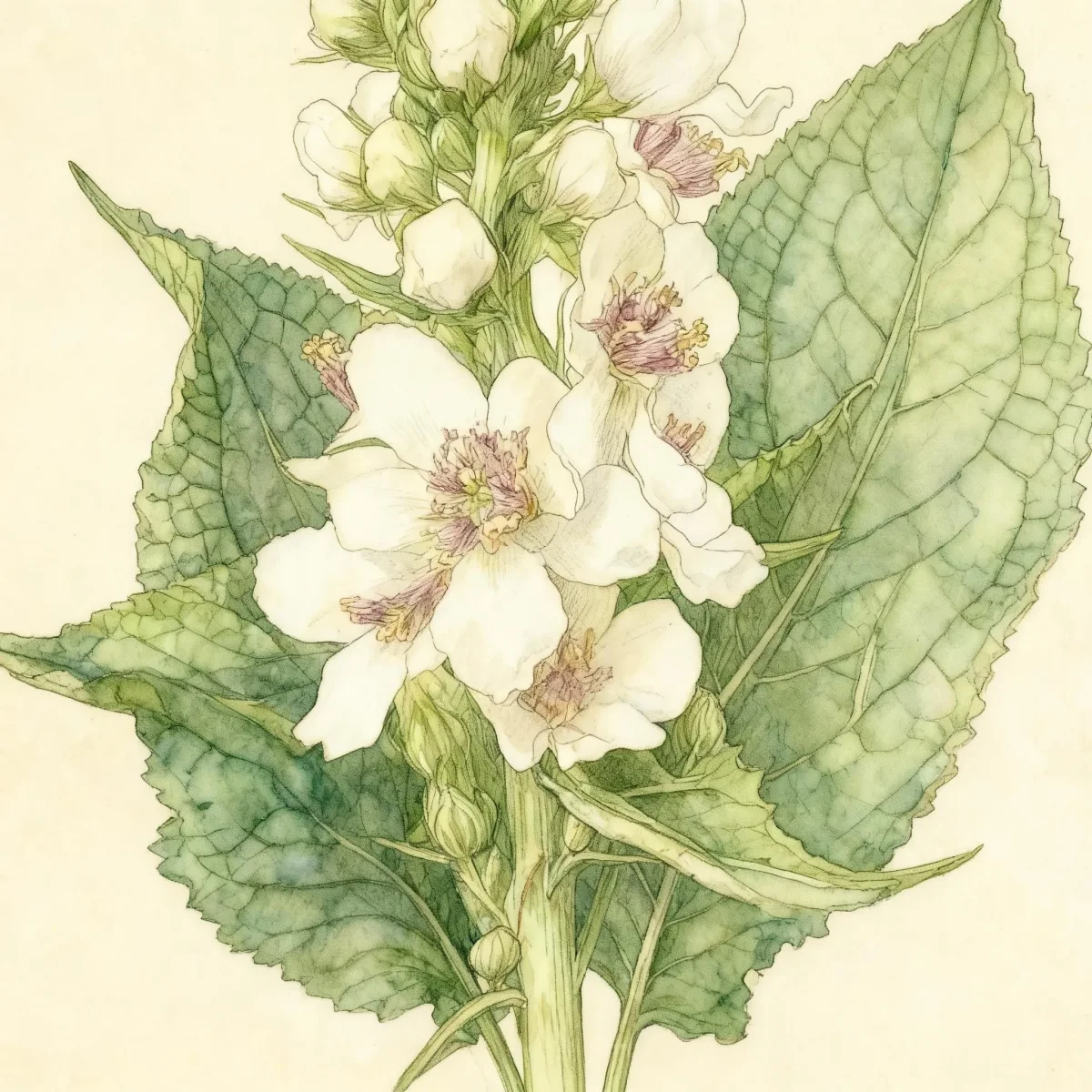
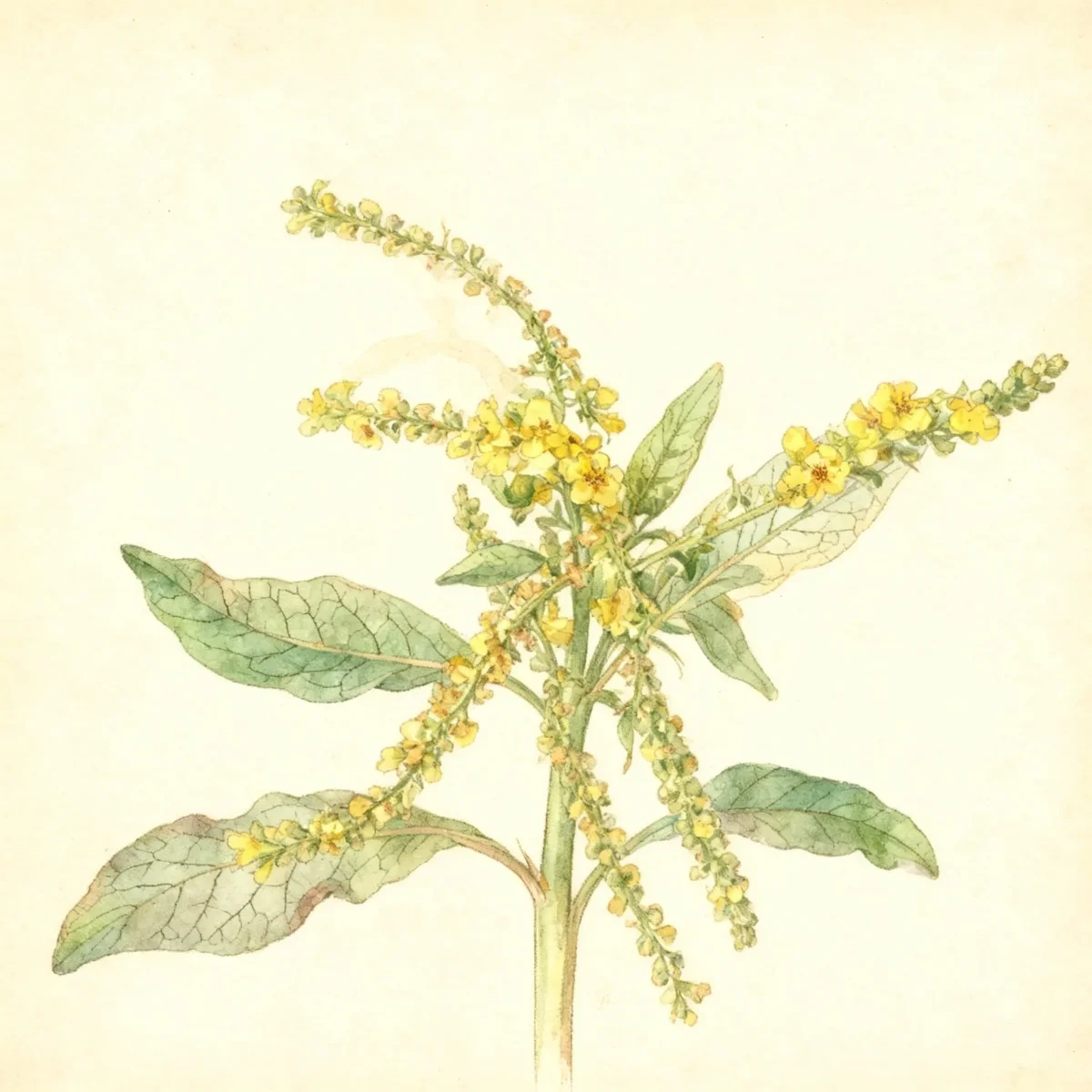
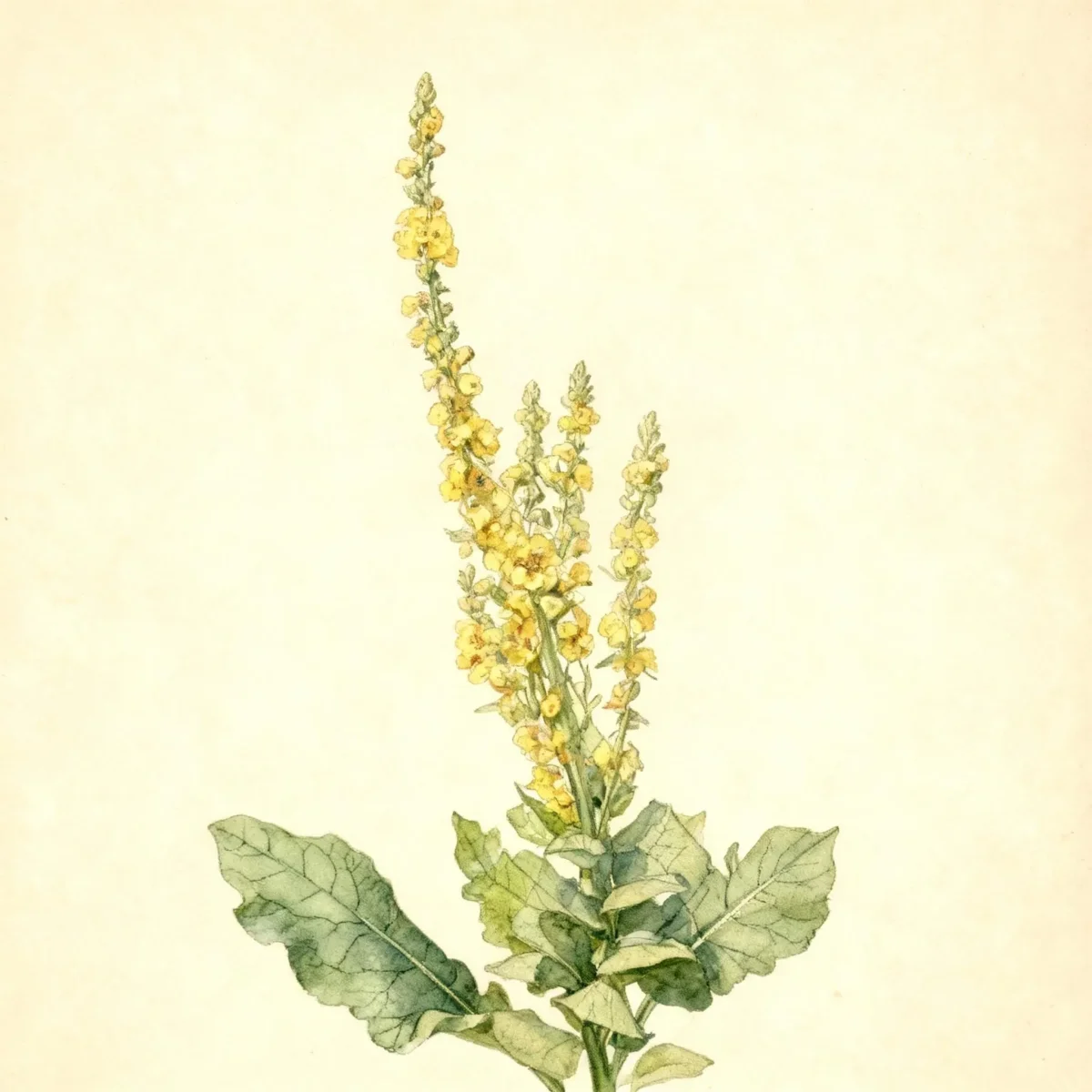
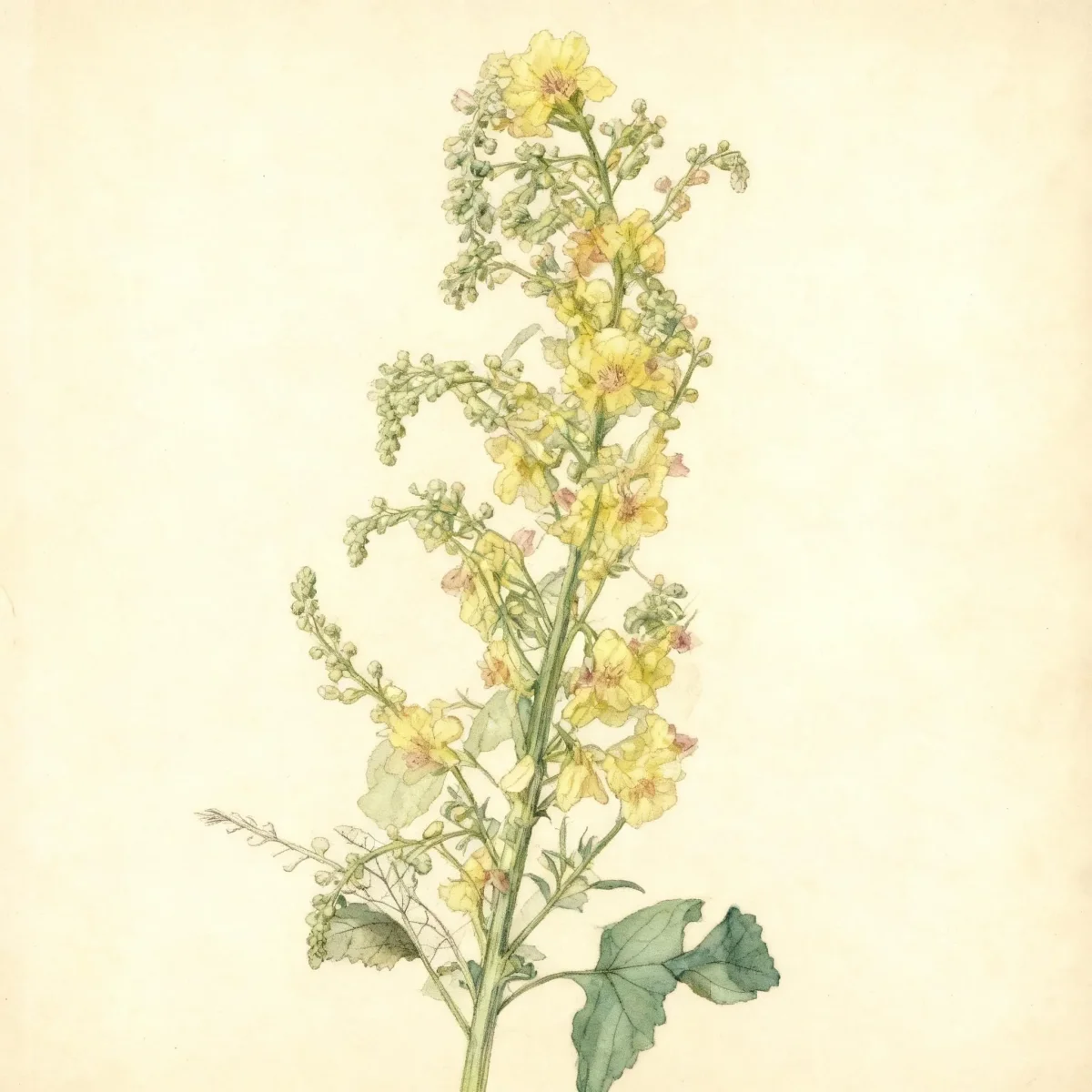
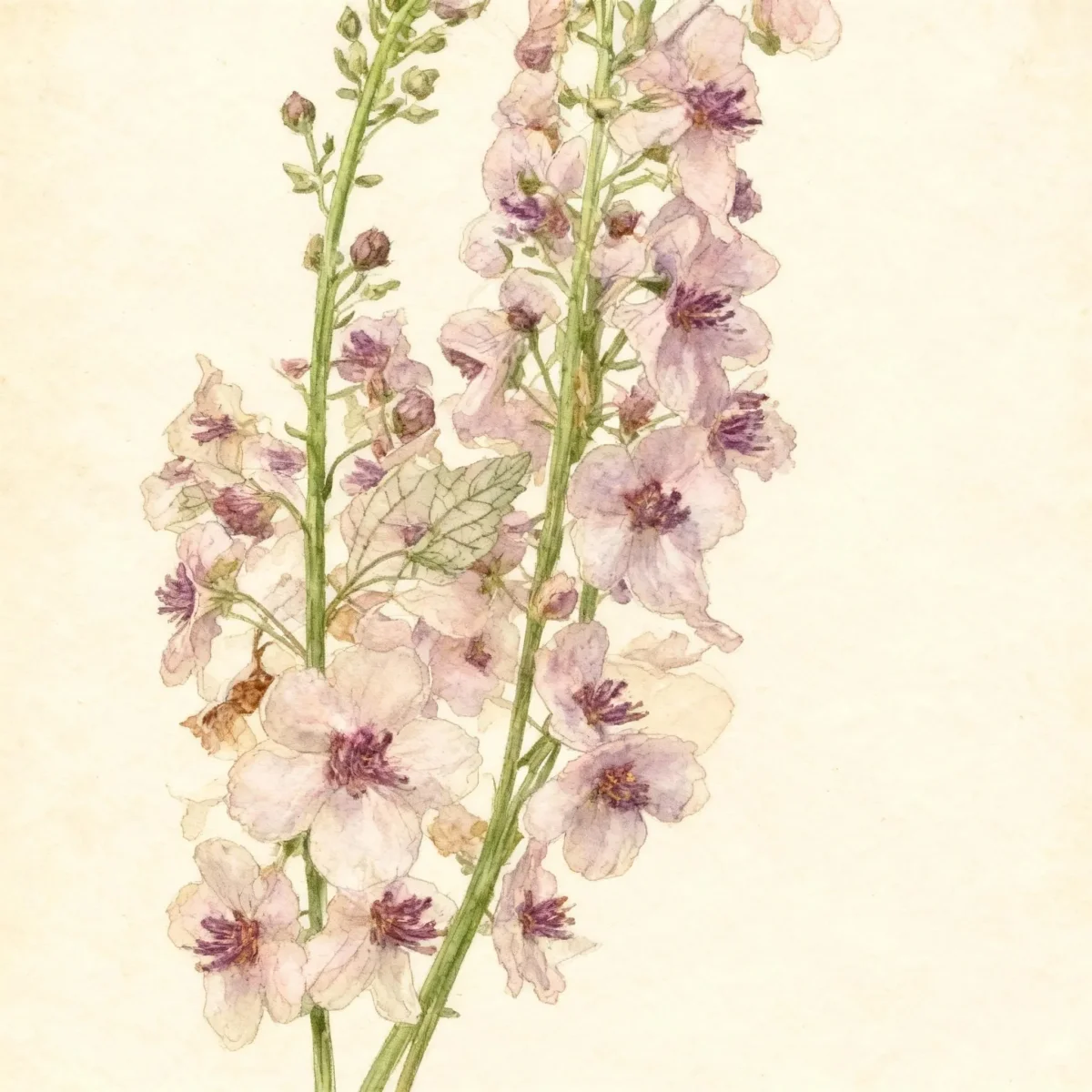
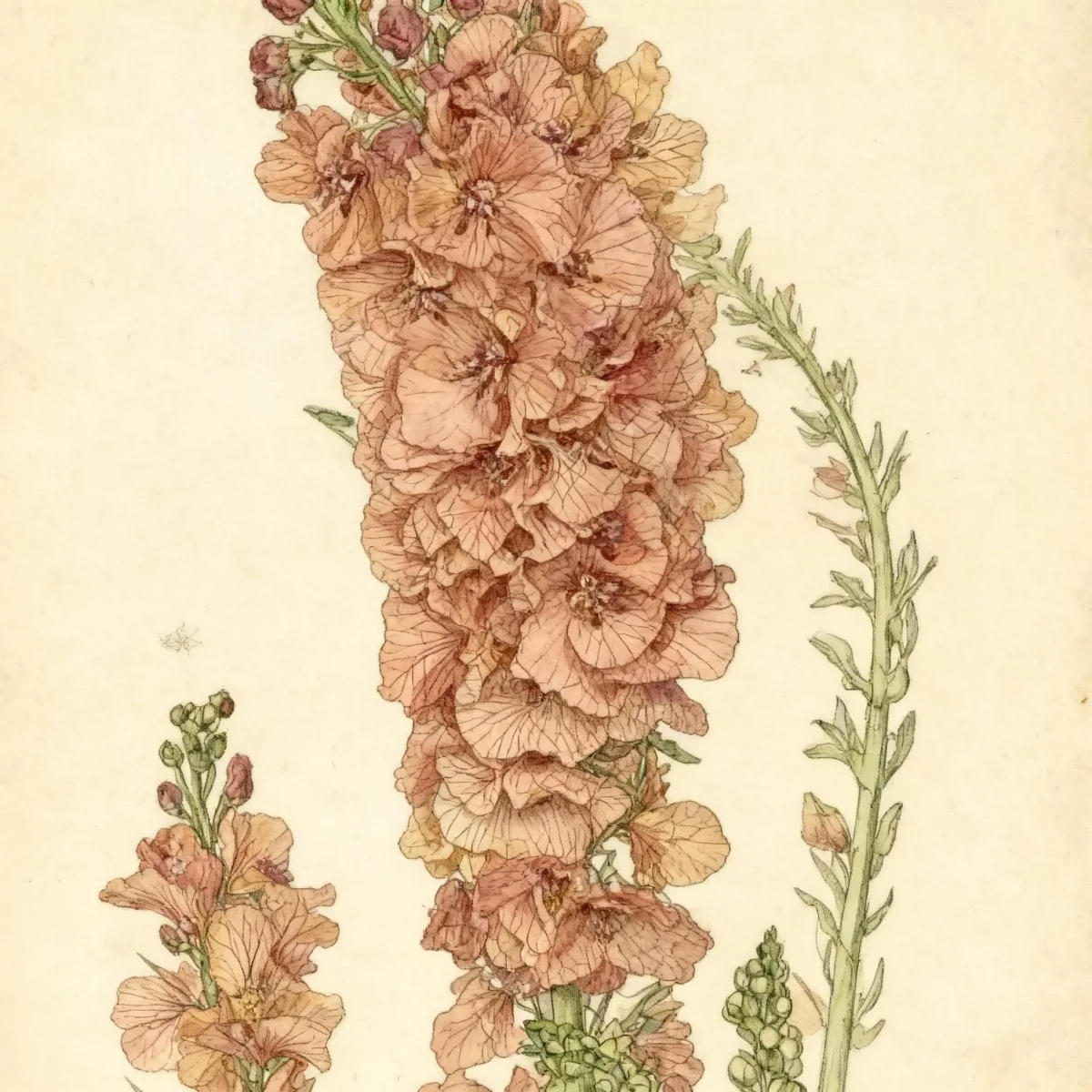
Nettle-leaved mullein (Verbascum chaixii)
Verbascum chaixii, or Nettle-leaved mullein, offers elegant vertical accents with yellow, purple-stamened flowers in early summer.
Scroll down to discover growing tips, care requirements, companion plants, and more
Complete Plant Information
Overview
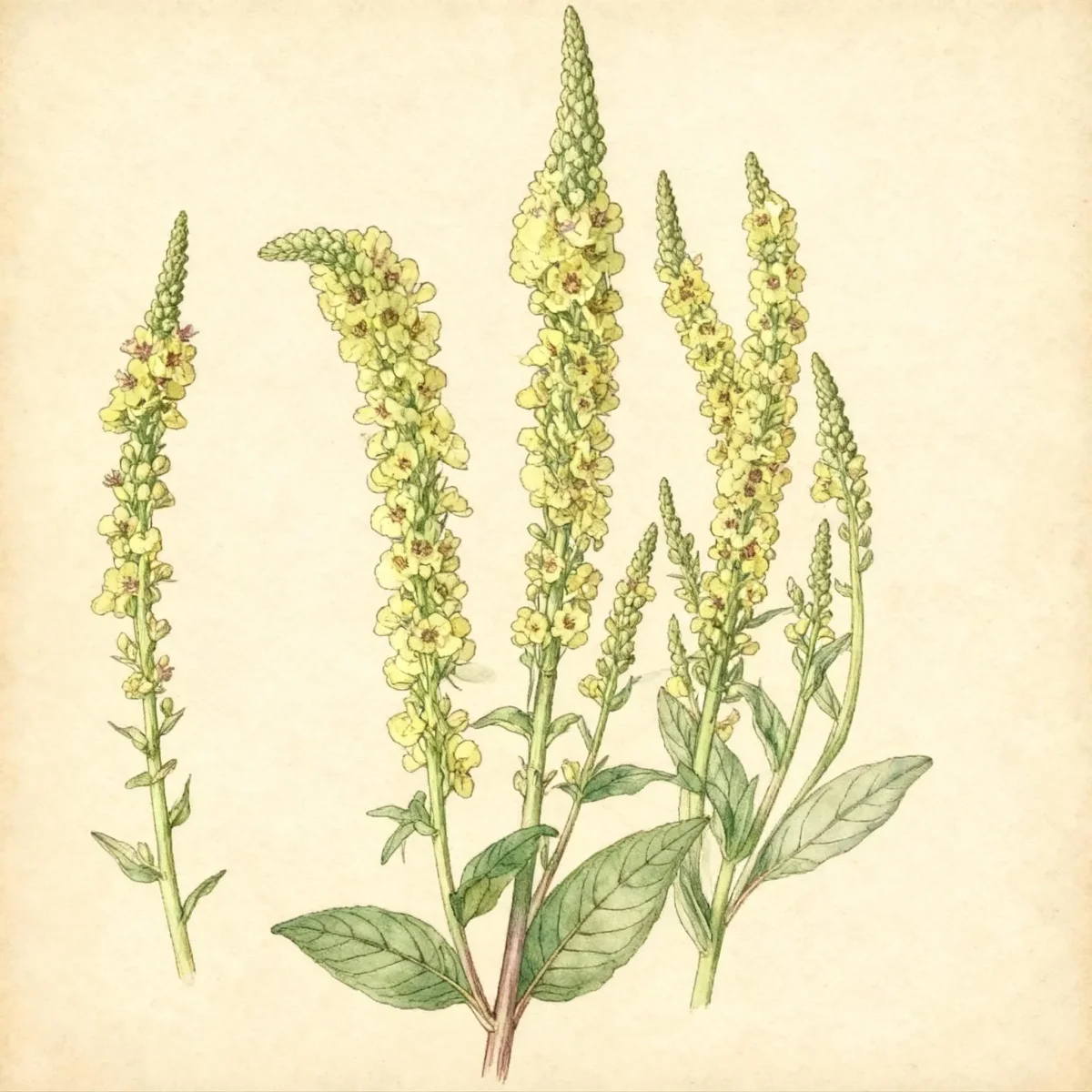
Verbascum chaixii, commonly known as Nettle-leaved mullein, is a highly ornamental herbaceous perennial valued for its refined vertical presence in the garden. It features striking spires of nearly flat, yellow flowers accented remarkably by contrasting purplish stamens, blooming reliably from late spring into midsummer. This mullein species is noted for forming a substantial basal rosette of textured, grayish-green leaves right near the soil, providing interest even before the flower stalks emerge.
Cultivating Verbascum chaixii is straightforward, as it thrives in neglected, dry conditions where many other plants struggle to establish roots. Its low maintenance profile and adaptability make it an excellent choice for cottage gardens or naturalized drifts. Gardeners appreciate this plant for its drought tolerance and its ability to add necessary height without demanding rich soil or excessive care.
The structure of Nettle-leaved mullein provides an excellent vertical accent, drawing the eye upward in perennial beds. Whether used alone for architectural impact or mixed into informal settings, the Verbascum chaixii rewards gardeners with reliable bloom and resilience against common garden stresses.
Fast Facts
- Plant Family: Scrophulariaceae
- Plant Type: Herbaceous perennial
- Native Range: South-central Europe, central Russia
- Hardiness Zones: USDA Zones 5-8
- Size at Maturity:
- Height: 2-3 ft
- Spread: 1.5-2 ft
- Bloom Time: May to July
- Bloom Description: Yellow with purple stamens
- Sun Exposure: Full sun
- Water Needs: Dry to medium
- Maintenance Level: Low
How to Grow
For best results when establishing Verbascum chaixii, plant in full sun, ensuring the location offers average, dry to medium conditions. This plant mandates excellent drainage; wet, poorly drained soils are usually fatal to established crowns. While it tolerates a wide range of soils, including poor, dry substrates, avoid overly rich, fertile ground, as this encourages excessive height which may lead to flopping.
Maintenance for this perennial is minimal. Watering should be infrequent once established, relying on natural rainfall unless experiencing prolonged summer drought, as Nettle-leaved mullein is highly drought tolerant. Fertilizing is generally unnecessary; excessive feeding often leads to softer growth that requires staking.
To maximize bloom time, shear off spent flower spikes before they fully set seed in midsummer. However, leave some spikes standing at the season’s end to allow natural self-seeding, which helps perpetuate the population. For propagation outside of natural seeding, root cuttings can be taken in late winter or early spring.
Landscape Uses
Verbascum chaixii excels when used as an accent plant to introduce vertical interest into mixed borders and informal cottage gardens. Due to its preference for sharp drainage, it integrates beautifully into rock gardens or planted among gravel paths, fulfilling its role as a plant suitable for dry, rocky slopes or scree. This species is also highly adaptable and can be purposefully naturalized in meadows or less formal areas of the landscape.
Consider pairing the stately spires of Nettle-leaved mullein with lower-growing, drought-tolerant companions that contrast well with its upright habits and grayish foliage. Good companions include creeping thyme, artemisia, or ornamental grasses that appreciate similar dry, sunny conditions. The combination creates textural contrast and year-round garden structure.
When using Verbascum chaixii in design, remember that it grows well in poor soils, making it an economical choice for large areas where enriching the soil is impractical. Its native range suggests it pairs well with other Mediterranean or steppe-origin perennials.
Standout Features
Flower Qualities
- Showy
Noteworthy Characteristics
Verbascum chaixii is a narrow-leaved mullein species that is sometimes commonly called nettle-leaved mullein. It is a somewhat short-lived perennial which forms a large basal rosette (8-12” wide) of woolly, coarsely toothed, dull grayish-green, ovate-oblong leaves (3-6” long) from which rise spire-like, unbranched stems (2-3” tall) with terminal racemes of 5 lobed, nearly flat, yellow flowers (1 inch diameter) with purplish stamens. Blooms in late spring to early summer.
Tolerances
- Deer
- Drought
- Dry Soil
Potential Problems
This species generally demonstrates no serious insect or disease issues, which contributes significantly to its low maintenance rating. The primary concern arises from improper cultivation, specifically planting in wet or poorly drained areas, which is usually fatal. In hot, dry summer periods, spider mites can occasionally become a minor nuisance, especially if the plant is stressed.
If you choose to grow Nettle-leaved mullein in rich, fertile soils, be prepared for taller growth. These elongated stems may become weak and floppy, necessitating staking for support to maintain an attractive appearance throughout the blooming season. Avoid excessive pruning unless you are managing self-seeding.
Frequently Asked Questions
What hardiness zones is Nettle-leaved mullein suitable for?
Verbascum chaixii is reliably hardy across USDA Zones 5 through 8.
How large does Verbascum chaixii grow?
This plant typically reaches heights between 2 and 3 feet tall, with a spread ranging from 1.5 to 2 feet wide at its base.
When does Nettle-leaved mullein bloom?
The bloom time for Verbascum chaixii generally spans from May through July, featuring striking yellow flowers with purple stamens.
What sun exposure does Verbascum chaixii need?
This species requires full sun exposure to thrive and produce its characteristic vertical flower spikes.
Conclusion
The Nettle-leaved mullein offers exceptional value for gardeners seeking drought-tolerant, low-maintenance vertical structure accented by unique yellow and purple blooms. Its resilience in poor soils makes Verbascum chaixii a beneficial addition to sunny, dry borders. Before planting, always confirm your garden site provides the full sun exposure and excellent drainage that this species demands.
Companion Planting
Because Verbascum chaixii prefers dry soil and full sun, companion plants must share these stringent cultural accommodations to succeed alongside it. Select drought-tolerant perennials that offer contrasting foliage texture or different bloom times to extend visual interest past the mid-summer peak of the mullein. Good companions thrive in lean soil where fertilizer is sparingly applied.
Consider pairing the upright form of Nettle-leaved mullein with low-spreading plants that can soften the base rosette and cover ground left bare between spikes. Sedums, low pincushion flowers (Scabiosa), or spreading Geraniums are excellent choices that won’t compete heavily for nutrients but will benefit from similar dry, sunny conditions.
Propagation Tips
While often treated as a short-lived perennial, Verbascum chaixii can be easily maintained in borders using its natural tendency to self-seed. Allow a few flower spikes to mature completely and drop their seed near the mother plant. To manage this, strategically leave a few finished spikes standing at the end of the season, removing others to prevent overwhelming seedlings.
For deliberate propagation of desirable traits, root cuttings offer a reliable method for creating new, genetically identical plants. Take these cuttings in late winter or the very early spring before new growth begins in earnest. Ensure the cuttings are placed in well-draining medium and kept consistently moist until rooting occurs.