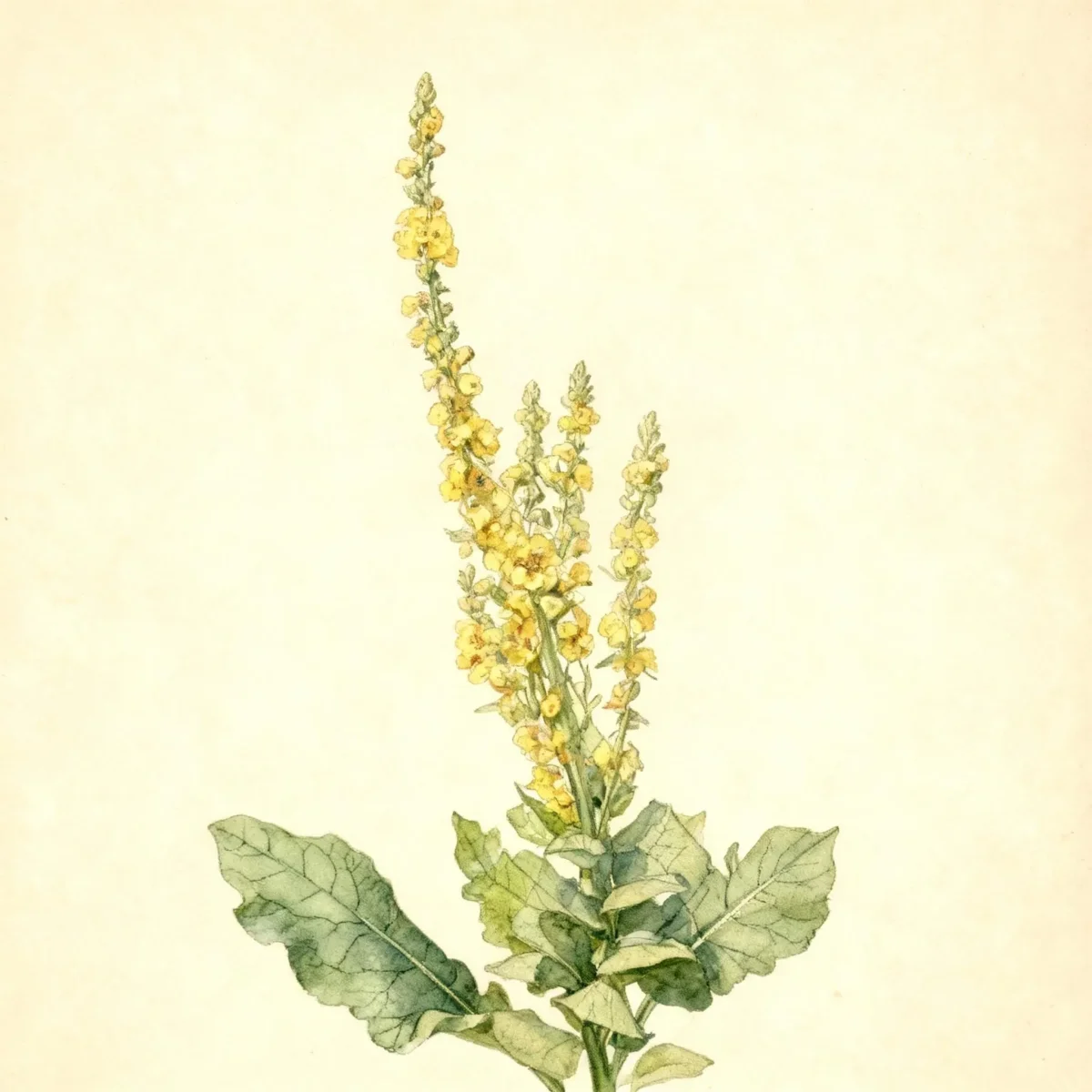
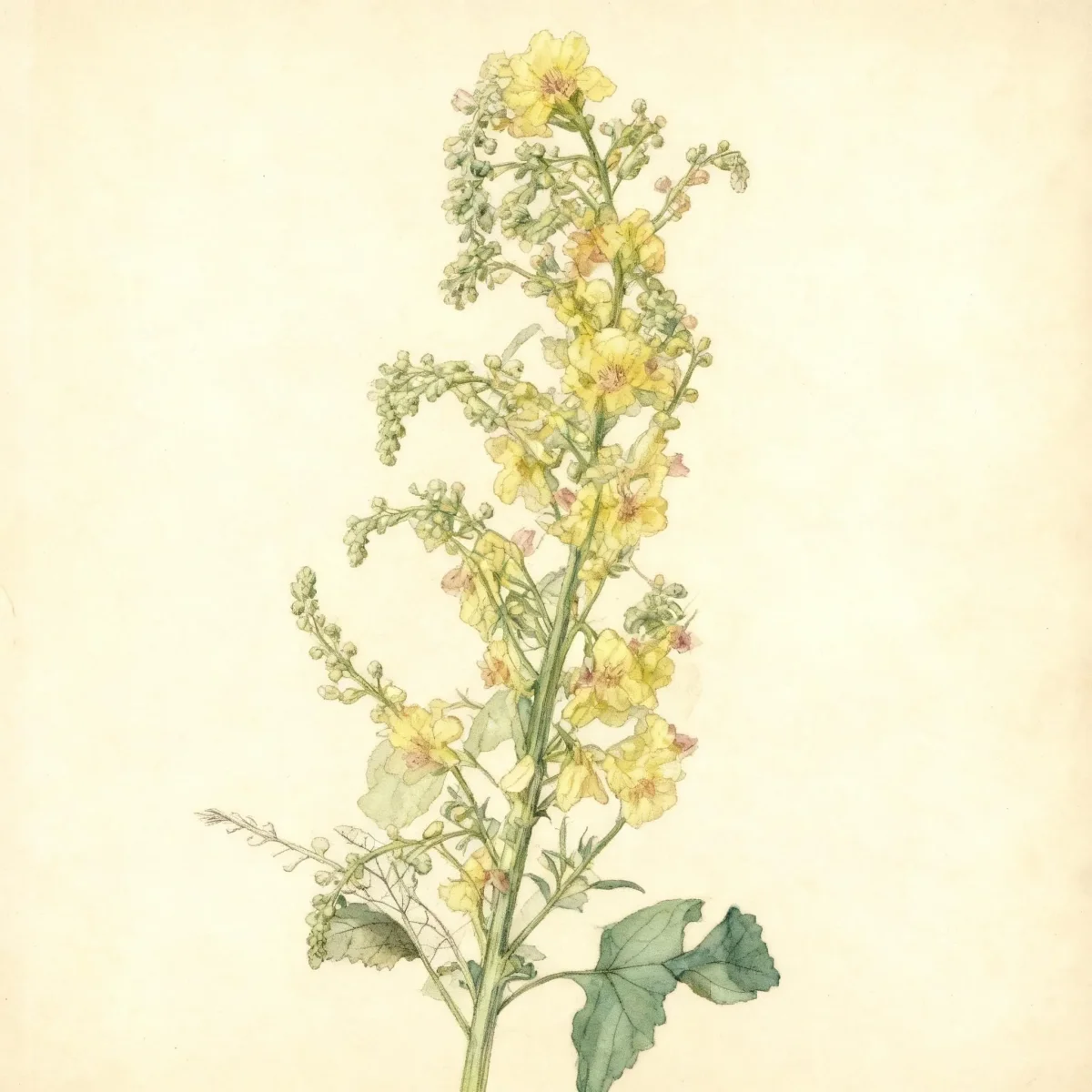
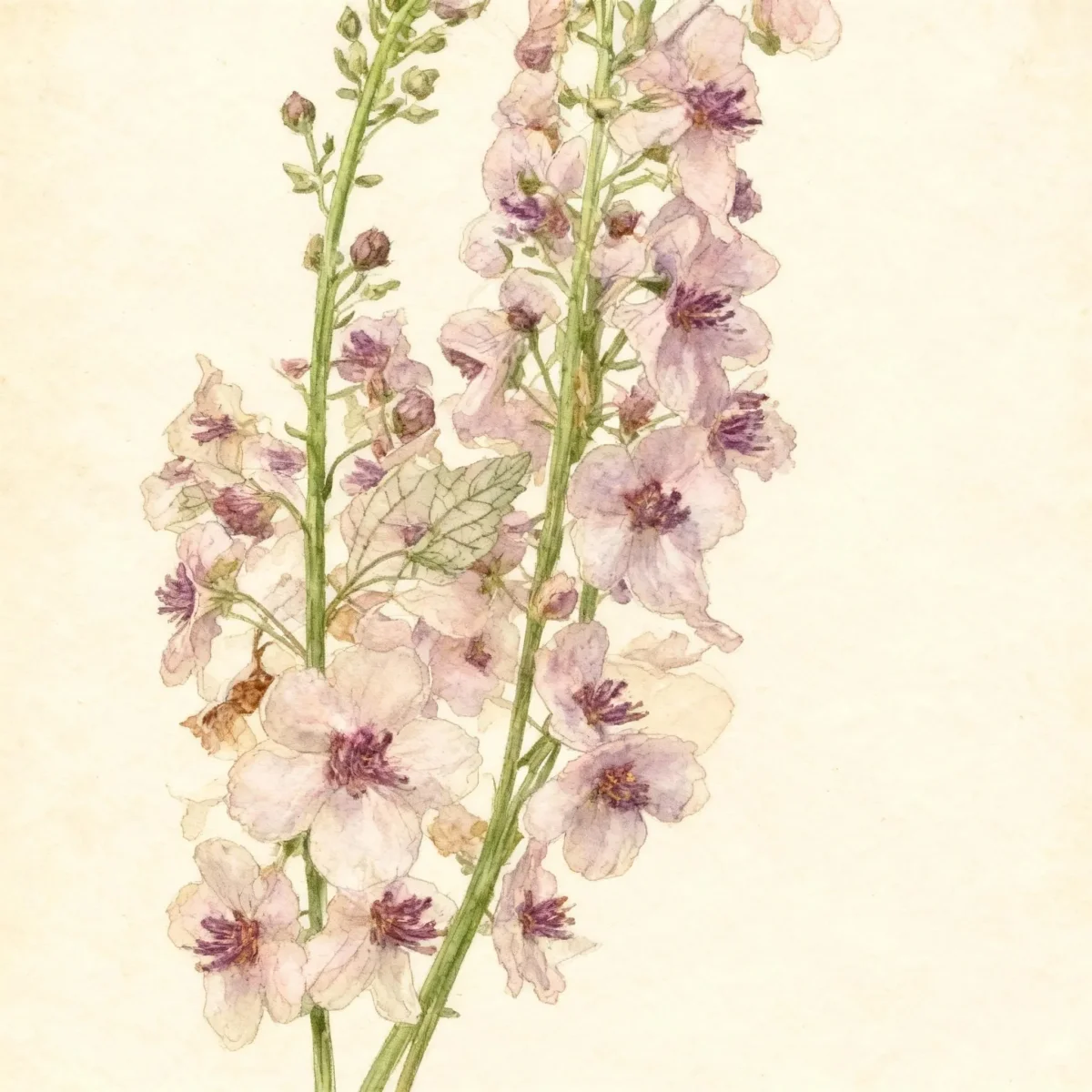
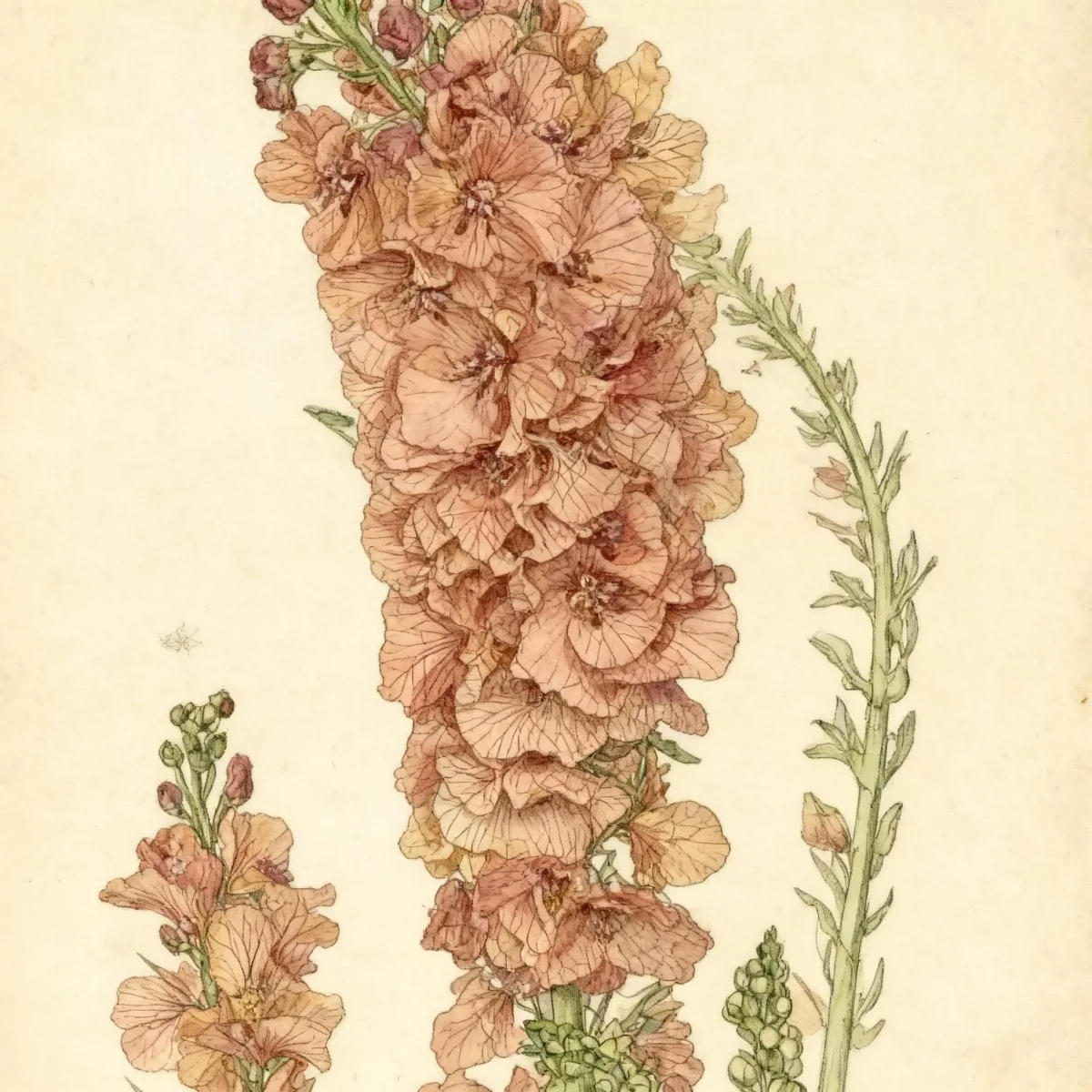
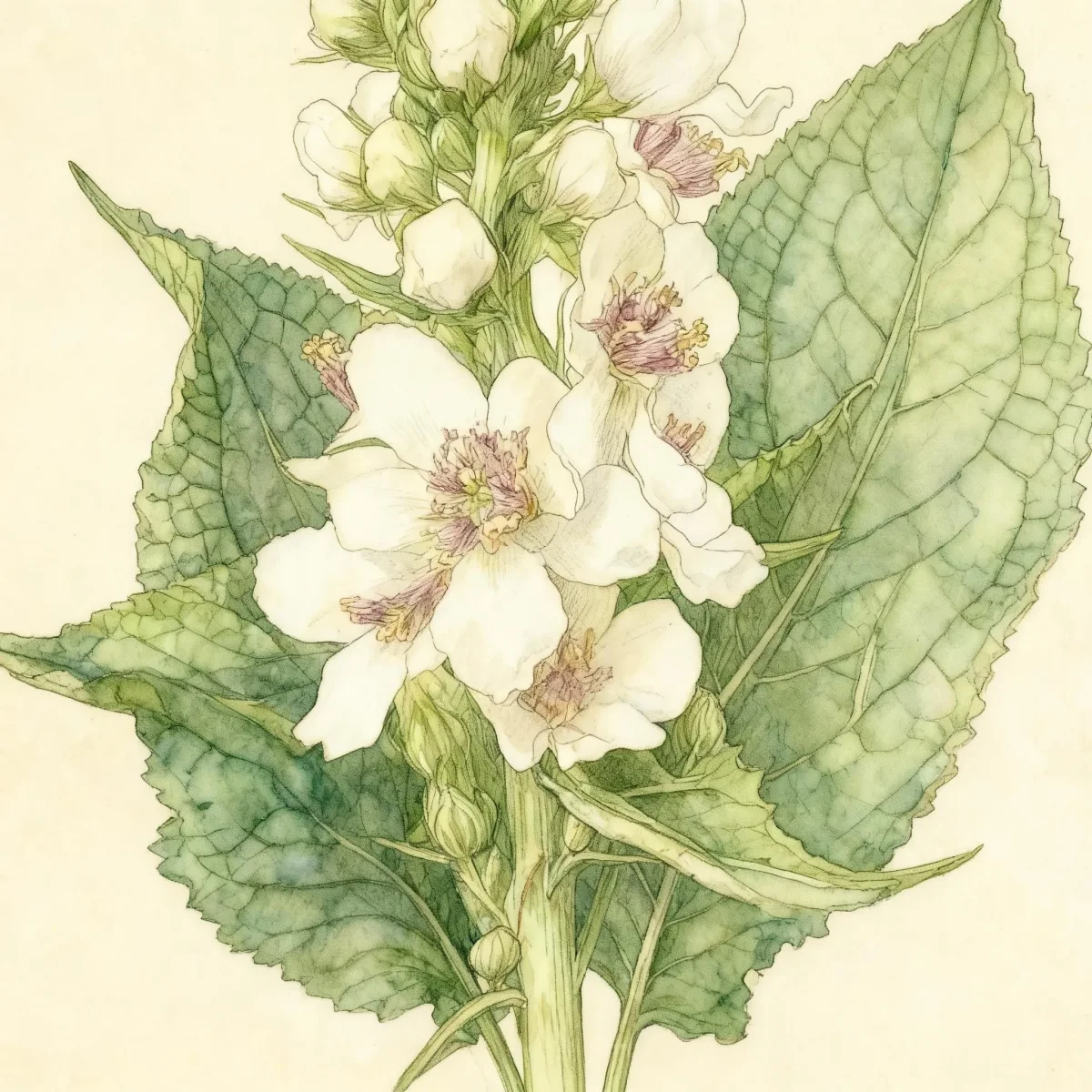
Verbascum (Verbascum pyramidatum)
Towering Verbascum pyramidatum offers dramatic height and drought tolerance. This low-maintenance Verbascum thrives in full sun.
Scroll down to discover growing tips, care requirements, companion plants, and more
Complete Plant Information
Overview
The imposing presence of Verbascum pyramidatum, commonly known as Caucasian Mullein, makes it an outstanding choice for adding dramatic vertical structure to perennial borders. This species is highly valued for its exceptionally tall flower spikes, which provide striking architectural interest throughout the summer months. As a member of the Verbascum genus, it generally exhibits robust growth habits suited for challenging garden spots.
Verbascum pyramidatum is remarkably adaptable, thriving in hot, dry conditions once established, which minimizes routine watering needs. Its large, woolly basal leaves form an attractive rosette, offering textural contrast even before the flowers emerge. Gardeners seeking resilient, high-impact perennials will find this Verbascum an indispensable vertical accent.
The beauty of Verbascum pyramidatum lies in its ease of cultivation coupled with its lofty stature. It readily naturalizes, happily self-seeding without becoming aggressively invasive, thus rewarding gardeners with recurring displays of pale yellow blooms atop magnificent, pyramidal spikes.
Fast Facts
- Plant Family: Scrophulariaceae
- Plant Type: Herbaceous perennial
- Native Range: Southern Russia, Caucasus
- Hardiness Zones: USDA Zones 4-8
- Size at Maturity:
- Height: 5-7 ft
- Spread: 3-4 ft
- Bloom Time: May to August
- Bloom Description: Pale yellow with purple anthers
- Sun Exposure: Full sun
- Water Needs: Dry to medium
- Maintenance Level: Low
How to Grow
Planting for success with Verbascum pyramidatum hinges on excellent drainage. This herbaceous perennial excels when placed in average soil that is dry to medium in moisture retention, provided it receives full sun exposure daily. While it tolerates some light shade, maximum height and flower production occur in unobstructed sunlight.
Care requirements are minimal for this drought-tolerant species. Water sparingly, especially once the plant is established in the landscape, as wet, poorly drained soils are typically fatal. Fertilization should generally be avoided; rich, fertile soils often cause the plant to grow excessively tall, increasing the risk of leaning stems needing support.
Verbascum pyramidatum is a short-lived perennial, but it actively propagates itself through natural self-seeding, ensuring continuity in the garden setting. Deadheading spent flower spikes is optional but can improve appearance and control the spread of seedlings if they appear where they are not wanted.
Landscape Uses
The towering verticality offered by Verbascum pyramidatum makes it ideal for borders, where it can serve as an impressive backdrop plant alongside shorter perennials. Its native tolerance for poor, dry soil means it performs exceptionally well on dry, rocky slopes or scree where many other plants struggle to establish robustly. It is perfect for structuring cottage gardens, providing essential height that draws the eye upward through the planting scheme.
Consider pairing this specimen with drought-tolerant companions that share similar sun and water needs, such as Sedum (Hylotelephium), Russian Sage (Perovskia atriplicifolia), or ornamental grasses. This creates a cohesive, low-maintenance tapestry echoing its natural environment in the Caucasus. Naturalizing Verbascum pyramidatum allows it to self-sow gently, creating drifts of architectural blooms over time.
Standout Features
Flower Qualities
- Showy
Noteworthy Characteristics
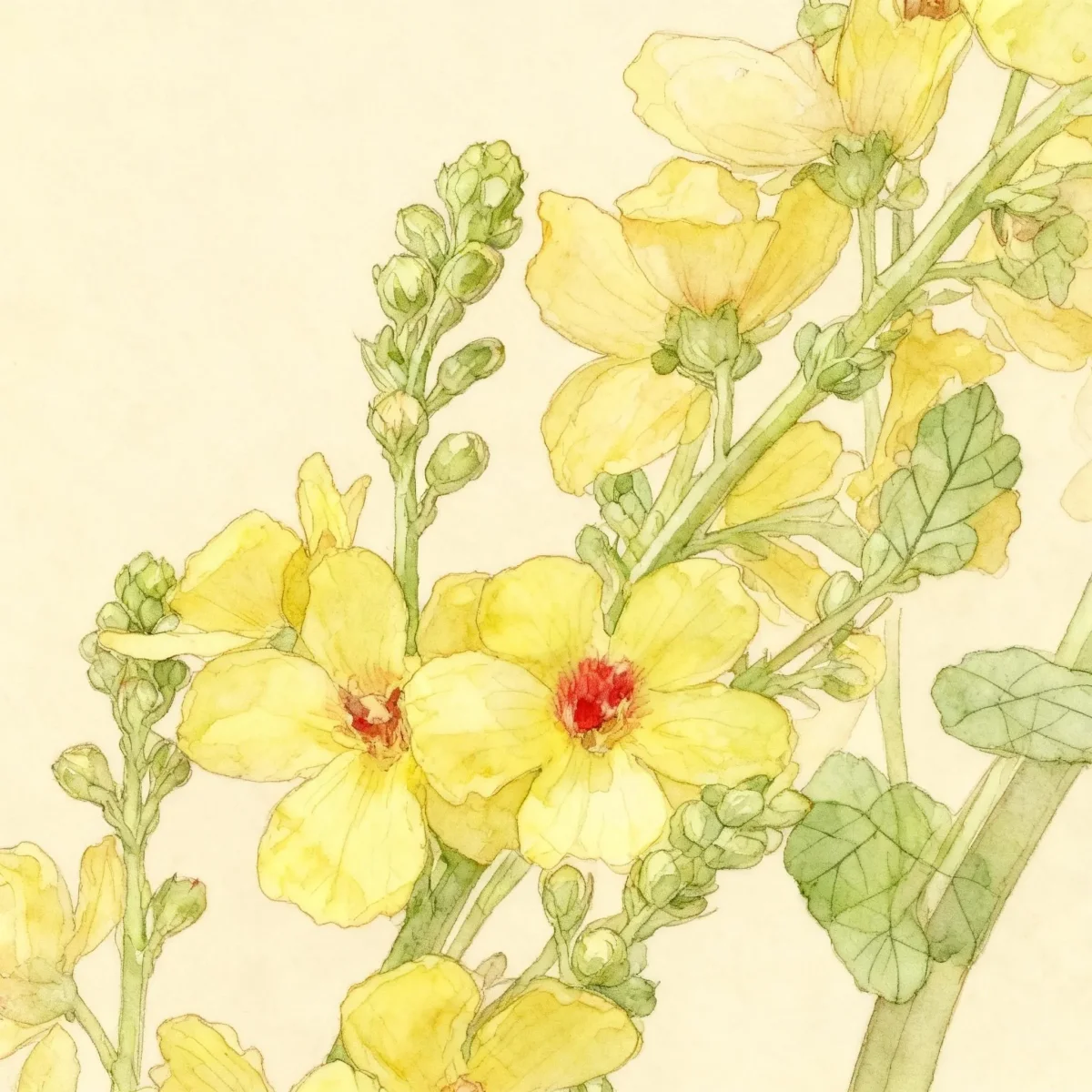
Verbascum pyramidatum is native to the Caucasus/southern Russia. It is an upright, rosette-forming, short-lived perennial that grows to 7’ tall. Wooly, obovate-oblong, basal leaves (to 12” long) with crenate toothed margins have a wrinkled appearance. Pale yellow flowers with purple anthers bloom in late spring and summer (May-August) in huge, branched, narrowly pyramidal flowering spikes. The genus name Verbascum comes from the Latin word barbascum which means “bearded”, in reference to the hairy stamen filaments of some species. The specific epithet pyramidatum means pyramid-shaped for the flower spikes.
Tolerances
- Deer
- Drought
Potential Problems
The Caucasian Mullein generally exhibits very few issues regarding serious insect or disease problems, lending credence to its low-maintenance rating. The primary concern arises from environmental conditions or over-enrichment; plants grown in overly rich, fertile soils tend to become leggy and require staking for support. Hot conditions may occasionally encourage spider mites, which can be managed with a strong blast of water or horticultural oil if necessary. The most critical factor to avoid is heavy, poorly drained soil, which almost invariably leads to crown rot and fatality.
Frequently Asked Questions
What hardiness zones is Verbascum suitable for?
This Verbascum variety is best suited for USDA Hardiness Zones 4 through 8.
How large does Verbascum pyramidatum grow?
This species can reach impressive heights between 5 and 7 feet tall, with a spread of 3 to 4 feet wide.
What sun exposure does Verbascum need?
For optimal performance and flower production, Verbascum pyramidatum requires full sun exposure.
When does Verbascum bloom?
Bloom time spans from May through August, featuring striking pale yellow flowers accented by purple anthers.
Conclusion
The towering stature and exceptional drought tolerance solidify the value of Verbascum pyramidatum for gardeners creating structured, resilient landscapes. Integrating this robust Verbascum species ensures vertical drama without demanding intensive care. Before planting, confirm your site offers the necessary elements: full sun and, critically, excellent soil drainage.
Companion Planting
When designing a border around your Verbascum pyramidatum, select companions that share its affinity for dry, sunny conditions. Plants like Gaura, Yarrow (Achillea), and Lavender (Lavandula) naturally thrive in similar xeriscaping environments, creating a cohesive, visually interesting, yet water-wise display. Using these drought-tolerant partners ensures that watering schedules do not compromise the health of the Mullein.
Design Ideas
Utilize the unique coloration of the pale yellow flowers against deep purple or blue companions for high contrast. Consider planting Verbascum pyramidatum near dark purple Salvias or deep blue Russian Sages to emphasize the spiked silhouette of the Mullein. Because it is so tall, avoid placing it where it will shade out smaller subjects; position it toward the middle or back of deep borders where its substantial height provides necessary structure throughout the season.