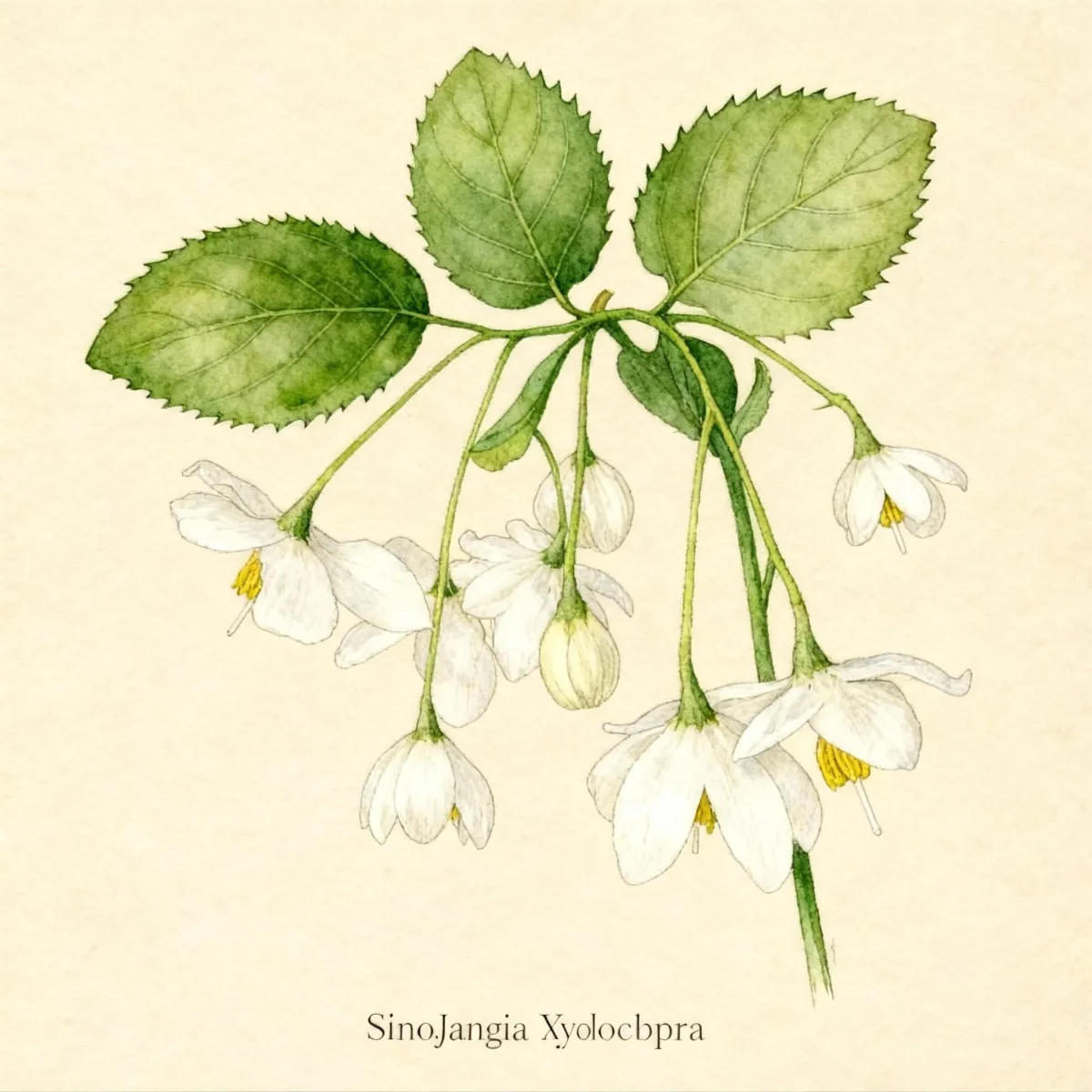
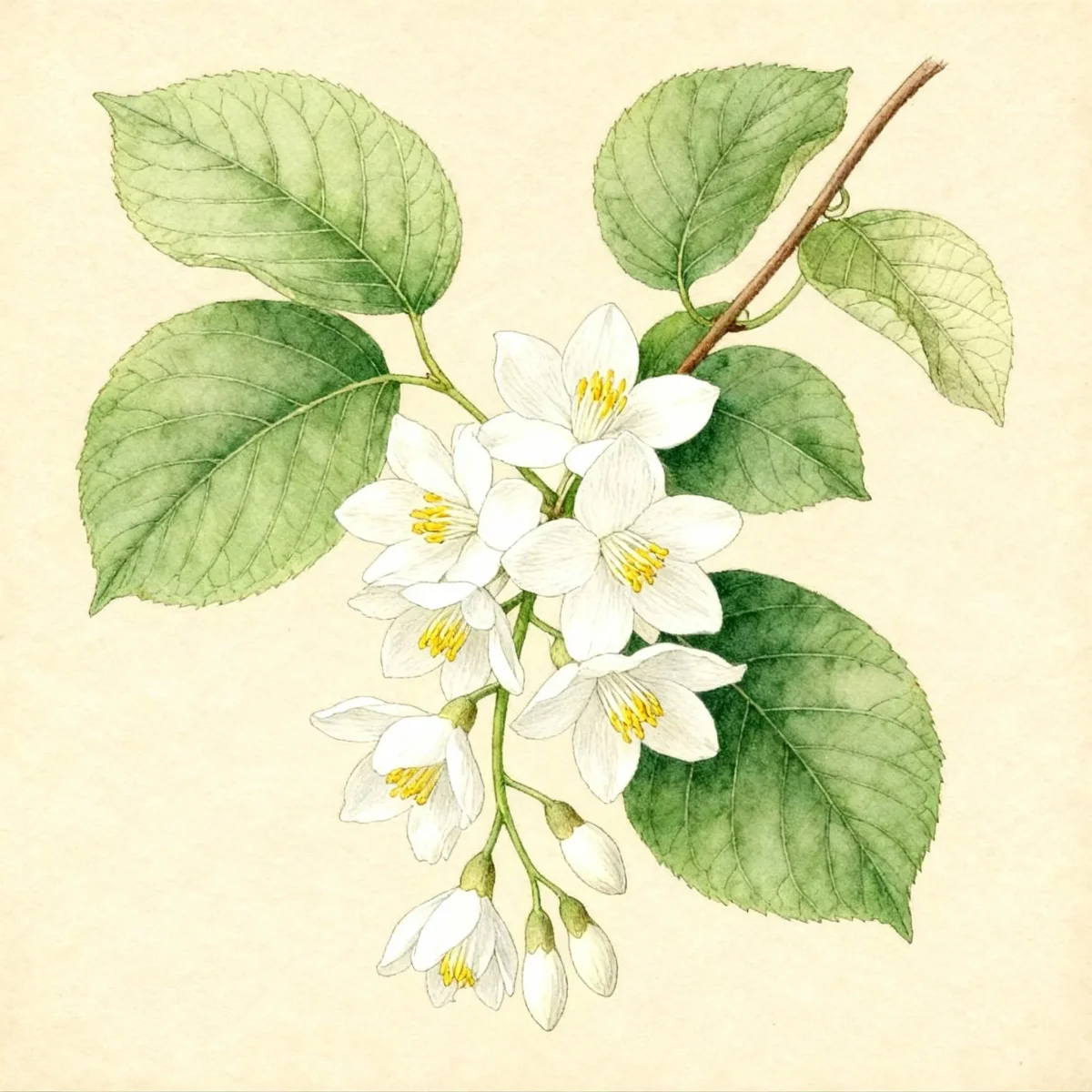
Snowdrop bush (Styrax officinalis)
The beautiful Styrax officinalis, or Snowdrop bush, yields showy, fragrant white flowers in late spring. Ideal for zones 9-10.
Scroll down to discover growing tips, care requirements, companion plants, and more

Complete Plant Information
Overview
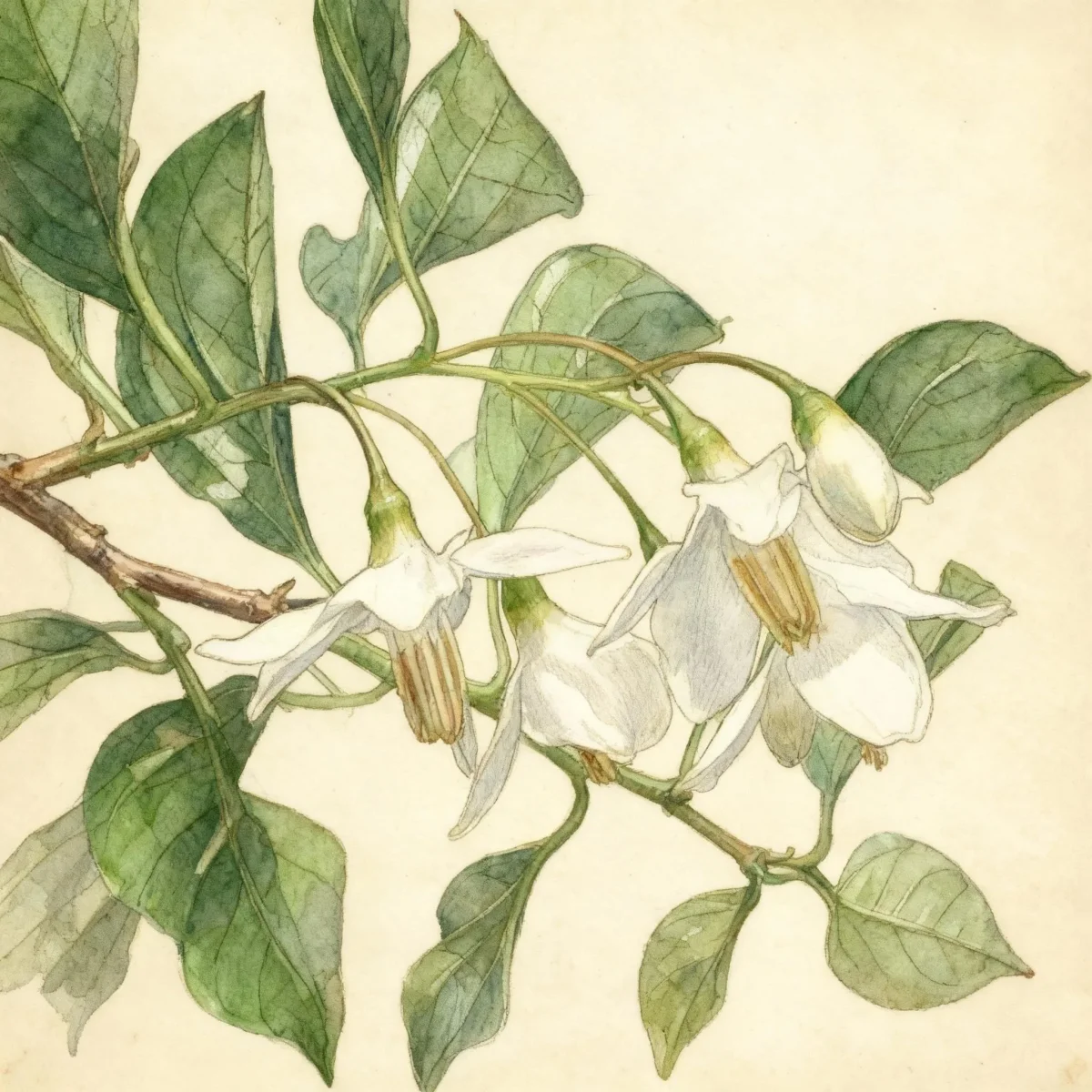
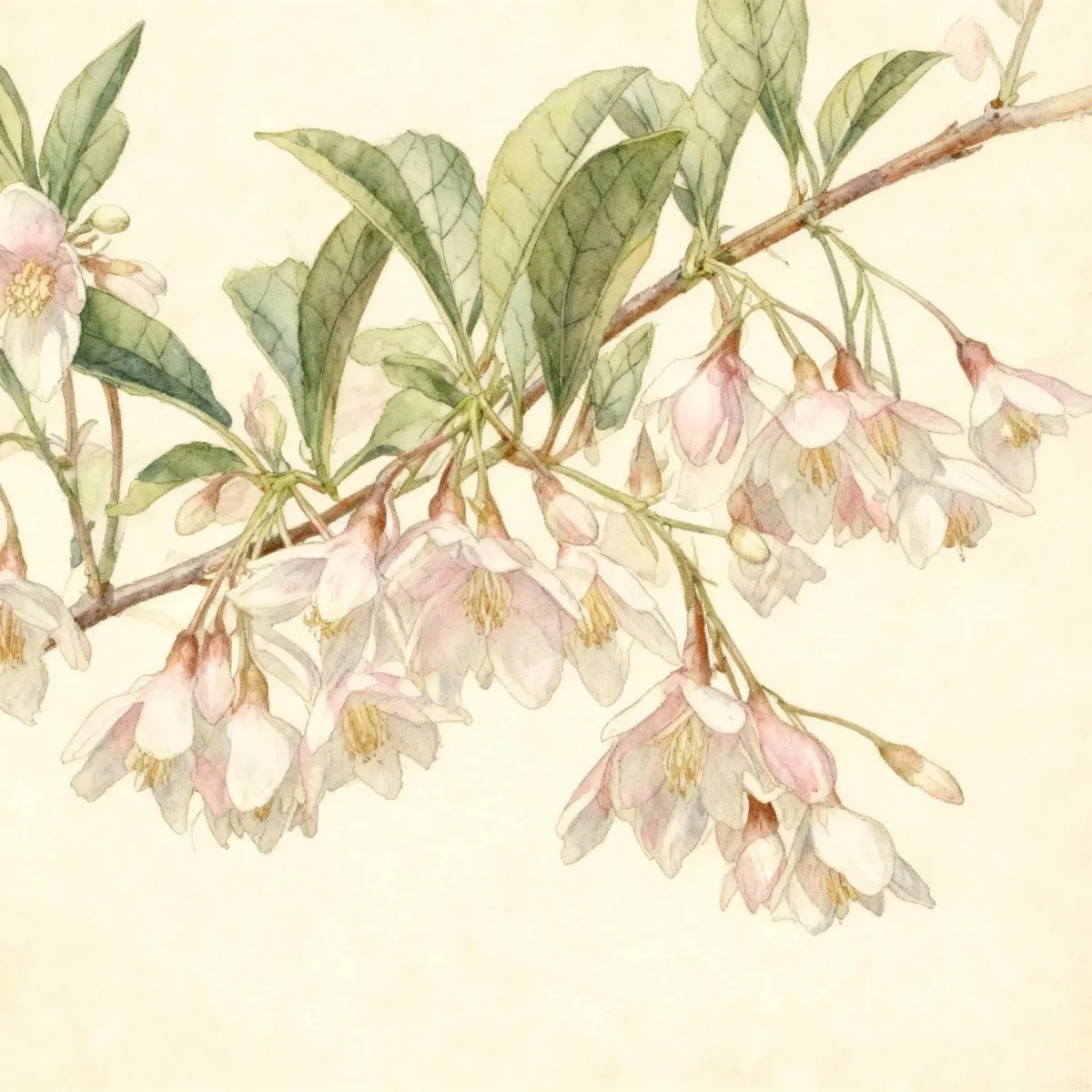
The Styrax officinalis, commonly known as the Snowdrop bush, is a distinctive deciduous shrub celebrated for its elegant spring display. This plant produces masses of drooping, bell-shaped white flowers that resemble miniature snowdrops, lending it its common name. Its structure develops into a rounded shrub or small tree, providing excellent form in the landscape, particularly when displaying its late-spring blooms.
Native to rocky slopes and open woods of Southeastern Europe and Asia Minor, Styrax officinalis is resilient yet requires specific cultural conditions to thrive. Gardeners value this shrub not just for its aesthetic beauty but also historically for the resin, storax, which was once an important commodity for incense and medicine. Proper siting ensures healthy growth and abundant flowering from the Snowdrop bush.
This medium-sized shrub fits well into mixed borders or as an individual specimen plant. Success with Styrax officinalis depends heavily on providing well-draining soils that match its preference for slightly acidic conditions. While requiring moderate attention, the reward is a fragrant, visually stunning specimen during the transition from spring to early summer.
Fast Facts
- Plant Family: Styracaceae
- Plant Type: Deciduous shrub
- Native Range: Southeastern Europe, Asia Minor
- Hardiness Zones: USDA Zones 9-10
- Size at Maturity:
- Height: 6-16 ft
- Spread: 4-12 ft
- Bloom Time: May to June
- Bloom Description: White
- Sun Exposure: Full sun to part shade
- Water Needs: Medium
- Maintenance Level: Medium
How to Grow
Planting the Snowdrop bush should ideally occur in the spring, allowing it time to establish before summer heat. Locate your shrub where it receives full sun to light afternoon shade, as this benefits flowering while protecting foliage in hotter climates. The most critical aspect of culture is soil preparation: ensure the planting medium is acidic, organically rich, and provides excellent drainage. The species performs exceptionally well when grown in moist, sandy loam environments.
Ongoing care for Styrax officinalis involves maintaining consistent moisture, especially during dry periods, as it requires medium water needs. Avoid letting the soil completely dry out, though it should never remain waterlogged due to its sensitivity to poor drainage. Fertilization is rarely necessary if the native soil structure is rich in organic matter; however, supplementing with compost annually can support vigor.
Pruning should be kept minimal and is best executed in winter while the plant is dormant. Perform light pruning as needed strictly to maintain desired shape or remove crossing branches. Propagate new plants from seed or cuttings, though establishing young Styrax officinalis can sometimes be slow. Protect the roots from disturbance once established.
Landscape Uses
The Snowdrop bush excels as both a beautiful rounded flowering shrub and a small specimen tree, offering significant focal interest. Its graceful, slightly weeping silhouette makes it an outstanding choice for specimen planting in lawns or open woodland gardens where its dark green foliage and white flowers can contrast nicely. For mixed borders, position it toward the middle or back to appreciate its 6-to-16-foot stature.
Consider integrating Styrax officinalis within naturalized settings or near patios where the fragrance of its bloom can be fully appreciated during late spring. When grouping plants, pair it with acid-loving companions such as Rhododendrons, Azaleas, or evergreen ferns that share similar cultural requirements for rich, moist, well-drained soil. Its delicate flowers provide a softer texture complementing coarser, neighboring shrubs.
Standout Features
Flower Qualities
- Showy
- Fragrant
Noteworthy Characteristics
Styrax officinalis, commonly called storax or snowbell bush, is a deciduous shrub or small tree that typically grows to 6-16’ (infrequently to 20’) tall. It is native to rocky slopes, river margins, open woods and thickets from Bulgaria and the Eastern Mediterranean to the Middle East. This shrub features apically blunt, elliptic to ovate or nearly spherical leaves (to 3-4” long), and axillary, drooping, mildly fragrant, white flowers that bloom in late spring. Wounded stems historically exude a fragrant resin known as storax, linking this plant to ancient trade for perfumes and medicines.
Tolerances
No specific entries provided.
Potential Problems
The Snowdrop bush is generally esteemed for its low susceptibility to common issues. Gardeners report no serious insect or disease problems when the plant is grown in appropriate conditions. Prevention focuses primarily on ensuring excellent root zone health—specifically, avoiding heavy, compacted clay soils that retain excessive moisture, which can lead to root rot, the most common fatal issue for many shrubs.
If pests do appear, they are usually minor and can often be managed by improving air circulation through proper spacing or light thinning, especially if grown in partial shade. Monitoring the soil moisture carefully removes the primary threat to the longevity of your Styrax officinalis.
Frequently Asked Questions
What hardiness zones is Snowdrop bush suitable for?
The ideal growing range for Styrax officinalis is USDA Hardiness Zones 9 through 10.
How large does Styrax officinalis grow?
This plant typically matures to a height between 6 and 16 feet, with a spread ranging from 4 to 12 feet wide.
When does Snowdrop bush bloom?
The Snowdrop bush produces its white blooms across a two-month window, generally from May into June.
What sun exposure does Styrax officinalis need?
It performs best when situated in locations receiving full sun or partial shade, adapting well to varied light conditions provided the soil structure is optimal.
Conclusion
The Styrax officinalis offers structure, a delightful spring fragrance, and uniquely elegant white flowers, making it a sophisticated addition to the landscape. By ensuring it receives acidic, well-draining soil in a sunny to partly shady site, you can successfully cultivate this magnificent Snowdrop bush. Check your local zone compatibility before planning your planting this coming season.
Companion Planting
Selecting appropriate companions helps maintain the desired acidic soil pH and moisture levels crucial for Styrax officinalis. Plants that thrive in similar conditions, such as Camellias, Gardenias, and evergreen Azaleas, create a harmonious, lush layered planting. These companions generally prefer dappled light filtered through larger canopy trees, which mimics the woodland edge habitat where the Snowdrop bush naturally originates.
When designing a border, consider texture pairing. The soft, medium-textured leaves of the Snowdrop bush contrast beautifully with the fine texture of ferns or the bold, leathery leaves of established broadleaf evergreens. Always ensure that companion plants do not compete aggressively for surface moisture, as consistent, even watering benefits the entire grouping.
Propagation Tips
While not difficult, propagating Styrax officinalis requires patience, as seed germination can be slow and erratic. Seeds often need a period of cold stratification to break dormancy; this typically involves sowing them outdoors in a protected cold frame or simulating stratification indoors for several months.
For vegetative propagation, take semi-hardwood cuttings in mid-summer. These cuttings should be wounded slightly at the base and treated with rooting hormone before being placed in a mixture that offers high humidity and excellent aeration, such as perlite and peat moss. Success rates are enhanced if cuttings are taken from younger, vigorous wood, ensuring the new Styrax retains desirable mature characteristics.