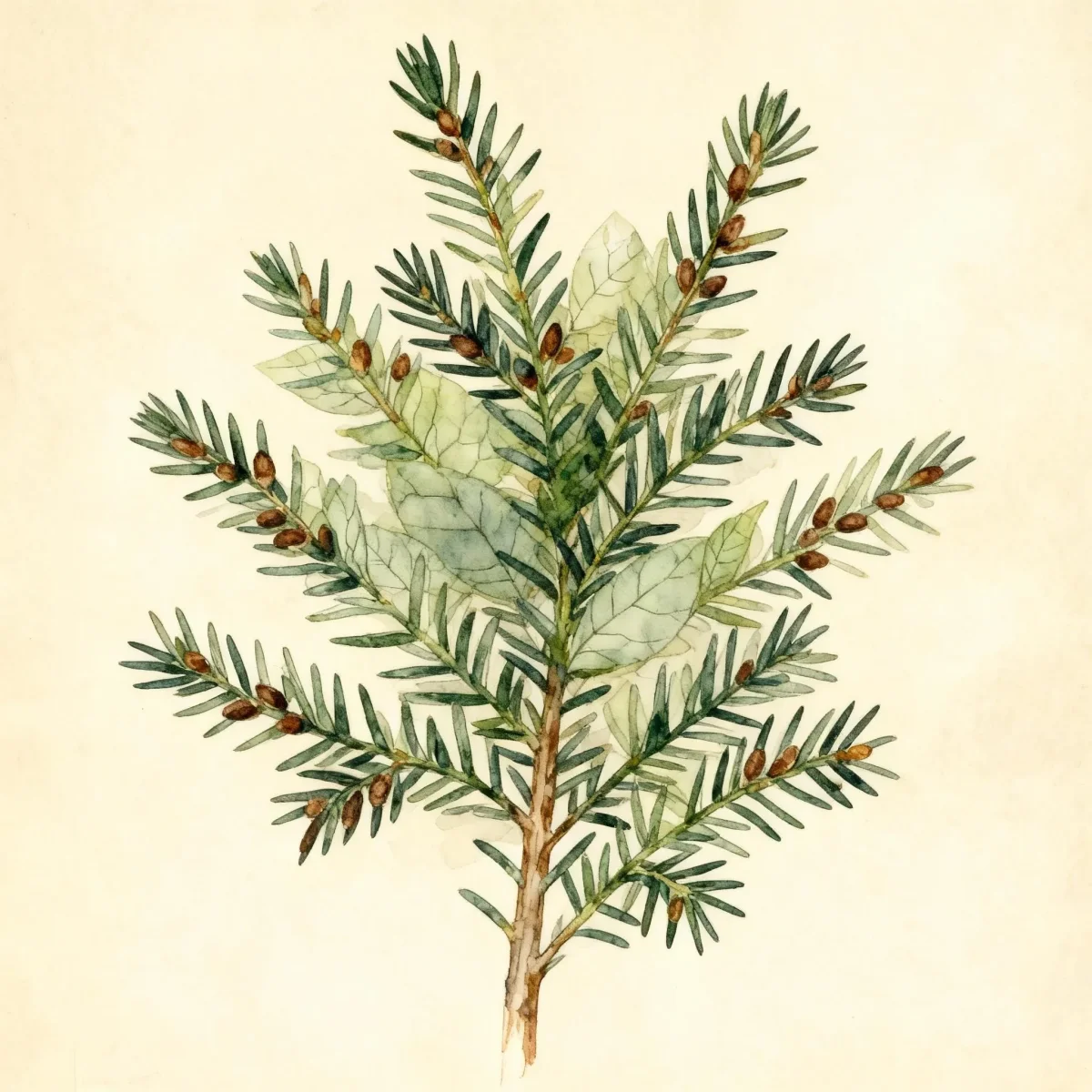
Florida torreya (Torreya taxifolia)
Critically endangered Torreya taxifolia, the Florida torreya, needs rich, moist soil and part shade. A unique, slow-growing evergreen.
Scroll down to discover growing tips, care requirements, companion plants, and more
Complete Plant Information
Overview
The Florida torreya (Torreya taxifolia) is one of North America’s most botanically significant and endangered conifers. This needled evergreen, often called Torreya taxifolia, is highly valued for its unique foliage structure and heritage, though its commercial availability is extremely limited due to widespread disease in the wild. Gardeners who can provide its specific niche appreciate its stiff, glossy, bright green needles and spreading habit.
This species naturally occurs in very specific, high-humidity ravines in the southeastern US, requiring consistent moisture and rich, well-drained soil to thrive outside its native habitat. The distinct feature of this tree is its foliage; while the leaves are similar to yews, they are sharp-tipped, and notably, both the foliage and twigs emit a foul odor when crushed, leading to the common name “stinking cedar.”
Cultivation is challenging due to the severe fungal blight currently devastating wild populations of Torreya taxifolia. Successful cultivation focuses on providing consistent humidity and avoiding soil desiccation, offering a valuable, albeit rare, specimen for conservation-minded gardeners.
Fast Facts
- Plant Family: Taxaceae
- Plant Type: Needled evergreen
- Native Range: Southeastern United States
- Hardiness Zones: USDA Zones 5-9
- Size at Maturity:
- Height: 30-50 ft
- Spread: 30-50 ft
- Bloom Time: Non-flowering
- Bloom Description: Non-flowering
- Sun Exposure: Part shade
- Water Needs: Medium
- Maintenance Level: High
How to Grow
Planting the Florida torreya should ideally occur during the cooler, wetter periods of spring or fall to minimize transplant shock. It absolutely requires moist, rich, well-drained soils; avoid heavy clay or sandy, dry locations. While it is native to USDA Zone 8, greenhouse or nursery-grown stock is generally deemed winter hardy down to Zone 5, though high humidity is essential for long-term success.
Watering is critical for Torreya taxifolia. This tree cannot tolerate drying out. Supply ample water, especially during dry spells, ensuring the soil remains consistently moist but never waterlogged. Fertilization should be light, focusing on soil amendments rather than synthetic fertilizers, to mimic the rich, loamy environment of its native ravines.
Pruning is generally minimal, focusing only on removing dead or damaged wood. Because of the threat of fungal issues, sterilize pruning tools between cuts, particularly if you suspect any blight activity. Tolerating full shade is a noted advantage, making it suitable for deeply shaded woodland garden understories, provided moisture levels are maintained.
Landscape Uses
Given that the Florida torreya is critically endangered and not readily available in commerce, its primary landscape use remains within specialized botanical collections, conservation areas, or among dedicated rare tree enthusiasts. If sourced, it functions as a magnificent, albeit slow-growing, specimen tree, providing year-round evergreen structure.
Due to its need for consistent moisture and shade, use it where companion plants share similar humidity requirements, such as certain ferns, rhododendrons, or moisture-loving woodland shrubs. Avoid planting near sources of constant drought or high wind, which can stress this relatively delicate conifer.
For the dedicated propagator or conservationist, maintaining a few specimens serves as a living safeguard against extinction. The loose pyramidal shape matures elegantly, offering a strong vertical accent in a secluded woodland setting.
Standout Features
Fruit Qualities
- Olive-like fruit (to 1 1/3” long) is a single seed covered by a fleshy aril.
- Fruits are striped with purple.
- Seed matures to reddish-brown.
Noteworthy Characteristics
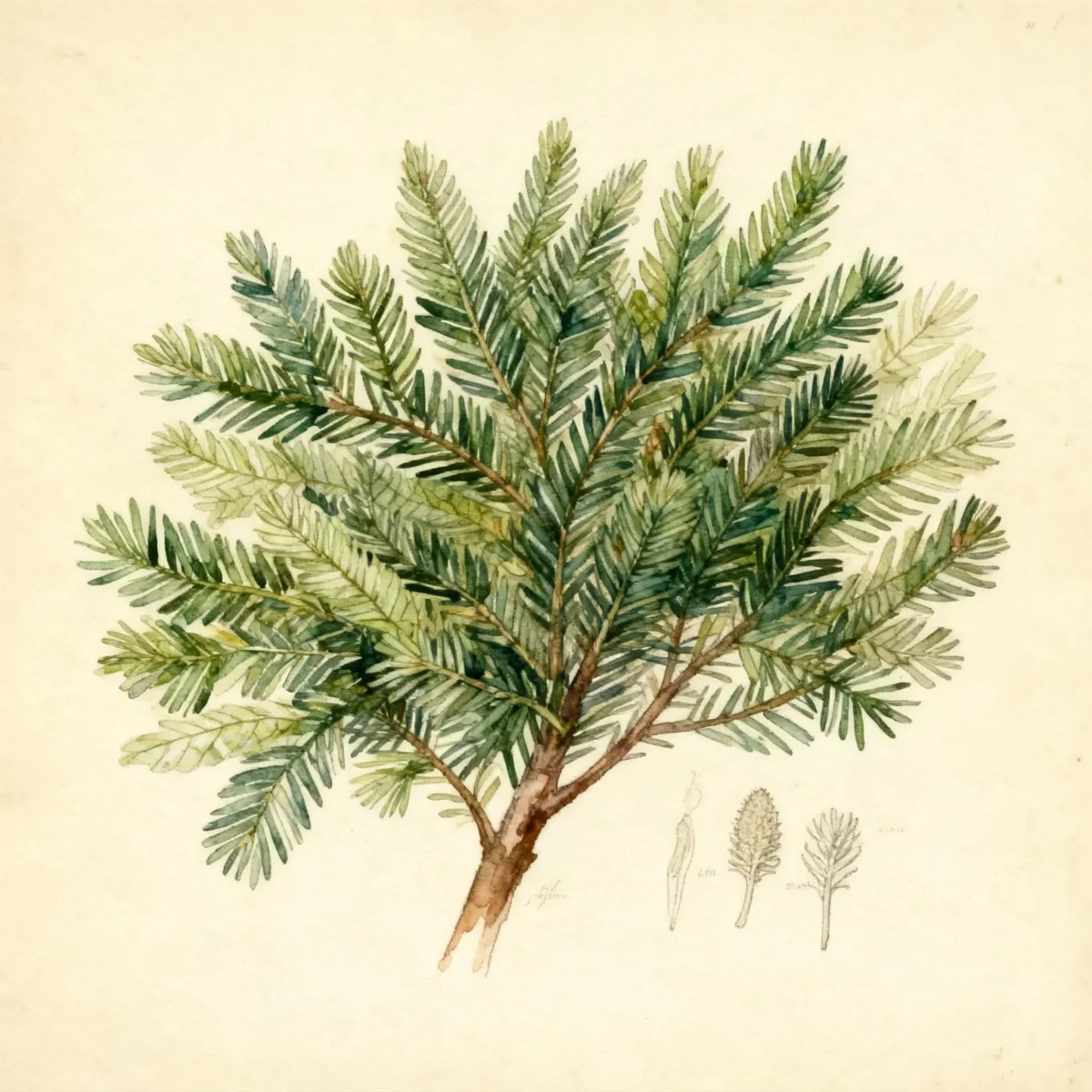
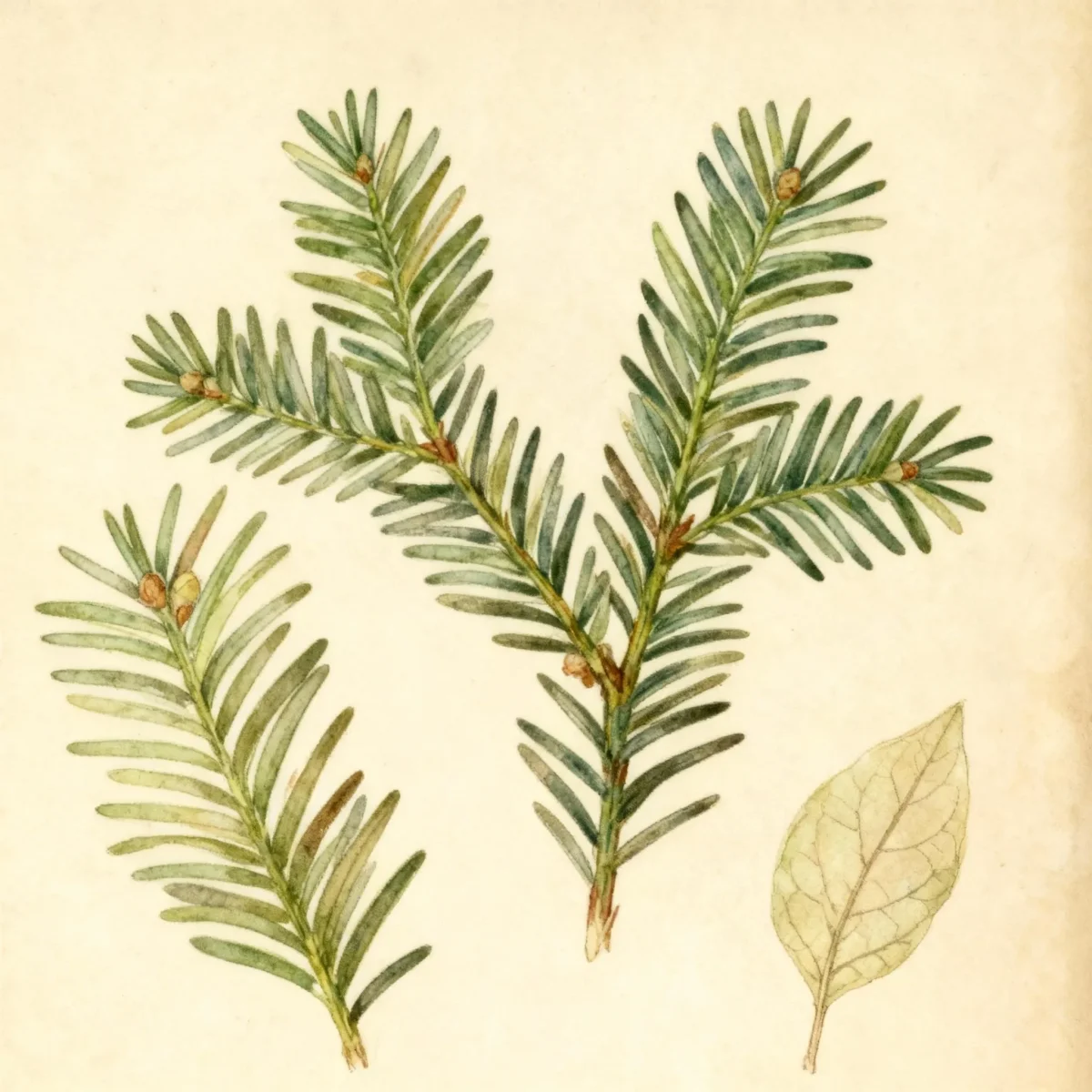
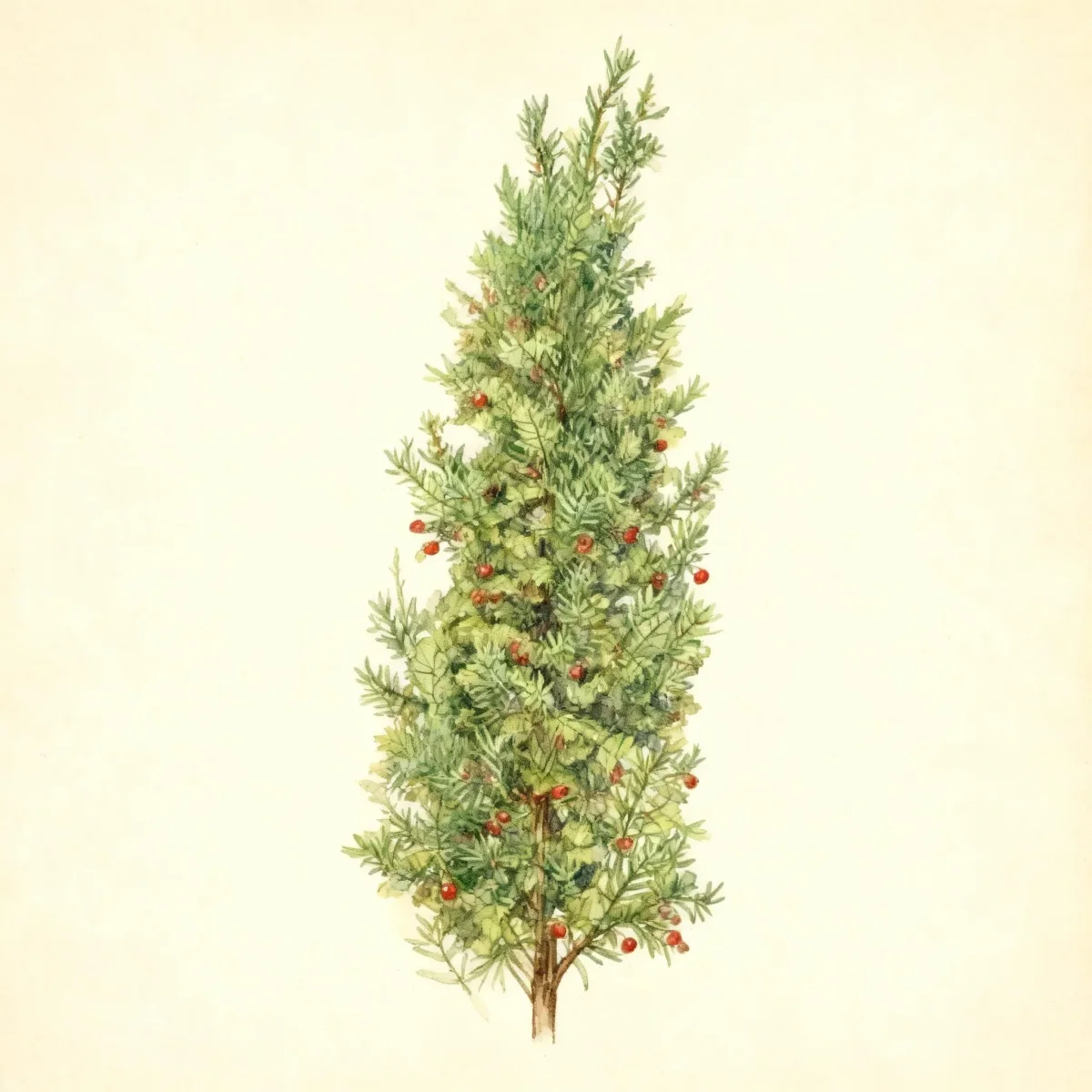
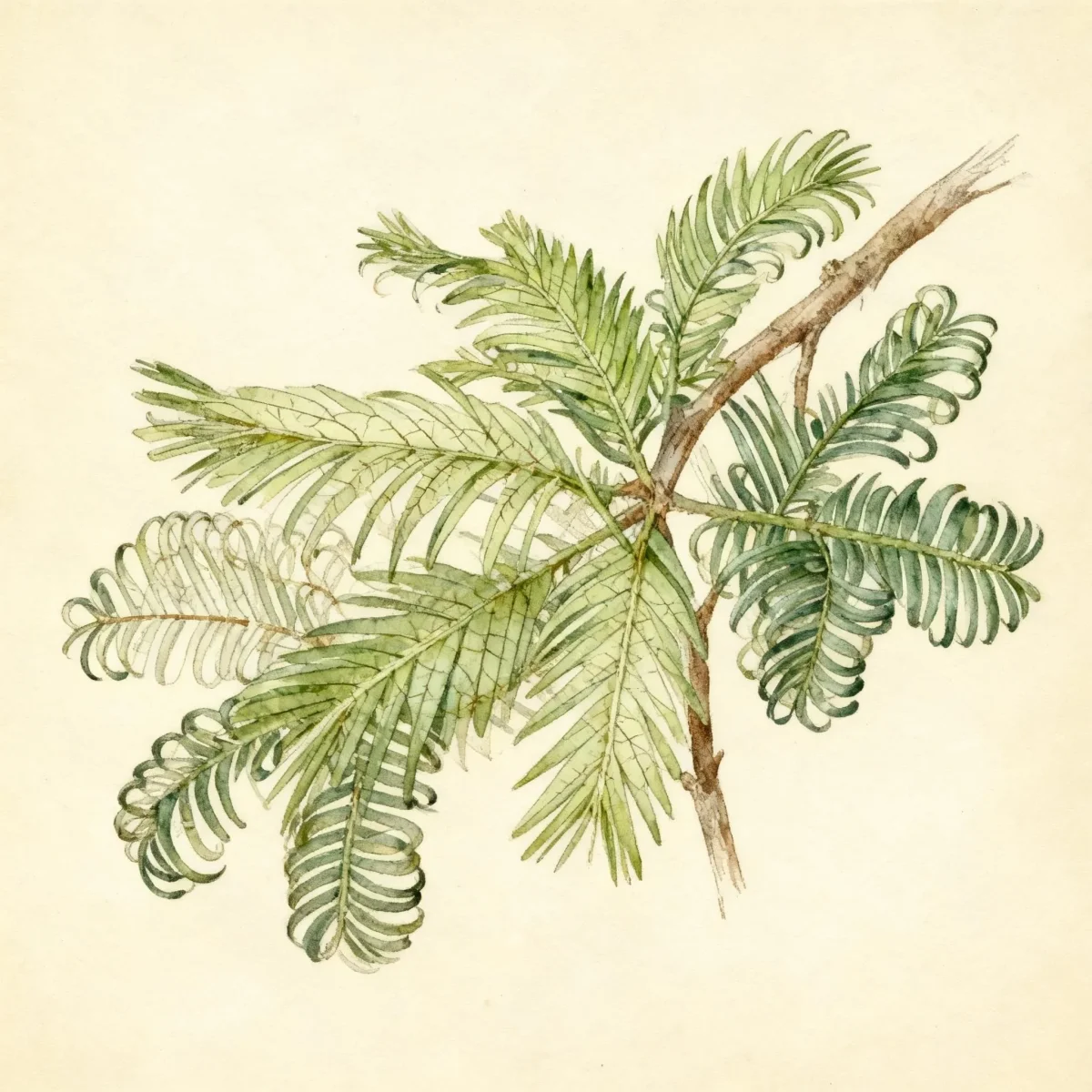
Torreya taxifolia, commonly called Florida torreya, is a dioecious, small to medium sized, evergreen coniferous tree in the yew family that is currently found in the wild along bluffs, slopes and wooded ravines on the east side of the Apalachicola River in Liberty and Gadsden Counties in Florida plus in adjacent Decatur County in Georgia, with an additional small population on the west side of the river in Jackson County, Florida. Mature trees will rise over time to 40-50’ tall with spreading to slightly drooping branches and a loose pyramidal shape. Florida torreya features stiff, glossy, sharp-tipped, linear, needle-like, bright green leaves (each to 1-1 ½” long and 1/8” wide) in 2-ranks, with each leaf having two blue-white stomatal bands beneath.
Tolerances
- Tolerates full shade
Potential Problems
The most significant threat facing Torreya taxifolia is a devastating fungal blight, perhaps a species of Fusarium, which is the primary reason this magnificent tree is critically endangered, threatening to drive it to extinction across its natural range. In cultivation, gardeners must guard against this pathogen, ensuring stringent tool sterilization and avoiding plants showing signs of distress.
Beyond the blight, secondary issues can include scale infestations and mushroom root rot, which thrive in poorly draining or overly saturated soils. Observations also note susceptibility to leaf spot, needle necrosis, and stem lesions, all signs that environmental conditions—particularly humidity or soil aeration—are suboptimal for this sensitive conifer.
Frequently Asked Questions
What hardiness zones is Florida torreya suitable for?
The Torreya taxifolia is generally recommended for USDA Hardiness Zones 5 through 9.
How large does Florida torreya grow?
Mature trees typically reach heights between 30 and 50 feet, with a spread matching that range.
What sun exposure does Florida torreya need?
This needled evergreen prefers part shade but demonstrates tolerance for full shade conditions in the landscape.
When does Florida torreya bloom?
This species is non-flowering; it produces cones, and female cones require two years to ripen the seed.
Conclusion
The Torreya taxifolia represents a vital piece of North American botanical history, offering unique evergreen texture and excellent shade tolerance to specialized gardens. While facing an existential crisis in its native range, successful cultivation in appropriate settings ensures the survival of this rare species. Before attempting to grow Florida torreya, confirm your site offers rich, consistently moist soil and protection within USDA Zones 5-9.
Companion Planting
When establishing Torreya taxifolia, selecting companions that share its preference for high humidity and rich, acidic soil is paramount. Consider shade-loving plants native to the American Southeast that also thrive in woodland conditions. Good pairings include various species of native ferns, such as Christmas fern (Polystichum acrostichoides), or moisture-loving evergreen shrubs like Mountain Laurel (Kalmia latifolia).
Avoid placing the Florida torreya near drought-tolerant Mediterranean species or large, aggressive roots systems that might compete for the consistently moist soil volume this conifer needs. The slow, loose pyramidal shape of the Torreya taxifolia contrasts nicely with finer, clumping groundcovers, maintaining an overall natural, damp woodland aesthetic.
Design Ideas
For the ambitious grower, Torreya taxifolia shines as a stately, rare specimen tree, perfect for inclusion within a woodland garden that mimics its humid ravine habitat. Because of its critically endangered status, its inclusion often carries a conservation narrative, making it a point of interest in specialized arboreta or private estate gardens focused on rarity.
If space is limited, younger plants can be temporarily managed in large, deep containers, using a soil mix heavy in organic matter to simulate rich forest floors. Ensure these containers are well-draining but capable of retaining significant moisture throughout the growing season to mimic the consistent water availability of its native stream banks.