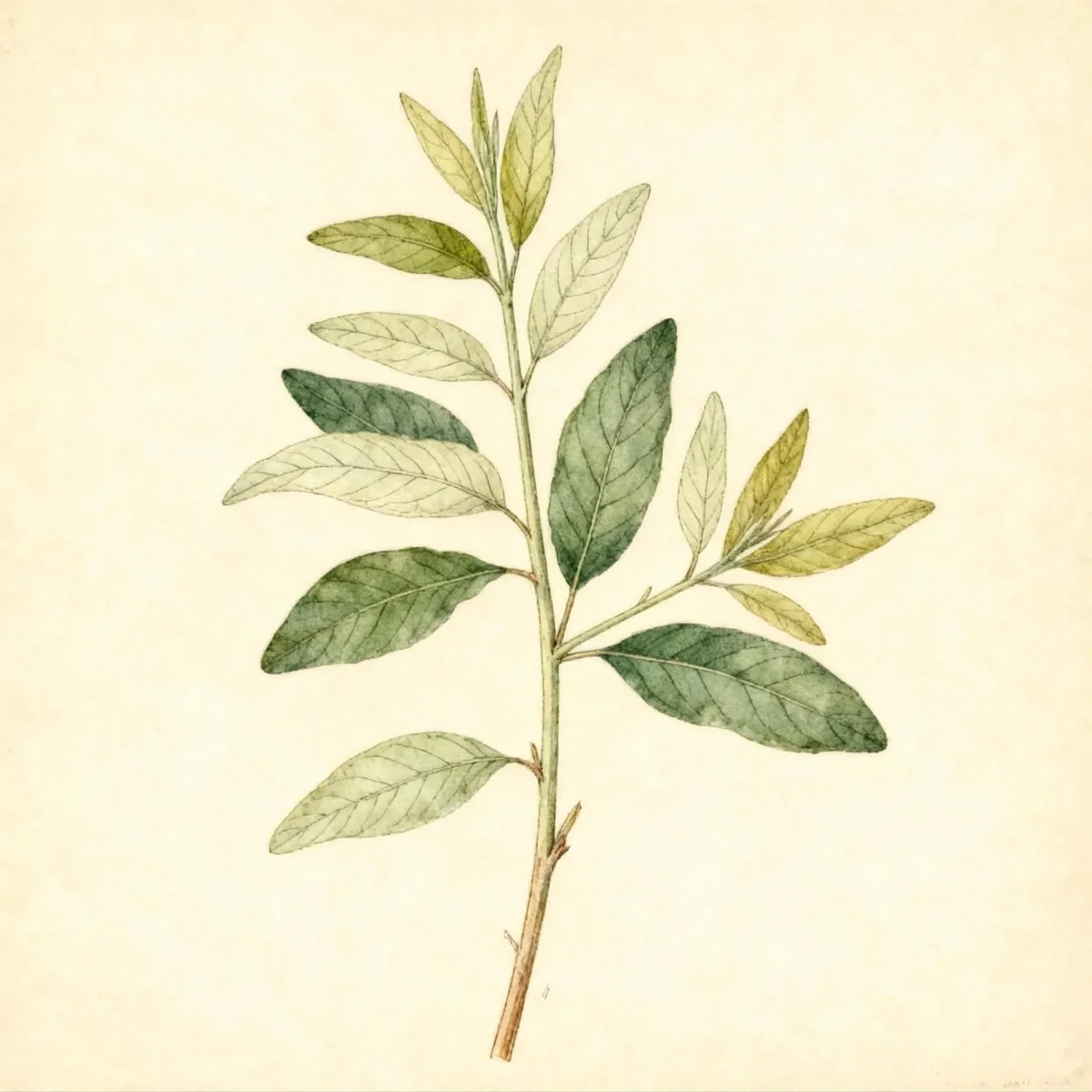
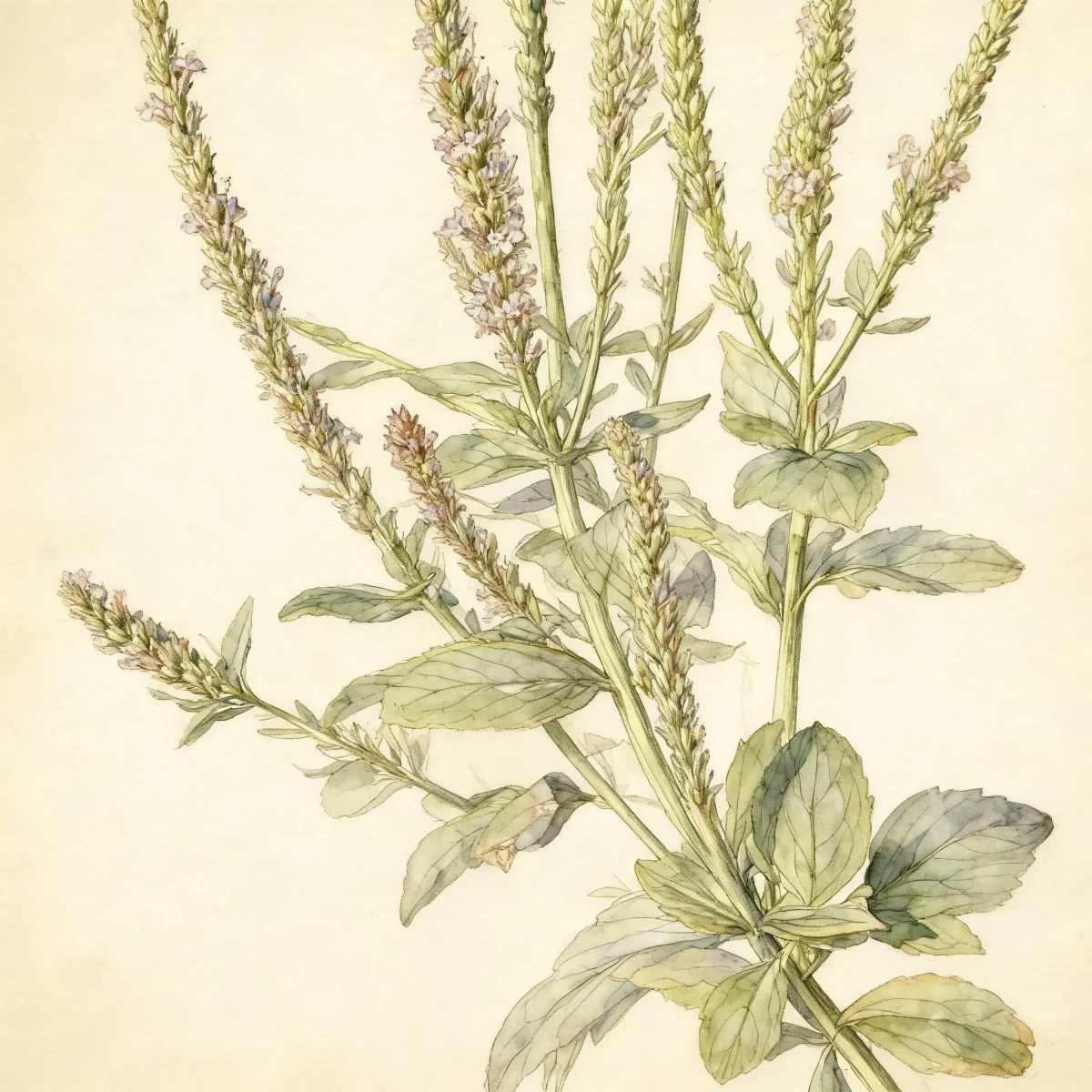
Hoary vervain (Verbena stricta)
Hoary vervain (Verbena stricta) is a low-maintenance, drought-tolerant perennial perfect for native gardens and meadows.
Scroll down to discover growing tips, care requirements, companion plants, and more
Complete Plant Information
Overview
Hoary vervain, scientifically known as Verbena stricta, is a vigorous, clump-forming native perennial highly valued for its exceptional resilience and extended summer bloom time. This plant earns its common name from the dense white hairs (pubescence) covering its gray-green leaves and stems, providing excellent texture contrast in the landscape. It is exceptionally easy to grow, thriving even in poor, dry conditions where many other garden specimens struggle.
This species is an excellent selection for naturalistic plantings, providing continuous blue-purple flower spikes from late spring well into autumn. Beyond its aesthetic appeal, Verbena stricta offers significant ecological benefits, proving highly attractive to essential pollinators like butterflies and hummingbirds throughout its long blooming season.
Gardeners seeking truly low-maintenance native solutions will appreciate the drought tolerance and minimal soil needs of Hoary vervain. It establishes easily, usually blooming reliably by its second year, making it a long-term asset for prairies, meadows, and dry borders.
Fast Facts
- Plant Family: Verbenaceae
- Plant Type: Herbaceous perennial
- Native Range: North America
- Hardiness Zones: USDA Zones 4-7
- Size at Maturity:
- Height: 2-4 ft
- Spread: 1.5-2 ft
- Bloom Time: May to September
- Bloom Description: Blue-purple
- Sun Exposure: Full sun
- Water Needs: Dry to medium
- Maintenance Level: Low
How to Grow
Planting Verbena stricta is best done in the spring after the danger of frost has passed, ensuring it establishes roots before high summer heat. It prefers full sun exposure and easily adapts to average soils, performing particularly well in dryish, sandy, or shallow-rocky soils, provided drainage is adequate. Good drainage is the most critical soil requirement for successful cultivation.
Maintenance for this hardy perennial is very low. Watering should be minimal once established, fitting well into dry or medium moisture landscapes, confirming its superior drought tolerance. Fertilization is generally unnecessary, as rich soils can sometimes lead to excessive flopping.
The species naturally spreads by self-seeding, quickly forming attractive colonies, which aligns perfectly with its use for naturalizing areas. To control its spread or manage its appearance, remove spent flowering spikes before the terminal seeds fully mature. Hoary vervain is easily grown from seed, though flowering is usually deferred until the second season.
Landscape Uses
The primary suggestion for this robust native is to Naturalize it across large areas, such as meadows, prairies, or along roadsides where it can develop its colonies freely. Its upright structure serves well planted at the rear of informal borders, providing vertical accents that transition nicely between manicured areas and wilder spaces.
Incorporating Verbena stricta into wild or native plant gardens is highly recommended, especially when paired with other drought-tolerant species that share a similar bloom time, such as Coneflowers or Rudbeckia. Its structure and texture provide interest even when not in bloom, blending structure with the softer forms of surrounding prairie grasses.
Standout Features
Flower Qualities
- Showy
Noteworthy Characteristics
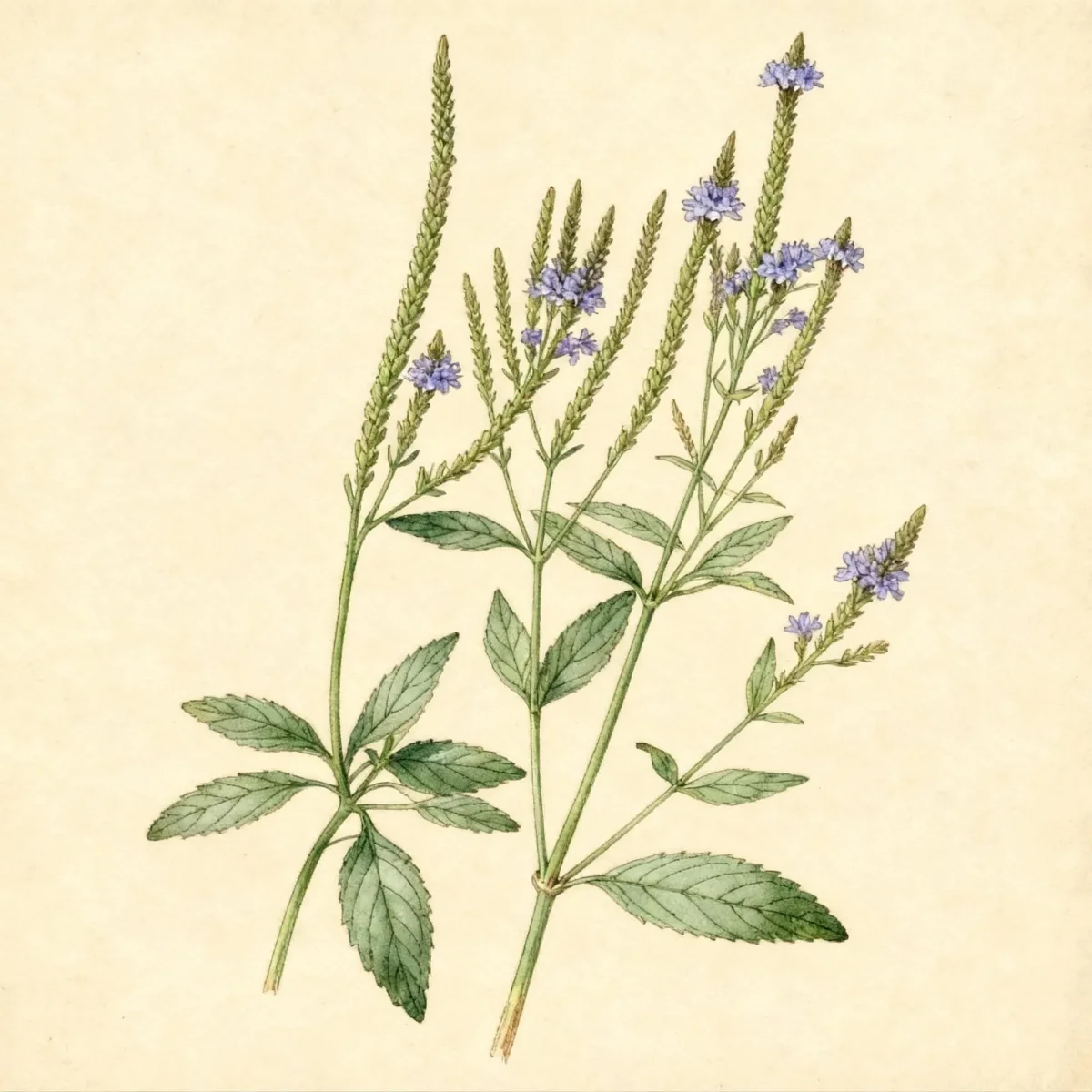
Verbena stricta, commonly called hoary vervain, is a vigorous, clump-forming perennial that gets its common name from the white pubescence on its gray-green leaves and stems. It is native throughout Missouri, typically occurring in prairies, glades, thickets, fields, waste ground and along railroads and roadsides (Steyermark). It grows in a narrow clump to 2-4’ tall and features blue-purple flowers (to 1/2” long) in narrow, upright, pencil-like, terminal panicles. Flowers are densely packed on the panicles, but bloom only a few at a time from bottom to top. Flowers appear from May to September, but primarily in summer and are attractive to hummingbirds, butterflies, and other pollinators. Ovate, coarsely-toothed, usually stalkless leaves (to 4” long) are covered with whitish hairs. Foliage has a gray-green appearance.
Tolerances
- Drought
- Erosion
- Dry Soil
- Shallow-Rocky Soil
Potential Problems
This plant shows remarkable resistance to pests and diseases, meaning it rarely suffers from serious insect or disease problems under normal garden conditions. Its inherent toughness minimizes the need for intensive chemical treatments.
Because it is relatively pest-free and requires minimal intervention, management often centers purely on cultural control, such as preventing unwanted spread via timely deadheading before the seeds fully ripen. Gardeners should focus primarily on ensuring excellent drainage rather than scouting for common problems.
Frequently Asked Questions
What hardiness zones is Hoary vervain suitable for?
Verbena stricta is suitable for USDA Hardiness Zones 4 through 7, offering reliable perennial performance across a wide swath of the temperate climate.
How large does Verbena stricta grow?
This perennial can reach heights between 2 and 4 feet tall, spreading outward approximately 1.5 to 2 feet wide, forming a medium-sized upright clump.
What sun exposure does Verbena stricta need?
This plant requires full sun exposure to thrive, bloom optimally, and maintain its compact, upright habit.
When does Hoary vervain bloom?
Hoary vervain produces its attractive blue-purple flowers throughout the summer, typically blooming from May to September.
Conclusion
Verbena stricta stands out as an essential, rugged component for any garden aiming for ecological soundness and low maintenance. Its resilience, coupled with its extended flowering that supports local wildlife, makes Hoary vervain an excellent backbone plant for dry, sunny sites. Assess your site conditions to ensure you meet its full sun requirement before planting this magnificent native species.
Wildlife Benefits
The primary environmental value of Verbena stricta lies in its exceptional pollinator attraction. The dense, upright spikes of blue-purple flowers offer abundant nectar sources for a long duration, spanning from May through September. Gardeners focused on creating native habitats should prioritize this plant specifically to support butterflies that migrate or remain local throughout the summer months.
Furthermore, the dense flower heads are frequently visited by hummingbirds, seeking high-energy rewards during the mid-summer heat when other blooms might be fading. Integrating this species near seating areas maximizes viewing enjoyment of the frequent insect and avian visitors it draws.
Design Ideas
Due to its upright, narrow flower spikes, Verbena stricta functions wonderfully as an architectural element in informal designs. Plant it in drifts within a meadow setting where its uniform height acts as a gentle vertical repetition across the landscape. For borders, place it behind shorter, mounding perennials that can tolerate the same dry, sunny conditions.
Consider pairing it with silver-leaved plants or yellow composites to amplify the contrast against its gray-green foliage and blue flowers. Because the foliage is somewhat rugged, avoid placing it near highly formal plantings where its textured, hairy leaves might look out of place.