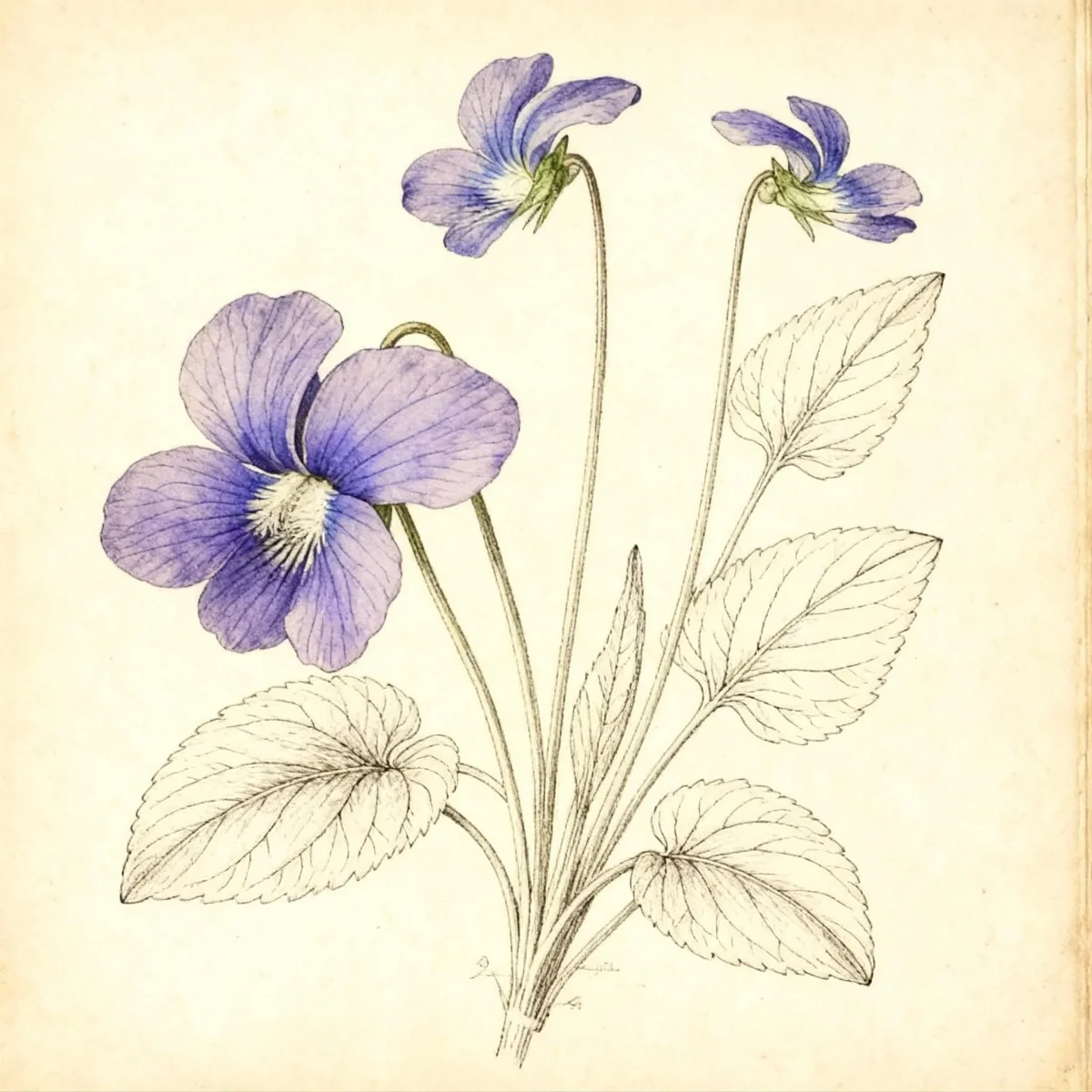
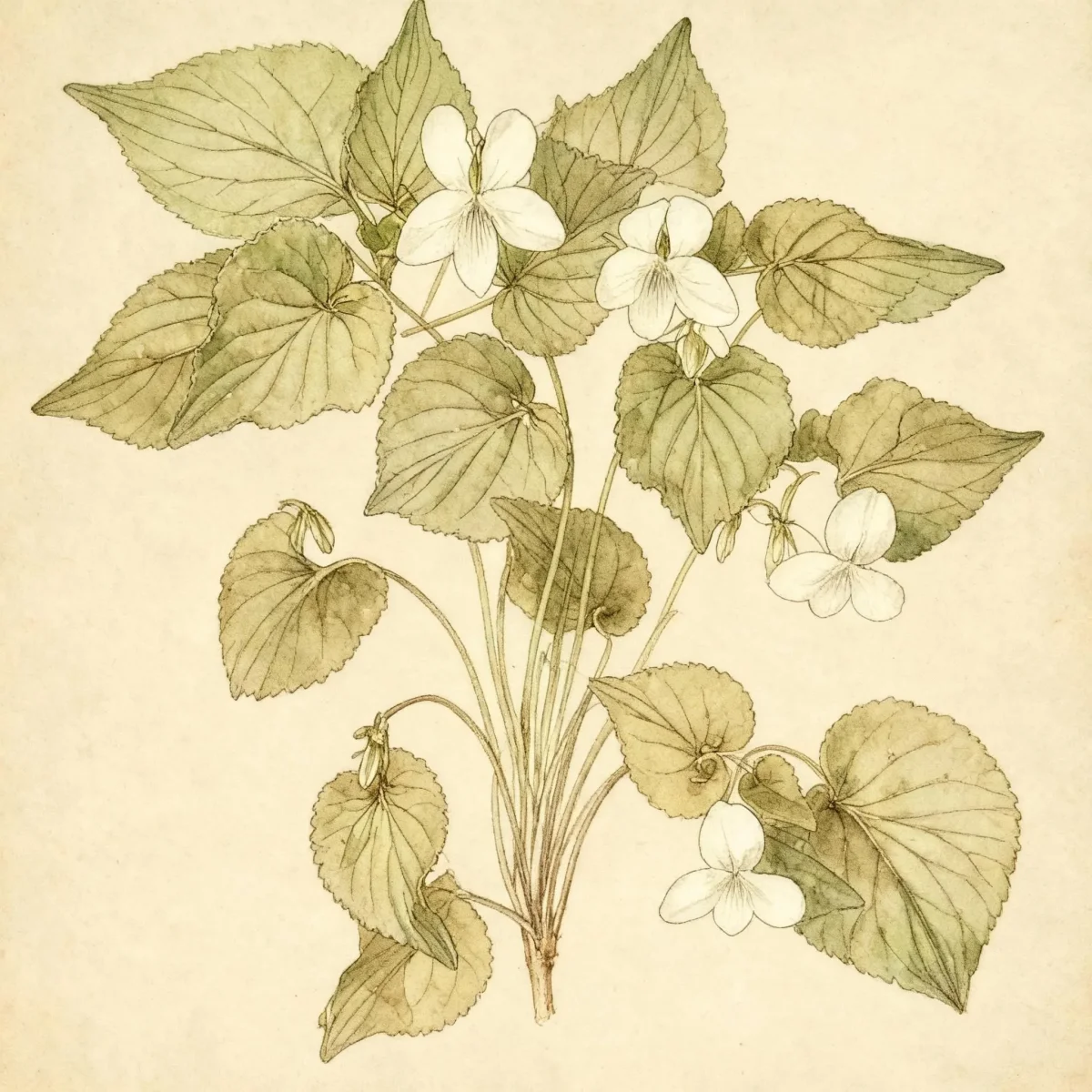
Sweet white violet (Viola blanda)
Viola blanda, the Sweet white violet, is a charming, low-growing perennial offering fragrant white blooms perfect for shaded woodland gardens.
Scroll down to discover growing tips, care requirements, companion plants, and more
Complete Plant Information
Overview
The Sweet white violet (Viola blanda) is a delightful native perennial cherished for its early spring display of delicate, fragrant flowers. This low-growing plant forms attractive carpets, making it an ideal choice for gardeners seeking naturalistic planting schemes under tree canopies or dappled light. Its charm lies in its humble stature and sweet perfume, providing critical early nectar sources in the woodland ecosystem.
Viola blanda thrives in consistent moisture, preferring sites that mimic its native habitat of moist woods in eastern North America. As a stoloniferous species, it readily spreads via runners, blanketing shaded areas with its heart-shaped basal leaves and subsequent white blooms. Its low maintenance profile further enhances its appeal for those designing low-input, ecologically sound landscapes.
Gardeners value Viola blanda for its ability to naturalize effectively, creating soft borders or filling gaps in rock gardens. The small, charming white flowers contrast beautifully with the deep green foliage, offering subtle elegance throughout the spring season before many other plants emerge. Incorporating the sweet white violet ensures a touch of tradition and subtle fragrance in shady corners.
Fast Facts
- Plant Family: Violaceae
- Plant Type: Herbaceous perennial
- Native Range: North America
- Hardiness Zones: USDA Zones 2-7
- Size at Maturity:
- Height: 0.25-0.5 ft
- Spread: 0.75-1 ft
- Bloom Time: April to May
- Bloom Description: White
- Sun Exposure: Part shade
- Water Needs: Medium to wet
- Maintenance Level: Low
How to Grow
Planting the Viola blanda is best achieved in spring or fall when the soil is cool. Select a location that provides part shade; harsh afternoon sun will scorch the foliage. This species requires average, well-drained soil that retains ample moisture throughout the growing season. Incorporation of organic matter, such as compost or leaf mold, is highly beneficial as the sweet white violet prefers humusy, moisture-retentive conditions.
Maintenance for these violets is exceptionally low once established. Water consistently, ensuring the soil never dries out completely, especially during dry spells, as they prefer medium to wet conditions. Fertilization is rarely necessary if the native soil has been amended with organic material; overcrowding usually keeps weed pressure low. There is no significant pruning required, allowing the plant to self-manage its low, creeping habit.
As the growing season concludes, allow the foliage to die back naturally. Because Viola blanda spreads by runners, division is an easy propagation method, though often unnecessary if you desire a colony effect. In colder zones (lower end of USDA 2), ensure the area is well-mulched with leaves for insulation, though its inherent hardiness often makes it very winter-tough.
Landscape Uses
The primary appeal of Viola blanda in the garden stems from its suitability as a dense ground cover. It excels when massed or grouped in shaded areas, softening the edges of rock gardens or serving as a delicate border front. For a truly natural look, allow the sweet white violet to spread unchecked in woodland settings or native plant gardens where it perfectly complements ferns and trilliums.
This versatile perennial is excellent for covering small, difficult-to-plant shady spaces where turf grass refuses to grow. Consider using it beneath large shrubs or along winding paths where its low stature will not obstruct views. The fragrance released by the blooms adds an atmospheric layer to intimate garden rooms or shaded patios.
When selecting companions, look for other shade-loving natives that share similar moisture requirements, such as woodland phlox or various hosta cultivars. The naturalizing habit of Viola blanda means it blends seamlessly, avoiding the formality of highly structured plantings.
Standout Features
Flower Qualities
- Showy
- Fragrant
Noteworthy Characteristics
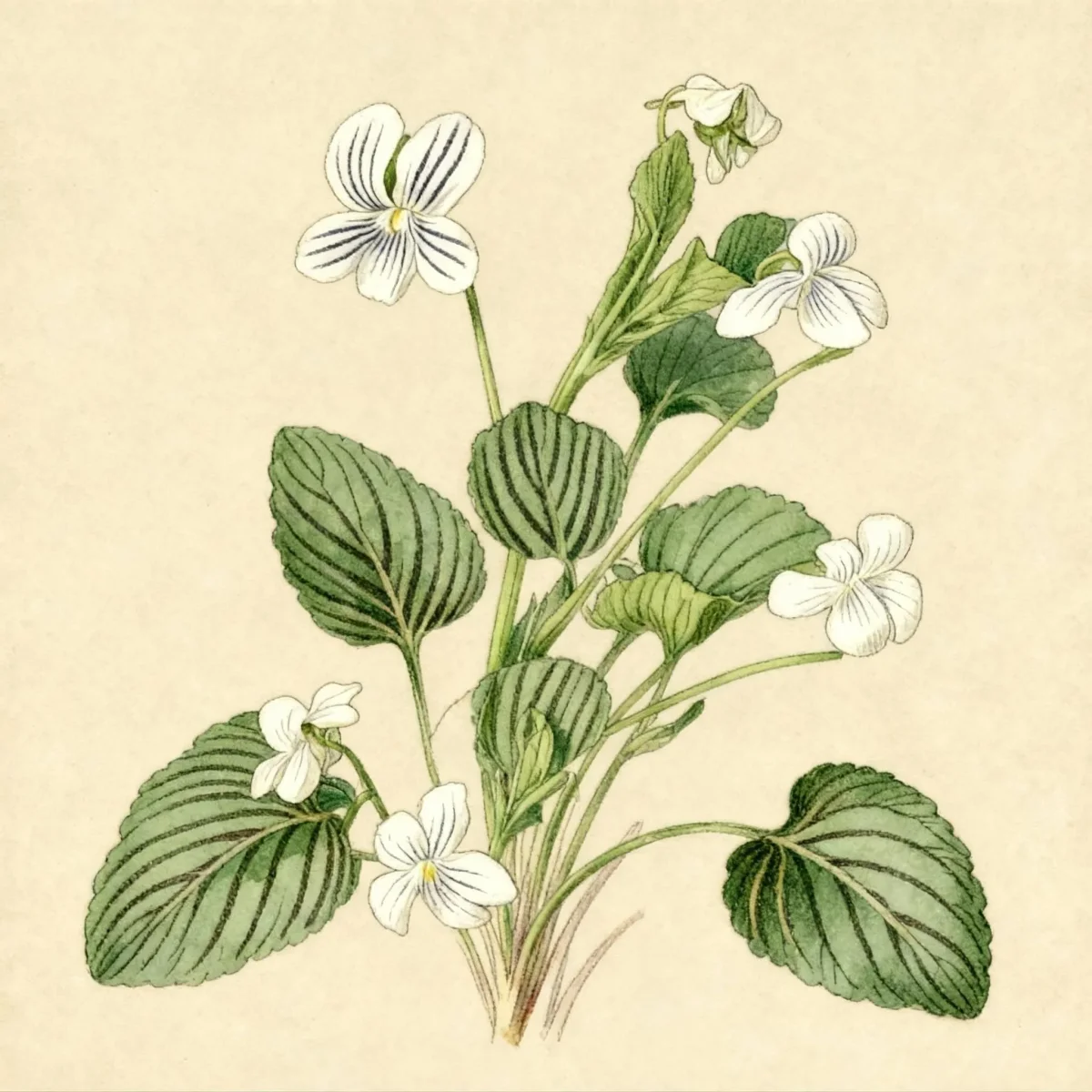
Viola blanda, commonly known as sweet white violet, is a stoloniferous, stemless, low-growing perennial (1-5” high) which features basal, heart-shaped leaves and fragrant, white flowers with strongly-reflexed upper petals and a purple-veined lower petal. Each flower rests atop its own leafless stalk, blooming in early spring. The genus name honors Latin names for sweet-scented flowers, while the specific epithet means mild, pleasant, or charming.
Tolerances
- Deer
Potential Problems
Viola blanda is noted for its remarkable resilience, suffering from no serious insect or disease problems under normal cultural conditions. This low maintenance profile is a significant advantage for woodland gardening. The most common “problem” encountered is actually its successful spread by runners, which may occasionally require slight edging if it encroaches on lawn areas or desired walkways. Maintain proper moisture levels to prevent stress, which could otherwise invite minor fungal issues typical of crowded plants.
Frequently Asked Questions
What hardiness zones is Sweet white violet suitable for?
The Viola blanda is extremely cold-hardy, suitable for USDA Zones 2 through 7.
How large does Viola blanda grow?
This low-growing perennial reaches a maximum height of about 0.5 feet (6 inches) and spreads between 0.75 to 1 foot wide.
What sun exposure does Viola blanda need?
The sweet white violet requires part shade to thrive and is intolerant of intense direct sun.
When does Viola blanda bloom?
Viola blanda blooms relatively early in the season, typically from April to May, producing lovely white flowers.
Conclusion
The hardiness, low maintenance, and charming fragrance make the Viola blanda, or sweet white violet, an indispensable plant for creating naturalized beauty in cool, shady landscapes. Its ability to carpet the woodland floor effectively secures its place as a premier ground cover option. Before planting, confirm your garden location falls within USDA Zones 2–7 and that you can consistently provide the required medium to wet soil environment.
Companion Planting
When planning companions for Viola blanda, focus on plants that share its preference for part shade and consistent moisture. Epimediums (Barrenwort) are excellent partners, as their tough foliage establishes well alongside the violets, and they emerge around the same time. Consider pairing the early spring bloom of the sweet white violet with ferns that will fill in later in the season, such as Ostrich Ferns or Japanese Painted Ferns, creating visual interest throughout the summer.
Another successful pairing involves woodland bulbs like spring-beauty (Claytonia virginica) or small native trilliums. These neighbors share the same moist forest floor requirements and their vertical shapes contrast nicely with the low, spreading habit of the Viola blanda. Ensure that any chosen companion does not establish too aggressively, as the violet needs room to utilize its stolons to form its signature ground cover carpet.
Propagation Tips
Propagation of Viola blanda is straightforward, relying heavily on vegetative reproduction due to its stoloniferous nature. The easiest method is division, usually performed in early spring just as growth begins, or in the fall after flowering. Gently lift clumps of the established plants, ensuring each section has healthy roots and a few basal growing points, and transplant immediately to their new location.
Seed collection is also possible but requires patience, as few gardeners notice the inconspicuous seed capsules that develop after flowering. If you choose to plant from seed, remember that violets often have complex germination requirements, possibly needing a period of stratification. For easiest success, rely on dividing existing mats of the Viola blanda to quickly increase your coverage of this wonderful woodland violet.